Can You Cut Down a Tree That Sits Right on the Property Line in New York?
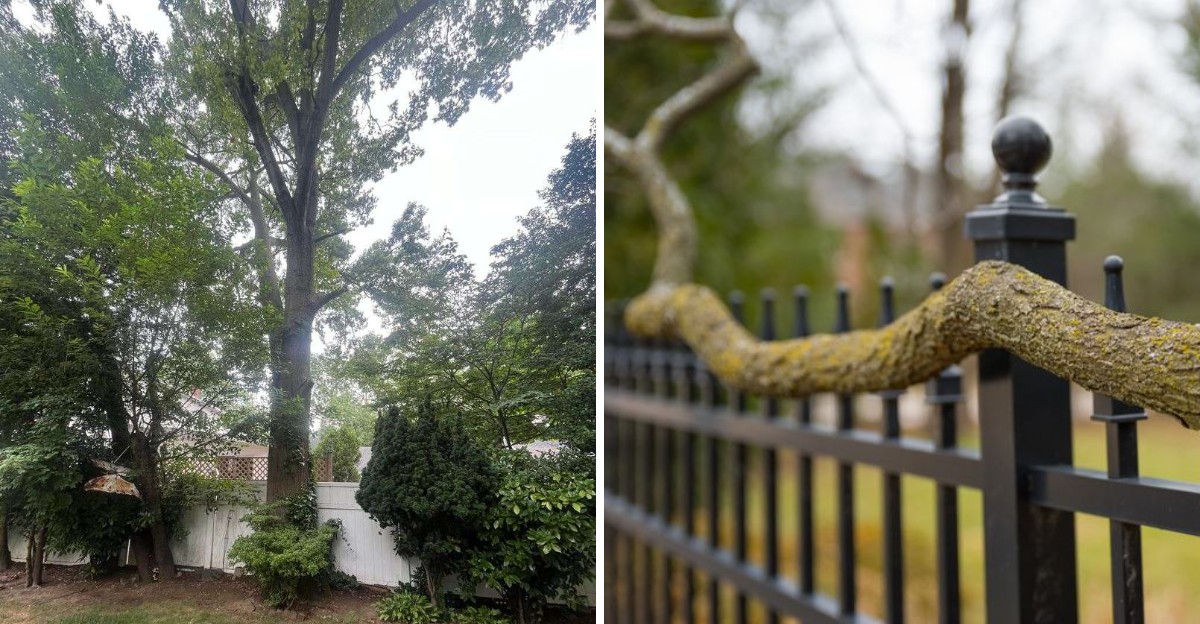
A single tree trunk can belong to two households at the same time. Courts have treated it that way for a very long time.
Funny thing is, most of us figure a tree belongs to whoever mows around it. I used to think the same thing. Then I learned how the law in New York actually looks at a trunk that sits right on the line.
That shared trunk changes who gets a say about saws, pruning, and even cleanup. One wrong cut can turn a quiet weekend chore into a bill you won’t forget. Even trimming a big limb can raise eyebrows if the trunk is shared.
So what happens when you love sunshine and your neighbor loves shade? Who wins when the tree in the middle can’t pick a side? The answer has more twists than a gnarled old apple limb.
That Trunk Straddling the Fence Line Has Two Owners, Not One
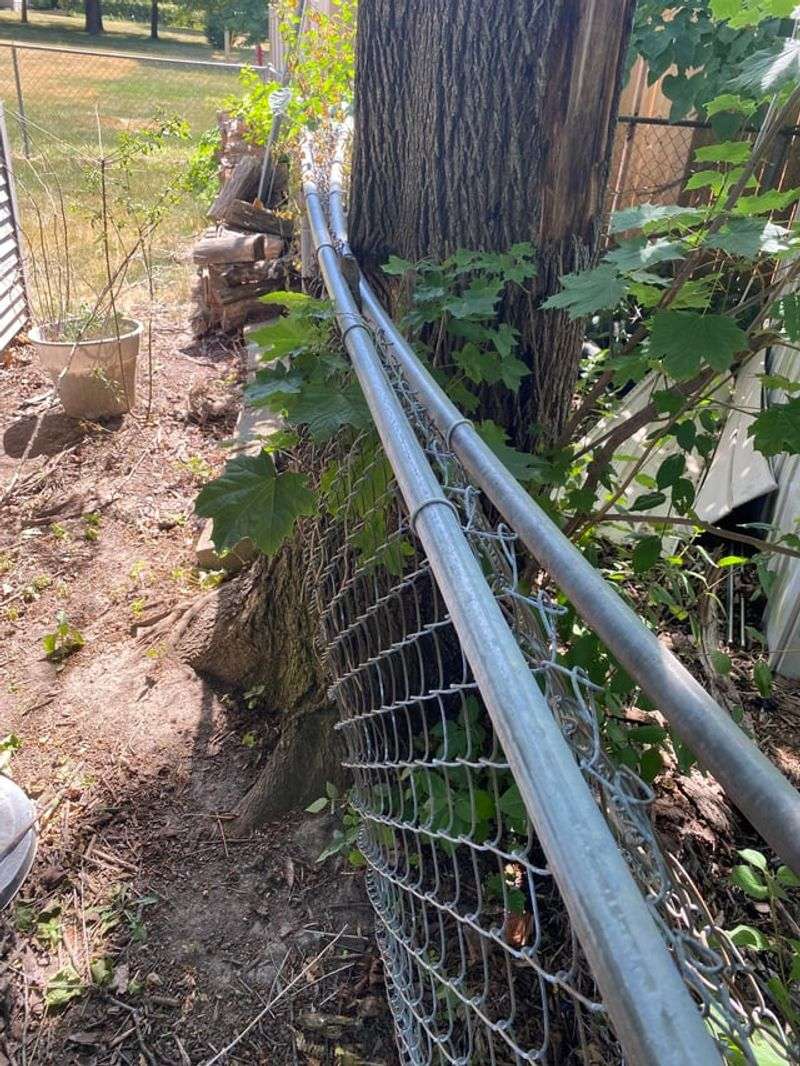
Take a walk along your fence and look closely where the trunk meets the ground. If the line between your yard and your neighbor’s runs through that trunk, you are looking at what lawyers call a boundary tree.
Under long-standing New York case law, a tree whose trunk stands on the line is treated as the shared property of both landowners. Courts often describe the two owners as tenants in common of that tree.
It does not matter who planted it, who rakes more leaves, or whose side gets the most shade.
What matters is the trunk, not the branches. A tree growing fully on one side, even if its limbs hang over the fence, belongs to the owner of that side.
A trunk that crosses the line is a different story.
For what it’s worth, I find this rule kind of charming. One oak can tie two families together, whether they like it or not.
Shared ownership means shared rights and shared duties. Both of you can enjoy the shade, the fall color, and the birds.
Both of you also have a stake in its health and its future.
So before anything else, figure out exactly where that trunk sits. The rest of the rules flow from that one simple question.
A Chainsaw Needs Your Neighbor’s Yes Before It Touches a Shared Tree
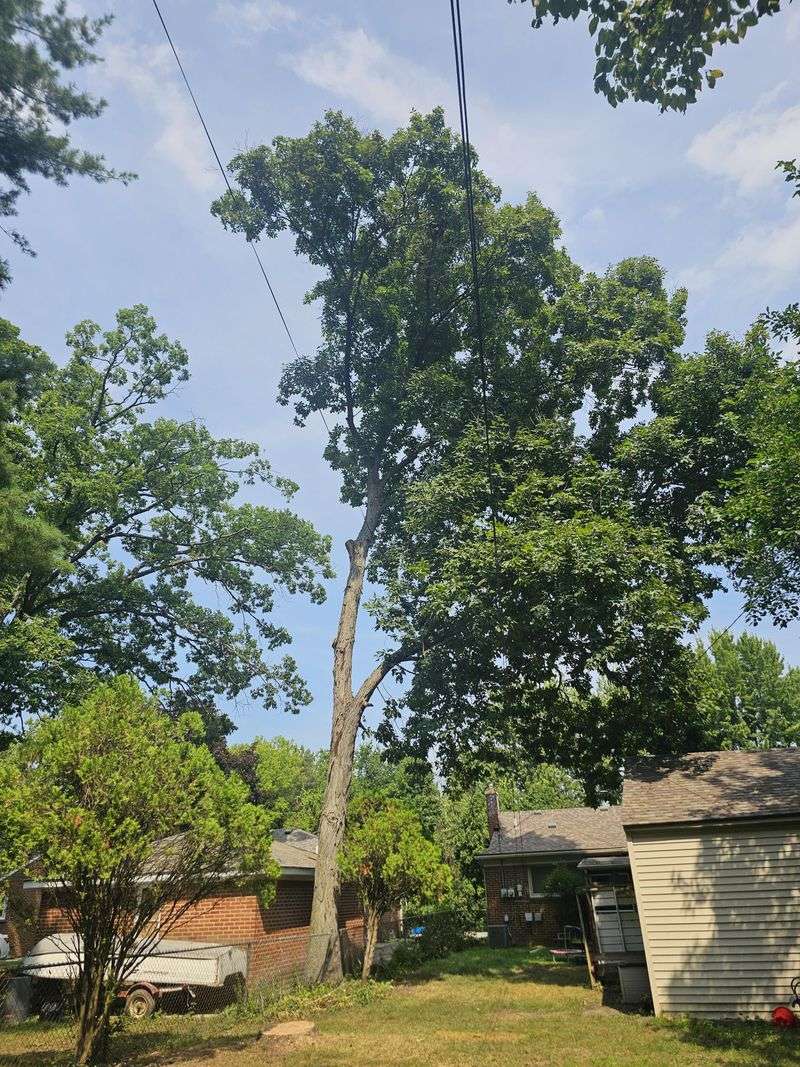
Short answer first. No, you generally cannot cut down a tree that sits right on the property line without your neighbor’s consent.
Since the tree belongs to both of you, one owner cannot decide alone to remove it. New York courts have also held that a co-owner should not harm the tree in a way that injures the other owner’s share.
That includes heavy cutting that leaves the tree weak or lopsided.
Let’s just say a quick coffee chat beats a courtroom any day. Knock on the door, explain your reasons, and listen to theirs.
Maybe the roots are lifting your patio, or maybe the trunk is leaning toward your roof.
If you both agree, put it in writing. A simple signed note should cover who hires the tree service, who pays what share, and what happens to the stump and wood.
Splitting the cost is common, though nothing forces a certain split.
If your neighbor says no, the tree usually stays. Your options then shift toward talking it out again, bringing in an arborist for a neutral opinion, or speaking with a local attorney.
Patience feels slow, but it protects your wallet and your friendship. A tree can take decades to grow and seconds to drop.
New York’s Tree Cutting Law Can Triple the Price of One Fallen Maple
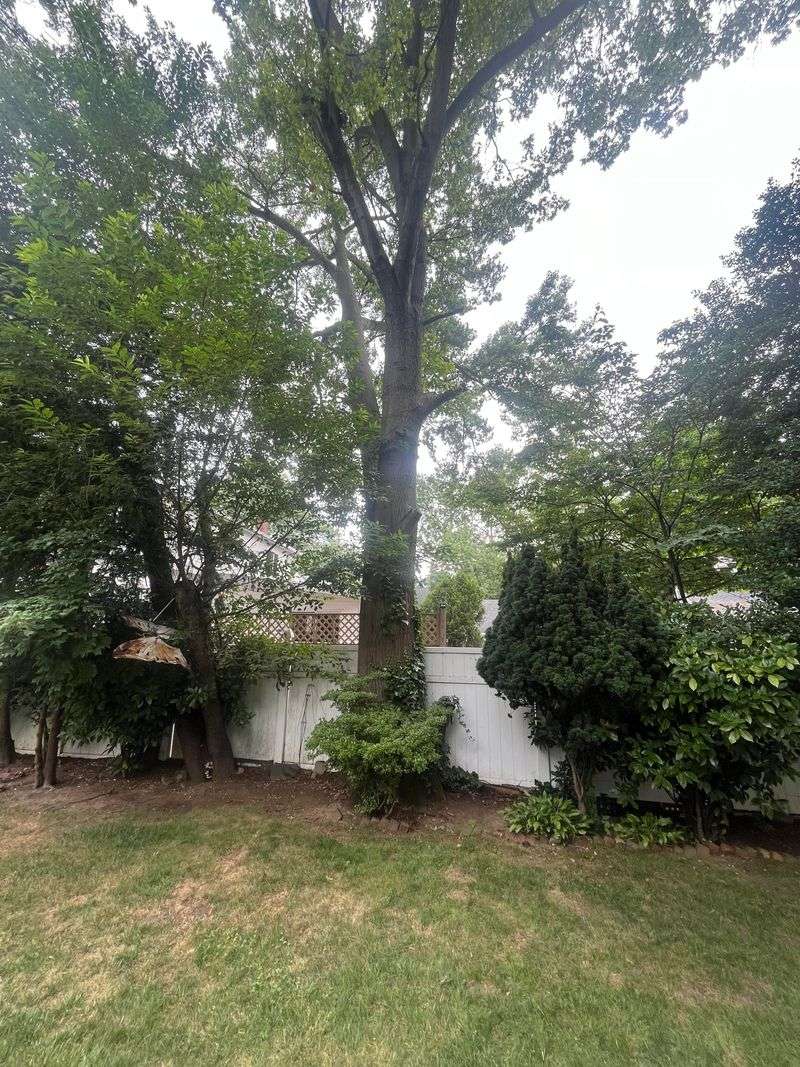
Money talks, and the state’s tree law speaks loudly. Section 861 of the New York Real Property Actions and Proceedings Law covers cutting or removing trees on someone else’s land without permission.
Under that statute, a person who cuts another owner’s tree without consent can owe treble the stumpage value or 250 dollars per tree, or both. Stumpage value is roughly what the standing tree is worth as timber.
The owner can also recover damages for permanent and substantial harm to the land, such as restoration costs.
There is a softer version for people who acted in good faith. If you honestly and reasonably believed you had the right to cut, the penalty can drop to single stumpage value or 250 dollars per tree, or both.
Proving good faith takes solid evidence, though.
How this plays out for a shared boundary tree depends on the facts and the court. Your neighbor’s share of the tree is still their property, so cutting it without approval carries real legal risk.
Take it from someone who has priced tree work. The removal bill alone can sting.
Adding legal fees and damages on top turns a weekend project into a financial headache.
A signed agreement costs nothing and keeps you on the right side of the statute.
Overhanging Branches Can Be Trimmed Right Up to Your Side of the Line
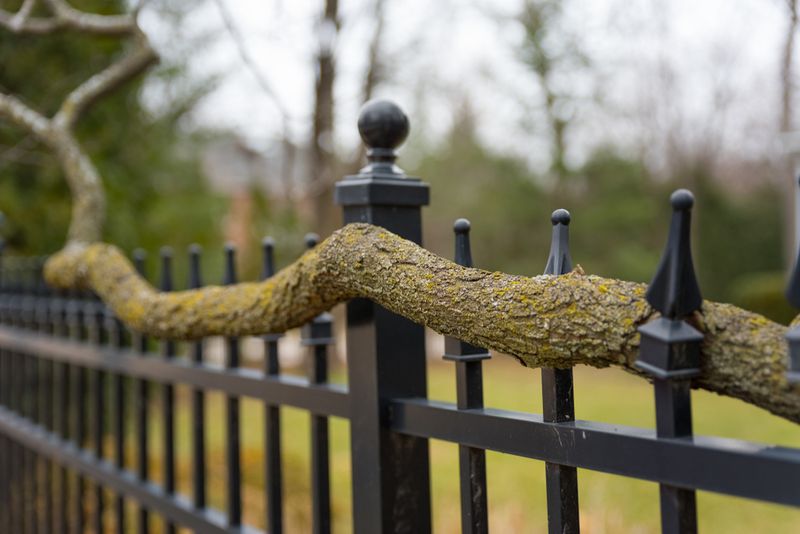
My favorite rule in this whole topic gives you a little breathing room. Even when a trunk sits on the line or fully in your neighbor’s yard, you usually have the right to trim branches and roots that cross onto your property.
Lawyers call this self-help. You may cut back the parts that extend over your land, but only up to the property line.
Stay on your own side while you work, and do not climb into the neighbor’s yard without permission.
You also pay for the trimming yourself in most situations. That surprises a lot of people, but the law treats it as your choice to manage what reaches your space.
For a shared boundary tree, a friendly heads-up still goes a long way. Pruning is not removal, yet big cuts on a jointly owned tree can spark arguments.
A quick text before the ladder comes out keeps the peace.
Timing helps, too. Many arborists prefer pruning shade trees like maples and oaks during late winter dormancy, when the branch structure is easy to see.
Oak pruning is often avoided from about April through July to lower the risk of oak wilt spreading.
Small, clean cuts heal better than big hacks. Your tree and your neighbor will both thank you.
Flat Siding a Maple Can Leave the Whole Tree Unstable
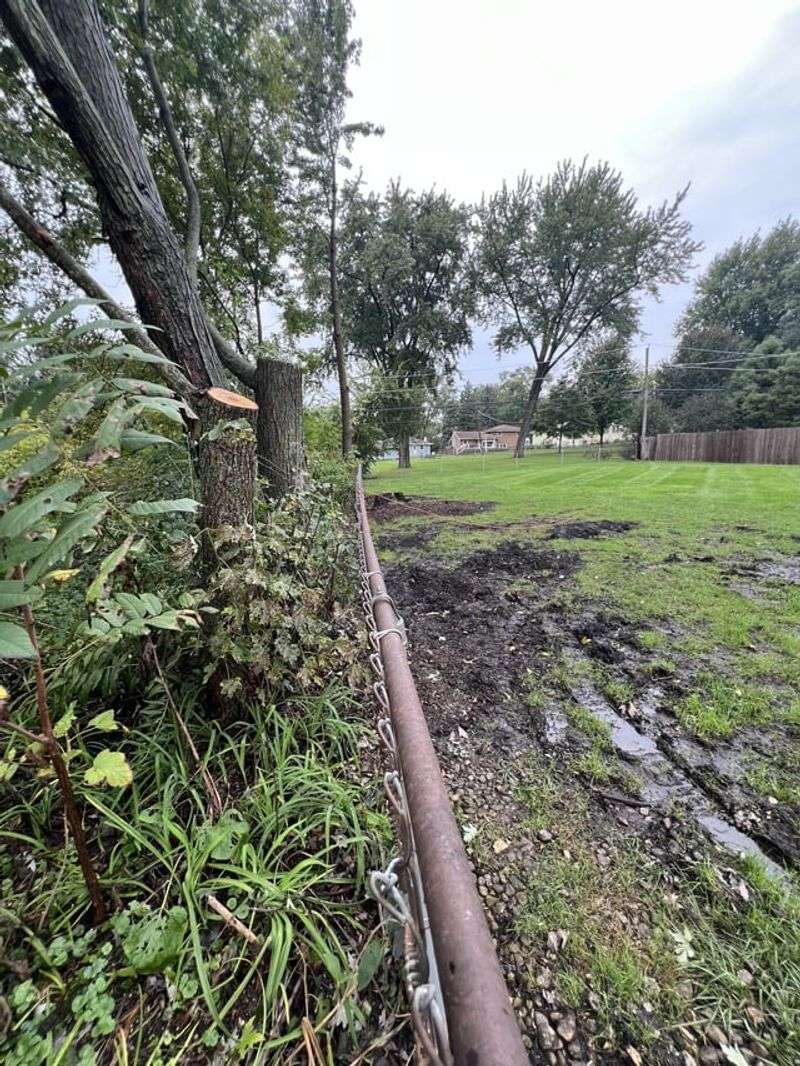
Ever seen a tree that looks like someone sliced it with a giant knife? That straight vertical wall of cut branches has a name.
Arborists call it flat siding, and it causes trouble.
Your right to trim stops where harm to the tree begins. Courts in the state have generally expected self-help trimming to avoid injuring the overall health of the tree.
Cutting so much that the tree declines or falls could leave you responsible for damages.
Roots deserve even more caution. Large structural roots anchor the whole trunk.
Slicing through them for a new driveway or fence can weaken a big tree and make it more likely to tip in a storm.
In my own yard, I’ve noticed trees handle many small cuts far better than a few huge ones. A healthy rule of thumb from tree care groups is to avoid removing more than about a quarter of the living canopy at once.
Hiring a certified arborist is a smart move for anything beyond light pruning. The International Society of Arboriculture lists certified pros you can search by zip code.
A good arborist will cut at proper branch collars, protect key roots, and explain the plan. That paperwork can also help show you acted carefully if questions come up later.
A Leaning or Decaying Boundary Oak Shifts the Liability Picture
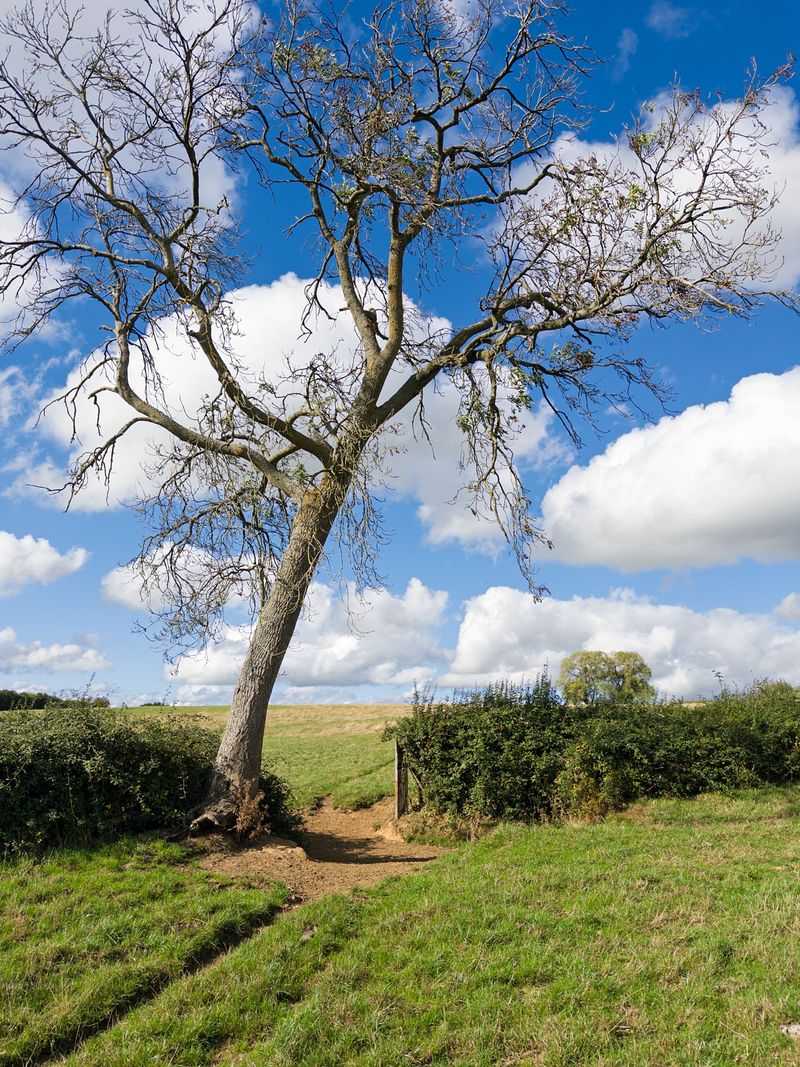
Storms test every tree on the block. When a healthy tree falls in a severe storm, damage is often treated as an act of nature, and each owner usually turns to their own homeowners insurance.
Things change when a tree shows clear warning signs. If an owner knew, or reasonably should have known, that a tree was hazardous and did nothing, they may be held liable for the damage it causes.
Courts call this actual or constructive notice.
Warning signs worth watching include:
Mushrooms or fungal growth at the base, deep cracks, hollow cavities, large bare limbs, and sudden new leaning.
With a shared boundary tree, both owners may share that responsibility. Ignoring a rotting trunk because it feels like the other person’s job rarely works out well.
Don’t make my mistake of waiting until a limb crashes onto the fence. A hazardous tree is one of the strongest reasons to have the removal conversation with your neighbor.
An arborist’s written assessment gives you both facts instead of guesses.
If the danger is urgent, such as a cracked trunk leaning over a home, call a qualified tree service and your insurer quickly. Document everything with dated photos before and after any emergency work.
Roots Cracking Your Driveway Deserve Photos, Letters, and Patience
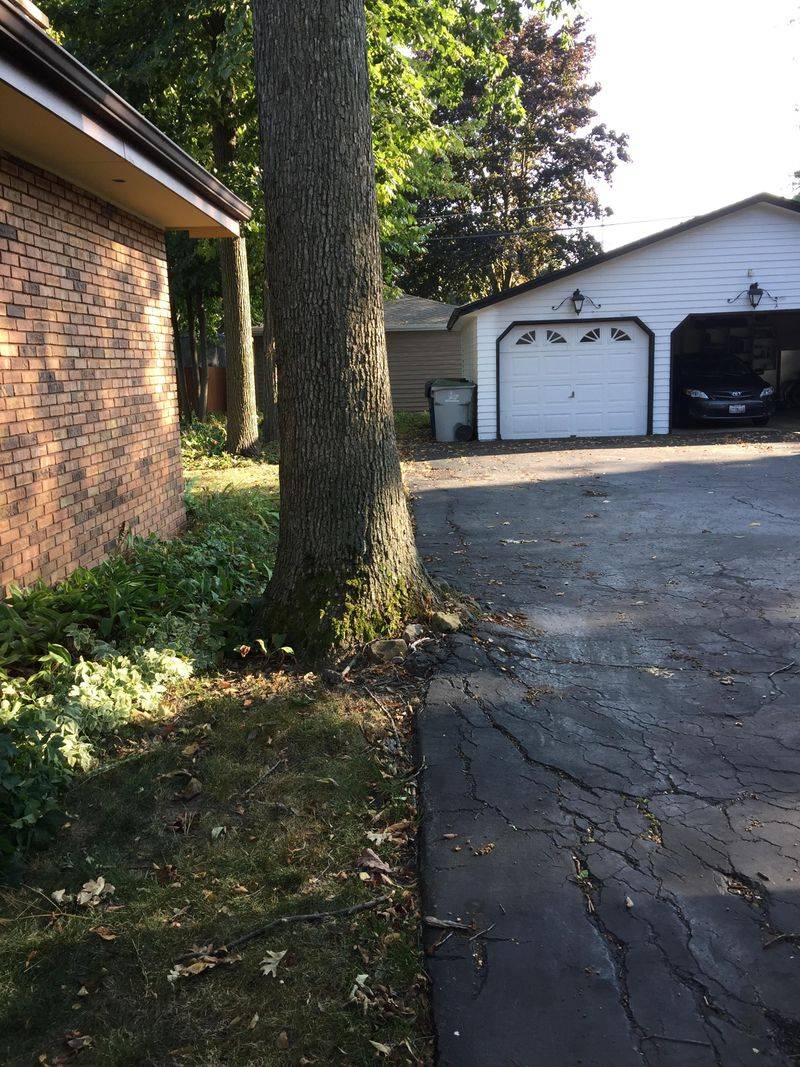
Nothing grabs attention like a driveway slab heaved up two inches by a root. Tree roots can also clog sewer lines, lift sidewalks, and push against foundations.
When a tree keeps causing real damage, more formal steps may come into play. A decayed or unsound tree that harms nearby property could, in some cases, be treated as a private nuisance.
That opens legal paths beyond simple trimming, though each situation depends on its facts.
Paper trails matter a lot here. If you ask me, a calm, dated letter beats a heated chat over the fence.
Include clear photos of the damage and, ideally, a copy of an arborist’s report.
That letter does two jobs. It gives your neighbor a fair chance to respond, and it creates a record showing they were informed about the problem.
Keep copies of repair estimates and receipts, too. Insurance adjusters and attorneys both appreciate tidy records.
Root barriers can help in some yards. These are panels installed in the soil to steer roots downward and away from paving.
An arborist can tell you if one makes sense without harming a shared tree.
Mediation is another option. Many New York counties offer community dispute resolution centers that help neighbors settle problems for little or no cost.
Survey Stakes and Town Permits Come Before Any Saw Hits the Bark
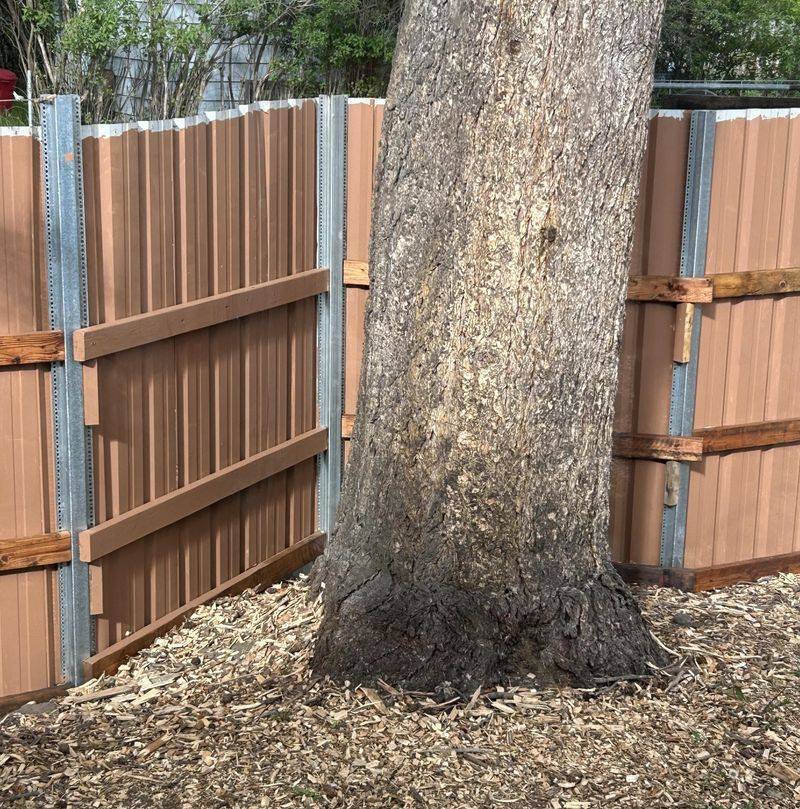
Fences lie more often than you would expect. Many were built a few feet off the true line, so the trunk you think is on your side may not be.
A professional land survey is the surest way to know where the boundary actually runs. Surveyors set stakes or markers, and that small expense can prevent a very large argument.
Check your closing papers first, since you may already have a survey on file.
Local rules add another layer. Many towns, villages, and cities in the state have tree ordinances requiring permits for removing larger trees, certain species, or trees in protected areas.
Rules vary widely from Long Island to the Adirondacks.
Street trees are a special case. In New York City, trees along sidewalks belong to the Parks Department, and residents need a permit before pruning or removing them.
Here’s my practical checklist before any big cut:
Confirm the boundary with a survey. Call your town or city building or planning office about permits.
Talk with your neighbor and get written consent for shared trees. Hire an insured, certified arborist.
My garden taught me that the best tree decisions happen slowly. A few phone calls now protect your yard, your budget, and the neighbor you will still wave to next spring.