8 Reasons Your Peace Lily Keeps Drooping After Watering in Arizona
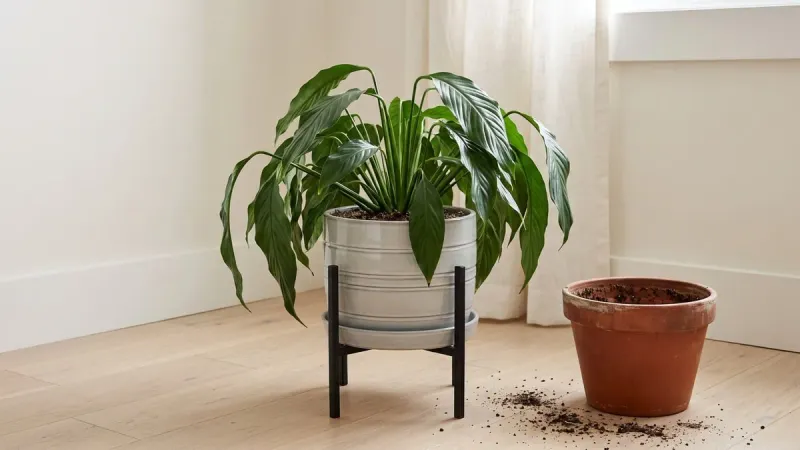
A peace lily can flop over within hours of running dry, then stand back up after a good drink. That quick comeback makes the plant a bit of a drama star.
But a lily that stays limp after watering is sending a different message. Here are eight things to check, starting with the roots, so you can decide whether to water, drain, or look around the room.
Check the Root Zone Before Watering Again
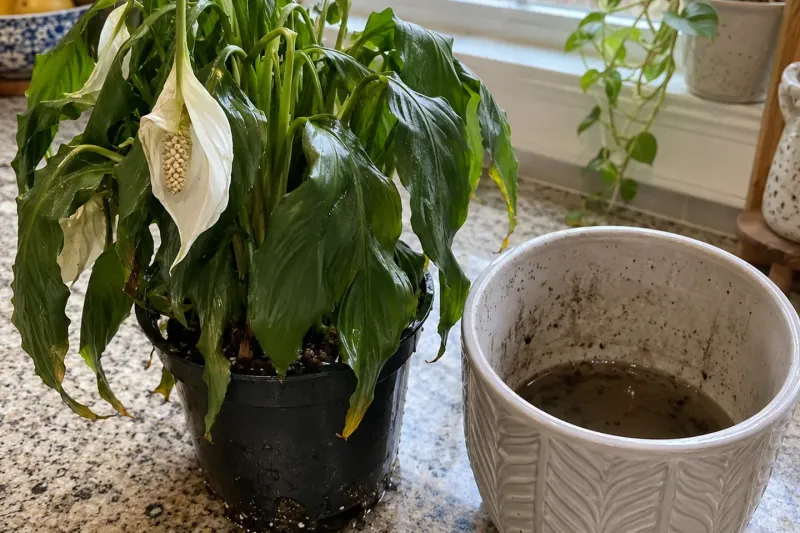
Drooping after watering tells you when the plant wilted, not why. So think of this article as eight things to check rather than eight proven reasons.
Wilting means the leaves are not getting enough water, and Iowa State Extension notes that both too little water and roots stressed by soggy soil can cause it.
That is why the soil comes first. Skip the surface, which can look dry while the middle stays wet, or look damp while the root ball is dry.
Push a finger about one-third of the way into the pot, which matches the approach in University of Arizona indoor plant guidance.
If the soil feels dry at that depth, the plant may need a thorough drink. If it feels wet, hold off, because adding water will not help.
Clemson suggests keeping peace lily soil moist but not soggy, and that is a guide for checking, not a calendar. Arizona is just the backdrop here.
The soil in your pot tells you far more than your zip code.
A Dry Root Ball May Need a Thorough Rewetting
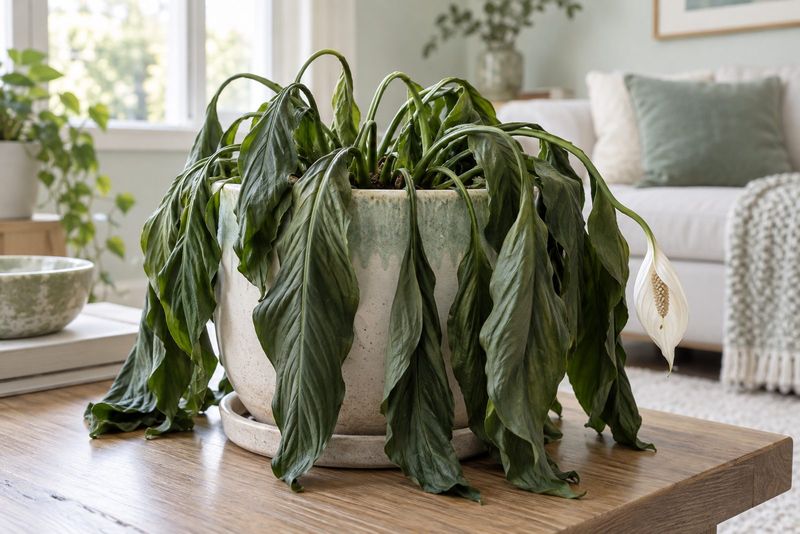
Sometimes a quick splash is not enough. If the root ball was quite dry, a small pour may only wet the top, and the leaves stay limp because the roots never got a real drink.
In that case the plant looks like it was watered, but the root zone is still thirsty.
Check first, though. Feel the soil down in the pot before you decide the plant needs more.
When the root zone is starting to dry, University of Arizona guidance suggests watering thoroughly rather than a little at a time.
Pour slowly and keep going until water flows from the drainage hole. Wait a few minutes, then push a finger into the mix again to see whether it is evenly moist all the way through.
Empty the saucer afterward so the pot does not sit in runoff.
Clemson recommends moist but not soggy soil for peace lilies. A very thirsty plant may perk up within hours, while one that stays limp in damp soil points you toward other checks.
Very Dry Mix Can Let Water Run Past the Roots
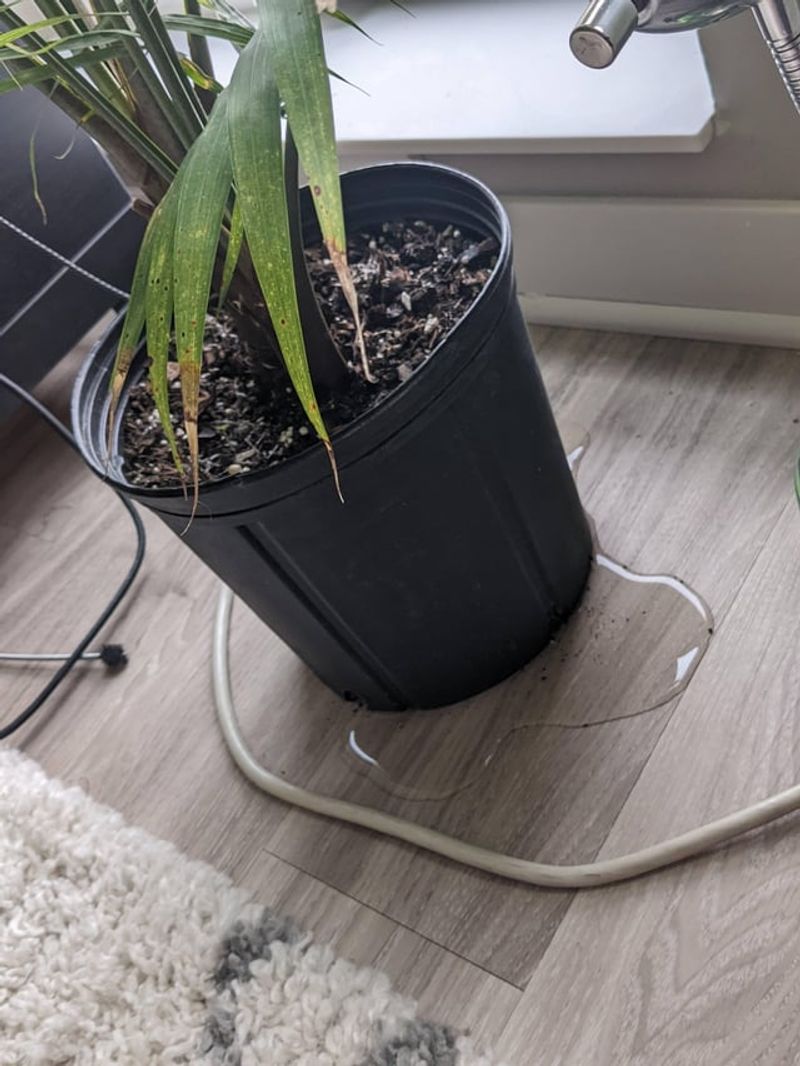
Bone-dry potting mix can act a little like a stiff sponge. Water may slip down the sides of the pot and out the bottom without soaking the root ball.
You see water pour out of the drainage hole and assume the job is done.
That quick runoff does not prove the roots got a drink. Virginia Cooperative Extension explains that very dry mix can repel water, so it runs around the root ball instead of rewetting it.
Treat this as something to investigate, not a diagnosis from drooping alone. It fits best when the soil felt very dry and the pot felt light before you watered.
A mix that has shrunk away from the pot wall is another clue.
Water slowly and thoroughly, giving the mix time to take in moisture. Then check again by feeling the soil at several spots.
You want it evenly moist, with extra water draining out, not a dry core hiding in the middle.
Persistently Wet Soil Can Stress Roots
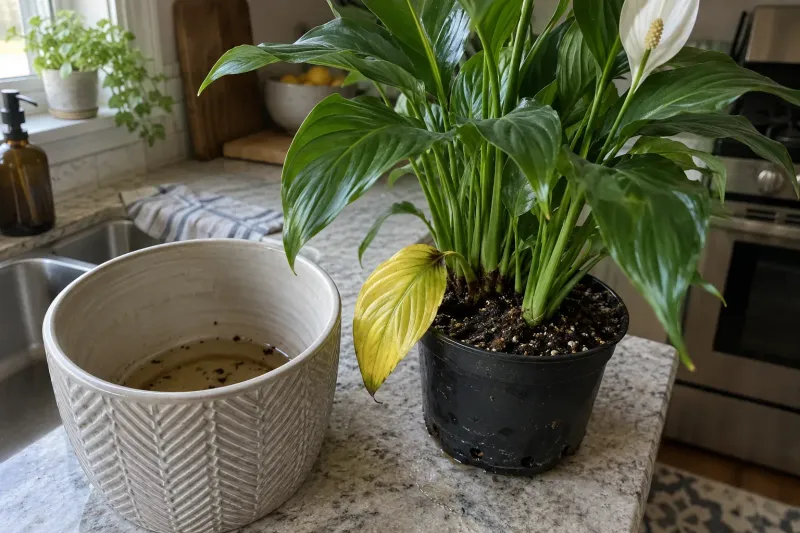
Roots need air as well as water. When soil stays soaked for a long time, oxygen gets squeezed out, and stressed roots cannot move water up to the leaves.
The result can be a wilted plant sitting in wet mix, which looks a lot like thirst.
That is why a droopy lily is not automatically asking for another drink. University of Illinois Extension lists both dry and overly wet conditions as possible reasons.
Appearance alone cannot reliably tell them apart, so the soil check matters.
If the mix feels wet, do not add more water. Look for standing water in the saucer or a decorative outer pot and empty it.
Then check that the pot holding the plant has an open drainage hole.
Guidance from University of Maryland Extension on overwatered plants points the same way. Let the mix dry down and keep the pot out of runoff.
Inspect Roots if Wilt Persists in Damp Soil
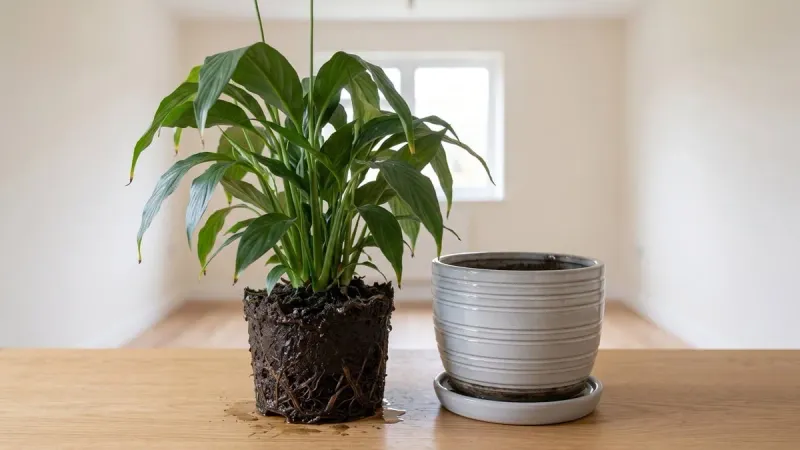
When the plant stays limp and the soil is damp, a peek at the roots can help. It is a way to gather clues, not a first step for every droopy lily.
Slide the plant out of its pot gently and look at what you find.
Healthy roots are generally light-colored and firm. Roots that are dark and soft can point to rot, as described in University of Maryland Extension’s plant problem guide.
A sour smell can add to the picture.
Keep the conclusion modest. Wilting alone does not confirm root rot, and a few dark roots do not mean the whole plant is lost.
If most roots look firm and light, look elsewhere for the cause, such as heat, light, or airflow.
Do not repot just because the plant drooped. If you do inspect, slip the plant back into its pot with the same mix, or fresh mix if the old stuff is soggy, and hold off on watering until the soil dries a bit.
Check for Heat and Harsh Light
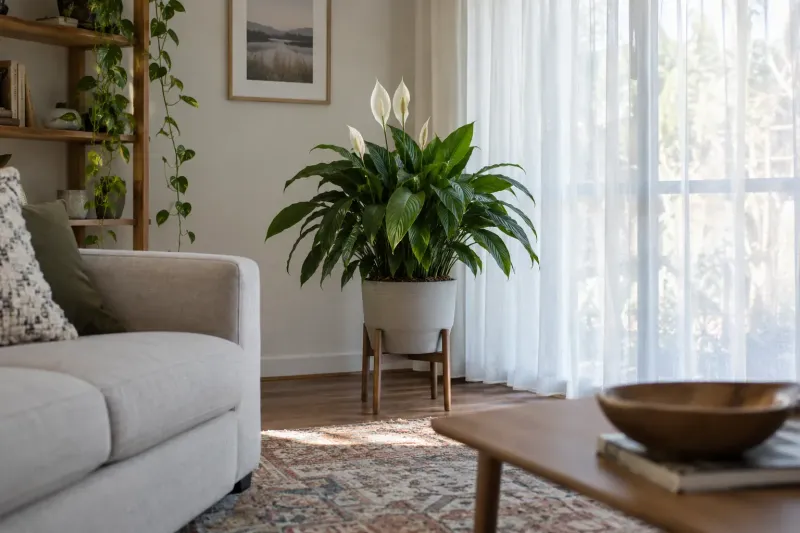
A window that feels pleasant to you can be a furnace for a plant. Glass magnifies afternoon sun, and peace lilies prefer bright, indirect light.
Direct sun and high heat can leave leaves limp even when the mix is moist.
Clemson’s peace lily fact sheet advises avoiding direct sun. UF/IFAS production guidelines note that heat and bright light can cause drooping, particularly in conditions above roughly 80 to 85 degrees Fahrenheit.
Treat this as a possible contributor, not a final answer. Look at where the plant sits at different hours.
Does sun hit the leaves in the afternoon? Does the spot feel hot to your hand?
If so, shift the pot back from the window or to a spot with bright, filtered light. Then watch for a day or two.
Arizona summers are hot, but your actual room, window, and exposure tell you more than the climate outside.
Look for Drafts and Direct Vent Airflow
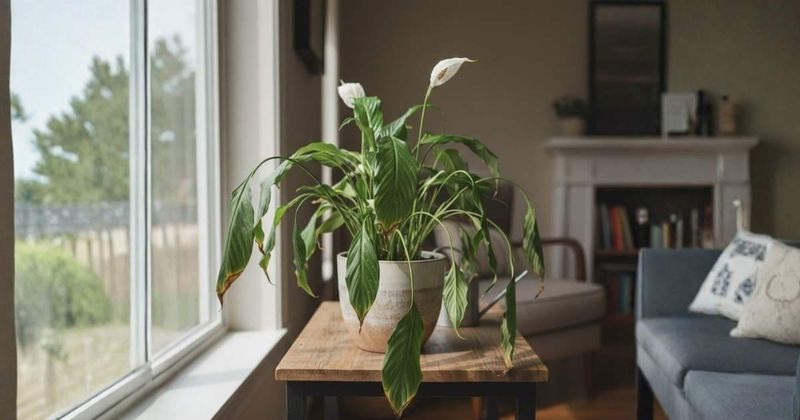
Walk around your home and feel the air near the plant. A stream from an air-conditioning vent, a hot gust from a heater, or a cold draft by a door can all stress a peace lily.
Plants cannot step aside, so you have to do it for them.
Clemson advises protecting peace lilies from hot or cold drafts and air-conditioning vents. That makes airflow a sensible check when the soil moisture seems fine and the plant still looks tired.
Hold your hand near the leaves for a moment. Do you feel steady moving air?
If so, move the pot a few feet away to a calmer spot with similar light, and then observe over the next few days.
Dry indoor air is common in desert homes, but on its own it is not a proven reason for a plant to stay wilted after watering. Look for other signs, such as crispy leaf tips, before blaming humidity.
Review the Pot and Treat Water Quality as a Related Clue
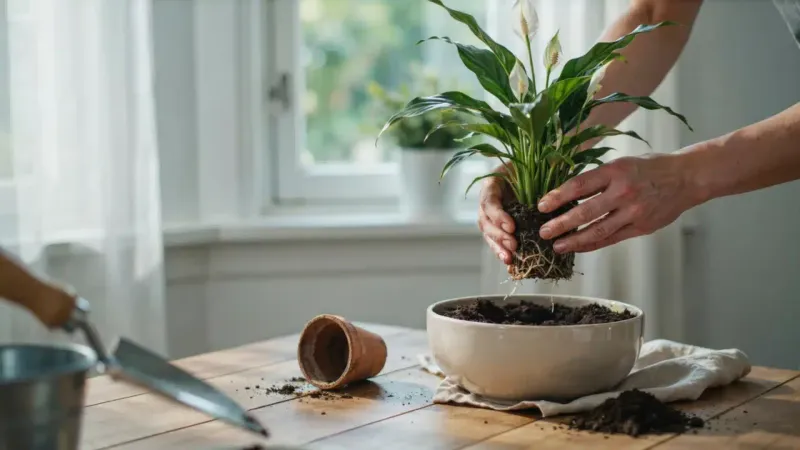
The pot itself can shape how wet the roots stay. An oversized container holds extra mix that stays damp long after the roots have used what they can.
Clemson cautions that a pot that is too big can stay too wet.
Peace lilies can tolerate being a bit snug. If roots grow through the drainage holes or circle the soil surface, a modestly larger pot may be worth considering.
A droopy plant alone is not a reason to repot.
Water quality is a separate, qualified clue. Tap water varies across the Southwest, and University of Arizona guidance warns that salts can build up in containers.
That buildup is more clearly tied to brown leaf tips or edges than to persistent drooping.
So look at the leaf tips before you blame the faucet. Whatever you find, feel the soil and confirm the drainage before you water again.
The root zone usually has the answer.