Should You Keep Your Christmas Cactus In The Dark To Make It Bloom In Georgia?
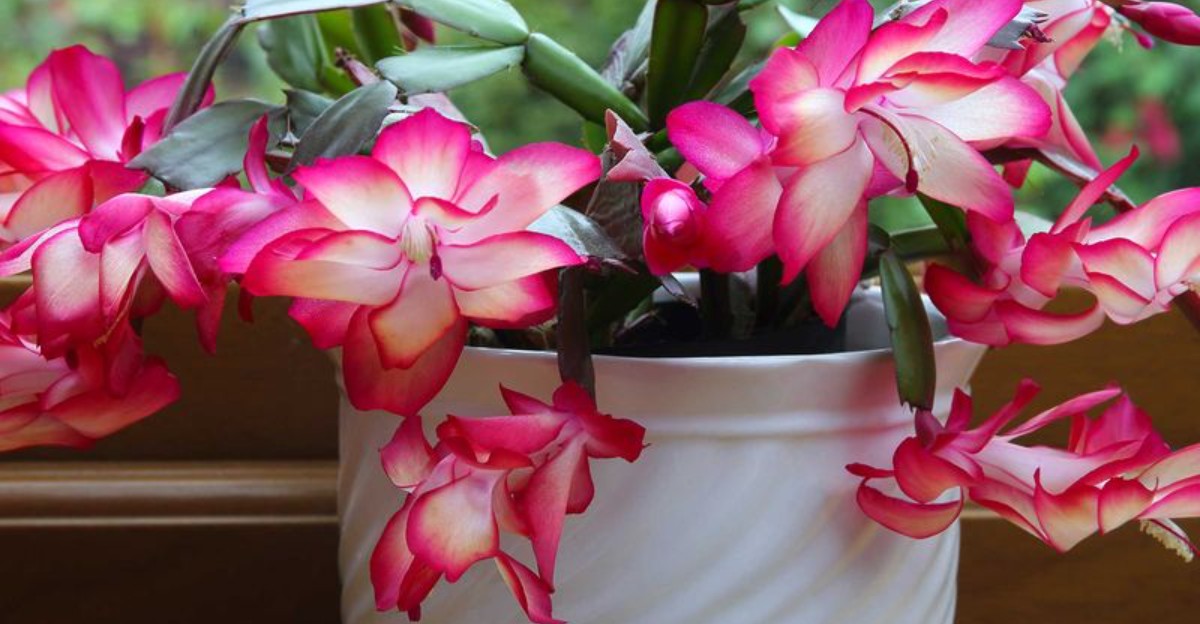
Even a street light shining through your window at night can be enough to cancel a whole season of flowers. Yes, a plain old porch bulb can do that.
The plant behind this drama grows wild on tree branches in cool, humid mountain forests. It counts the hours of darkness the way a kid counts days until a holiday.
I love that a houseplant can be that picky and that clever at the same time.
Here in Georgia, our long, warm autumns add an extra twist. Nights can stay mild well into October, and that matters more than most folks realize.
You might be doing everything right with water and still end up with green stems and zero buds.
Could a closet, a cardboard box, or a dark spare room really hold the answer? The truth is simpler and a little more surprising than the old advice suggests.
1. Those Christmas Cactus Buds Are Waiting On A Signal You Might Be Missing
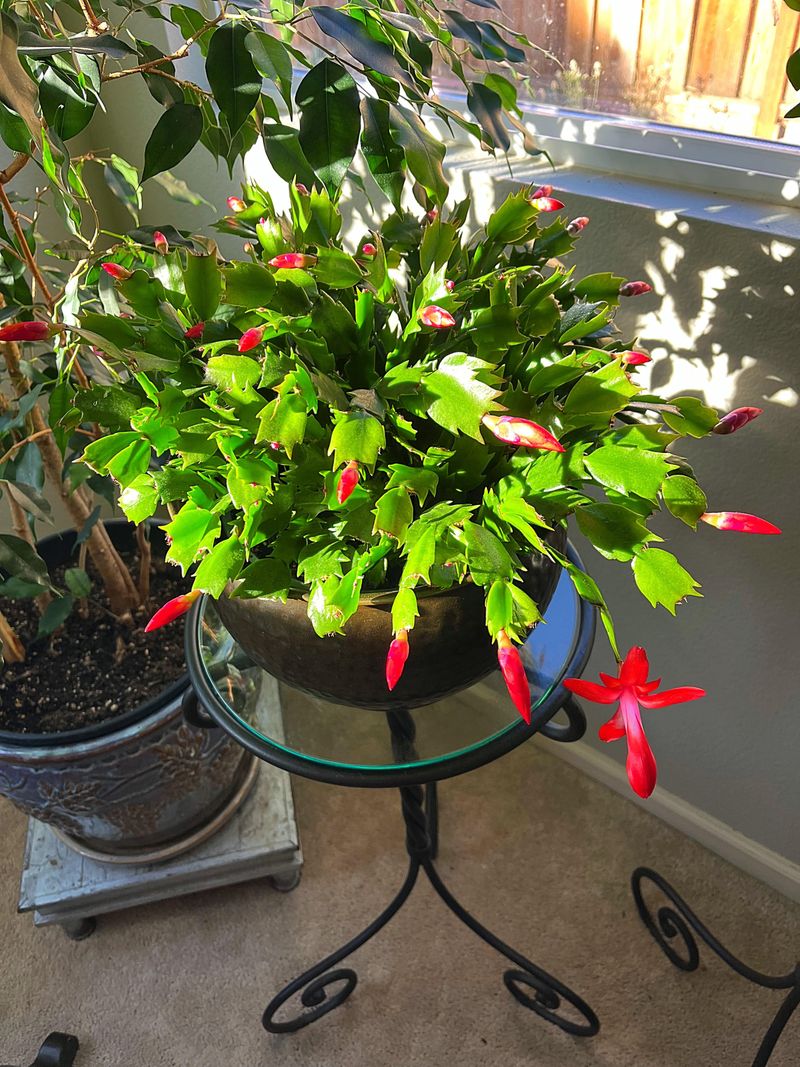
Darkness really does matter, and science backs it up. Christmas cactus is what growers call a short-day plant, which means it sets flower buds when nights grow long.
University extension experts explain that the plant needs roughly 12 to 14 hours of uninterrupted darkness each night. That routine usually needs to last about six weeks before buds show up.
In nature, autumn handles this job on its own.
Indoors, though, our homes are full of light. Lamps, TV screens, ceiling fixtures, and outdoor security lights can all break that dark stretch.
Even a short burst of light in the middle of the night can reset the plant’s internal clock.
So the honest answer to the big question is yes, but with a catch. You do not need to lock your plant in total darkness all day.
It still needs bright light during daytime hours to make energy for those flowers.
What it really wants is a steady, dependable night. Think of it as a bedtime routine rather than a cave.
Once you see it that way, the whole process feels a lot less mysterious and a lot more doable for any home gardener.
2. Give Your Cactus A Dark Bedroom Routine Starting In Mid-September
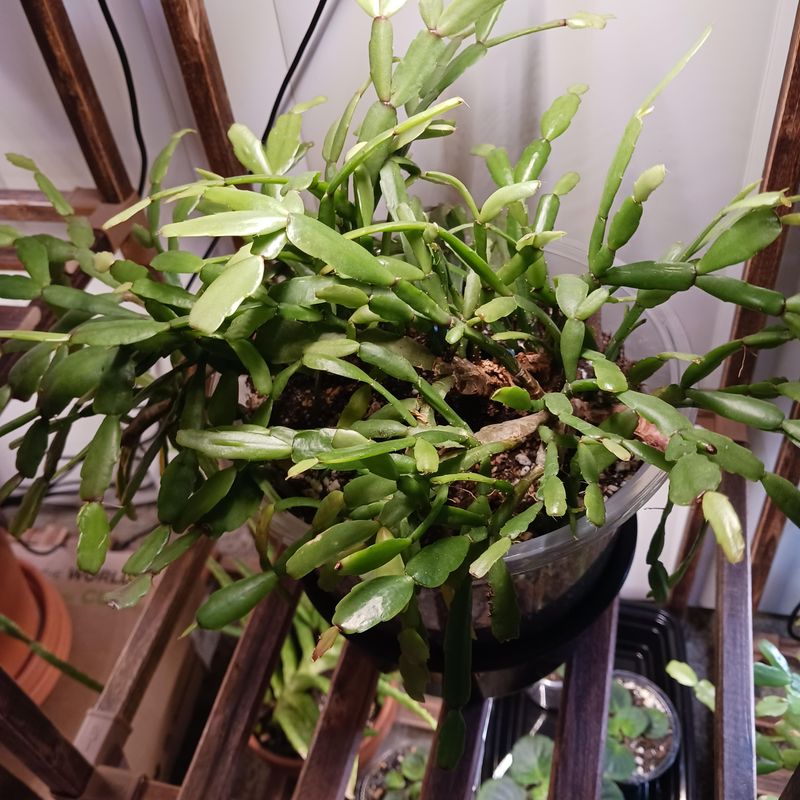
Mid-September is your starting line. University of Georgia Extension guidance points to that time for beginning long, dark nights that continue for at least six weeks.
A spare bedroom that nobody uses after sunset works beautifully. So does a closet, as long as you move the plant back to a bright spot in the morning.
Some folks cover the pot with a large cardboard box from about 5 p.m. to 8 a.m.
Here is a simple daily plan you can follow:
Move the plant into darkness around early evening. Bring it back to a bright window the next morning.
Repeat this every single day without skipping.
Consistency is the secret ingredient. Missing a few nights here and there can slow bud formation or stop it outright.
Setting a phone reminder helps a lot, especially during busy fall weeks.
Once you spot small buds at the tips of the stem segments, you can relax the routine. At that point the plant has made its decision.
Keep it in a bright spot with normal household light, and let those buds swell into color over the next several weeks.
3. Cool Fall Nights Can Trigger Christmas Cactus Flowers Even Without A Closet
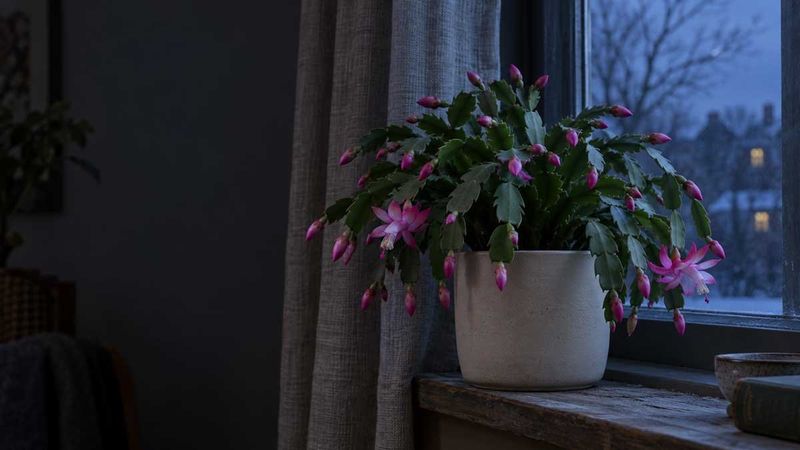
Temperature is the sneaky partner in this whole story. Many gardeners focus only on darkness and overlook how much cool nights help.
Extension sources note that night temperatures between about 50 and 55 degrees Fahrenheit can push a Christmas cactus to set buds regardless of day length. When nights hover around 55 degrees, flowers may form within roughly five to six weeks.
Warmer nights above about 65 degrees often stall the process.
That is where life in Georgia gets interesting. North Georgia mountain towns may hit those cool numbers in late September or October.
Coastal and south Georgia homes can stay warm much longer, so darkness matters more there.
Many local gardeners simply leave their plants outside on a shaded porch through early fall. Natural nights are dark and cool, which handles both triggers at once.
Just keep the plant away from porch lights and street lamps.
Watch the forecast closely, though. Bring the plant indoors before nights drop below about 45 to 50 degrees.
Frost can badly damage those tender, fleshy stems. A cool, unheated sunroom can also work nicely once outdoor nights get too chilly.
4. Bright Indirect Window Light Still Powers Those Holiday Blooms
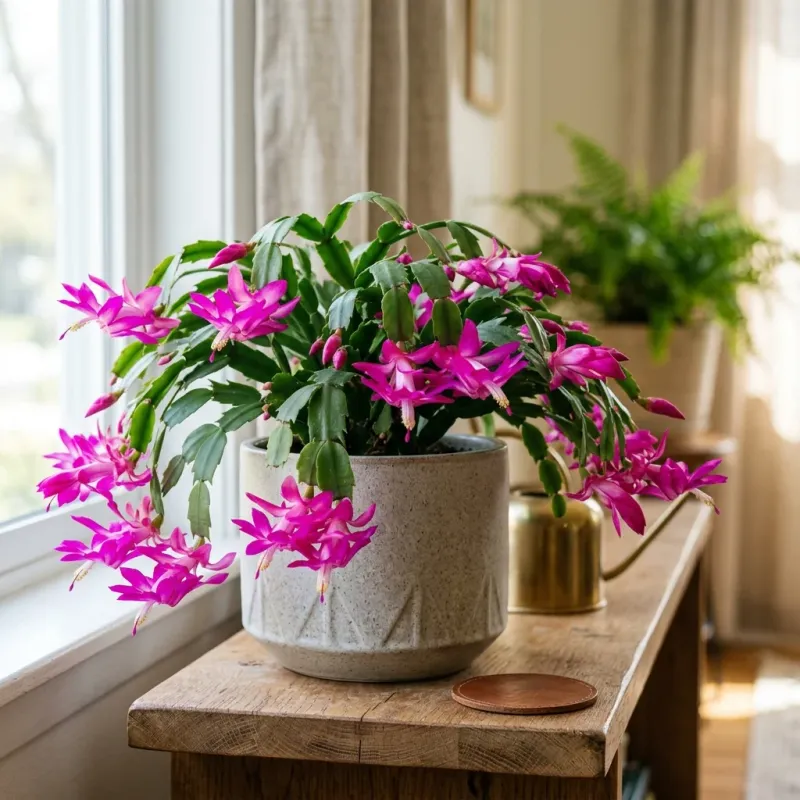
Funny enough, a plant that loves long nights also craves good daylight. Christmas cactus is not a desert plant at all.
It grows as an epiphyte on trees in Brazilian forests, where filtered sunlight drifts through the leaves above.
That background explains a lot about its needs. Harsh afternoon sun can scorch or redden the stem segments.
Too little light leaves the plant weak and short on energy for flowering.
An east-facing window is often the sweet spot. Morning sun is gentle, and the rest of the day stays bright.
A west window with a sheer curtain can work too.
During the dark-treatment weeks, daytime light still counts. Your plant uses those bright hours to build the food it needs for buds.
A gloomy corner all day and all night will not give you the results you want.
Personally, I like rotating the pot a quarter turn every week or so. That keeps growth even and stops the plant from leaning toward the glass.
Just stop rotating once buds appear, since sudden changes can sometimes cause them to drop.
5. Easing Up On Water And Fertilizer Helps Your Cactus Focus On Buds
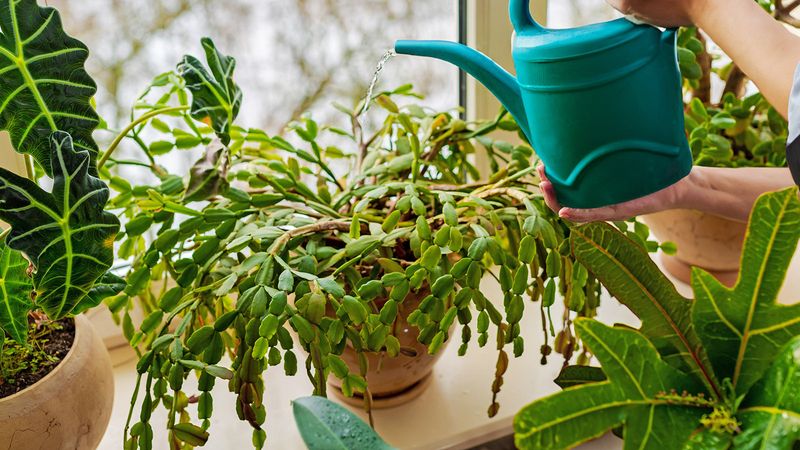
Ever notice how a plant can look lush yet refuse to flower? Too much feeding late in the season is often the culprit.
During spring and summer, a balanced houseplant fertilizer at half strength about once a month supports healthy growth. As late summer turns to fall, extension experts suggest stopping fertilizer.
This nudges the plant to shift energy from new stems to flower buds.
Watering changes a bit in fall too. Let the top inch or so of soil dry before you water again.
Soggy soil invites root rot, which is one of the most common problems with this plant.
Always use a pot with drainage holes. Empty the saucer after watering so the roots are not sitting in a puddle.
A loose, well-draining mix made for succulents or epiphytes keeps roots happy.
Once buds form, keep the soil lightly and evenly moist. Swings between bone dry and dripping wet can cause buds to fall off.
A finger test every few days is the easiest way to stay on track without guessing.
6. Pointy Or Rounded Leaf Edges Reveal Which Holiday Cactus You Own
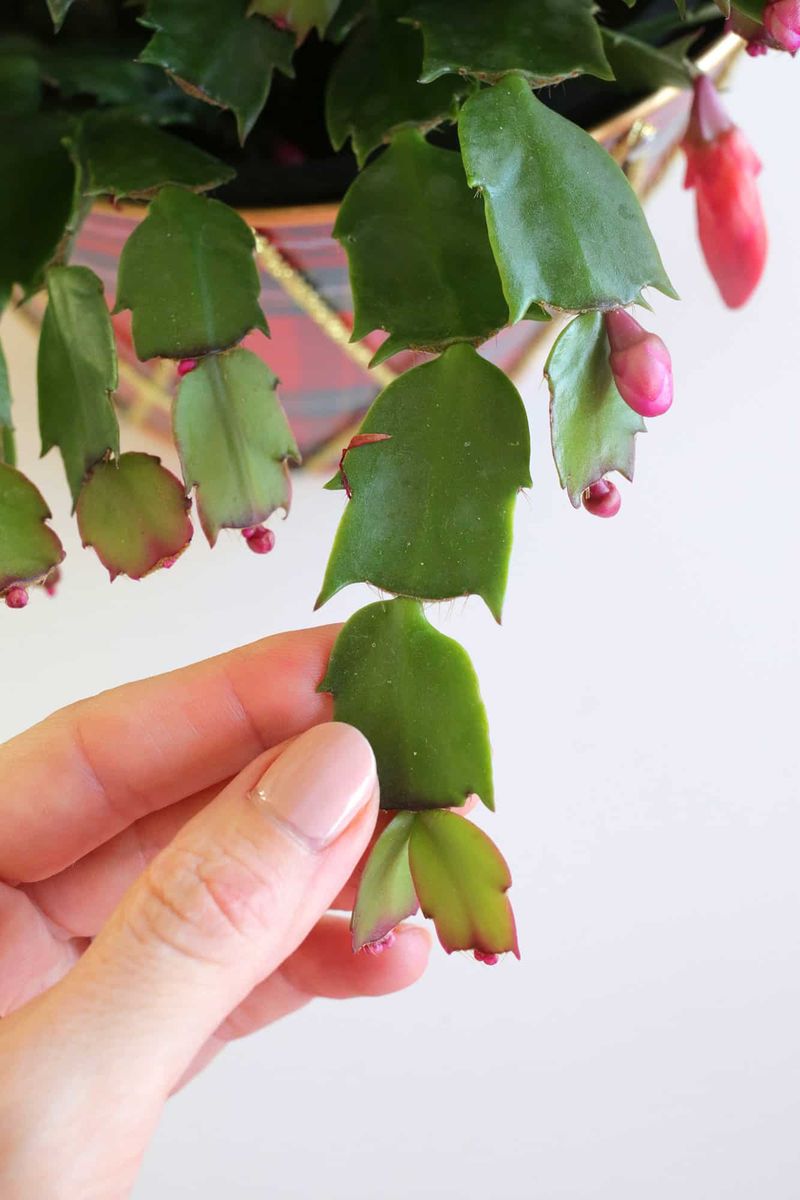
Plot twist time. The plant on your windowsill might not be a Christmas cactus at all.
Many holiday cacti sold in stores are actually Thanksgiving cactus, Schlumbergera truncata. Look closely at the stem segments.
Thanksgiving types have sharp, claw-like points along the edges, while true Christmas cactus has smoother, rounded scallops.
Flower timing differs too. Thanksgiving cactus often blooms from November into December.
Christmas cactus usually shows color closer to the holidays or a little later.
There is also an Easter cactus, which belongs to a different group. It blooms in spring and has its own care quirks, so the fall darkness trick does not fit it the same way.
For Thanksgiving and Christmas types, the same long-night and cool-temperature routine works. Thanksgiving cactus simply responds a bit earlier, so you may want to start dark nights around early September.
Knowing which plant you have helps you set realistic expectations.
I find it oddly satisfying to check those leaf edges. It feels like solving a tiny plant mystery right at the kitchen table.
7. Keep Those Christmas Cactus Buds From Dropping After All Your Hard Work
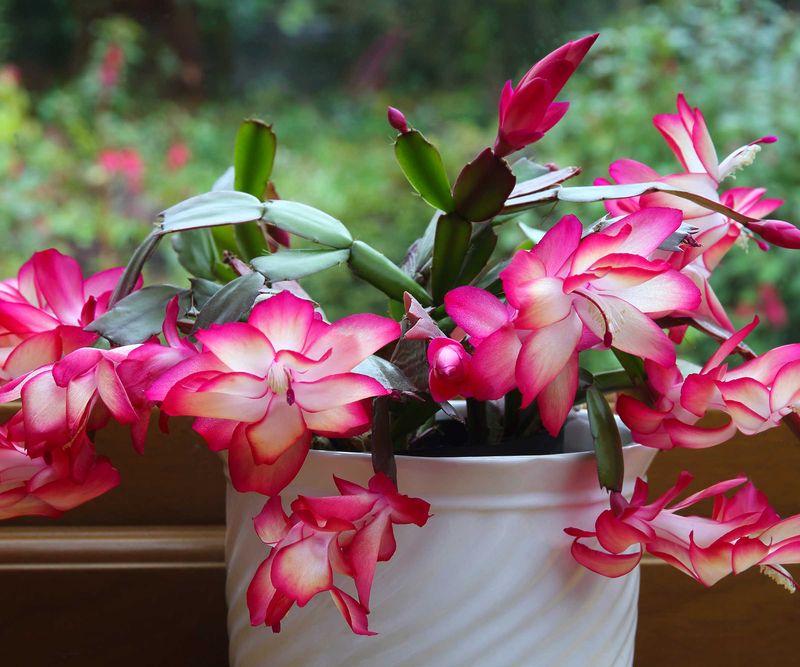
Few things sting like watching plump buds tumble onto the floor. Bud drop is common, and it usually comes from sudden changes.
Once buds appear, try to leave the plant in one spot. Moving it from a cool porch to a warm, dry living room can shock it.
Heater vents, drafty doors, and fireplaces are also trouble zones.
Dry indoor air in winter can add stress too. Grouping plants together or setting the pot on a tray of pebbles and water can raise humidity a little.
Keep the pot itself above the waterline.
Watering swings matter as well. Steady, even moisture helps buds stay attached and open fully.
After flowering wraps up, give your plant a short rest with slightly less water. Late spring is a fine time to prune a few segments to encourage fuller growth.
Those cuttings root easily, so you can share them with friends.
My favorite takeaway is this: darkness helps, but rhythm is what truly counts. Long nights, cool temperatures, bright days, and gentle care work together.
Get that rhythm right, and your plant can reward you with color for many holidays ahead.