What To Do About White Mold On Houseplant Soil In California Homes
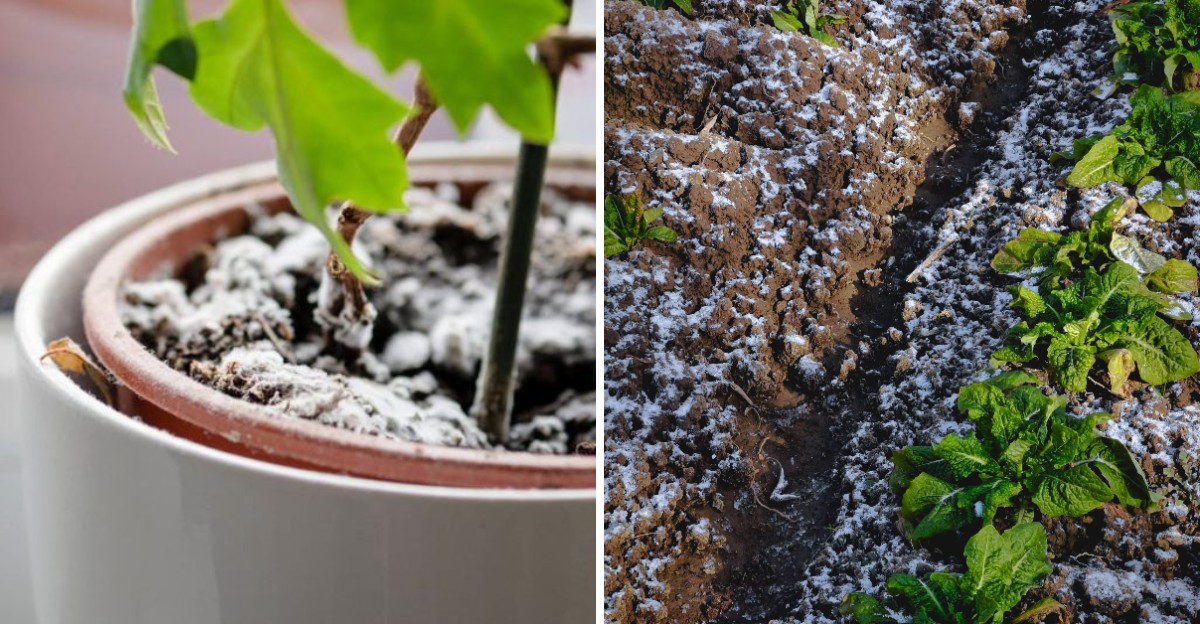
Crunchy, chalky white crust on top of potting mix is usually mineral salt, not fungus. Hard tap water across Southern California, much of it piped from the Colorado River, leaves those minerals behind as pots dry.
Fluffy, cottony fuzz is a different story, usually a harmless fungus feeding on old bark and peat. A thick mat can still shed water, sending moisture down the sides of the pot instead of into the roots.
Here’s my two cents: a tiny clip-on fan does more for damp plant shelves than any spice rack remedy. You might notice the fuzz fading within a week or two once the surface dries between drinks.
Plenty of houseplant owners panic and toss a perfectly healthy plant at the first sign of white. A few clues hiding in texture, light, and the watering schedule could reveal what your pot is quietly trying to say.
That Cottony Fuzz On Your Potting Mix Has A Surprising Job
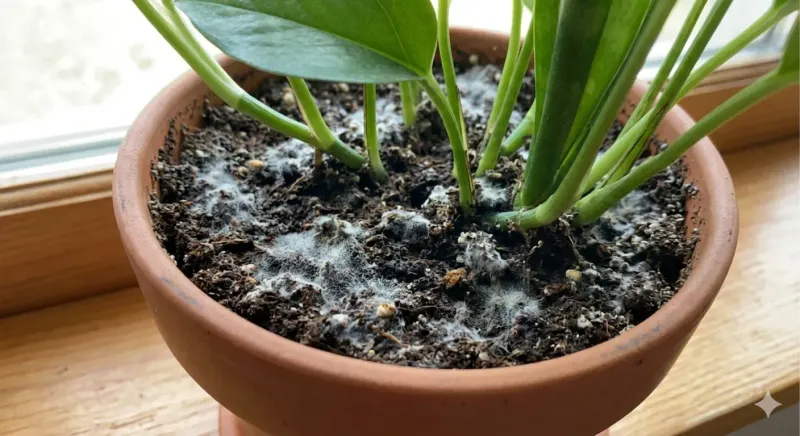
Mushroom lovers would recognize this stuff right away. The white threads you see are usually mycelium from a saprophytic fungus, a type that feeds on decaying organic matter.
Potting mixes are packed with that kind of food. Peat moss, coco coir, composted bark, and wood fines all slowly break down over time. The fungus simply moves in to help with the job, much like it does on a forest floor.
University of California Integrated Pest Management experts note that these soil fungi are common in containers and rarely harm healthy plants. They work on decaying material, not living roots. That is a big relief if you feared your favorite monstera was under attack.
Still, the fuzz is not something to ignore forever. A thick mat can form a crust that sheds water, so moisture runs down the sides of the pot instead of soaking in evenly. It can also bother people with mold sensitivities, since any fungus may release spores indoors.
So treat it as a clue, not a crisis. Your plant is probably fine for now. The real question is why the surface stays damp enough for the fungus to feel at home, and that answer usually leads straight to your watering can.
Scrape Off The White Fuzz And Let The Top Soil Dry
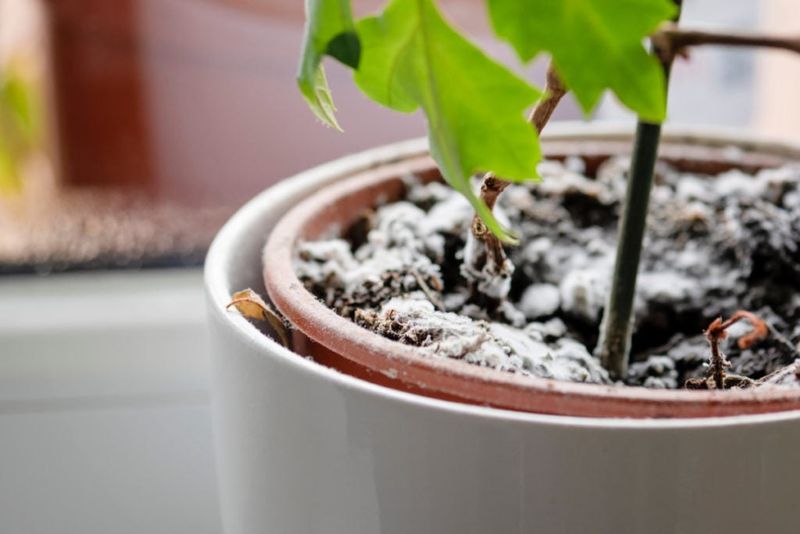
Grab a spoon from the kitchen drawer, because this fix is refreshingly low-tech. Start by pausing your watering for a few days so the surface can dry out a bit.
Once the top looks lighter in color, gently scoop away the moldy layer. Removing about a quarter inch to half an inch of soil usually does the trick. Work slowly so you do not tear up shallow roots near the surface.
A few quick tips make the job cleaner:
– Take the pot outside or onto a balcony if you can, so spores stay out of your living room.
– Bag the scraped soil and put it in the trash rather than mixing it back into other pots.
– Wear a simple mask if you have allergies or asthma.
After scraping, top the pot with fresh, sterile potting mix. Bagged mix is heat-treated or cleaner than old garden soil, so it gives the surface a fresh start.
Then let the plant settle in before you water again. I like to wait until the top inch feels dry when I poke a finger in. This one simple routine clears up most cases within a week or two.
Your Watering Can Is Probably The Real Culprit
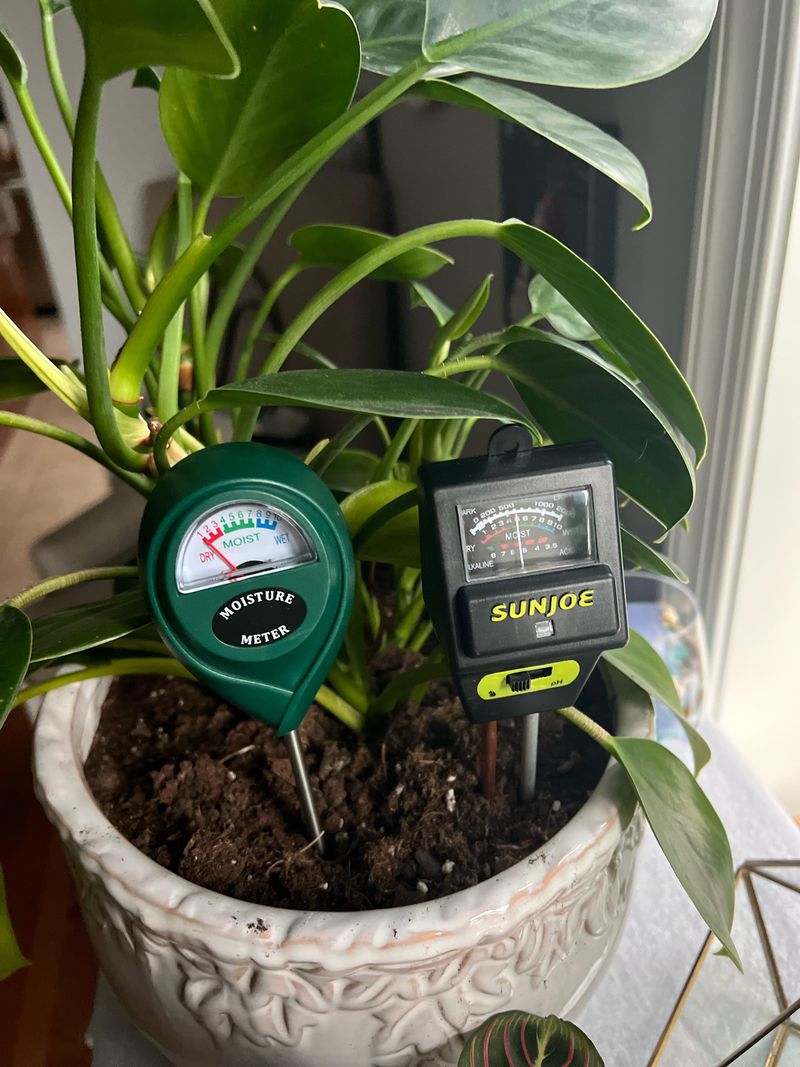
Overwatering is the number one reason mold shows up on indoor soil. Fungi need steady moisture, and a pot that never dries gives them exactly that.
Many of us water on a fixed schedule, like every Sunday. Plants do not read calendars, though. Their thirst changes with light, temperature, pot size, and season.
Try the finger test before every watering. Push a finger into the soil up to your second knuckle. If it still feels cool and damp, wait a few more days.
Season matters a lot here. Indoor plants grow slower in winter, when days are short, so they drink far less. Summer heat in places like Fresno or Riverside can dry pots much faster than the cool, foggy air in San Francisco.
When you do water, water thoroughly. Let it run out the drainage holes, then dump any extra from the saucer within about 30 minutes. A soggy saucer keeps the lower roots wet and can lead to root rot, which is a much bigger problem than surface fuzz.
Fun tip: a cheap moisture meter can help beginners learn how their pots feel when they are truly ready for a drink.
Drainage Holes And Empty Saucers Make A Huge Difference
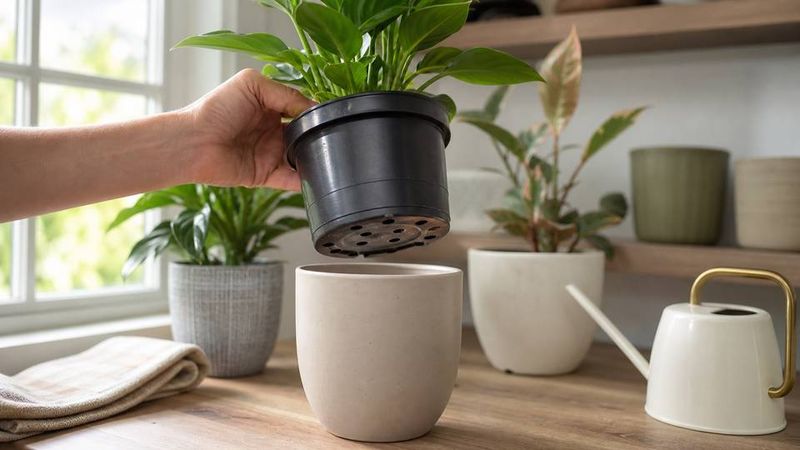
Cute pots can be sneaky troublemakers. Plenty of decorative ceramic containers sold in stores have no drainage holes at all.
Without an escape route, water pools at the bottom. The whole root ball stays wet, and the soil surface stays damp for days. That is a perfect setup for mold, fungus gnats, and root rot.
An easy workaround is the pot-in-a-pot method. Keep your plant in a plain plastic nursery pot with holes. Then set that inside the pretty pot, which becomes a cachepot.
Here is how to make it work smoothly:
– Lift the inner pot out to water it in the sink.
– Let it drain fully before sliding it back in.
– Check the bottom of the cachepot weekly for sneaky puddles.
Skip the old trick of adding gravel to the bottom of a pot. Research shared by university extension programs shows gravel actually raises the wet zone inside the container instead of improving drainage.
Pot size matters too. A plant sitting in a container far too big for its roots holds extra wet soil that roots cannot use. Moving up just one or two inches in diameter at repotting time is a safer bet.
Dim Corners And Still Air Keep Houseplant Soil Damp
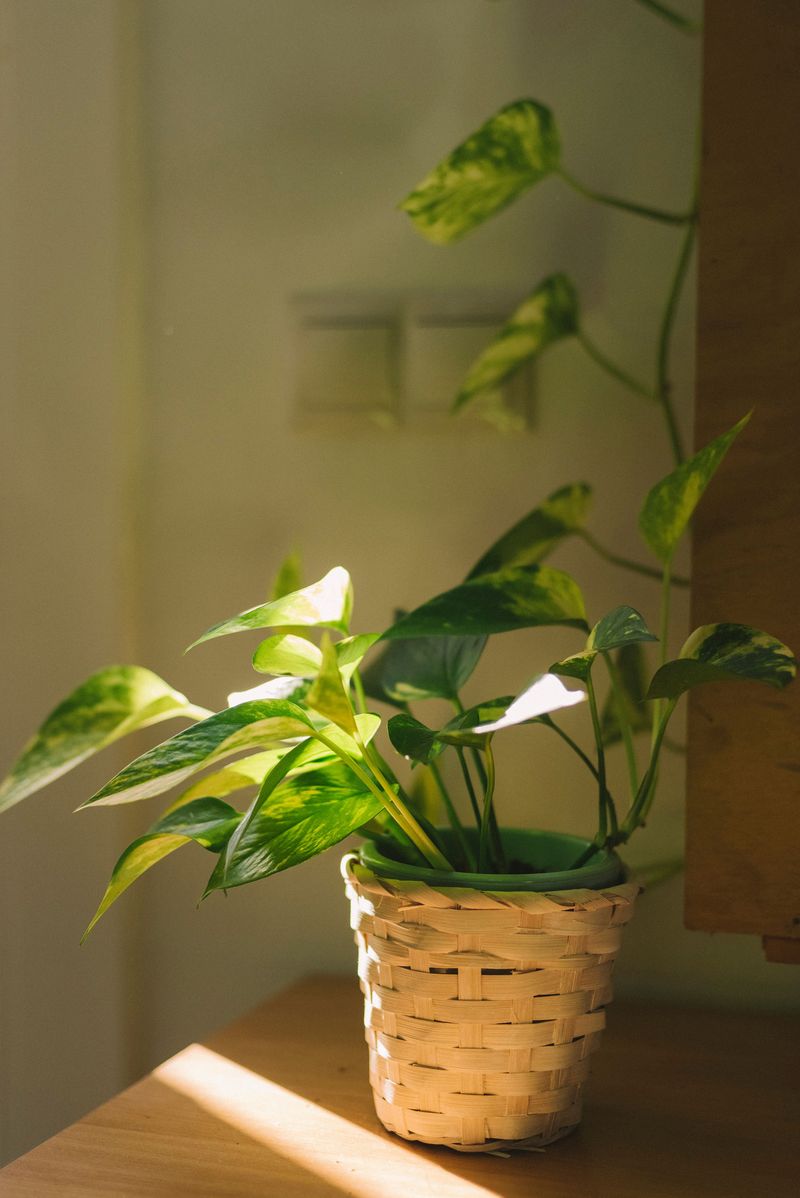
Light and air are the quiet helpers in this story. A plant tucked in a shady hallway uses water slowly, so its soil stays wet much longer.
Moving a pot closer to a bright window can change things quickly. More light means the plant grows more actively and pulls moisture from the soil faster. Just ease sensitive plants into stronger light so their leaves do not scorch.
Airflow matters as well. Crowded plant shelves, closed bathrooms, and stuffy corners trap humid air around the pots. Mold loves that calm, moist pocket.
Simple changes help a lot:
– Space pots a few inches apart.
– Run a small fan on low for a few hours a day.
– Crack a window on mild days.
California homes vary widely. Coastal apartments in places like Santa Cruz can stay humid for long stretches, especially during spring and early summer fog. Inland homes with air conditioning tend to be drier, though a humidifier running nonstop next to your plants can create the same damp issue.
I noticed my own shelf problems faded once I added a tiny clip fan. Moving air is cheap, quiet, and surprisingly effective.
Crusty White Salt Or Leaf Mildew Is A Different Story
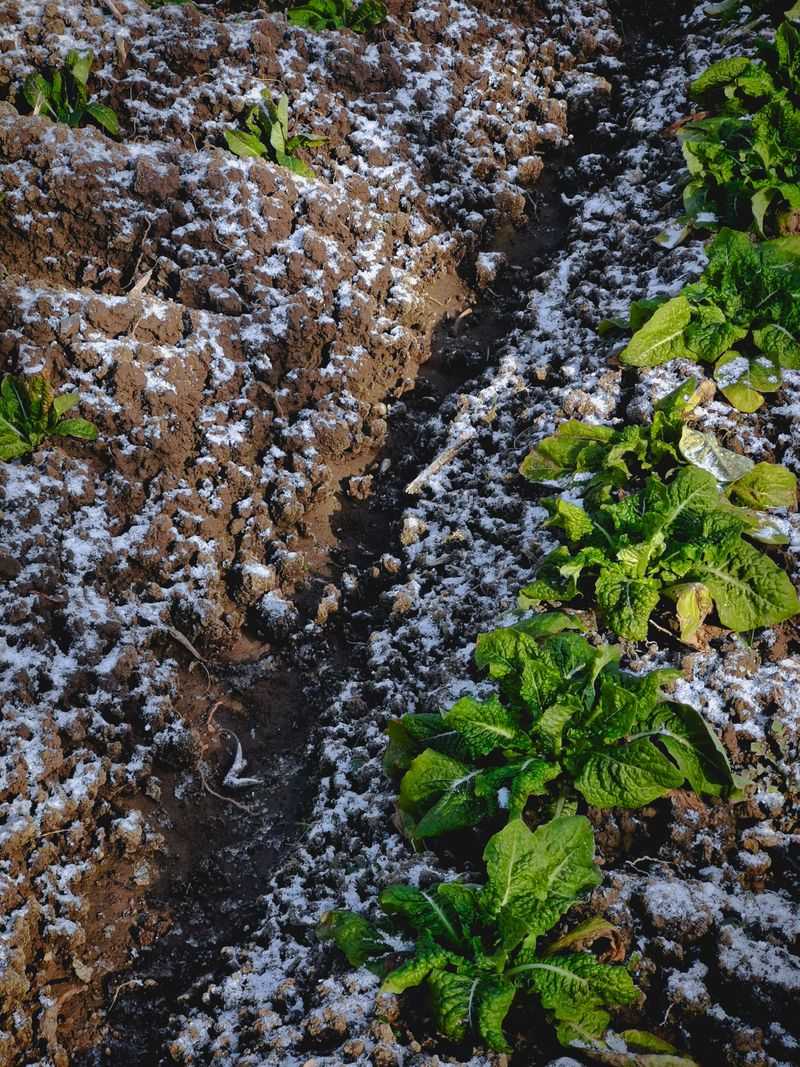
Not every white patch is fungus, so take a close look first. The texture tells you a lot.
Fluffy, cottony, or web-like growth is usually soil fungus. Dry, crunchy, chalky crust is more likely mineral salts. You often see salts on the soil surface and around the rim of terracotta pots.
California tap water is often hard, especially in Southern California, where much of it comes from the Colorado River. Those dissolved minerals, plus leftover fertilizer, build up as water evaporates. Too much salt can burn root tips and cause brown leaf edges.
To fix salt buildup, flush the pot. Slowly run plenty of water through the soil so it pours out the bottom, which carries extra salts away. Using filtered water or rainwater and feeding less often also helps.
Then there is powdery mildew. This shows up as a white, dusty coating on leaves and stems, not on the soil. It is a true plant disease that can weaken growth.
For mildew, remove badly affected leaves, improve airflow, and keep foliage dry. Scraping the soil will not help this one, so knowing which white you have saves time and worry.
A Light Dusting Of Cinnamon Might Help, Within Reason
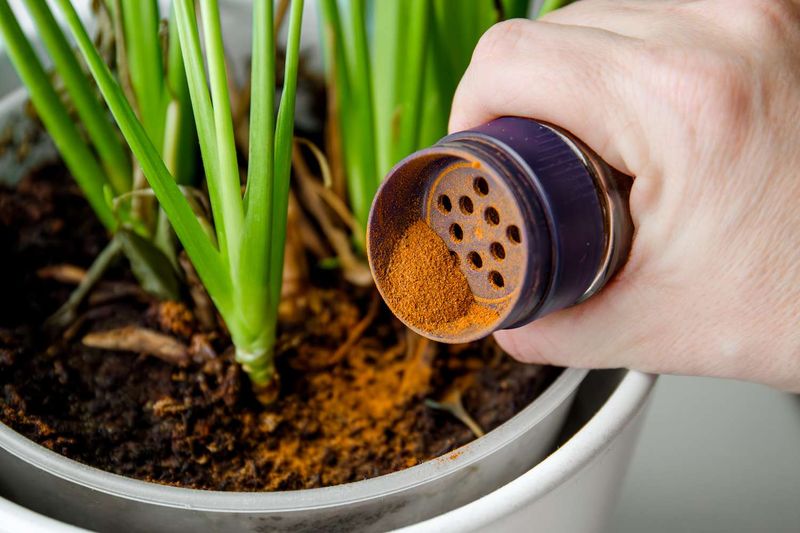
Your spice rack has a fan favorite among houseplant owners. Ground cinnamon contains cinnamaldehyde, a compound with known antifungal properties in lab studies.
Many gardeners sprinkle a thin layer of cinnamon over the soil after scraping away mold. It is cheap, smells nice, and is easy to try. Some people also dust it on fresh cuttings.
Here is the honest part, though. Evidence for cinnamon working as a reliable fix on houseplant soil is mostly anecdotal. Extension experts focus on drying the soil and better watering, not kitchen remedies.
So think of cinnamon as a small bonus, not the main cure. If the soil stays soggy, the fuzz will likely return no matter how much spice you add.
A few tips if you try it:
– Use a light dusting, not a thick blanket.
– Keep it off leaves.
– Reapply only after scraping or repotting.
Skip harsh home mixes like strong bleach on the soil, since they can harm roots. Chemical fungicides are rarely needed for this harmless surface fungus. When it comes to soil mold, patience and better habits beat fancy treatments almost every time.