7 Ways Holiday Lights Can Damage Arizona Palms and Desert Trees
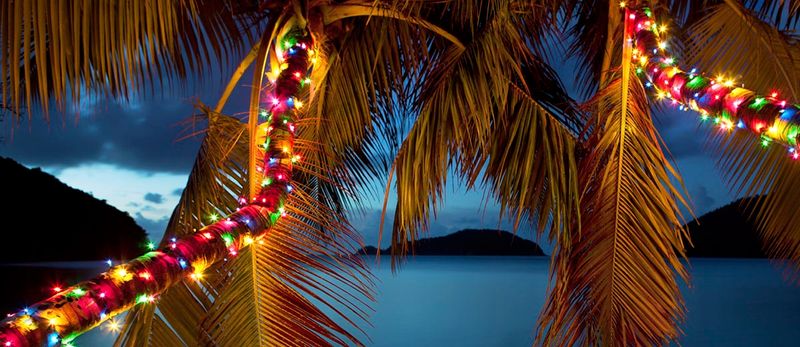
A single forgotten wire can stay buried inside a growing trunk for years, hidden under fresh bark like a secret. Arborists in Arizona regularly find old cords and ties swallowed by mesquites and other desert trees.
Palms add another twist, because they cannot heal wounds the way most broadleaf trees can manage. Every hole you poke into a palm trunk stays there for the rest of its long life.
I have to admit that I love a glowing yard as much as anyone on my Arizona street. Still, I can’t imagine trading a healthy shade tree for one month of sparkle and holiday cheer.
Now is the perfect moment to plan your display before the ladders and tangled boxes come out. What if a few small changes this year could keep your favorite trees thriving for decades?
1. Tight Light Strands Slowly Girdle Mesquite Branches
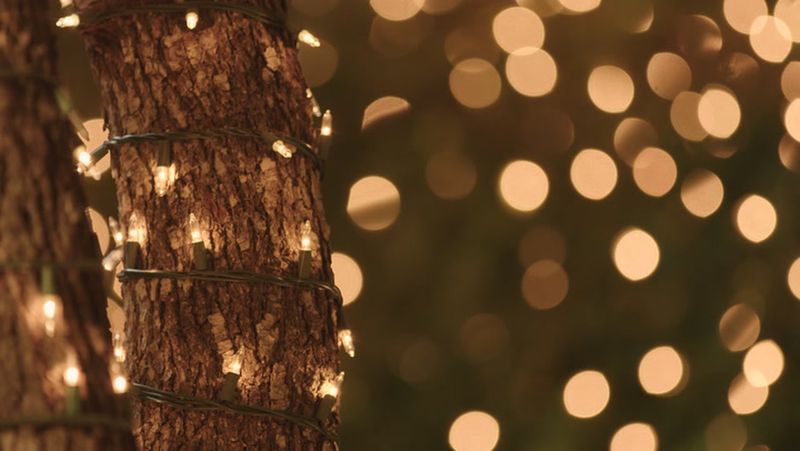
Trees grow outward a little every single year, and a snug wire does not stretch along with them. Over a few seasons, that cheerful strand can tighten like a belt that is two sizes too small.
Arborists call this girdling, and it happens when wire or ties cut into the living tissue under the bark. That thin layer carries water and sugars, so squeezing it can starve whole limbs above the pinch point.
Fast growers like mesquite and palo verde can swallow forgotten wires surprisingly quickly in a warm desert yard. I once found an old cord buried so deep that only a tiny loop still poked through the bark.
You can avoid this mess by draping lights loosely instead of spiraling them tightly around each branch. A simple test helps a lot, because you should slide a finger easily under every strand and tie.
Plan to remove every strand after the holidays rather than leaving them up all year for convenience. Your trees will thank you with steady growth, and you will skip a costly visit from an arborist later.
2. Nails And Staples Leave Permanent Holes In Palm Trunks
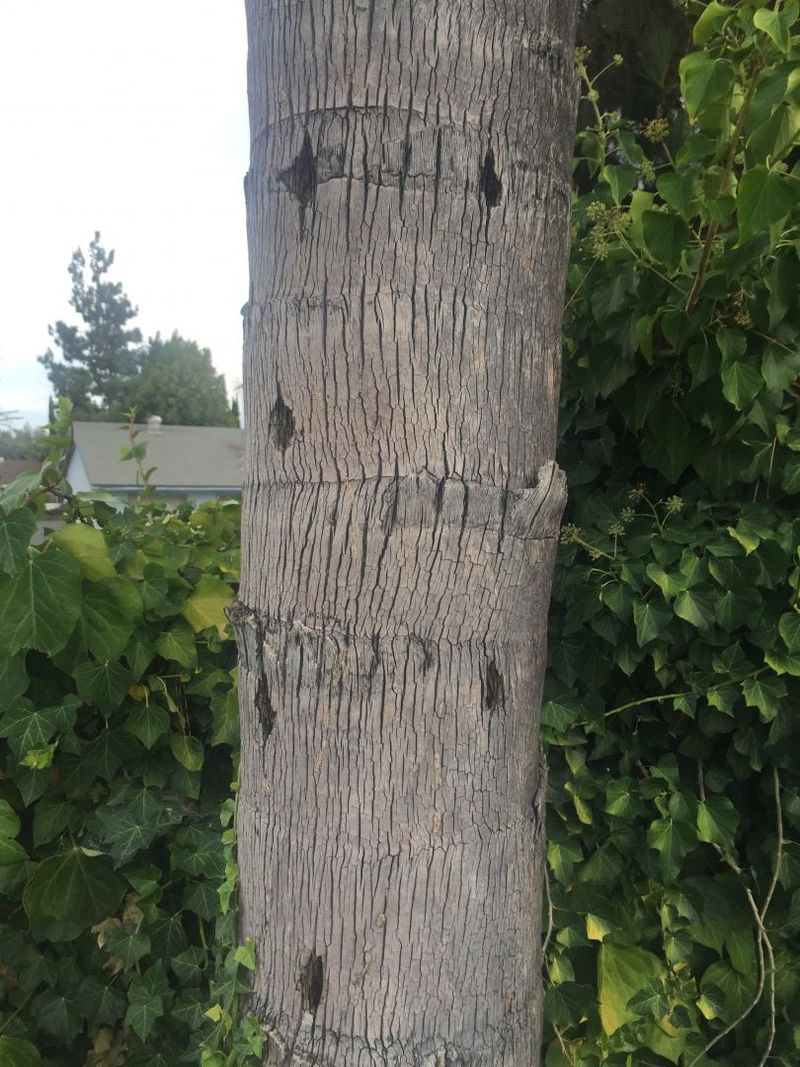
Palms play by different rules than oaks or mesquites, and that surprises plenty of holiday decorators. As monocots, palms lack the growth layer that lets most trees seal wounds with fresh new wood.
That means every nail, staple, or screw leaves a hole the palm carries for its entire lifetime. Those openings can welcome fungal problems and boring insects looking for an easy way inside the trunk.
Personally, I wince whenever I see a staple gun aimed at a tall Mexican fan palm in December. One quick shortcut for the display can become a lasting scar on a tree worth thousands of dollars.
Woody desert trees fare a little better, yet punctures still stress them and open doors for decay. Every wound forces the tree to spend energy sealing damage instead of growing roots and healthy canopy.
Soft options work beautifully, including padded plant ties, reusable hook-and-loop straps, and gentle plastic clips. Many palm owners simply wrap lights loosely around the trunk, letting gravity and the rough fiber hold everything steady.
3. Hot Incandescent Bulbs Scorch Dry Palm Fronds
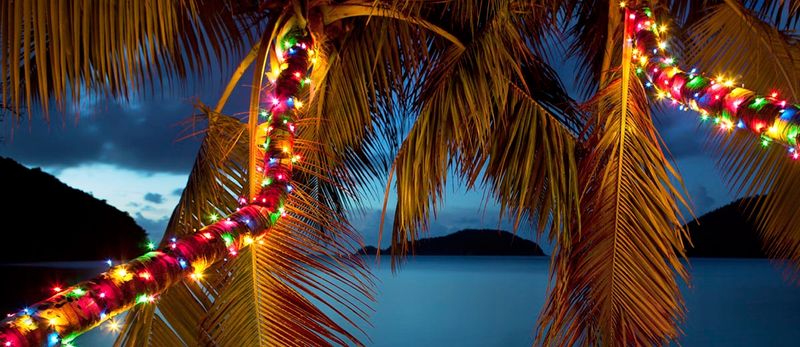
Old-school incandescent bulbs feel warm to the touch, and that warmth adds up across hundreds of glowing lights. Pressed against dry fronds or papery bark, hot bulbs can brown tissue and raise a serious fire risk.
Desert trees often hold onto dry material, especially palms wearing a skirt of old brown fronds below. That thatch catches sparks easily, which is why fire departments in the Southwest often recommend trimming it.
I love how much cooler modern LED strings run compared to the vintage strands from my childhood. They also sip far less electricity, which feels sensible when summer power bills are still fresh in memory.
Swapping to LEDs is a simple upgrade you can make during holiday sales before you start decorating. Look for strands clearly labeled for outdoor use, since indoor lights handle weather and sun exposure poorly.
Keep every bulb from resting directly against foliage, even with cooler LEDs, just as a careful habit. A little spacing protects tender fronds, and it lets the lights glow evenly instead of hiding in clumps.
4. Heavy Decorations Snap Brittle Palo Verde Limbs
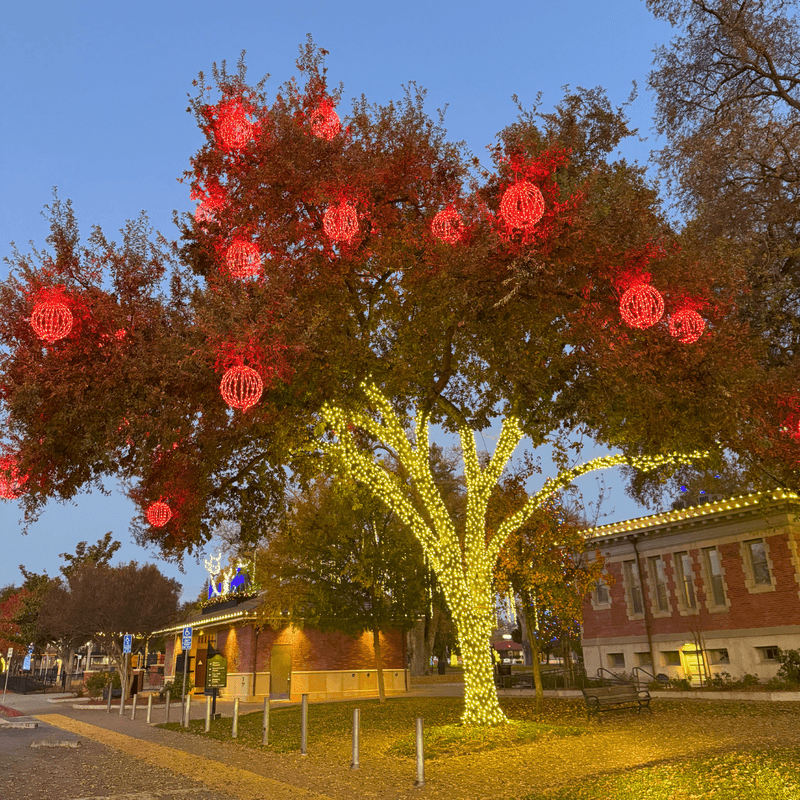
Palo verde branches look sturdy from a distance, yet many limbs are thinner and more brittle than they seem. Load them with thick strands and heavy ornaments, and a gusty evening can turn festive into frustrating.
Weight adds up faster than most of us expect, especially with commercial cords and large decorative balls. Young trees and recently pruned limbs struggle most, since their wood has had less time to strengthen.
Winter storms in the desert sometimes bring strong wind, and occasionally rain soaks the decorations and adds weight. You might notice branches drooping lower each morning, which is a clear sign the load needs lightening.
Spread lights evenly instead of piling them onto one showy branch near the front walkway or driveway. Stick with lightweight strands, and attach them to thicker main limbs rather than skinny twigs at the edges.
Avoid bending branches into new shapes just to fill a gap in your design for the season. Forcing wood out of position can crack it, leaving weak points that may split during next summer’s monsoon storms.
5. All Night Lights Disturb Bats And Nighttime Wildlife

Bats are some of the hardest working neighbors in any desert neighborhood, gobbling insects after the sun goes down. Bright lights glowing all night can change how night-flying animals move and feed around your yard.
Research on artificial light at night shows it can affect insects, birds, and bats in measurable ways. Many local bat species migrate or quiet down in cold months, yet some remain active during mild desert nights.
Trees themselves may respond too, since some studies link street lighting to shifts in leaf and bud timing. Evidence for short holiday displays is limited, so I treat this as a sensible precaution rather than a certainty.
I believe a timer is the easiest win here, and it saves money on your energy bill too. Setting lights to switch off by late evening gives your yard several hours of real darkness each night.
Warm-colored LEDs are another thoughtful choice, since bluish light tends to attract more insects than amber tones. Your bug-eating visitors will keep patrolling, and you still get a cozy glow during the evening hours.
6. Frayed Extension Cords Spark Fires In Dry Palm Skirts
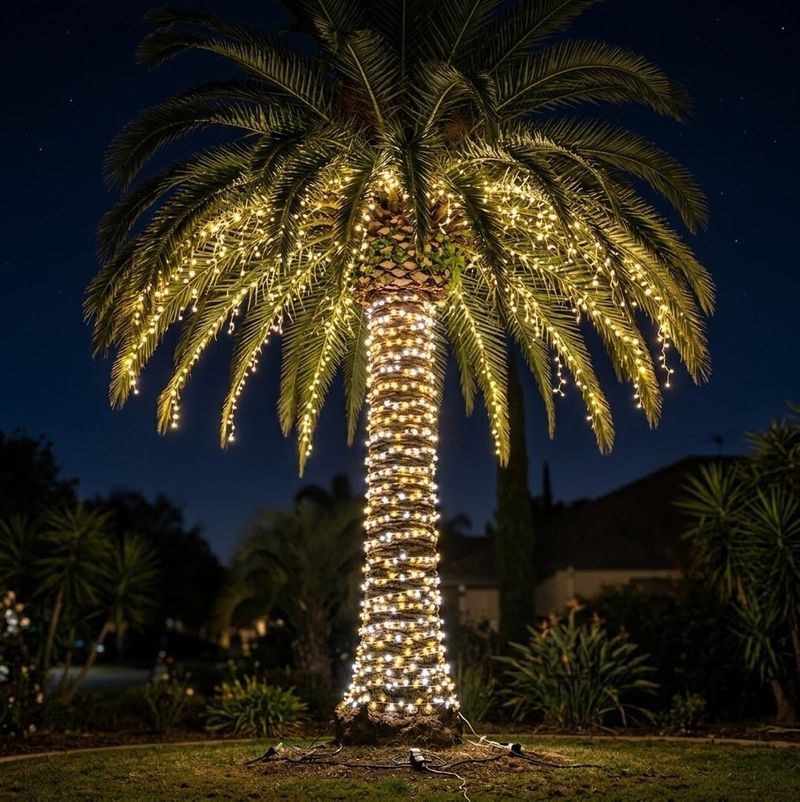
Dry desert air turns old palm thatch into something close to kindling, and one spark can travel fast. Damaged cords, cracked plugs, and overloaded outlets cause many holiday fires that start outside the house.
Firefighters across the Phoenix area have long warned homeowners that palm skirts can ignite and burn very quickly. Flames climbing a tall palm can drop burning debris onto roofs, fences, and neighboring trees nearby.
Before hanging anything, I lay every strand out on the patio and check for nicks or exposed wire. Anything frayed goes straight to recycling, because a cheap replacement beats an emergency call on a holiday evening.
Use outdoor-rated cords plugged into outlets with ground-fault protection, often called GFCI outlets, for extra safety. Keep connections off the ground and away from irrigation lines, since drip systems can splash water unexpectedly.
Before you decorate, consider having palms trimmed of dry fronds. Cleaner trunks look tidier, hold lights more evenly, and offer far less fuel if a spark ever escapes.
7. Year Round Wraps Trap Moisture And Hide Scorpions
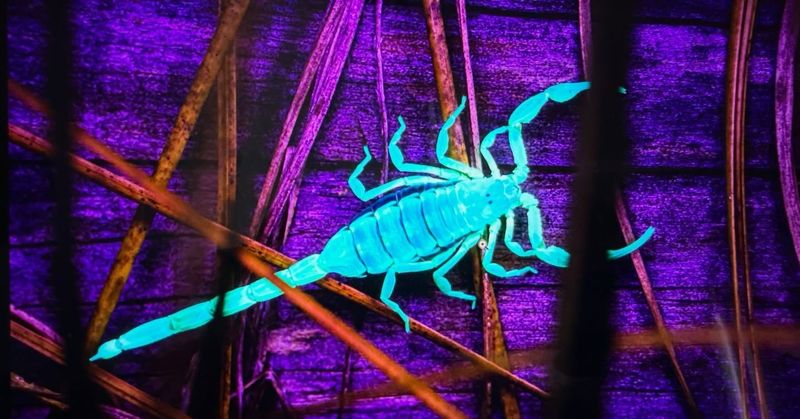
Lights left up until next summer slowly turn from decoration into a cozy hideout for unwanted creepy crawlers. Bark scorpions love tight crevices, and tangled wires against rough bark create plenty of perfect daytime shelters.
Ties and clips pressed against bark can also hold moisture after rain or sprinkler overspray hits the trunk. Constant dampness in one spot may encourage fungal growth, weakening the bark that protects the tree underneath.
What surprises me most is how many yards still show faded strands baking in the July heat each year. Sun breaks down plastic insulation over time, which makes cords brittle and much riskier to use again.
Plan a removal date right after the holidays and mark it on your calendar now while you plan. Taking everything down lets you inspect bark closely, catching any rubbing spots before they become lasting problems.
Store strands in labeled bins indoors, where scorpions and summer sun cannot reach them during warmer months. Your trees get a full year to breathe freely, and your next display goes up faster and safer.