What That Green Clump High Up In Your North Carolina Trees Really Is
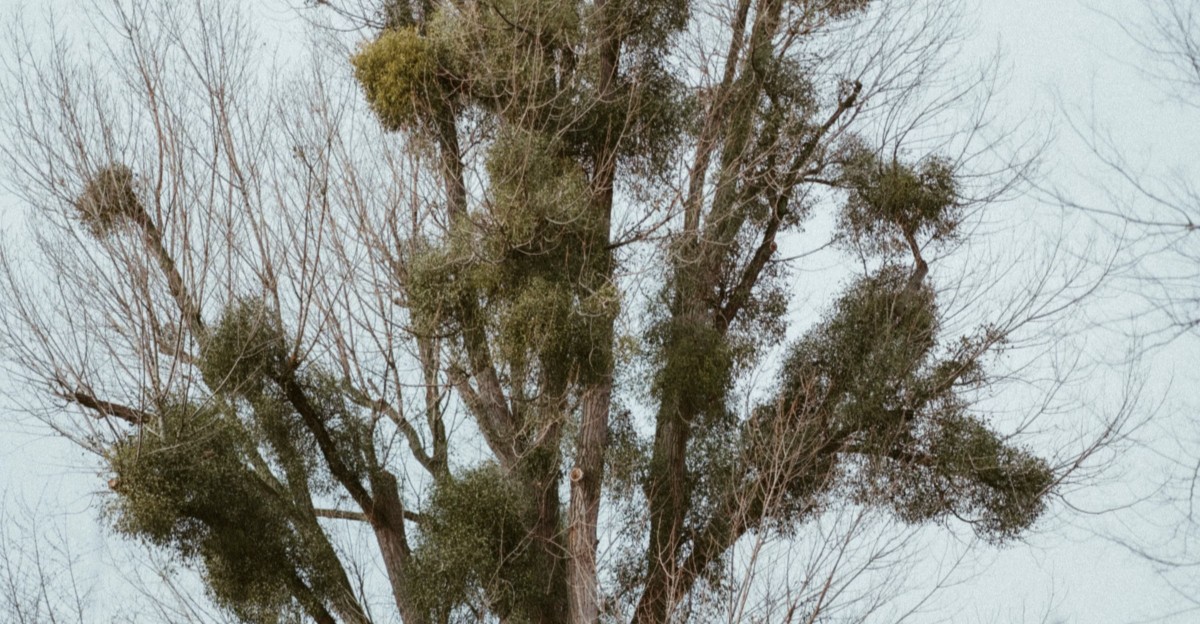
Leaves fall, and suddenly the tree reveals a secret. High in the bare branches sits a round, green ball that was hiding all summer.
It looks like a nest, but no bird built it. It stays bright green through the coldest week of winter, when everything around it looks asleep.
Look closer, and the story gets stranger. This clump did not arrive on the wind as a seed in the usual way.
It has a habit that surprises almost everyone, and a connection to a holiday tradition you already know. Some people want it gone, and others leave it alone for good reasons.
Before you decide, it helps to know exactly what you are looking at, and who put it there.
1. It’s Most Likely American Mistletoe
Bare branches tell secrets that summer leaves keep hidden. When oaks and maples drop their leaves in fall, a round green ball suddenly pops into view, and in North Carolina it is most often American mistletoe, known to scientists as Phoradendron leucarpum.
Mistletoe is a native evergreen plant. It keeps its color all year long, so it was there during summer too, just tucked behind a wall of tree leaves.
Once winter strips the canopy, those clumps stand out like green ornaments on a gray background.
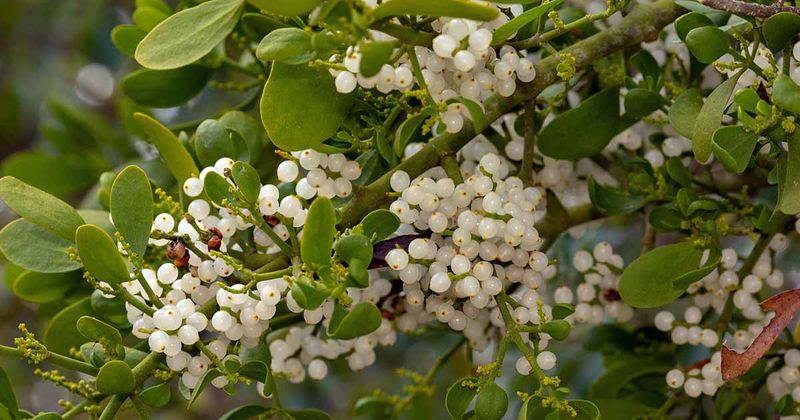
So how can you be sure? Look for rounded, bushy clusters high in the tree, often a foot or two wide, though older ones grow much larger.
The leaves are thick, leathery, and oval, with a slightly yellow-green shade. From late fall through winter, many clumps carry small, white, shiny berries that almost glow in the low sunlight.
Binoculars make the job easier. A quick look on a clear day will show you the stubby leaves and berry clusters far better than squinting from the driveway.
You can also check the ground under the tree, since bits of broken mistletoe sometimes fall after wind or ice storms.
Mistletoe is a common sight across much of the state, especially in the Piedmont and Coastal Plain. Drive along almost any rural road in winter and you may spot dozens of clumps in tall hardwoods.
Some neighborhoods have so much of it that the trees look decorated for the season. Once you learn its shape, you will start noticing mistletoe everywhere. That new skill turns an ordinary winter walk into a fun treasure hunt for the whole family.
2. It Grows On The Tree, Not In The Ground
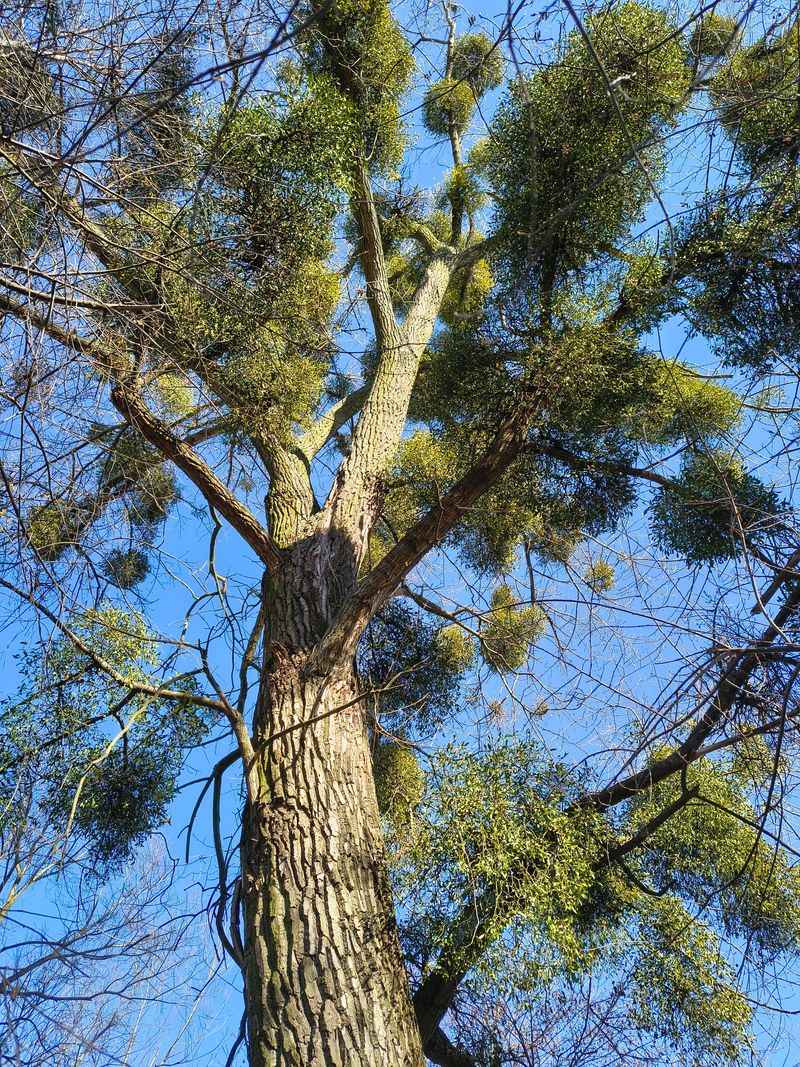
Most plants start in the soil and reach upward. Mistletoe skips the dirt completely and makes its home right on a tree branch, living like a houseguest who never pays rent but still helps with a few chores.
Scientists call mistletoe a hemiparasite. The word sounds tricky, but the idea is simple.
Mistletoe pushes special root-like structures into the branch and pulls water and nutrients from its host tree. At the same time, its green leaves still make some of their own food from sunlight, which is why it is only a partial parasite.
Because of that setup, mistletoe cannot survive on its own. If the branch it lives on falls or gets cut away, the mistletoe goes with it. The tree is its water supply, its anchor, and its whole world.
Hardwoods are its favorite homes. In North Carolina, you will commonly find it on oaks, maples, hickories, and black gum, along with other leafy trees. Willow oaks and water oaks lining older streets often carry several clumps at once.
Homeowners notice it most on big, mature shade trees. Those tall trees in front yards and along sidewalks have broad branches and plenty of perches, which makes them perfect targets.
A younger tree in the backyard may stay clear for years while the giant oak out front collects clump after clump.
Knowing which trees mistletoe likes can help you plan. When you pick new trees for your yard, ask your local nursery or county Extension office about options that hold up well.
Keeping an eye on your largest hardwoods each winter also helps you catch new growth early, before it spreads.
3. Birds Plant It High In The Trees
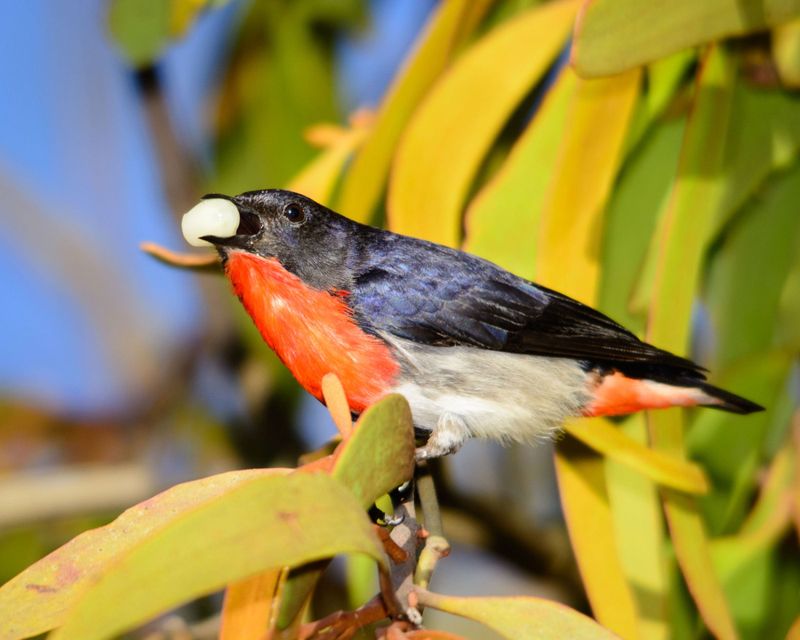
Nobody climbs up there with a seed packet. The real gardeners behind mistletoe have feathers, and they do their planting while snacking.
Cedar waxwings, eastern bluebirds, and other birds love those white mistletoe berries. Inside each berry sits a seed wrapped in a very sticky coating, almost like natural glue.
When birds eat the fruit, the seeds pass through and land on branches in their droppings. Sometimes a bird simply wipes its beak on a twig to clean off the gooey pulp, leaving a seed stuck right there.
Once glued to the bark, the seed sprouts and slowly works its way into the branch. Over a few years, it grows into a brand new clump.
That is why mistletoe nearly always shows up high in trees, right where birds like to sit and rest.
It also explains why mistletoe tends to spread. One tree loaded with berries becomes a busy bird cafe, and those visitors carry seeds to nearby trees. Before long, a whole row of oaks can share the same green guests.
Winter is when this matters most in North Carolina. Insects are scarce, and many wild fruits are gone, so mistletoe berries become an important food source for hungry birds.
Watching a flock of waxwings swarm a clump on a cold morning is a real treat.
Here is a helpful tip for bird lovers: if your mistletoe is not harming your trees, you might leave a little for the wildlife. Grab some binoculars, set up near a window, and keep a list of every bird that stops by for a berry break.
4. A Few Clumps Rarely Cause Serious Harm
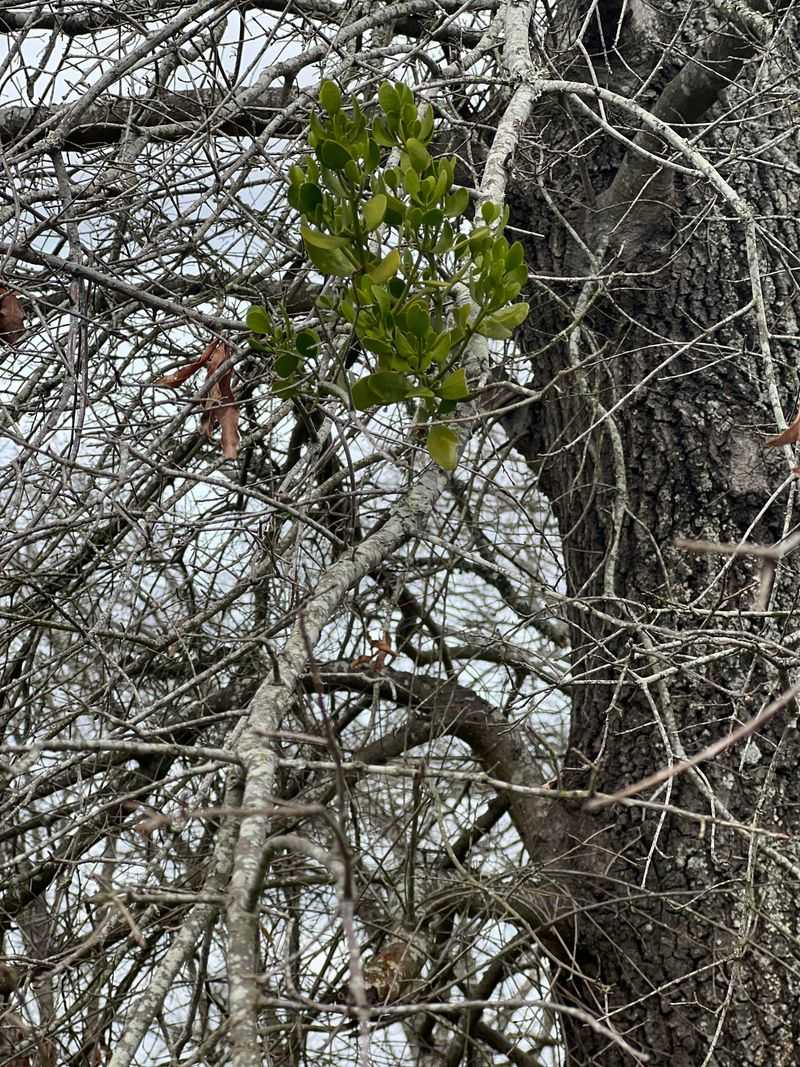
Good news first. A healthy tree with only a few mistletoe clumps is usually doing just fine, so there is no need to panic the moment you spot one.
Trees are tough, and a big oak has plenty of water and nutrients to share. A small amount of mistletoe takes only a little.
Trouble starts when the clumps multiply. Heavy infestations can weaken branches, slow the tree’s growth, and add extra stress, especially for older trees or during long dry spells.
Think of it like carrying a backpack. One light bag is no big deal, but stuff it with heavy books and walk uphill in the heat, and you will feel worn out fast.
Trees react in a similar way when mistletoe piles up during tough weather. So what should you watch for? Count the clumps each winter and write the number down, or snap a photo from the same spot every year.
If the count keeps climbing, that is a sign to take action. Also look for branches beyond the mistletoe that stop leafing out or turn brittle.
Pay extra attention to trees already facing other problems. Drought, root damage from construction, storm injury, and insect trouble can all team up with mistletoe to wear a tree down.
This matters a lot in North Carolina right now, since this year’s drought has already stressed many trees across the state.
Deep watering your favorite shade trees during dry stretches, about once a week around the outer edge of the branches, helps them stay strong. A layer of mulch, kept a few inches away from the trunk, also holds moisture in the soil.
5. Removing It Takes Patience
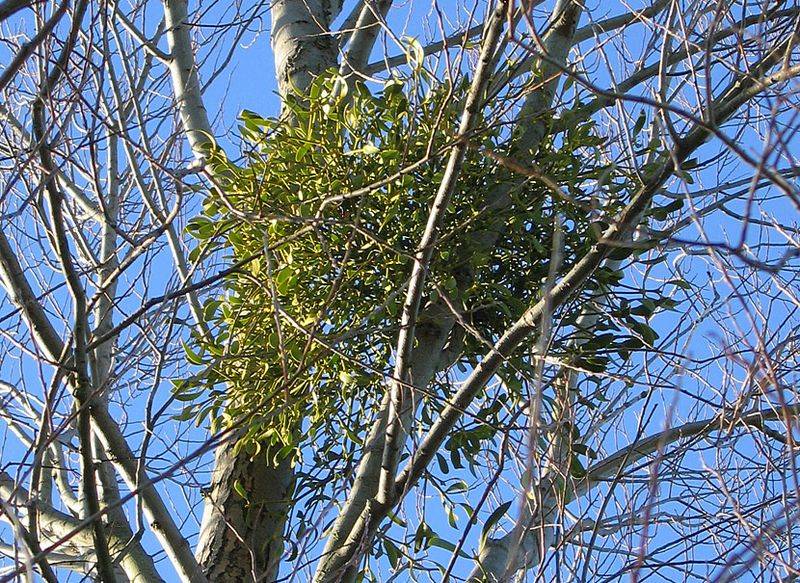
Yanking off a mistletoe clump feels satisfying for about a season. Then, sneaky as ever, it sprouts right back from the same spot.
The reason hides inside the branch. Mistletoe’s root-like structures stay buried in the wood even after you break off the green part.
Like a weed with roots left in the ground, it simply regrows. Knocking clumps down with a pole or a well-aimed toss rarely solves anything.
The best fix is pruning. When you can reach a branch safely, cut it off at least a foot below the clump.
Make your cut back to a side branch or to the trunk so the tree heals neatly and does not leave an ugly stub. That way, you remove the hidden parts too.
Some branches are too large or too important to cut. For those, snip off any new growth regularly as it appears.
Doing this keeps the plant from making berries and spreading, and over time it weakens the mistletoe. Some homeowners also wrap the spot with black plastic to block sunlight, which can help slow regrowth.
For clumps high in large trees, hire a certified arborist. You can find one through the International Society of Arboriculture website by searching your zip code. Ask for proof of insurance before any work begins.
Safety is the biggest reason to call a pro in North Carolina. Many mature trees grow close to power lines, and climbing tall trees or balancing on ladders near those lines can lead to serious injuries.
Arborists have the training and gear to handle the job, so you can stay on solid ground.
6. It’s Toxic To People And Pets
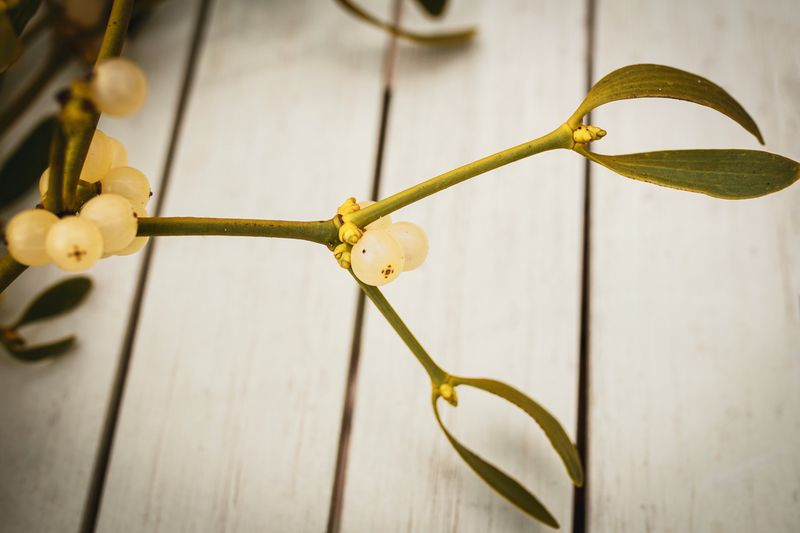
Holiday kisses under the mistletoe are a sweet tradition. Holiday snacks on the mistletoe, however, are a very bad idea for kids, cats, and dogs.
The leaves and berries can cause stomach upset if someone swallows them. Symptoms may include vomiting, diarrhea, and drooling, and larger amounts can bring on more serious problems.
Pets are especially curious about dangling plants and shiny berries, so a fallen sprig can quickly become a chew toy.
Luckily, a few smart habits keep everyone safe. Hang mistletoe high, well above the reach of children and jumping pets.
Tie it firmly so it cannot drop if a door slams. Check the floor often and pick up any fallen berries or leaves right away, since they shrivel and can be easy to miss.
Some families choose artificial mistletoe instead. It looks festive, lasts for years, and removes the worry entirely, though plastic berries still should not be swallowed.
If someone does eat part of the plant, act quickly. For people, call the Poison Help line at 1-800-222-1222, which connects you to experts any time of day.
For pets, call your veterinarian or an emergency animal clinic. Have the plant on hand so you can describe what was eaten and about how much.
Here in North Carolina, mistletoe grows so freely that many people cut fresh sprigs from their own trees for holiday decorating. Older traditions even included shooting it down from tall branches.
Bringing it inside is a fun way to celebrate local nature, as long as you treat it like any other item that belongs out of little hands and curious paws.
7. Some Green Or Leafy Clumps Are Something Else
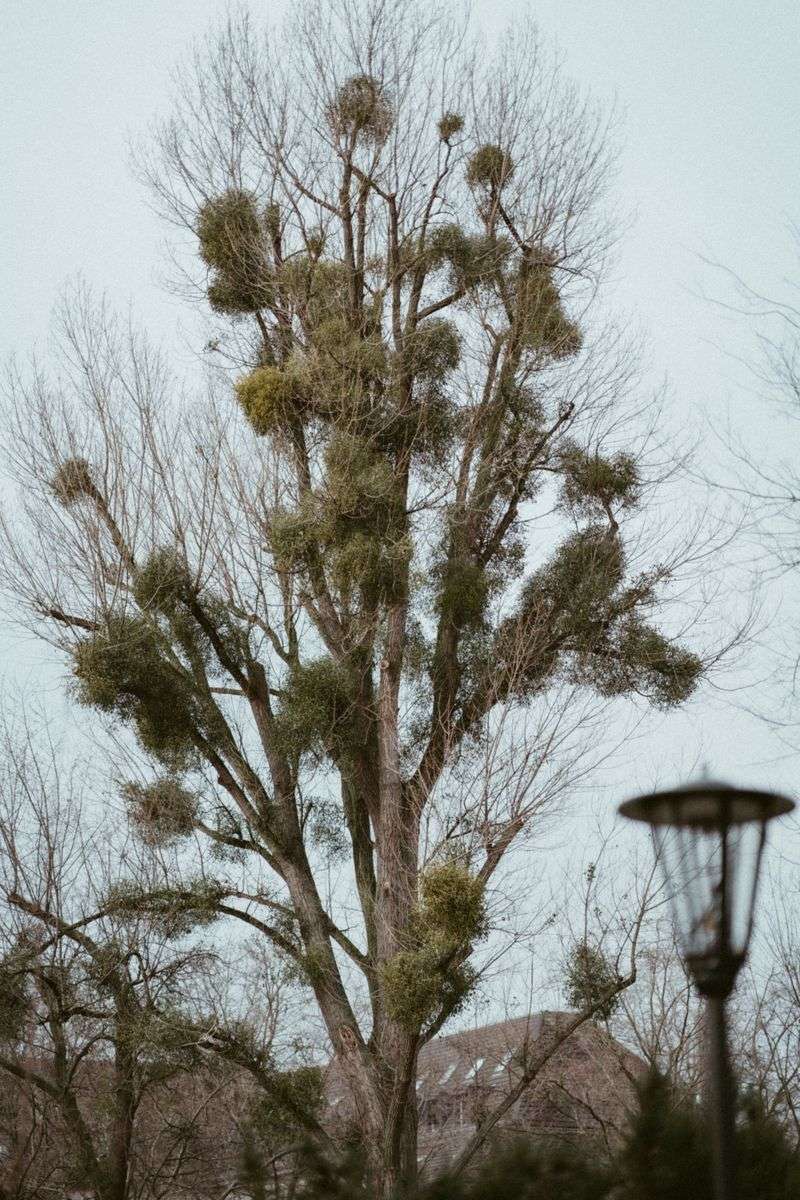
Not every lump in a tree belongs to mistletoe. A few look-alikes share the winter skyline, and telling them apart turns you into a backyard detective.
Squirrel nests are the most common mix-up. These are called dreys, and they look like large balls of brown leaves and twigs wedged into branch forks.
Squirrels build them high for safety and pack them with soft material to stay warm. Unlike mistletoe, dreys stay brown and messy rather than green and leafy.
Along the coast, you may spot gray, stringy plants draping from live oaks and other trees. That is Spanish moss.
Despite the name, it is not a moss at all. It is actually a relative of pineapples, and it takes its water and nutrients from air and rain, not from the tree, so it does no harm.
Sorting them out is simple once you know the clues. Is the clump green and leafy with oval leaves?
That points to mistletoe. Brown and made of dried leaves? Probably a squirrel nest. Gray and hanging in long strands? You are looking at Spanish moss.
Watching for movement helps too. Spend a few minutes near the tree in early morning or late afternoon. If squirrels keep scampering in and out, you have found their home, not a plant problem.
All three are common winter sights across North Carolina, which is why mix-ups happen so often. Knowing the difference saves you from paying for removal you do not need.
It also helps you appreciate the busy little world living above your head, from berry-loving birds to sleepy squirrels tucked into leafy beds.