Snakes Florida Residents Are Most Likely to Find in Their Yard in Winter
Some of the busiest visitors in my winter garden have no legs and a serious crush on sunny stepping stones. Cold-blooded neighbors here rarely sleep the whole season, because our mild Florida afternoons keep coaxing them back outside.
Biologists call their sluggish cold-weather rest brumation, which is lighter than true hibernation and easily broken by warm days. A single January cold front can send them under mulch, then a sunny afternoon brings them right back out.
I have to admit, my first surprise encounter near the compost bin made me drop a full watering can. You might notice them too, curled beside a firewood stack or along the warm south wall of your house.
Most of these slithering neighbors are harmless helpers, but two carry venom and deserve a careful, respectful distance. Which Florida backyard regulars are most likely to greet you on your next chilly morning stroll?
1. Southern Black Racer
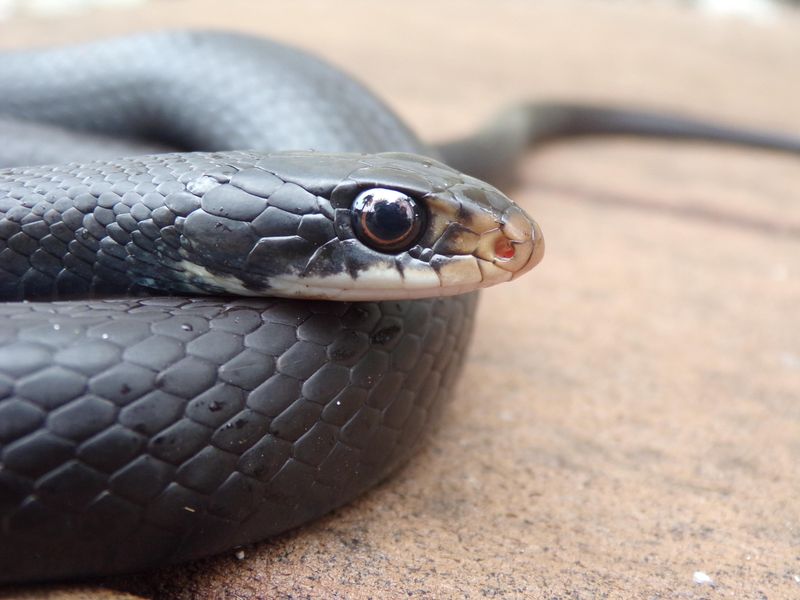
A glossy black streak zipping across a sunny winter lawn is usually a southern black racer showing off. I swear these slender speedsters move faster than my cat, and they seem to know it too.
Adults wear satiny black scales with a white or pale gray chin, and most stretch between two and five feet. Babies look like another species, with gray bodies and reddish-brown blotches that fade as they grow up.
Their scientific name, Coluber constrictor priapus, is a little misleading, since racers rarely squeeze their prey like true constrictors. They simply grab a meal with their mouth and press it against the ground until it stops struggling.
Racers hunt by sight during daylight, so they patrol open lawns and shrub borders with their heads raised high. Their menu includes frogs, lizards, rodents, large insects, and even other snakes, which makes them handy pest managers.
Winter rarely shuts them down in the southern half of the state, though cold mornings make them noticeably slower. On mild afternoons you might spot one stretched across a warm driveway or basking on a sunny patch of mulch.
During a cold snap, racers tuck into leaf litter, rotting logs, old burrows, or thick ground cover until temperatures rebound. Personally, I leave a few brush piles at the back of the yard so they have shelter away from paths.
Cornered racers put on quite a show, vibrating their tails in dry leaves until it sounds like a rattle. They may also release a stinky musk or bite repeatedly, which stings a little but carries no venom.
You need to resist the urge to grab one, because a racer rarely stops wiggling once it feels trapped. Backing away a few steps usually gives it the opening it wants, and it vanishes in seconds.
I love how one racer keeps rodents in balance without me spending a dime on traps or sprays. If one has claimed your yard, consider it a sign that your garden supports a healthy food web.
Keep pets supervised near brush piles, since a feisty racer may nip a curious dog that sticks its nose too close. The bite is harmless, but a quick rinse with soap and water is a smart habit for any scratch.
2. Corn Snake
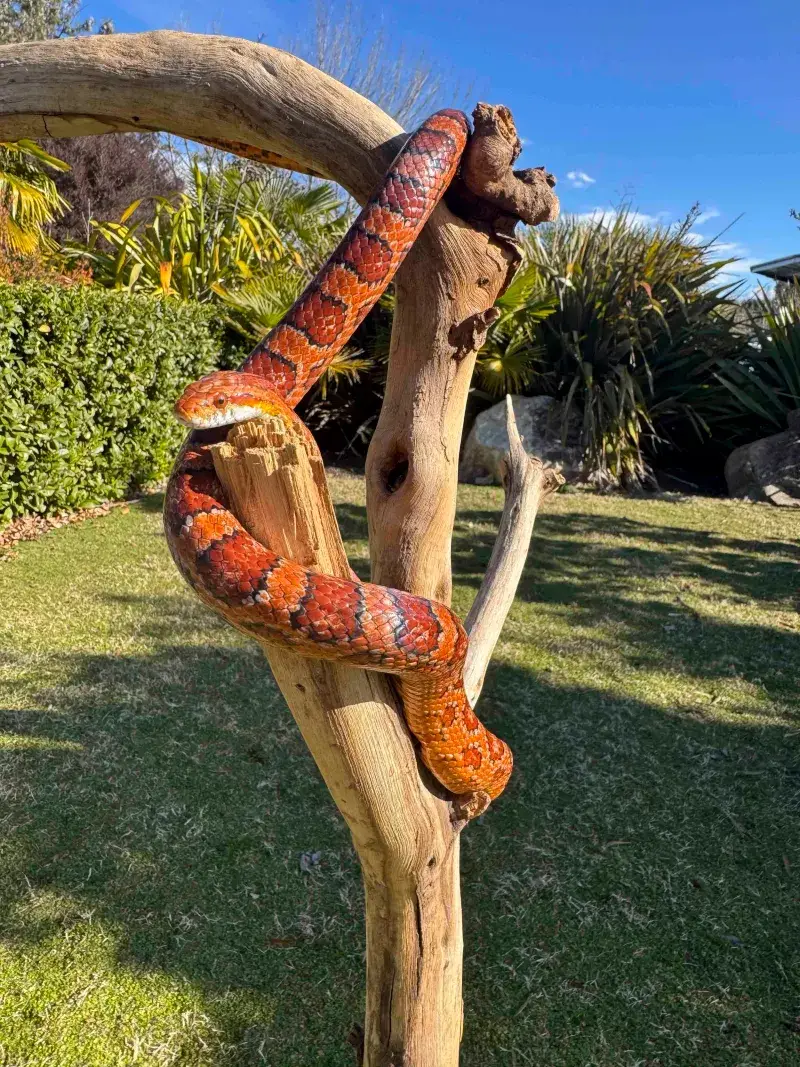
Lift old plywood behind the shed in January, and a bright orange snake with a checkered belly might peek back. That stunning reptile is a corn snake, and I think it might be the prettiest neighbor on this whole list.
Its back is decorated with red or rusty blotches outlined in black, sitting on an orange or grayish tan background. The black and white belly pattern reminds many people of maize kernels, which is one popular explanation for the name.
Most adults measure about three to four feet, though a few exceptional individuals reach six feet in length. Scientists know the species as Pantherophis guttatus, and it is a constrictor that wraps its coils around each meal.
Rodents make up most of the diet, so a corn snake near your garage often means mice are already there. Young ones start with smaller prey like lizards and tree frogs before graduating to rats and mice.
Corn snakes are skilled climbers, slipping into attics, rafters, and hollow trees in search of rodents or roosting birds. That climbing talent explains why some homeowners discover one coiled in a garage corner or a dusty storage shed.
Winters here are mild enough that corn snakes take only short breaks instead of long, deep rests underground. They hide under logs, loose bark, and debris during cold spells, then reappear on warmer days to hunt.
They tend to move around at dusk and after dark, so evening trips to the trash can bring surprise encounters. A flashlight is your friend here, especially if you walk barefoot or in sandals across the patio.
People sometimes mistake corn snakes for copperheads, but copperheads are uncommon here and live mainly in the Panhandle. Look for a slim body with round pupils, which points toward the harmless corn snake rather than a pit viper.
Personally, I treat a resident corn snake like free pest control, and I just seal gaps around doors and vents. Removing clutter in the garage also keeps them from wandering indoors while leaving outdoor hunting grounds open for business.
When threatened, a corn snake may rattle its tail or strike, yet the bite is harmless and minor. Watching one glide away calmly is far more rewarding than chasing it off with a rake.
3. Eastern Garter Snake
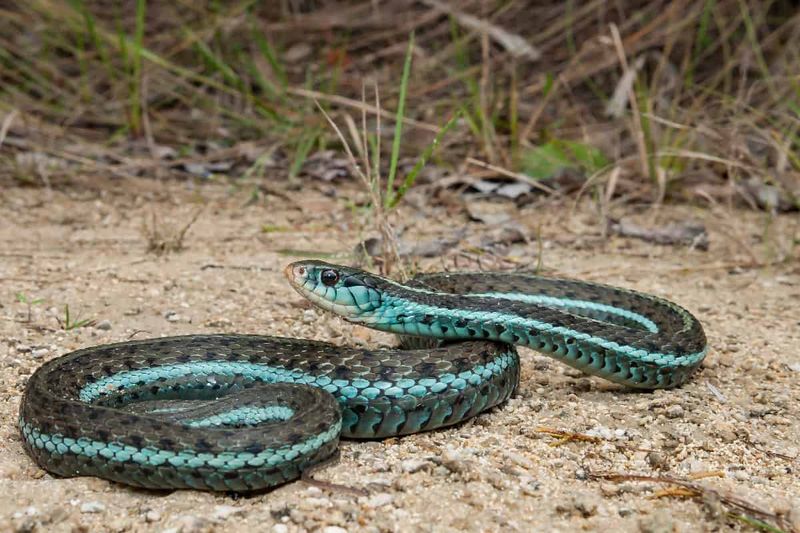
Few snakes handle chilly weather better than the eastern garter snake, which can stay active at surprisingly cool temperatures. On a crisp sunny morning, I often find one warming up beside the pond like it owns the place.
Look for a slender body with pale stripes running lengthwise, usually yellow or greenish white against darker scales. Many individuals also show a checkered pattern of dark spots between those stripes, which gives them a busy, speckled look.
Most adults stay between eighteen and twenty-six inches long, so they look modest compared with racers and rat snakes. Their scientific name is Thamnophis sirtalis, and the species ranges across most of eastern North America today.
Garter snakes love damp places, so drainage ditches and soggy corners of the lawn are favorite hangouts for them. If your yard has a rain garden or a small water feature, you have rolled out a welcome mat.
Their diet leans heavily on frogs, toads, and earthworms, with small fish and slugs also showing up on the menu. I like how they snack on slugs that chew holes in my lettuce leaves during the cool months.
During cold snaps, garter snakes slip into rodent burrows, rock crevices, and the spaces under logs or boards. Several may share one shelter, which helps them hold onto warmth until the sunshine returns a day later.
Unlike many snakes, females give birth to live young rather than laying eggs, usually during the warm summer months. A single litter can include a dozen or more babies, and some big females produce dozens at once.
Picked up by curious hands, a garter snake will often smear foul-smelling musk and may also deliver a quick bite. Their saliva can cause mild itching or swelling in some people, so washing your hands afterward makes good sense.
You can encourage them by skipping slug pellets, which may harm the very predators that eat slugs for free. A shallow dish of water and a few flat stones near the garden also offer comfortable resting spots.
What surprises me most is how quickly these little striped hunters vanish into the grass once they notice you. A slow, quiet approach lets you enjoy a closer look before they slip away without any fuss.
4. Florida Brown Snake
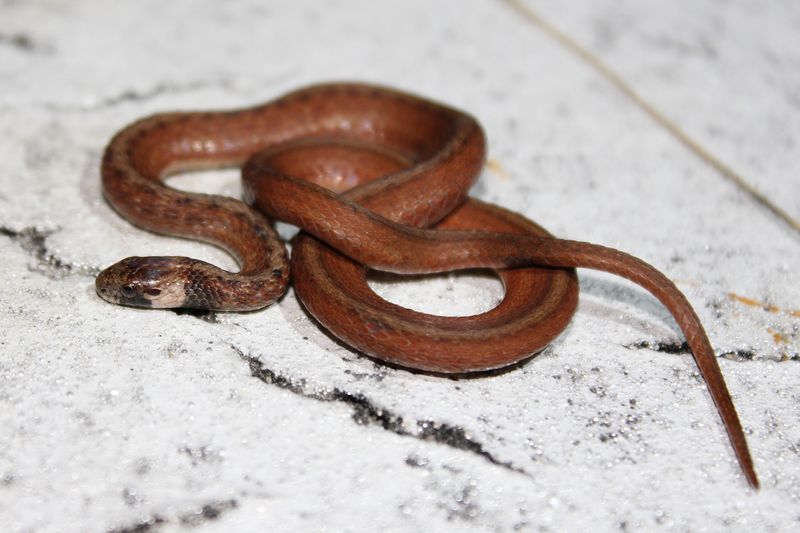
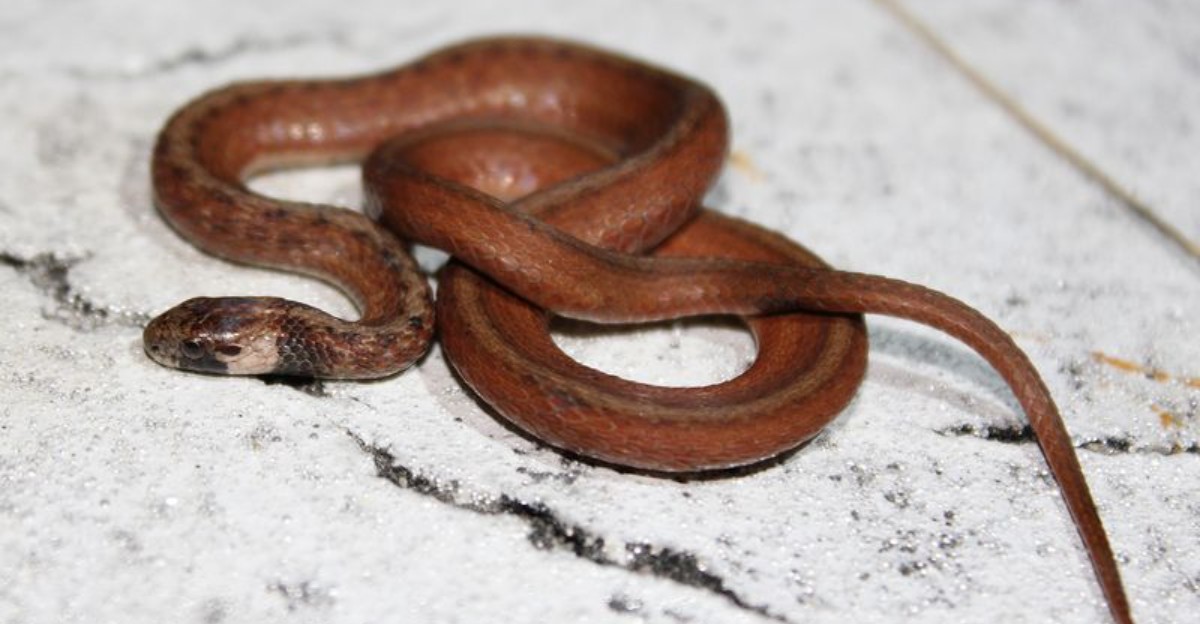
Turn over a clump of soggy oak leaves while weeding, and a pencil-thin snake might wriggle away from your trowel. That shy little creature is likely a Florida brown snake, a pint-sized resident rarely longer than a school ruler.
Most adults measure about nine to thirteen inches, with brown or grayish bodies and a pale band across the neck. Look closely for tiny dark dots along the back, along with dark markings on the upper lip scales.
Scientists list it as Storeria victa, and some herpetologists treat it as a subspecies of the widespread DeKay’s brown snake. Either way, it lives mainly on the peninsula and in nearby southern Georgia, favoring damp and leafy ground.
Slugs and snails are its favorite meals, with earthworms and soft insects filling in the rest of the diet. I appreciate any garden helper that tackles slugs, especially when they keep chewing ragged holes in my tender seedlings.
Brown snakes spend much of their lives hidden under leaf litter, mulch, logs, and loose garden debris. They mostly come out in the evening or at night, which explains why many gardeners rarely notice them at all.
During cold spells they burrow deeper into soil or compost, waiting out the chill in a protected pocket. On mild winter evenings, though, you might spot one crossing a damp garden path after a light rain.
Females give birth to live young in summer, and each tiny newborn is only a few inches long. Those babies look dark and plain at first, so people sometimes confuse them with large earthworms in the soil.
When handled, a brown snake may flatten its body, squirm hard, and release a musky odor to seem unappealing. Bites are rare and harmless, and the little jaws feel more like a tiny pinch than anything painful.
You can help them by leaving a strip of leaf litter under shrubs instead of raking every bed bare. Avoiding heavy pesticide use matters too, since slugs and worms carry those chemicals right into the snake’s food.
I have to admit, I now feel a small thrill whenever one of these mild-mannered diggers appears under my mulch. Gently cover it back up, and it will go right back to guarding your plants from slimy pests.
5. Florida Cottonmouth
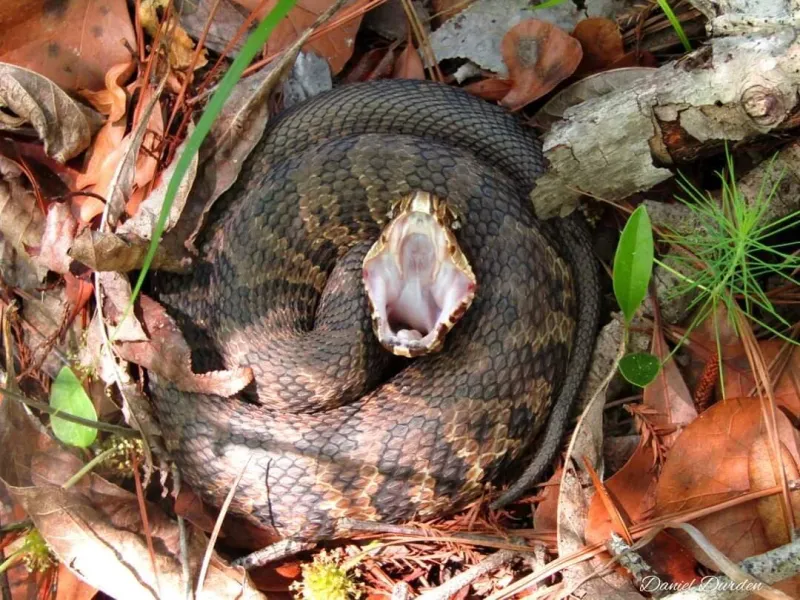
A thick, dark snake lounging on a sunny canal bank in January is a sight that commands instant respect. In many yards near water, that snake turns out to be a cottonmouth, one of the state’s venomous residents.
Its scientific name is Agkistrodon conanti, and scientists recognized it as a separate species from northern cottonmouths in 2015. Adults commonly reach thirty to forty-eight inches, with heavy bodies that look surprisingly bulky for their overall length.
Coloring ranges from olive to dark brown or nearly black, and older adults often lose most of their banding. A dark stripe runs through each eye, and the broad head looks noticeably wider than the neck behind it.
Young cottonmouths are lighter with bold crossbands and a yellowish tail tip they wiggle like a worm to lure frogs. Many harmless water snakes look similar, so I prefer to treat any chunky snake near water with caution.
Cottonmouths stick close to ponds, ditches, swamps, and retention ponds, which are common features in many neighborhoods. They eat fish, frogs, other snakes, small mammals, and even carrion, so they play a cleanup role in wetlands.
Winter slows them, yet in warmer regions they often bask on mild afternoons instead of hiding for months. Cold snaps send them into stump holes, burrows, or thick vegetation near the water until temperatures climb again.
When threatened, a cottonmouth often coils up and opens its mouth wide to flash the cottony white lining inside. That display is a warning rather than an attack, and research shows they mostly try to escape when given room.
You need to give that warning plenty of space and let the snake leave on its own terms. Their venom causes serious pain and tissue damage, so any bite calls for a prompt trip to the emergency room.
Keep grass trimmed along pond edges and clear tall weeds where you walk, which makes surprise meetings less likely. Wearing boots and carrying a flashlight during evening chores near water also lowers your risk considerably.
Personally, I admire cottonmouths from a distance through binoculars, which feels like a front-row seat without any risk. If one settles too close to the house, a licensed wildlife removal professional can handle the situation safely.
6. Dusky Pygmy Rattlesnake
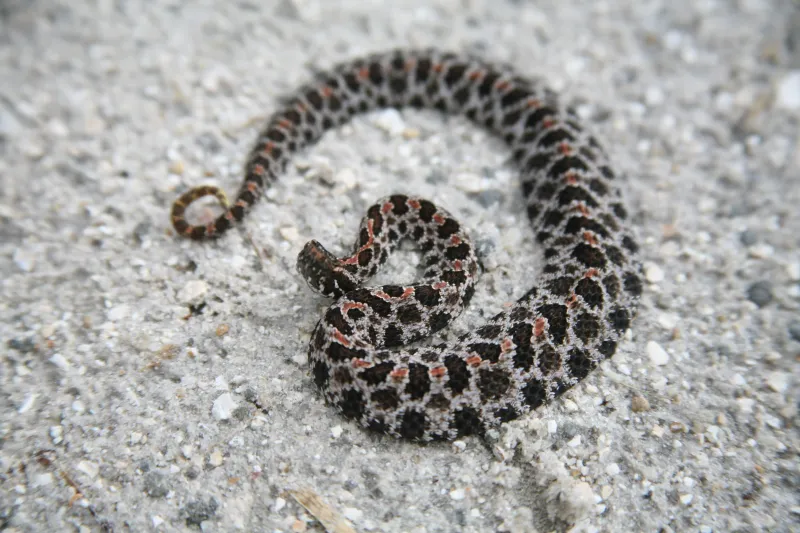
A faint buzzing sound, softer than an insect, may be the only warning a dusky pygmy rattlesnake ever gives. Plenty of gardeners mistake that whisper of a rattle for an insect until they spot the small gray coil.
Adults usually measure twelve to twenty-four inches, making this the smallest venomous snake found in the state. Its scientific name is Sistrurus miliarius barbouri, and many locals simply call it a ground rattler.
The body is gray with dark round blotches along the back and sides, plus a reddish stripe down the spine. A dark band runs from each eye toward the jaw, and the tiny rattle sits at the slender tail tip.
Pygmy rattlers live nearly everywhere on the mainland, from pine flatwoods to suburban yards near lakes and wetlands. Leaf litter, pine straw, and low ground cover make perfect hiding spots, so their camouflage works incredibly well.
They eat lizards, frogs, small snakes, and mice, and young ones also hunt centipedes and other large invertebrates. Like juvenile cottonmouths, babies wiggle a yellowish tail tip to tempt curious frogs and lizards within striking range.
Winter rarely sends them fully underground in the warmer parts of the state, where they bask on mild days. During cold snaps they shelter in stumps, burrows, and thick leaf piles, then resume sunning when temperatures rise.
You need to wear gloves and look before reaching into pine straw, groundcover, or stacked pots this time of year. A long-handled rake also helps, since it lets you move debris without putting your fingers near a hidden coil.
Bites are painful and cause swelling, though they are rarely life-threatening to healthy adults according to university experts. Any bite still deserves quick medical care, and small pets may suffer more serious effects than people do.
Keeping the lawn mowed and storing firewood off the ground reduces the cozy cover these little vipers prefer. Clearing debris near doorways and play areas makes surprise encounters much less likely for kids and pets.
What surprises me most is how calmly they sit still, trusting their camouflage rather than fleeing like a racer. Spot one, step back slowly, and let this small but impressive predator keep doing its job in peace.