Where Ohio Box Turtles Are Hiding Right Now – and Why You Shouldn’t Rake There
Some creatures can live longer than most people, and one of them may be sleeping under barely two inches of dirt in your backyard right now. A thin quilt of oak and maple leaves is often the only thing keeping it snug until April.
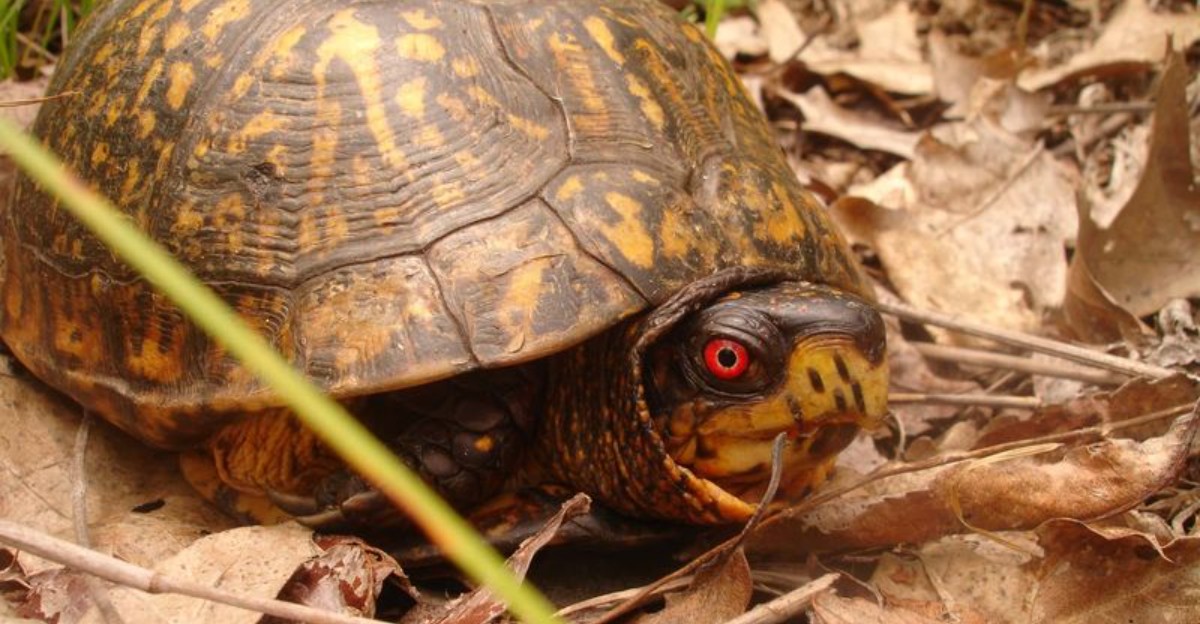
Researchers in southwestern Ohio found these shy reptiles tucking into surprisingly shallow spots each fall. Their domed shells and orange-speckled skin blend right into the litter.
Many return to the same hidden bed year after year, like a favorite chair by the window.
I used to see a leafy corner as an unfinished chore. Now I see a guest room with a sign on the door that nobody can read.
You might be hosting one without knowing it.
That crunchy brown blanket in your yard could be protecting a quiet winter guest. It might be worth taking a closer look before the rake comes out this weekend.
1. That Leafy Woodland Edge Is Hiding a Shelled Sleeper
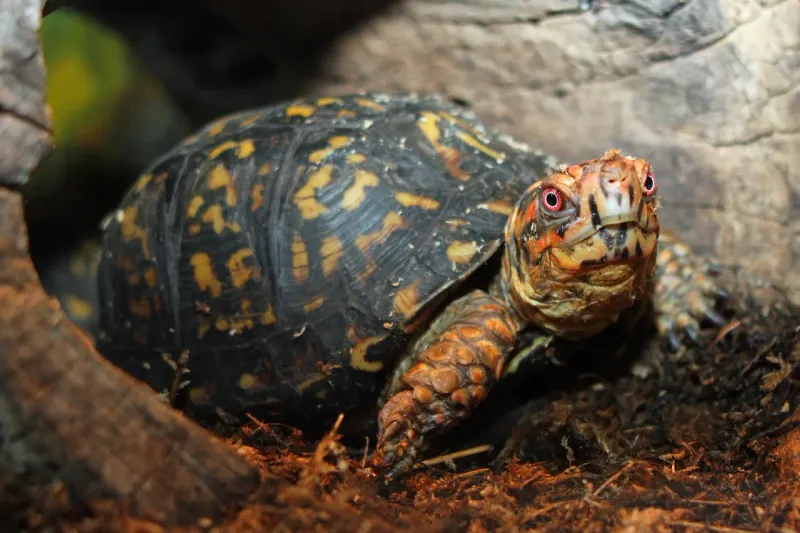
Late October in the Ohio countryside smells like damp oak leaves and woodsmoke. Somewhere under that scent, a small reptile with a high, domed shell is getting ready to vanish for months.
Eastern box turtles spend the warm season wandering woodland edges, meadows, and even suburban backyards near trees. They hunt slugs, earthworms, mushrooms, and fallen berries.
As nights cool into the 40s and 50s, they slow down and start looking for a winter hideout.
That hideout is called a hibernaculum. It sounds fancy, but it is usually just a quiet patch of loose soil under a pile of leaves.
Many turtles pick spots near where they spent the summer, since each one has a home range it knows well.
I find it charming that these turtles are such homebodies. Some stay in the same few acres for 50 years or more, so the turtle in your yard may have lived there longer than you have.
They turn up across much of the state, especially in wooded areas. If your property backs up to trees or a brushy fence line, your fall cleanup zone might also be a reptile bedroom.
2. Box Turtles Bury Themselves Just Inches Under the Leaf Litter
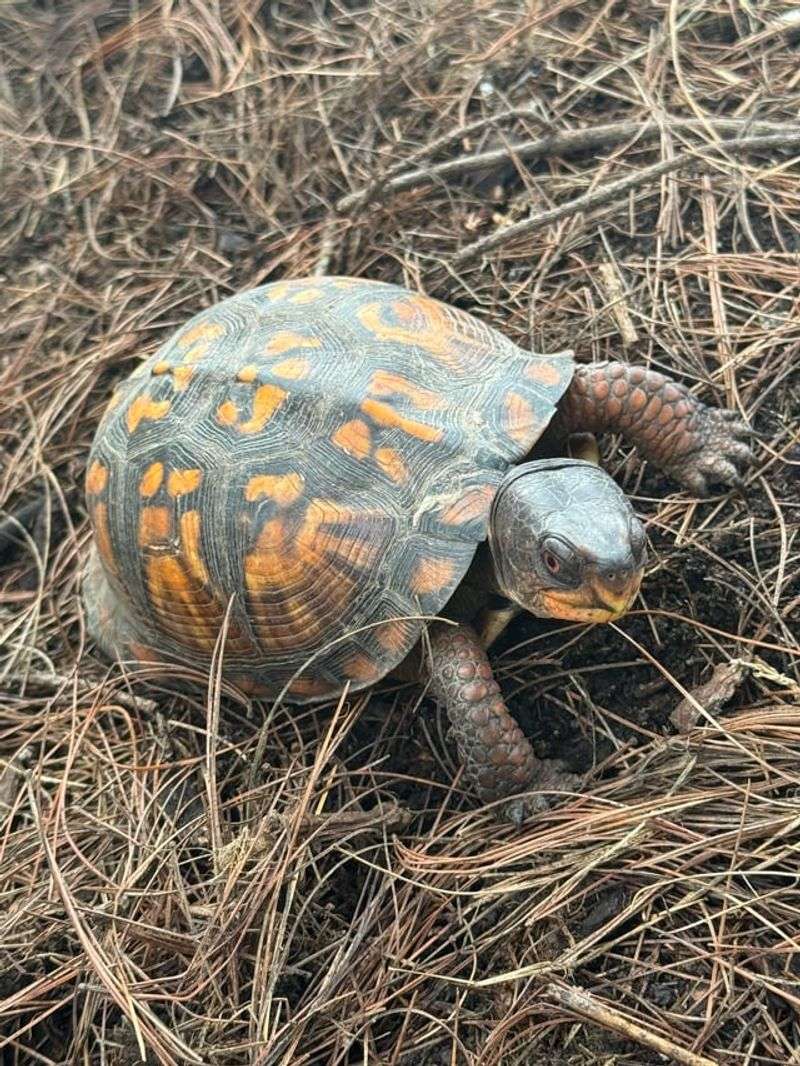
Two inches. That is roughly how deep some box turtles settle in for winter, according to research on turtles in southwestern Ohio.
A deck of cards standing on its side is taller than that.
Box turtles are not powerful diggers like some of their pond cousins. They nose and push into soft soil, mud, or rotting wood, then let fallen leaves pile on top.
That leaf layer does a lot of the heavy lifting, holding in ground warmth and buffering the turtle from sharp temperature swings.
Look for them in the places that feel forgotten. Thick leaf litter under oaks and hickories, the soft edge where lawn meets woods, old stump holes, and the base of brush piles are all favorites.
Some even slip into abandoned rodent burrows.
As winter deepens, a turtle may slowly work a bit deeper. Box turtles can also handle brief, light freezing of some body fluids, which is a wild survival trick.
That tolerance has limits, though, and a missing leaf blanket can push them past it.
You need to treat any deep, undisturbed leaf pile near trees as a possible turtle zone from late October through early spring.
3. A Rake or Leaf Blower Can Reach a Sleeping Turtle Faster Than You Think
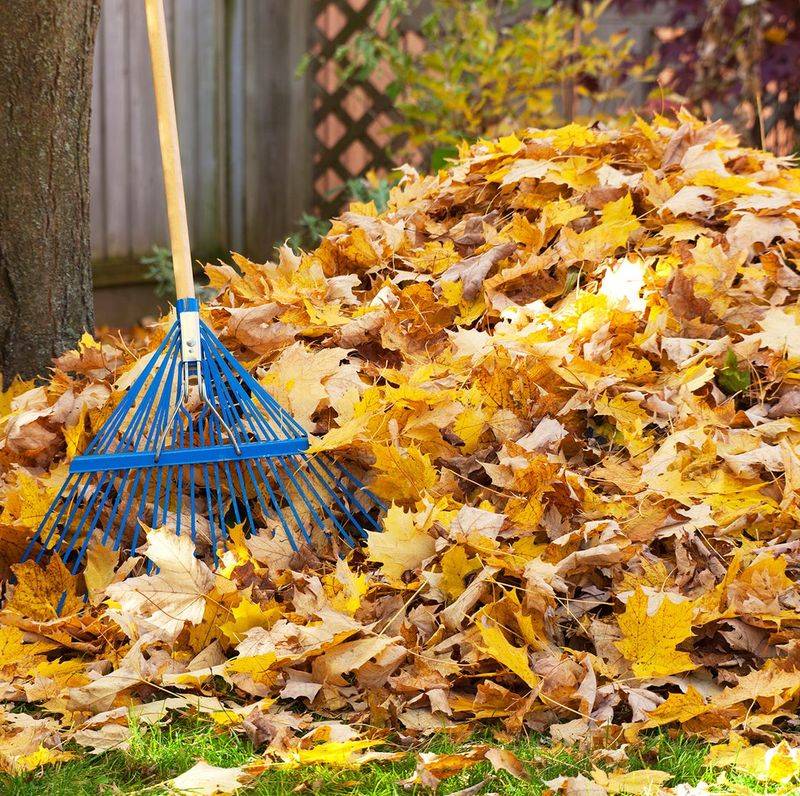
One quick pull of a metal rake sounds harmless. Yet steel tines dragged across a shallow turtle bed can scrape, crack, or flip a sleeping box turtle before you ever notice it.
A cold turtle is a sluggish turtle. Its body temperature matches the ground, so it cannot pull away or protect itself well.
Gas-powered leaf blowers add another problem by stripping the insulating cover in seconds, leaving the shell exposed to frost, wind, and hungry raccoons.
Wildlife rehab centers often treat shell injuries from lawn equipment, including mowers in spring and summer. A cracked shell can heal with care, but it takes months, and many injured turtles struggle to recover in the wild.
Personally, I switched to a gentler routine near the tree line. I leave that strip alone or move leaves by hand with a light plastic rake, feeling for anything hard and round.
It takes a bit longer, but it gives me peace of mind.
If you do uncover a turtle, gently replace the leaves and soil right where it was. Avoid moving it to a new spot, since box turtles placed outside their home range often wander and struggle to settle.
4. Brush Piles, Rotting Logs, and Garden Beds Make Prime Turtle Bedrooms
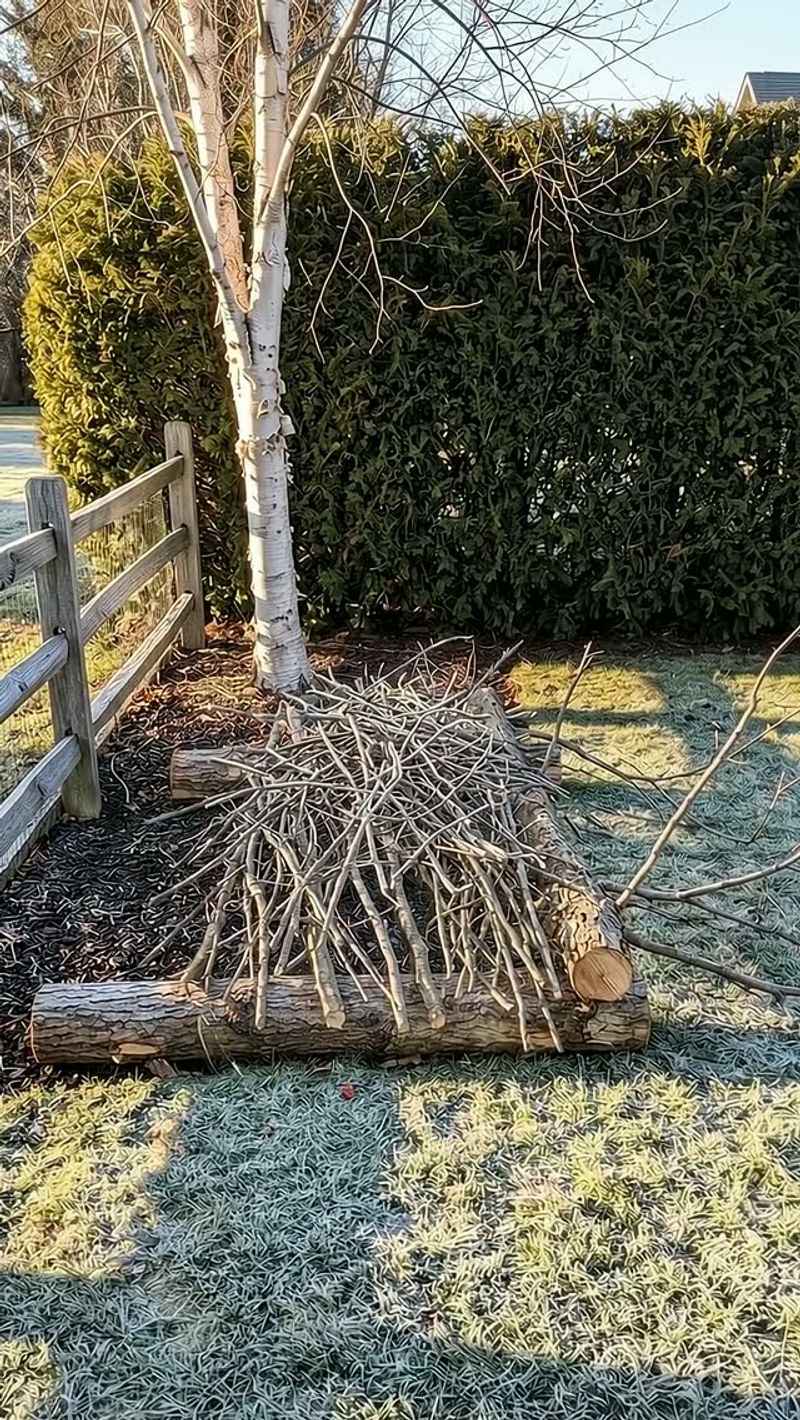
Ever notice how the messiest corner of the yard is the one wildlife loves most? Box turtles are no exception.
They favor cover that stays damp, dark, and undisturbed through the cold months.
Brush piles are a top pick. Loose branches trap leaves and snow, creating a pocket of steady temperature underneath.
Rotting logs work the same way, with crumbly wood that is easy for a turtle to push into.
Garden beds can attract them too, especially mulched beds near shrubs or along a wooded fence. Loose, well-worked soil is easier to burrow into than packed lawn.
Compost piles at the edge of a yard sometimes draw them in as well.
Some turtles choose sunny slopes that warm up sooner in spring. Low, soggy spots are riskier, since standing water can turn into ice during a hard freeze.
Before you clear any of these areas, ask yourself whether it really needs tidying this fall. If cleanup must happen, wait until mid to late spring, when turtles are active and can move out of the way.
I keep one brush pile on purpose now, and it has become my favorite low-effort wildlife project.
5. Brumation Keeps Box Turtles Underground From Late Fall Until Spring
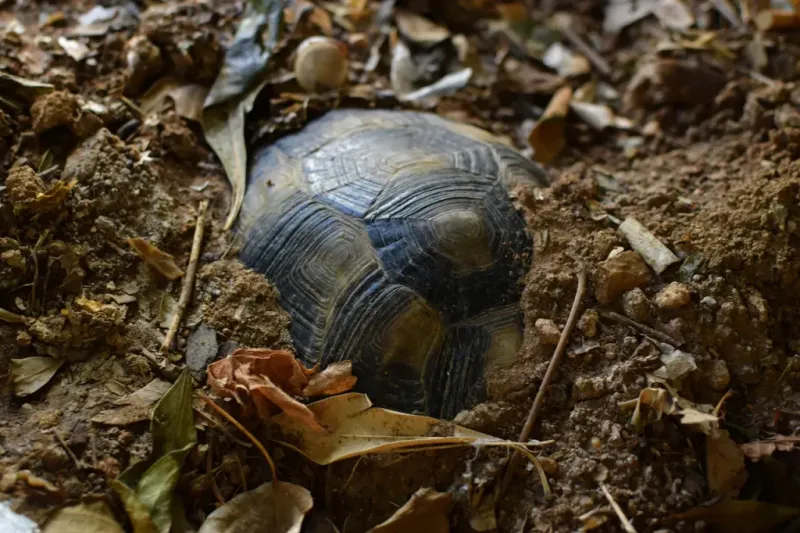
Reptiles do not truly hibernate the way groundhogs do. Biologists call their winter slowdown brumation, and box turtles are experts at it.
In Ohio, most box turtles settle in during late October or November, once nights turn steadily cold. They usually stay tucked away until April, when soil warms and spring rains bring worms and slugs to the surface.
Southern counties may see turtles stir a little earlier than northern ones.
During brumation, a turtle’s heart rate and breathing drop way down. It does not eat, and it relies on fat stored from a busy summer of feasting on berries and bugs.
That is one reason a healthy fall diet matters so much.
Warm spells can confuse things. A sunny 65-degree day in December may tempt a turtle to shift position, but it rarely leaves its spot for long.
If you spot one wandering in winter, call a licensed wildlife rehabilitator rather than bringing it indoors.
Your safe leaf-moving window is fairly clear. Rake turf areas early in fall, before late October if possible, and leave wooded edges alone until turtles wake up in spring.
6. That Orange-Spotted Shell Belongs to a Species Ohio Is Watching Closely
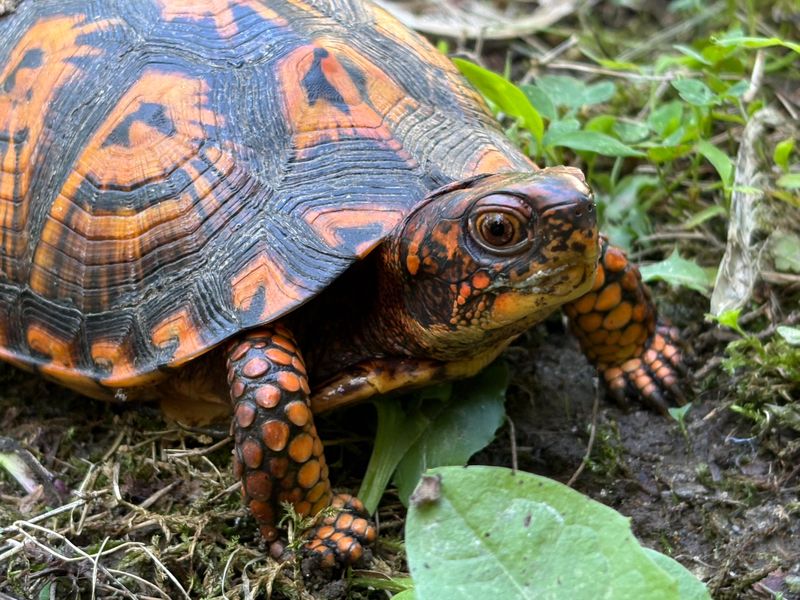
Every eastern box turtle wears a one-of-a-kind outfit. The high brown shell is splashed with yellow and orange markings, and no two patterns match.
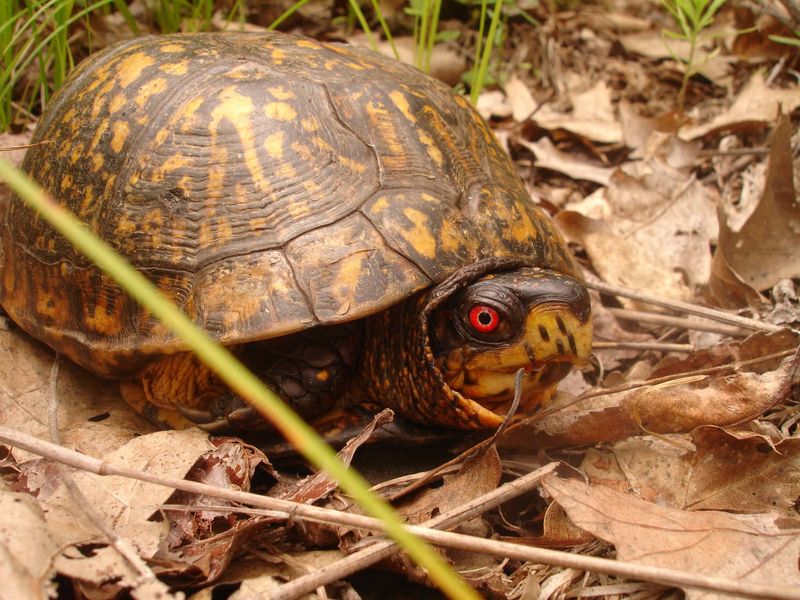
Males often have bright red eyes, while females usually have brown ones.
That beauty comes with a worry. The Ohio Department of Natural Resources lists the eastern box turtle as a species of concern, which means biologists are watching its numbers closely.
Habitat loss, road traffic, and collection for pets have all taken a toll.
Box turtles grow slowly and may not breed until they are around 7 to 10 years old. Females lay only a few eggs each year, and many nests are raided by predators.
Losing even one adult can set a local population back for years.
Did you know? A few wild box turtles have lived beyond 100 years.
You can help them reach old age in simple ways. Leave wild turtles in the wild, help them cross roads in the direction they are heading, and keep pets from pestering them.
I like thinking of the yard as part of a bigger map. Your patch of leaves might connect to a neighbor’s woods and a nearby park, giving turtles a safe path through a busy world.
7. Fireflies, Moths, and Salamanders Share the Same Leafy Blanket
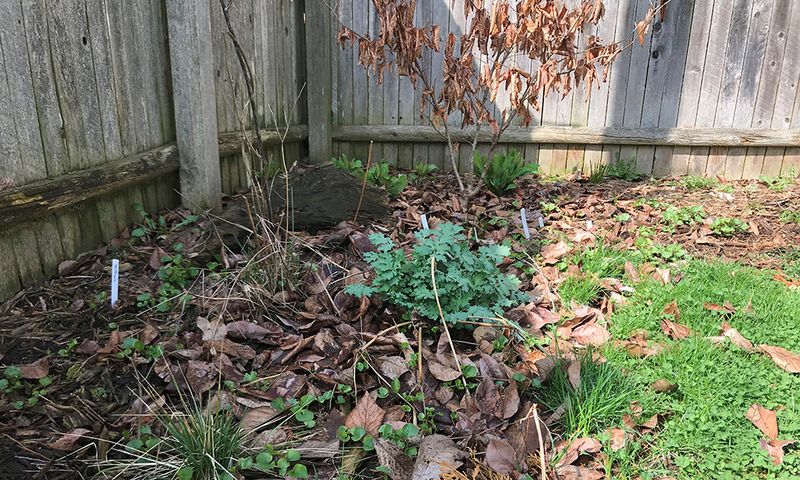
Lift a handful of old leaves on a winter day and you are peeking into a crowded apartment building. The turtle may be the biggest tenant, but it is far from alone.
Firefly larvae spend the cold months in moist leaf litter and soil, hunting snails and slugs when temperatures allow. Many moths and butterflies overwinter there too, as eggs, caterpillars, or chrysalises.
Woolly bear caterpillars, the fuzzy orange and black ones, curl up under leaves and wait for spring.
Salamanders, toads, and wood frogs also lean on this layer. Wood frogs can partly freeze and thaw out again, which still amazes me every time I read about it.
Some bumblebee queens spend winter just under the soil and litter as well.
The neat part ties it all together. In spring, those insects become food for songbirds raising chicks, and slugs and worms become meals for hungry box turtles waking up.
Bagging leaves removes a whole season of food along with the shelter.
You do not have to leave every leaf. Even a few thick patches under trees and shrubs give these tiny neighbors a real shot at spring.
8. Move Fallen Leaves Into Beds Instead of Bagging Them for Turtles
My favorite fall chore is the one where I move leaves instead of hauling them away. It feels like giving the yard a warm blanket rather than a buzz cut.
Start with the lawn, since thick mats of wet leaves can smother grass. Rake or blow those leaves off turf, then spread them 2 to 4 inches deep over garden beds, around shrubs, and under trees.
As they break down, they feed the soil and help hold back weeds.
A mulching mower is another easy option. It chops leaves into small bits that slip down into the grass and break down quickly, adding organic matter without bagging.
Just walk the area first and skip tall, leafy edges near the woods.
Mark a ‘leave it alone’ zone along tree lines and brush piles. Wait to tidy those spots until mid-spring, when daytime temperatures stay above 50 degrees and turtles are up and moving.
Shredded leaves also make a fine compost ingredient if you have extra.
Many Ohio cities and extension programs now encourage residents to keep leaves on site. Small changes like these turn an ordinary backyard into a safe winter home for box turtles.