The Best Ohio Arboretums To See Peak Fall Color This October
October in Ohio smells like crunchy leaves and warm cider. The air turns crisp, and the trees start showing off like they rehearsed all summer.
Some spots put on a better show than others, though. The best ones feel like walking straight into a giant box of crayons.
Peak color usually hits the north and middle of the state in mid-to-late October. Southern Ohio often catches up near the end of the month.
So grab a jacket and a camera with plenty of storage. Your next favorite fall walk might be closer than you think.
1. Holden Arboretum Brings Northeast Ohio’s Forests Into Full Color
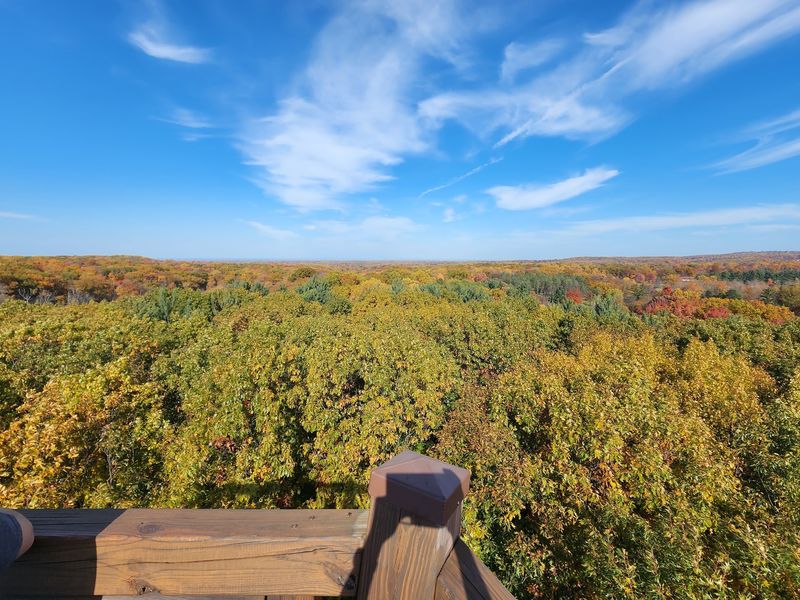
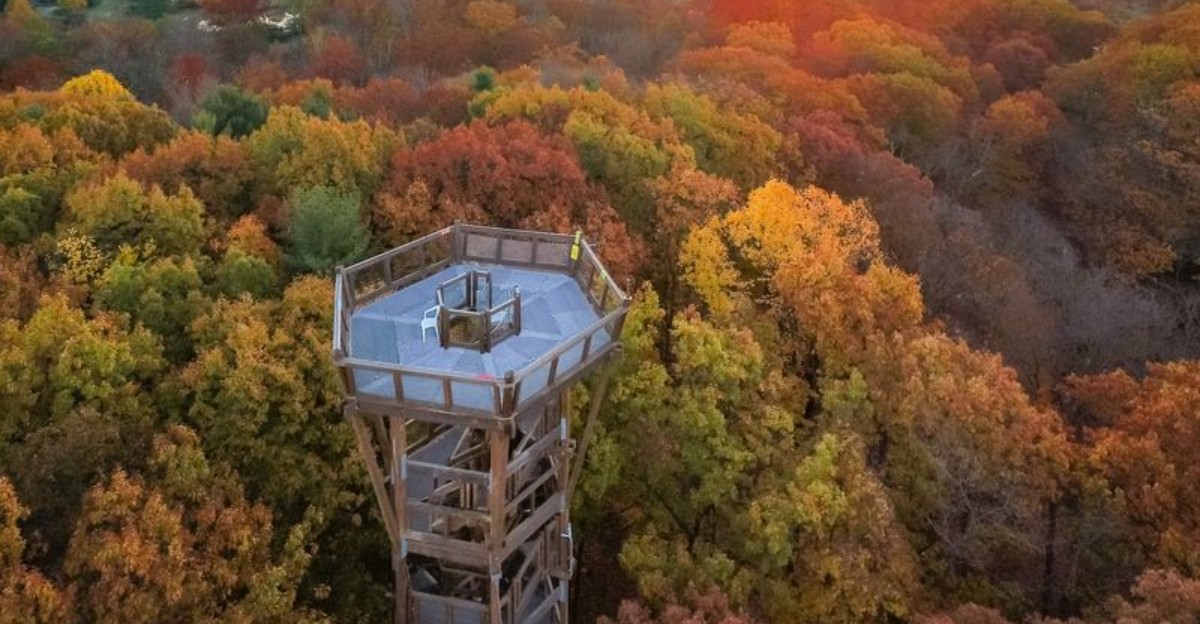
Picture yourself standing 65 feet up, eye to eye with a sugar maple glowing like a campfire. At Holden Arboretum situated at 9550 Sperry Rd, Kirtland, that view is part of a normal fall visit.
The Murch Canopy Walk lets you stroll through the treetops on a sturdy walkway. For an even bigger thrill, the Kalberer Emergent Tower climbs 120 feet above the forest floor.
From the top, the woods below look like a patchwork quilt of red, orange, and gold.
Color starts showing up in September, but October is when things really heat up. Keep an eye out for sugar maples, red maples, and Persian ironwood.
These trees tend to steal the spotlight with their bright autumn shades.
Not a big hiker? Tram tours give you a relaxing ride past the best scenery.
If you like exploring, the Woodland Trail now leads into the newer Pierson Valley trails.
October also brings some fun extras to the grounds. Skeleton Grove shows off skeletons decorated by local artists, which kids tend to love.
Fall Forest Fest adds food trucks, live music, and crafts to the mix.
Here is a sweet bonus for families. Free professional family photos are offered on Saturdays in October, so wear your coziest sweaters and smile.
2. Dawes Arboretum Pairs Fall Foliage With Miles Of Trails
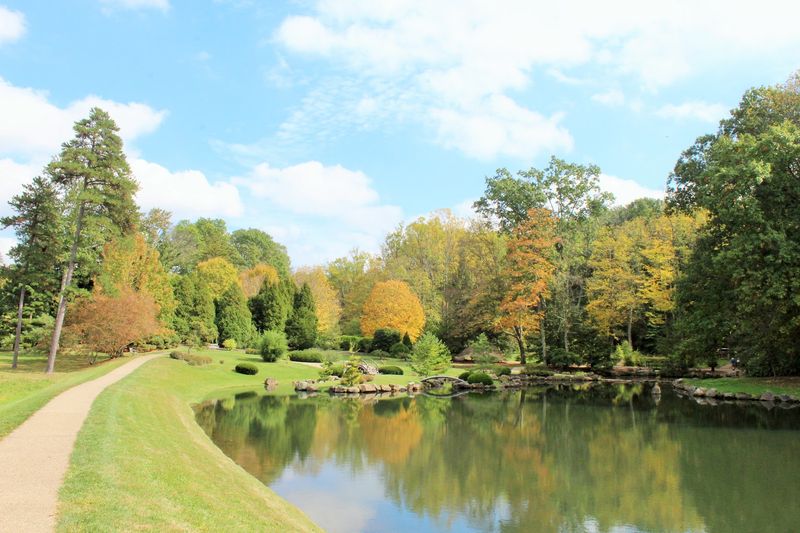
Got restless legs and a love for leaves? The Dawes Arboretum in Newark was practically made for you.
It sits about 30 miles outside Columbus and covers nearly 2,000 acres. You can find it at 7770 Jacksontown Rd, Newark.
You can walk 11 miles of trails or cruise along 4 miles of auto trails. Families with little ones might like the smooth, paved Dogwood Trail.
Folks craving adventure can tackle the rustic Gorge Overlook Trail instead.
Maple fans, get ready to be amazed. Dawes grows 336 kinds of maple trees, which means a wild mix of fall shades.
It also has big collections of buckeyes and dawn redwoods.
Here is a fun fact about that dawn redwood. It is a conifer from Asia, yet its needles turn deep golden brown and drop each fall.
Most people expect needle trees to stay green, so it surprises plenty of visitors.
Climb the three-level observation tower for a sweeping look at Conifer Glen and Dawes Lake. From up there, you can also spot the famous hedge lettering spelling out words across the lawn.
Your Ohio Garden Changes Every Week. Your Plan Should Too.
Gardening in Ohio changes quickly throughout the season. Every Friday you’ll receive a simple weekly plan showing exactly what to plant, prune, fertilize, harvest, and protect so you never miss the right timing.
On October weekends, Fall in Love with Dawes adds wagon tours and self-guided walks. Coffee and food trucks keep everyone fueled.
Hands-on activities give kids something to do between leaf-peeping stops.
3. Secrest Arboretum Packs Ohio Tree Diversity Into One Visit
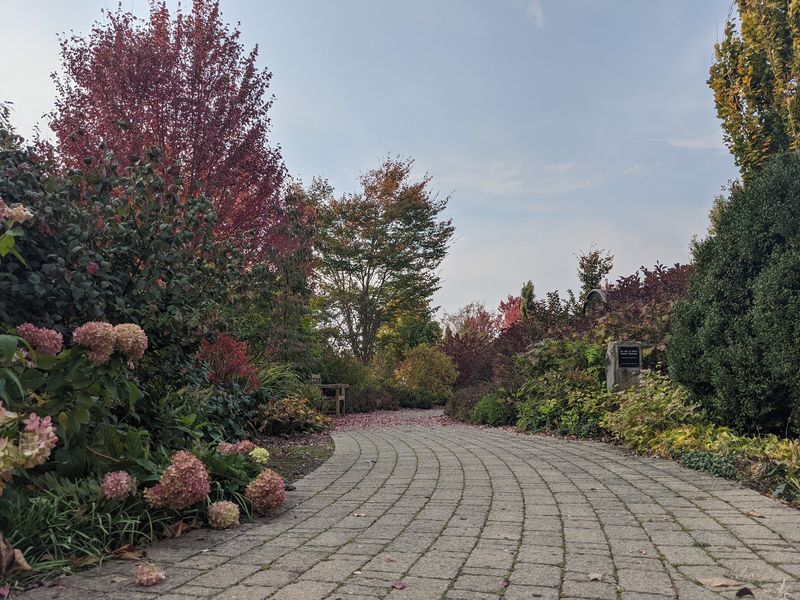
More than 4,000 kinds of trees, shrubs, and plants live at Secrest Arboretum at 2122 Williams Rd, Wooster. That is like a whole library of nature packed into just over 100 acres.
The arboretum belongs to Ohio State University’s College of Food, Agricultural, and Environmental Sciences. Scientists study plants here to learn what grows well in Northeast Ohio.
Lucky for us, all that research looks gorgeous in the fall.
Program director Jason Veil says any given day in late October brings beautiful color. That makes planning a trip a little less stressful.
You do not need perfect timing to catch a good show.
Blackgum trees, also called black tupelo, are the stars here. The Wildfire and Tupelo Tower varieties turn a fiery red that almost looks unreal.
Bald cypress and golden larch add warm, rusty tones to the scene.
Shrubs get in on the fun too. Large fothergilla, hybrid witch hazel, fragrant abelia, and Carolina allspice all bring their own flair.
Some even smell nice as you walk past.
Paths wind and curve through display gardens and woodlands. Bring a notebook or a phone to jot down favorites.
You might find the perfect tree to plant in your own backyard next spring.
4. Cox Arboretum Delivers Big Views Across Its Hillside Trails
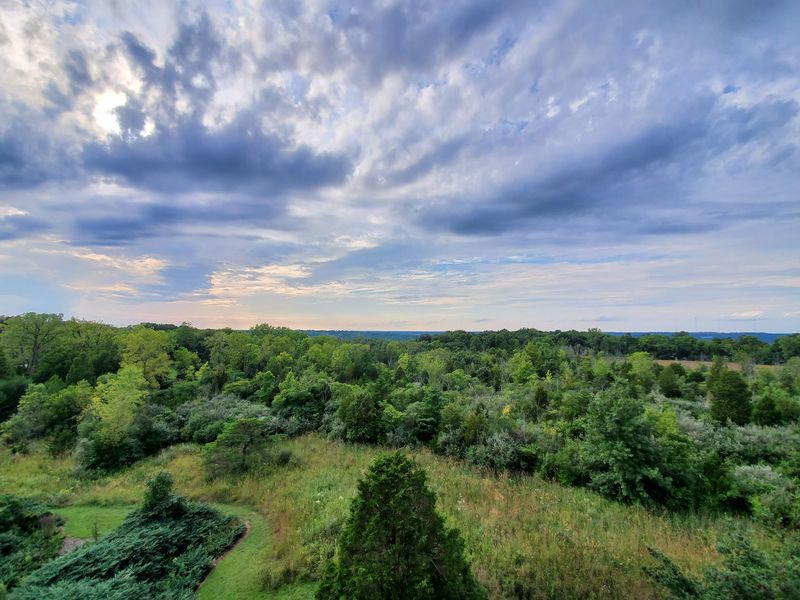
Free admission and a tower above the trees sounds like a pretty great deal. Cox Arboretum at 6733 N Springboro Pike, Dayton gives you both, plus 189 acres of forests, meadows, and ponds.
The Tree Tower is the big crowd-pleaser here. It stands around 56 to 65 feet tall and looks out over the Miami Valley.
On a clear October day, the whole valley seems to glow in warm colors.
Horticulturist Kelly Woods has a tip for visitors. She suggests the yellow and blue nature trails, which weave through the woodlands.
Together, the paved and natural paths add up to about 3.5 miles.
Wander into the Ruth Cummings Mead Woodland for a quieter moment. Tall, mature trees and native wildflowers fill this shady spot.
You will also find two groves of pawpaw trees, which grow the largest fruit native to North America.
Nature lovers should swing by the Conservation Corner too. It shows off tallgrass prairie, shrublands, and wetlands in one area.
A bird blind lets you watch feathered visitors without scaring them off.
Here is a handy bonus for busy families. The park stays open until 10 PM in October.
An after-school or after-work walk fits right into the schedule.
5. Chadwick Arboretum Offers Fall Color Near Columbus
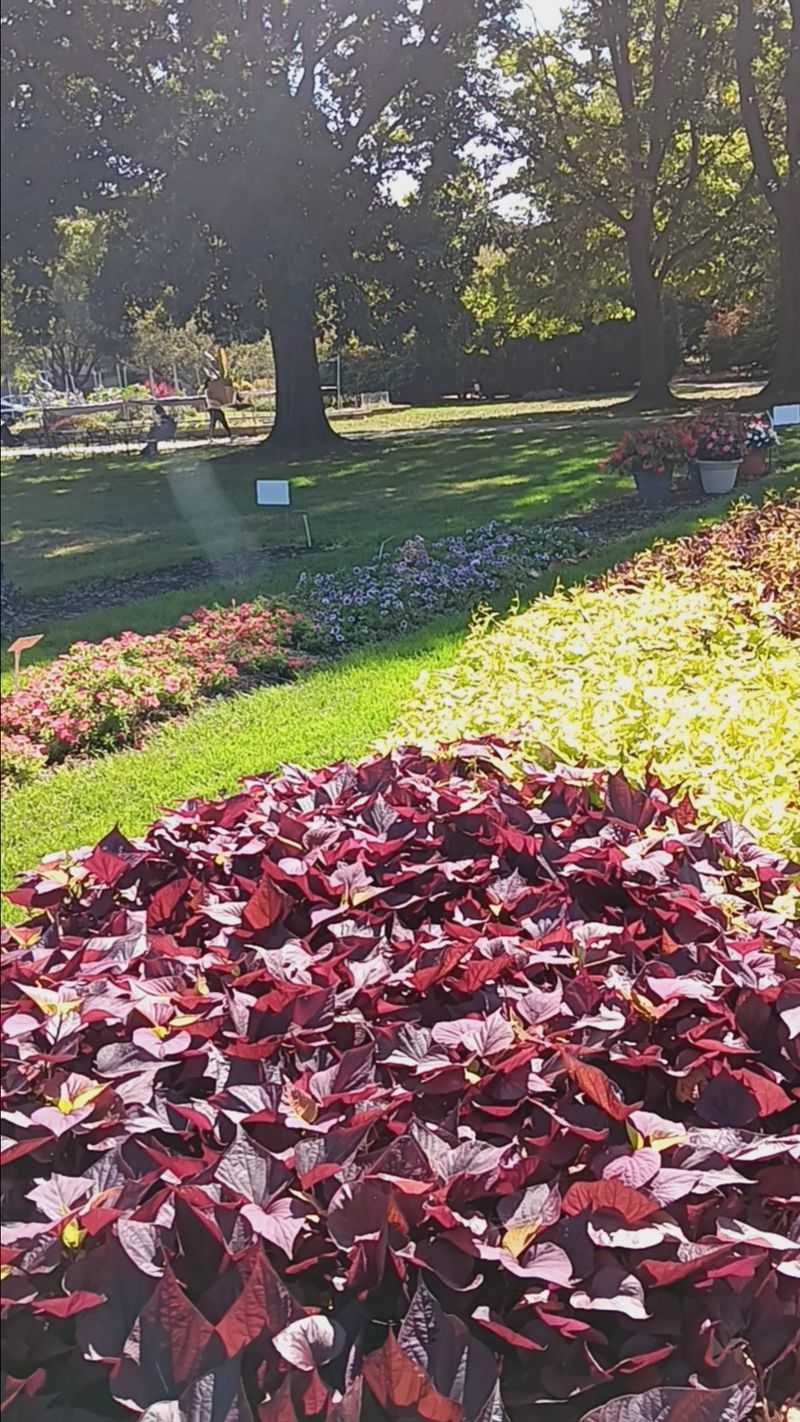
Right in the middle of a busy college campus sits a peaceful surprise. Chadwick Arboretum at 152 Howlett Hall, 2001 Fyffe Court, Columbus covers more than 60 acres of green space.
Arboretum North is the largest section, and it feels like a mini escape from the city. A calm lake reflects the bright leaves on sunny days.
Around 1,000 native trees make sure there is plenty of color to enjoy.
Look closely and you will spot a tiny house tucked into the grounds. It is a net zero home, which means it makes as much energy as it uses.
Curious kids often want a peek inside.
Each October, the Fall Foliage Open House turns the arboretum into a festival. Families can try nature crafts, grab lunch from food trucks, and listen to live music.
Guided tours help you learn about the trees around you.
Want the brightest leaves without guessing? Special guided walks point out the trees with the boldest and most varied fall colors.
It is a smart way to learn what makes a maple turn red.
Collections here include buckeyes, native trees, conifers, and willows. Pack a picnic and settle in by the lake.
City life can wait for an afternoon.
6. Mt. Airy Arboretum Adds Cincinnati-Area Color To October
Back in 1911, Cincinnati started planting trees on worn-out farmland. More than 1 million trees later, Mt.
Airy Forest at 5190 Arboretum Rd, Cincinnati became the first city reforestation project in the nation.
Tucked inside that giant forest is the Mt. Airy Arboretum.
People like to call it a tree museum, and the name fits. Its 30 acres hold neat collections of trees, shrubs, and flowers.
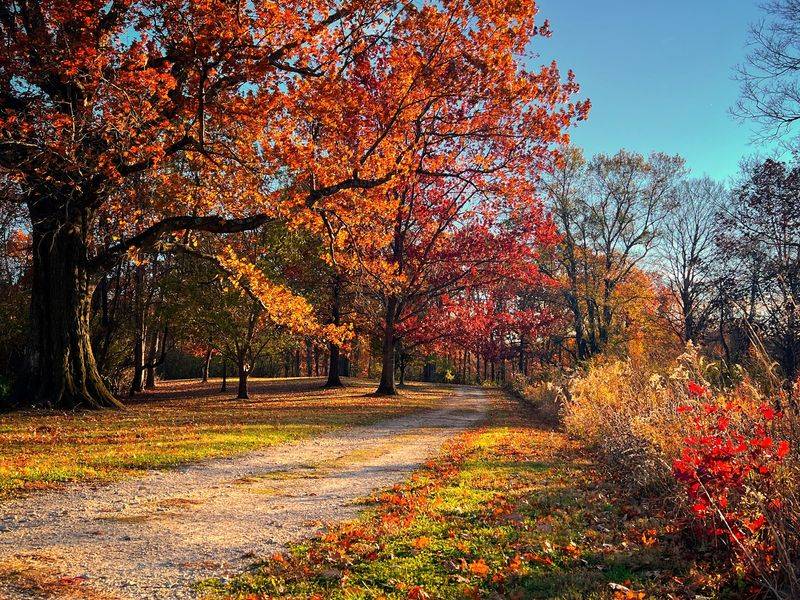
Dogwoods are the showstoppers here in autumn. Their leaves turn brilliant red and deep crimson, like a painter spilled a bucket of cherry juice.
They pop against the golden trees nearby.
The bigger forest stretches across more than 1,450 acres. Hiking, horse, and biking trails wind all over the place.
You could spend a whole day exploring and still find new corners.
One spot deserves a special visit. Mt.
Airy Forest has the only wheelchair-accessible public treehouse in Ohio. Everyone in the group can climb up and enjoy a leafy view together.
Timing matters in southern Ohio. The Cincinnati area usually reaches peak color from mid-to-late October.
Check the weekly fall color reports from the Ohio Department of Natural Resources before you head out, and plan your picnic around the brightest week.
7. James H. McBride Arboretum Showcases Northern Ohio Foliage
Some fall trips feel like big adventures, while others feel like a calm deep breath. The James H.
McBride Arboretum at Huron is the deep-breath kind.
Erie Metroparks and Bowling Green State University teamed up to create this 50-acre spot. It sits on the BGSU Firelands campus near Lake Erie.
Over 200 kinds of flowers, trees, and shrubs grow here, and many are native to the Firelands area.
An easy asphalt path loops about half a mile around Parker Lake. It is perfect for strollers, grandparents, or anyone who wants a relaxed walk.
The water mirrors the orange and yellow leaves on still mornings.
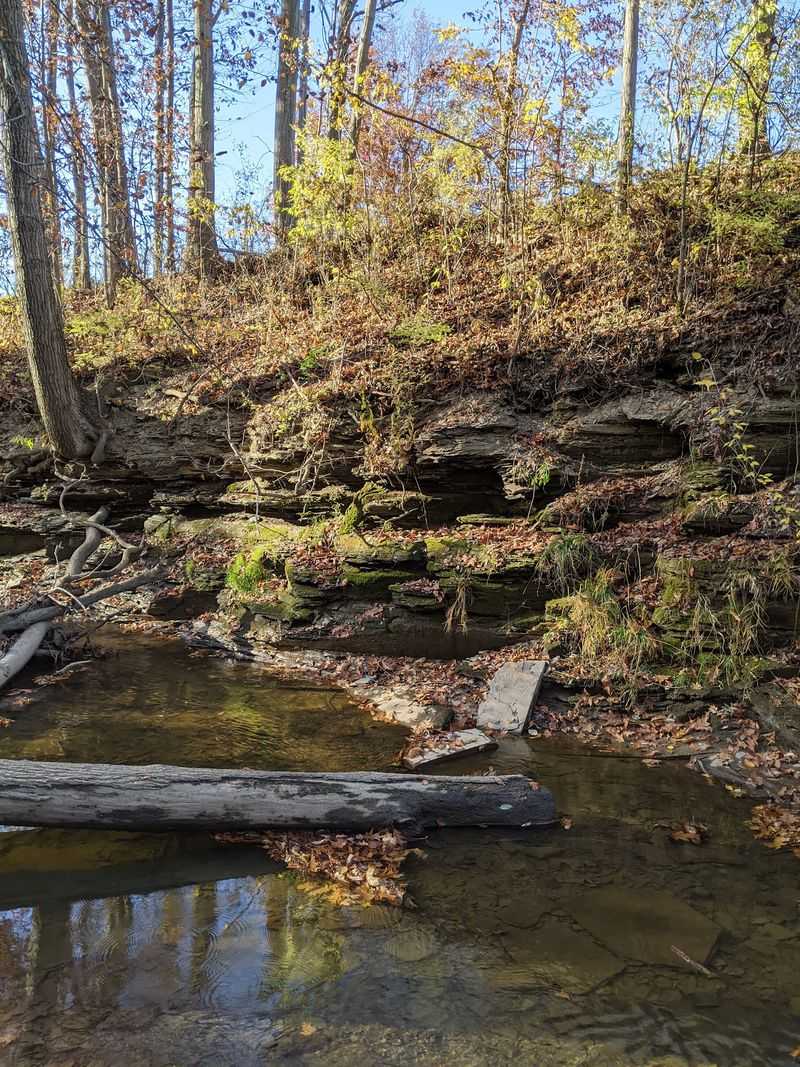
Craving something wilder? Extra trails lead hikers into the woods along Sawmill Creek.
The crunch of leaves under your shoes makes the whole walk feel extra cozy.
Restored prairie plots add another layer of beauty. Tall grasses turn soft bronze and tan in fall, swaying in the lake breeze.
They make a lovely backdrop for family photos.
The arboretum is especially proud of its flowering crabapple trees. In autumn, many hold small, colorful fruit that birds enjoy.
Gates open from 8 AM to dusk every day, so plan an early visit if you like quiet trails.
8. Rowe Arboretum Brings Autumn Color To Cincinnati’s East Side
Small but mighty is the best way to describe Rowe Arboretum. At just 9.75 acres in Indian Hill, it proves you do not need huge spaces for huge color.
The story starts in 1926 with Stanley and Dorothy Rowe. They turned their estate garden into a collection of plants gathered from around the world.
Their love of trees still shapes every corner today.
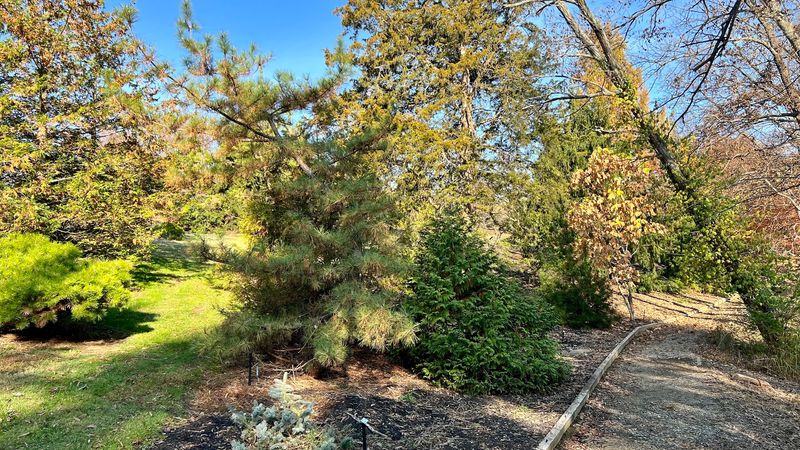
Evergreens are a big focus here, and they make fall leaves look even brighter. Deep green needles sit beside flaming reds and sunny yellows.
That contrast makes photos look like postcards.
Every plant has a label, which turns your walk into a fun learning game. Try guessing a tree’s name before reading the sign.
Kids often get hooked trying to beat their parents.
Do not miss the giant slice of a West Coast redwood. Counting its rings gives you a sense of how old these trees can grow.
It is a real jaw-dropper.
It’s located at 4600 Muchmore Rd, Cincinnati. Admission is free, and the arboretum opens daily in October from 7 AM to 7:30 PM.
Leave your furry friends at home, though. A no pet policy started in January 2024 to protect the plants and visitors.