7 Native Ohio Plants That Thrive Under Black Walnut Trees
Black walnut trees can make gardeners feel like the yard is working against them. Their shade is tough enough, but the real challenge sits in the soil, where juglone can make many popular flowers and shrubs struggle before they ever get settled.
That is why planting beneath a black walnut often turns into trial and error, with wilted leaves, weak growth, and bare spots that refuse to fill in. Yet that space does not have to stay empty.
Some native Ohio plants can handle the pressure and still bring texture, color, and life to a difficult part of the landscape. The trick is choosing plants already built for local conditions rather than forcing fussy favorites into the wrong spot.
With the right picks, the area under a black walnut can become more than a problem zone. It can look intentional, natural, and surprisingly full.
1. Plant Wild Ginger For A Low Woodland Groundcover
A bare patch under a walnut can look impossible until you stop treating it like a flower border and start treating it like a woodland floor.
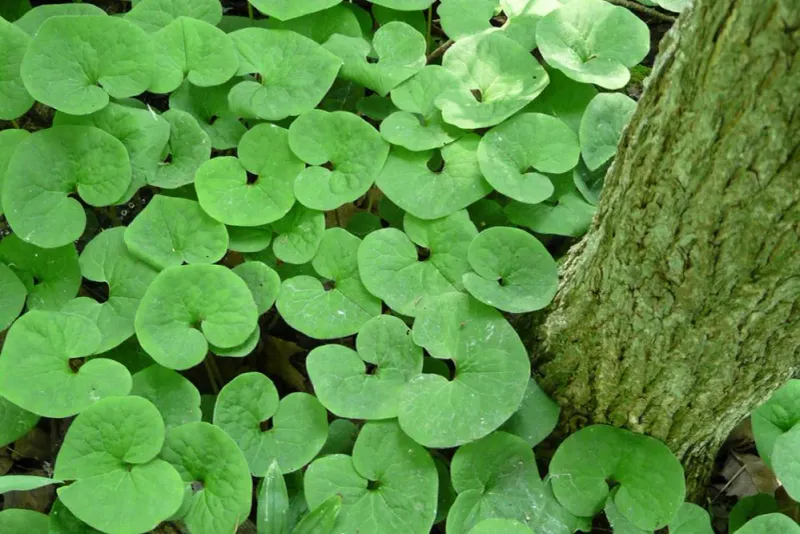
Wild ginger, known botanically as Asarum canadense, is a native groundcover that naturally grows in shaded forest understories across Ohio.
It spreads slowly by rhizomes to form a low, dense mat of heart-shaped leaves that can cover bare soil without requiring much fuss once it settles in.
That said, wild ginger is not a plant you can drop into dry, compacted dirt and walk away from. It performs best in humus-rich soil with consistent moisture, at least during its first growing season.
Under a walnut, soil tends to dry out fast because of root competition. Adding a thin layer of aged leaf compost around the planting area, but not against the walnut trunk, can help retain moisture and improve soil texture over time.
Juglone tolerance for wild ginger is widely cited by native plant sources, including references aligned with OSU Extension guidance on woodland plantings.
It is not immune to every challenge, but it handles the combination of shade, organic debris, and juglone exposure better than most ornamental groundcovers.
Plant small plugs or divisions in early spring or fall when the soil is workable. Avoid digging deeply through major walnut roots.
Keep new plants watered through dry spells for the first full season. Once established, wild ginger fills in gradually and provides a reliable carpet of green through the growing season.
Buy from a reputable native nursery rather than collecting from natural areas.
2. Use Virginia Bluebells For Spring Color Under Walnut Shade
Before the walnut canopy closes in and casts its heaviest shade, Virginia bluebells put on one of the most striking spring shows a woodland garden can offer.
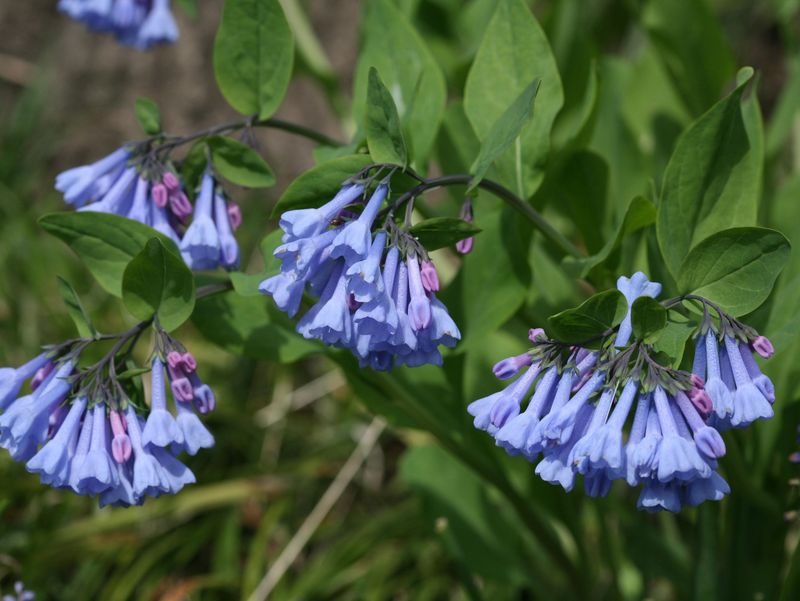
Mertensia virginica pushes up soft blue-green foliage and clusters of pink buds that open into sky-blue, trumpet-shaped flowers in early to mid-spring.
The timing works in its favor under walnut trees because it blooms and grows before summer shade deepens and soil dries out.
Virginia bluebells are a spring ephemeral, which means the foliage fades and goes dormant by early summer. That seasonal rhythm can actually suit a walnut planting well.
Your Ohio Garden Changes Every Week. Your Plan Should Too.
Gardening in Ohio changes quickly throughout the season. Every Friday you’ll receive a simple weekly plan showing exactly what to plant, prune, fertilize, harvest, and protect so you never miss the right timing.
The plant does its growing when conditions are cooler and moisture is more available, then retreats underground before the toughest stretch of summer arrives.
Plan for that gap by pairing it with a slower-growing groundcover that will fill in once the bluebells go dormant.
For best results, plant Virginia bluebells in moist, humus-rich soil with good organic content. They are not suited to hot, dry, or compacted ground.
Under a walnut tree, look for spots where leaf litter has broken down and the soil holds a bit more moisture, often closer to the trunk but not right against it. Avoid planting in areas where the soil stays bone dry all summer.
Juglone tolerance for Virginia bluebells is supported by multiple native plant and extension references. Buy nursery-grown plants or seeds from responsible growers.
Plant in fall for spring bloom, or transplant carefully in early spring. Water consistently while the plants are establishing, and let the foliage fade naturally before cutting anything back.
3. Grow Mayapple Where A Woodland Patch Can Spread
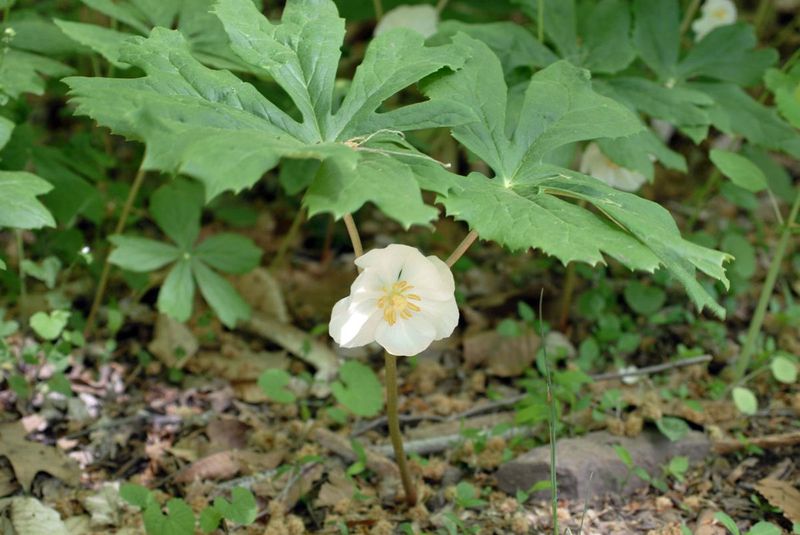
Few native plants look as boldly architectural as mayapple pushing up through the leaf litter in spring. Podophyllum peltatum unfurls large, umbrella-shaped leaves on knee-high stems and spreads steadily by underground rhizomes to form broad colonies.
Under or near a black walnut tree, that spreading habit can actually work in your favor because mayapple fills space that most ornamentals refuse to occupy.
Mayapple is best suited to naturalized areas, woodland edges, and larger shaded patches where spreading is welcome. It is not a plant for small, tidy formal beds where you need controlled edges.
Once a colony establishes, it can be difficult to redirect without significant effort. Think of it as a woodland groundlayer rather than a border plant, and site it accordingly.
It handles the combination of dappled shade, organic soil, and juglone exposure reasonably well according to native plant references and woodland garden sources. Moist to average soil with good organic matter is ideal.
Very dry, compacted soil under heavy root competition will limit its spread and vigor, so amend with aged compost if the soil is poor.
One important note: all parts of the mayapple plant contain toxic compounds. The unripe fruit, roots, leaves, and stems are not safe to eat.
Do not handle the plant and then touch your face, and keep children and pets away from the berries. Only a fully ripe fruit is sometimes described as edible, but expert identification is required.
Buy nursery-propagated plants from a reputable Ohio native plant source. Plant plugs or small divisions in early spring, disturbing existing walnut roots as little as possible.
4. Choose Wild Columbine For Dappled Light Near The Drip Line
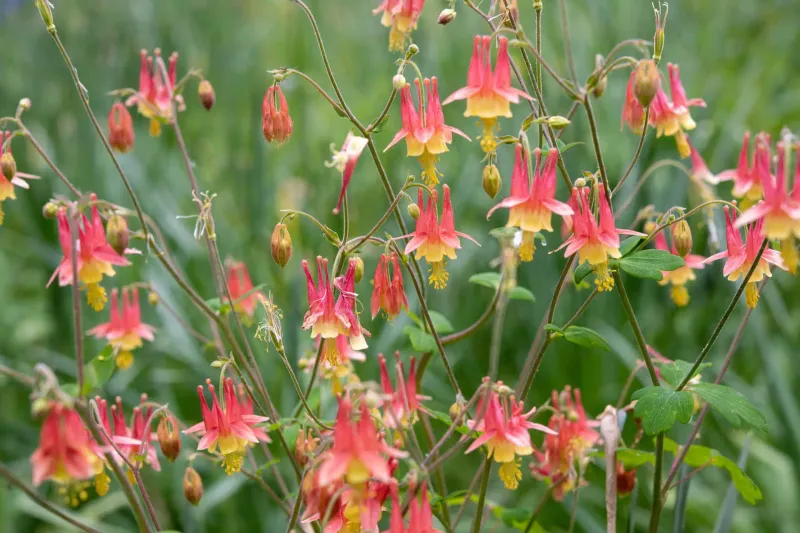
At the outer edge of a walnut’s canopy, where sunlight filters through in shifting patches, wild columbine finds a more comfortable home than it would in deep shade.
Aquilegia canadensis is a graceful native perennial with distinctive red and yellow nodding flowers that hummingbirds visit eagerly in spring.
The drip line zone, where the canopy thins and light improves, suits it far better than the dark interior under the tree.
Wild columbine needs at least dappled light to bloom well. Planting it in dense, unbroken shade will result in weak stems and sparse flowers.
Position it where it receives a few hours of indirect or broken light each day. The drip line and woodland edges of a walnut planting are often the most realistic spots for this plant to perform at its best.
Soil drainage matters here. Wild columbine handles average to dry soil better than many woodland plants, which actually helps near walnut trees where root competition pulls moisture away quickly.
It does not want wet feet or heavy clay that stays soggy. Rocky or lean soil with decent drainage can work well, especially at sunnier edges of the planting zone.
Juglone tolerance for wild columbine is reported in multiple native plant sources. It often self-seeds lightly where conditions suit it, so expect a small population to develop over a few seasons if the site works.
Avoid transplanting large, established plants because the taproot resents disturbance. Start with small nursery plugs in spring or fall and water regularly until roots settle in.
Always source plants from responsible native nurseries rather than wild collection.
5. Plant Jacob’s Ladder For Soft Blue Spring Flowers
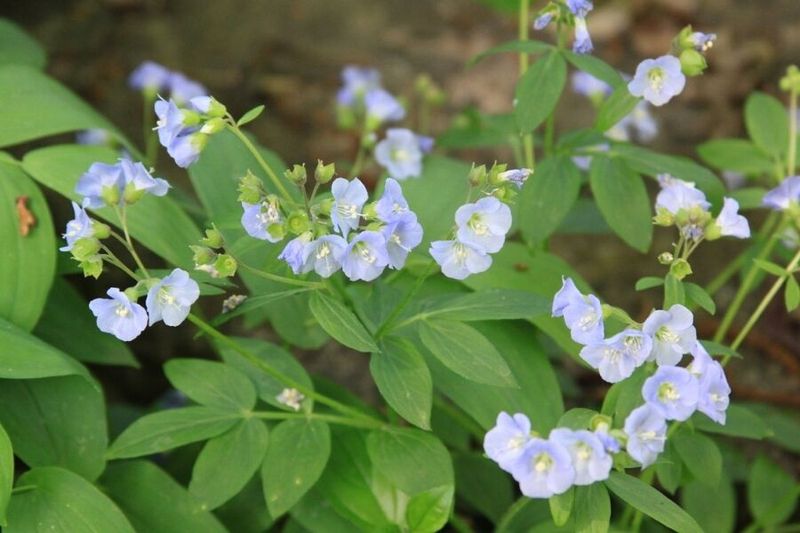
There is a quiet elegance to Jacob’s ladder that makes it stand out in a shaded woodland bed.
Polemonium reptans, the native species found across Ohio, carries soft blue to lavender bell-shaped flowers above finely divided, ladder-like foliage in mid-spring.
The ferny leaves remain attractive even after bloom, giving the planting texture through much of the growing season before the plant eases back in summer heat.
Jacob’s ladder works well in partly to fully shaded spots where the soil holds reasonable moisture. Under a walnut tree, look for areas where organic matter has accumulated and the ground does not dry to dust by June.
Spots that receive morning light or dappled afternoon light tend to support the best flowering. Deep, unrelenting shade with bone-dry soil is not a good match for this plant.
Juglone tolerance for Jacob’s ladder is cited by native plant references and woodland gardeners with experience planting near black walnuts.
It is not the toughest plant on this list, but when sited carefully in moist, organic soil with adequate indirect light, it can hold its own in the walnut zone.
Avoid placing it in hot, exposed areas or in soil that bakes dry by midsummer.
Plant small plugs in spring or early fall. Keep the root zone consistently moist for the first full growing season while the plant establishes.
Mulching lightly with aged leaf compost, kept away from the plant’s crown, can help retain soil moisture and moderate temperature swings. Jacob’s ladder may self-seed modestly where it is happy.
Buy from reputable native nurseries and avoid collecting from natural populations.
6. Use Christmas Fern For Evergreen Texture In Dry Shade
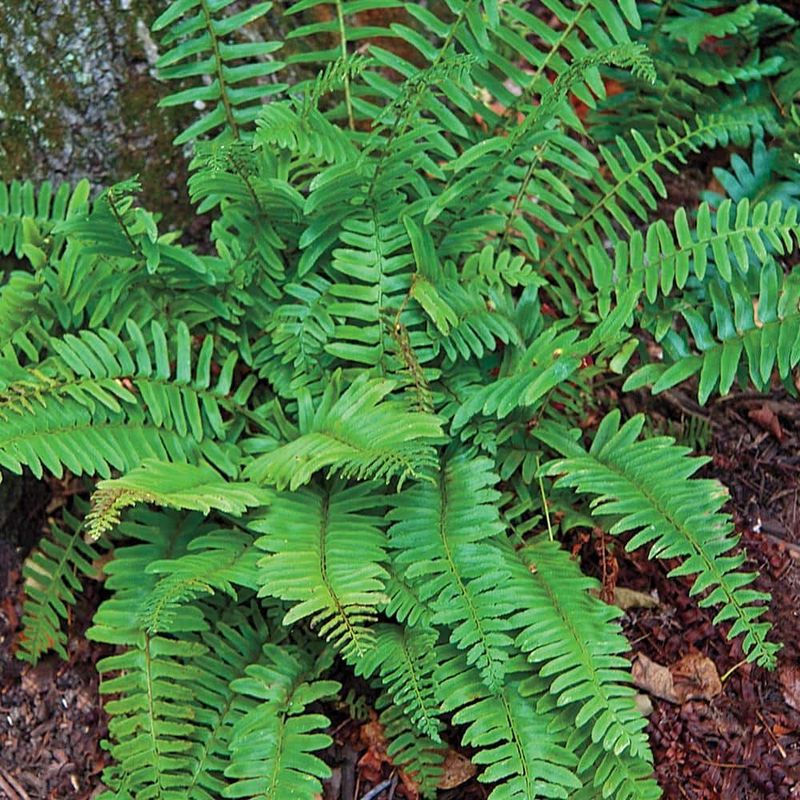
Beside exposed walnut roots where the soil is thin and the shade is heavy, most plants simply struggle to hold on. Christmas fern, Polystichum acrostichoides, is one of the few native plants that can manage these conditions with reasonable consistency.
Its dark green, leathery fronds stay evergreen through winter. That gives a shaded walnut planting some visual structure even in the coldest months when everything else has gone brown.
One reason Christmas fern earns its reputation in difficult spots is its tolerance for dry shade and root competition. It does not demand rich, moist soil the way some woodland plants do.
Once established, it can handle the low moisture and heavy shade that come with a mature walnut canopy better than most ornamental ferns. That combination of traits makes it a practical choice where options are limited.
Even so, establishment takes patience. New plants need consistent watering through their first growing season, especially during summer dry spells.
Planting small nursery divisions in spring gives the roots time to settle before summer heat arrives. Avoid digging large holes through major walnut roots.
Work with the existing soil as much as possible, and add a thin layer of aged leaf compost to the surface if the ground is very compacted.
Juglone tolerance for Christmas fern is well documented in native plant and extension resources. It is widely recommended for shaded walnut sites by woodland gardeners across the region.
Space plants about 18 to 24 inches apart to allow room for their arching fronds. Buy from reputable native nurseries.
Do not collect ferns from natural areas, as wild populations can be slow to recover from removal.
7. Grow White Wood Aster For Late-Season Walnut-Tree Color
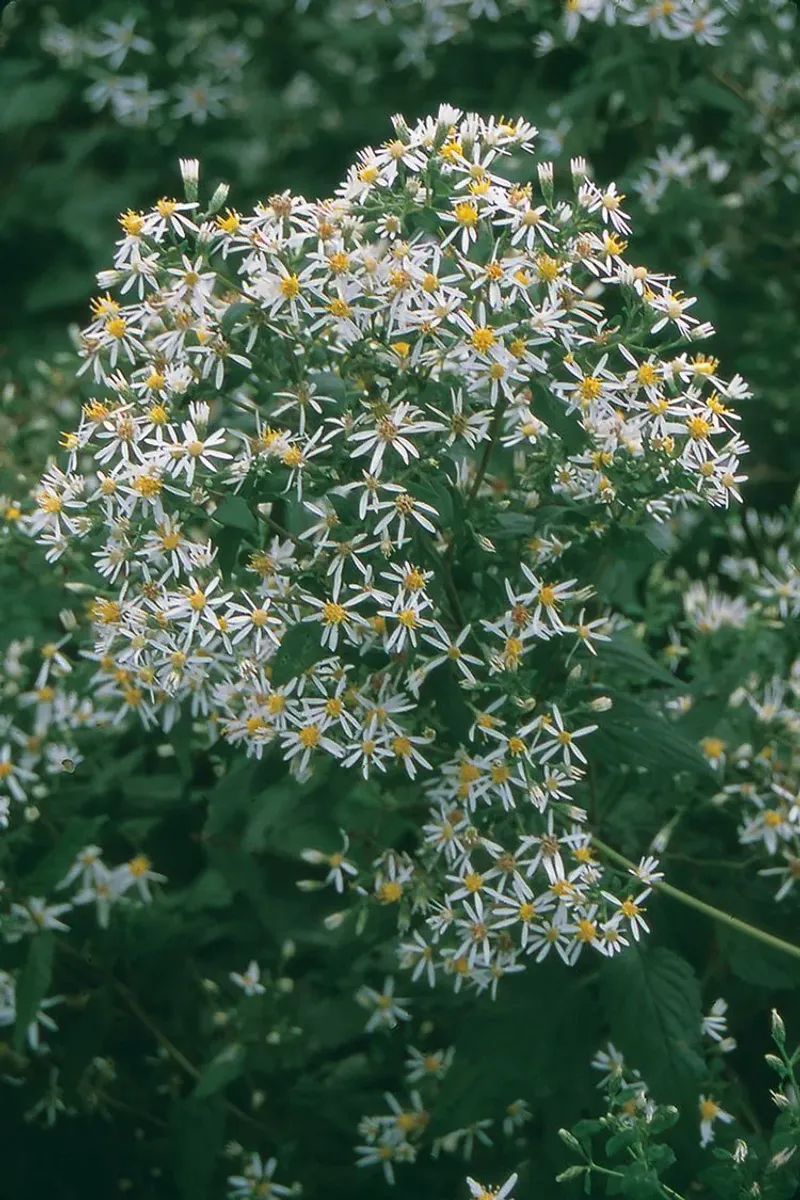
By late summer, most Ohio shaded gardens under walnut trees have gone quiet. White wood aster, Eurybia divaricata, changes that.
It sends up branching stems covered in small white flowers with yellow centers from late summer into fall. That offers some of the only late-season bloom available in a heavily shaded woodland planting.
For pollinators still active in September and October, that timing matters.
White wood aster tolerates more shade than many asters, which makes it a realistic option under or near a walnut canopy where light is limited.
It handles average to dry soil reasonably well once established, which suits the root-competitive conditions common beneath a large walnut tree.
Moist, organically rich soil will produce lusher growth, but the plant does not strictly require it the way some spring-blooming woodland species do.
Spread is something to plan for. White wood aster can move by both seed and rhizome where conditions suit it.
In a naturalized or woodland-edge setting, that spreading habit fills space effectively. In a smaller, more controlled bed, you may want to pull seedlings or divide the clump every few years to keep it in bounds.
It is not invasive, but it is enthusiastic when happy.
Juglone tolerance for white wood aster is supported by native plant references. It is also consistent with its natural habitat in woodland-edge environments where black walnut often grows as a native tree.
Plant nursery-grown plugs in spring or fall. Water consistently through the first season.
Avoid cutting stems back until early spring to leave seed heads for birds over winter. Always buy from reputable native plant sources rather than collecting from the wild.