You Can Toss An Old Bird Nest From Your Maryland Porch, But You Can’t Keep It
A federal law signed in 1918 still decides what you can do with a handful of twigs on your porch light. That law covers more than 1,000 bird species, and it reaches all the way to a single fallen feather.
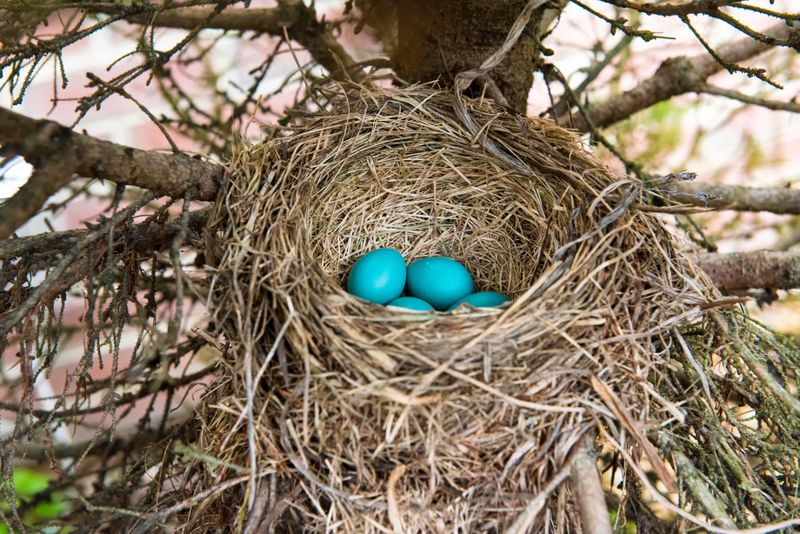
I found an empty nest above my Maryland front door last fall. It was a tidy little cup of grass, mud, and one stray piece of red yarn. My first thought was a shelf in the living room.
Truth is, that cute idea had a legal problem. Tossing the old nest was fine, but tucking it away as a keepsake was not.
So why can a nest go in the compost but not on your bookshelf? The answer says a lot about how seriously the country protects its songbirds, and it might change how you look at your porch rafters.
That Empty Nest On Your Porch Light Comes With Strings Attached
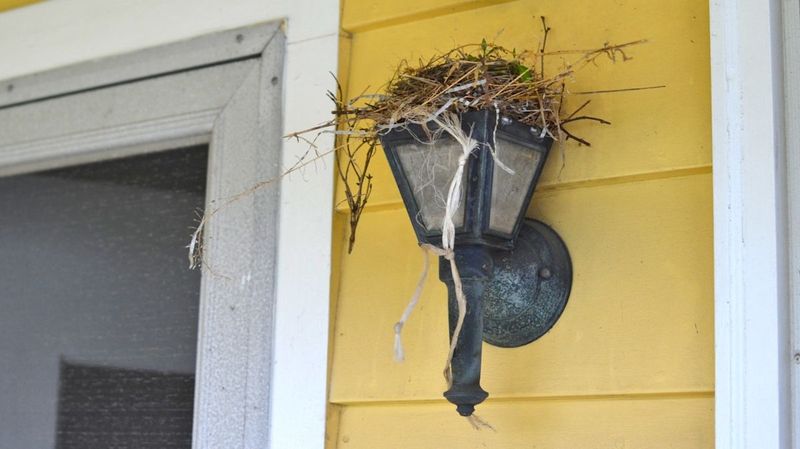
Grass, mud, a bit of moss, and maybe a scrap of string. A nest left behind on a porch light looks like the most harmless thing in the world.
Here’s what surprised me. That little cup is still connected to the bird that built it, at least in the eyes of the law. Most native birds in the United States are protected, and the protection covers their nests, eggs, and feathers too.
It doesn’t matter that the babies flew off months ago. It also doesn’t matter that the nest is sitting on your own house. The rules focus on what you hold onto, not where you found it.
Many folks in Maryland have no idea about this. I sure didn’t. Robins, house finches, Carolina wrens, and eastern phoebes all love porches, ledges, and wreaths, so these nests turn up on homes across the state every year.
The idea behind the rule is simple. If people could freely collect nests, it would be very hard to tell an innocent souvenir from something taken out of an active nest. Protecting all of them closes that loophole.
So before you admire that tidy little bowl too long, know what it really is. It’s protected property belonging to wildlife, not a free craft supply.
A 1918 Bird Treaty Decides Whether That Nest Stays On Your Shelf
Back in 1916, the United States and Great Britain, acting for Canada, agreed to stop the mass slaughter of birds for hats and markets. Out of that came the Migratory Bird Treaty Act, often called the MBTA.
The law makes it illegal to take, possess, sell, or transport protected birds, their parts, nests, or eggs without a permit. The key word for porch owners is possess. Keeping a nest, even an empty one that blew down, counts as possession.
Don’t let the word migratory fool you. The protected list includes plenty of birds that hang around all year, like cardinals, chickadees, and blue jays. More than 1,000 species are on it.
Maryland adds its own layer through state wildlife laws managed by the Department of Natural Resources. Those rules also restrict keeping protected birds and their parts.
Fair warning, the permits that allow possession are mostly for scientists, museums, and approved educators. A homeowner wanting nest decor won’t qualify.
Will a game warden knock on your door over one nest? Probably not. Still, the law is clear, and the honest move is to let it go.
Tossing An Inactive Nest Into The Compost Pile Is Usually Fine
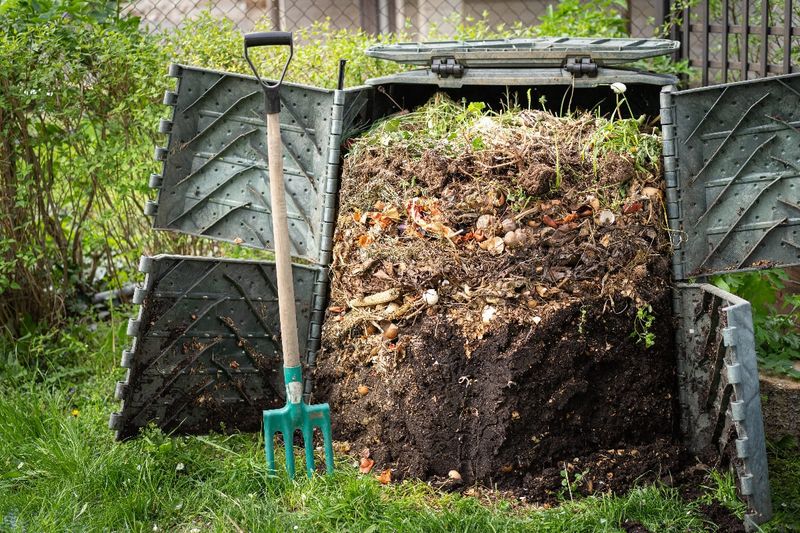
I’ll admit I felt a bit relieved learning this part. You can generally remove an old nest, as long as it’s inactive and you don’t keep it.
The U.S. Fish and Wildlife Service explains that destroying an inactive nest of most species isn’t prohibited under the MBTA, provided no birds or eggs are harmed and nothing is kept. Inactive means no eggs and no chicks inside.
So that crumbly nest wedged above your door can go. Here’s a simple way to handle it:
Put on gloves first, since old nests can hold mites, droppings, and bacteria. Lift it out gently and drop it straight into your compost or yard waste bin. Wash your hands afterward, even with gloves.
Late fall and winter are the easiest times in Maryland, after most nesting has wrapped up. You’ll rarely find an occupied songbird nest on a porch in December.
One more tip. Some birds, like barn swallows and phoebes, reuse old nests, so clearing a spot may send them elsewhere next year. That’s fine if you want your doorway back, but leave it if you enjoy the company.
Blue Robin Eggs In The Nest Mean Hands Off Until The Babies Leave
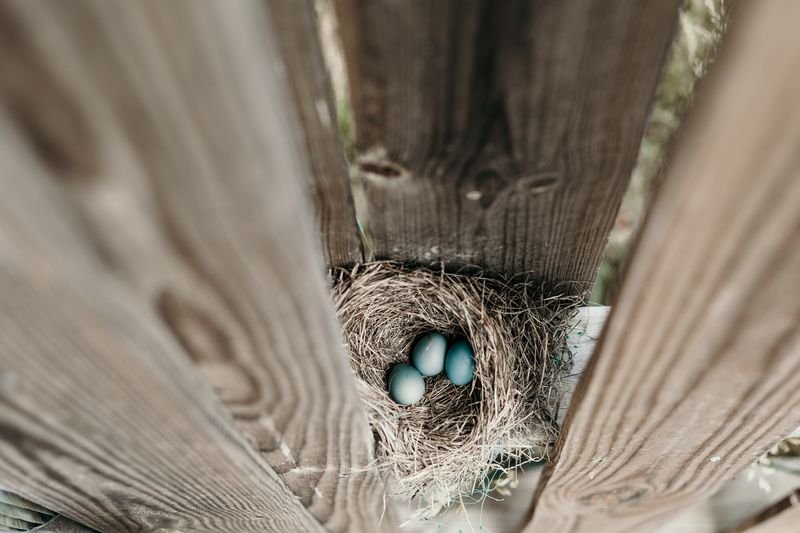
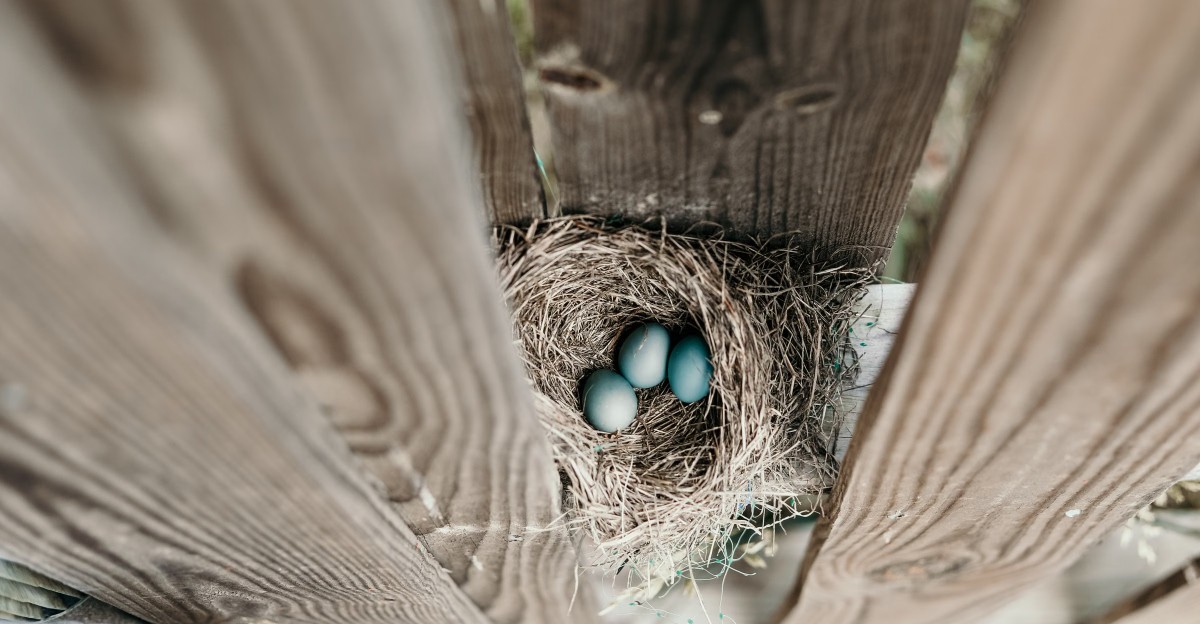
Spotting three sky-blue eggs above your front door is a thrill and a small inconvenience. Once eggs or chicks show up, that nest is off limits.
Moving or disturbing an active nest of a protected bird can break federal law. It doesn’t matter how awkward the location is, even if a mama robin dive-bombs you every morning.
Patience pays off here. Most backyard songbirds finish the whole job in about a month. Robins, for example, sit on eggs for around two weeks, and the chicks usually leave the nest about two weeks after hatching.
In Maryland, nesting can run from early spring into late summer, and some species raise two or even three broods. That means a nest that looks empty in June might get a fresh clutch soon after.
How do you tell if it’s active? Watch from a distance for adults flying in with food or sitting tight. Listen for peeping. If you see neither for a couple of weeks after the young have fledged, it’s likely done.
Meanwhile, use a side door if you can. A few weeks of detours buys you a front-row seat to something pretty special.
House Sparrows And Starlings Play By Different Rules
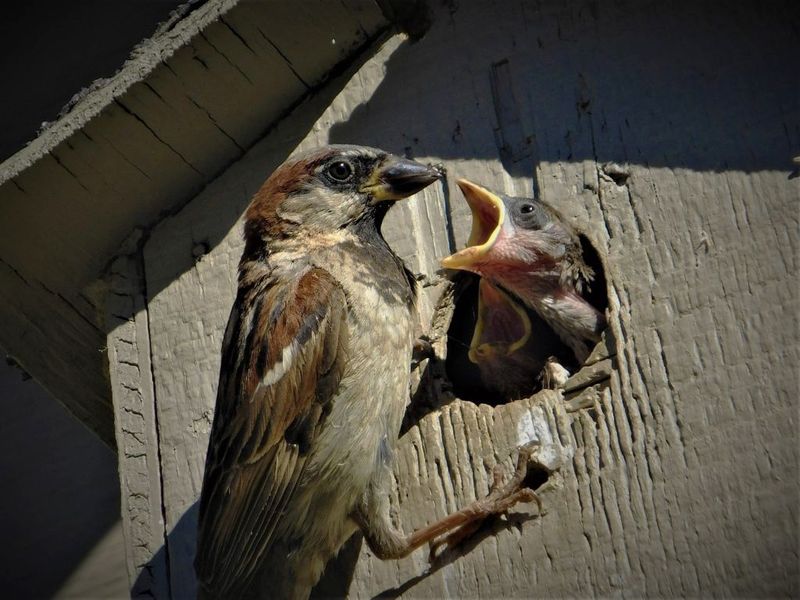
Not every feathered tenant gets federal protection. A few non-native birds sit outside the MBTA because they were brought here by people.
The big three are house sparrows, European starlings, and rock pigeons. Their nests can generally be removed at any stage under federal law.
Starlings showed up in New York’s Central Park in 1890, released by a group of bird fans. Today there are tens of millions across North America, and both starlings and house sparrows compete hard with native cavity nesters like bluebirds.
Telling them apart matters before you act. House sparrow nests are often bulky, messy wads of grass, trash, and feathers stuffed into gutters, vents, or signs. Starlings like holes in siding and soffits. Pigeons build flimsy stick platforms on ledges.
If you’re not sure who built the nest, look at the adults. Male house sparrows have a gray cap and black bib. Starlings are glossy and speckled with a pointed yellow bill in spring.
When in doubt, treat it as protected. Guessing wrong on a native bird is the mistake you don’t want. Checking local rules is smart too, since some areas have extra regulations.
Bald Eagle Nests Stay Protected Even When Nobody Is Home
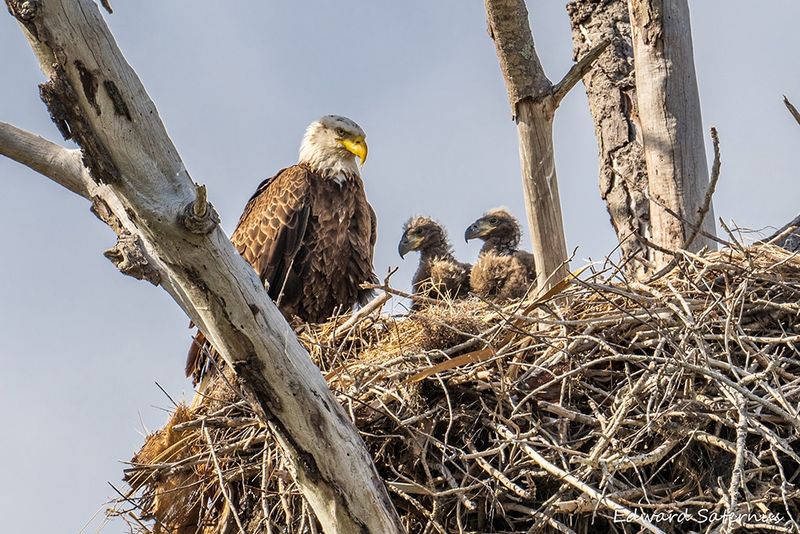
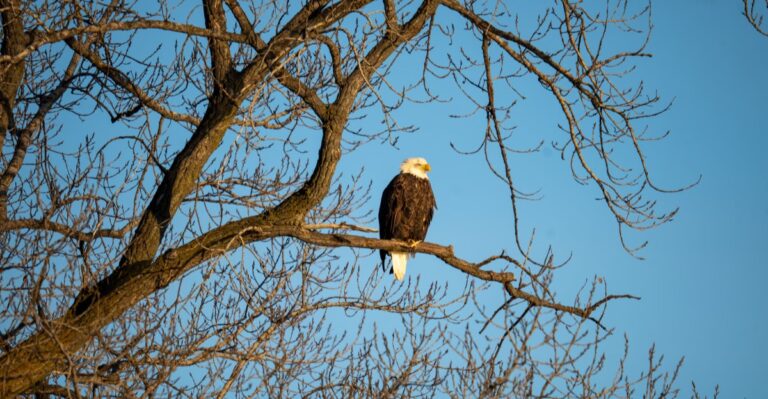
A bald eagle won’t be nesting on your porch, but the rule is worth knowing. Eagle nests follow stricter protection than songbird nests.
The Bald and Golden Eagle Protection Act covers these birds separately. Under it, eagle nests are protected even when they’re empty, because eagles often return to the same nest year after year.
Those nests get enormous. Pairs keep adding sticks each season, and some grow several feet wide and weigh close to a ton. One famous Florida nest weighed more than two tons.
Maryland has a real eagle success story. Around the Chesapeake Bay, numbers dropped sharply in the mid-1900s, mainly because of DDT. After the pesticide was banned and protections took hold, eagles bounced back, and the state now counts many hundreds of nesting pairs.
If your property sits near water and you have an eagle nest nearby, give it plenty of room. Federal guidelines recommend keeping activity well away from nests, often around 330 feet or more, especially during nesting season.
Feathers fall under this law too. Picking up an eagle feather on a walk and keeping it isn’t allowed, except through special permits, including those for Native American religious use.
A Cedar Nest Box Can Move Next Year’s Builders Off Your Porch
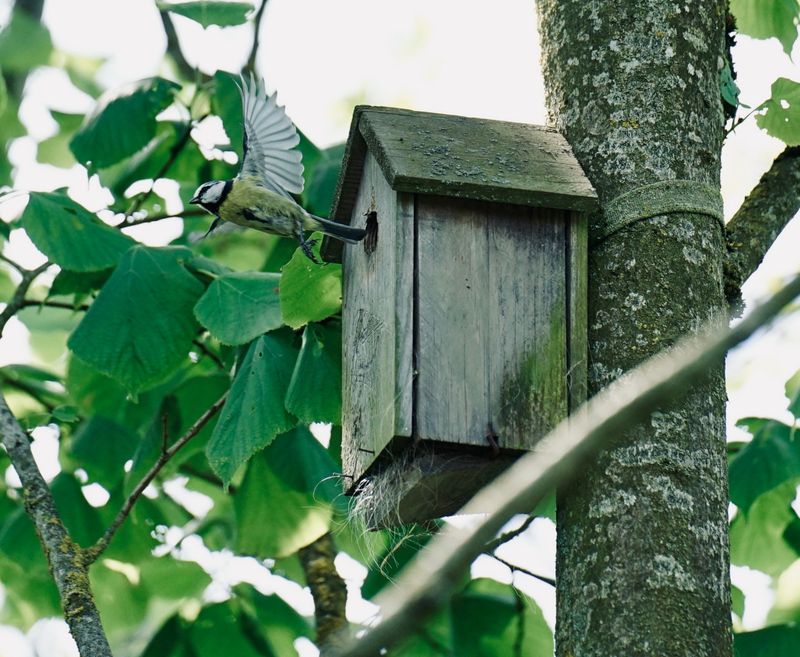
Every winter I scout my porch for the same handful of favorite nesting spots. Blocking them early and offering better options nearby saves a lot of trouble later.
Timing is the whole trick. Make changes after the nest is inactive and before the next nesting season starts, which in Maryland often means late fall through February.
To discourage porch nesting, try these ideas:
Cover ledges and beams with bird netting or a sloped board so there’s no flat landing spot. Hang shiny reflective tape near favorite corners. Move seasonal wreaths indoors when you’re not using them, since they’re a robin magnet.
Then give the birds somewhere better to go. A cedar nest box on a pole, about 5 feet up, can attract bluebirds, chickadees, or wrens. Robins and phoebes prefer open nesting shelves under an eave away from doors.
Native shrubs help a lot too. Serviceberry, arrowwood viburnum, and American holly give cover and food in Maryland yards.
Clean nest boxes once each fall with gloves, and toss the old material. It’s the same rule as the porch. Let the nest go, enjoy the memory, and get ready for the next feathered family.