Maryland Yards Are Filling With A Web That Shimmers Gold In Sunlight
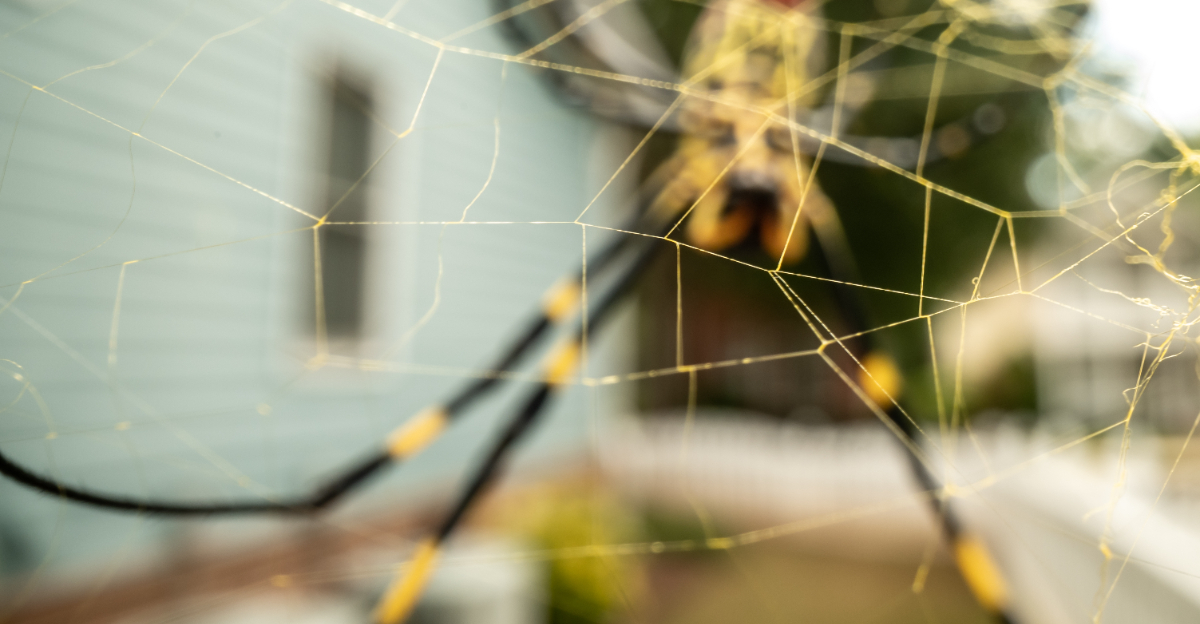
Step outside on a cool Maryland morning and something catches the light between the porch rail and the shrubs. It glints like spun honey, and it was not there yesterday.
Neighbors are trading photos and asking the same question. What builds a web that big, and why does it shine like that?
The answer arrived from far away and has been quietly moving north for about a decade. It is now turning up in yards from the suburbs to the Eastern Shore.
Before you reach for the broom, it helps to know exactly what you are looking at. Here is what those shimmering strands mean for your yard, your garden, and your morning walk to the car.
The Spider Behind The Golden Threads
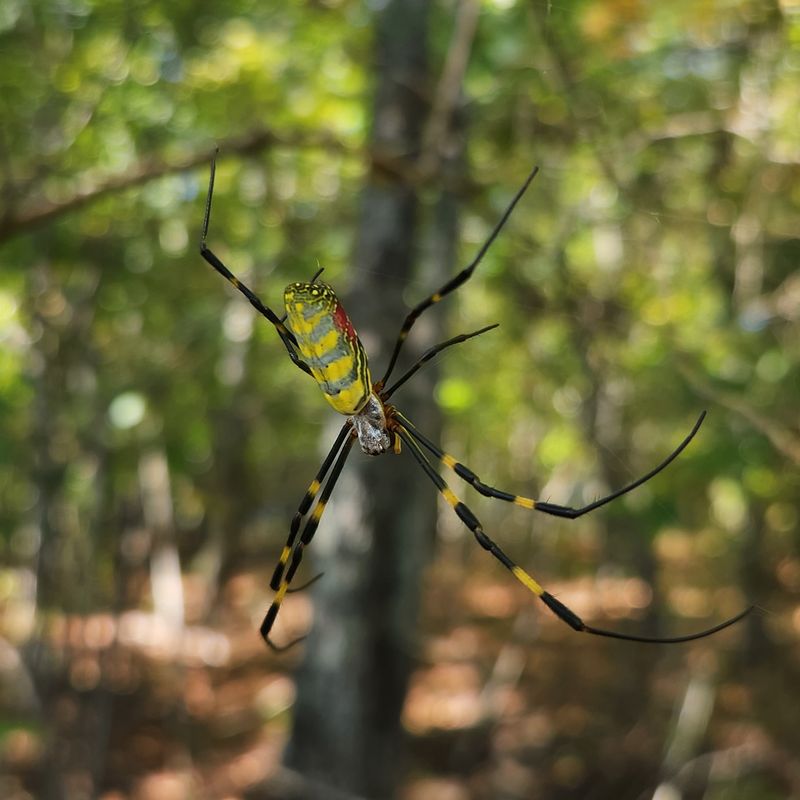
The builder behind the gold is the Joro spider, known to scientists as Trichonephila clavata. It grew up, evolutionarily speaking, in Japan, Korea, Taiwan, and eastern China.
Somewhere around 2013, a few likely hitched a ride inside shipping containers into northern Georgia. From there the population fanned out through the Southeast, and sightings have been creeping up the East Coast ever since.
Maryland reports started rolling in recently, with confirmations near the Baltimore metro area and scattered notes from surrounding counties. Entomologists at state universities have asked residents to photograph and report whatever they find.
Females are the ones people notice. Their bodies stretch about an inch, and with legs extended they cover roughly the width of a human palm, three to four inches across.
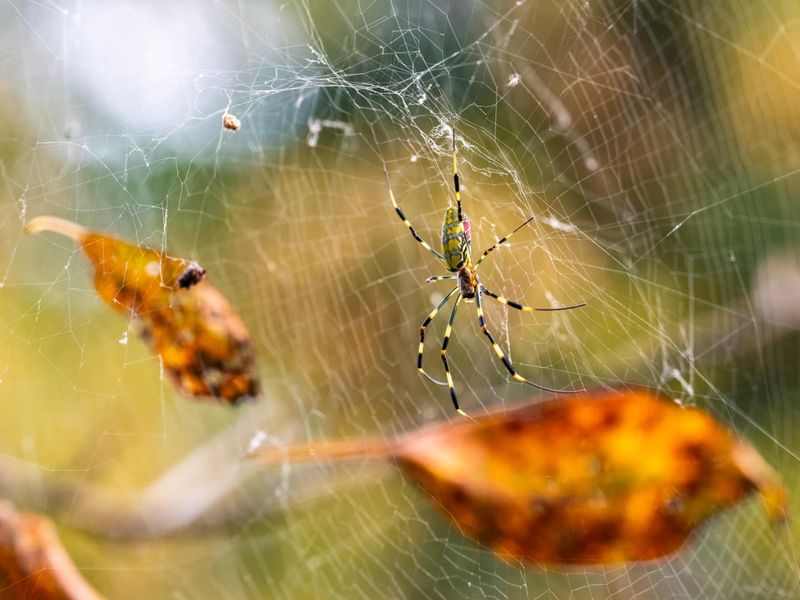
Look for a bright yellow abdomen crossed by blue-gray bands, legs striped in black and yellow, and a splash of red underneath. Males are drab brown and about a quarter of that size, usually loitering at the edge of a female’s web.
Timing matters if you want a good look. Spiderlings hatch in spring, stay small and easy to overlook through early summer, then bulk up quickly in August.
By September and October the females reach full size and the webs become impossible to miss. Cold weather ends the adult season, and the next generation waits inside papery egg sacs tucked under bark, eaves, or siding.
One quirk: the species has been in the country barely a decade, yet it already spans several states.
Telling Joros Apart From Familiar Backyard Spiders
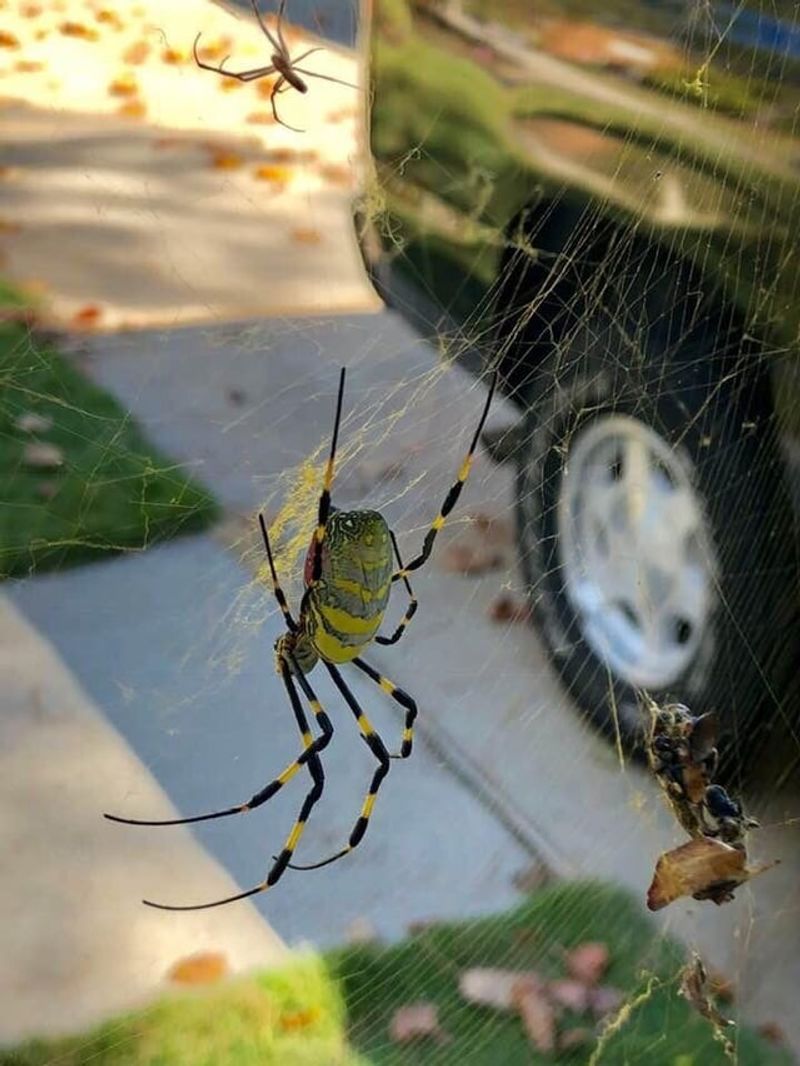
Plenty of panicked photos turn out to be the yellow garden spider, a longtime Maryland local that has been minding its own business for generations.
The quickest tell is the web itself. Argiope aurantia, the yellow garden spider, stitches a thick white zigzag down the center of a neat, flat orb.
Joro webs skip the zigzag, lean golden in color, and often tilt at an angle instead of hanging straight up and down. They also sit inside a three-dimensional tangle of support lines that garden spider webs lack.
Color patterns help too. A yellow garden spider wears bold black and yellow blocks with legs banded in orange near the base.
A Joro shows softer yellow with blue-gray stripes across the back, plus that unmistakable red patch underneath. Get a view from below if you can do it safely, since the red mark settles the question fast.
Your Maryland Garden Changes Every Week. Your Plan Should Too.
Gardening in Maryland changes quickly throughout the season. Every Friday you’ll receive a simple weekly plan showing exactly what to plant, prune, fertilize, harvest, and protect so you never miss the right timing.
Size overlaps, so do not lean on that alone. Both species look alarmingly large in a phone photo taken from six inches away.
Another look-alike is the banded garden spider, which has finer horizontal stripes and prefers meadow grass over porch corners.
Still unsure? Snap a clear photo from a couple of feet back and share it with your county extension office.
Maryland researchers actively want those records, and a good picture beats a guess every time. Tracking where the species turns up helps scientists map how far north it has settled, one backyard photo at a time.
Prime Web Real Estate Around Your Property
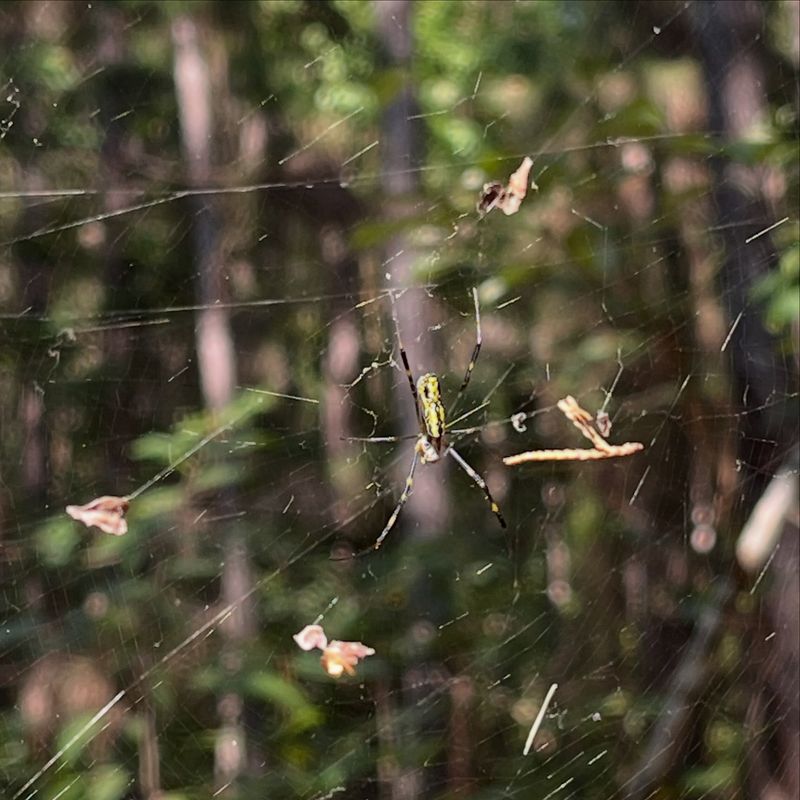
Ask ten neighbors where they walked face-first into silk and most will name the same three spots. Porch corners, the gap between a mailbox and a shrub, and the shortcut across the driveway.
Joros favor open gaps with clear flight paths, because that is where flying insects travel. A doorway, a fence gate, or the space between two parked cars all qualify.
Height is another preference. Anchor lines often run up to gutters, eaves, power lines, and the undersides of deck rails, letting the orb hang several feet off the ground.
Porch lights change the math too. Bulbs pull in moths and beetles all night, and a web strung near that glow gets a steady delivery of food.
Sunny edges beat deep shade. Check the border where mowed lawn meets tree line, or where a garden bed backs up against a fence.
Water nearby raises the odds. Yards close to streams, ponds, and drainage ditches produce more insects, and the webs follow the buffet.
Do not be surprised by clusters. Where conditions suit them, several webs can share one hedge, with smaller spiders tucked along the edges of a larger female’s lines.
Two habits save a lot of startled hopping. Walk your usual paths early with the sun at a low angle so the strands light up, and carry a light stick in front of you when heading into overgrown corners.
A quick scan before mowing or trimming spares both you and the web.
How Worried Should You Be About A Bite
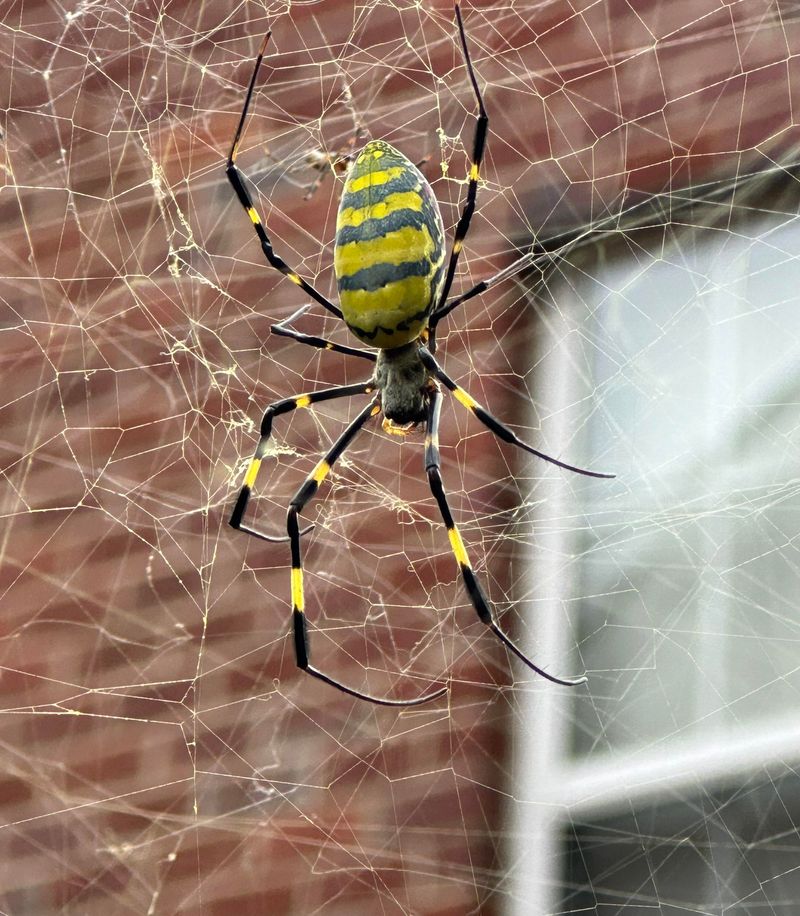
Here is the reassuring part. Despite the size and the horror-movie staging, these spiders are timid and would rather drop out of sight than confront anything bigger than a beetle.
Their fangs are small, and in many cases they struggle to break human skin. Bites usually happen when a spider gets pressed against skin, like inside a glove or under a shirt collar.
Reported bites feel similar to a mild bee sting. Expect brief redness and soreness that fades within a day, with no lasting trouble for most people.
Wash the spot with soap and water, use a cold pack, and keep an eye on it for a few hours. Anyone with a history of strong reactions to stings should call a doctor to be safe.
Pets are rarely an issue either. Curious dogs may snap at a web, and the usual result is a mouthful of silk and a confused expression.
Joros also freeze when startled, tucking their legs and hanging still, or vibrating the web into a blur. Some researchers rank them among the shyest orb weavers studied, staying motionless far longer than native species when disturbed.
Practical steps keep encounters boring. Wear gardening gloves, shake out patio cushions before sitting, and check hanging baskets before you water them.
If one lands on your arm, brush it off gently with a leaf or a stick rather than swatting. Most people who share a porch with one all season rarely get bitten.
What They Mean For Maryland Gardens And Bugs
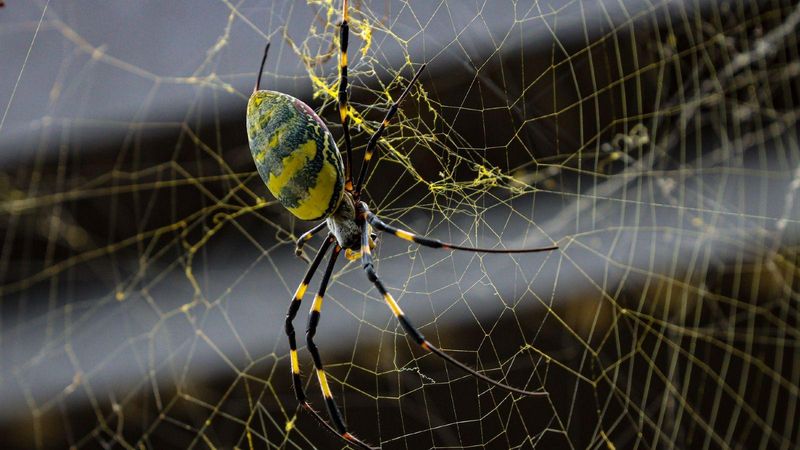
Gardeners have mixed feelings, and both sides have a point. On the plus side, these webs trap mosquitoes, flies, wasps, and even brown marmorated stink bugs.
That last item matters in Maryland. Stink bugs damage fruit and vegetables, and many native predators refuse to touch them, while Joros seem willing.
The catch is that a sticky net does not sort its guests. Honeybees, butterflies, and small pollinators end up in the same silk.
Scientists are watching how the newcomer affects native orb weavers, especially the yellow garden spider and the spined micrathena. Field surveys from southeastern universities suggest some displacement where Joro numbers run high, though results vary from site to site.
No one has documented a broad decline in local spider populations, and researchers describe the picture as ongoing rather than settled. Long-term monitoring across several states is underway.
For a home garden, the practical effect is usually small and sometimes helpful. A few large webs near tomatoes or peppers can trim the local pest crowd without any spray at all.
If pollinator health is your priority, place bee-friendly flowers away from heavy web zones. Moving a planter ten feet can lower how many bees pass through the strike zone.
Keep records if you enjoy that sort of thing. Noting which webs appear each year, and what shows up in them, turns your yard into a small study plot that extension offices genuinely appreciate.
Ballooning, The Silk Parachute Behind Their Spread
Spiders do not have wings, so how did one from East Asia reach a yard in Maryland? Two answers: silk and highways.
In spring, tiny spiderlings climb to a high point, lift their abdomens, and release strands of silk into the breeze. Those threads catch static and air currents, and the hatchling sails off like a dandelion seed.
Ballooning trips usually cover short distances, though a strong wind can carry travelers many miles. That drifting explains the slow, spreading edge of the population.
The faster route is human transportation. Egg sacs and adults hitch rides on car bumpers, trailers, firewood, patio furniture, and nursery plants moving up Interstate 95.
New sightings often pop up near busy corridors before they appear in rural pockets. A single sac tucked under a truck mirror can start a fresh colony.
Cold weather matters less than people expect. Studies found the species tolerates brief freezes better than its tropical relative, with a higher metabolic rate and heart rate that keep it functioning in chillier air.
Its home range in Japan sits at latitudes similar to much of the mid-Atlantic. Climate models suggest suitable conditions along a wide stretch of the East Coast.
You can slow accidental transport with a two-minute habit. Glance at your bumper, roof rack, and trailer hitch after a road trip through the Southeast, and brush off any silk bundles you spot.
Same goes for plants bought at out-of-state nurseries, since egg sacs hide well against bark and pots.