New York Gardeners Are Ripping Out Annual Beds for This One Low-Maintenance Shrub
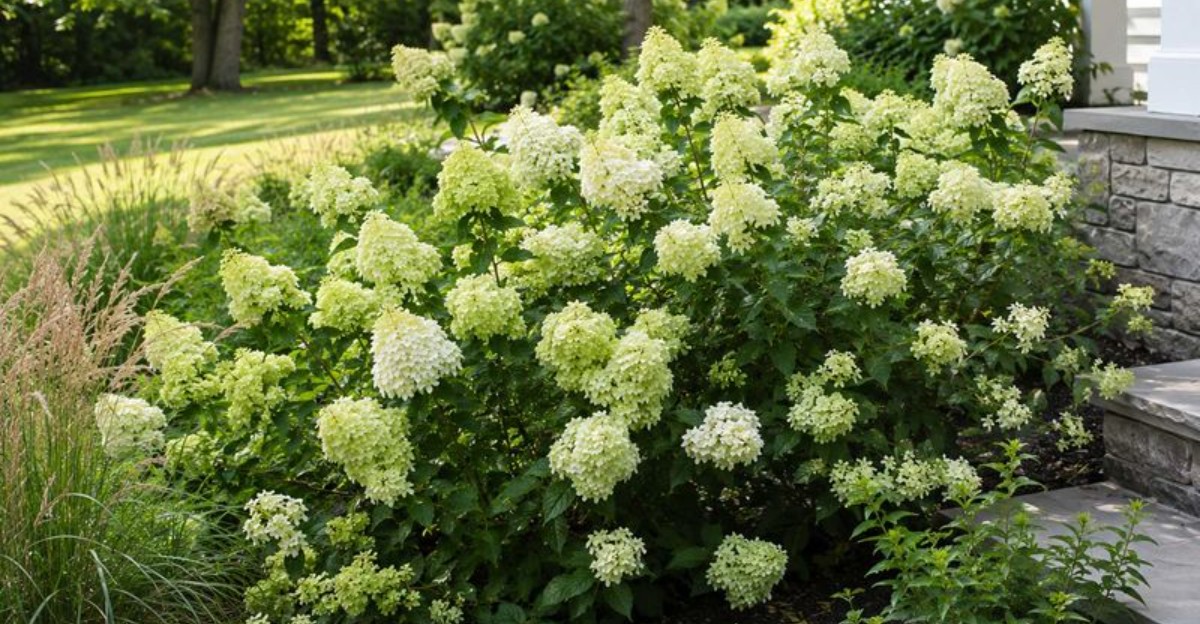
One shrub can survive winters near minus 40 degrees and still flower like clockwork every single summer. That sounds like a tall tale, but plant hardiness ratings back it up.
I spent years buying flats of petunias every May. I watered them, trimmed them, and watched them flop by August. Then the first frost turned the whole bed to mush, and I started over the next spring.
Plenty of gardeners across New York are done with that cycle. They want color that comes back without a fresh receipt each year. They want blooms that shift shades as fall rolls in. My garden taught me that the easiest plants are often the ones that ask the least.
So which tough little shrub is winning over yards from Buffalo to Long Island? And could it earn a spot in your front bed too?
The Shrub Filling Old Petunia Beds Has Cone-Shaped Blooms
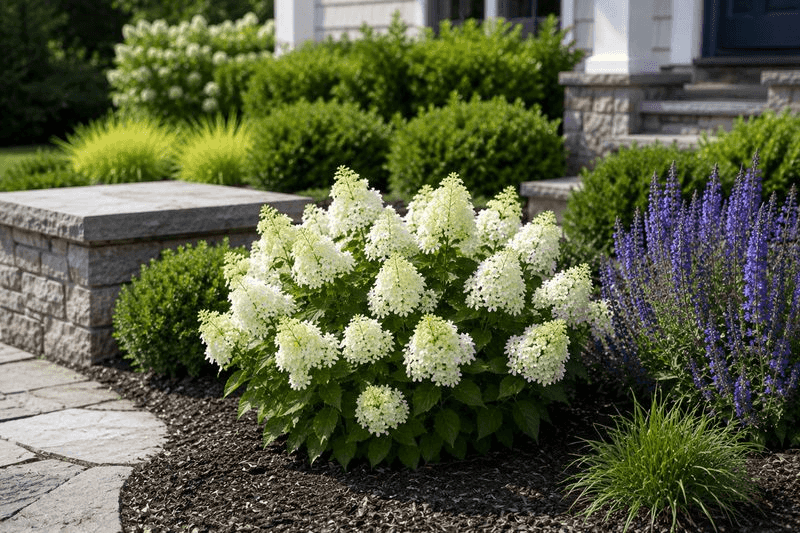
Walk through a few suburban neighborhoods in late July and you will spot them. Rounded shrubs, about waist high, loaded with fat cone-shaped flower clusters in lime green and creamy white.
Those are compact panicle hydrangeas, and they are the plant many gardeners are swapping in for yearly annual beds. Varieties like ‘Little Lime’ and ‘Bobo’ lead the pack because they stay small enough for front borders and foundation beds.
Panicle hydrangea, or Hydrangea paniculata, is a different plant from the blue mophead hydrangeas your grandmother grew. Its flowers form tapered clusters called panicles instead of round balls.
That shape gives the shrub a crisp, upright look that fits tidy yards and cottage gardens alike.
The appeal makes a lot of sense to me. You plant it once, and it fills the same spot your annuals did, year after year.
No spring shopping trip for 48 tiny seedlings, no hours spent tucking them into the soil.
To be fair, nobody tracks an official statewide count of ripped-out flower beds. What garden centers and growers do report is steady demand for these compact shrubs.
Their reliable blooms and easy care explain why.
If your annual bed gets at least half a day of sun, it might be a perfect candidate for the swap.
Panicle Hydrangea Flowers Form on New Wood, So Winter Rarely Ruins Them
Bigleaf hydrangeas have broken plenty of hearts in upstate yards. Their flower buds form on last year’s stems, so one harsh winter or a late May frost can wipe out the show before it starts.
Panicle hydrangeas play by friendlier rules. They bloom on new wood, meaning the stems that grow this spring carry this summer’s flowers.
That one detail changes everything for cold-climate gardeners. Even if January brings brutal wind or a surprise freeze nips the shrub in April, fresh shoots still grow and still set buds.
You get flowers either way.
Hardiness matters here too. Most panicle hydrangeas are rated for USDA Zones 3 through 8.
New York runs from about Zone 4 in the Adirondacks to Zone 7 around New York City and Long Island, so nearly every corner of the state fits.
I remember the summer my neighbor’s bigleaf shrub gave her nothing but leaves. My panicle hydrangea, a few yards away, was covered in blooms.
Same winter, same yard, totally different result.
For North Country gardeners, check the tag for a Zone 3 or 4 rating. Most popular compact varieties qualify easily, which is a big part of their growing fan base.
Little Lime and Bobo Hydrangeas Fit Right Where Annuals Used to Grow
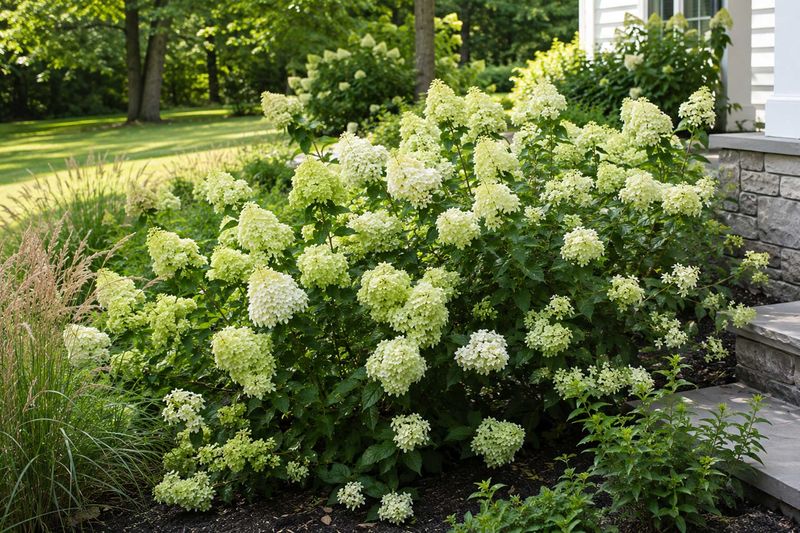
Size is the secret weapon. Older panicle hydrangeas like ‘Grandiflora’ can top 15 feet, which is far too big for a bed along the driveway.
The compact varieties solve that problem neatly. ‘Little Lime’ usually grows 3 to 5 feet tall and wide, with blooms that open lime green and fade toward pink. ‘Bobo’ stays even smaller, around 2.5 to 3 feet tall and 3 to 4 feet wide, and its white flowers can nearly hide the leaves.
That scale lines up beautifully with spaces once filled with marigolds or impatiens. A row of three ‘Bobo’ plants can cover a 10-foot border once they mature.
Small yards, front walkways, and spots under windows all work well.
Other compact choices are worth a look too. ‘Little Quick Fire’ blooms a few weeks earlier, and ‘Fire Light Tidbit’ stays under 3 feet. Each brings a slightly different color story.
Here is my honest tip. Read the mature size on the label and plan for it, not the size in the nursery pot.
Give each plant room to reach its full width. Crowded shrubs compete for water and light, and you lose that full, rounded shape that makes them so charming in the first place.
Those White Hydrangea Cones Blush Pink as Fall Arrives
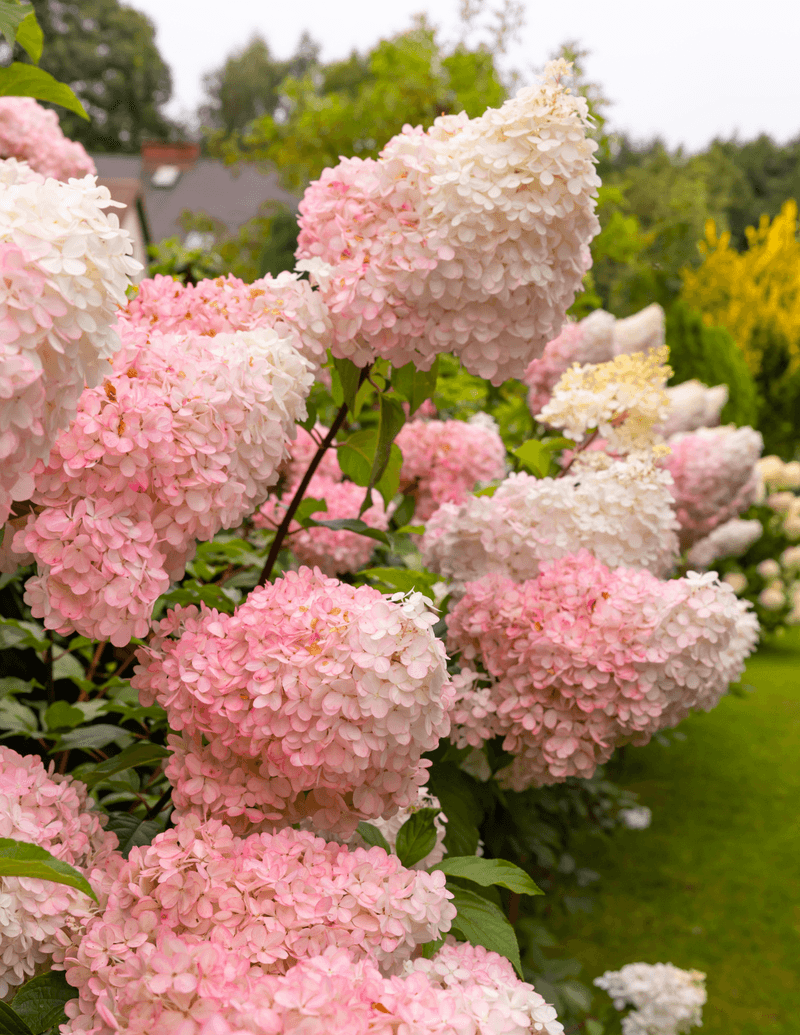
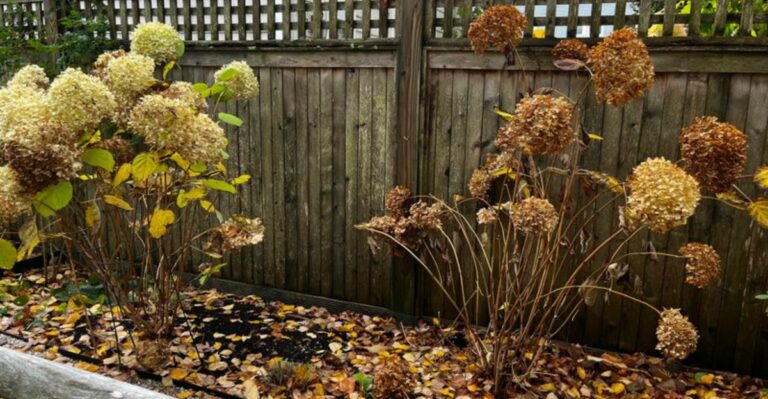
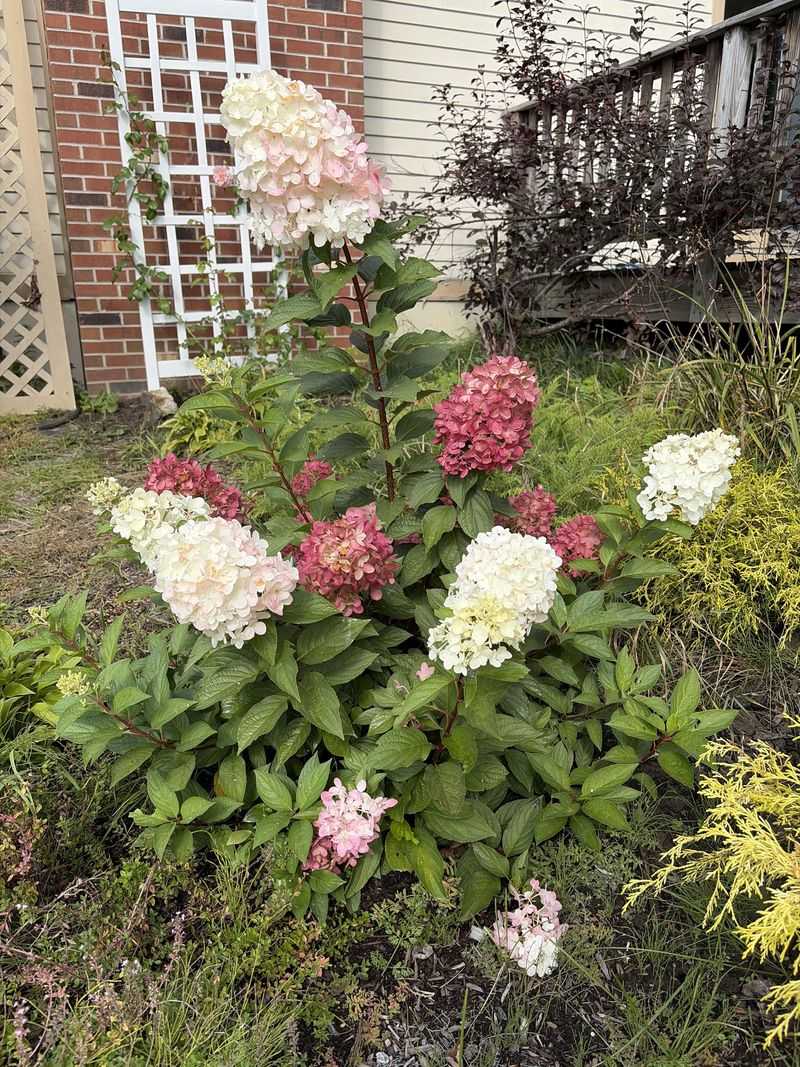
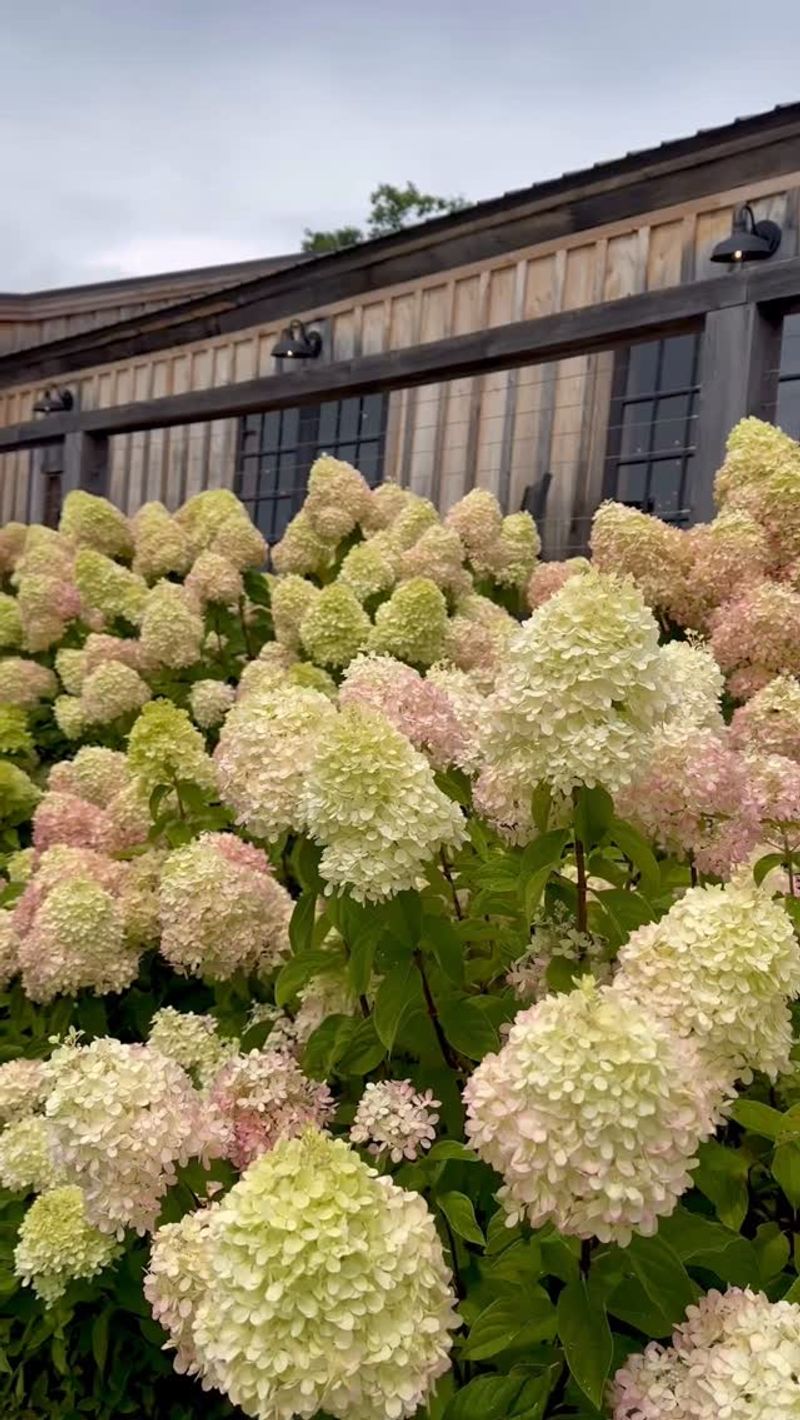
Color shifts are where these shrubs turn into a little magic show. Blooms open lime green or creamy white in midsummer, then slowly warm into pink, rose, and sometimes deep burgundy as nights cool.
Annual beds rarely give you that kind of drama. Most bedding plants look their best for a few weeks, then get tired and leggy by late August.
Panicle hydrangeas actually seem to improve as summer winds down. In much of New York, the strongest pink tones show up in September and October, right when the rest of the yard starts to fade.
Unlike bigleaf types, panicle hydrangea colors are not controlled by soil pH. You do not need to fuss with aluminum sulfate or lime to get a certain shade.
Cool temperatures and the variety itself do the work.
Want to enjoy the show indoors? Cut a few stems once the flowers feel slightly papery.
Hang them upside down in a dry spot, and they make lovely dried arrangements.
Plenty of gardeners leave the old flower heads on through winter too. They catch snow in soft little caps and add texture when everything else is bare.
Honestly, it is one of my favorite winter views from the kitchen window.
Planting Your Hydrangea in the Right Sun and Soil Saves Headaches
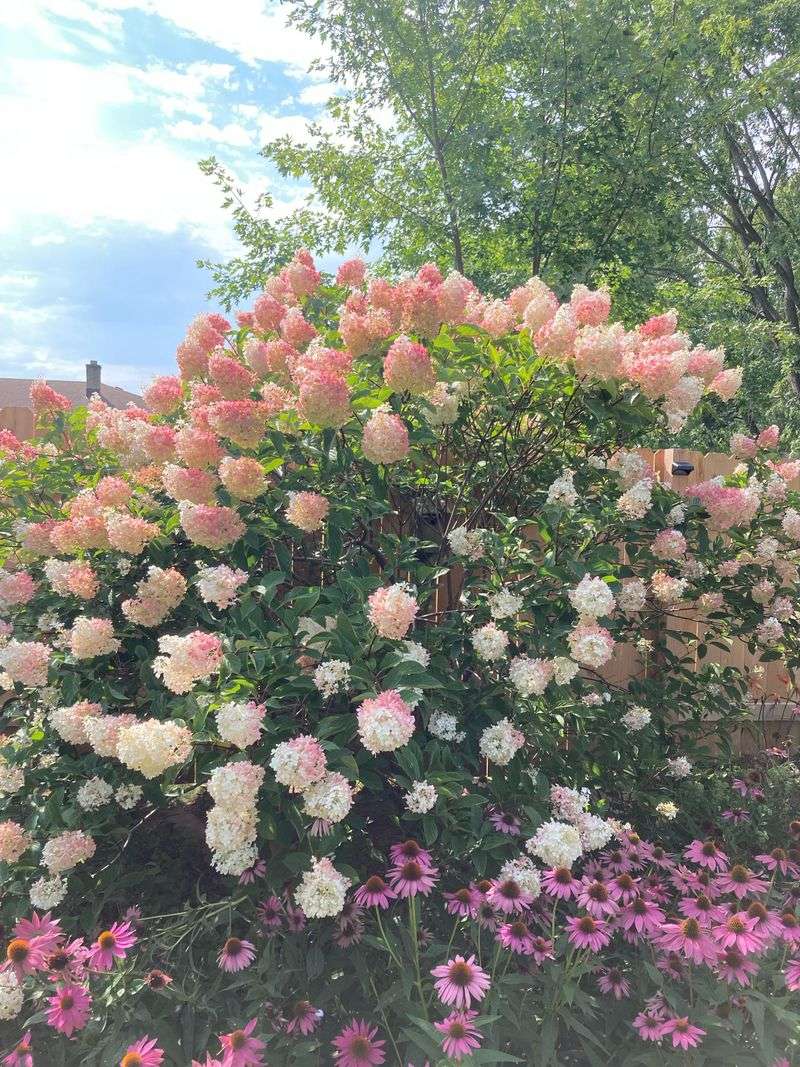
Sunshine is where panicle hydrangeas really shine compared to their cousins. They handle full sun to partial sun, and most flower best with at least six hours of direct light.
In hotter spots, like a south-facing wall in the Hudson Valley or a sunny lot near the coast, a little afternoon shade helps. It reduces wilting during July heat waves.
Soil is pretty forgiving. Clay, loam, and sandy ground all work as long as water drains well.
Soggy soil that stays wet for days can lead to root rot, so avoid low spots where puddles linger after a storm.
Spring and early fall are ideal planting times across the state. Cooler temperatures help roots settle in before summer stress or winter freeze.
Late September works nicely in most regions.
Dig a hole about twice as wide as the root ball but no deeper. Set the plant so the top of the root ball sits level with the ground.
Backfill with your native soil, then water deeply.
A 2 to 3 inch layer of shredded bark mulch helps hold moisture. Keep it a couple inches away from the stems, though.
Mulch piled against the base can trap moisture and invite trouble.
A Quick Late-Winter Hydrangea Haircut Keeps Stems Strong
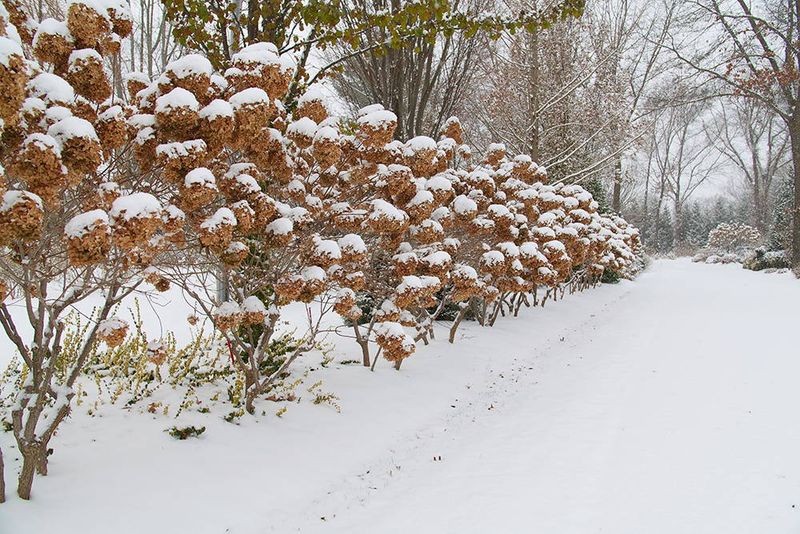
Pruning scares a lot of new hydrangea owners, and I get it. Cut the wrong type at the wrong time and you can lose a whole year of flowers.
Panicle hydrangeas take the guesswork out. Because they bloom on new wood, you can prune in late winter or early spring before leaves appear.
In most of New York, that means March or early April.
A simple approach works well. Cut the shrub back by about one-third of its height, snipping just above a pair of healthy buds.
Remove any thin, weak, or crossing stems at the base.
Why bother? Light pruning encourages thicker stems that hold heavy blooms upright.
Without it, big flower heads can flop over after summer rain.
Compact varieties like ‘Bobo’ need even less work. Some years, a light tidy-up and removal of old flower heads is plenty.
Hold off on fall pruning. Those dried blooms help shelter the plant visually through winter, and cutting late in the season can push tender growth that frost may damage.
Clean, sharp bypass pruners make the job faster and leave clean cuts. Ten or fifteen minutes per shrub each spring is about all the effort you need.
Bees and Butterflies Visit Panicle Hydrangea Blooms Too
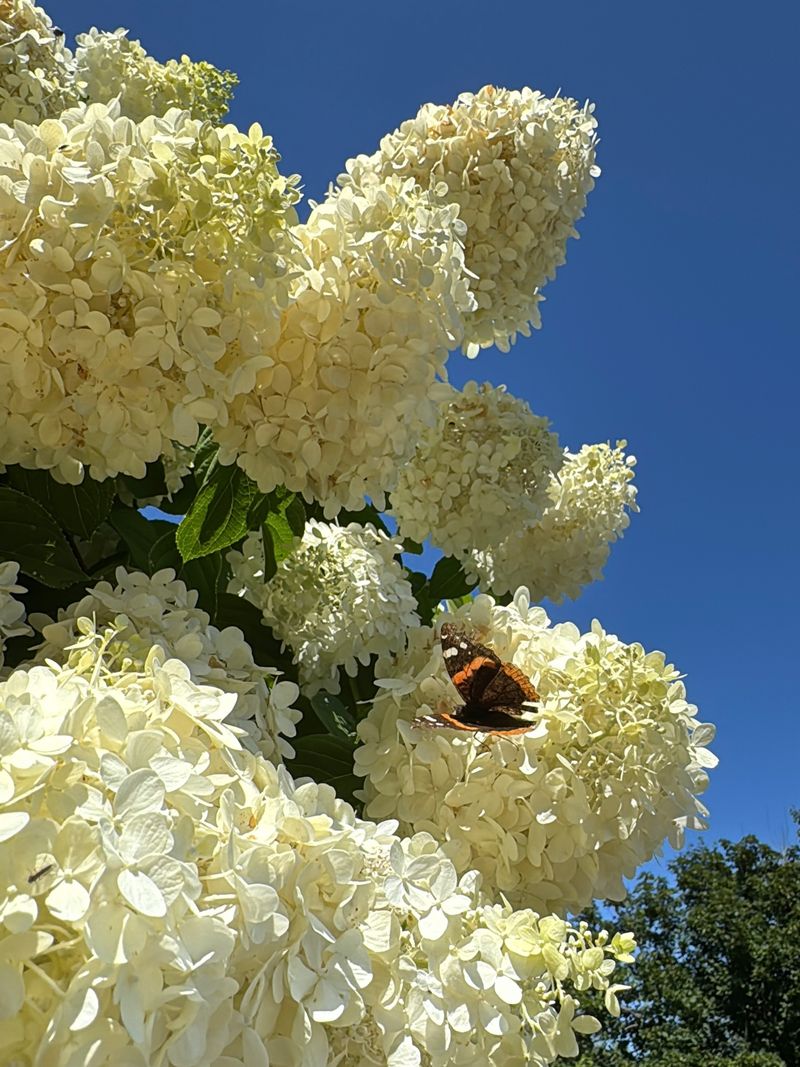
Watch a panicle hydrangea on a warm August afternoon and you might hear it before you see much. Bees buzz through the flower cones, and the occasional butterfly drifts by for a sip.
The reason lies in the flower structure. Each cone mixes showy sterile florets with tiny fertile flowers that hold pollen and nectar.
Varieties with more fertile flowers, like ‘Quick Fire’, tend to draw more insects.
Some heavily bred types with mostly sterile blooms offer less to pollinators. ‘Bobo’ and ‘Little Lime’ still attract visitors, but they are not pollinator powerhouses.
Honesty matters here too. Panicle hydrangea is native to China and Japan, not New York.
It is not listed as invasive in the state, though some regions keep an eye on its seedlings.
For a stronger wildlife boost, pair your shrubs with native plants. Smooth hydrangea, Hydrangea arborescens, is native to parts of New York and blooms on new wood as well.
Native perennials such as purple coneflower, bee balm, and New England aster fill in nicely around the base. They extend the flower season and feed local bees and butterflies.
A mix like that gives you easy care and a livelier, buzzing yard.
Start Your Hydrangea Swap Small and Watch the Payoff Grow
Nobody says you need to tear out every annual in one weekend. Plenty of gardeners start with one bed, watch how it performs, then expand.
The first year, new shrubs focus on roots. Water deeply about once a week during dry spells, giving roughly an inch of water.
By the second or third summer, they usually fill out and need help only during long droughts.
Budget wise, the swap often pays for itself. A few compact hydrangeas might cost about what you spend on annual flats over two or three springs.
After that, the savings keep adding up.
Pests rarely cause serious trouble. Aphids or leaf spots can appear now and then, but most problems stay minor.
Deer may nibble, so gardeners in heavy deer areas sometimes add a spray repellent or light fencing.
Keep a little room for fun too. Tuck a pot of seasonal annuals near the front if you miss them.
That way you still enjoy a splash of petunias without replanting an entire bed.
The way I see it, easy gardening is not lazy gardening. It just means choosing plants that match your climate and your schedule, so you spend summer enjoying blooms instead of babysitting them.