What It Means When A Bald Eagle Circles Your Georgia Property This Fall
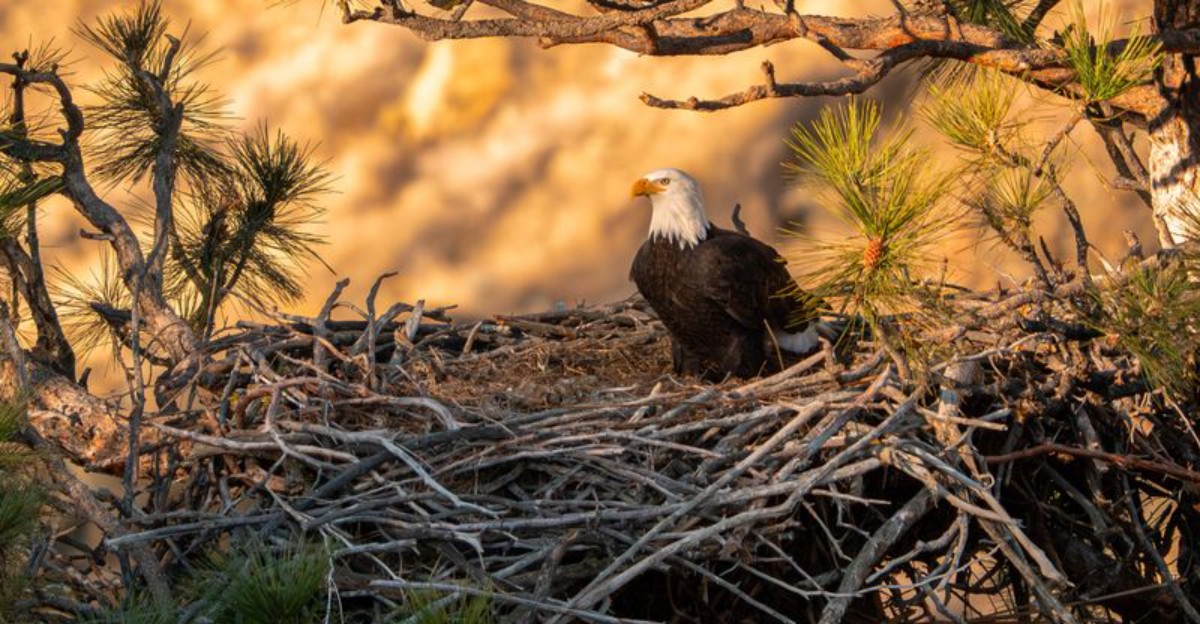
One enormous nest built by this bird once weighed close to two tons. That is heavier than most pickup trucks, and the builders keep adding sticks year after year.
Now one of those same nest builders is drifting in slow loops right over your roof. I can’t imagine a better reason to drop the rake and stare at the sky.
Fall is when these big raptors get busy in Georgia, and the timing is no accident.
I think the circling is the most interesting part. Is the bird hunting, riding warm air, checking out real estate, or keeping an eye on rivals?
The answer could be any of those, and your yard might hold more clues than you expect.
What exactly does that white-headed visitor see when it looks down at your trees, pond, and lawn?
1. That White-Headed Bird Overhead Is Probably Not Lost
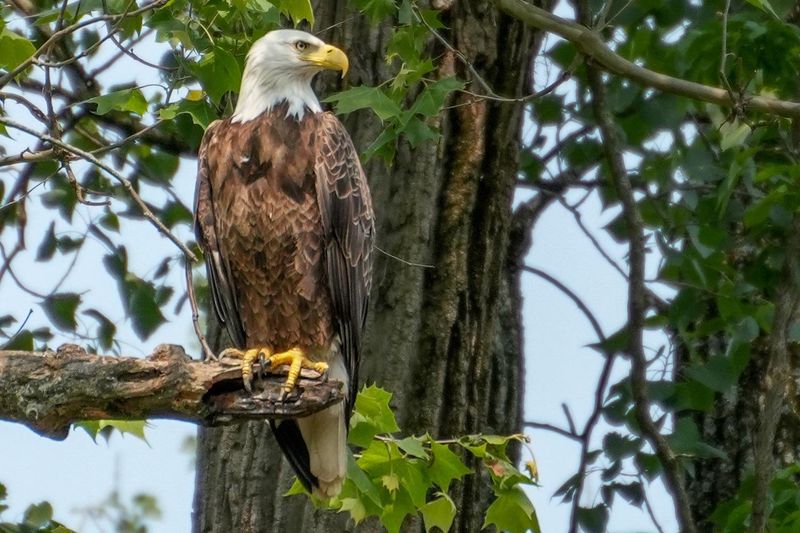
Most folks assume a circling eagle is up to something dramatic. In truth, the most likely explanation is simple and a little clever.
Bald eagles often circle to ride thermals, which are columns of warm air rising off sunny ground. On clear fall afternoons, open fields, rooftops, and parking lots heat up and send that air skyward.
An eagle can lock its wings, spiral upward, and gain hundreds of feet with barely a flap.
Once it climbs high enough, the bird glides off toward the next thermal. That saves a huge amount of energy for a bird that can weigh 8 to 14 pounds.
Biologists describe soaring as one of the most efficient ways large raptors travel.
So the eagle over your house may simply be commuting. It might be heading toward a lake, a river, or a nest site miles away.
Your property just happens to sit under a handy elevator of warm air.
I like knowing this because it changes how I watch. If the circles keep rising and the bird drifts off, you likely saw a travel stop.
If it stays low and keeps returning, something on the ground has its attention.
2. Fall Marks The Start Of Bald Eagle Nesting Season In Georgia
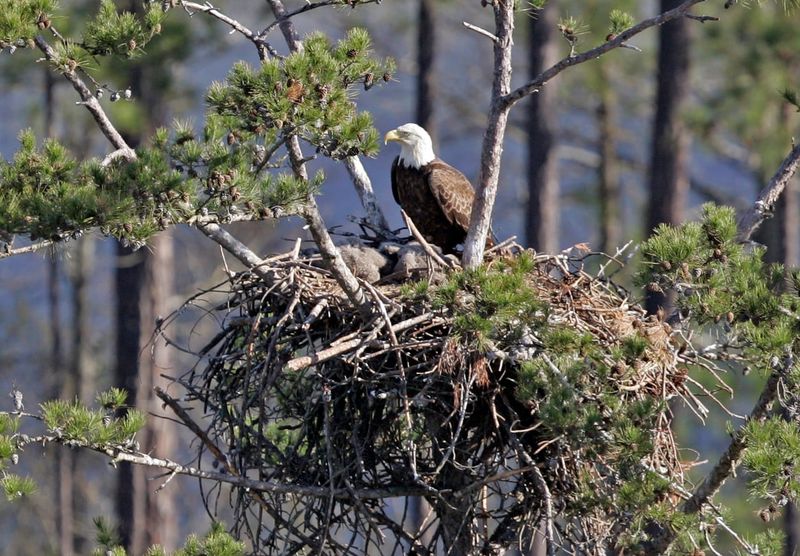
Here in the Southeast, eagles run on a different calendar than their northern cousins. Georgia pairs start repairing and building nests in early fall, often in October and November.
According to the Georgia Department of Natural Resources, egg laying usually follows from late fall through winter. Most eggs in the state show up between November and February.
That makes autumn the busy season, not the quiet one.
A circling eagle in fall may be scouting nest trees or flying sticks back to a favorite pine. Georgia nests are often built in tall living pines near large water, and they get huge.
Many measure 5 to 6 feet across and keep growing as pairs return year after year.
Watch for clues. Eagles carrying branches, landing repeatedly in the same tall tree, or calling to a partner all point to nest work.
Pairs commonly mate for life and reuse the same territory.
Personally, I find it thrilling that your neighborhood could become a nursery. If you notice this behavior, keep your distance and enjoy the show with binoculars.
A pair settling in now could be raising eaglets by early spring.
3. Those Sharp Eagle Eyes Could Be Scanning Your Pond For Fish
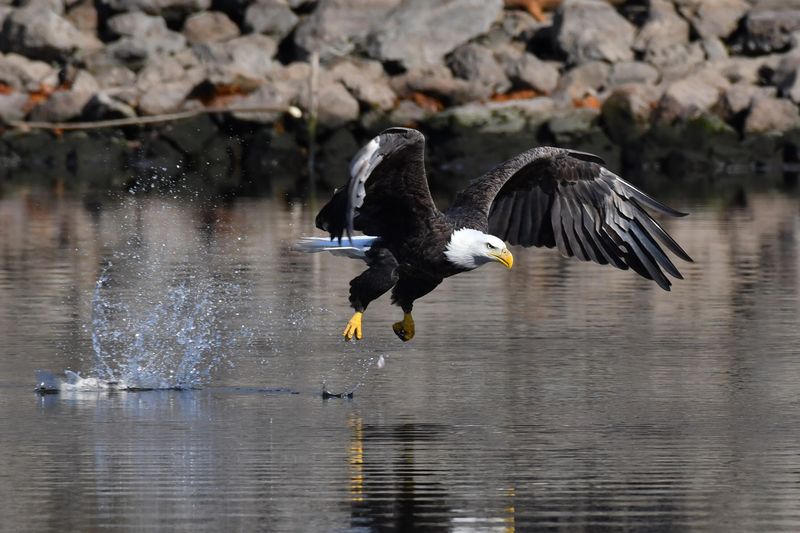
An eagle’s vision is roughly four to five times sharper than ours. From high above, it can spot a fish breaking the surface that you would miss from the dock.
Fish make up most of a bald eagle’s diet. If you have a pond, a creek, or a lake view, that circling bird may be shopping.
Eagles also take ducks, coots, and other waterbirds, which arrive in bigger numbers across the state as fall turns to winter.
Eagles are famous opportunists too. They gladly grab easy meals, including carrion and fish stolen from ospreys.
A road-struck deer or a fish left on the bank can draw one in fast.
So how do you tell a hunt from a joyride? Hunting eagles often circle lower, hover briefly, or drop toward water with talons forward.
They may perch on a snag nearby and wait patiently.
If you stock a pond, you might lose a few fish. That is part of sharing land with a protected predator.
Deeper water and submerged brush give fish places to hide without harming the bird.
4. A Circling Eagle Might Be Guarding Its Territory From Rivals
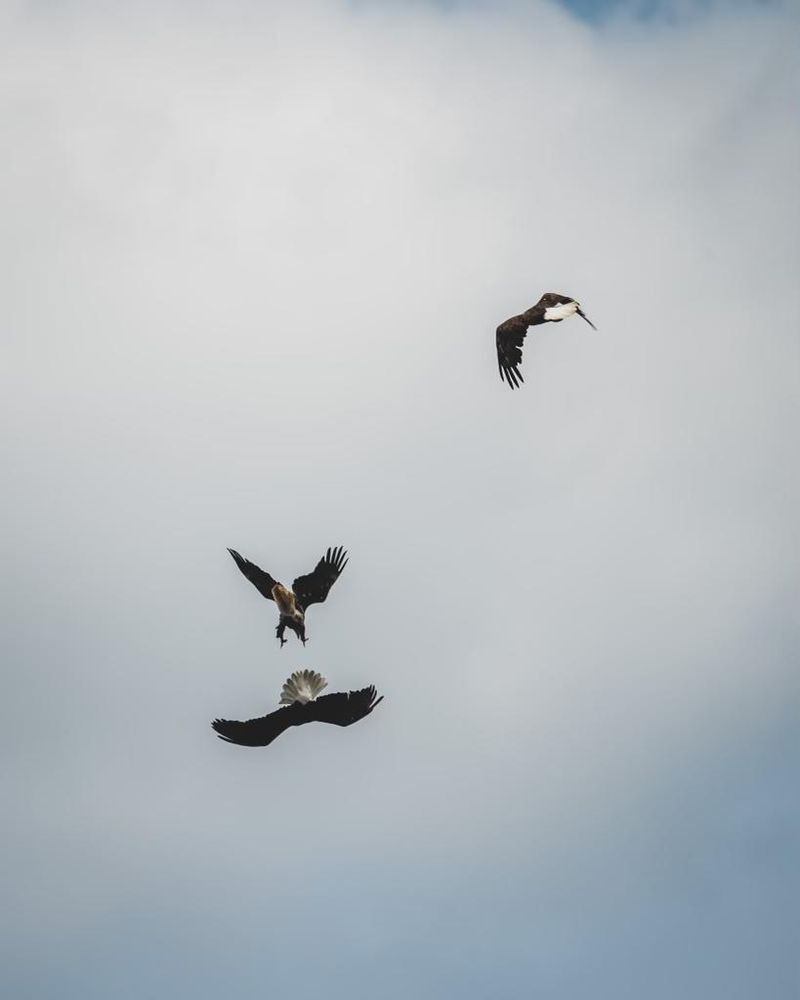
Ever seen two eagles tangle in midair? That dramatic chase is often a boundary dispute, and fall is prime time for it.
Nesting pairs defend the area around their nest, especially as egg season nears. A territory may stretch a mile or more, depending on food supply and how many eagles live nearby.
Circling high gives the owners a clear view of intruders.
Young eagles are frequent trespassers. Birds under about five years old lack the bright white head and tail, so they look mottled brown.
Many wander widely before settling down, and resident adults chase them off.
You might also spot courtship flights in late fall. Pairs soar together, dive, and sometimes lock talons and tumble before breaking apart.
It looks like a fight, yet it often signals bonding.
If you see an adult circling loudly and repeatedly in the same spot, a nest may be close. That is your cue to keep pets and noisy projects away from tall trees in that direction.
Honestly, few backyard moments beat watching two eagles sky-dance over the treetops.
5. Tall Pines And Open Water Make Your Yard Look Like Eagle Real Estate
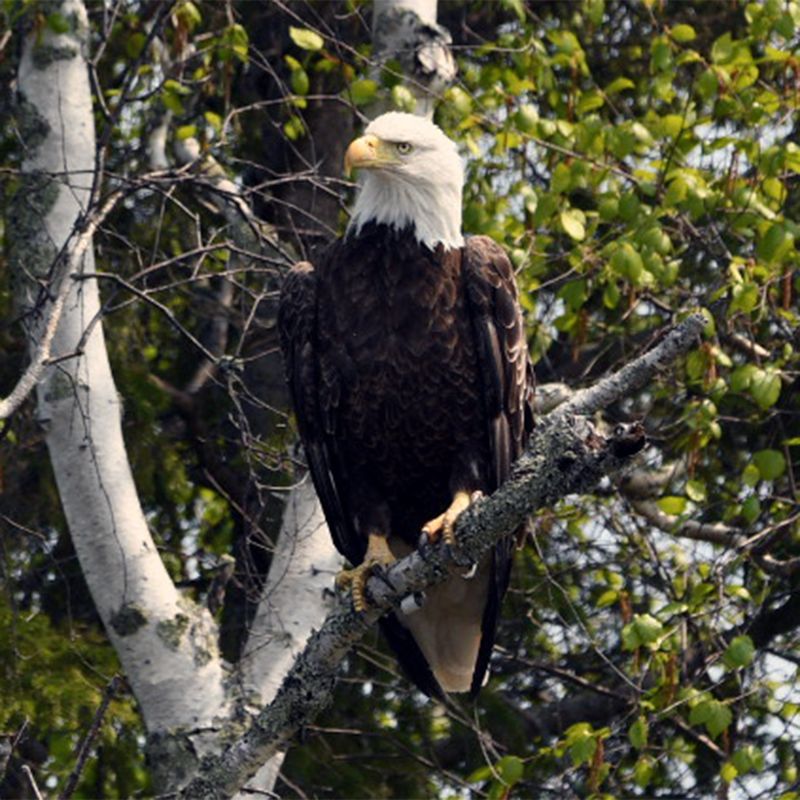
Eagles are picky house hunters. They want a tall, sturdy tree with open branches, a clear view, and water within easy reach.
In Georgia, that usually means big pines, especially those taller than the surrounding canopy. Coastal marshes, large reservoirs like Lake Lanier and Lake Seminole, and major rivers support many of the state’s nests.
Smaller farm ponds and wetlands can draw visitors too.
Tall bare trees matter, too. Eagles use high perches to watch the water for hours.
A shoreline tree can become a favorite lookout if it is safe to leave standing.
Quiet helps. Eagles often avoid areas with constant noise and foot traffic.
Properties with buffers of woods or fields feel more inviting than busy lots.
If you want to support future visits, protect your largest pines and keep shorelines natural. Plant native trees for the long haul, since a young pine needs decades to reach nesting size.
You are basically thinking a generation ahead, and I love that kind of gardening.
6. Federal And Georgia Laws Protect Every Bald Eagle On Your Land
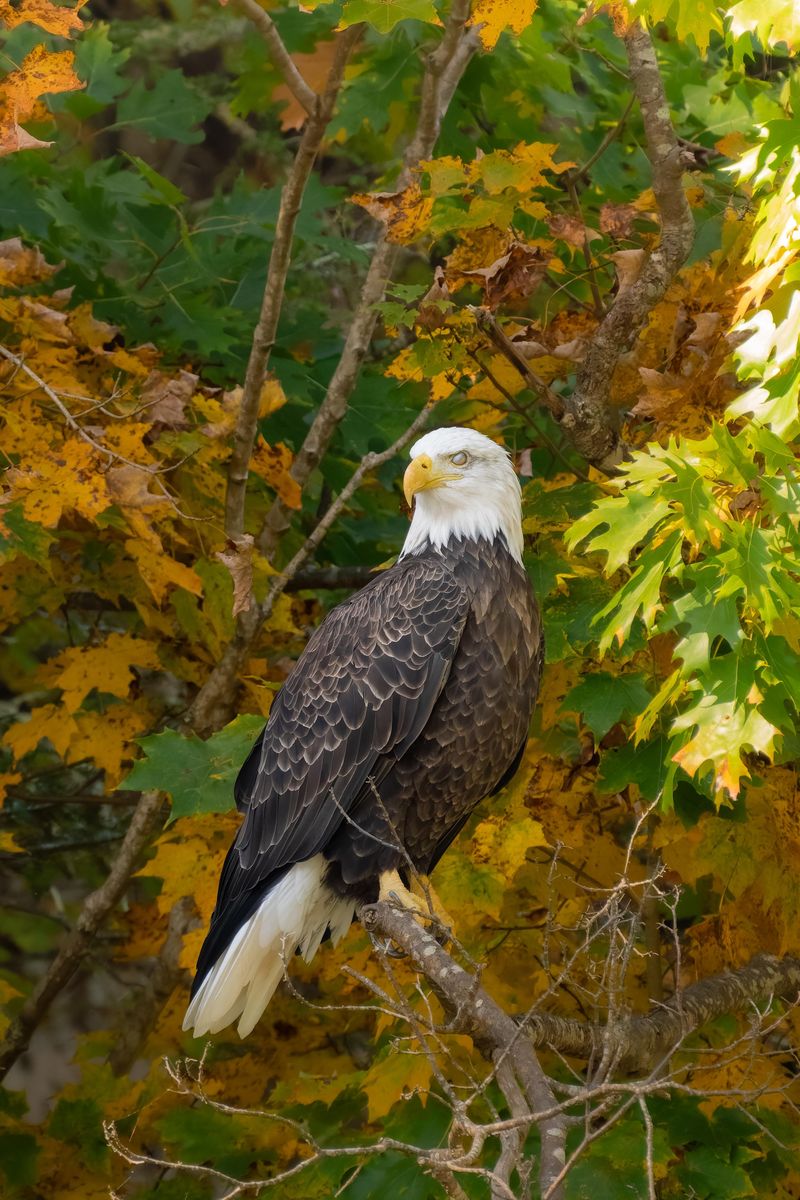
Bald eagles bounced back from near disappearance in the lower 48 states, and the law helped make that happen. Those protections still apply on private property.
The federal Bald and Golden Eagle Protection Act and the Migratory Bird Treaty Act make it illegal to take, harm, or disturb eagles, their nests, or their eggs without a permit. Disturbance includes actions that cause a pair to abandon a nest or eggs.
Even possessing a feather is restricted for most people.
Georgia also lists the bald eagle as a protected species under state rules. Fines and penalties can be steep for violations.
The U.S. Fish and Wildlife Service recommends buffers of 330 to 660 feet or more, depending on the activity, nesting season, and surrounding conditions.
Bigger projects like clearing land, building, or heavy machinery may need larger distances, especially during nesting season.
Planning timber work or construction near a nest? Contact the Georgia DNR Wildlife Conservation Section or the Fish and Wildlife Service first.
A quick call can save you serious trouble and keep the birds safe.
7. Hold Off On Feeding That Hungry Eagle, Even With Good Intentions
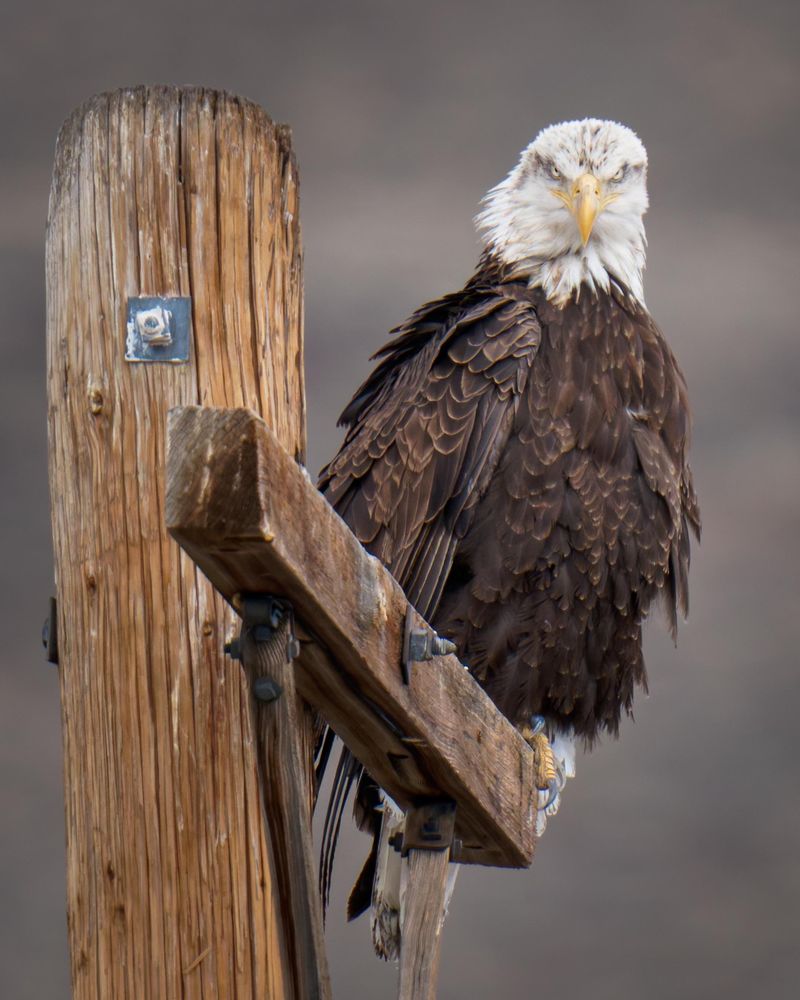
Tossing out fish or meat to lure an eagle closer sounds tempting. Please skip it.
Feeding raptors can make them lose their healthy caution around people. Birds that link humans with food may hang around roads, homes, and pets, which puts them at risk.
Wildlife agencies discourage baiting for these reasons.
Small pets deserve a quick word too. Eagle attacks on cats and small dogs are rare, though they do happen occasionally.
Supervising tiny pets outdoors is a smart, low-effort habit when a raptor is hanging around.
Another hazard hides in plain sight. Eagles scavenge, so they can swallow lead fragments from carcasses or gut piles left by hunters.
Lead poisoning is a leading health threat for eagles, and using non-lead ammunition helps.
Rodent poisons cause harm as well when eagles eat affected animals. Choose traps or prevention over poison baits around your property.
The best gift you can give is a clean, natural yard. Let the eagle find its own fish and enjoy the visit from a respectful distance.
8. Grab Binoculars And Report That Georgia Eagle Nest You Spot
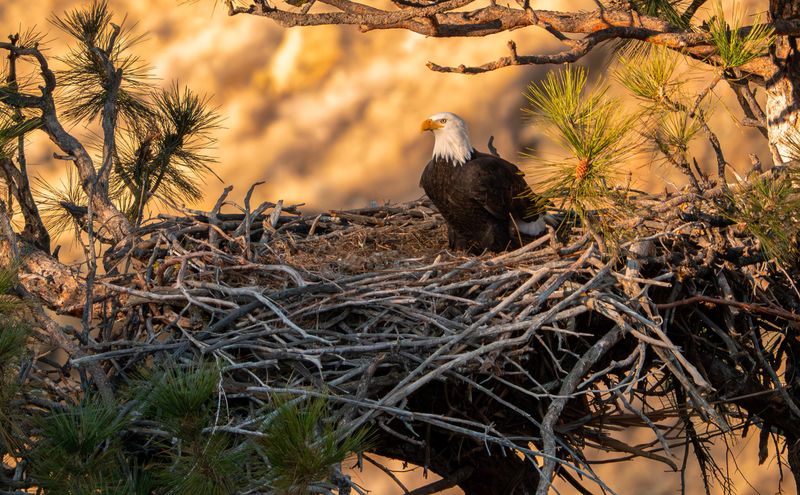
Your sighting can actually help science. Georgia DNR runs annual eagle nest surveys and welcomes reports of nests from the public.
If you find one, note the location, the tree type, and whether birds are present. Send it to the DNR Wildlife Conservation Section through its website.
Biologists use these reports to track how the population is doing.
For everyday watching, binoculars or a spotting scope work beautifully. Stay at least 330 feet from any nest and keep visits short.
If the birds stop what they are doing to watch you, you are too close.
Keeping a simple log is fun too. Jot down dates, times, and behaviors like stick carrying, hunting, or chasing rivals.
Over a season, you will start to understand your local eagles like neighbors.
Community science apps like eBird let you share sightings with researchers worldwide. Kids love this kind of project, and it turns a lucky moment into a real contribution.
So next time that broad shape circles above your oaks, take a breath and look closer. Your land may be part of a much bigger comeback story.