Your Texas Poinsettia Needs These Tweaks To Turn Red By The Holidays
Those famous scarlet petals on the classic holiday plant are not petals at all, but colorful leaves called bracts. The tiny yellow buttons sitting in the middle are the real flowers, and most people overlook them every December.
Even stranger, those leaves only blush red after weeks of long, uninterrupted nights, much like a clock counting darkness. A single porch light or passing headlights can confuse that clock and leave your plant stubbornly green.
I learned that lesson the hard way after my first Texas reblooming attempt sat beside a bright kitchen window. You might notice the same thing happens when summer heat lingers deep into fall across much of Texas.
Turns out a few small adjustments make a huge difference between a sad green shrub and a holiday showstopper. So which simple changes will finally coax that famous crimson glow out of your stubborn plant this year?
1. Long Dark Nights Turn Poinsettia Bracts Red

Poinsettias tell time by measuring darkness, and they start coloring when nights stretch past roughly twelve hours, with about fourteen hours of darkness ideal. Native to Mexico, they evolved to bloom as autumn days shorten, which explains their perfect holiday timing.
Starting around October 1, give your plant fourteen hours of solid darkness every night for about eight to ten weeks. Many growers pick a window like 5 p.m. to 7 a.m., which fits neatly into busy family schedules.
I use an unused closet, but a large cardboard box set over the pot works just as well. You simply need a space where no light sneaks in through tiny cracks or the gap under the door.
Consistency matters more than perfection here, so set a phone reminder for moving the plant each evening and morning. Skipping even a few nights can push coloring back, and your crimson display might arrive after New Year instead.
Tiny green buds at the stem tips are the first sign that your darkness routine is working its quiet magic. Once bracts show solid color, usually by early December, you can stop the nightly box routine and enjoy them.
Honestly, this step feels a little silly at first, like tucking a houseplant into bed every single night. Still, the payoff is real, and watching green leaves slowly blush red feels like winning a tiny backyard science fair.
2. Streetlights And Porch Lamps Can Keep Poinsettias Green
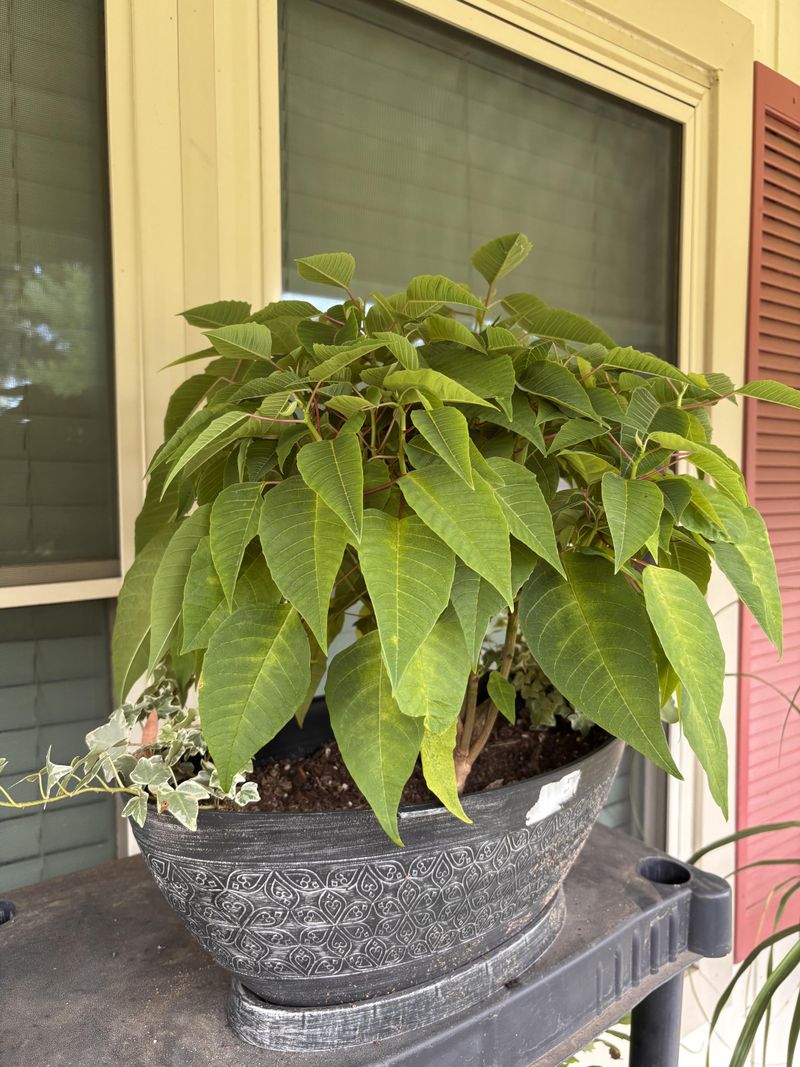
Light pollution is the sneaky culprit behind countless green poinsettias, especially for plants growing outdoors near busy suburban streets. In the warmest parts of Texas, people plant them in the ground, then wonder why they stay leafy all winter.
Even dim light from a streetlamp or a neighbor’s porch can interrupt the long, steady night the plant needs. Greenhouse growers know this well, so commercial operations guard their crops carefully against stray light every autumn.
Before October arrives, walk around your yard after sunset and look for any glow landing on your shrubs. I did this last year and discovered my motion sensor light was flashing on every time a cat wandered past.
For in-ground plants, choose a spot on the darker side of the house, away from driveways and street corners. Potted plants are easier, since you can roll them into a dark garage or shed each evening.
Indoors, watch for sneaky sources like television screens and lamps flipped on during late night snack runs. Covering the plant with an opaque box or heavy black cloth blocks those surprises without much extra effort.
Darkness sounds boring, but it works like a secret ingredient that quietly flips the switch toward vivid holiday color. Protect it carefully, and your plant will reward you with bracts brighter than any string of decorations nearby.
3. Bright Morning Sun Fuels Rich Poinsettia Color
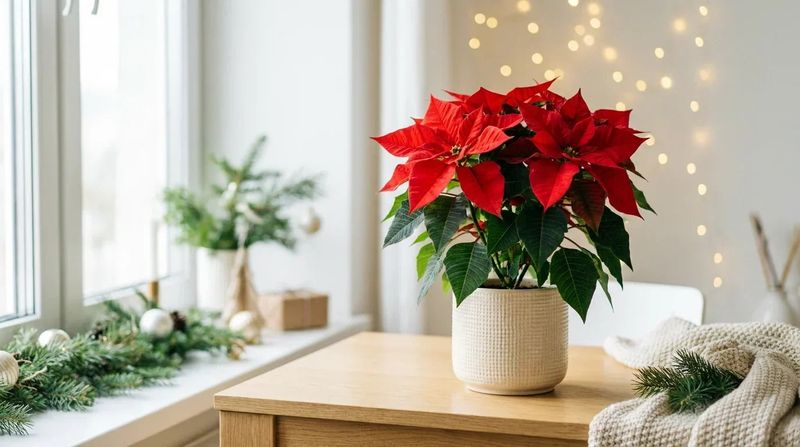
Darkness gets all the attention, yet poinsettias also need plenty of daytime light to build the energy for brilliant bracts. Without enough sun, the color often looks washed out, and leaves start dropping from the lower stems.
Aim for at least six hours of bright light each day, ideally from an east or south facing window. Morning sun is gentle and cheerful, while harsh afternoon rays through glass can sometimes scorch tender leaves.
Outdoor plants in Texas handle more sun, but afternoon shade helps during those surprisingly hot October afternoons. A spot under high tree branches or beside an east wall gives a pleasant mix of brightness and relief.
I rotate my pot a quarter turn every few days so every side gets equal light and grows evenly. Otherwise, stems stretch toward the window, and you end up with a lopsided plant that leans like a tired tourist.
Remember that daytime light and nighttime darkness work as partners, so bring the plant out promptly each morning after its rest. Leaving it boxed until noon cuts its sunshine short, which can weaken growth and dull the final bract color.
Once your plant reaches full color, keep it in bright, indirect light to help the display last for weeks. A sunny living room corner looks festive and keeps those bracts glowing well past the holiday dinner rush.
4. Cool Nights Help Poinsettias Hold Deep Red Color
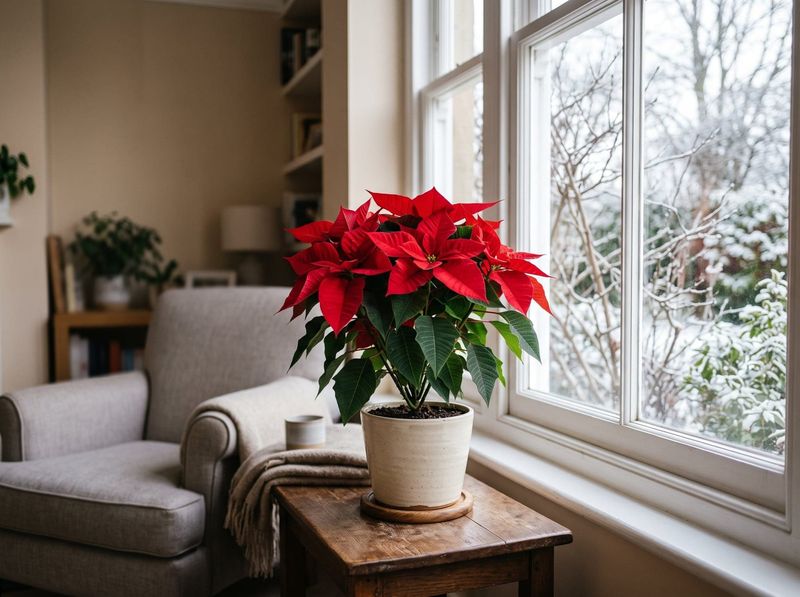
Poinsettias are a bit like folks who sleep best with the thermostat turned down a few degrees at night. Daytime temperatures around 65 to 75 degrees suit them nicely, with nights closer to 60 to 65 degrees.
Warm nights above roughly 70 degrees during the coloring period can delay bract development and leave colors looking faded. Lingering fall heat is common in many southern regions, so indoor growing often gives you more control.
On the chilly side, poinsettias dislike temperatures below about 50 degrees and sustain real damage near freezing. Outdoor plants in the Rio Grande Valley or Houston area usually handle winters fine, but surprise freezes still happen.
I keep an old frost cloth folded by the back door for those sudden blue norther evenings each winter. Draping it over in-ground plants before sunset traps warmth from the soil and protects tender stems overnight.
Indoors, a cool spare bedroom or a spot away from the heater often provides ideal conditions for steady coloring. A cheap digital thermometer helps you see what is actually happening near the plant, rather than guessing.
Temperature feels like a small detail, yet it quietly shapes how deep and lasting your red bracts become this season. Keep things comfortably cool, and you may find your plant holding its color well into January.
5. Soggy Soil Spells Trouble For Potted Poinsettias
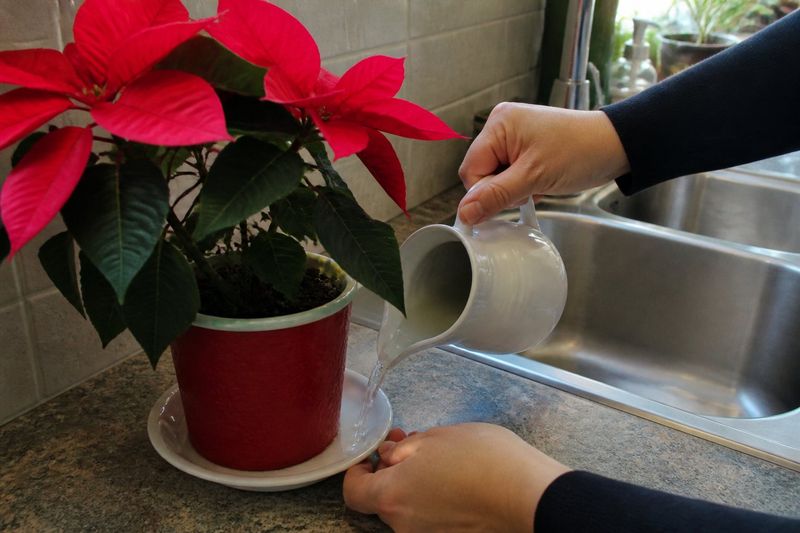
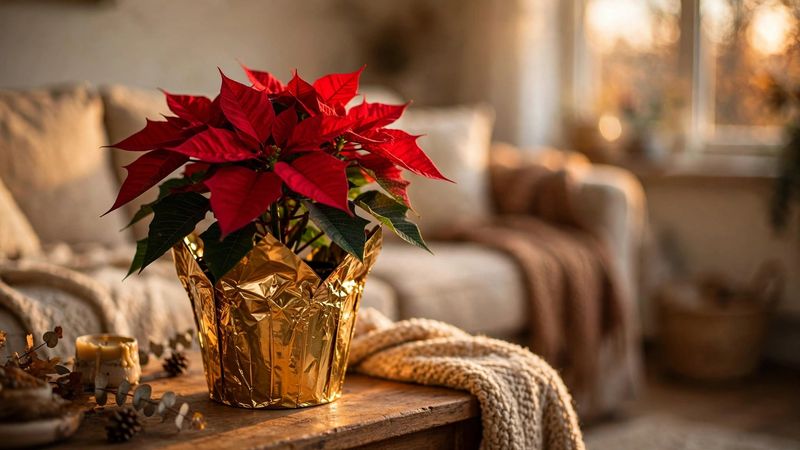
Overwatering ranks among the top reasons holiday poinsettias collapse, and that pretty foil wrapper is often the guilty party. Water collects inside the foil, and roots sitting in that puddle soon begin to rot.
Check the soil with your finger, and water only when the top inch feels dry to the touch. Then pour slowly until water drains out the bottom, and empty the saucer within a few minutes.
I poke a few holes in decorative foil or slide it off before watering in the kitchen sink. Afterward, I let the pot drip for a bit, then return it to its spot looking festive again.
Underwatering causes problems too, since a parched plant wilts quickly and may drop leaves while you are away. Lifting the pot helps, because a light pot usually means dry soil, while a heavy one still holds moisture.
Outdoor plants growing in well-drained beds rarely need extra water once cooler weather and fall rains arrive. Heavy clay soil holds water longer, so mixing in compost before planting helps roots breathe and stay healthier.
Finding the right rhythm takes a little practice, but your plant will quickly show you what it prefers. Firm, perky leaves mean you are on track, while drooping or yellow foliage signals it is time to adjust.
6. Hold Off On Fertilizer Once Poinsettia Bracts Color
Feeding a plant sounds generous, yet poinsettias in full color need about as much fertilizer as a well-fed cat. Once bracts turn red, extra nutrients rarely help and can even build up salts in the potting mix.
During spring and summer growth, a balanced houseplant fertilizer every two to four weeks keeps stems strong and leafy. That steady feeding builds the sturdy framework that will eventually carry your holiday color later in the year.
Many growers ease off fertilizer as fall arrives, and most stop feeding once the nightly darkness routine is underway. I mark the calendar in late September, which keeps me from absentmindedly feeding the plant during its color change.
Follow label directions carefully, because more fertilizer does not mean faster growth and can scorch delicate roots. Watering thoroughly before feeding also protects roots, since dry soil soaks up concentrated nutrients too quickly.
Pale green leaves in late summer can signal hunger, so a light feeding then may freshen the foliage nicely. After that, let the plant focus its energy on forming colorful bracts rather than pushing new leafy growth.
Holding back feels strange for gardeners who love tending plants, but patience here pays off in richer winter color. Consider it a well-earned rest before your poinsettia makes its big holiday debut on the coffee table.
7. Pinch Poinsettia Stems Before Early September
A leggy poinsettia with a few lonely stems looks a little sad, while a bushy one practically glows with color. The secret is pruning at the right time, which encourages more branches and therefore more bracts for the holidays.
In early spring, after the old color fades, cut stems back to about four to six inches above the soil. New shoots emerge within weeks, and you can move the plant outside once nights stay comfortably warm.
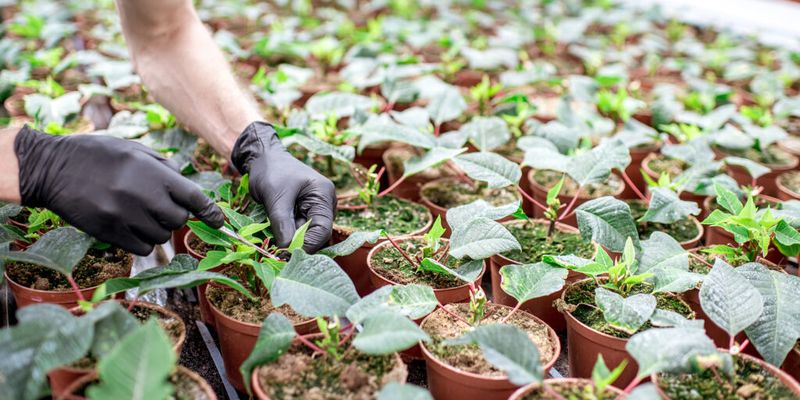
Through early summer, pinch an inch off each new shoot to encourage branching and a fuller, rounder shape. I usually do this once in June and again in July, and the difference in fullness surprises me every year.
Stop pinching by late August or early September, giving new stems time to mature before darkness treatments begin. Pruning too late leaves the plant scrambling to grow, and it may produce smaller bracts or color unevenly.
Wear gloves while trimming, because the milky sap can irritate sensitive skin and is messy on kitchen counters. Clean pruners also help prevent spreading plant diseases, so wipe the blades with a disinfectant before starting.
Pruning can feel scary, especially when you are cutting a healthy plant down to stubs in spring. Trust the process, and by December you may count twice as many colorful branches as last year.
8. Humid Air Keeps Poinsettia Leaves From Dropping
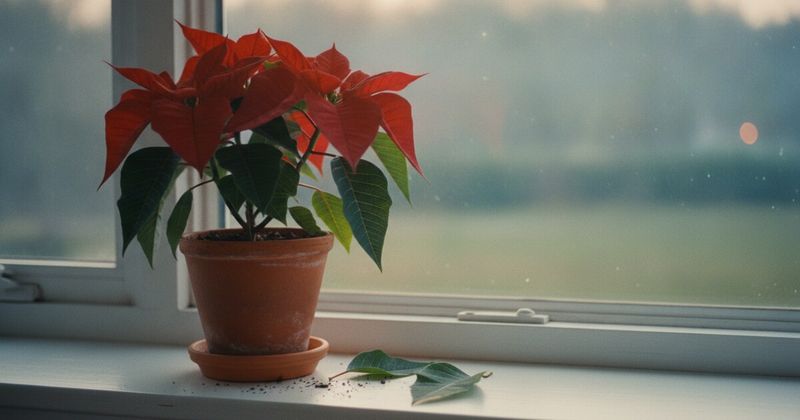
Poinsettias grow wild in warm parts of Mexico, and indoors they prefer moderate humidity around fifty percent or more. Dry indoor air can trigger leaf drop and crispy edges, especially once the furnace starts running for winter.
A pebble tray is my favorite trick, since it raises humidity without letting roots sit in water. Fill a shallow tray with pebbles and water, keeping the water level just below the top of the stones.
Grouping houseplants together also helps, because plants release moisture through their leaves and share it with neighbors. A small humidifier nearby works wonders during dry spells, especially in drier western cities like El Paso or Lubbock.
Misting seems like an easy fix, but wet leaves can encourage leaf spot diseases if air circulation is poor. I prefer keeping moisture in the air around the plant rather than sitting on the foliage itself.
Gulf Coast gardeners often get plenty of natural humidity, so their indoor plants may need less help than inland ones. Watch your plant closely, since curling or browning leaf edges usually mean the air has turned too dry.
Small comforts like these keep your poinsettia relaxed, and a relaxed plant holds its leaves and bracts much longer. Your holiday centerpiece will look fresh for weeks instead of dropping foliage across the table before Christmas morning.
9. Whiteflies And Spider Mites Target Texas Poinsettias
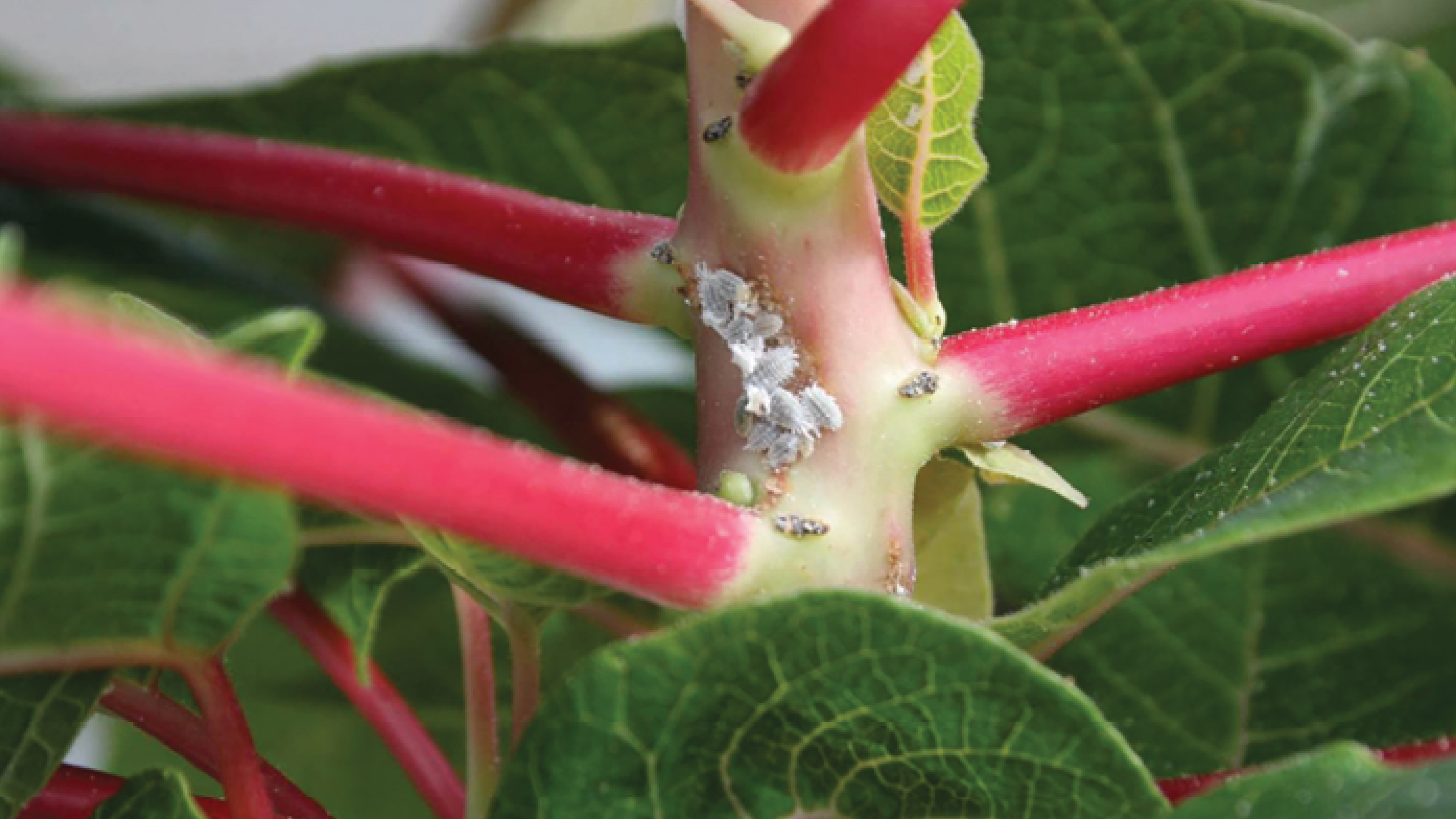
Tiny white specks fluttering up when you brush a poinsettia are a sign you have uninvited guests called whiteflies. These sap-sucking pests love poinsettias, and warm Texas weather lets them multiply quickly through fall.
Spider mites and mealybugs can also show up, often hiding on leaf undersides where few people bother looking. Flip a few leaves each week, and look for sticky residue or fine webbing between the stems.
Yellow sticky traps placed near the plant catch adult whiteflies and help you spot trouble before it spreads. I tuck one into the pot on a stake, and checking it becomes part of my morning coffee routine.
For light infestations, insecticidal soap or horticultural oil sprayed on leaf undersides usually brings pests under control. Test a small area first, since some poinsettia varieties show leaf spotting from certain sprays, especially on colored bracts.
Inspect new plants carefully at the store, because many pest problems ride home on that cheerful holiday purchase. Keeping new arrivals apart from other houseplants for a week or two helps prevent spreading any hidden hitchhikers.
Healthy, unstressed plants resist pests better, so good light and careful watering do double duty here. A clean, bug-free poinsettia simply looks brighter, and its red bracts stay glossy rather than dull and sticky.