Waterlogged Pots Will Crack in the Next New York Freeze. Empty Them This Weekend
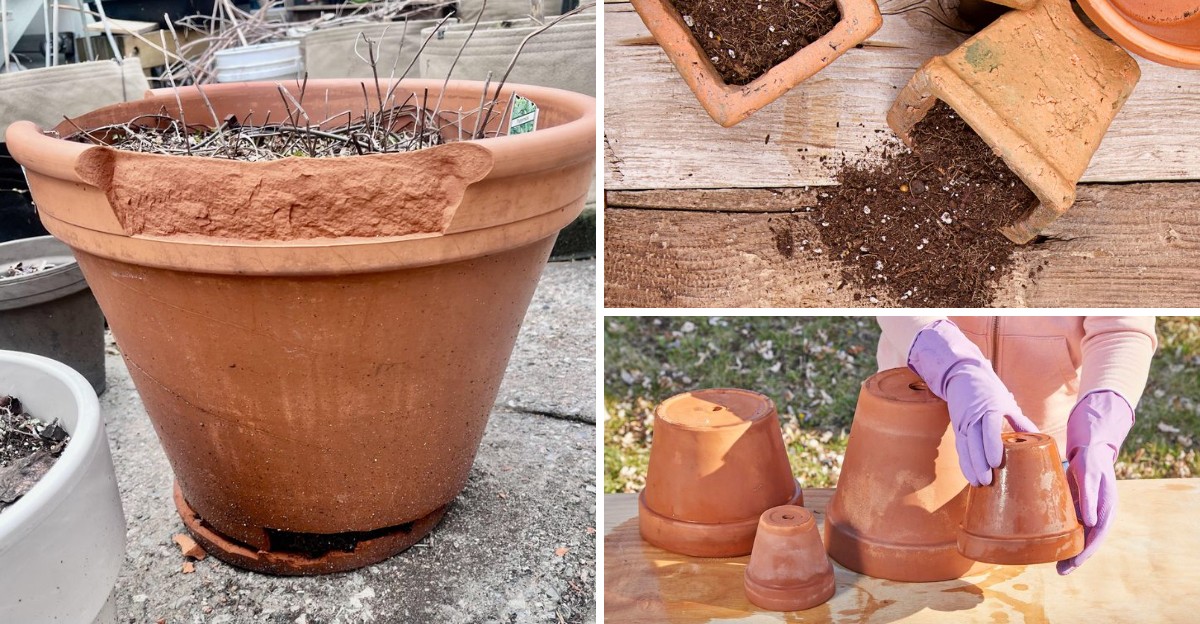
Water grows by about 9 percent when it turns to ice, and that tiny swell can split a heavy clay pot like an eggshell. I learned this the hard way one March morning. My favorite glazed planter had a crack running from rim to base.
The culprit was not one brutal cold snap. It was soggy soil freezing, thawing, and freezing again, night after night. Ice also creeps into tiny pores in clay and glaze, pushing a little harder each time.
Here in New York, those swings happen a lot. Long Island and New York City bounce above and below 32 degrees all winter, while upstate towns can see hard freezes by late October. Either way, your containers are sitting in the danger zone.
So why do so many of us leave wet pots out on the patio until spring? If you ask me, it comes down to timing and a few easy fixes most gardeners skip.
That Soggy Terracotta Pot Is Quietly Storing Ice Fuel
Clay feels solid in your hands, but under a magnifying glass it looks more like a sponge. Unglazed terracotta is full of tiny air pockets that pull in rain, snowmelt, and water from wet potting mix.
That hidden moisture is the real trouble. When temperatures drop below freezing, the water inside those pores turns to ice and expands.
The clay has nowhere to give, so the pressure pushes outward from inside the walls.
One freeze might not do much. The damage builds as the pot freezes and thaws over and over, which is exactly what late fall and early spring weather loves to do.
Each cycle widens tiny cracks a little more.
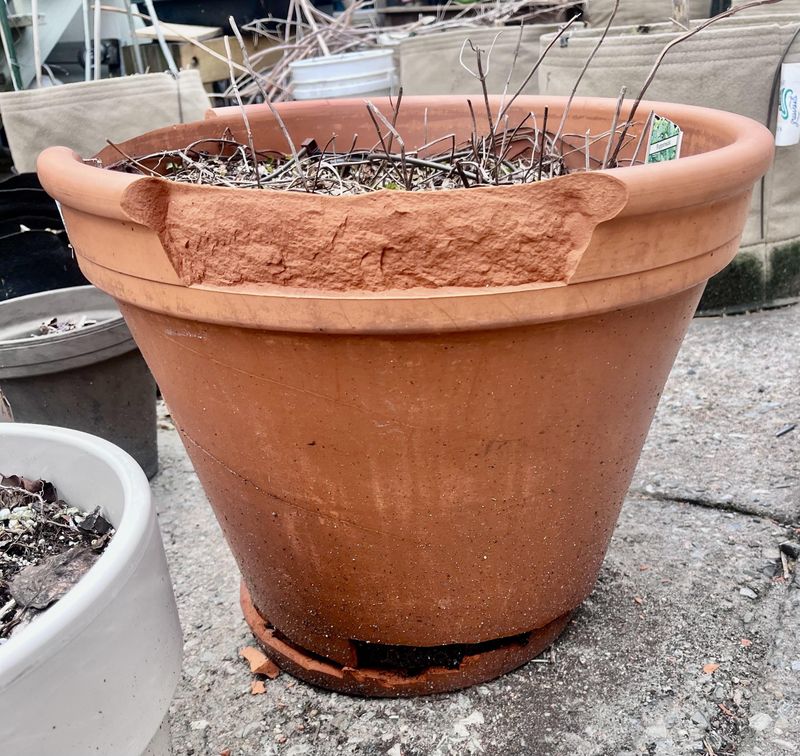
The first warning sign is often flaking, called spalling. Thin chips of clay peel off the surface like a sunburn.
After that, a hairline crack may appear and grow until the pot splits.
Wet soil adds a second push. A pot packed with soaked mix becomes a solid block of ice, pressing on the walls from the center out.
That combo of soggy clay and frozen soil is why terracotta is the material most likely to fail outdoors in a cold winter.
Run your hand across your clay pots this week. If they feel cool, dark, and damp, they are holding more water than you think.
Dump the Wet Potting Mix Before the Thermometer Hits 32
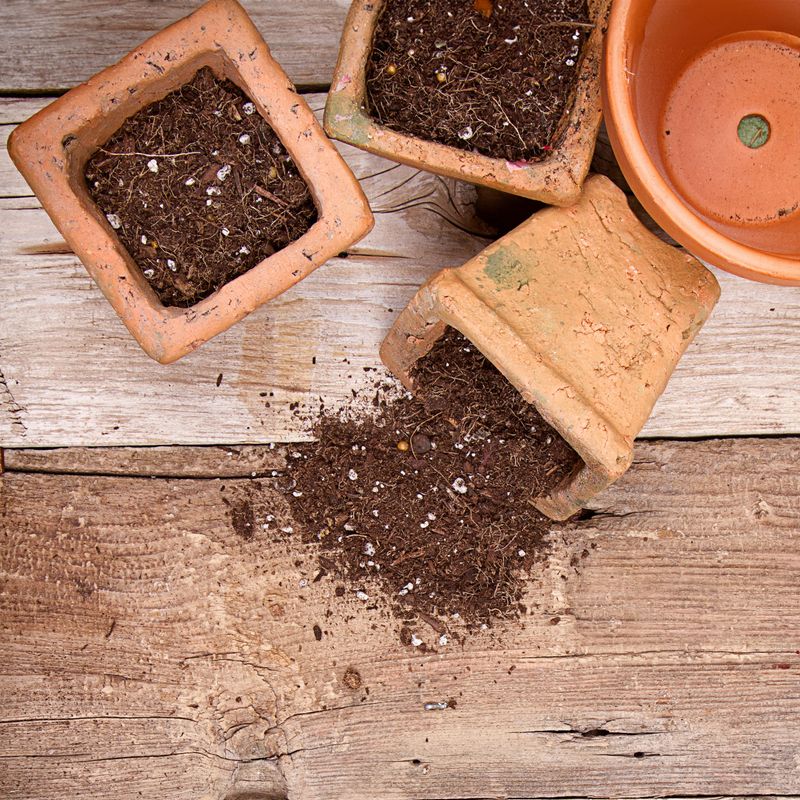
My best winter habit takes about ten minutes per pot. Tip it over, knock out the old soil, and let the container sit empty and dry.
Emptying works because it removes the main source of ice. Without a heavy, waterlogged root ball inside, there is nothing to swell and press against the walls.
Most garden experts agree this is the simplest way to protect clay and ceramic containers.
Spent potting mix does not need to go to waste. Annual flowers and summer veggies like tomatoes can head to the compost pile along with their roots.
Older mix can also be spread over garden beds as a light top layer.
Timing matters. Many upstate areas see the first hard freeze in October, while the city and Long Island often hold off until November.
A weekend with dry weather is ideal, since the soil will be lighter and easier to dump.
Got perennials or shrubs in pots you want to keep? Those plants need their soil, so they need a different plan, like moving them to a sheltered spot or picking a frost-tough container.
For everything else, empty it out. A clean, bare pot is a pot that will likely see another summer on your porch.
Scrub and Dry Those Empty Planters Before They Go Into Storage
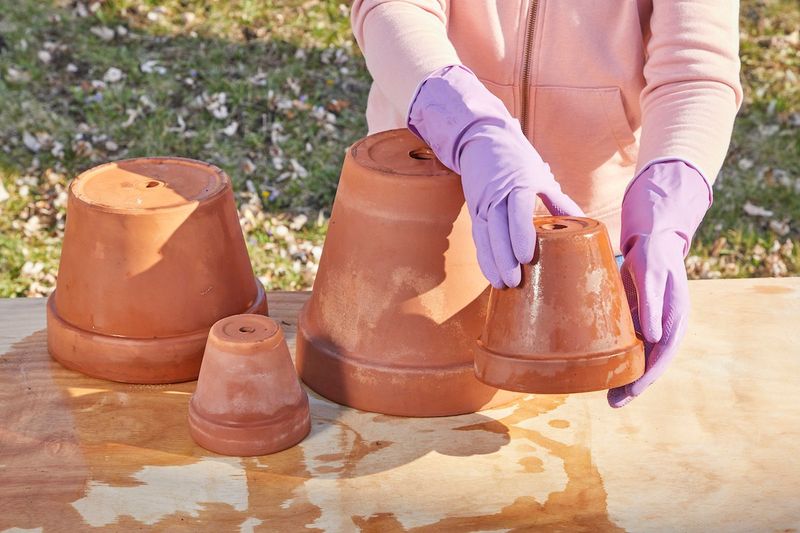
Here comes the unglamorous part, and honestly I kind of enjoy it. A bucket, a stiff brush, and some warm water turn crusty pots into fresh ones.
Scrub away clinging soil, old roots, and the white mineral crust that builds up on clay. Some gardeners add a splash of household bleach to the water, often about one part bleach to nine parts water, to help reduce lingering plant disease.
Rinse well afterward.
Drying is the step people rush. A pot that looks dry on the outside can still hold water deep in its walls.
Set clay pots upside down in the sun or a breezy spot for a day or two before you put them away.
Storage spot matters too. An unheated garage, shed, or basement works well because the pots stay dry, even if the air gets cold.
Dry clay handles chilly air much better than wet clay.
Stacking saves space but can cause chips or stuck pots. Slip a piece of cardboard, newspaper, or burlap between each one so they nest without grinding together.
Come April, you will thank yourself. Clean, dry pots are ready to plant right away, with no scraping in the cold spring mud.
Glazed Ceramic Pots Hide Their Weak Spots Underneath
Shiny glaze fools a lot of us, and I was first in line. That glossy coat looks waterproof, so it is easy to assume the pot is winter tough.
Flip one over, though, and you will often see raw clay on the bottom and around the drainage hole. Water soaks in through those bare spots and spreads into the body of the pot.
Tiny crazing lines in the glaze can let moisture in too.
Once water gets trapped under the glaze, it has a hard time escaping. When it freezes, the glaze may pop off in flakes, or the whole pot can split.
Low-fired decorative pottery tends to absorb the most.
So what should you do with your favorite glazed planters? Treat them just like terracotta.
Empty them, dry them, and store them somewhere sheltered if you can lift them.
Some glazed pots are labeled frost resistant, usually because they were fired at higher temperatures and absorb less water. Even those last longer when they are not packed with frozen mud.
A quick test can help. Drip a little water on the unglazed base.
If it darkens and soaks in fast, that pot drinks water and deserves a spot indoors this winter.
Pull the Saucers and Lift Big Pots Onto Pot Feet
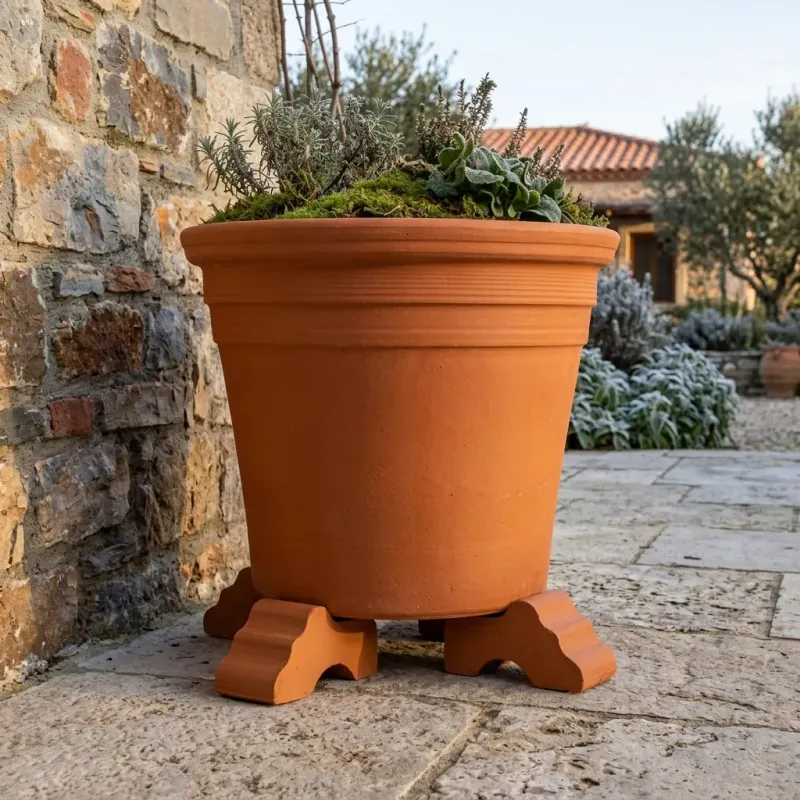
Some pots simply will not budge. That giant urn by my front steps weighs more than I want to wrestle, so it stays put every winter.
For heavy containers like this, the goal is keeping water from collecting around them. Start by removing any saucers.
A saucer full of water turns into an ice puck that freezes right against the base, which is a classic spot for cracks to start.
Next, raise the pot off the ground. Pot feet, flat bricks, or wood blocks lift it just enough for water to drain freely.
This also keeps the bottom from sitting in slush on a patio that thaws and refreezes.
Check the drainage hole while you are at it. Packed roots or soil can clog it, trapping water inside.
Poke it open with a stick or screwdriver so melting snow can escape.
If the pot is empty, flip it upside down or cover the top with a lid or tarp. That keeps rain and snow from filling it back up.
These steps cost almost nothing. Still, they can be the difference between a pot that lasts a decade and one that cracks before February.
Potted Shrubs Staying Outside Need a Snug Burlap Wrap
Not every pot gets emptied. Hardy perennials, small evergreens, and potted shrubs often spend winter outdoors, and that takes a different approach.
Roots in containers are far more exposed than roots in the ground. Garden soil insulates them, but a pot sits in open air on all sides.
A common rule of thumb from extension services is to choose plants rated a zone or two colder than your area if they will stay in pots.
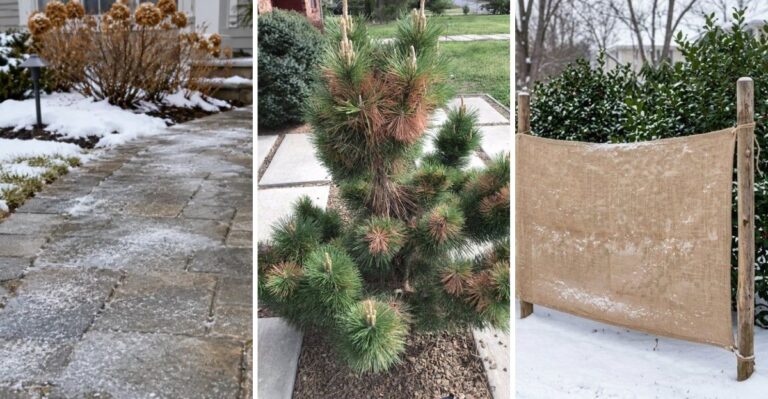
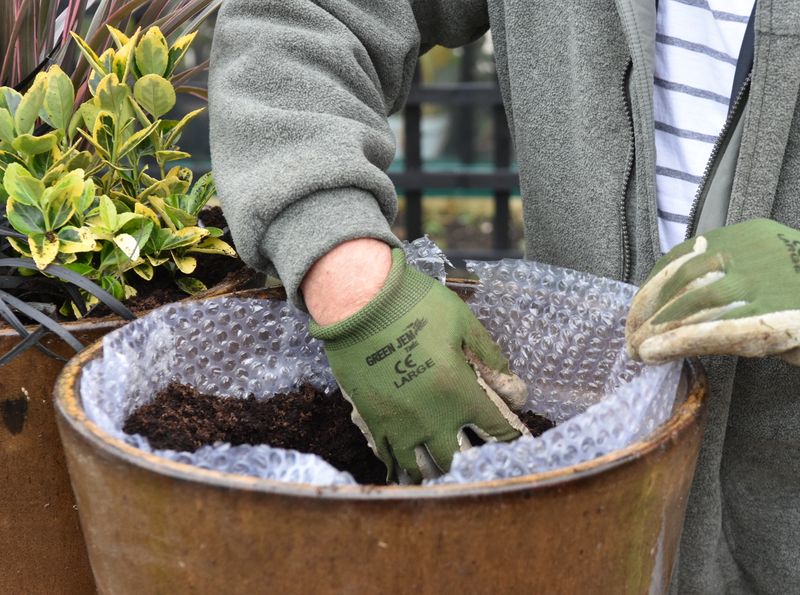
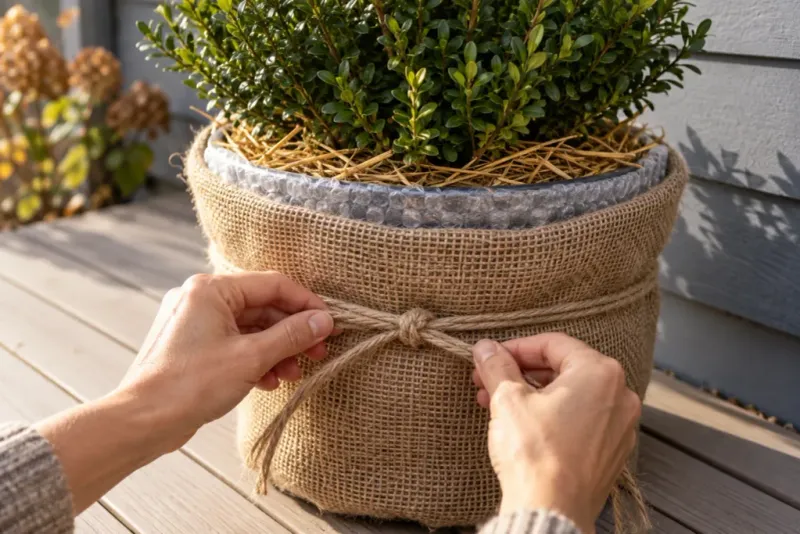
Wrapping helps. Bubble wrap or burlap around the outside of the pot evens out temperature swings for both roots and container.
Secure it with twine, and keep the soil only lightly moist, not soggy.
Grouping pots together also makes a difference. Cluster them against a sheltered wall, out of harsh wind, and they share a bit of warmth.
Some gardeners tuck them into a pile of shredded leaves or mulch.
Another trick is moving them into an unheated garage once the plants go dormant. Cold but steady conditions are easier on everyone.
Check them now and then on mild days. Evergreens may need a small drink when the soil is thawed, since winter wind can dry their leaves.
Fiberglass and Resin Planters Shrug Off Winter Much Better
After losing a few pots, I started shopping differently. Some materials simply handle cold better, and it pays to know which ones before you buy.
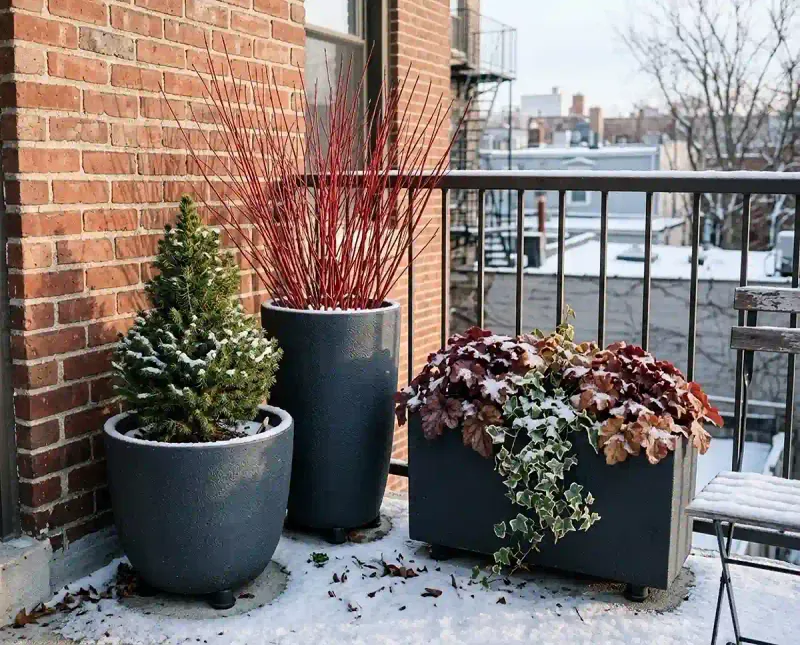
Fiberglass, resin, and quality plastic planters absorb little to no water. They also flex slightly, so expanding ice has room to push without snapping the walls.
Many look surprisingly like stone or clay these days.
Thick, well-made concrete and cast stone can also hold up, especially when they drain well. Metal works too, though thin metal heats and chills fast, which can stress roots inside.
Clay is not off the table. Some high-fired terracotta, like certain Italian-made pots, is denser and labeled frost resistant.
Look for that wording on the tag, and ask the garden center staff if you are unsure.
Fun fact: frost resistant does not mean frost proof. Even sturdy pots can crack if they sit full of soggy soil and their drain hole clogs.
My approach now is simple. Containers that stay outside all year get tough materials, while delicate clay and painted pottery come inside each fall.
That split keeps my patio looking good in January and saves me a lot of money in spring.
A Free Weekend Afternoon Can Save Every Pot on Your Porch
Let me share my favorite fall checklist, the one I wish I had years ago. It fits into a single Saturday and saves real money.
First, walk your yard and sort pots into two groups. Delicate clay and ceramic go inside, while plastic, fiberglass, and frost resistant pots can stay out.
Second, empty, scrub, and dry everything headed for storage.
Third, deal with the heavy ones. Pull saucers, clear drain holes, and lift pots onto feet or bricks.
Cover empty ones so snow cannot fill them.
Fourth, protect any potted plants staying outdoors. Wrap them, group them near a wall, and keep the soil damp but never soaked.
Weather in New York can turn quickly, so watch the forecast. Once nights start dipping below freezing regularly, those freeze and thaw cycles begin chipping away at wet containers.
Getting ahead of that first hard freeze is the whole goal.
My garden taught me that most winter damage is preventable. Pots rarely crack because of cold alone.
They crack because water is trapped inside them when the cold arrives.
So grab a bucket and some gloves this weekend. Your spring self will be planting in happy, unbroken pots.