What It Really Means When a Carolina Wren Roosts on Your Ohio Porch This Winter
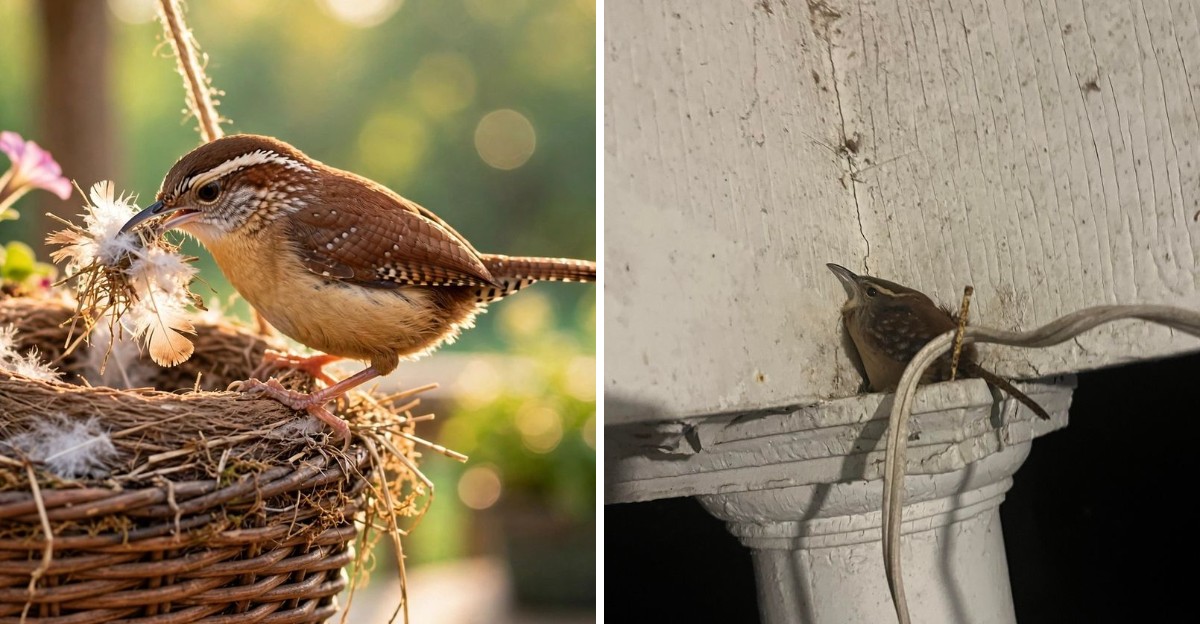
A bird smaller than a tennis ball can puff itself into a feathery pinecone and sleep tucked inside your porch light fixture. I found one wedged above my door frame last January, head buried, tail sticking out like a tiny brown flag.
These little visitors don’t fly south for the winter. They stay right here in Ohio through sleet, wind, and those gray weeks when the sun barely shows up.
Back in the late 1970s, brutal winters knocked their numbers way down, yet they bounced back and kept pushing north.
So why your porch, out of every spot in the neighborhood? I believe the answer says as much about your yard as it does about the bird.
You’re in for a fun surprise once you learn what that fluffy lump is really up to.
And honestly, have you checked your hanging baskets lately?
That Puffed-Up Brown Ball in Your Porch Corner Has a Plan
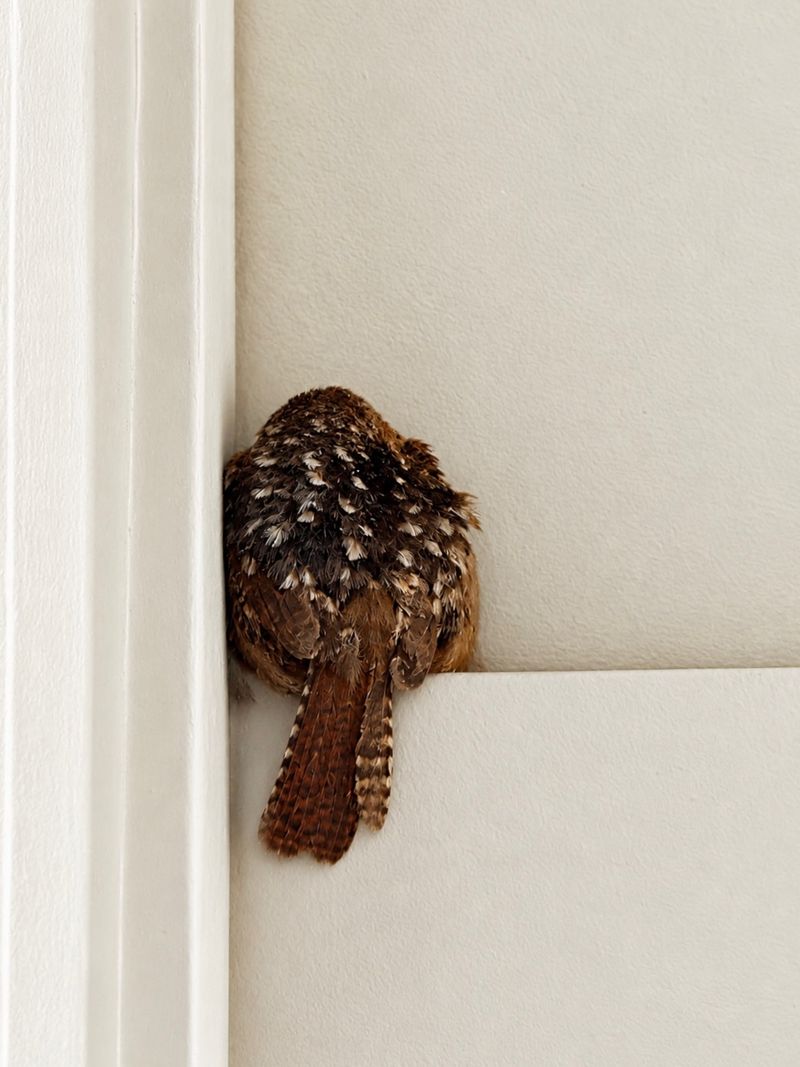
Spot a round, rust-colored lump tucked into the top corner of your porch some chilly evening, and you might mistake it for a pinecone. Look closer.
That lump is a Carolina wren, and it picked your porch on purpose.
Roosting simply means resting or sleeping for the night. Wrens do it all year, but winter makes a good roost far more important.
The bird needs a spot that blocks wind, stays dry, and hides it from owls, cats, and other hunters.
Your porch checks a lot of those boxes. A roof overhead keeps snow and freezing rain off.
Walls on two or three sides cut the wind. Corners, ledges, and light fixtures give the bird something snug to press against.
So the honest meaning is pretty simple. Your porch passed a tiny survival test, and a wild bird trusts it enough to sleep there.
Some old folklore says a bird on your home brings blessings, and I like that idea too.
Still, the science-backed answer is shelter. You happen to have built a better winter hideout than most of the trees nearby, which is a nice compliment from a creature this picky.
Fluffed Feathers Work Like a Tiny Down Jacket
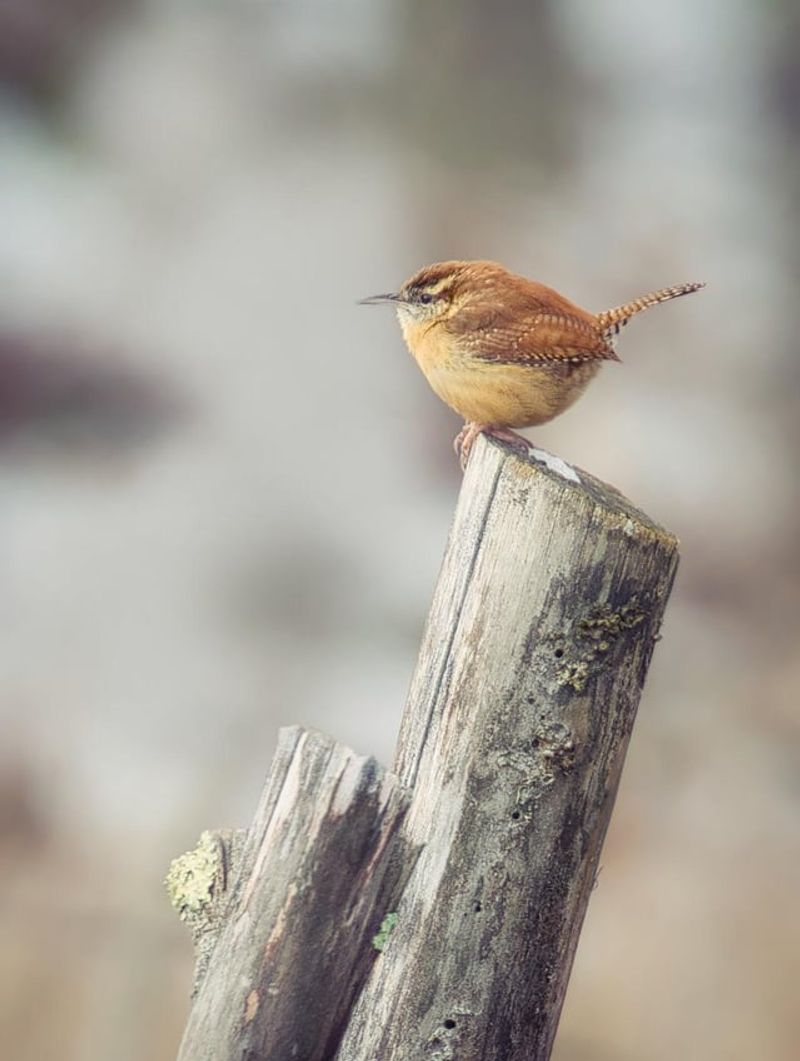
Ever zipped up a puffy coat and felt warm in seconds? Carolina wrens pull off the same trick with their own feathers, no zipper needed.
When the temperature drops, a roosting wren fluffs out its body feathers. That traps a layer of air close to its skin.
Air holds heat well, so the bird stays much warmer than it would with sleek, flat feathers.
Many wrens also face into a corner and tuck their heads down. That position shields the face and keeps the wind off the thinner feathered spots.
The result looks almost comical, like a fuzzy brown ball with a tail.
You can help without doing much at all. Avoid flipping on bright porch lights late at night if a wren is sleeping nearby.
Skip loud cleaning or sweeping right under the roost after dark.
A startled wren that flies off on a frigid night loses precious warmth and energy. Finding a new safe spot in the dark is hard for such a small bird.
So let it rest. Enjoy the view from a window instead, and save the porch chores for midday when your feathered guest is out hunting for snacks.
A Second Wren Might Be Snuggled Right Beside the First
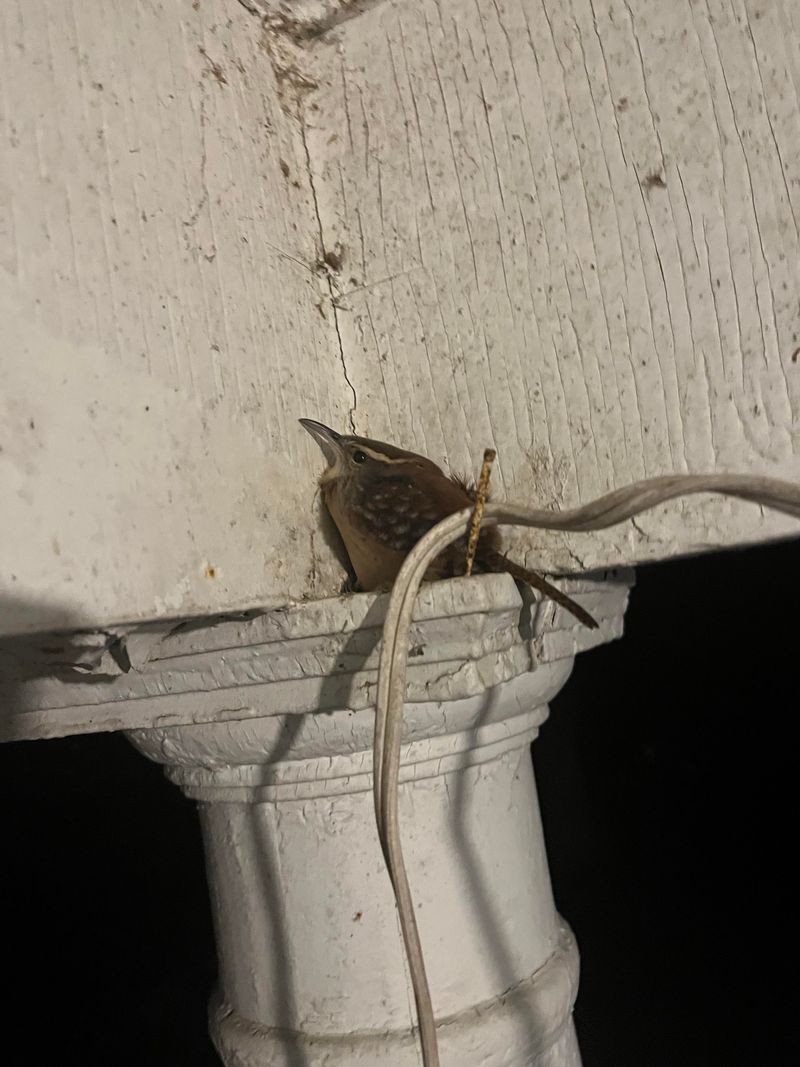
Count again. If the roost looks a little bigger than one bird, you may be hosting a couple.
Carolina wrens form strong pair bonds, and many partners stay together for years. On cold winter nights, a pair often roosts side by side.
Sharing body heat cuts down how much energy each bird burns while it sleeps.
I find this one of the sweetest details about these birds. They don’t split up after nesting season like many songbirds do.
Instead, the pair holds a territory together all year, patrolling it and calling back and forth.
That loud song you hear even in January belongs to the male. His famous teakettle-teakettle-teakettle tells other wrens this patch of ground is taken.
The female sometimes answers with a quick, scolding chatter.
So a winter roost on your porch can hint at more than one bird. It suggests a pair has claimed your yard as home base.
There’s a decent chance they’ll look around for a nest site nearby once spring arrives.
Keep an ear out at dawn. If that ringing song bounces off your house most mornings, you’ve probably got year-round neighbors.
Deep Snow Is the Real Trouble for Ground-Hunting Wrens
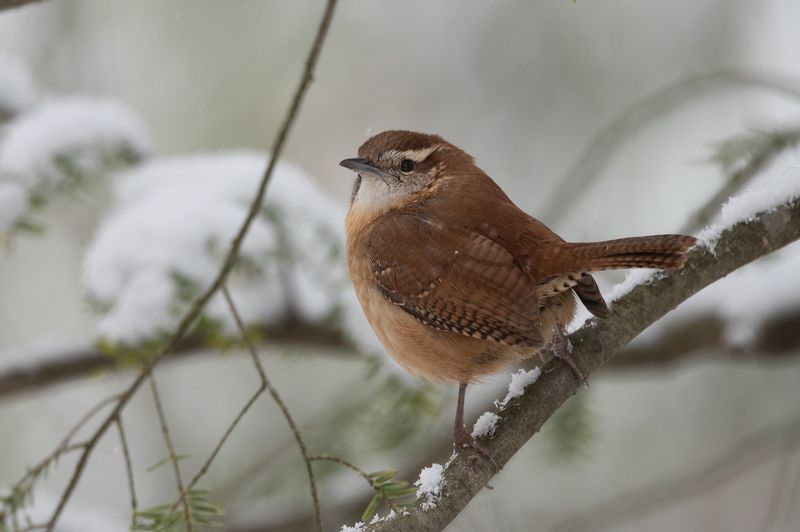
Cold alone doesn’t worry wren experts nearly as much as snow that sticks around. These birds find most of their food on or near the ground.
Carolina wrens mainly eat insects and spiders. They poke through leaf litter, flip bark, and probe tangles of brush.
When a thick blanket of snow covers that ground for days, the pantry is basically locked.
History backs this up. Harsh, snowy winters in the late 1970s caused steep population drops across Ohio and other northern areas.
The birds recovered over time, helped by milder winters and plenty of backyard feeders.
That’s why your porch matters during a storm. A covered space often stays snow-free underneath, and spiders or overwintering insects may hide in its cracks and corners.
A wren gets shelter and maybe a snack in one spot.
Northern Ohio, especially near Lake Erie’s snowbelt, tends to see more lasting snow than the southern counties. Wrens up there face a tougher test most years.
When the forecast calls for heavy snow, clear a small patch of ground under a shrub. Toss some food there.
You’d be surprised how fast a hungry wren finds it.
Suet and Mealworms Keep Your Porch Wren Fueled
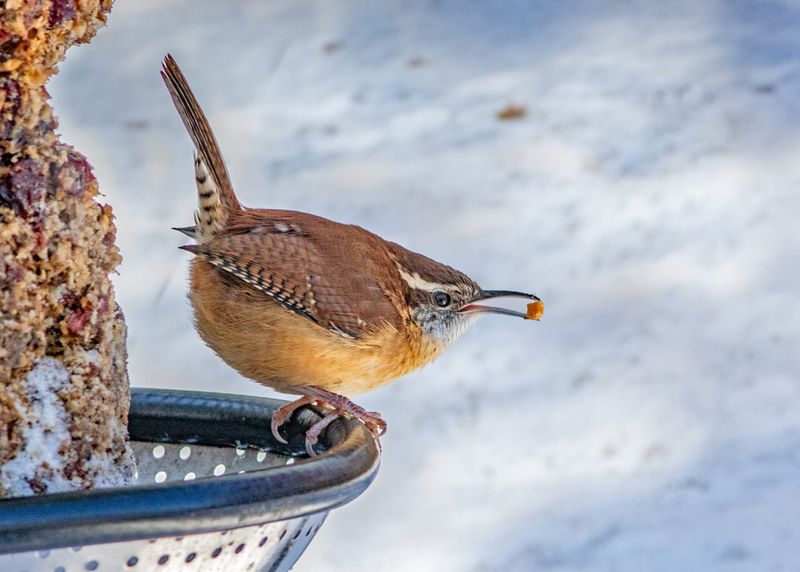
Want to win a wren’s loyalty fast? Offer fat.
In winter, high-energy food is what these birds crave most.
Suet is my top pick. Wrens happily cling to a suet cake or peck at suet nuggets.
Mealworms, either live or dried, are another favorite since they’re close to the bugs wrens eat naturally.
Other good options include hulled sunflower seeds and small bits of plain, unsalted peanuts. Skip anything salted, seasoned, or coated.
Bread and kitchen scraps don’t give wrens the nutrition they need.
Placement matters too. Wrens feel safest near cover, so hang feeders close to shrubs or a porch railing.
A low platform or a dish on a sheltered step works well for these ground-loving birds.
Try to keep food available on the coldest mornings. A wren burns a lot of stored fat overnight just staying warm.
Breakfast early in the day helps it refill.
Clean your feeders every couple of weeks with hot, soapy water and let them dry. Moldy suet or damp seed can make birds sick.
A little upkeep keeps your porch café a safe place to stop for a bite.
A Roosting Box Beats a Regular Birdhouse in January
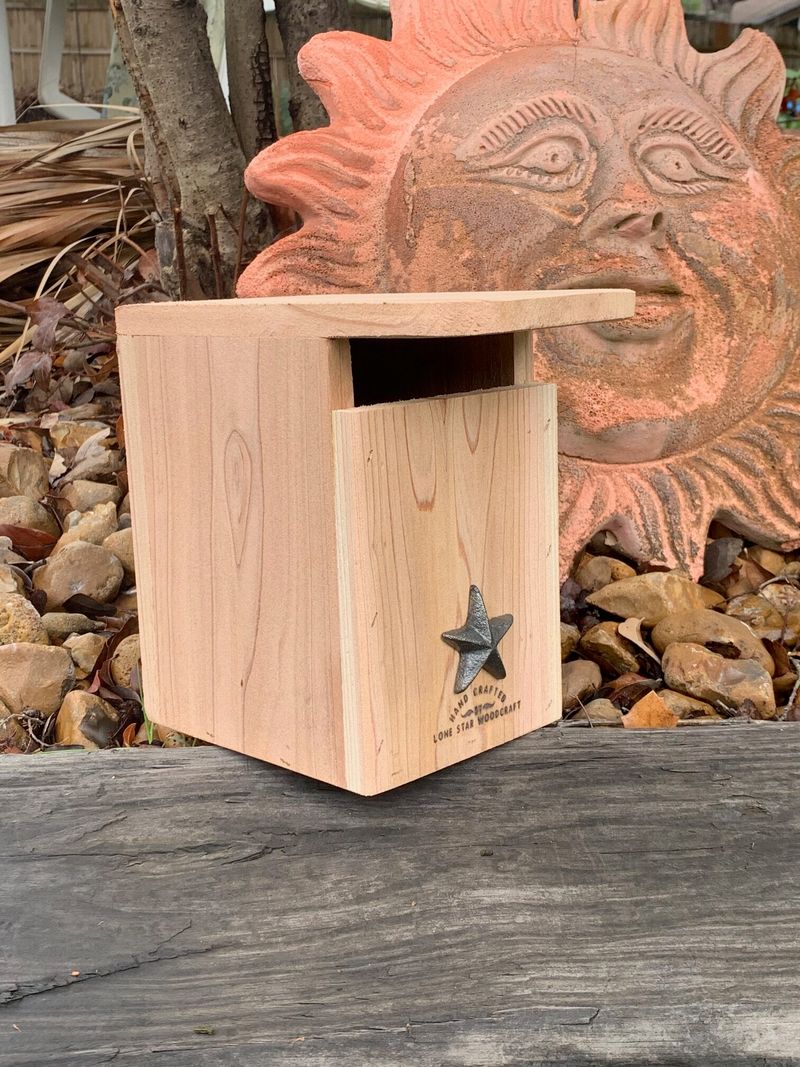
Not all birdhouses are built for winter sleeping. A roosting box is designed with one job in mind, holding heat through a long night.
Many roosting boxes put the entrance hole near the bottom instead of the top. Warm air rises, so it stays trapped up high where the birds rest.
Some boxes include small inside perches or dowels so several birds can fit.
You can buy one or build one. Unpainted wood holds up nicely and doesn’t overheat in sun.
Tuck a handful of dried grass inside to give the wren some extra insulation.
Mount the box in a sheltered spot. Under a porch roof, on a protected wall, or near dense shrubs all work.
Face the opening away from the prevailing winter wind, which in most of Ohio comes from the west or northwest.
Don’t panic if no wren moves in right away. Birds may take weeks to trust a new structure.
Some will keep using your porch corner instead, and that’s fine.
Either way, you’ve given them another choice. Choices matter when a cold snap hits and the best spots fill up fast.
Brush Piles and Native Shrubs Give Wrens a Backup Bedroom
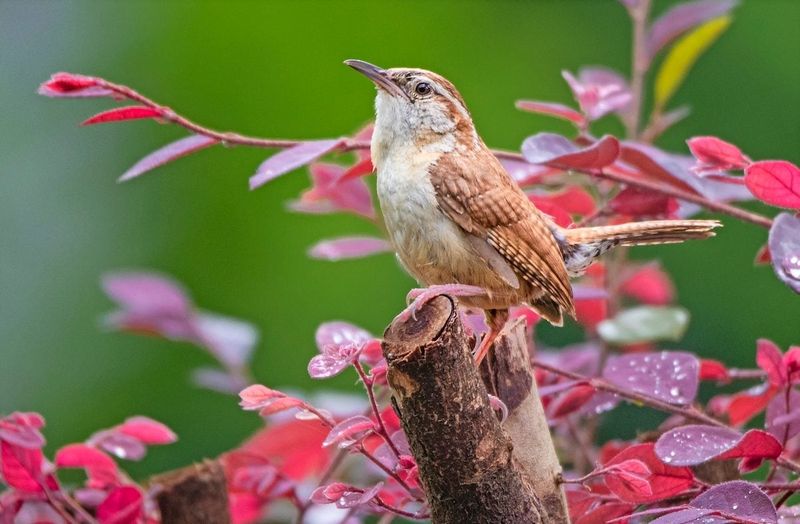
Here’s a garden chore you can happily skip. That pile of branches left over from fall pruning might be one of the best gifts for wrens.
Brush piles create a maze of hidden pockets. Wrens slip inside to hunt for insects, dodge hawks, and ride out wind.
Stack larger limbs on the bottom and smaller twigs on top so air spaces stay open.
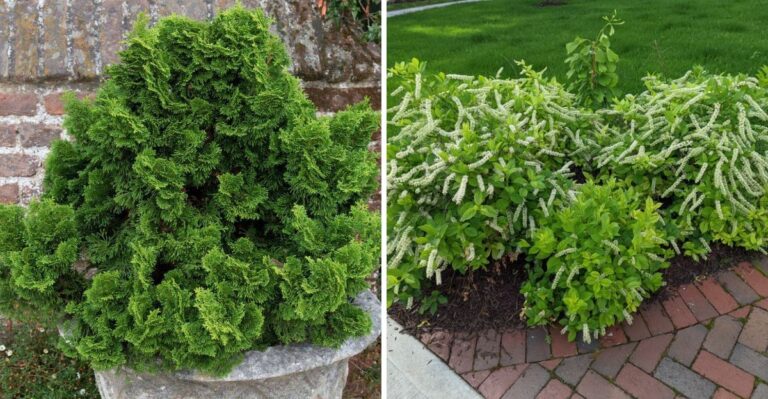
Dense plantings help a lot too. Native shrubs like American holly, eastern red cedar, and arrowwood viburnum offer cover and, in some cases, berries.
Leaving fallen leaves under shrubs also protects the insects wrens search for.
I’ve noticed my yard got busier with birds once I stopped tidying every corner in autumn. A little mess goes a long way.
Seed heads, leaf litter, and tangles all add up to winter habitat.
Avoid invasive plants like Japanese honeysuckle or bush honeysuckle, even if birds visit them. They crowd out native growth over time.
Ohio’s Department of Natural Resources lists many better choices.
A wren with several safe spots nearby is a sturdier wren. Your porch can be one stop on a cozy network you build across your whole yard.
Your Winter Porch Guest May Become a Spring Nesting Neighbor
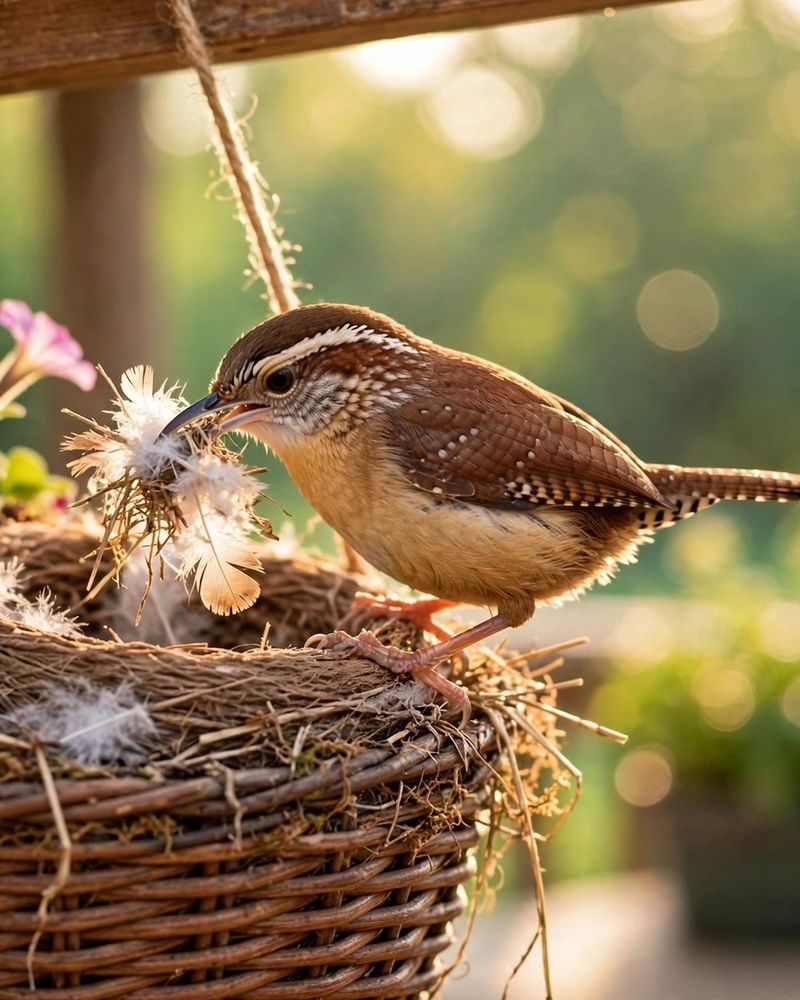
Spring has a funny way of turning winter guests into roommates. Carolina wrens are famous for nesting in the oddest porch spots.
Hanging baskets, mailboxes, old boots, grills, open garage shelves, and even coat pockets have hosted wren nests. A bird that roosted on your porch all winter already knows the space feels safe.
Nesting there later is a natural next step.
In Ohio, wrens can start building as early as March or April and may raise more than one brood. Check baskets and gear before you move or water them.
A quick peek saves you from disturbing eggs.
Carolina wrens are protected under the federal Migratory Bird Treaty Act. Removing an active nest with eggs or young isn’t allowed.
If a spot truly won’t work, block it gently before building starts.
Personally, I count a porch wren as one of winter’s best perks. It’s a free pest patrol, an alarm clock with a song, and a reminder that small creatures are tougher than they look.
So leave that corner be. Keep the suet coming.
Your reward could be a whole family of chattering brown fluffballs by early summer.