The Bark Damage That Starts When Bucks Rub Young Ohio Trees in Fall
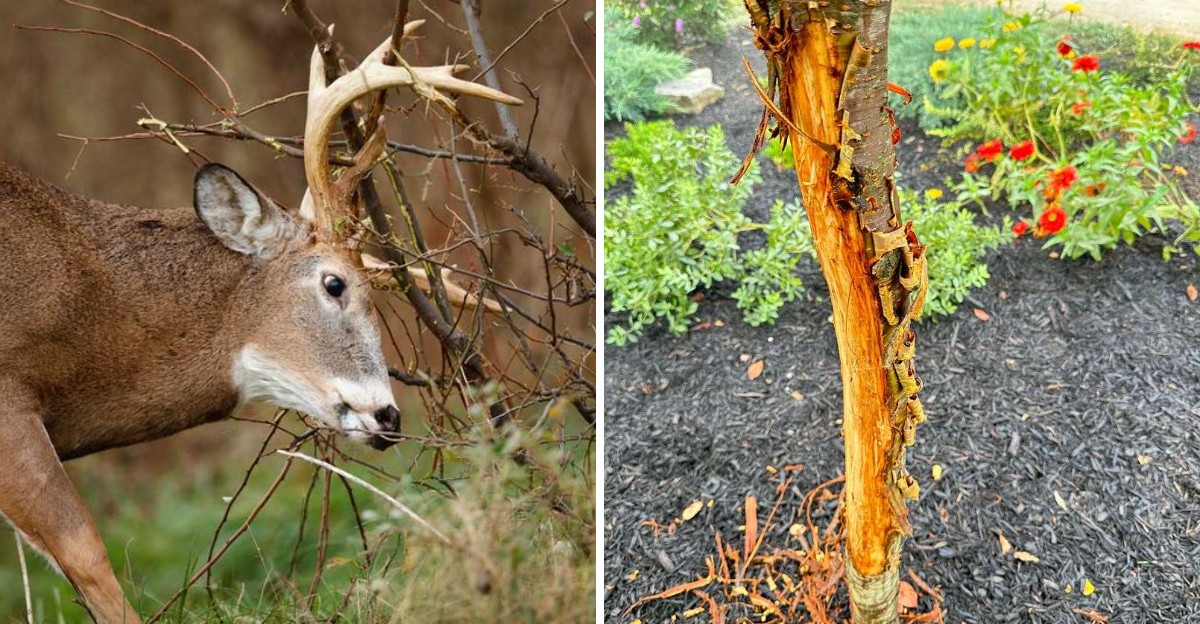
Step outside one October morning and find a young tree you planted last spring wearing a ragged, peeled-off collar of bark. A buck came by overnight, and he wasn’t being gentle.
Ohio’s rut kicks off right about now. Bucks work off energy and mark their turf by scraping antlers against whatever stands tall and skinny.
Your new maple fits the bill. So does the pear by the driveway.
The wound looks small. It rarely stays that way.
A ring of missing bark can cut off the tree’s supply line, and the damage often shows up slowly, long after the buck has moved on.
Some trees survive. Plenty don’t.
Quick action, plus a few simple tools, can tip the odds in your favor.
Walk your yard this weekend and look at every sapling with fresh eyes.
1. Bucks Rub Their Antlers To Strip Off The Velvet
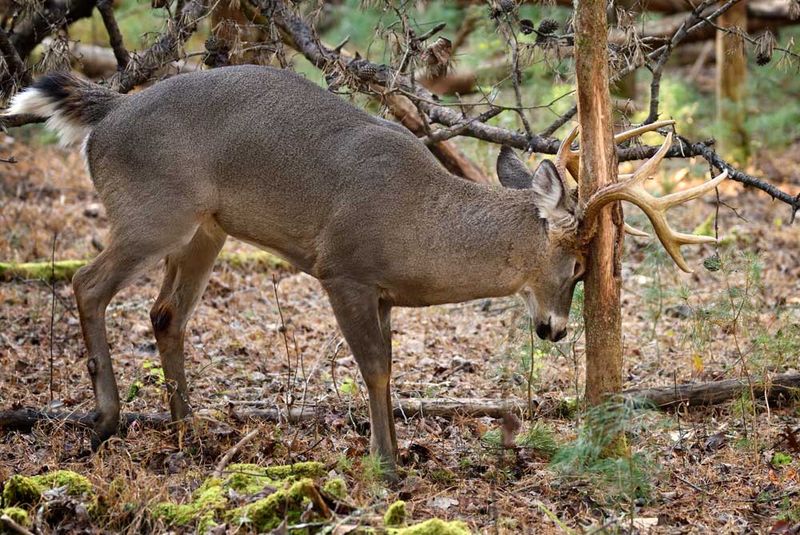
Imagine wearing a fuzzy sweater that suddenly starts peeling off in itchy strips. That is roughly what a buck deals with each late summer.
His antlers grow under a soft, blood-rich skin called velvet.
Velvet feeds and protects the antlers while they grow, which takes about three months starting in early summer. Once the antlers reach full size, the bone hardens and blood flow stops.
The velvet dries up and begins to peel away.
By late August or early September, most Ohio bucks start scraping off that loose skin. They rub against trees, branches, shrubs, and brush.
The whole job can take just a few hours or a few days.
Rising testosterone sets this process in motion. The same hormone surge also makes bucks feisty and eager to show off.
So the rubbing does more than clean antlers.
Bucks use rubs to mark territory with scent from glands on their foreheads. The pushing and twisting also builds strong neck muscles for battles later in fall.
A single rub sends a message to every deer passing by.
For homeowners, this means trouble can begin earlier than many expect. If you spot shredded velvet bits near a scraped trunk, you know who visited.
Keep your eyes open as soon as August winds down.
2. Ohio’s Rut Runs Roughly From September Through November
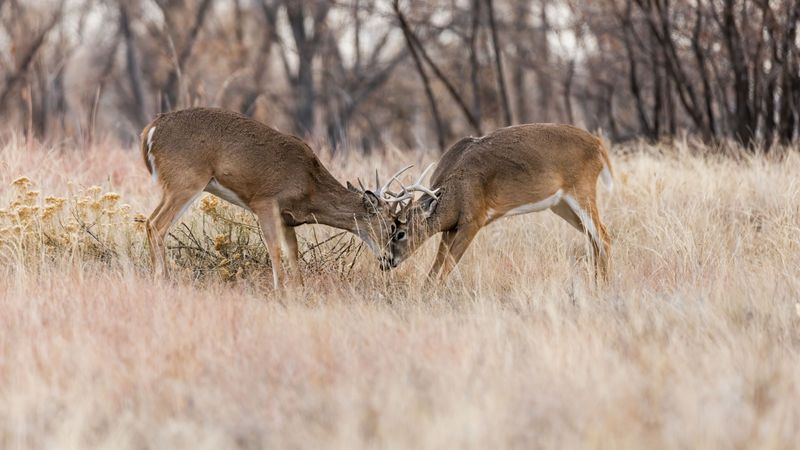
Mark your calendar, because Ohio deer run on a surprisingly steady schedule. The breeding season, called the rut, follows a pattern that hunters and gardeners can count on.
Knowing the dates helps you act before damage shows up.
Antler rubbing kicks off in early September and keeps going through November. The Ohio Department of Natural Resources says courtship starts around mid-October.
Breeding activity runs from about October 15 to November 30.
Peak conception usually lands between November 5 and 15 across the state. The midpoint sits near November 7.
That window is when bucks act their wildest.
Hunters call one stretch the chasing phase, usually from October 31 to November 6. Bucks roam far and fast during these days, crossing yards and roads.
More movement means more rubbing on whatever trunks they pass.
Your Ohio Garden Changes Every Week. Your Plan Should Too.
Gardening in Ohio changes quickly throughout the season. Every Friday you’ll receive a simple weekly plan showing exactly what to plant, prune, fertilize, harvest, and protect so you never miss the right timing.
Some experts say rut behavior can start in mid-September and stretch into early January. Weather and local deer numbers can shift things a little.
Still, fall is the main danger zone for your trees.
Here is a simple tip worth remembering. Get protection in place by Labor Day, then leave it up until after the new year.
That way you beat the busiest weeks instead of reacting after the bark is gone.
3. Young, Thin-Barked Trees Take The Worst Of It
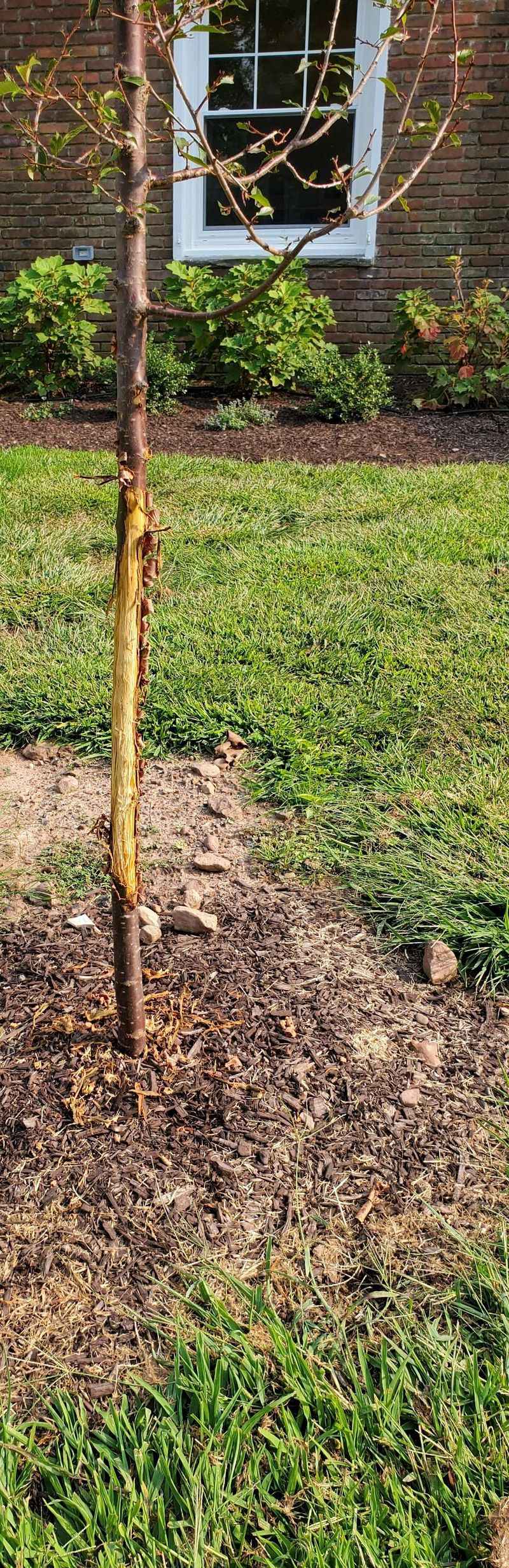
Bucks are picky shoppers when they choose a rubbing post. They skip the giant oak and head straight for the skinny newcomer you planted last spring.
Sadly, that young tree is the perfect fit.
Smooth bark and trunks about 1 to 4 inches thick top the wish list. Flexible saplings bend and spring back, which seems to satisfy a buck pushing against them.
Thin bark offers almost no armor against sharp antler tines.
Some species get targeted again and again. Dogwood, maples, lindens, birch, and magnolias show up on many damage reports.
Ornamental trees in new landscapes are especially tempting.
Central Ohio gardeners see trouble on even more plants. Arborvitae, rhododendron, euonymus, boxwood, cypress, and woody hydrangeas can get roughed up in fall and winter.
Evergreens near wooded edges face extra risk.
Think about where your newest plantings sit. A young tree near a tree line, creek, or field edge is basically on a deer highway.
Those spots deserve protection first.
If you are planning new trees, consider guarding them right after planting. It costs far less than replacing a scarred sapling.
Older trees with rough, thick bark can usually handle themselves, so focus your effort on the little ones.
4. Rubbing Strips Away The Bark And Cambium
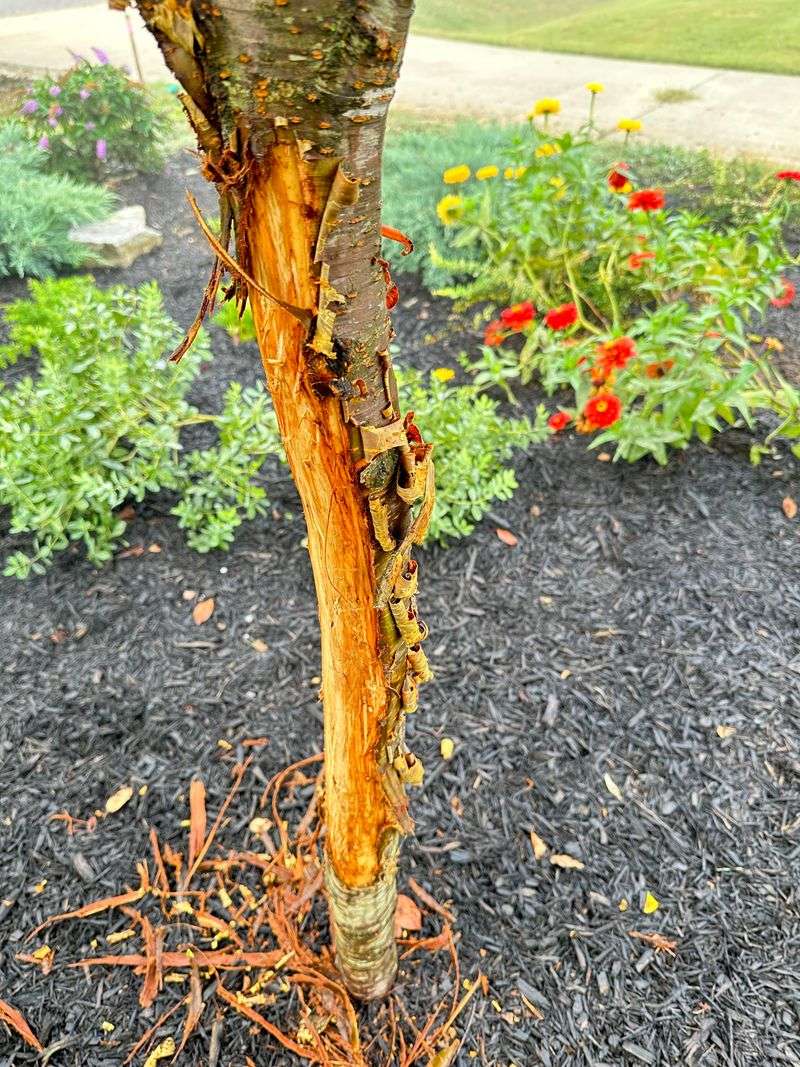
Peel back a tree trunk in your mind, layer by layer, like an onion. The rough outer bark is just the jacket.
The truly important parts sit right underneath.
Below the bark lies the phloem, a thin tissue that carries sugars from leaves down to the roots. Next comes the cambium, a slim green layer between the inner bark and the woody core.
The cambium makes new growth and helps move water and nutrients.
When a buck grinds his antlers on a young trunk, he scrapes off more than the jacket. Phloem and cambium tear away in long ribbons.
What remains is bare, pale wood exposed to the air.
Think of it like cutting a straw that feeds the whole plant. Roots stop getting the sugars they need for energy.
Growth slows because the tissue that builds new wood is gone in that spot.
Exposed wood also invites insects, fungus, and decay to move in. A wound that looks small in October can turn into a big weak spot by spring.
Cracks and cankers sometimes follow.
Check scraped trunks closely with your fingers. If you feel smooth, slick wood instead of bark, the cambium is likely gone there.
That tells you how serious the injury really is.
5. A Rub That Circles The Trunk Is Devastating
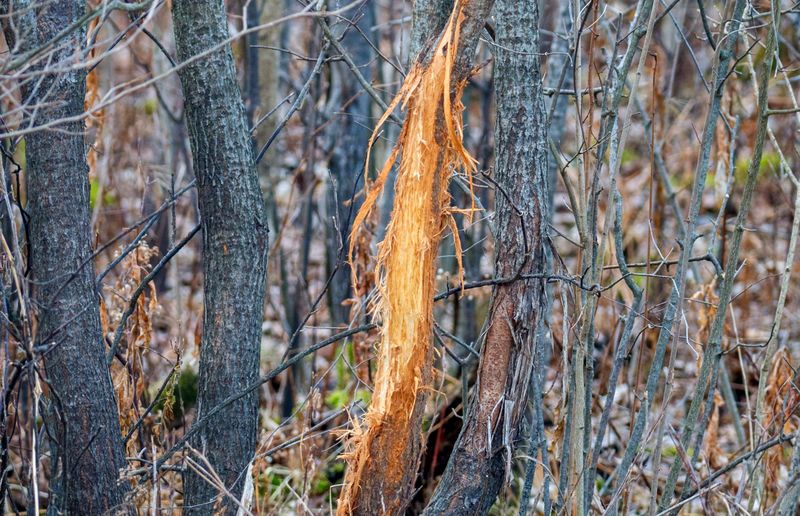
Arborists have a word that makes gardeners wince: girdled. It describes a trunk with its cambium scraped away all the way around.
A buck can do that in one busy night.
Picture a belt of bare wood circling the trunk. Water and nutrients can no longer travel smoothly between roots and branches.
Sugars made in the leaves cannot reach the roots at all.
Without that food, roots slowly starve over the following months. The tree may leaf out next spring using stored energy, which fools many owners.
Then it often fades and fails later in the season.
Partial rubs are a different story. If a strip of living bark still connects top and bottom, the tree has a fighting chance.
The wider that strip, the better the odds.
Even survivors can carry scars for years. Heavy injury may leave a tree stunted, lopsided, or slow to recover.
Some never reach the size they were meant to.
So measure the damage honestly. Wrap a string around the trunk at the wound and see how much bark remains.
If less than a quarter of the circle is intact, talk with a local arborist about whether replanting makes more sense than waiting.
6. Bucks Often Return To The Same Tree
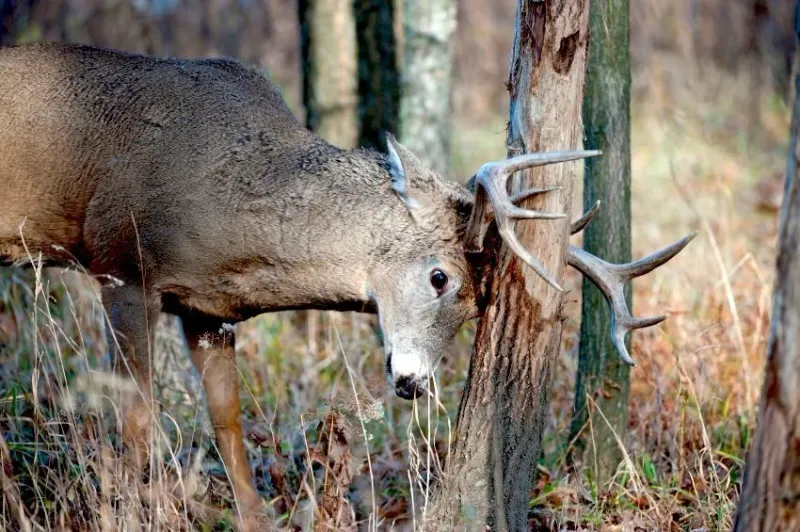
Some deer have favorite spots, much like you have a favorite chair. Many rubs get used once and then forgotten.
A few, however, become famous landmarks in the deer world.
Hunters call these traditional rubs. They often show up on larger trees, such as sassafras over 3.5 inches thick.
Older, dominant bucks may visit them year after year.
Here is a fun fact: these rubs work like a community message board. Several bucks, and even does, leave scent from their glands there.
Each visit adds another note for the next deer to read.
With heavy repeat use, a trunk can wear into an hourglass shape. That pinched waist is a sure sign of a long history.
You might spot one at the edge of your woods.
Bucks returning to an area sometimes pick a nearby stem instead of the old one. That means a scraped tree often has neighbors at risk too.
Guard the trees around a fresh rub, not just the hurt one.
If a buck has made your yard part of his territory, expect him back next fall. Leave protection on wounded trees through the following season.
Planning ahead beats watching the same sapling get scraped twice.
7. Protect Trees Under 6 To 8 Inches In Diameter
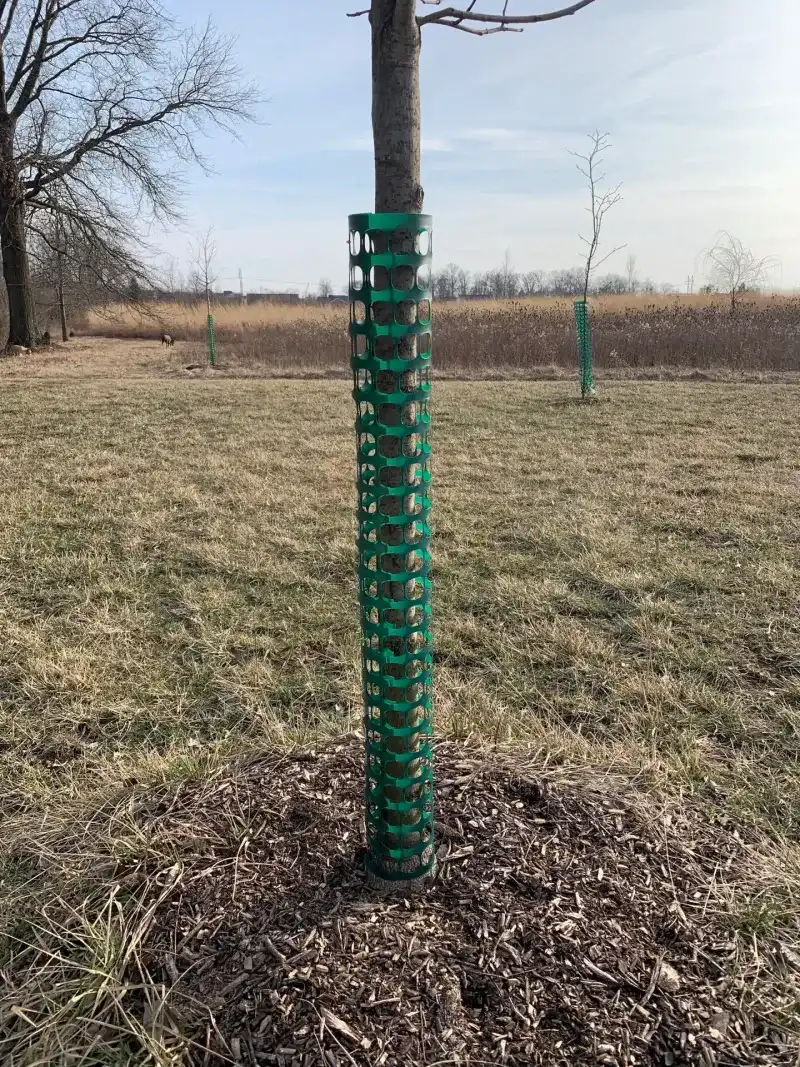
Grab a tape measure and head outside for a quick tree check. Trunk size is the best clue for deciding which trees need help.
It takes just a few minutes per tree.
Trees with trunks between 1 and 6 inches across are the most at risk. Damage shows up most often on trunks between 1 and 4 inches.
Playing it safe, guard anything under 6 to 8 inches.
Measure about a foot or two above the ground. That is roughly where antlers hit when a buck lowers his head.
Write the size on a list so you know what to buy.
Many store-bought tree guards fit trunks up to about 4 inches. For bigger young trees, a wire cage set a little away from the trunk works well.
Cages give room to grow without rubbing the bark themselves.
Got a whole row of young trees? A tall fence around the group may cost less than many single guards.
Plan for fencing at least 6 to 8 feet tall so deer cannot hop over.
Once a trunk grows thick and rough, you can usually retire its guard. Until then, treat protection like a seatbelt for your tree.
It is cheap, simple, and saves a lot of heartache.
8. Fencing Or Full Exclusion Works Best
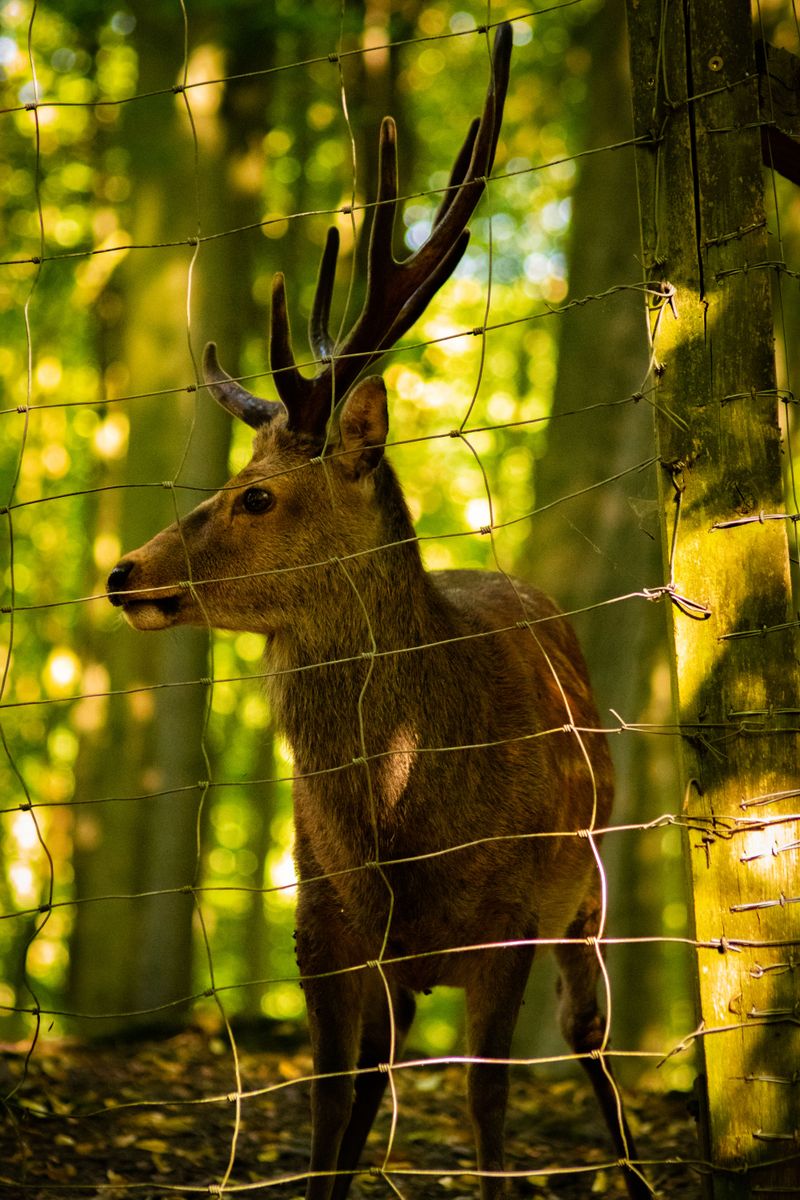
Sprays and shiny tape sound easy, but deer are not easily fooled in fall. A buck full of hormones does not care much about a funny smell.
A solid barrier is what truly stops him.
Physical barriers rank as the top way to prevent rub damage. Fences and tree guards keep antlers from ever touching bark.
You can pick from several styles to fit your yard and budget.
Wire cages about 4 feet high and 1.5 feet across work great for single trees. They block both nibbling and rubbing.
Drive a couple of stakes to keep each cage steady in the wind.
Plastic mesh guards, tubes, and sleeves slip right around the trunk. Burlap wraps add a soft buffer too.
Check them now and then so they do not trap moisture or pinch growing bark.
For orchards or big plantings, woven-wire fencing at least 6 to 8 feet tall is the strongest choice. High-tensile and fixed-knot fences also hold up well.
They cost more up front but protect many trees at once.
Repellents can help a bit with browsing in other seasons. During the rut, though, they often fall short.
Save your money for barriers when bucks are on the move.
9. Trim Loose Bark, But Skip The Wound Dressing
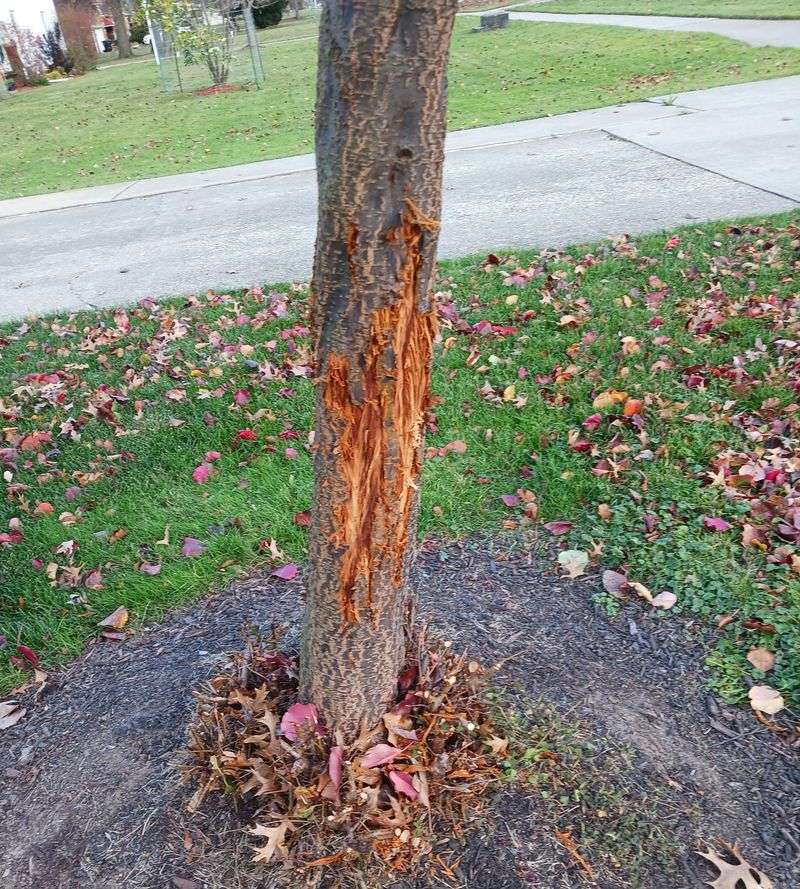
So a buck got there first, and your tree looks rough. Take a breath, because a little careful first aid can go a long way.
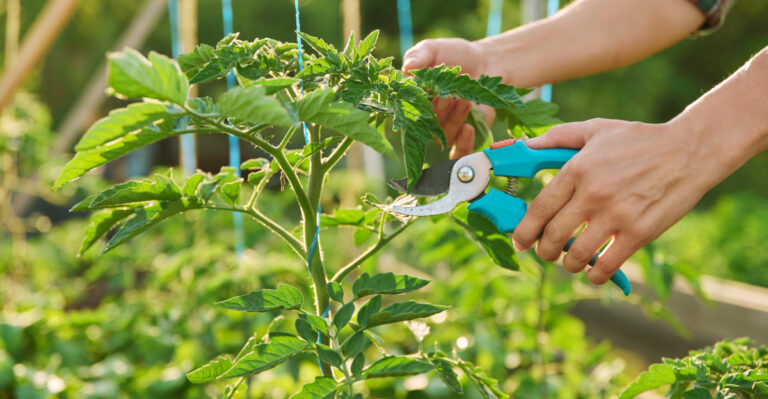
You only need a sharp, clean knife or pruners.
Start by trimming away loose, shredded bark that no longer sticks to the trunk. Clean edges heal better than ragged ones.
Cut gently and avoid slicing into healthy, firmly attached bark.
Some experts suggest shaping the wound into a long oval, like a football. That shape can help the tree seal over faster.
Just do not make the wound much bigger in the process.
Now for the part that surprises many people. Skip the tar, paint, and asphalt wound sprays.
Research shows they can slow callus growth and trap moisture that feeds decay.
Instead, let the wound air-dry and heal on its own. Trees have a built-in system for sealing off injuries.
Your job is simply to stay out of the way.
Keep watering the tree during dry spells to help it recover. Then put a guard around it right away so the buck cannot reopen the wound.
With patience, you may see a ring of new tissue rolling in by next summer.