The Gorgeous Gardenia Alternative You Can Grow Without the Fuss in Florida
Many gardenias sold in Florida grow on borrowed roots from a South African cousin. Growers do this because tiny soil worms called nematodes love to chew on regular gardenia roots.
I learned the hard way how picky these shrubs can be. Mine wanted acidic soil, perfect watering, steady temperatures, and constant bug patrol.
One hot spell later, the buds dropped onto the mulch like little white marbles.
Then a friend handed me a cutting from a twining evergreen growing on her mailbox post. It had glossy leaves and starry white flowers.
The perfume reached me before I even got out of the car.
You’re in for a treat if you crave that sweet scent without the drama. Would you happily trade a fussy shrub for a vine that mostly takes care of itself?
I already know my answer, and so does my nose.
Those Moody Gardenia Shrubs Ask for a Lot in Sandy Yards
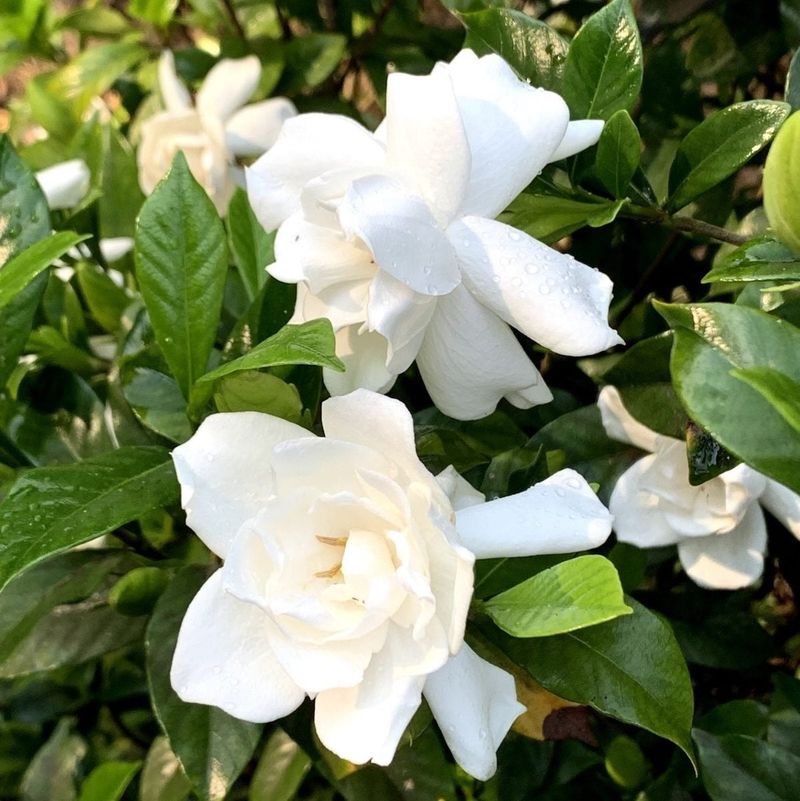
Gardenias have a reputation, and honestly, they earned it. They want acidic soil with a pH around 5.0 to 6.5, and much of Florida sits on sandy, alkaline ground full of limestone and shell.
Concrete makes things harder. Foundations and driveways leach lime into nearby soil, so a gardenia planted by the house often turns yellow between the veins.
That pale look usually signals the plant can’t pull enough iron from the ground.
Nematodes add another headache. UF/IFAS experts recommend buying gardenias grafted onto Gardenia thunbergia rootstock, because those roots hold up far better against these microscopic pests in sandy soil.
Then come the bugs. Whiteflies, scale, mealybugs, and aphids all love the tender growth, and their sticky honeydew feeds a black coating called sooty mold.
Bud drop rounds out the list. A sudden dry spell, a cold snap, or uneven watering can make a shrub shed its flower buds before they open.
I once counted over a dozen on the ground after one breezy weekend.
None of this means gardenias are impossible. Plenty of gardeners grow beautiful ones with soil testing, mulch, and regular feeding.
Still, if you want that heavenly fragrance without a weekly checkup, a more relaxed plant might suit your yard and schedule better.
Star Jasmine Brings the Sweet Gardenia Scent With Half the Drama
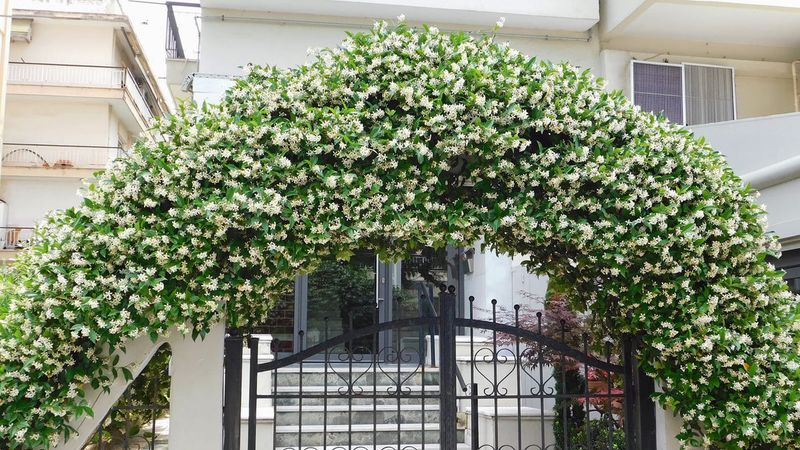
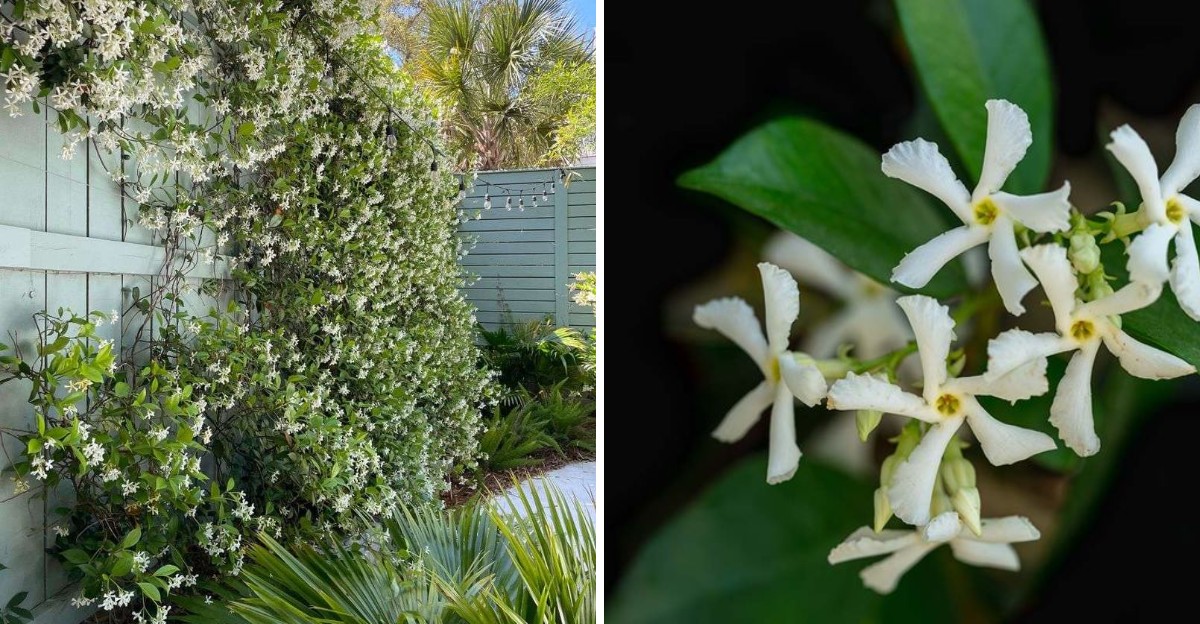
Star jasmine, also called Confederate jasmine, is the plant that won me over. Its botanical name is Trachelospermum jasminoides, and it hails from China and Japan.
Despite the common name, it isn’t a true jasmine. It belongs to the dogbane family, making it a cousin of oleander and periwinkle, while true jasmines belong to the olive family.
That’s fun trivia for your next garden club meeting!
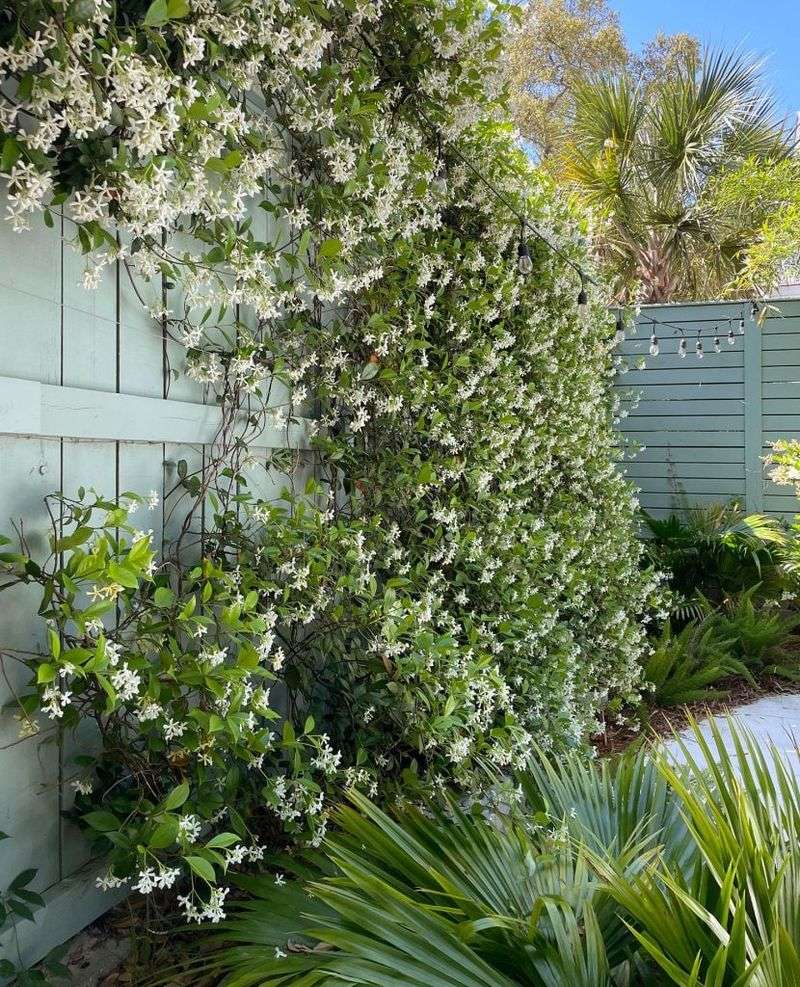
What matters most is the fragrance. Each spring, clusters of small white flowers with five twisted petals open across the vine, and their sweet, heady perfume drifts across patios and porches.
Many people compare the scent to gardenia, with a soft hint of vanilla.
The leaves earn praise too. They’re dark, glossy, and evergreen, so the plant looks tidy all year, even when it isn’t blooming.
UF/IFAS lists this vine for USDA zones 8 through 10, which covers most of the state. It handles full sun or partial shade and grows at a moderate pace, often reaching 10 to 20 feet on a sturdy support.
You get gardenia-style elegance in a package that forgives missed waterings and less-than-perfect soil. For a busy gardener, that trade feels like a real win.
Glossy Jasmine Vines Shrug Off Soil That Makes Gardenias Sulk
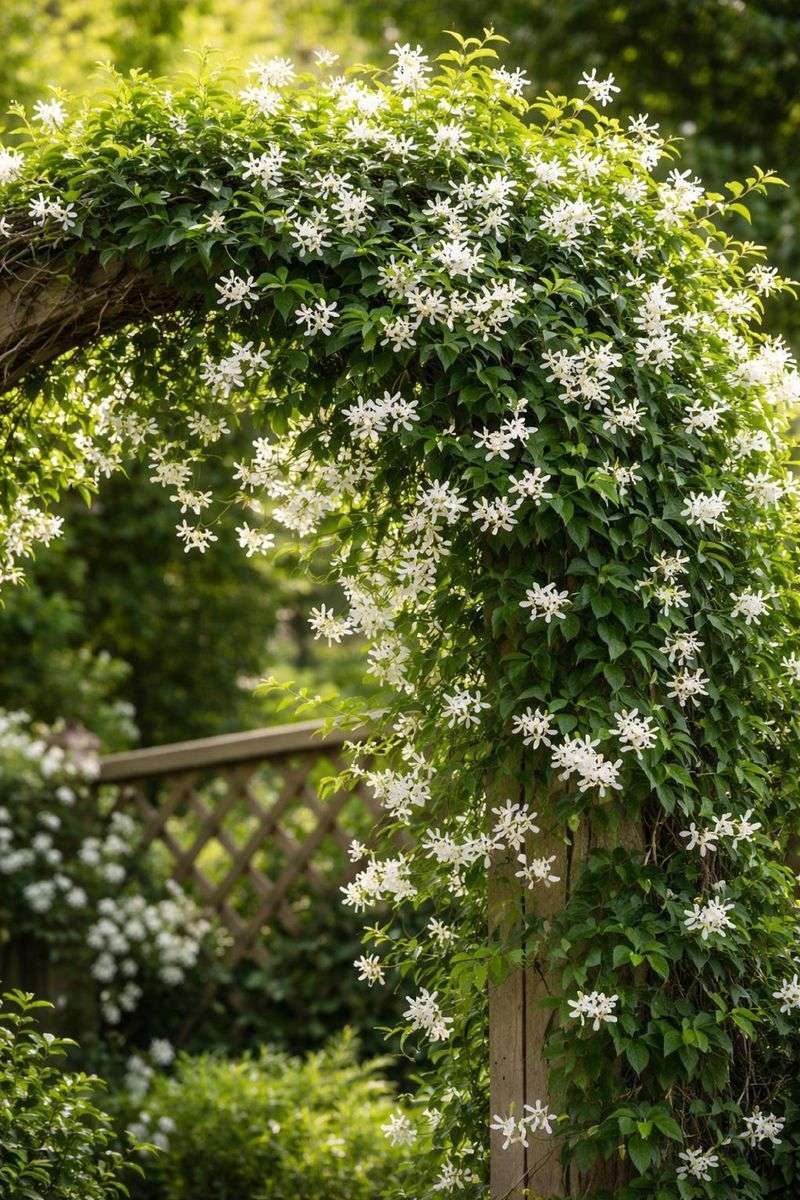
Sandy soil? Clay pockets?
A spot that stays damp after summer storms? Star jasmine shrugs at all of them, as long as water doesn’t sit around the roots for days.
Unlike gardenias, this vine doesn’t demand acidic conditions. It grows in average garden soil and tolerates a fair range of pH, so you can skip much of the sulfur and iron fussing.
Mixing a little compost into the planting hole is plenty.
Once established, it handles dry stretches well. Water regularly for the first few months, then switch to deep soakings during long rainless periods.
Hot, humid summers rarely faze it.
Pests do visit now and then. Scale insects and whiteflies may show up, and sooty mold can follow their honeydew.
Still, problems tend to be lighter than on a gardenia, and a strong spray of water or horticultural oil usually handles them.
Cold isn’t a big worry either. An established vine can handle brief dips into the teens, which makes it dependable in North Florida gardens.
Salt is the main limit. It has only moderate salt tolerance, so beachfront yards should tuck it behind a buffer of tougher coastal plants.
Train Those Twining Jasmine Stems Up a Trellis, Fence, or Mailbox
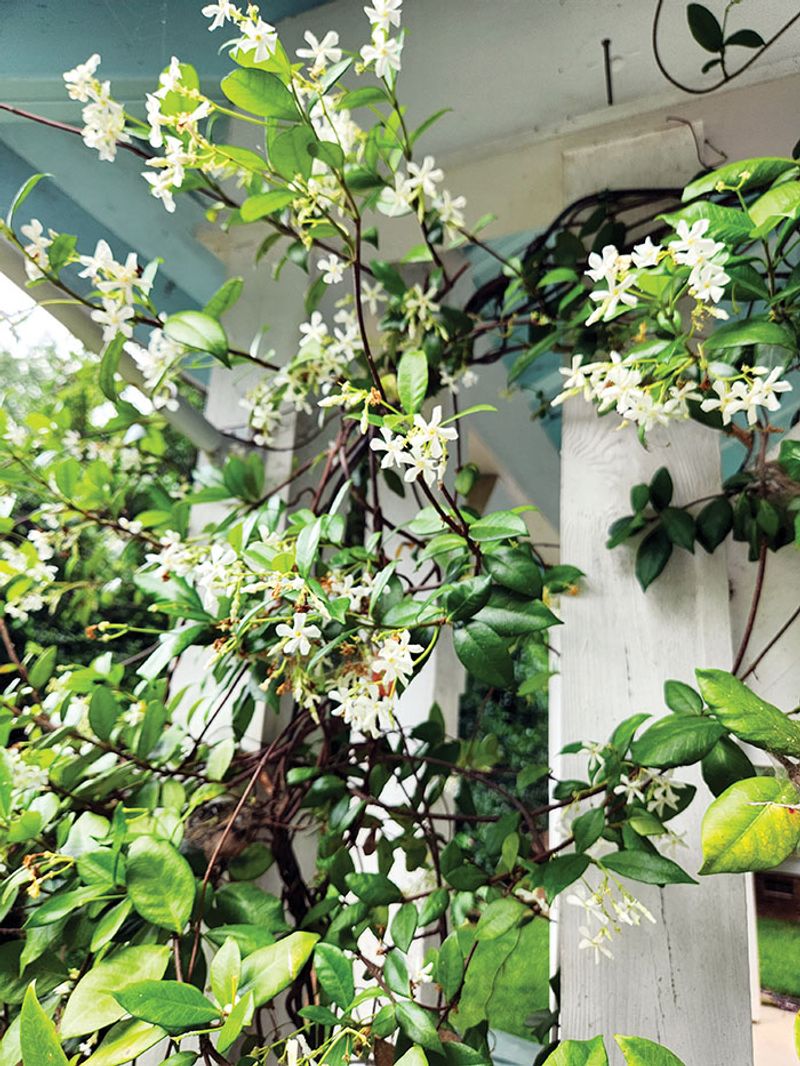
Give it something to climb and it will happily twist its way up. Star jasmine climbs by twining stems, not sticky pads, so it needs a trellis, arbor, fence, or wire to wrap around.
I like it on a mailbox post or a porch rail, where you brush past the blooms every day. A plain chain-link fence can become a fragrant green wall in two or three seasons.
No support? No problem.
Left on the ground, the vine spreads into a dense groundcover about one to two feet tall, handy for slopes or the shady side of a house. Some gardeners also clip it into a loose mounding shrub.
Early guidance makes a big difference. Gently weave young stems through the support and tie them loosely with soft garden twine until they grab hold.
A sturdy structure also keeps a mature vine from sagging under its own weight.
Keep it off tree trunks and away from window screens, gutters, and siding. The stems can work into gaps and become a chore to pull out later.
Wear gloves when you trim. Cut stems ooze a milky sap that can irritate sensitive skin, so a quick rinse afterward is a smart habit.
Pinwheel-Shaped Jasmine Blooms Put On Their Big Show in Spring
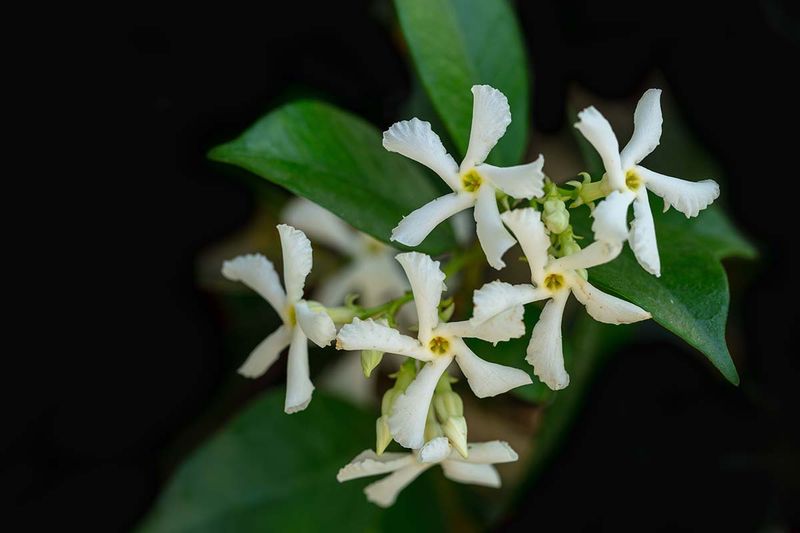
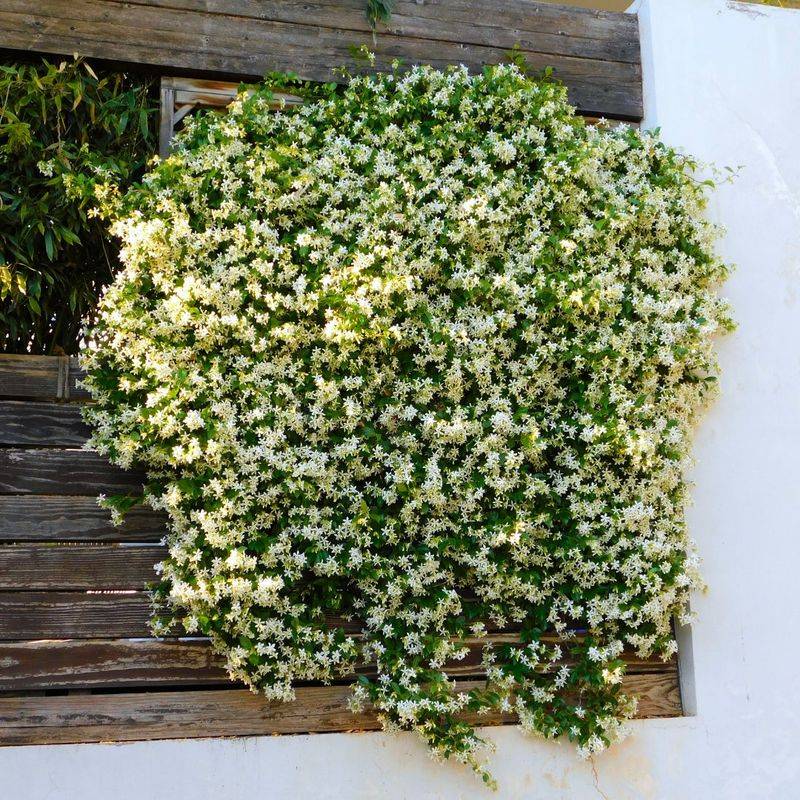
Spring is showtime. In most of Florida, star jasmine bursts into bloom from roughly March through May, and a mature vine can look like it’s dusted with fresh snow.
Each flower is about an inch across, with five petals twisted like a tiny pinwheel. The scent is strongest on warm evenings, so plant it near a patio, bedroom window, or front door where you’ll catch it.
After the main flush, you may spot scattered flowers into early summer, but the big display is a spring event. Northern and central gardens usually get the heaviest bloom, while the warmest South Florida yards may see a lighter show.
Sunlight plays a role too. Vines in full sun to light shade produce more flowers than those in deep shade, though the foliage stays handsome either way.
Poor timing with the pruners is a common reason for a skimpy bloom. Heavy cuts in late winter can remove developing flower buds and shrink next spring’s display.
Shape the vine right after flowering instead. Then sit back next year, pour a glass of iced tea, and let that sweet perfume roll across the porch.
Cats, Dogs, and Moths Can All Share Your Star Jasmine Patch
Pet owners, this section is for you. The ASPCA lists gardenia as toxic to cats and dogs, with symptoms like vomiting and diarrhea, while star jasmine appears on its non-toxic list.
That doesn’t mean your pup should snack on it. Any plant can upset a curious stomach, and the milky sap may bother sensitive mouths, so gently discourage chewing.
Pollinators find the vine quickly. Bees work the flowers by day, and as dusk falls, the stronger evening fragrance draws moths.
Butterflies stop by for a sip of nectar too.
I love sitting outside at sunset and watching the night shift arrive. An ordinary porch suddenly feels like a little wildlife theater.
One honest note: star jasmine isn’t native. It doesn’t appear on the Florida Invasive Species Council list, but planting natives alongside it gives local wildlife even more to enjoy.
Coral honeysuckle makes a lovely partner. This native vine feeds hummingbirds with its red tubular flowers and stays well-behaved on a trellis.
Mix the two on a long fence, and you get fragrance from one and bright color from the other, plus a yard that feels friendly to fur, feathers, and wings alike.
A Little Pruning and Light Feeding Keep Star Jasmine Happy for Years
Planting day sets the tone. Fall and early spring are ideal times in most areas, since mild weather lets roots settle before summer heat arrives.
Dig a hole as deep as the root ball and about twice as wide. Space plants three to five feet apart for a fence screen, or a bit closer if you want quick groundcover.
Water every couple of days for the first few weeks, then taper off as new growth appears. A two- to three-inch layer of mulch keeps roots cool, but leave a small gap around the stems.
Feeding is simple. A slow-release balanced fertilizer two or three times a year, in spring, summer, and early fall, keeps the leaves glossy and green.
Skip heavy feeding, which pushes leafy growth at the expense of flowers.
Trim right after the spring bloom to control size and remove wayward stems. A light tidy-up in summer is fine too.
Start with one plant by a doorway or garden gate. Once that first spring perfume drifts across your yard, I suspect you’ll be shopping for a second one.
Your gardenia days might just turn into star jasmine years.