What to Do in Late November to Keep Your Christmas Cactus Buds From Dropping
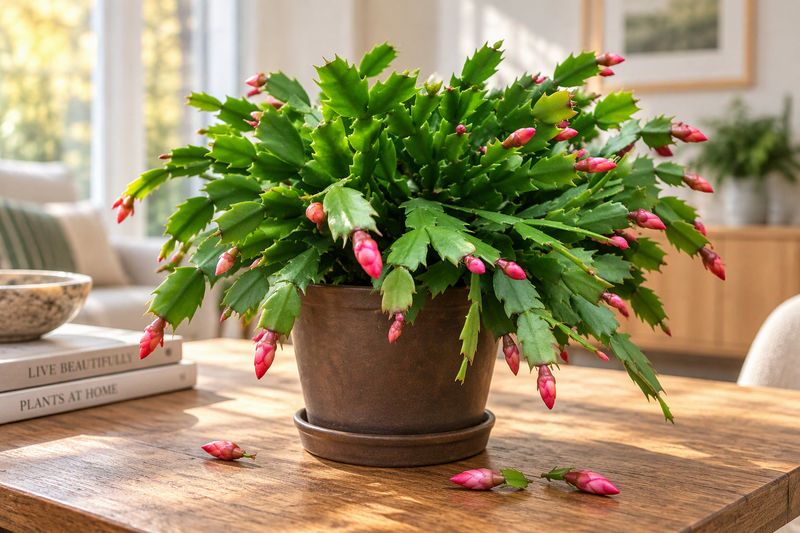
Keep your budded holiday cactus in steady conditions, give it bright, indirect light, and water by checking the potting mix. Those plain steps can help you hold on to the buds you worked for in October.
Buds can still fall for reasons that vary from plant to plant. Here is how to care for yours without adding stress.
Holiday Cacti Do Not All Follow the Same Calendar
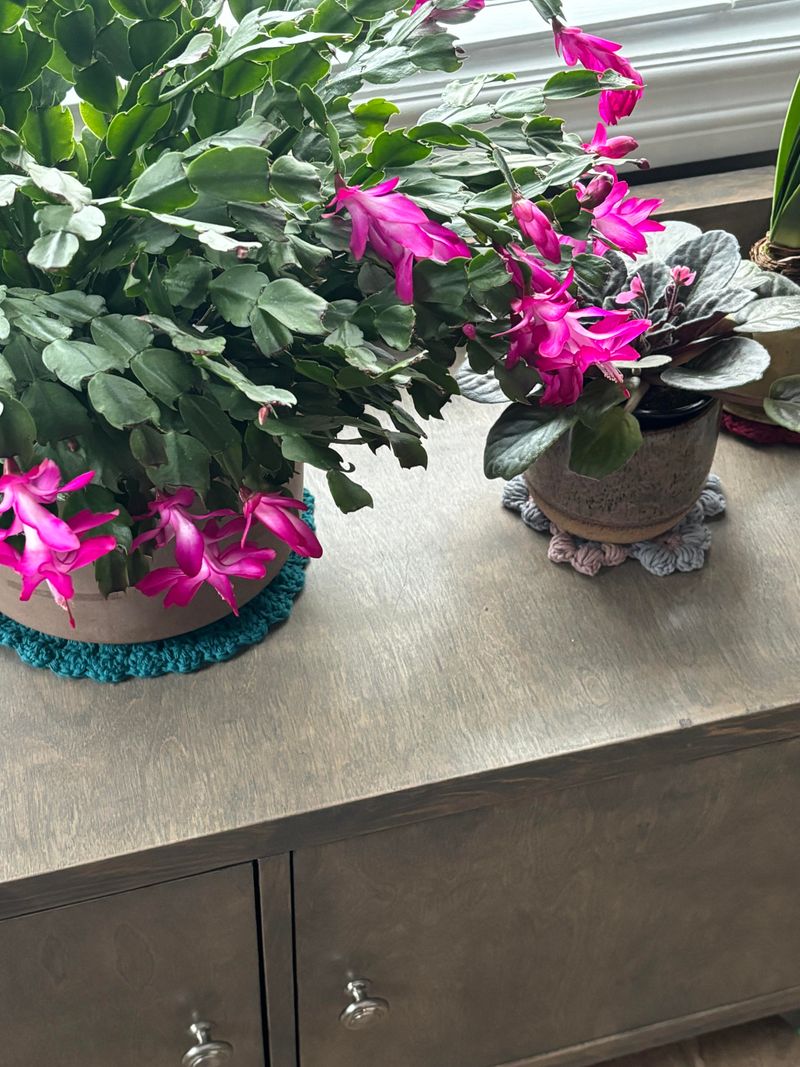
Plenty of us say Christmas cactus for any holiday cactus with flat, segmented stems. In stores, many of those plants are actually Thanksgiving cacti, and South Dakota State University Extension notes they typically flower earlier than true Christmas cacti.
The two are related but distinct, and their stem edges are shaped differently.
That is why late November is a useful time to check your plant’s stage, not a universal deadline. Cultivar, growing conditions, and past care all affect timing.
One plant may be fully open while its neighbor is only showing tiny buds.
Take a quick look at yours. Are the buds small and tight, plump and colorful, or already opening?
Knowing that helps you decide what it needs. Next up are the practical steps for a plant that already has visible buds.
Keep a Budded Plant in Steady Conditions
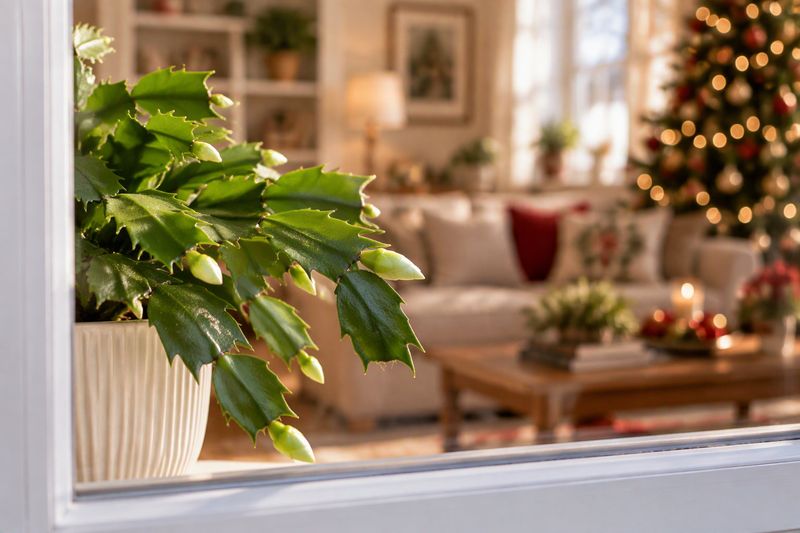
Once buds show up, the best gift you can give is a steady routine. If your plant is happy where it sits, let it stay.
A move that changes its light, warmth, or airflow a lot can add stress while buds are developing.
Iowa State recommends waiting until flowers begin opening before you move the plant for display, as explained in their holiday cactus guidance. That does not mean the pot can never be touched.
It means avoiding moves that create a big environmental change.
Minnesota Extension also cautions against disturbance and sudden shifts, which you can read in their holiday cacti page. If you want it on the dining table for guests, wait for the blooms to open.
Until then, let it sit tight and enjoy watching the buds swell.
Avoid Drafts and Sudden Temperature Changes
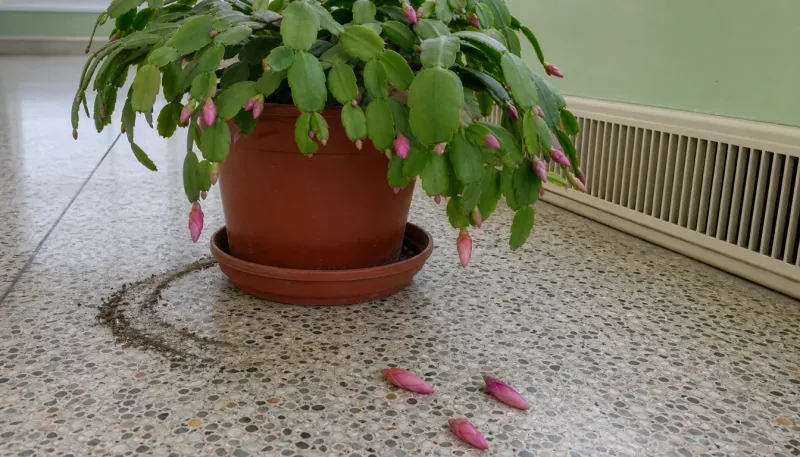
Take a slow walk around your plant and feel the air. Does a cold breeze slip in when the front door opens?
Does warm air blow from a heating vent straight onto the stems? Those spots can expose buds to abrupt temperature swings.
Both Iowa State and Minnesota Extension list sudden temperature changes among the stressors that may be linked to bud drop. Treat them as possible contributors, not proof of what happened to your plant.
A drafty spot is simply worth ruling out.
If you find one, a small fix may be enough, like shielding the plant from the draft or redirecting a vent. Skip the urge to haul a budded plant to a much cooler room.
A big jump in conditions can cause more trouble than it solves, and steadiness matters most right now.
Give It Bright, Indirect Light
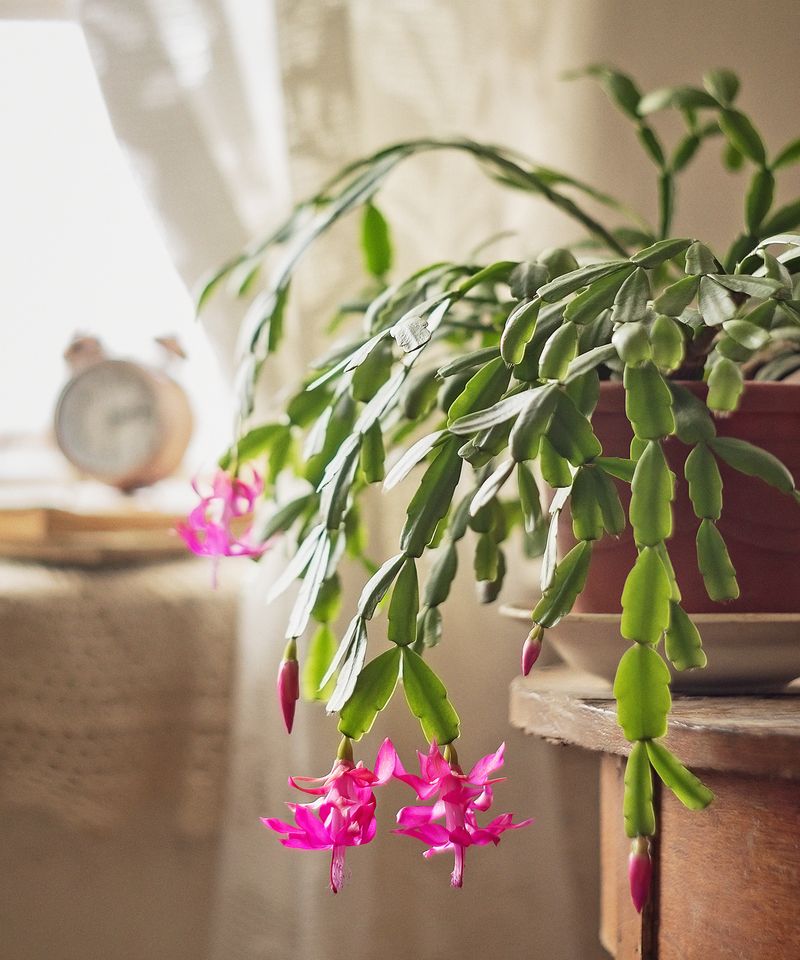
Holiday cacti like a glow, not a glare. South Dakota State recommends bright, indirect light and lists changes in light as one possible stressor.
A sheer curtain can soften strong sun nicely.
Look at where your plant sits right now. Is the light bright but gentle most of the day?
If so, you are probably in good shape. No single window direction is required, so do not feel you must hunt for a perfect one.
The main caution is about sudden swings. Moving a budded plant into a much brighter or much dimmer spot as a bud-saving trick may add stress.
If you spot a real problem, like harsh sun scorching stems, make small adjustments and watch how the plant responds.
Check the Potting Mix Before You Water
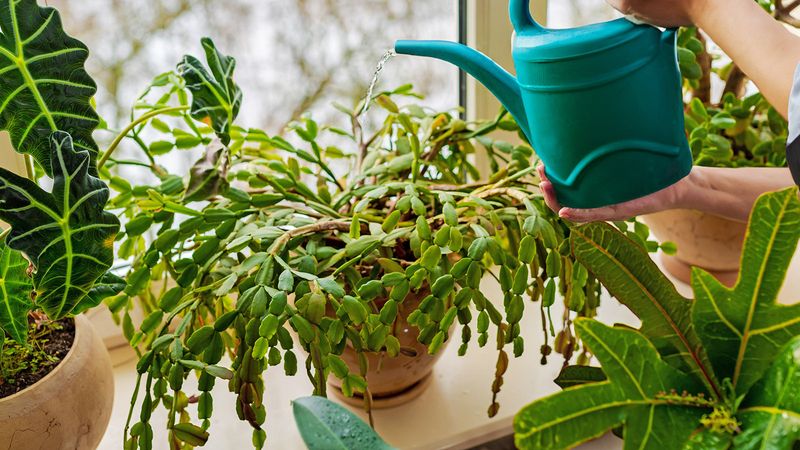
Forget the calendar and trust your finger. Poke it into the mix and see how it feels.
South Dakota State suggests watering when the top third of the mix is dry.
Two extremes are worth avoiding. A waterlogged mix can lead to root trouble, and Minnesota Extension warns that standing water can contribute to bud drop.
On the other side, a mix that gets severely dry, with shriveled stems, can stress the plant too.
Think of this as routine care. If buds are already falling, resist a sudden big change like soaking a dry plant or holding back water.
Just return to checking the mix regularly and watering when it is due. Pot size, mix type, and room warmth all change how fast it dries.
Let Excess Water Drain Away
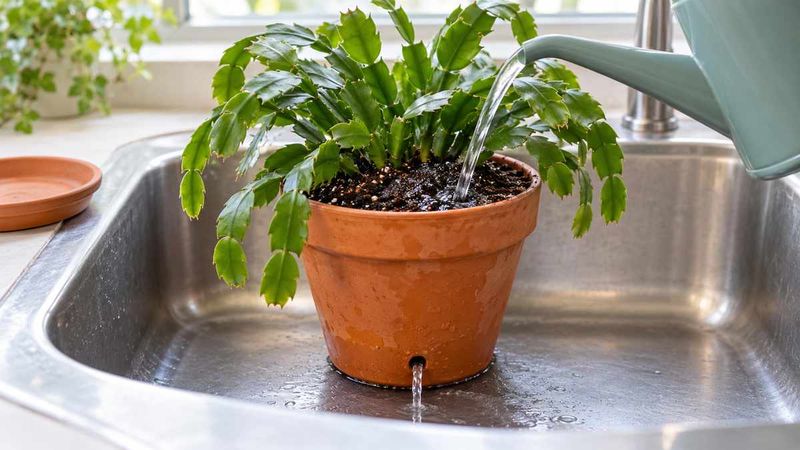
Watering well is only half the job. The other half is letting the extra water leave.
Holiday cacti need a freely draining mix, and South Dakota State advises emptying excess water from the saucer.
Try this check after your next watering. Wait a few minutes, then lift the pot and look underneath.
If water is sitting in the saucer or in a pretty outer pot, pour it out. Make sure the pot has drainage holes too.
UConn Extension adds a caution in its holiday cacti guide: making up for a long dry spell with a very large watering can leave a stressed plant waterlogged. Steady, moderate watering is gentler.
Do Not Start a New Bloom Routine Now
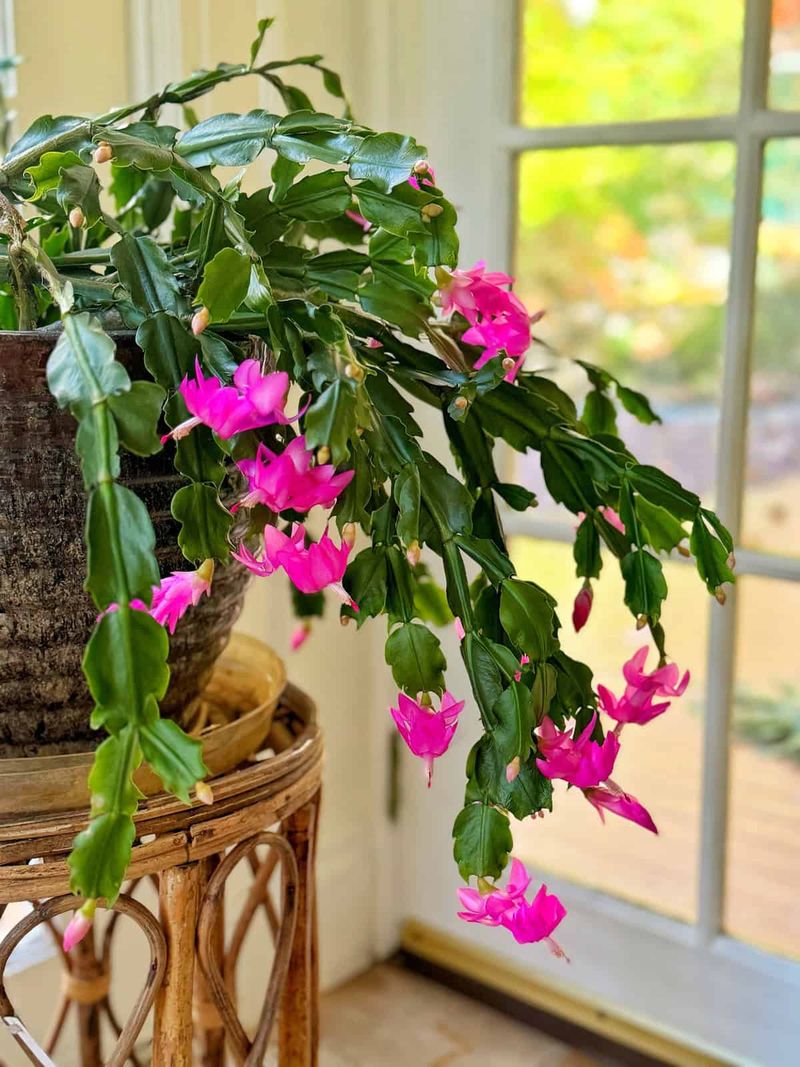
You may have read about long nights and cooler temperatures for blooms. That advice is flower-induction guidance for earlier in the season, as described by Iowa State.
Exact needs vary by temperature and cultivar, and Wisconsin Extension gives different night temperatures than Iowa State does.
Once buds are visible, those steps are not a late-November treatment. Starting a new dark-room or chilling routine now could be a sudden change, which is what we are trying to avoid.
Steady care is the better plan.
Skip the dry-down trick too. UMass Extension reports that research does not support withholding water to induce flower buds, and that water stress can reduce bud set.
That work is about forming buds, not rescuing ones already falling, so just avoid abrupt watering changes.
Use Bud Drop as a Cue to Review Conditions
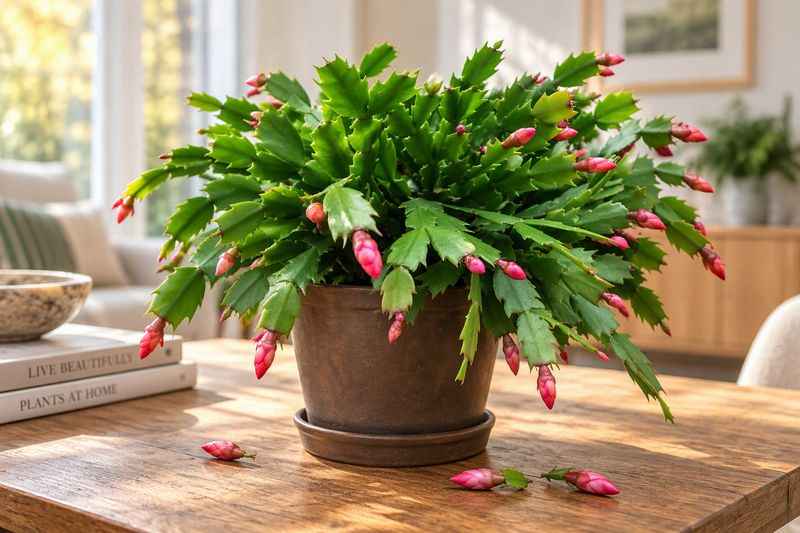
A few fallen buds can feel discouraging, but they are a prompt to look back, not a verdict. Ask what changed in the last few weeks.
Did the plant move, did the room get warmer or cooler, or did the light shift?
Also think about watering. Was the mix soggy or very dry?
Minnesota Extension lists environmental and moisture-related causes of bud drop, and no single one explains every plant.
UConn Extension also lists low humidity and fumes from gas-burning appliances as possible contributors in its guide. Treat those as possibilities, not usual causes.
Steady care can reduce avoidable stress, yet it cannot promise every bud will open. A few blooms you nurtured still beat a bare stem.