The Arizona Plants That Actually Keep Scorpions Off Your Patio And Away From The Doors
Nobody wants to find a bark scorpion waiting by the back door on a warm July night. In the low desert, the plants you put near your patio can either give scorpions a cozy hideout or make the area far less welcoming.
The right picks are open, tough, and water-wise, and some even carry scents that pests seem to dislike. Here are seven plants that pull their weight in a Phoenix or Tucson yard while helping keep your entryways a little more scorpion-free.
1. Lavender
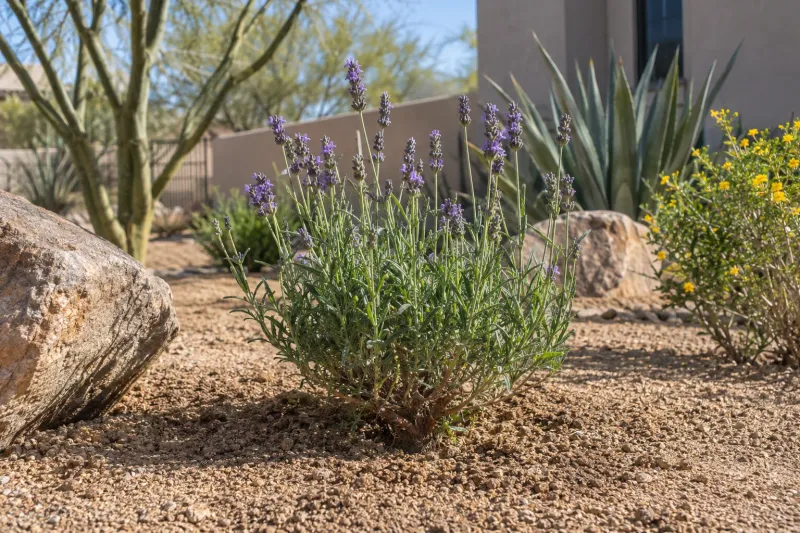
Step outside on a hot morning, brush your hand across a lavender bush, and the whole patio smells like a spa. That strong scent is exactly why so many desert homeowners plant it near doors.
Many people find that scorpions and the bugs they hunt seem less drawn to areas planted with lavender.
Not every lavender handles a Phoenix summer, though. ‘Goodwin Creek Gray’ and Spanish lavender are the tough ones, shrugging off 110-degree days as long as they get full sun and fast-draining soil. Rocky, alkaline ground actually suits them just fine.
The real danger is too much love. Overwatering, especially during monsoon season, can rot the roots fast.
Water deeply but rarely, and let the soil dry out between drinks.
Want a native twist? Desert lavender (Hyptis emoryi) gives off a similar fragrance when its leaves are crushed and asks for even less water.
Bees adore its tiny blooms, so you get pollinator traffic as a bonus.
For the best results, plant lavender in pots or beds along the patio edge, keeping it about a foot and a half from the wall. Pair it with a shallow layer of gravel instead of bark mulch, and the space stays dry and open.
2. Desert Marigold
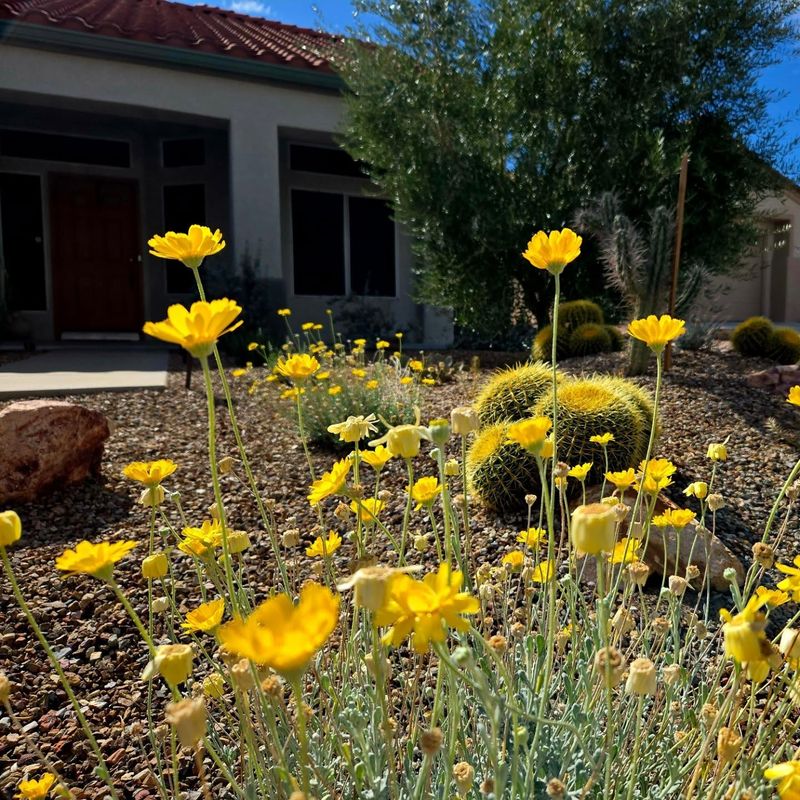
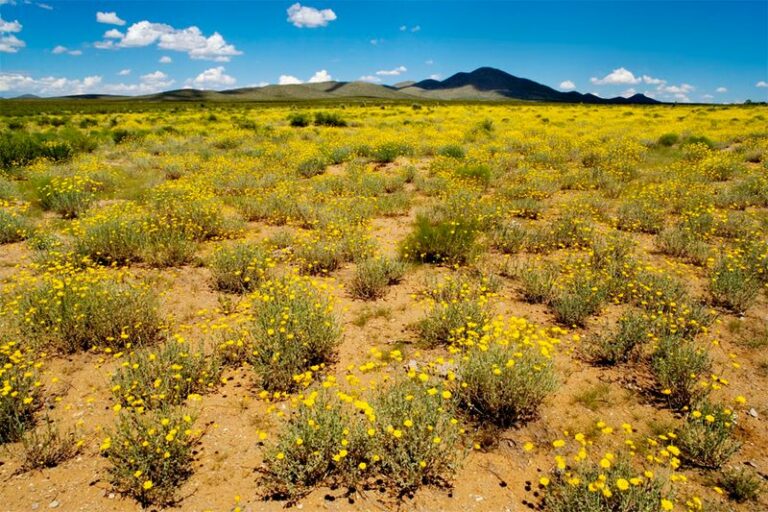
Some wildflowers wilt the second July shows up. Desert marigold just keeps blooming, pushing out sunny yellow daisies from spring right through fall in spots where reflected heat would cook most plants.
Here is why it earns a place by your door. The plant grows in a loose, open mound rather than a thick carpet, so there are fewer shady pockets for a scorpion to tuck into.
Its fuzzy, slightly aromatic gray leaves may also make it less appealing to some critters.
Native to Arizona, it barely needs water once it settles in. Too much irrigation actually shortens its life, which makes it perfect for folks who forget the hose.
Fun fact: desert marigold often reseeds on its own. Leave a few spent flowers in place, and new plants may pop up in nearby gravel next season, filling bare spots for free.
Scatter seeds or set transplants in fall, around October or November, when the soil is still warm and roots grow quickly. Tuck them along walkways, beside the front step, or in a sunny strip by the garage.
Clip off old stems now and then so dried debris doesn’t pile up near the house, and you’ll have nonstop color with very little fuss.
Your Arizona Garden Changes Every Week. Your Plan Should Too.
Gardening in Arizona changes quickly throughout the season. Every Friday you’ll receive a simple weekly plan showing exactly what to plant, prune, fertilize, harvest, and protect so you never miss the right timing.
3. Lemongrass
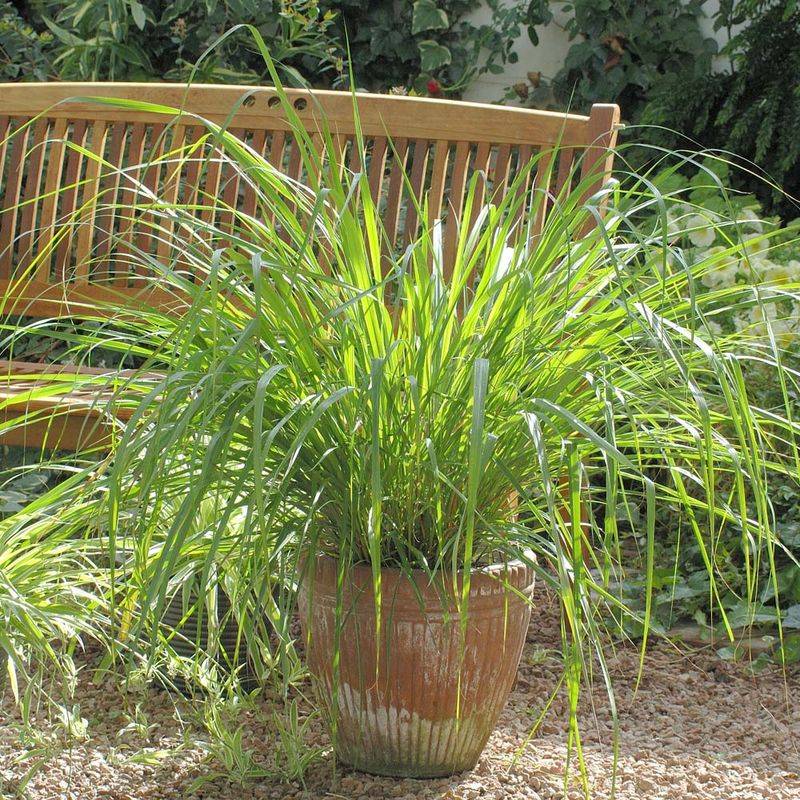
Picture a patio that smells faintly of lemon every time the breeze kicks up. Lemongrass delivers that zesty perfume, and it’s one of the plants often named as a possible scorpion repellent thanks to its citrusy oils.
Though it comes from tropical places, lemongrass handles low-desert heat surprisingly well. Give it a spot in full sun and it will grow into a tall, fountain-like clump.
A light frost may brown the leaves in winter, but the roots usually bounce back once spring warms things up.
Watering takes a bit more attention than true desert natives. During scorching months, a deep, regular soak keeps it happy.
Once temperatures cool, cut back so the soil isn’t staying soggy.
A smart trick is growing it in big containers right beside your sliding door or seating area. Pots keep the moisture contained, so you avoid damp ground next to the foundation, which can attract the insects scorpions eat.
Bonus points: you can snip stalks for tea, soups, and stir-fries. Trim the dried outer blades each spring to keep the clump tidy.
A cleaner plant means fewer brown, crunchy hiding spots, and a kitchen herb that also works as a patio guard is hard to beat.
4. Powis Castle Artemisia
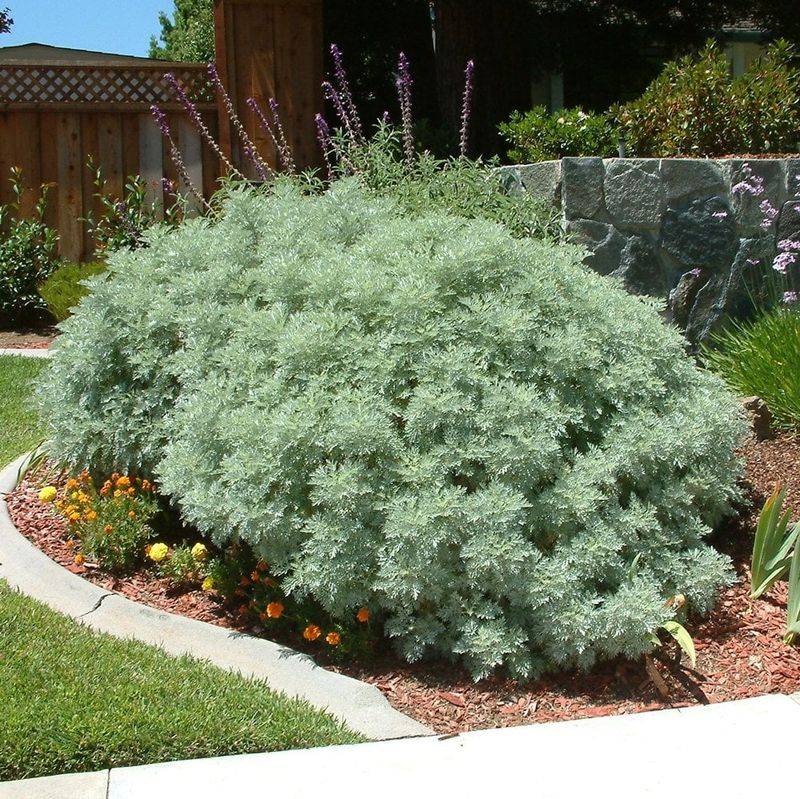
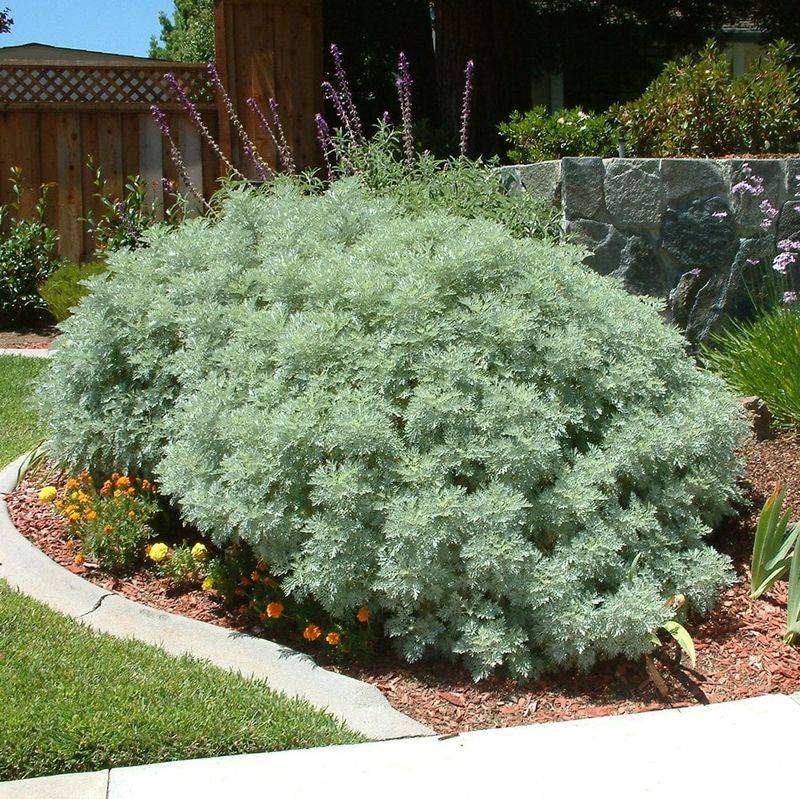
Silver is the color of survival in the desert, and ‘Powis Castle’ artemisia wears it proudly. Its soft, feathery foliage glows in the sunlight and shrugs off heat that would scorch greener shrubs.
Run your fingers through the leaves and you’ll notice a sharp, sage-like aroma. That scent is the reason gardeners often list artemisia as a natural scorpion deterrent.
While no plant offers a guarantee, a strong-smelling border can help make doorways less attractive to pests.
Care is refreshingly simple. Artemisia wants full sun, well-drained soil, and only occasional water once it’s established.
Heavy fertilizer or constant irrigation makes it floppy, so treat it a little rough.
One tip worth following: give it a light trim in late winter or early spring. Without shaping, the center can get woody and open up.
A quick haircut keeps it rounded and prevents a tangle of old stems from building up at ground level.
Use it to frame a front walk, soften the edge of a patio, or fill gaps between agaves. The cool silver tone pairs beautifully with purple penstemon or yellow brittlebush.
Plant in fall for the strongest start before summer arrives.
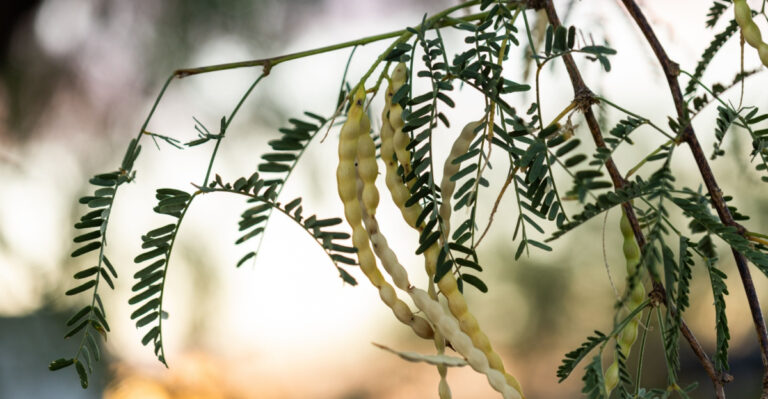
5. Desert Museum Palo Verde
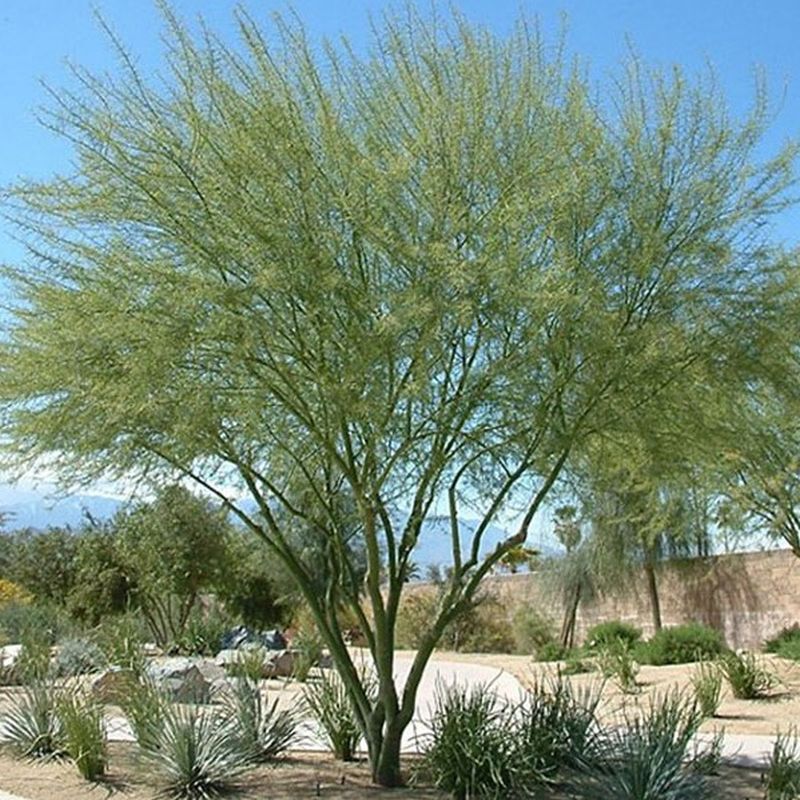
Arizona’s state tree has a clever secret. Its green bark can make food from sunlight, so the tree doesn’t depend as much on leaves and drops less litter when stressed.
That matters for scorpion control more than you’d guess. Piles of fallen leaves are like hotels for bugs, and bugs bring scorpions.
A palo verde keeps the ground beneath it fairly open and airy, especially when paired with a gravel surface.
The ‘Desert Museum’ variety is the patio favorite. It’s thornless, produces few seed pods, and grows fast enough to shade a seating area within a few summers.
In spring, the whole canopy bursts into yellow blossoms that pull in native bees.
Shade is the other big win. On a 112-degree afternoon, filtered shade can make a patio usable again, and it helps cool nearby walls too.
Plant your tree in October or early spring, at least 15 feet from the house so branches never touch the roof or walls. Branches brushing the home give scorpions an easy bridge inside.
Water deeply and slowly for the first couple of years, then taper off. Once established, it lives happily on very little, making it one of the hardest-working trees in any low-desert yard.
6. Desert Willow
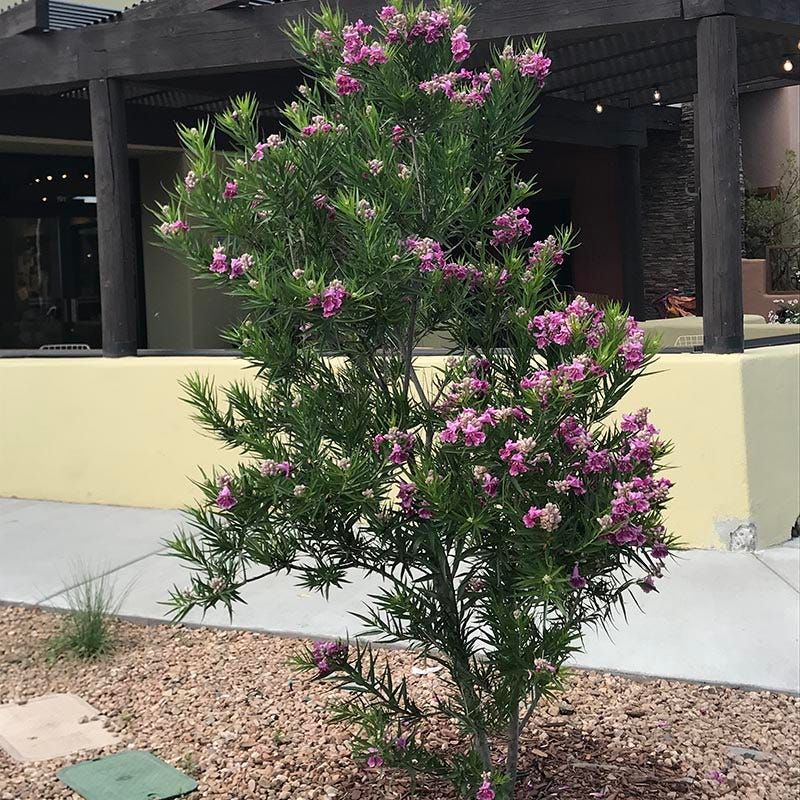
Hummingbirds seem to have desert willow on speed dial. From late spring into fall, its pink and purple trumpet flowers draw them in, along with bees and the occasional curious oriole.
But beauty isn’t the only reason to plant one near your patio. Desert willow has a light, airy canopy with skinny leaves, so sunlight reaches the ground and the soil stays dry.
Scorpions prefer dark, damp shelter, and this tree simply doesn’t offer much of it.
Native across the Southwest, it handles alkaline soil and blazing heat without complaint. After a year or two of regular deep watering, it gets by on occasional drinks.
It does go bare in winter, which actually lets warm sun hit your patio during cooler months.
Did you know? Despite the name, desert willow isn’t a willow at all.
It’s related to catalpa trees and just happens to have willow-shaped leaves.
Keep it pruned so lower branches stay off the ground and away from walls. Rake up spent seed pods in autumn so they don’t collect near doors.
Plant in fall for strong roots, and you’ll have a pollinator magnet that keeps the area underneath open and less inviting to unwanted guests.
7. Yellow Bells
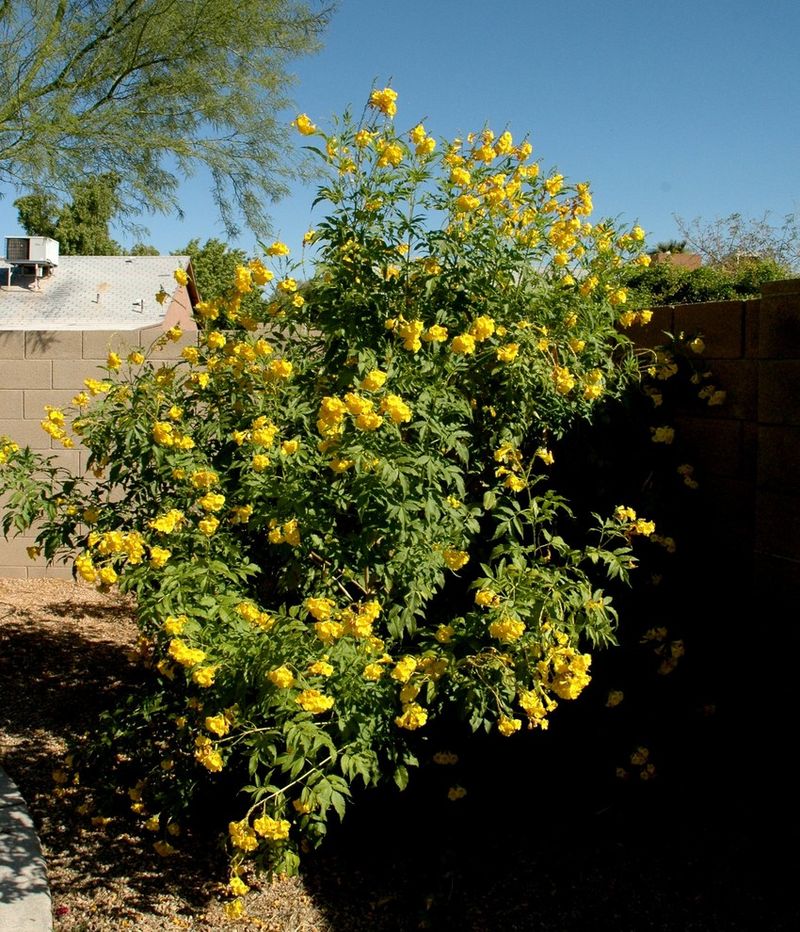
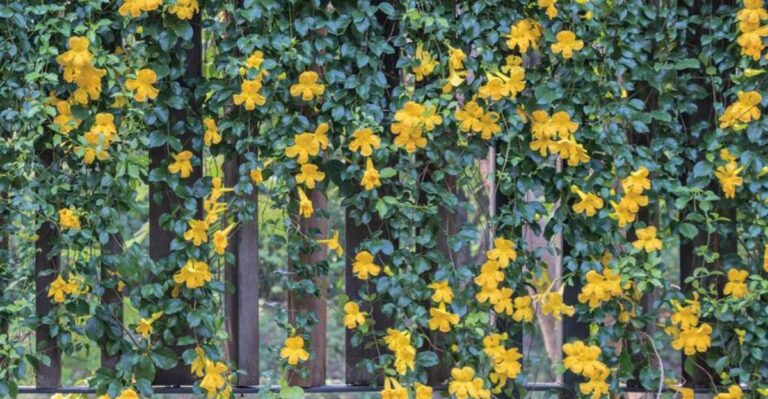
If you want a burst of color that laughs at summer, meet yellow bells. This big, cheerful shrub covers itself in golden trumpet flowers from spring all the way into late fall.
Why does it belong near doors? Unlike thorny desert shrubs, yellow bells has smooth branches, so it’s safe beside walkways and seating.
It also sheds fairly little leaf litter, meaning less debris for insects to gather in and fewer meals for hunting scorpions.
The native form, Tecoma stans var. angustata, is the toughest choice. It handles full sun, reflected heat, and even caliche soil that makes other plants struggle.
Once rooted, it needs only occasional deep watering.
Placement makes all the difference. Set it a good 18 inches or more from your home’s walls, and prune the base so it doesn’t touch the ground.
That gap keeps the foundation dry and removes an easy path to windows and doors.
Hummingbirds and bees visit constantly, giving your yard a lively feel. Plant in fall or early spring, cut it back after a hard frost, and watch it bounce back stronger.
It’s a low-effort shrub that brings beauty and helps keep your entryways a little less welcoming to scorpions.