That Gray Crust on Your Florida Tree Bark Is Probably Lichen, and It Isn’t Destroying the Tree
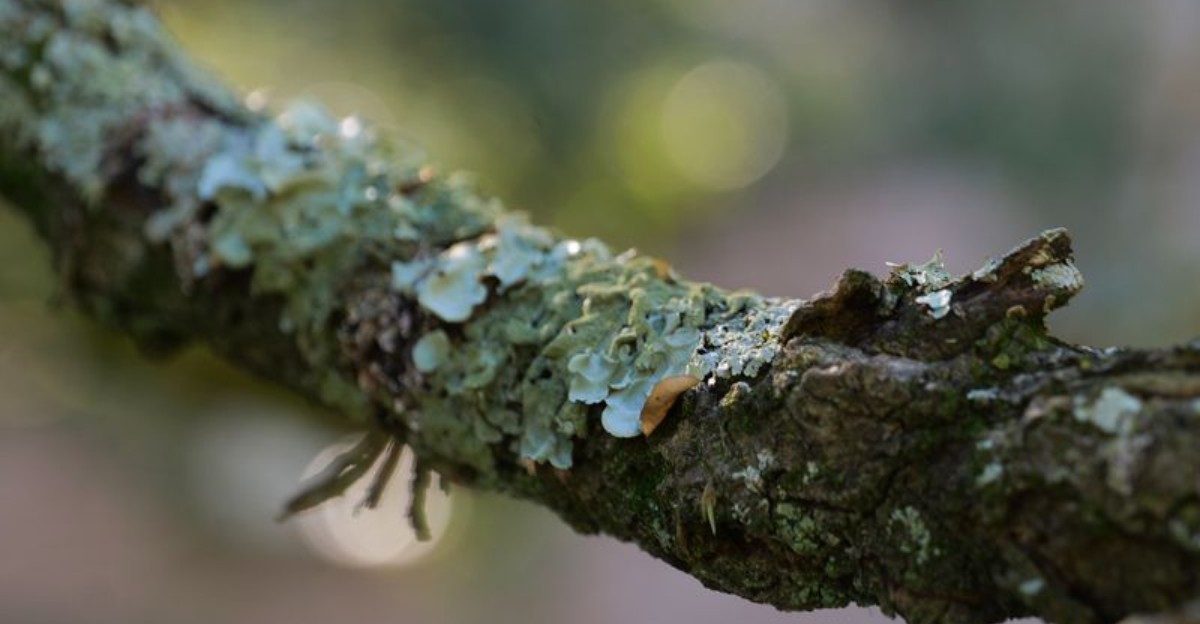
Some of the gray stuff stuck to backyard oaks is two living things sharing one body. One partner builds the house, and the other cooks the meals using sunlight. I didn’t believe it either the first time I read about it.
I’m the first to admit I once grabbed a wire brush over this. My live oak looked like it had a bad rash, and I was sure it needed rescuing. Guilty as charged, I scrubbed one branch raw before a friend at the nursery stopped me.
Funny thing is, scientists have found these crusty patches on rocks, gravestones, fence posts, and even old cars. Here in Florida, they show up in gray, mint green, orange, and even bright red. Some look like flat paint, while others look like tiny shrubs.
Let’s take a closer look at what that crust is doing on your tree and whether it deserves any of your worry.
That Gray Crust on Oak Bark Is Two Organisms Living as One
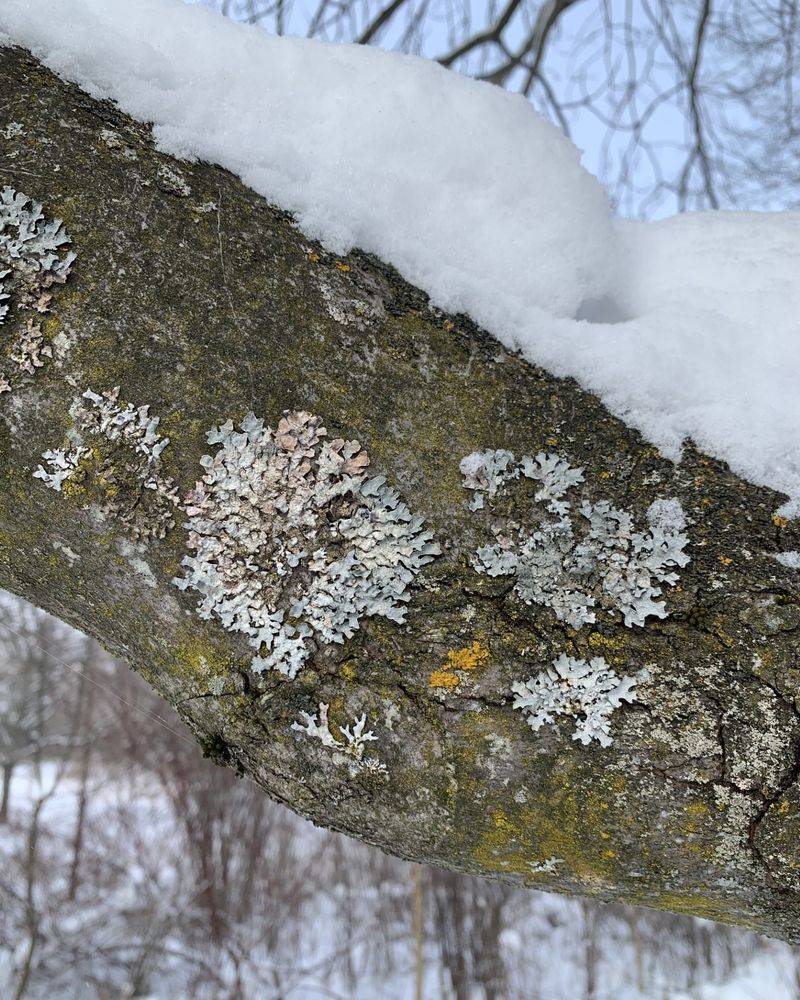
Nature loves a good team-up, and that crust on your bark is proof. It’s a lichen, which is a fungus and a tiny partner living together as a single unit.
The partner is usually a green alga, though some lichens team up with cyanobacteria instead. The fungus forms the body and grabs water and minerals from rain, dew, and dust. The alga uses sunlight to make sugar, and it shares that food with the fungus.
Neither partner could live in the same tough spots alone. Together, they handle baking sun, dry spells, and soaking rain with surprising ease. Some lichens can dry out to almost nothing and then spring back to life after a summer storm.
Florida has a huge variety of them thanks to its warm, humid air. You’ll find flat crusts that look painted on, leafy types that curl at the edges, and shrubby ones that look like tiny coral. Spanish moss is not one of them, by the way, since it’s a flowering plant in the pineapple family.
Next time you walk the yard, take a closer look with a magnifying glass. The ridges, cups, and tiny bumps are honestly beautiful once you know what you’re seeing.
Lichen Simply Rides Along on the Bark Without Stealing a Thing
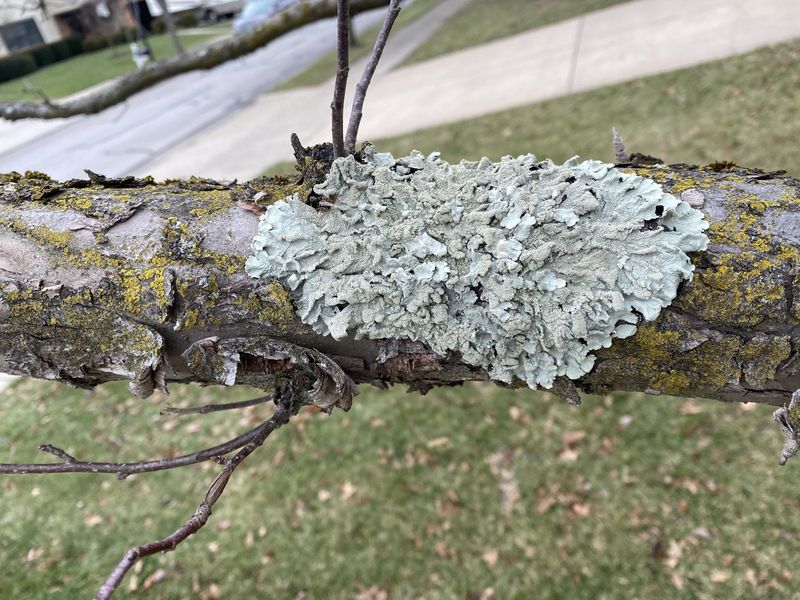
Relax, your tree is fine. University of Florida IFAS Extension experts say lichens are not parasites, and they do not harm the trees they grow on.
A lichen has no roots that dig into wood. It simply clings to the outer bark, the same way a sticker clings to a lunchbox. All its water and nutrients come from the air, rain, and whatever dust settles on it.
The tree’s living tissue sits under the outer bark, safely out of reach. Lichen doesn’t tap into that layer or block the tree’s water flow. It doesn’t smother bark either, because bark doesn’t breathe like our lungs do.
Plenty of vigorous, healthy oaks, maples, and citrus trees wear lichen for decades. Many old trees carry heavy coats of it simply because they’ve had more years to collect it. Slow-growing patches can take a long time to spread even a few inches.
So if you spot gray crust but the leaves look full and green, you can cross lichen off your worry list. Use that energy to check the things that truly matter. Watch for wilting, early leaf drop, or soft spots in the trunk instead.
Thinning Canopies Let More Sun Reach Lichen on Branches
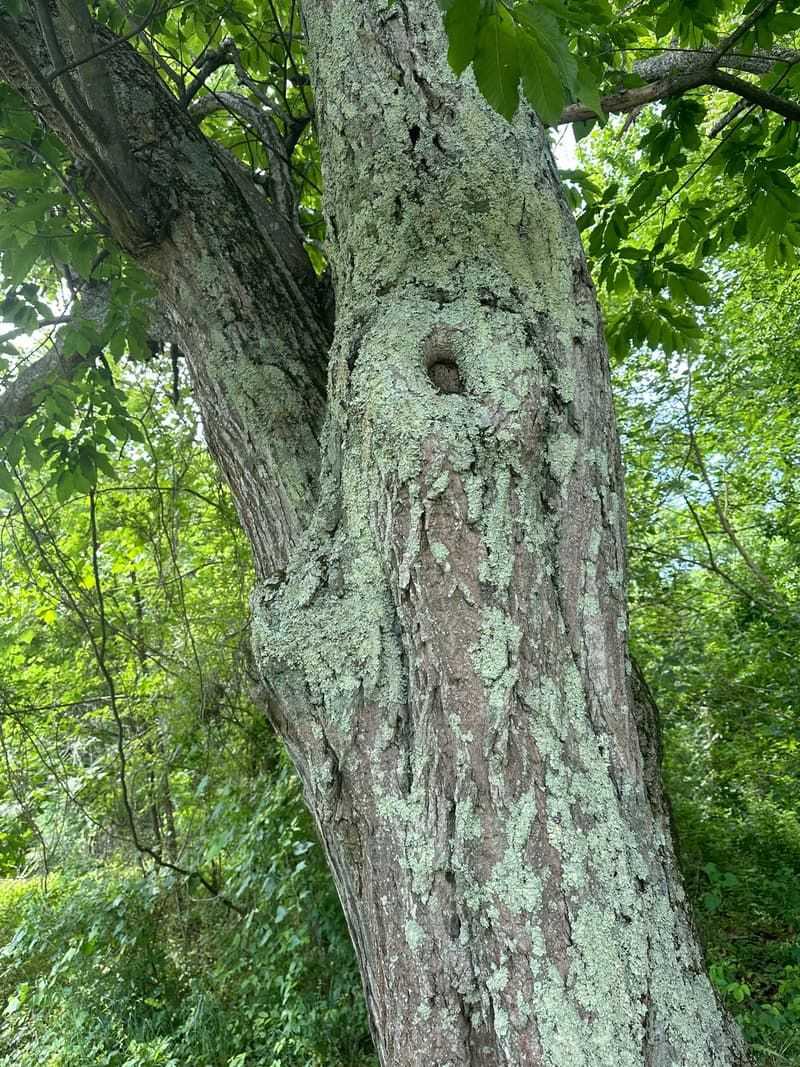
A lot of folks blame lichen when a tree starts looking rough. I did the same thing with an old crape myrtle, pointing at the crusty branches like they were the culprit.
The real story usually runs backward. When a tree struggles and loses leaves, more sunlight reaches the bark. Lichens love light, so they grow faster on those exposed limbs.
That means heavy lichen on a sparse branch is a clue, not a cause. Something else may be stressing the tree. Common suspects in Florida include root damage from construction, compacted soil, poor drainage, drought, salt exposure near the coast, or disease.
Look up at the canopy instead of staring at the crust. Are leaves smaller than usual or falling early? Do you see bare twigs at the branch tips, mushrooms at the base, or cracks in the trunk?
If something seems off, a certified arborist can help sort it out. You can find one through the International Society of Arboriculture website. Your local UF/IFAS Extension office is another great free resource for questions and plant samples.
Treat the cause, and the tree has a fair chance to rebound, lichen and all.
Those Colorful Bark Patches Can Hint at Cleaner Air
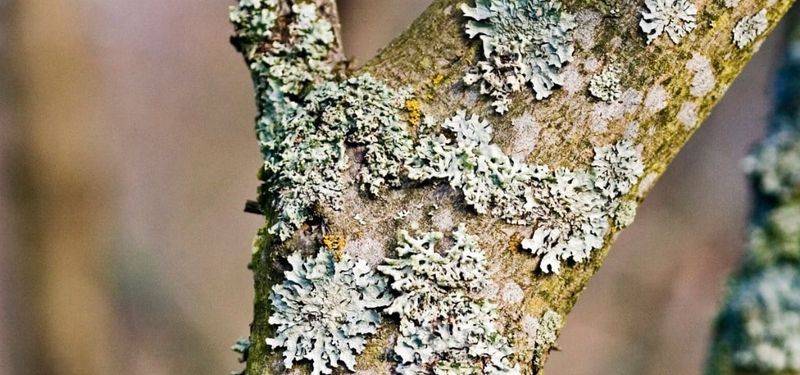
Did you know scientists use lichens as living air monitors? Since they soak up everything from the air, many types are sensitive to pollution like sulfur dioxide.
In heavily polluted places, the touchier lichens tend to vanish first. Hardier crust types may hang on, but leafy and shrubby kinds often decline. Researchers have studied lichen patterns for decades to track air quality around cities.
So a mix of lichens on your trees, especially the leafy and bushy kinds, is often a sign of reasonably clean air. It’s a fun bit of backyard science you can enjoy for free. Kids especially love hunting for different shapes and colors.
Florida has a real showstopper worth looking for. Baton Rouge lichen, also called Christmas lichen, paints bark with bright red and pinkish patches. It’s common in shady hammocks across much of the state.
Keep in mind that lichen alone can’t give you a full air quality report. Humidity, shade, and bark type also affect what grows. Still, a lively lichen collection suggests your little patch of the world is doing fairly well.
Moss Looks Soft and Green While Lichen Feels Crusty
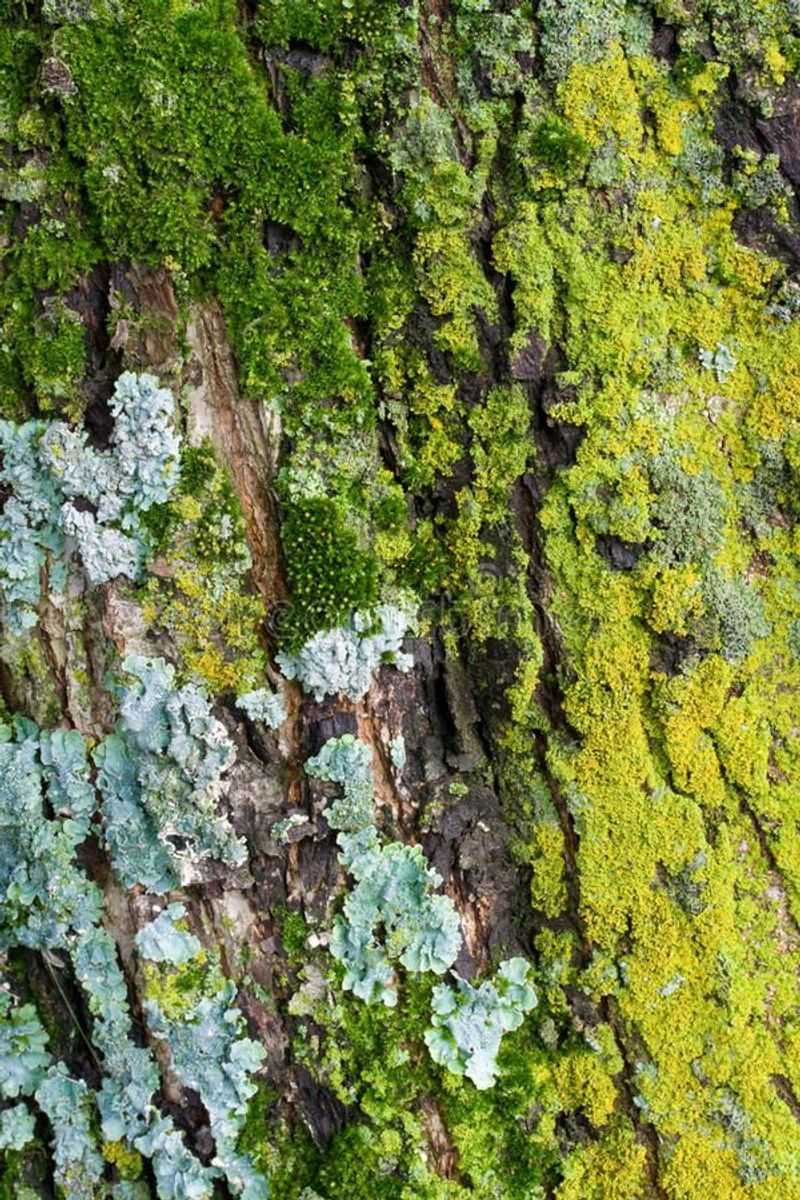
Don’t laugh, but for years I called everything on a tree trunk moss. Turns out I was wrong more often than right.
Moss is a true plant. It has tiny leaves and stems and grows in soft, springy green cushions. It loves shade and moisture, so you’ll often see it near the base of trunks or on the shady side.
Lichen is that fungus and alga partnership instead. It tends to feel dry, crusty, flat, or papery. Colors range from gray and pale green to yellow, orange, and red.
An easy test is to touch it gently. Moss feels plush and often stays green when wet. Lichen feels firm or leathery and can change color a bit after rain.
Then there’s Spanish moss and ball moss, which confuse almost everyone. Both are actually air plants related to pineapples. Like lichens and true moss, they use trees only for support and don’t feed on them.
All of these are epiphytes, a fancy word for organisms that live on plants without harming them. Knowing the difference just makes your yard walks more interesting.
Put Down the Wire Brush and Pressure Washer
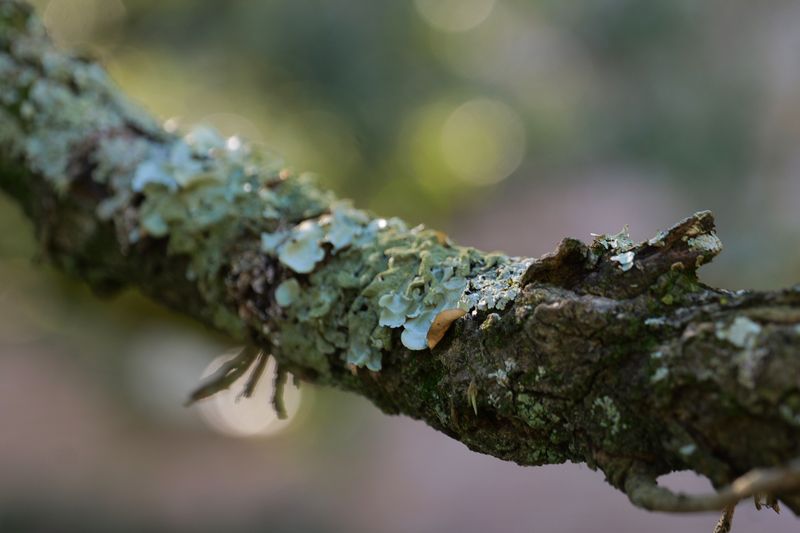
Not going to lie, scrubbing bark feels productive. It isn’t, and it can actually hurt your tree.
Wire brushes, scrapers, and pressure washers can tear the outer bark. That opens wounds where insects and disease organisms can sneak in. Young trees and thin-barked species are especially easy to injure.
Chemical sprays are another bad idea. Copper fungicides are sometimes labeled for lichen on certain plants, but UF/IFAS experts generally say treatment isn’t needed. Sprays can also harm beneficial organisms and may not clear the crust anyway, since lichens cling tightly even after they stop growing.
If lichen bugs you on a small ornamental shrub, gently prune any truly lifeless twigs instead. That improves the plant’s look and air flow without damaging healthy wood. Clean, sharp pruners make neat cuts that seal better.
Your time is better spent on smart basic care. Water deeply during dry spells, especially in spring before the rainy season starts. Add a ring of mulch two to three inches deep, keeping it a few inches away from the trunk.
Healthy trees with full canopies tend to shade out some lichen naturally anyway.
Hummingbirds and Tiny Critters Put That Lichen to Work
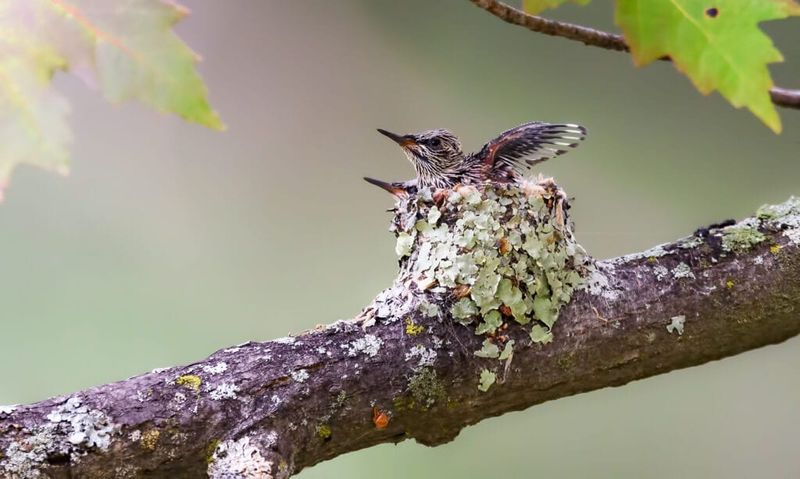
Here’s my favorite reason to leave lichen alone. Ruby-throated hummingbirds often decorate their tiny nests with flakes of it, which helps the nest blend into the branch.
Plenty of other wildlife benefits too. Small insects, spiders, and mites hide and feed among the crusts. Some moth caterpillars even rely on lichen, and a few species carry bits of it as camouflage.
Lichens play a role in the soil story as well. Pieces that fall to the ground slowly break down and return nutrients. Types with cyanobacteria can pull nitrogen from the air, adding a little natural fertilizer to the ecosystem.
So that gray crust on your Florida trees is part of a busy little neighborhood. It’s harmless to the tree and helpful to the creatures around it. Plus, it adds texture and character that no landscaper could fake.
My simple takeaway is to watch the leaves, not the lichen. Keep your trees watered, mulched, and free of mower and trimmer damage. Call an arborist if the canopy looks thin or weak.
Then grab a magnifying glass and enjoy the tiny world growing right on your bark.