The Best Live Christmas Trees For Texas Yards
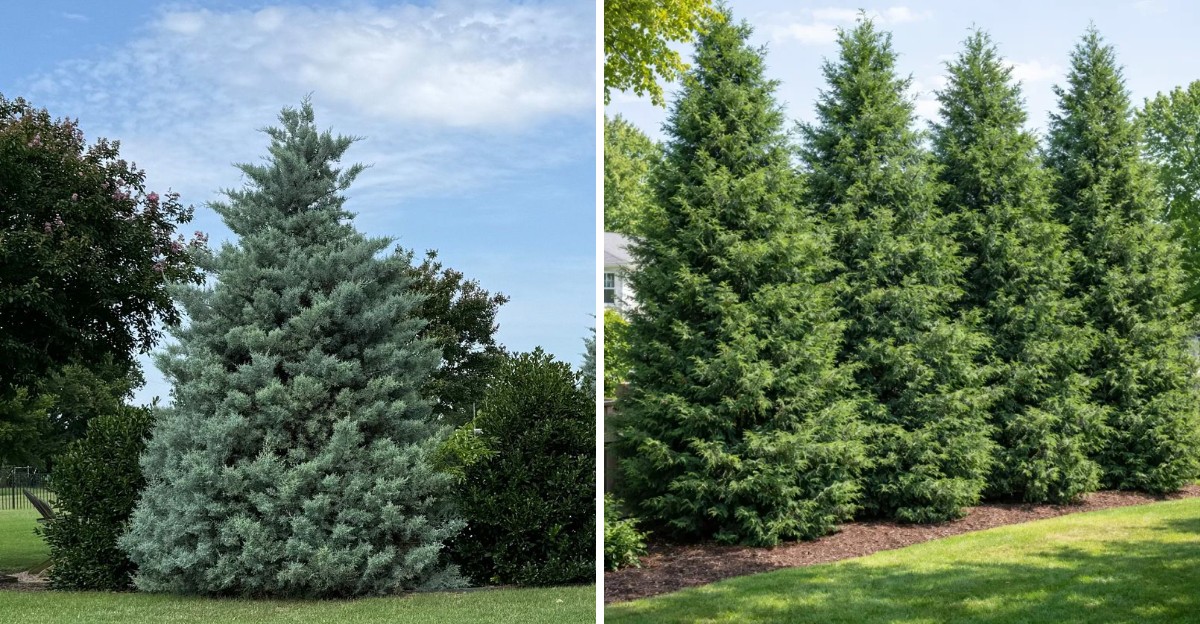
One of the bluest evergreens in North America grows wild high in the Chisos Mountains of Texas. Hikers at Big Bend often walk right past it without realizing it could star in their living room.
Several tough conifers and one shiny holly handle our steamy summers far better than the classic northern firs. Many of them shrug off alkaline soil and long dry stretches that would wilt a fussy fir.
I love the idea of a holiday tree that keeps growing after the ornaments go back in the box. You get one cheerful December indoors, then decades of shade and bird shelter outside in your yard.
Personally, I think the right pick depends on whether your yard soaks up rain or bakes dry. So which hardy evergreen deserves a spot on your porch first, then a permanent home in Texas soil?
1. Afghan Pine
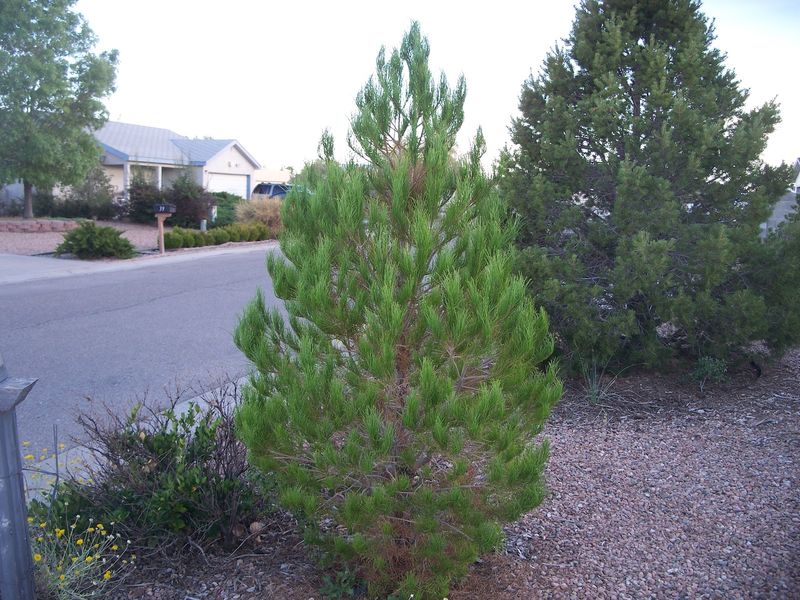
Long glossy needles up to seven inches make this pine feel soft and shaggy when you brush past it. Its crisp pine scent fills a room fast, so your whole house smells like the holidays within hours.
Afghan pine, also called Eldarica pine, is one of the classic cut and living Christmas trees across the Southwest. Young trees grow in a neat pyramid shape, which makes them easy to decorate without much trimming at all.
I have to admit, this tree shines brightest in dry places where other evergreens sulk and turn brown. It handles alkaline soil, clay, and hot wind, and it truly prefers to be left a little thirsty.
Out in West Texas, it can thrive with very little extra water once the roots settle in well. In rainy East Texas, though, root diseases often cause decline, especially in heavy soil or irrigated lawns.
Plan for a big tree, because mature Afghan pines reach thirty to sixty feet tall over time. Give it plenty of room away from the house, sidewalks, and power lines before you dig that planting hole.
Indoors, keep your potted pine inside for about a week, away from heaters and sunny windows. Water the root ball whenever the top inch feels dry, and slowly move it back outside afterward.
Plant it in full sun with fast drainage, then skip the sprinkler zone near the lawn whenever possible. You will enjoy that silvery young bark and fresh pine fragrance for many winters after the presents are opened.
2. Arizona Cypress
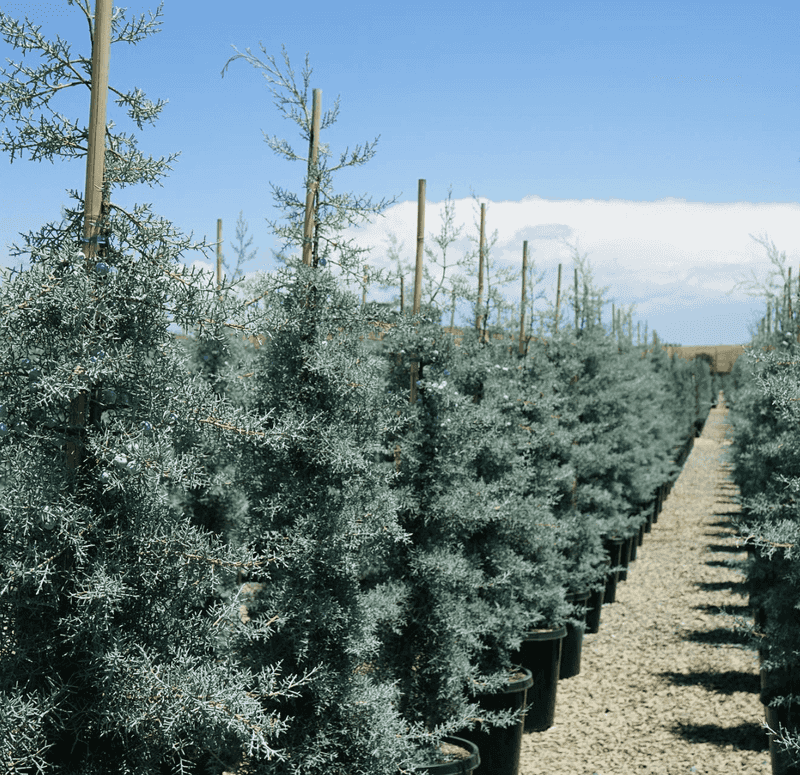
Peel back a strip of old bark on a mature Arizona cypress, and you might find bright cherry red underneath. That hidden color feels like a little winter gift, even before you add a single ornament.
Believe it or not, this evergreen grows wild in the mountains of the Trans-Pecos region near Big Bend. Its scaly foliage ranges from blue-green to silvery blue, giving it a frosty look on warm December days.
I like how quickly it grows, because a small potted tree can turn into a real screen fairly soon. Many gardeners use it as a windbreak or privacy border once the holiday season wraps up for the year.
Arizona cypress prefers full sun and soil that drains fast, including rocky or alkaline ground. Soggy roots cause the biggest trouble, so avoid low spots where rainwater puddles after a heavy spring storm.
Once established, it handles drought with impressive grit and needs very little fussing from you. Water deeply during its first summer, then cut back once new growth looks steady and healthy throughout the canopy.
Expect a mature height around thirty to fifty feet, with a narrow upright shape that fits smaller lots. Its slim profile works nicely along a fence line where a wide pine would crowd out everything nearby.
Inside the house, give it a bright, cool corner and a saucer to catch extra water. Bring it back outdoors within about ten days, then plant it during the cool months when roots settle easily.
3. Carolina Sapphire Arizona Cypress
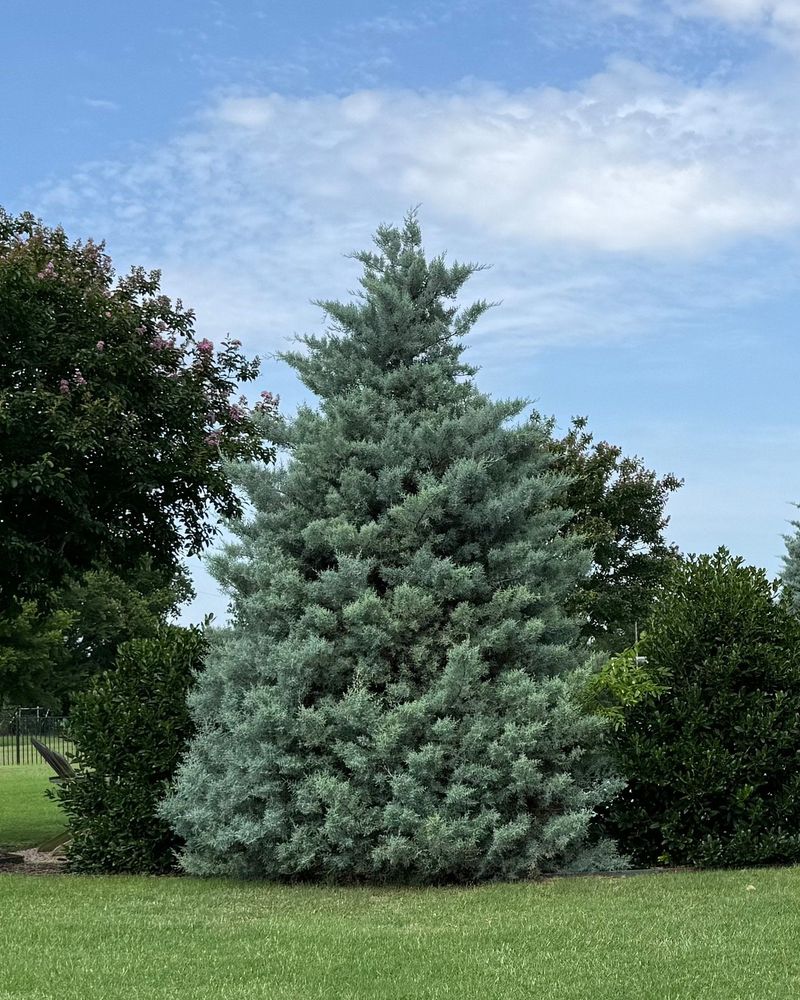
Frosty teal foliage gives this cypress a look that seems borrowed from a snowy mountain postcard. Holiday lights glow beautifully against that icy blue color, almost like the branches carry their own soft sparkle.
Carolina Sapphire is a selected form of Arizona cypress, prized for fine texture and very strong silver-blue color. New spring growth comes in powder blue, and the shade holds steady through the hottest weeks of summer.
Personally, I think it makes the prettiest porch tree on this list during the holiday season. Its strong central leader keeps the pyramid shape tidy, so you rarely need shears to keep it looking neat.
Give it at least six hours of direct sun each day to keep that color rich and bright. Shady spots cause thin, floppy growth, and the blue tone fades toward a duller green over time.
Soil type rarely bothers it, since sandy, rocky, clay, and alkaline ground all work if water drains away. Standing water is the main enemy, so build a slight mound if your yard stays wet after storms.
Many growers prefer it over Leyland cypress because it shows fewer fungal and root problems in hot regions. That reliability makes it a smart long-term choice for anyone tired of replacing struggling screen trees every few years.
After the holidays, plant it with plenty of space, since mature trees reach thirty feet or more. Its antique red bark adds a cozy touch to your winter garden for many seasons ahead.
4. Leyland Cypress
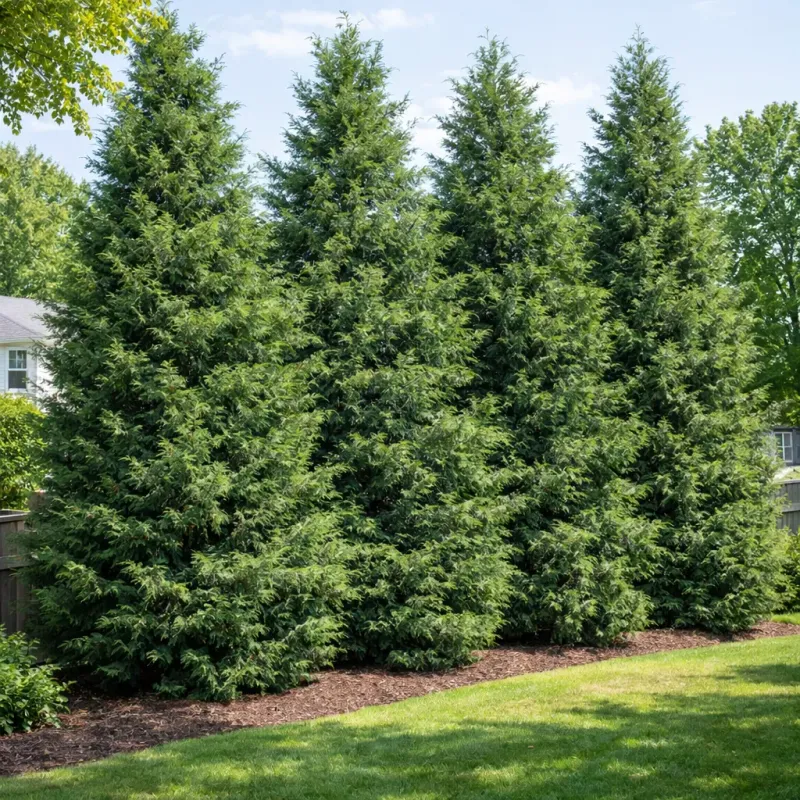
Run your hand along a Leyland cypress branch, and it feels more like feathers than prickly needles. Kids love hugging this tree, which makes decorating day a lot less scratchy for everyone involved.
Leyland cypress has been a popular living Christmas tree across the warmer South for many years now. Its dense pyramid shape looks full and polished, almost like it came straight from a holiday catalog page.
You’ll notice it grows fast, sometimes adding several feet each year once the roots settle into good soil. That speed explains why so many homeowners plant rows of it for quick privacy along back fences.
Still, I believe honesty matters here, because this tree has some real weak spots in hot humid places. Fungal canker diseases and root rot often show up, especially in heavy soil with poor drainage and crowded planting.
Shallow roots can also leave tall trees prone to tipping in strong wind or during long hot spells. Space each tree generously and give deep water during dry stretches to help roots stay strong and healthy.
Plant it in full sun or light shade, in soil that drains well and never stays soggy. Good airflow between branches reduces disease, so avoid jamming several trees close together for an instant wall.
Indoors, keep it for about a week near a bright window but away from heating vents. Afterward, give it a sunny spot with room to spread, since mature trees can grow quite large.
5. Eastern Red Cedar
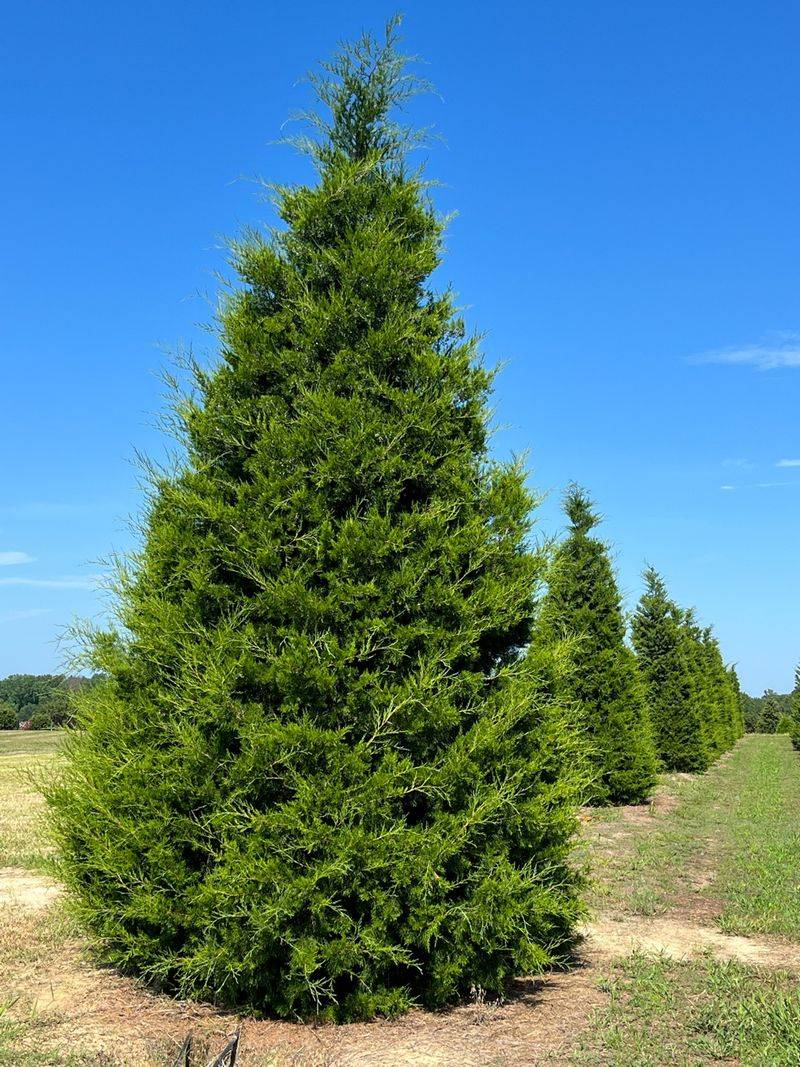
Pioneer families often cut wild cedars for Christmas long before tree lots appeared in every town. Grabbing a cedar from the pasture was a simple tradition, and the trees grew right outside the back door.
Eastern red cedar is a native evergreen with a natural cone shape that already looks festive. You barely need to prune, because the tree grows into that classic holiday outline all on its own.
Here’s a fun twist for bird lovers, since female trees produce blue-gray berry-like cones each fall. Cedar waxwings and mockingbirds visit for those berries, turning your yard into a lively winter snack bar.
Toughness is its real superpower, since it handles hot summers and freezing winters without much fuss. It grows in full sun and a wide range of soils, as long as water drains away reasonably well.
Wild trees can reach about fifty feet, but smaller cultivars like Brodie stay narrower and easier to manage. Brodie grows around twenty-five feet tall, which fits nicely along a property line or small backyard corner.
Allergy sufferers should know that male trees release pollen during winter, which can bother sensitive folks. If someone in your house sneezes often, consider a female tree, which brings berries instead of pollen clouds.
After a short stay indoors, plant your cedar in a sunny spot and water it through its first summer. Once settled, it needs little care and gives you shelter and screening for decades.
6. Deodar Cedar
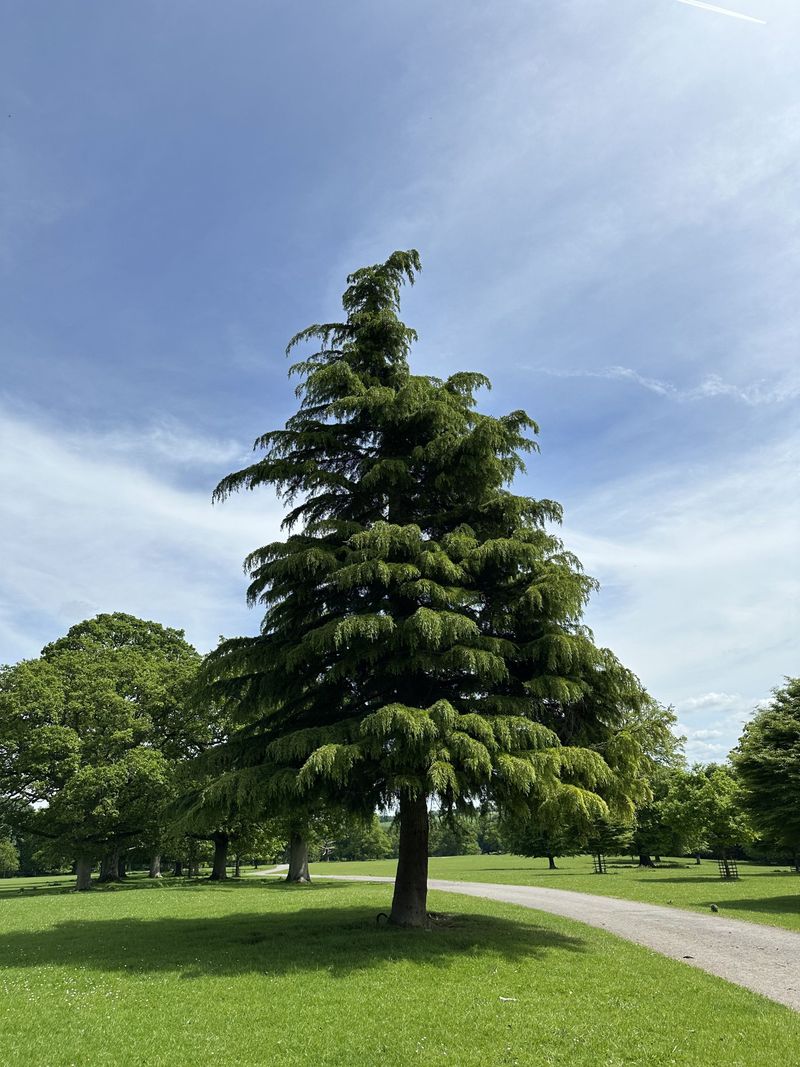
Graceful drooping branch tips give the deodar cedar a relaxed look, like it is bowing politely to guests. Soft blue-green needles cluster along each branch, making it surprisingly gentle to touch when you hang ornaments.
Unlike many trees called cedar, this one is a true cedar from the Himalayan region of Asia. Its name comes from Sanskrit words often translated as timber of the gods, which feels fitting for a holiday centerpiece.
I can’t imagine a more elegant tree for a large front lawn with plenty of open sky. Young potted trees look tidy and pyramid shaped, while older ones spread into broad, sweeping layers of soft foliage.
Size matters a lot here, because mature deodars can reach sixty feet tall and fifty feet wide. Measure your space carefully, and keep it well away from the house, driveway, and overhead power lines.
Plant it in full sun with soil that drains well, and avoid low areas that stay damp. It generally fits zones seven through nine, which covers a large portion of the state outside the hottest southern tip.
High humidity and long brutal heat waves can stress this tree, especially along the Gulf Coast. Wild temperature swings can also cause damage, so a spot with some wind protection gives it a better start.
Indoors, treat it like any living tree and keep the visit short and cool. Then water deeply after planting, and you’ll enjoy that graceful silhouette for many holidays to come.
7. Nellie R Stevens Holly
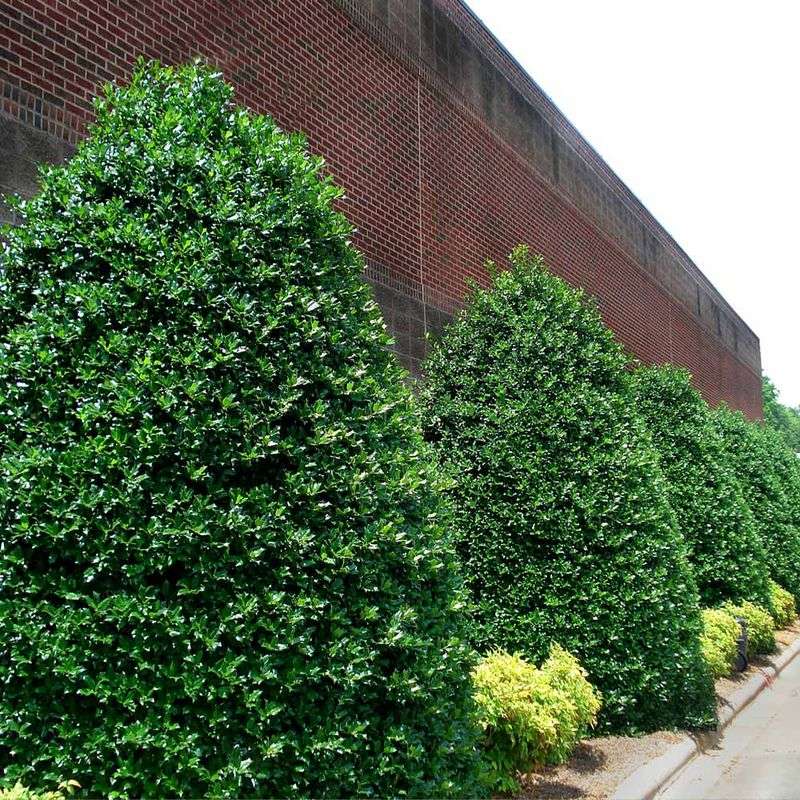
Bright red berries come already attached, so this holly basically decorates itself before you open the ornament box. Glossy dark leaves make those berries pop, and the whole plant looks festive from the street.
Nellie R. Stevens is a hybrid holly with a dense, naturally pyramid shape that suits holiday displays. Unlike the conifers on this list, it is a broadleaf evergreen with spiny, shiny leaves instead of needles.
What surprises me most is how well female plants set berries, even without a male holly growing nearby. You can clip a few berry-covered sprigs for wreaths, and the plant quickly fills those little gaps back in.
Mature plants reach about fifteen to twenty-five feet tall, which makes them great for screening or a corner accent. They handle full sun or partial shade, giving you more flexibility than most sun-hungry evergreens can offer.
Rich, well-drained soil keeps this holly happiest, though it tolerates dry spells once established. In Central Texas limestone soil, leaves can turn yellow from iron shortage, so improved soil and iron fertilizer help.
Water regularly during its first year, especially when summer heat arrives and rain becomes scarce. Steady moisture early on helps it settle faster, since this holly sometimes takes a while to establish in alkaline ground.
Keep curious pets and small children away from the berries, which can cause mild stomach trouble if eaten. Otherwise, enjoy a living tree that stays cheerful long after the holiday lights come down.