All About Phragmites And Other Invasive Plants Michigan Homeowners Should Remove
Most of a certain shoreline reed lives underground, and the part you can see is only the tip of the iceberg. About 80 percent of its mass hides in a tangle of roots and runners below the soil.
Those runners can creep more than six feet in a single year. The stalks above them can tower 15 feet tall, taller than a basketball hoop. I still remember the first time I stood beside a stand of it and felt tiny.
Here in Michigan, that reed has company. Several shrubs and wildflowers that look perfectly innocent are quietly crowding out the native plants our birds, bees, and butterflies need.
Personally, I walked past some of them for years without a second glance. You might have a few growing near your back fence right now. Would you recognize them if you saw them today?
1. That Giant Feathery Reed On The Shoreline Is Hiding Most Of Itself
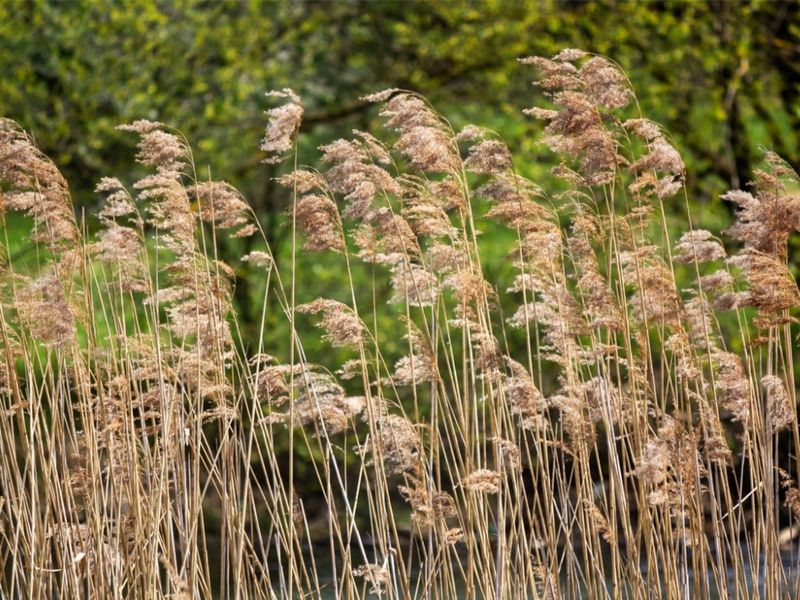
Along a lot of Michigan beaches and roadside ditches, a wall of tan stalks with fluffy plumes blocks the view of the water. That wall is usually invasive Phragmites, also called common reed. It can reach 15 feet tall, and its plumes turn purple-brown by late July.
A native type of Phragmites does exist, which makes things tricky. The native kind grows in thinner patches, has reddish stems in summer, and plays nicely with other wetland plants. The invasive type forms thick, crowded stands with tan or green stems and very little else growing between them.
Underground is where the real story happens. Roughly 80 percent of the plant lives below the surface as rhizomes, which are sideways roots that can run more than six feet deep. Those rhizomes let a patch spread six feet or more each year.
Why should you care if it sits on your lakefront? The dense stands push out native cattails, sedges, and wildflowers that fish, frogs, and birds rely on. Homeowners also lose their view and their path to the water, and dry stalks can become a fire hazard in late fall.
Before you grab clippers, take a close look and snap a few photos. Your local Cooperative Invasive Species Management Area, called a CISMA, can help confirm whether your patch is the invasive or the native kind.
2. Cutting Phragmites Stalks Alone Just Invites Them Back
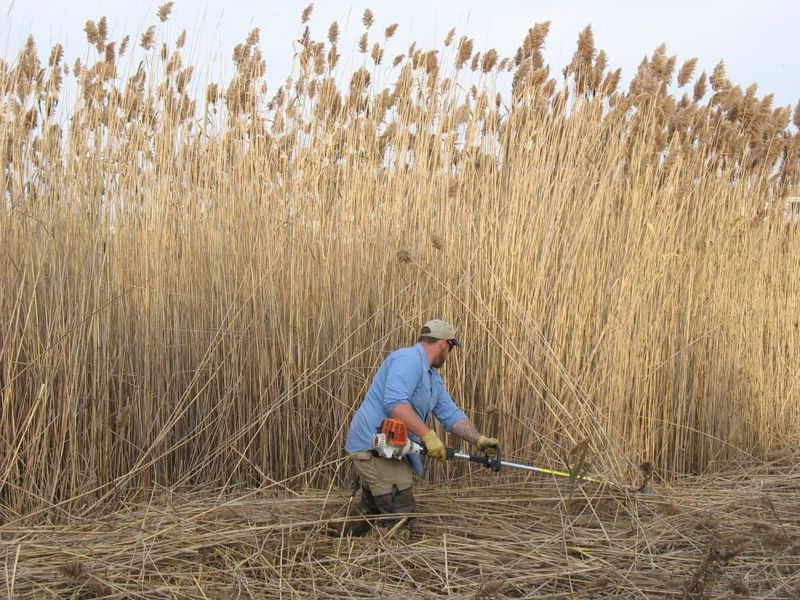
Chopping down a patch of tall reeds feels great for about two weeks. Then fresh green shoots pop right back up, because those hidden rhizomes were never touched. Successful control almost always follows a step-by-step plan instead of one big cut.
Paperwork comes first, especially near water. In Michigan, treating Phragmites in wetlands or along shorelines often requires a permit from the Department of Environment, Great Lakes, and Energy, known as EGLE.
Check with EGLE before you spray or dig, since rules protect lakes and wetland habitat. Experts from Michigan State University Extension and state agencies usually recommend a late summer to early fall herbicide treatment.
During that time, the plant sends sugars down to its roots, and the herbicide travels along with them. Near water, only products labeled for aquatic use, such as certain glyphosate or imazapyr formulas, should be used.
Once the treated stalks turn brown, cutting, mowing, or crushing them comes next. Removing that old growth lets sunlight reach the soil so native plants can return. It also makes any surviving shoots easier to spot.
Plan on follow-up work for several years. Small patches that reappear are much easier to handle than a full stand. Many homeowners hire licensed applicators, which I think is a smart choice for big or soggy sites.
3. Buckthorn Shrubs Stay Green Long After Your Maples Go Bare
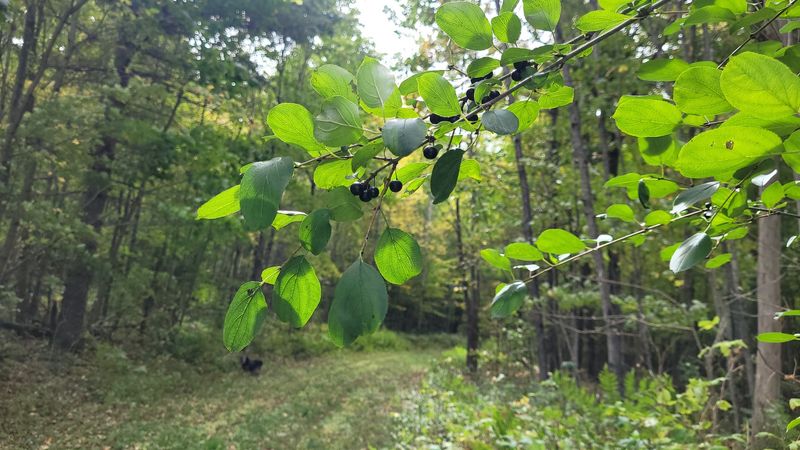
Take a walk through your yard in November and look for one stubborn shrub still wearing green leaves. Chances are good you’ve found buckthorn. Both common buckthorn and glossy buckthorn hold their leaves weeks after native trees drop theirs.
Common buckthorn has dark green, oval leaves with tiny teeth along the edges. Its twigs often end in a small thorn, and scraping the bark reveals bright orange wood underneath.
Glossy buckthorn likes wetter ground, has shiny smooth-edged leaves, and skips the thorns.
Both kinds leaf out early in spring and hang on late in fall. That long season lets them shade out wildflowers and young trees below. Birds eat the dark berries and spread seeds far and wide, even though the fruit works like a laxative for them.
Change is coming for these shrubs. Michigan plans to add common and glossy buckthorn to its restricted species list starting January 1, 2028, which will make selling or planting them illegal.
Small seedlings pull out easily when the soil is damp after rain. For bigger shrubs, cut the trunk near the ground and paint the fresh stump with herbicide right away.
Skip that stump step, and you’ll likely get a bushier plant than before. Fall is a handy time to hunt, since those green leaves stand out.
4. Snap A Honeysuckle Twig And Check The Center
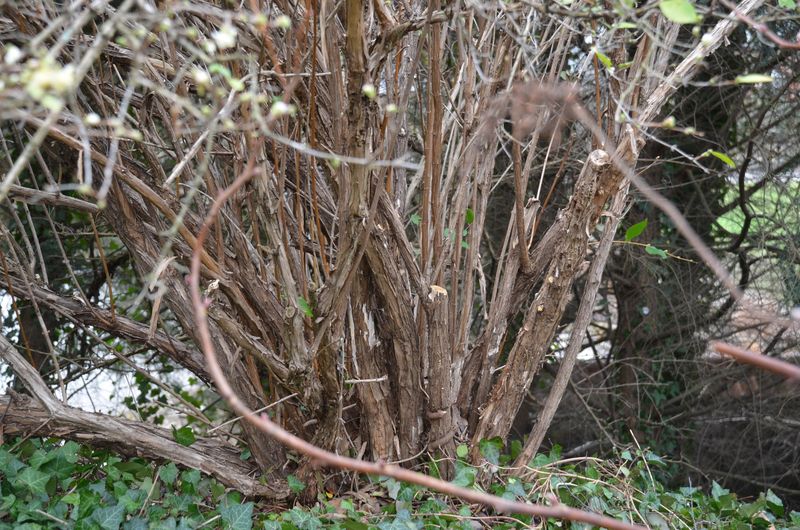
A pocketknife might be the best identification tool you own. Bush honeysuckles look a lot alike, but a quick snip reveals the truth. If the center of the stem, called the pith, is hollow and brown, you’re likely holding an invasive species.
Native honeysuckles usually have a solid white center. Invasive types like Morrow’s, Tatarian, and Bell’s honeysuckle grow into multi-stemmed shrubs up to about 12 feet tall. They form thick tangles along fences, woods, and old fields.
Those sweet-smelling spring flowers and bright red-orange berries win a lot of fans. Sadly, the berries offer less nutrition for migrating birds than many native fruits. Meanwhile, the dense shade under the shrubs leaves little room for wildflowers or young trees.
Timing makes removal easier. Like buckthorn, invasive honeysuckles leaf out early and stay green late in fall. Late autumn lets you spot them quickly and treat them while most native plants are already dormant.
Young plants pull out fairly easily from moist soil because their roots are shallow. Larger shrubs respond best to cutting near the ground and treating the stump with herbicide immediately. For big patches, a careful foliar spray in late fall can work.
Want a replacement? American fly honeysuckle is a native option worth asking about at local nurseries.
5. Autumn Olive Leaves Flash Silver In The Breeze
Back in the 1800s and again in the mid-1900s, people planted autumn olive on purpose. It was meant to feed wildlife and hold soil in place. Nobody expected it to spread across old fields and roadsides the way it has.
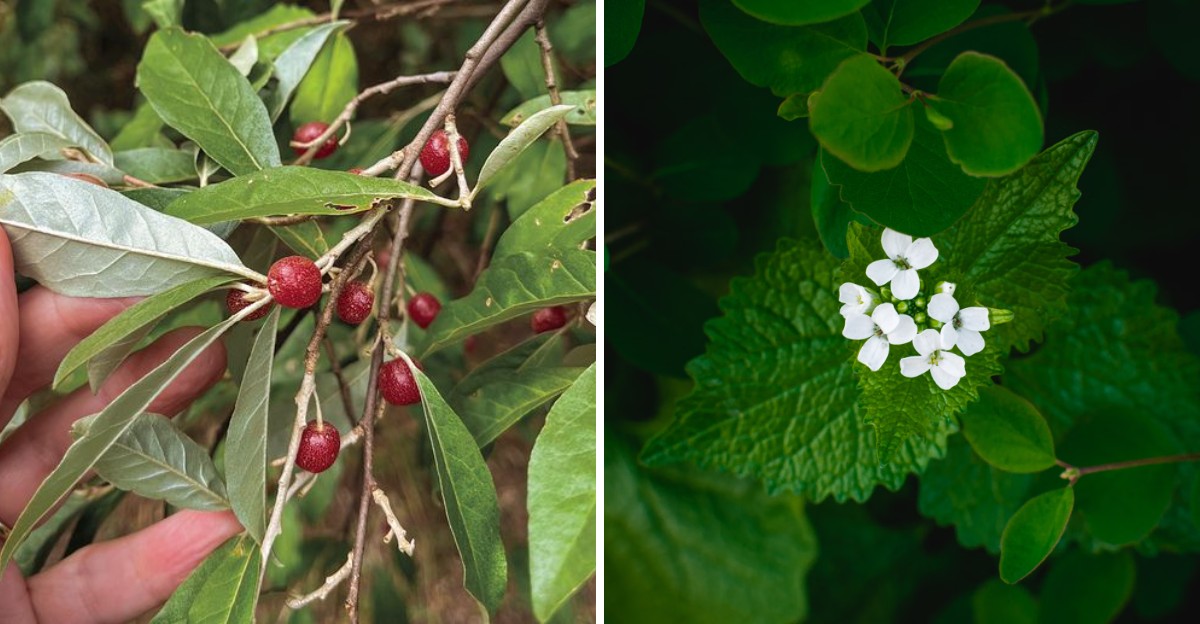
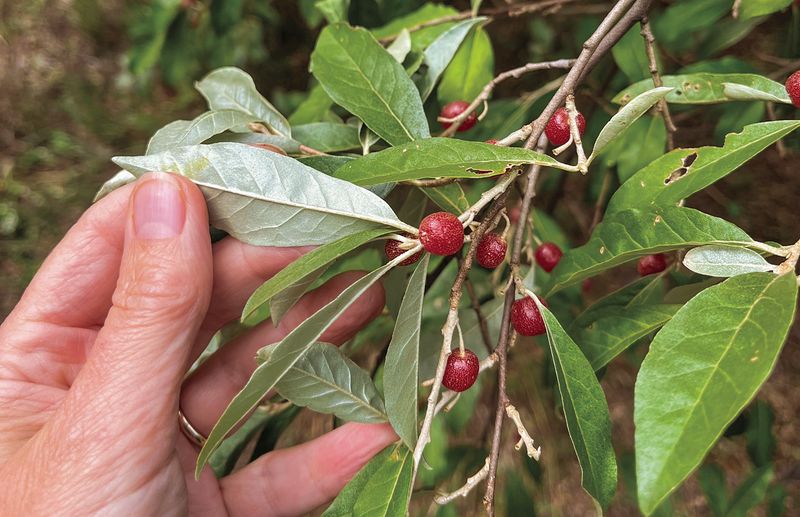
Spotting this shrub is fun once you know the trick. Flip a leaf over, and the underside shines silvery. Young twigs look speckled, and some carry sharp thorns.
In spring, it fills the air with sweet, creamy yellow flowers. By fall, branches sag with small red berries dotted with silver specks. Birds love them and drop seeds everywhere they go.
Autumn olive has a sneaky advantage. It can pull nitrogen from the air and feed itself, so it thrives in poor, sandy soil where many native plants struggle. A single shrub can grow up to 20 feet tall and even wider.
In Michigan, it is illegal to sell, trade, or plant autumn olive. That tells you how seriously state experts take it.
Hand-pull small seedlings after a good rain. Larger shrubs must be cut at ground level and treated with herbicide on the stump right away. Cutting alone often triggers a burst of new sprouts. Late summer to early fall is a strong window for treatment.
6. Garlic Mustard Smells Like Dinner But Acts Like A Bully
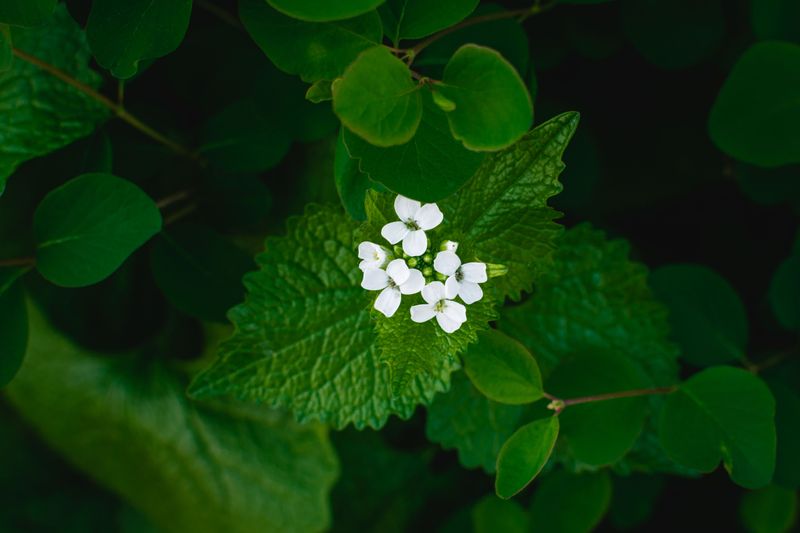
Crush a leaf between your fingers, and the garlic smell gives this plant away instantly. Garlic mustard pops up early each spring in shady yards and woodlots across the state. It blooms before most native wildflowers even wake up.
This plant lives for two years. In year one, it forms a low rosette of rounded, scalloped leaves hugging the ground. In year two, it sends up a stalk with triangular, toothed leaves and clusters of tiny white flowers with four petals.
Its sneaky side goes beyond grabbing sunlight first. Garlic mustard releases chemicals into the soil that disrupt helpful fungi many native plants and tree seedlings rely on. Each plant can make thousands of seeds, and those seeds may last in the soil for years.
Hand-pulling works beautifully for small patches. Grab the plant low at the base and pull slowly so the whole root comes up. Early spring, before seed pods form, is the sweet spot.
Bag everything you pull and send it to the landfill. Home compost piles rarely get hot enough to stop the seeds. Even pulled plants can finish making seeds if left on the ground.
Patience pays off here. Expect to pull for several springs in a row until the seed bank runs out.
7. Muddy Boots And Mower Decks Carry Invasive Seeds Around
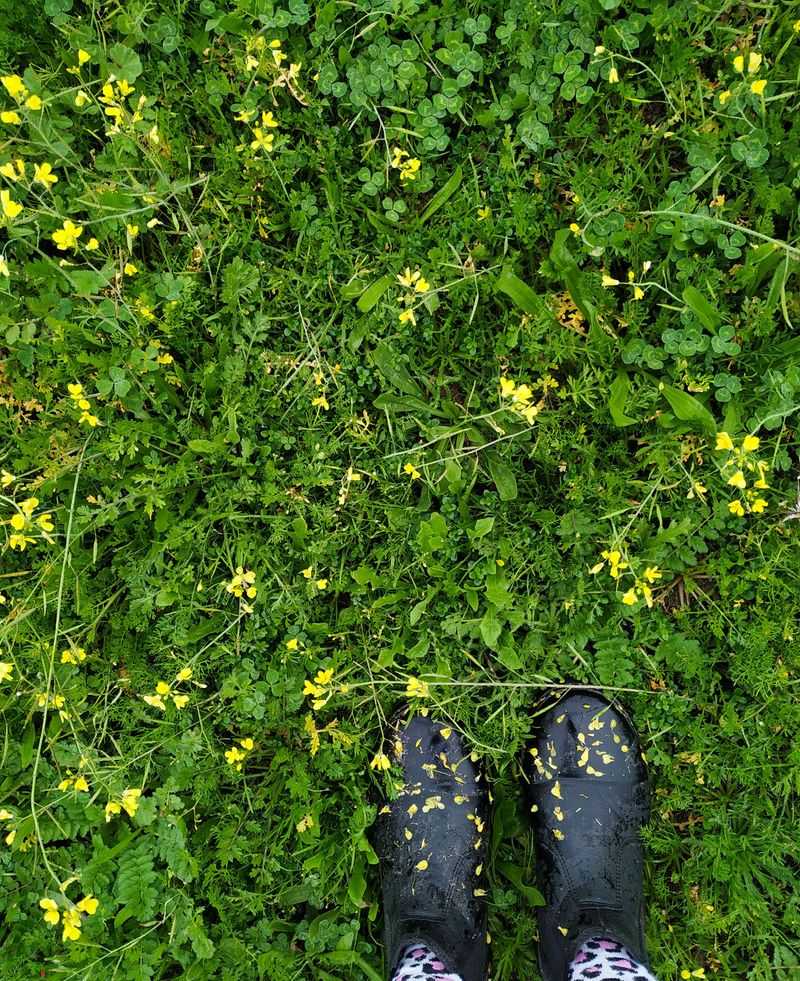
Honestly, I was shocked to learn how many invasive plants hitch a ride on us. Seeds cling to boot treads, pant cuffs, and the underside of mowers. Even tiny pieces of Phragmites rhizome can start a new patch somewhere else.
Cleaning gear takes only a few minutes. Keep a stiff brush by your back door or shed. Scrub boots, tools, and wheelbarrows before leaving a weedy area.
Mowers deserve special attention. Garlic mustard seeds and reed fragments can pile up under the deck. Brush it out or blast it with a hose on a hard surface where any seeds are easy to spot and toss.
Watch what you bring home, too. Firewood, free fill dirt, and bags of mulch from unknown sources can carry seeds. Buy plants from trusted nurseries, and skip any shrub listed as invasive, even if it looks pretty.
Boaters and anglers along the lakes can help as well. Check trailers and gear for plant bits before moving to another lake. Many Michigan boat launches post reminders for good reason.
Little habits add up fast. One clean pair of boots might keep your neighbor’s yard, or a nearby nature preserve, free of a brand new infestation.
8. Native Wildflowers And Shrubs Belong In The Gaps You Clear
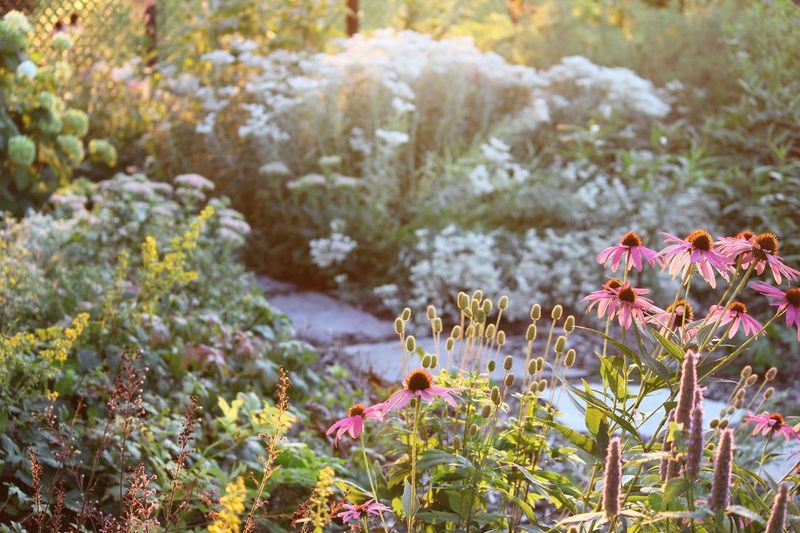
Bare ground after a big cleanup is an open invitation. If you leave it empty, invasive plants often move right back in. Filling those spots with native plants is the smartest way to keep them out.
Shady woodland areas welcome wild ginger, wild strawberry, and native ferns. Sunny spots might enjoy serviceberry, gray dogwood, or elderberry instead of buckthorn and autumn olive. Wet shorelines can host native sedges, blue flag iris, and swamp milkweed.
Your local wildlife will thank you. Native plants feed the caterpillars that baby birds need. They also provide better berries for migrating songbirds in fall.
Not sure what grows best where you live? Michigan State University Extension offers native plant guides for different regions. Local conservation districts often run spring native plant sales at friendly prices.
Reporting matters, too. If you find an unusual invasive, share photos with the Midwest Invasive Species Information Network, called MISIN. Your local CISMA can offer advice, workdays, and sometimes help with tough patches.
Start small and enjoy the progress. Clear one corner, plant a few natives, and watch what shows up. I believe the first butterfly visiting a new native flower is one of the best rewards a gardener can get.