7 Easy Ways to Turn Evergreen Cuttings Into Cozy Winter Decor in Michigan

Michigan’s state tree carries its soft needles in tidy bundles of five, one for each letter of white. Kids across the state learn that clever trick, yet few people think about bringing those branches indoors.
Old traditions in northern Europe brought green boughs inside during the darkest weeks as symbols of lasting life. Those branches also carried a fresh scent that cheered up smoky homes long before candles in jars existed.
I love how a single snip from the backyard can make my kitchen smell like a quiet forest trail. You need nothing fancy for this hobby, just sharp pruners and a bucket of cool water to get started.
Michigan winters are long, so free greenery from your own yard feels like a small gift every single week. Which of these cozy ideas will end up brightening your front door or kitchen table this year?
1. Wrap Fresh White Pine Boughs Into A Front Door Wreath

Eastern white pine needles feel so soft that my kids like to brush them against their cheeks like feathers. That gentle texture and a sweet, woodsy scent make pine one of the friendliest greens for a homemade wreath.
Wait until your area has had at least one hard frost before you start snipping any branches. Cold weather pushes the tree into dormancy, and the needles tend to hold on much longer afterward.
Use clean, sharp pruners and cut just above a node at a slight angle for neat results. Spread your cuts around the tree and take no more than one third of its growth.
Drop every fresh stem into a bucket of water right away so the needles can drink overnight. I like to soak mine in a cool garage for a full day before I start building anything.
Grab a wire wreath ring from any craft store and some green paddle wire to hold everything. Gather small bundles of six-inch pine tips and wrap each bundle tightly onto the frame with wire.
Overlap each new bundle slightly so it neatly hides the wire and stems of the one before it. Keep working in one direction around the ring until the circle looks full and nicely fluffy from every side.
Pinecones and a plaid bow add charm, but the pine itself steals the show on most doors. Hang it on a shaded door and mist it every couple of days to keep it fresh longer.
2. Drape A Fragrant Cedar Garland Along The Stair Railing
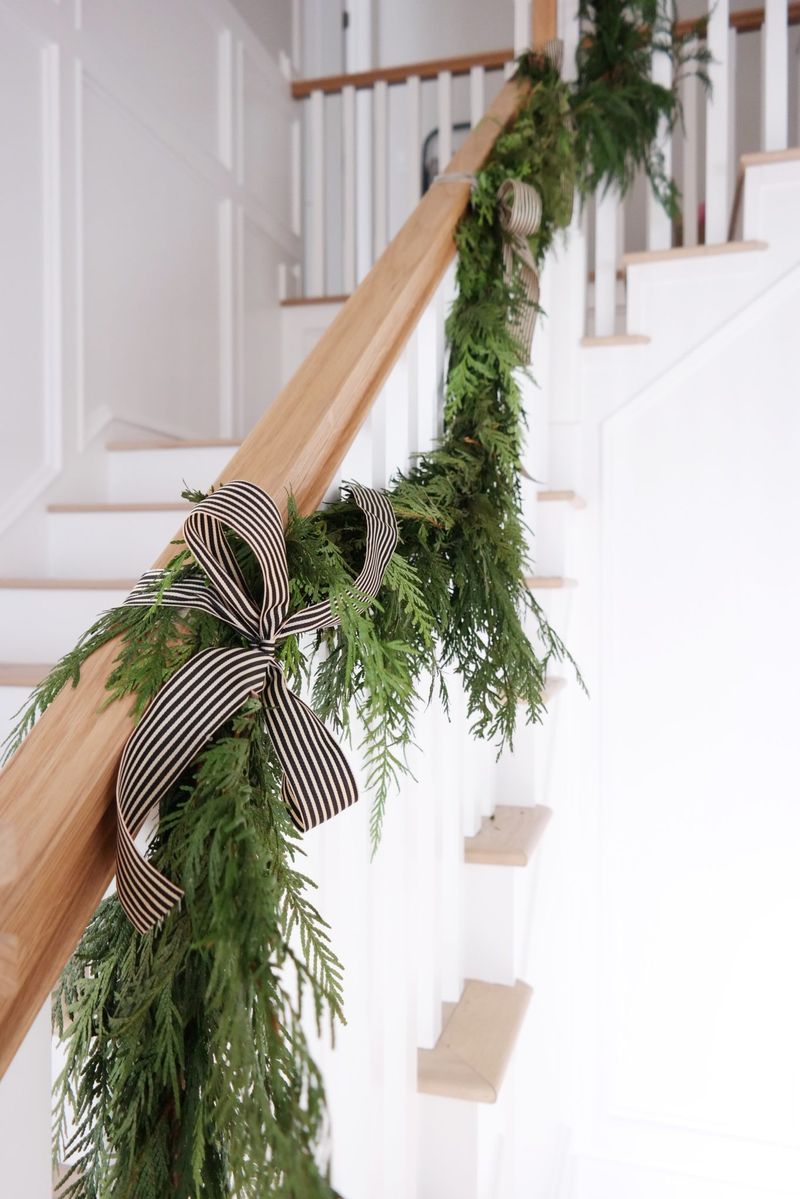
Cedar branches hang in soft, droopy sprays that look like green lace spilling down a wooden staircase. I have to admit, the spicy smell of fresh cedar beats any candle I have ever bought.
Northern white cedar, which many folks call arborvitae, grows wild across Michigan and fills plenty of backyard hedges. A few snips from the back side of a hedge rarely show, especially if you spread them out.
Cedar also dries out slower than many greens, so it handles indoor heat better than spruce or holly. Still, give the cuttings a long drink in warm water the day before you start building your garland.
Measure your railing first, then cut a length of sturdy jute twine about a foot longer than that. Lay small cedar bundles along the twine and wrap each one firmly with thin floral wire.
Point every bundle the same way so the garland flows smoothly and gently from the top step down. Personally, I tuck in a few pine sprigs too because the mixed textures look richer up close.
Attach the finished garland with soft ribbon ties instead of nails so the wood stays scratch free. If you want lights, choose cool LED strands because they give off far less heat than older bulbs.
Keep the garland away from heating vents and fireplaces, since warm, dry air browns cedar surprisingly quickly. A quick misting every other day helps those graceful sprays stay soft until the new year arrives.
3. Fill Porch Planters With Spruce Boughs And Red Twig Dogwood
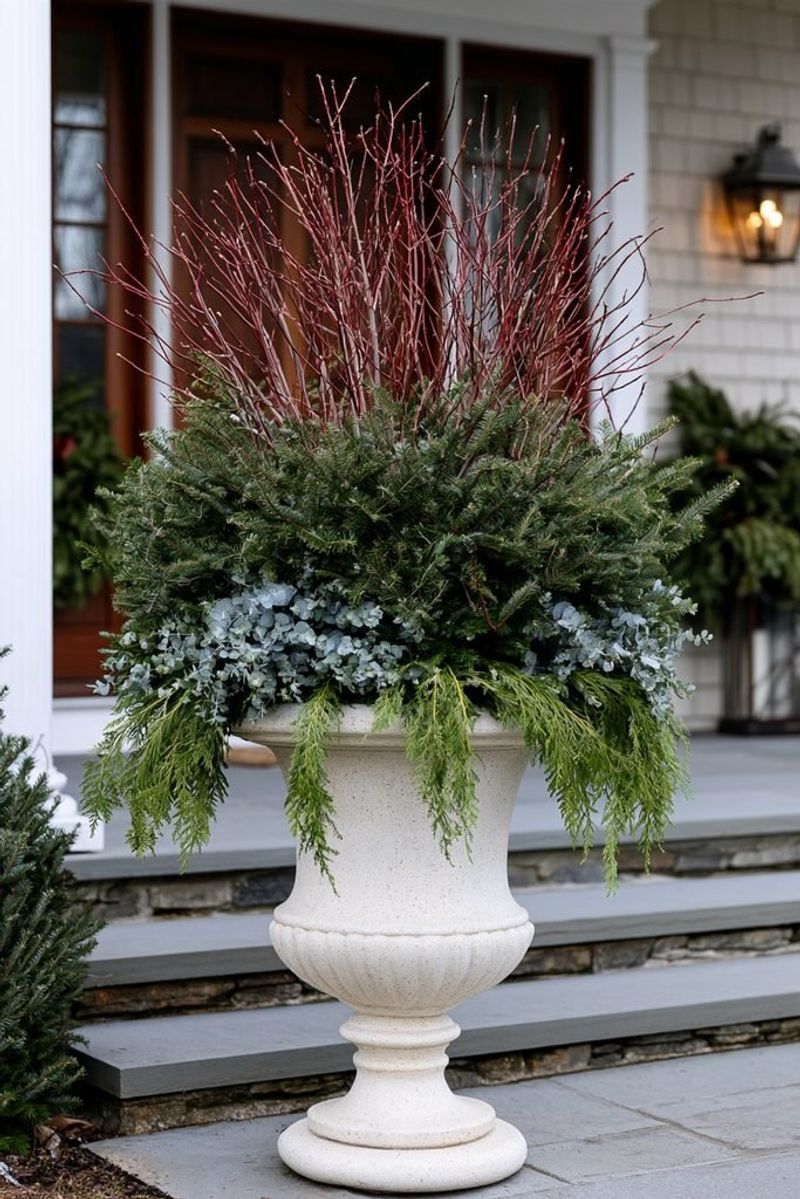
Spruce needles are stiff and a little pokey, so I save those branches for outdoor pots instead of the couch. Outside in the cold, spruce often stays green and sharp looking for weeks, sometimes right up until spring.
Empty summer planters make perfect bases, as long as the old potting soil is still sitting inside them. Push the cut stems deep into that soil before it freezes, and the frost will lock them in place.
Start with the longest spruce or fir boughs around the outer edge, angling them slightly outward and down. Then fill the center with shorter pieces so the arrangement looks full and tidy from the sidewalk.
Red osier dogwood is a native shrub, and its bright red stems glow like embers against snowy backgrounds. Stand a handful of those stems tall in the middle to give your planter some height and drama.
Pruning older dogwood stems in late winter also helps the shrub push out fresh, brightly colored shoots. So you get a gorgeous planter now and a healthier, redder shrub next year as a bonus.
Pinecones wired onto short sticks make easy fillers for any gaps between the darker green branches. Winterberry holly sprigs also add cheerful red dots, though birds may snack on the berries first.
Blue spruce looks lovely but drops needles fast once cut, so mix it in sparingly with other greens. You might notice your porch planter becomes the neighborhood favorite after the first snowfall dusts it white.
4. Arrange Balsam Fir Sprigs In Mason Jar Centerpieces

Balsam fir smells so much like the holidays that many scented candles try to copy its sweet, piney aroma. Its flat, soft needles even feel friendly in your hand, which makes tabletop arranging a real pleasure.
Balsam fir (Abies balsamea) grows naturally in cool northern forests, including much of the Upper Peninsula. Fraser and concolor fir from local tree farms work just as well if none grows nearby.
Before snipping on land that is not yours, ask the owner, since many tree lots share trimmed branches. I usually leave with an armful of fir tips that would otherwise end up in a brush pile.
Grab two or three clean mason jars and fill each one about halfway with fresh, cool water. Recut the fir stems at an angle right before arranging, because a fresh cut drinks water much better.
Strip off any needles that would sit underwater, since soggy needles cloud the water and start to smell. Swap in fresh water every two or three days to keep the arrangement looking crisp and green.
Line the jars down a wooden table runner and tuck a few pinecones between them for a rustic look. Battery tea lights look sweet nearby, and they skip the fire risk of real candles near dry needles.
Firs hold their needles well indoors, so this centerpiece can easily last a few weeks with care. I can’t imagine a snowy dinner without that fresh forest smell drifting across the table between bites.
5. Craft A Boxwood Kissing Ball For The Front Porch
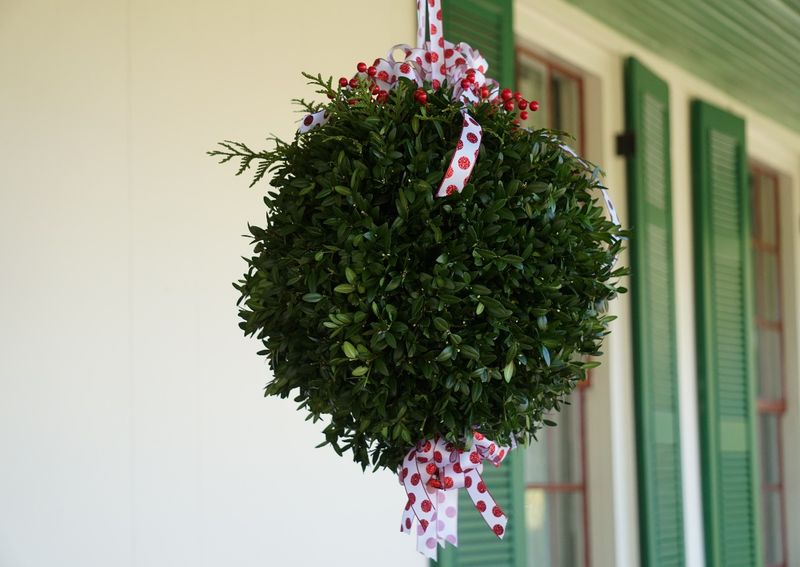
Kissing balls hung in old English homes, and couples often paused beneath them for a sweet holiday kiss. I love how this charming little sphere still makes porch visitors smile and glance up with curiosity.
Boxwood works beautifully here because its tiny, glossy leaves pack together tightly and dry out slowly indoors. Hardy types like Green Velvet handle cold winters in many yards, so you may already have a shrub.
Start with a floral foam ball about six inches wide and soak it in water for several minutes. Some crafters wrap damp sphagnum moss around the ball with twine to hold even more moisture for the greens.
Snip boxwood sprigs about three inches long and strip the bottom leaves so the stems slide in cleanly. Poke them in all over the ball, working in rows until no foam peeks through anywhere.
Thread a sturdy ribbon loop through the center before you start, since adding it later gets messy. A bow tied at the bottom with a tail of ribbon gives the ball a finished, old-fashioned look.
Boxwood leaves are toxic to pets and kids if chewed, so hang the ball well out of reach. A covered porch or entryway hook keeps it safe and also protects it from harsh drying winds.
Give the ball a gentle misting every couple of days, and it can stay green for weeks. Who knows, you might find yourself standing under it with someone special before the season ends.
6. Tuck Holly And Juniper Sprigs Along Bookshelves

Tiny sprigs of green can turn a plain bookshelf into the coziest corner of the house in minutes. Personally, I think small touches like these feel warmer than one giant display in the living room.
Eastern redcedar is actually a juniper, and its bluish berry-like cones look adorable tucked between books. The tree grows wild across southern Michigan, often popping up along fence rows and old abandoned fields.
Holly brings glossy leaves and bright red berries, and blue holly varieties grow well in many local gardens. Only female plants make berries, and they need a male plant nearby to produce that cheerful fruit.
Holly leaves can darken or discolor in heat, so keep those sprigs away from lamps and sunny windows. Juniper and cedar hold up better indoors, which makes them my go-to picks for longer winter displays.
Lay short sprigs along the top of picture frames, or tuck them behind small framed photos. A few pieces in a teacup or tiny bud vase also look sweet on a kitchen shelf.
Place a strip of wax paper underneath greens on wooden shelves to protect the finish from sticky sap. Holly berries can upset little tummies if eaten, so set those sprigs higher if pets or toddlers roam.
Swap out tired sprigs every week or so, since fresh cuttings from the yard cost nothing. You’re in for a sweet surprise when guests start hunting for every little green hiding spot you made.
7. Press Fir And Cedar Sprigs Into Framed Winter Art
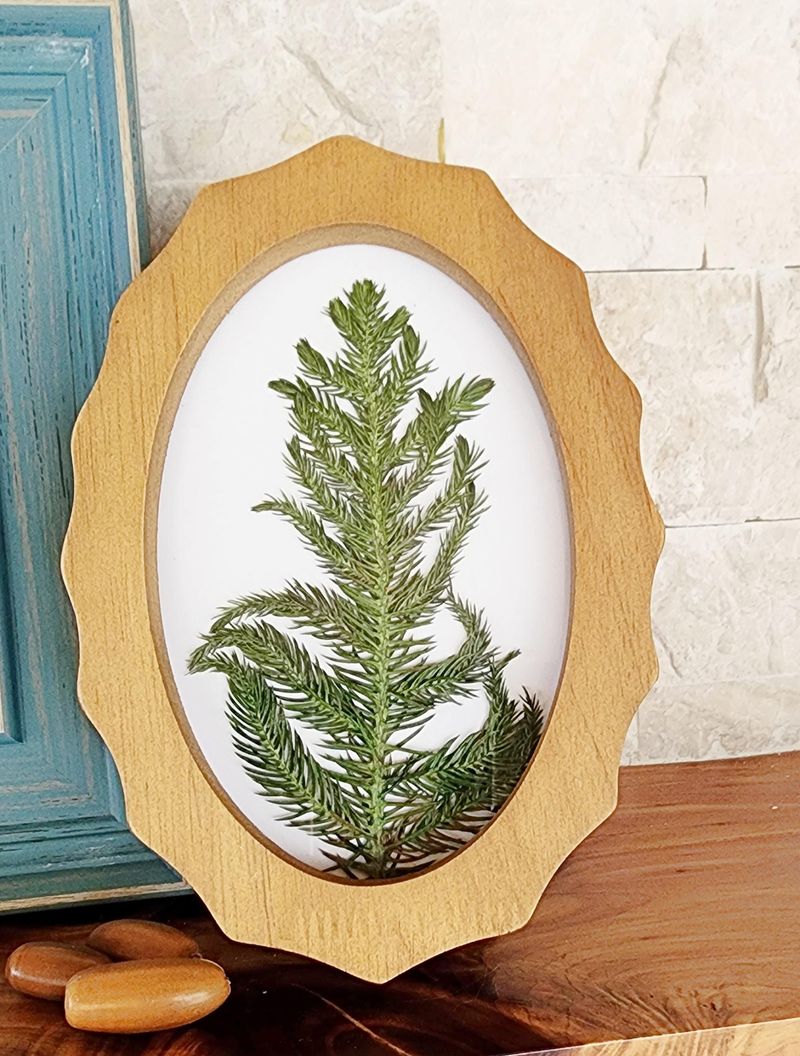
Pressed fir sprigs look like tiny green feathers once flattened, and they make adorable gift tags and cards. What surprises me most is how long these little keepsakes last compared to a fresh wreath.
Pick naturally flat pieces like cedar fronds and fir tips, since bulky pine bundles often press poorly. Smaller sprigs about three or four inches long fit nicely in most homemade presses and heavy books.
Lay each piece between sheets of blotting paper, then sandwich everything between two sturdy pieces of cardboard. Stack heavy books on top or tighten a flower press, then wait at least a full week.
For three-dimensional crafts, hang small bundles upside down in a cool, dark closet for about three weeks. Air-dried greens turn brittle and shed a bit, so handle them gently when you start crafting.
A clear sealing spray on fresh juniper can keep it green and bendy for months, according to crafters. I like using sealed sprigs on napkin rings because they hold their shape through plenty of dinners.
Glue pressed sprigs onto plain cardstock, then slip the sheet into a simple frame for instant winter art. Kids love arranging the pieces into little forest scenes or shaping them into their own first initials.
Michigan winters stretch well into March, so homemade art like this keeps the cozy feeling going strong. Best of all, a single pruning session can supply enough greenery for crafts long after the holidays end.