The Native Michigan Plant Combinations That Helps Create A Natural Tick Barrier Along Yard Edges
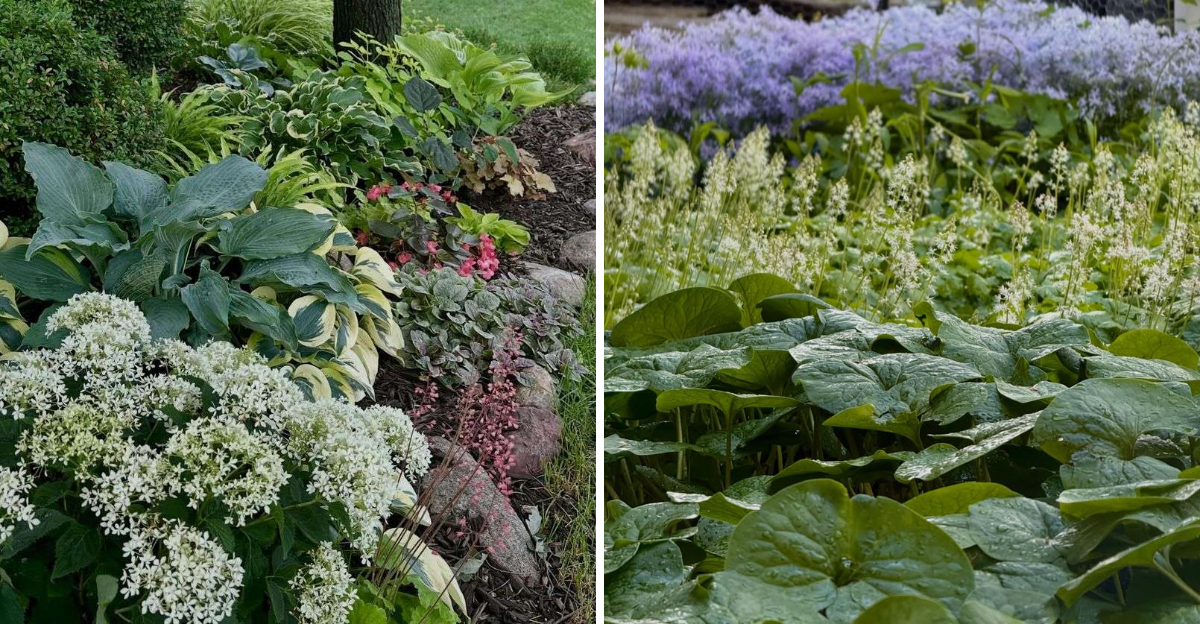
Yard edges are where tick exposure is highest in Michigan, that transitional zone between the maintained lawn and whatever lies beyond it, whether woods, a neighbor’s overgrown area, or a brushy fence line.
Ticks move through that border zone and into maintained spaces, and no single plant stops that entirely.
But certain native plant combinations change the character of that edge in ways that make it significantly less hospitable to tick movement and survival.
The right combination creates denser ground competition, reduces the moisture and shade ticks depend on, and introduces aromatic compounds that interfere with tick behavior at the border.
Michigan gardeners who’ve planted these combinations along their yard edges aren’t just getting a tick management benefit either.
The plantings look intentional, support pollinators, and solve the perennial problem of what to do with that awkward boundary where lawn meets everything else.
1. Northern Bush Honeysuckle And Mapleleaf Viburnum
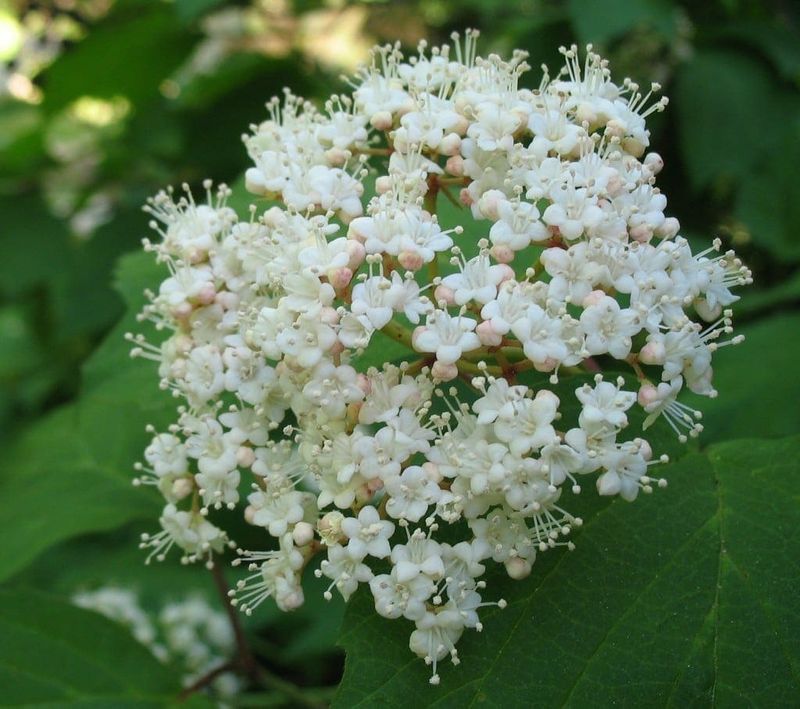
Picture a yard border so lush and layered that ticks simply have nowhere to go. That is exactly what happens when you pair Northern Bush Honeysuckle (Diervilla lonicera) with Mapleleaf Viburnum (Viburnum acerifolium) along your property edge.
These two Michigan natives work together in a way that feels almost intentional by nature itself.
Northern Bush Honeysuckle spreads low and wide, forming a dense mat of arching stems and bright yellow flowers that bloom from June through August. Bees and butterflies absolutely love it.
Meanwhile, Mapleleaf Viburnum grows upright, reaching four to six feet tall, adding a second layer of leafy coverage that fills in the gaps above the honeysuckle.
That layered structure is the real secret. Ticks prefer warm, humid microclimates close to the ground, often hiding in tall grass or leaf litter.
When dense native shrubs cover the soil and create a dry, shaded canopy, those favorable tick zones shrink dramatically. The combination basically redesigns the habitat so ticks struggle to thrive.
For spacing, plant Northern Bush Honeysuckle about two to three feet apart and Mapleleaf Viburnum roughly four feet apart in a staggered row behind them.
Both plants handle partial to full shade beautifully, making them perfect under tree canopies or along shaded fence lines.
They also tolerate Michigan’s clay-heavy or sandy soils well with minimal amendments.
Once established, this pairing needs very little maintenance. Occasional pruning keeps it tidy, but honestly, the more natural and full it grows, the better it works as a barrier.
2. Leatherwood With Spicebush
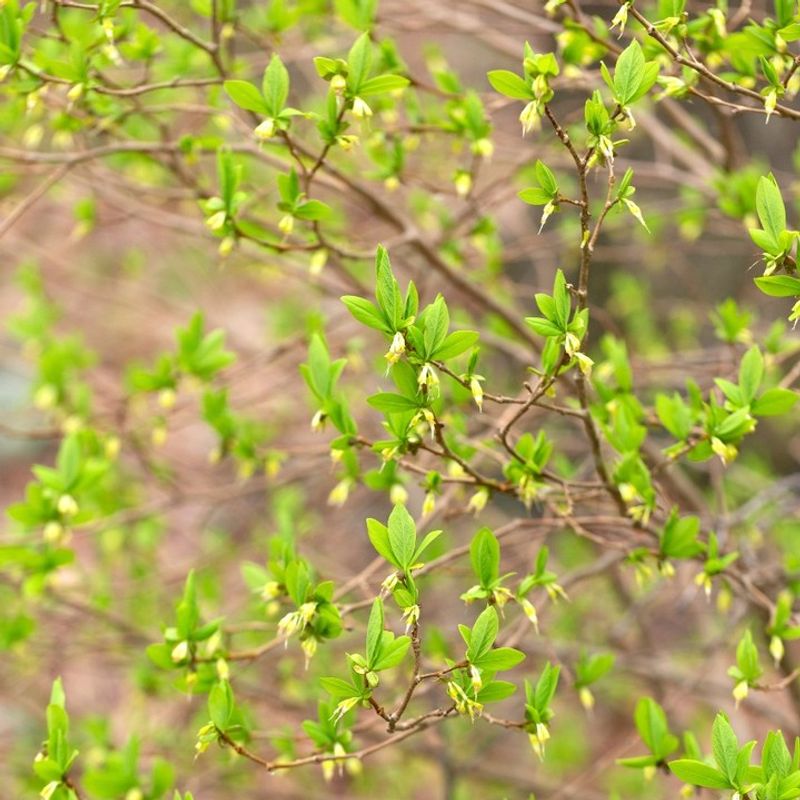
There is something quietly powerful about Leatherwood.
One of Michigan’s most underused native shrubs, Dirca palustris has flexible, almost rubbery stems and a naturally dense branching habit that makes it a surprisingly effective tick deterrent when planted alongside Spicebush (Lindera benzoin).
Spicebush is a true Michigan woodland favorite. It grows four to twelve feet tall with a full, rounded shape, and its spicy-scented leaves are a natural insect repellent on their own.
Early yellow blooms in March and April feed pollinators before most other plants even wake up. Together, these two shrubs create a shaded, humid-free zone that ticks find highly unappealing.
Your Michigan Garden Changes Every Week. Your Plan Should Too.
Gardening in Michigan changes quickly throughout the season. Every Friday you’ll receive a simple weekly plan showing exactly what to plant, prune, fertilize, harvest, and protect so you never miss the right timing.
The science behind this pairing is straightforward. Ticks need warmth and moisture near the ground to survive and move around.
Dense branching from both Leatherwood and Spicebush shades the soil, reduces ground-level humidity, and physically blocks tick movement between wooded areas and your lawn.
Birds also flock to Spicebush berries in fall, adding another layer of natural pest control since many songbirds feed on insects.
Plant Leatherwood and Spicebush in partial to full shade for best results. Both prefer consistently moist, well-drained soil rich in organic matter, making them ideal for low spots or shaded edges near trees.
Space Leatherwood about three feet apart and Spicebush four to five feet apart for good coverage without overcrowding.
This combination requires almost no care once established. A layer of wood chip mulch at planting helps retain moisture and gets both shrubs off to a strong, healthy start.
3. Wild Bergamot Next To Blackhaw Viburnum
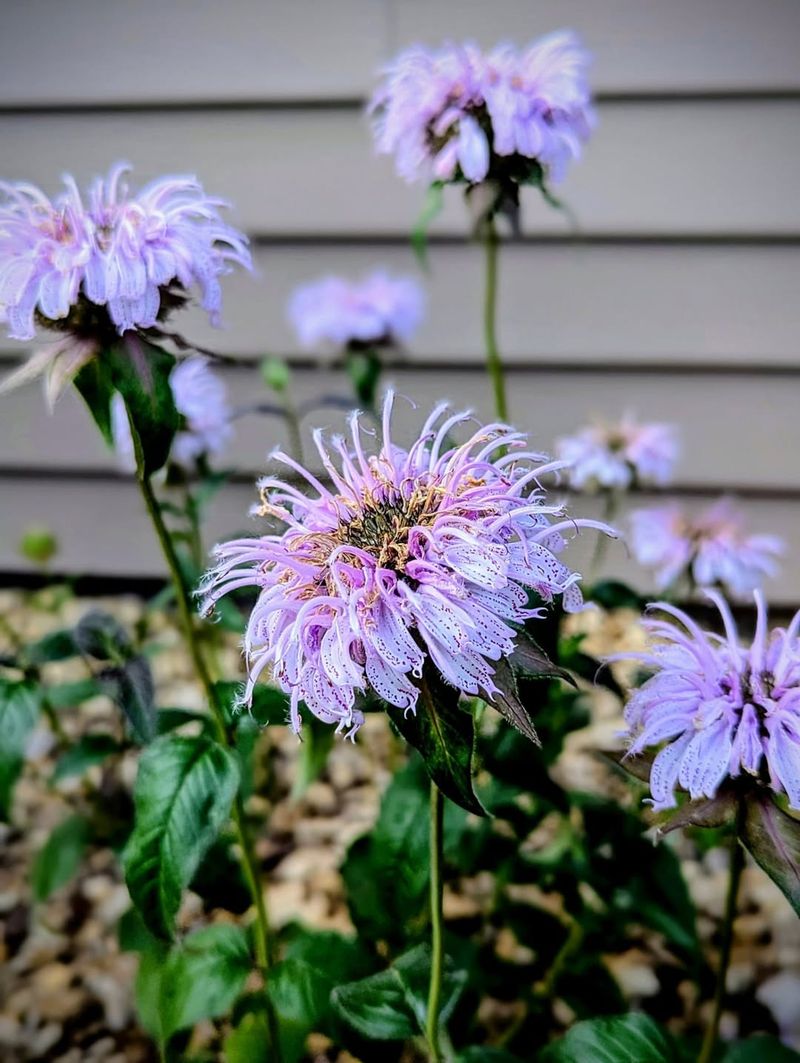
Wild Bergamot has a reputation for stopping pollinators in their tracks, but here is something most gardeners do not know: it also plays a real role in making yard edges less welcoming to ticks.
Pairing Monarda fistulosa with Blackhaw Viburnum (Viburnum prunifolium) creates one of the most effective and visually stunning native combinations for Michigan yard borders.
Wild Bergamot grows two to four feet tall with lavender-purple flowers that bloom all summer long. The aromatic foliage contains natural oils that many insects find off-putting, which adds a subtle but real chemical layer to your yard-edge defense.
Blackhaw Viburnum, on the other hand, brings serious structure. It grows eight to fifteen feet tall with dense, spreading branches, creamy white flower clusters in spring, and dark berries in fall that birds absolutely cannot resist.
Planted together, Bergamot fills the lower zone while Blackhaw creates a tall, solid canopy above. That vertical layering is critical.
Ticks typically move from vegetation to passing hosts, so when the ground-level and mid-level zones are both densely planted with aromatic or physically blocking natives, tick movement slows significantly.
Both plants thrive in full sun to partial shade and handle Michigan’s variable soils well, including clay.
Space Wild Bergamot about eighteen inches apart in drifts of three to five plants and Blackhaw Viburnum roughly six to eight feet apart behind them. Divide Bergamot every three years to keep it vigorous and full.
The combination also looks spectacular from spring through fall, making your yard edge a neighborhood highlight rather than just a border.
4. Sweetspire And Blue Flag Iris
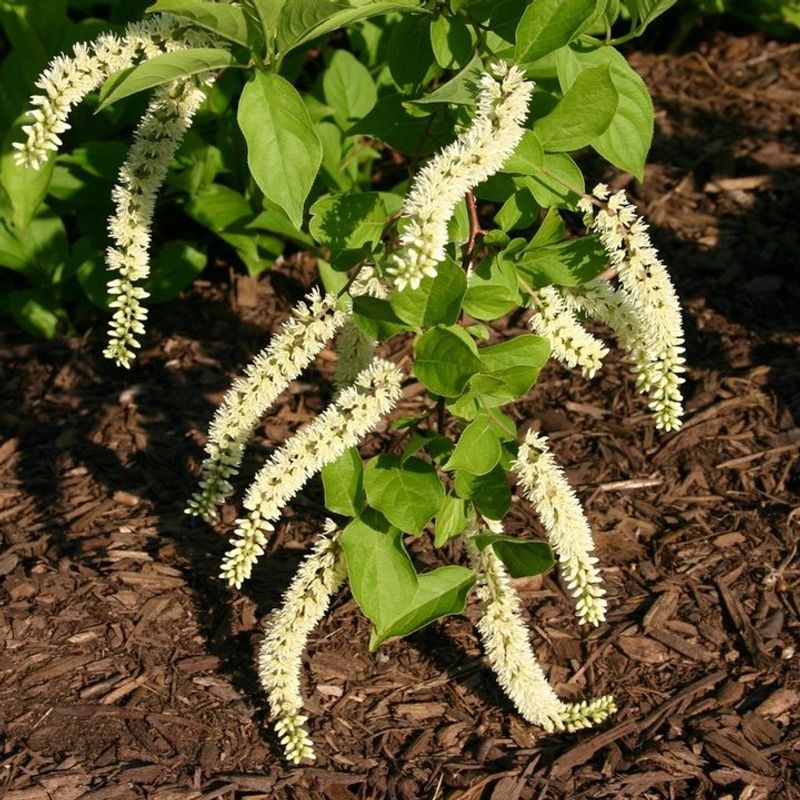
Wet yard edges and low-lying borders can feel impossible to plant well, but Sweetspire and Blue Flag Iris turn those soggy problem spots into one of the most beautiful and functional tick-deterring plantings in your entire yard.
Virginia Sweetspire (Itea virginica) is an arching shrub that reaches three to five feet tall, with fragrant white flower spikes in early summer and brilliant red-orange fall foliage that rivals anything in the nursery trade.
Blue Flag Iris (Iris versicolor) is Michigan’s native wetland iris, growing in dense upright clumps of sword-shaped leaves up to three feet tall. Those thick, overlapping leaves form a physical wall that is genuinely hard for ticks to navigate through.
Combined with the arching, low-hanging branches of Sweetspire, the two plants together create a layered, ground-hugging coverage that eliminates the open, grassy microhabitats ticks need to thrive.
What makes this pairing especially smart is the soil preference both plants share. They both love consistently moist to wet conditions and perform beautifully in rain gardens, along drainage swales, or near pond edges where other shrubs struggle.
Full sun to partial shade works well for both, though Blue Flag Iris tends to bloom most heavily in full sun.
Space Sweetspire about three feet apart and Blue Flag Iris clumps roughly eighteen inches apart in front of or alongside them. Sweetspire spreads slowly by suckers, gradually thickening the border over time with zero effort from you.
Minimal maintenance is needed beyond cutting back old Iris foliage in late fall to keep things tidy and fresh heading into spring.
5. Layered Combination Strategy For Maximum Coverage
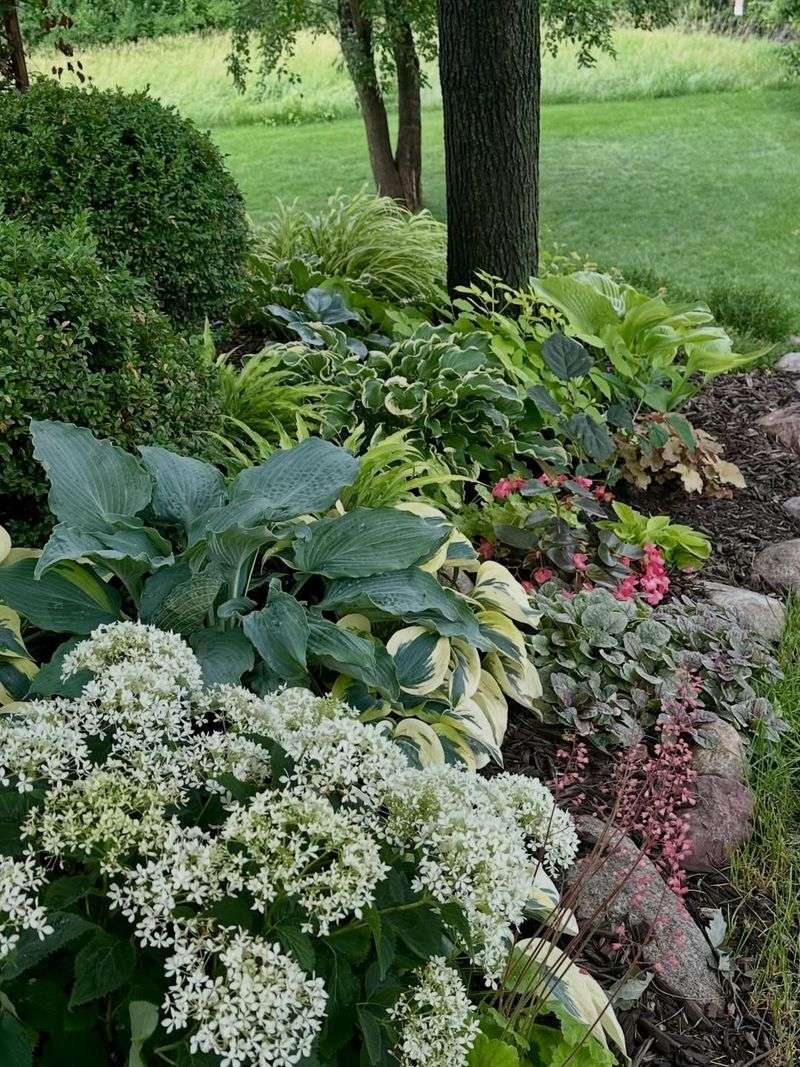
Single-plant borders are fine, but a truly effective natural tick barrier uses layers.
Stacking groundcovers, low shrubs, and taller shrubs together in a coordinated planting scheme is the single most powerful chemical-free approach Michigan homeowners can take to keep ticks from crossing into their yards.
Think of it like building a wall with three floors. The ground floor features low-spreading plants like Northern Bush Honeysuckle that hug the soil and eliminate open ground.
The middle floor uses mid-sized shrubs like Mapleleaf Viburnum or Spicebush to create dense canopy coverage from two to six feet up.
The top floor brings in taller plants like Blackhaw Viburnum or small native trees that shade everything below and complete the barrier.
Alternating species within each layer also matters. Mixing Leatherwood with Spicebush, or Wild Bergamot with Sweetspire, creates biodiversity that supports birds, beneficial insects, and other natural tick predators.
Guinea fowl and opossums are known to consume large numbers of ticks, and a diverse native planting attracts both. The more life your border supports, the more naturally the tick population gets managed.
For spacing in a layered design, leave about two feet between groundcover plants, three to four feet between mid-layer shrubs, and five to eight feet between taller background plants.
Stagger the rows so plants overlap slightly when viewed from the side, creating no visible gaps in coverage.
Mulch all bare soil between young plants with three inches of wood chips at installation. This suppresses weeds, retains moisture, and speeds up establishment so your layered barrier fills in faster and stronger.
6. Low-Growing Groundcovers To Complete The Layer
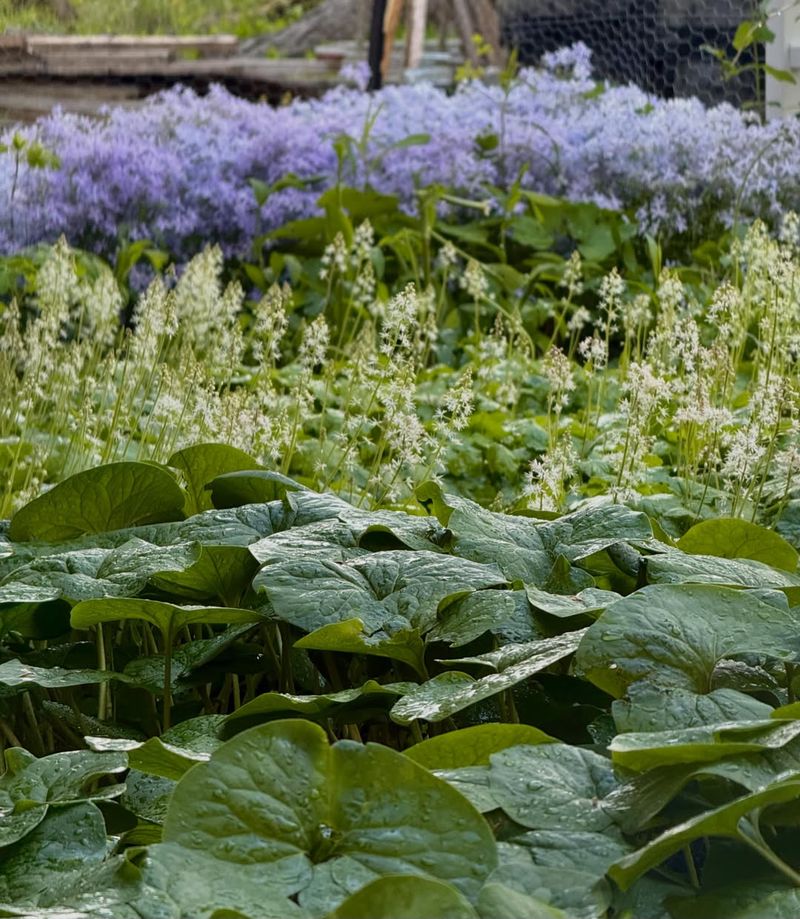
No layered tick barrier is truly complete without a strong groundcover base.
Low-growing native plants like Wild Ginger (Asarum canadense), Foamflower (Tiarella cordifolia), and Green-and-Gold (Chrysogonum virginianum) fill in the spaces under taller shrubs, covering bare soil that would otherwise become an entrance for ticks.
Wild Ginger is a Michigan woodland native that spreads slowly into a thick, glossy mat of heart-shaped leaves. It tolerates deep shade better than almost any other groundcover and thrives in moist, rich soil under trees or along shaded fence lines.
Foamflower is equally impressive, producing delicate white flower spikes in spring while its maple-like leaves form a dense, weed-suppressing carpet all season.
Green-and-Gold brings cheerful yellow blooms and handles both sun and shade with an easygoing adaptability that makes it useful almost anywhere in the yard.
What all three share is the ability to cover ground completely, leaving no open patches of soil or leaf litter where ticks love to wait for passing hosts.
A dense groundcover mat essentially removes the tick’s preferred resting and ambush habitat right at the base of your shrub border.
Space Wild Ginger and Foamflower about twelve inches apart for coverage within one to two growing seasons. Green-and-Gold can go slightly wider at eighteen inches since it spreads more aggressively.
All three prefer well-drained, organically rich soil and perform best in partial to full shade beneath the taller shrubs in your barrier planting.
Adding these groundcovers is genuinely the finishing touch that transforms a good native border into a truly complete, working tick barrier.