A Silent Eight-Legged Takeover Is Happening In Mississippi Yards
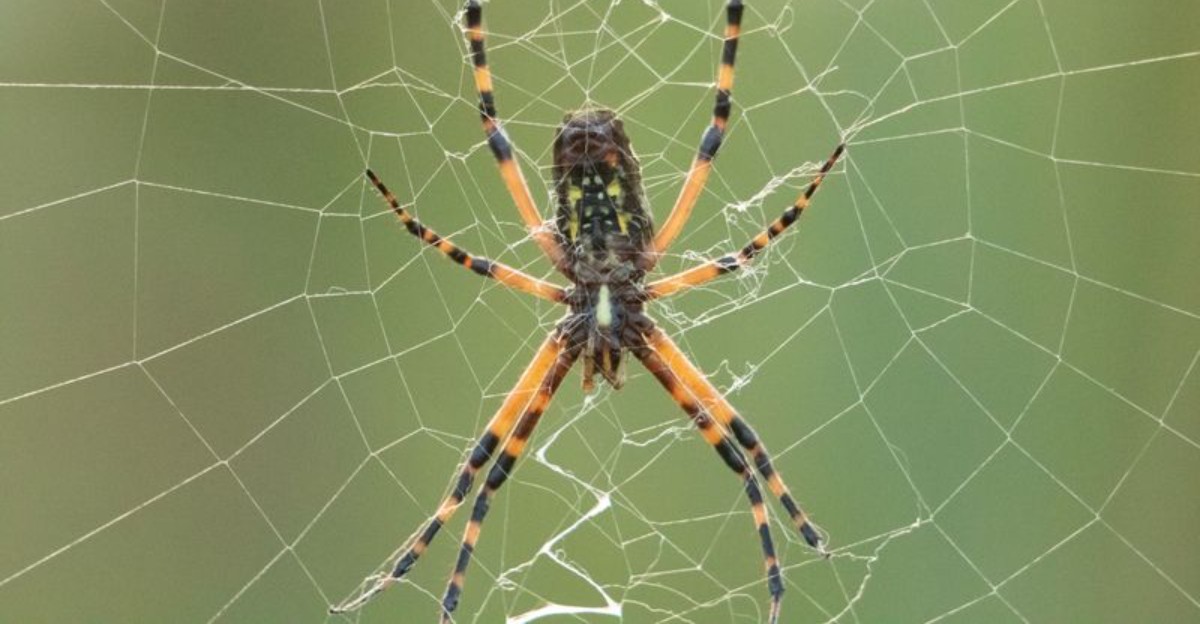
A single strand brushes your forehead before sunrise breaks. Mornings in Mississippi hide more motion than you expect. Silk stretches from porch rail to crepe myrtle overnight.
You missed it happening, yet there it stands. Backward steps down the driveway become pure instinct. Spring hatchlings spent months growing bigger near you. Summer heat pushed their bodies past ordinary limits.
Now they weave webs wide enough to catch you. Night shifts rebuild what daylight quietly tears apart. Silent crews work while your porch light dims. Humidity across Mississippi fuels growth homeowners rarely notice.
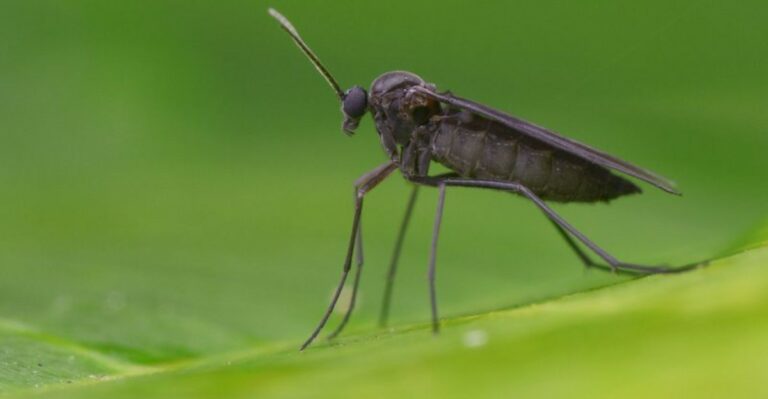
Gnats swarm thick, drawn straight toward sticky traps. Respect replaces panic once you know the architects. Curiosity now outweighs that fast backward dance. Neighbors notice the same silk lines appearing.
Size alone explains why panic feels justified. This arrival did not happen overnight. Ignore this silk network today, and tomorrow’s surprise arrives faster, thicker, and much stickier still.
September Weather Sets The Stage For Web Season
Late summer loosens its grip on Mississippi, and the backyard air changes almost overnight. Warm afternoons, cooler evenings, and clouds of gnats build ideal conditions for web spinners to bulk up fast.
Orb weavers that hatched back in spring were specks then, easy to overlook on a fence rail. Months of mosquitoes and moths later, their bodies swell to marble size and their webs follow suit.
Bigger spiders need bigger nets, which is why a walkway that felt clear in July is now crossed by webs. They did not arrive in a wave; they simply grew into view.
Breeding season adds to the traffic. Males wander in search of mates, and females stake out prime real estate between shrubs, mailboxes, and porch rails where insects travel. Both are focused on food and each other, not on people.
Gulf Coast humidity helps as well, since damp air keeps silk stretchy and sticky through the night. Humid climates like Mississippi’s may support larger webs, since damp air keeps silk more elastic, though prey availability plays a role too.
Dew is the other September giveaway. Cool mornings coat each strand in water droplets, turning invisible traps into glittering hoops across the lawn.
Timing is predictable enough to plan around. Keep a stick near the door, route foot traffic away from shrub edges, and expect activity to fade after the first real cold snap.
Seeing the pattern takes the spook out of it. What looks like a takeover is a yearly growth spurt that peaks around football season and winds down on its own.
Yellow Garden Spiders Flash Their Zigzag Signature
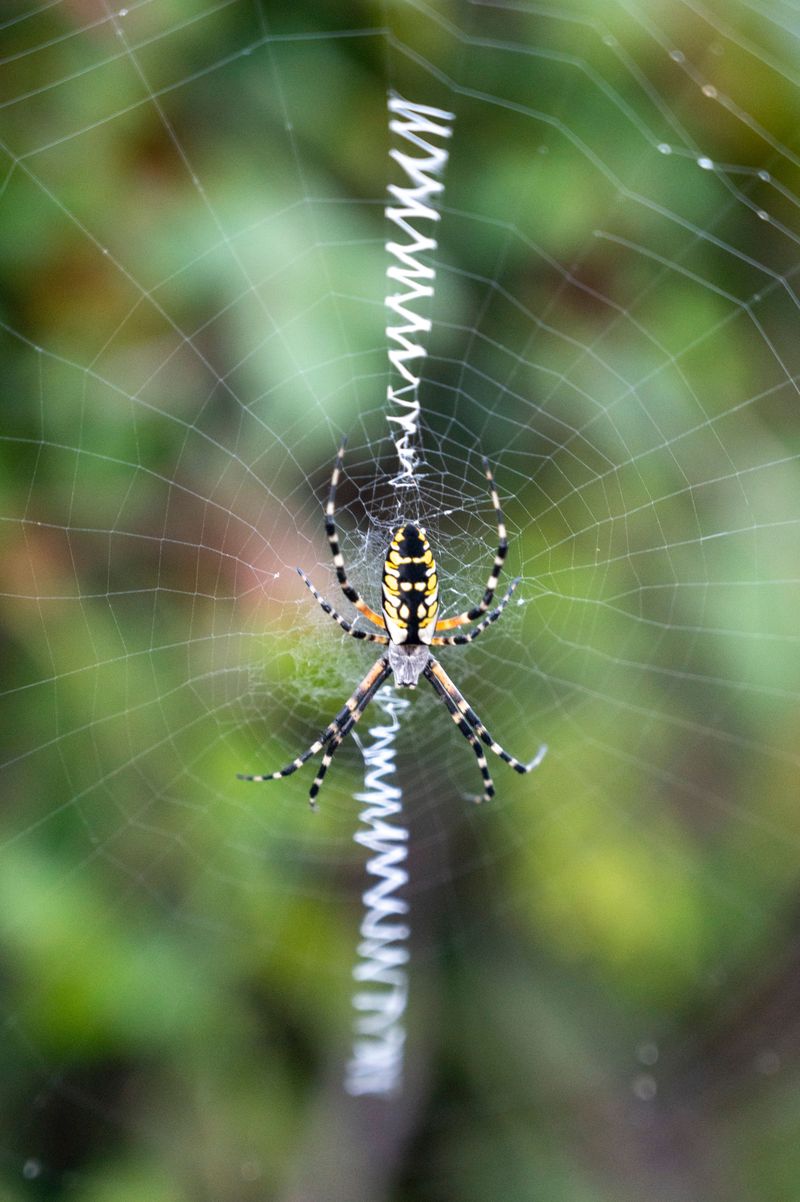
Bold black-and-yellow, hanging head-down in a web the size of a dinner plate. Argiope aurantia, the yellow garden spider, is the one that catches Mississippi gardeners’ attention.
Look at the center of her web and you will spot a thick zigzag ribbon of silk running top to bottom. Scientists call it a stabilimentum, and ideas about its purpose range from warning birds away to reflecting light that pulls insects in.
Your Mississippi Garden Changes Every Week. Your Plan Should Too.
Gardening in Mississippi changes quickly throughout the season. Every Friday you’ll receive a simple weekly plan showing exactly what to plant, prune, fertilize, harvest, and protect so you never miss the right timing.
She sets up among okra rows, zinnias, and azalea hedges, waiting for grasshoppers and leafhoppers to stumble into her lines. When something lands, she rushes over, wraps it in silk, and settles in for a long meal.
The size gap between the sexes surprises people. Females stretch over an inch in body length, while males stay small, drab, and hover at the web edge hoping for a safe approach.
Bites are uncommon and typically mild, often compared to a bee sting, though reactions can vary, and she would rather drop to the ground and hide than tangle with a human. Nudge her web gently and she bounces it hard, a bluff that unsettles predators.
Come autumn she fastens a papery brown egg sac to a stem or eave, holding hundreds of spiderlings until spring warmth arrives.
Gardeners in the know leave her be. One garden spider handles a steady stream of cabbage moths and cucumber beetles, which is free labor for a vegetable patch and one fewer reason to reach for a spray bottle.
Golden Silk Orb Weavers Rule The Shady Tree Gaps
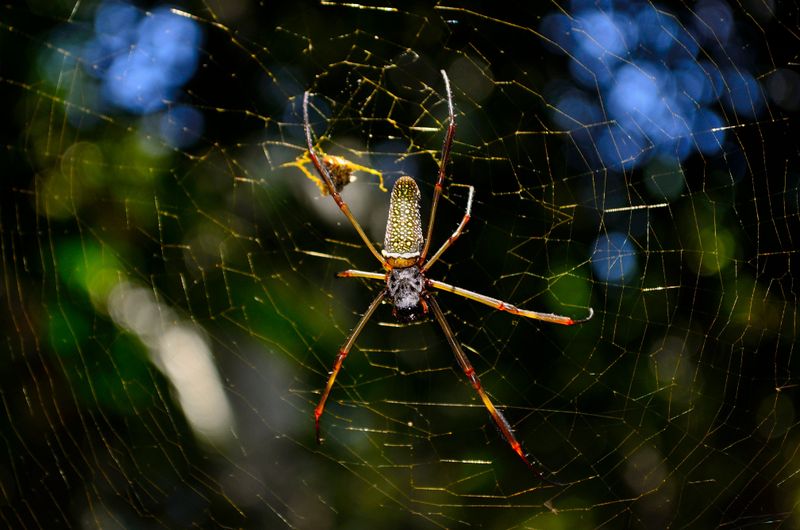
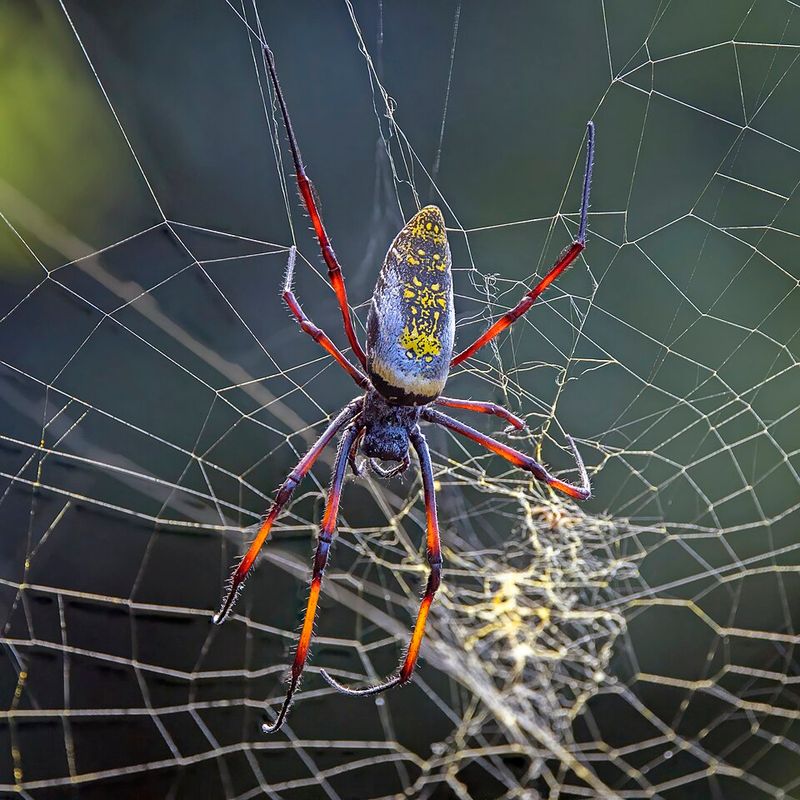
Locals call it the banana spider, and anyone who has walked a wooded trail in south Mississippi has probably ducked under one. Trichonephila clavipes, the golden silk orb weaver, spins webs with a faint yellow shimmer.
Hold a strand up to September sunlight and the color shows clearly. That golden tint comes from pigments in the silk.
Some researchers suspect it may attract pollinating insects or help the web blend into sun-dappled leaves, though the exact evolutionary purpose remains debated among scientists.
Her legs are long and slender, with dark tufts of hair at the joints that look like tiny bracelets. Her body is stretched out, orange-brown, and speckled with pale marks underneath.
Webs can get large, with the full structure, including scaffolding lines, sometimes spanning several feet between pine saplings, shed corners, and clothesline posts.
Tangled scaffolding on both sides of the main wheel catches insects that bounce off, which makes the whole structure easy to walk into face first.
Fun bit of history: people once tested this golden silk for fabric and fishing line, and it ranks among the toughest natural fibers pound for pound. Mississippi’s humid woods suit the species well, and September is when females reach full size.
She tends to stay in one spot for weeks, patching her web rather than starting fresh nightly. Several pinhead-sized males may share the same structure, and they cause her no trouble.
Holding a stick out in front works wonders on shady paths. She has no interest in chasing anyone and scoots to the web edge when disturbed.
Spotted Orb Weavers Work The Porch Light Shift
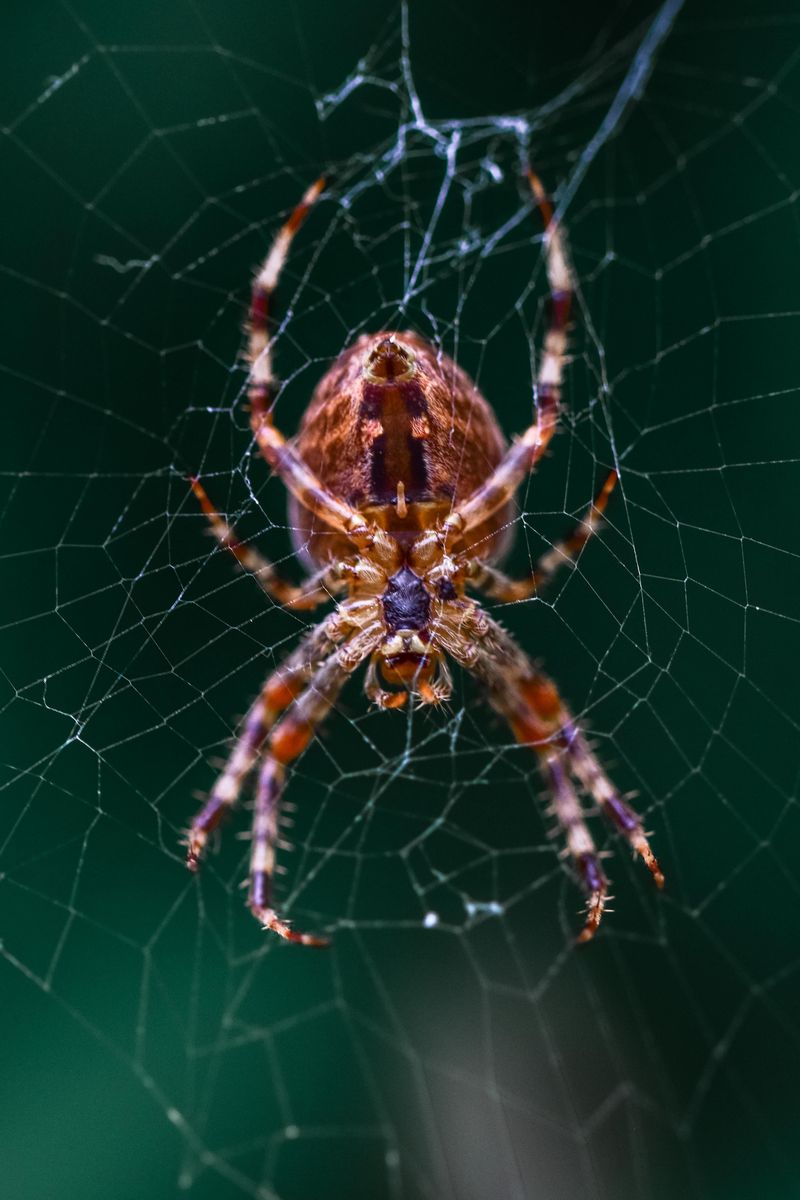
Ever flipped on the porch light and found a plump, bristly spider strung across the doorway that was not there at dinner? Neoscona crucifera, the spotted orb weaver, keeps a strict night schedule.
Construction starts at dusk. She lays out spokes, spirals in sticky line, and typically has a working web ready within an hour.
By sunrise the web is gone, eaten and recycled, and she is tucked under a shutter or gutter lip. That daily disappearance is why homeowners assume a brand new spider shows up each evening.
Her coloring runs rusty brown to burnt orange with a pale pattern on the abdomen, and the legs look hairy up close. Body length can reach roughly three quarters of an inch by September in many populations, when females fatten up before laying eggs.
Porch bulbs are the whole attraction. Moths, midges, and beetles swarm the glow, and she simply hangs her net in the flight path, which turns lit doorways into prime spider real estate.
Nightly rebuilding also keeps the silk tacky, since older strands lose their grip on struggling insects fairly quickly.
Occasionally one wanders indoors through a propped door. Scoop it into a cup, slide paper underneath, and set it loose in a shrub outside.
Swapping a white bulb for a warm yellow one cuts insect traffic, and the spiders usually relocate within a few nights. Motion-sensor fixtures work just as well and trim the power bill.
Nightly Rebuilds That Quietly Trim Your Bug Count
Think of a web as a free, biodegradable bug trap that reassembles itself. Nobody hands these spiders a paycheck, yet they trim the insect crowd around your tomatoes and patio chairs.
Mosquitoes, gnats, moths, stink bugs, and leafhoppers land on the menu. Plenty of those insects chew garden leaves or pester people outdoors, so the spiders are working the same shift you are.
Silk costs a spider real energy, so many species eat the old web and reuse the proteins. Recycling lets them rebuild night after night without hunting extra food first.
Spinning one wheel often takes roughly thirty to sixty minutes, according to general entomological observation, and the spacing of the spiral is generally measured out by leg length. No ruler, no blueprint, just instinct polished over ages.
Leaving a few webs in place near a vegetable bed or a compost corner pays off. Fewer chewing insects means less spraying, and less spraying protects bees and ladybugs too. Gardeners leaned on that quiet help long before pesticides existed.
Rain and wind wreck webs on a regular basis, which is another reason the builders start fresh. After a thunderstorm you may catch them stringing new frame lines in the early evening light.
Watching the process with a flashlight makes a solid September activity for curious kids. Stand a few feet back, keep the beam low, and you get a close-up view of natural behavior on your own patio.
Sharing The Yard Without The Panic
Startling is normal; panic is optional. A few simple habits make September walks around a Mississippi yard far less dramatic. Teaching kids to look before lunging through a gate helps too.
Carry a stick or rolled magazine on early trips to the mailbox, sweeping it lightly ahead at face height. Dew makes silk visible, so a glance toward the low sun often reveals the lines first.
Relocating beats demolishing when a web blocks a doorway. Coax the spider onto a stick or into a cup, carry her to a shrub twenty feet off, and she will rebuild by nightfall. Wear gloves if handling feels uncomfortable.
Orb weavers have weak eyesight and depend on vibration, so they read a human hand as a threat and back away. Bites are rare, and they tend to occur when a spider gets pressed against skin inside a glove or shoe.
Egg sacs tucked under eaves and rails are worth noticing. If you would rather not host a nursery next spring, move the sac to a brushy corner of the yard instead of the porch.
Trimming shrubs back from walkways, clearing clutter near doors, and adjusting outdoor lighting go further than any spray can. Chemicals also knock back the helpful insects you want hanging around.
By November, cold weather closes the season on its own. Females finish laying, the webs come down, and the yard resets until a new batch hatches in spring.