6 Arizona Fruit Trees That Keep Producing When Summer Heat Peaks
Almost every other fruit tree in Arizona has essentially given up by July.
The stone fruits are finished. The apples are waiting for cooler air. And most backyard trees are just surviving, not producing.
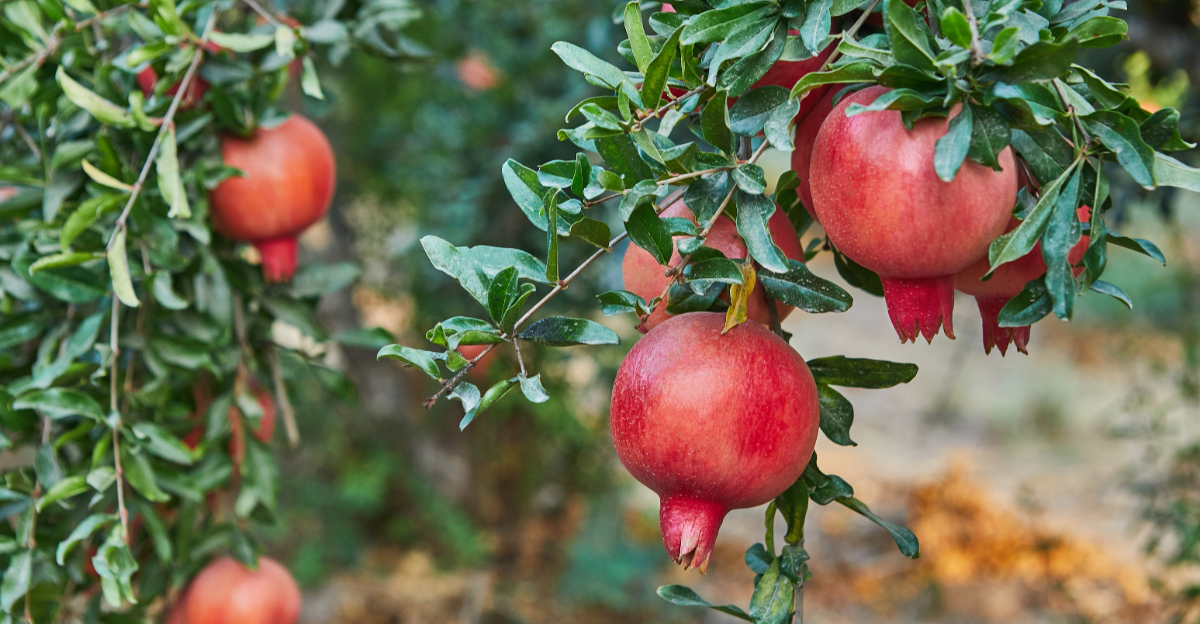
But walk into the right yard on a 112-degree Phoenix afternoon and something surprising is happening. Fruit is ripening. Trees are loaded. The harvest is actually better because of the heat, not despite it.
Many people never figure out which trees do this, and they spend years fighting the climate instead of using it. Arizona summers are brutal for the wrong plants and genuinely ideal for the right ones.
The difference comes down to origins, root depth, heat tolerance, and one simple principle most gardeners skip entirely.
Six trees have figured out how to thrive when everything else taps out. The question is whether your yard has any of them yet.
1. Fig Trees Thrive In Warm Dry Air
Eleven thousand years of cultivation is a pretty solid track record.
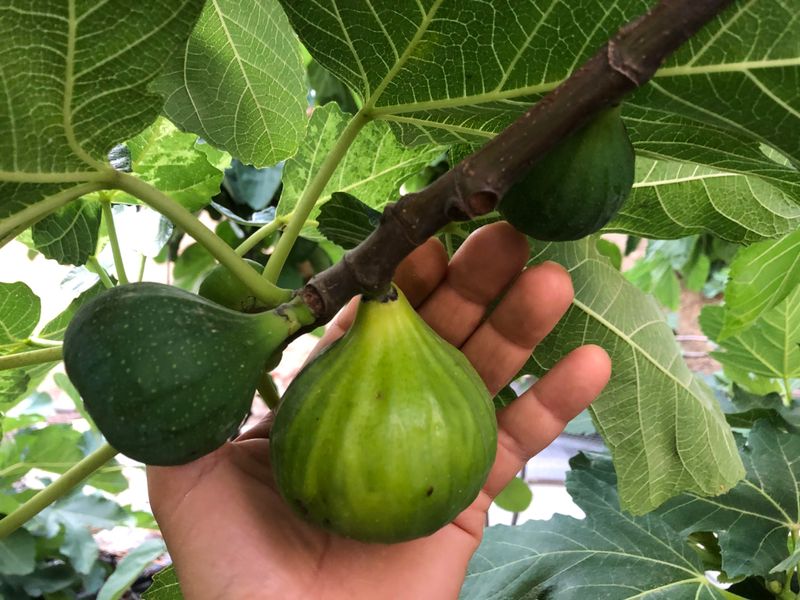
The fig tree has been producing for humans since before most civilizations got started, and the warm, dry air of an Arizona summer is almost exactly the environment it was shaped for.
Store-bought figs are fine. A fresh fig from a backyard tree on a hot afternoon in Phoenix is a completely different experience.
Figs perform best in low desert zones below 2,500 feet in elevation, where full sun and sustained heat ripen the fruit properly.
Brown Turkey and Black Mission are the most widely recommended varieties for Arizona because both handle alkaline desert soils reliably and develop exceptional sweetness under intense sun.
The same heat that makes other fruit trees struggle is actually concentrating sugars in a fig. The desert is doing the work for you.
Summer irrigation is where most fig growers make their biggest mistake.
Without consistent moisture during fruit development, figs split or drop before they fully ripen, and a split fig on the ground is a genuinely sad sight after months of waiting.
A three to four inch layer of organic mulch around the base of the tree retains soil moisture between waterings and keeps roots cooler during peak afternoon heat.
That mulch layer makes a measurable difference in fruit quality and consistency.
Water established trees deeply every five to ten days through summer, adjusting for rainfall and soil conditions.
Young trees need more frequent attention until their root systems develop enough reach to access deeper moisture independently.
Eleven thousand years of history is impressive, but the fig’s best Arizona chapters are still being written in backyards across the Valley.
2. Date Palms Love Desert Heat
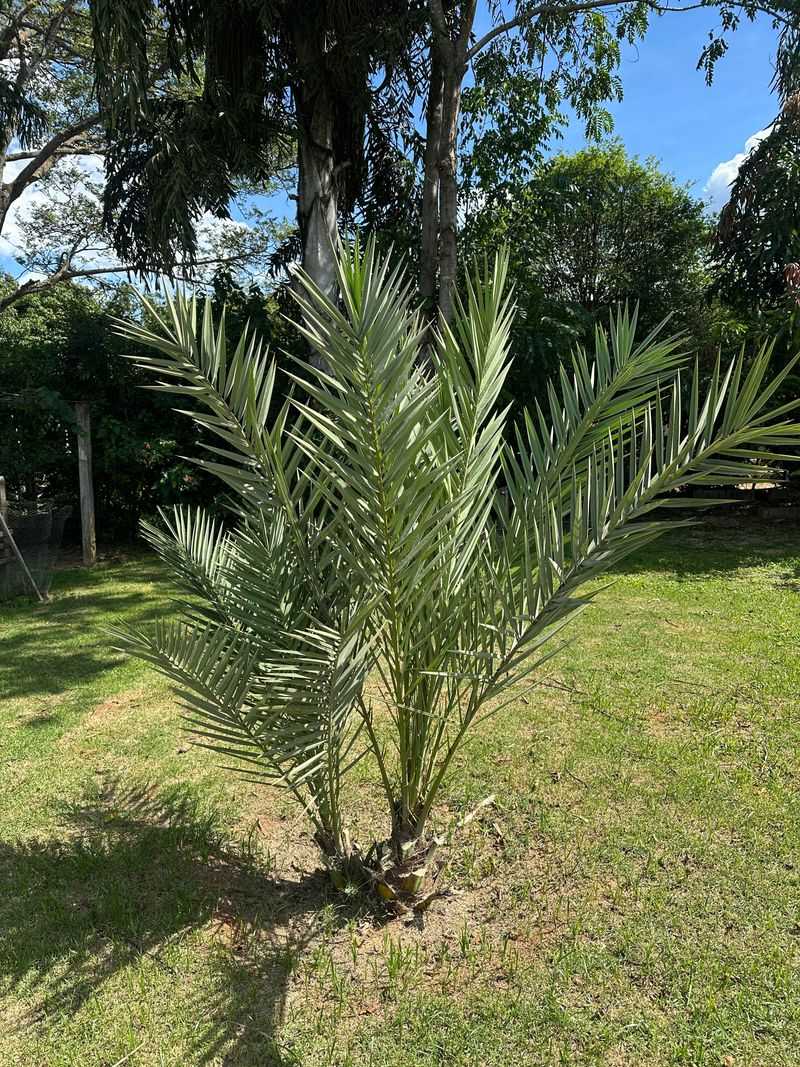
Yuma County has been growing dates commercially for over a century. That is not a coincidence.
It is a direct result of the date palm’s natural origins in the Middle East and North Africa, where extreme heat and minimal rainfall are simply the conditions the tree evolved in.
Arizona’s low desert did not need to be modified for date palms. It was already home.
Your Arizona Garden Changes Every Week. Your Plan Should Too.
Gardening in Arizona changes quickly throughout the season. Every Friday you’ll receive a simple weekly plan showing exactly what to plant, prune, fertilize, harvest, and protect so you never miss the right timing.
Medjool and Deglet Noor are the two most commonly grown varieties in Arizona home gardens and commercial operations.
Medjool dates are large, caramel-soft, and intensely sweet in a way that makes them the clear star of the two. Deglet Noor dates are slightly smaller and drier with a more delicate, nuanced flavor.
Both need a long, hot growing season to fully develop their sugars, and Arizona summers deliver that kind of sustained heat month after month without interruption.
Water requirements for date palms consistently surprise new growers.
Once established, these trees are remarkably efficient at accessing deep soil moisture and need far less supplemental irrigation than their fruit output would suggest.
Deep, infrequent watering every ten to twenty-one days during summer handles mature trees well. Young palms need more frequent attention during their first two years while root systems are still developing their depth and reach.
Space planning cannot be treated casually with date palms. Mature trees reach fifty to eighty feet tall with canopy spreads of twenty to forty feet.
That is a significant long-term commitment to a planting location, and choosing the wrong spot creates problems that grow larger every year.
Full sun is a genuine requirement, not a preference. A date palm in shade is a date palm that is not producing its best fruit, and no amount of extra water changes that equation.
3. Pomegranate Handles Heat With Deep Water
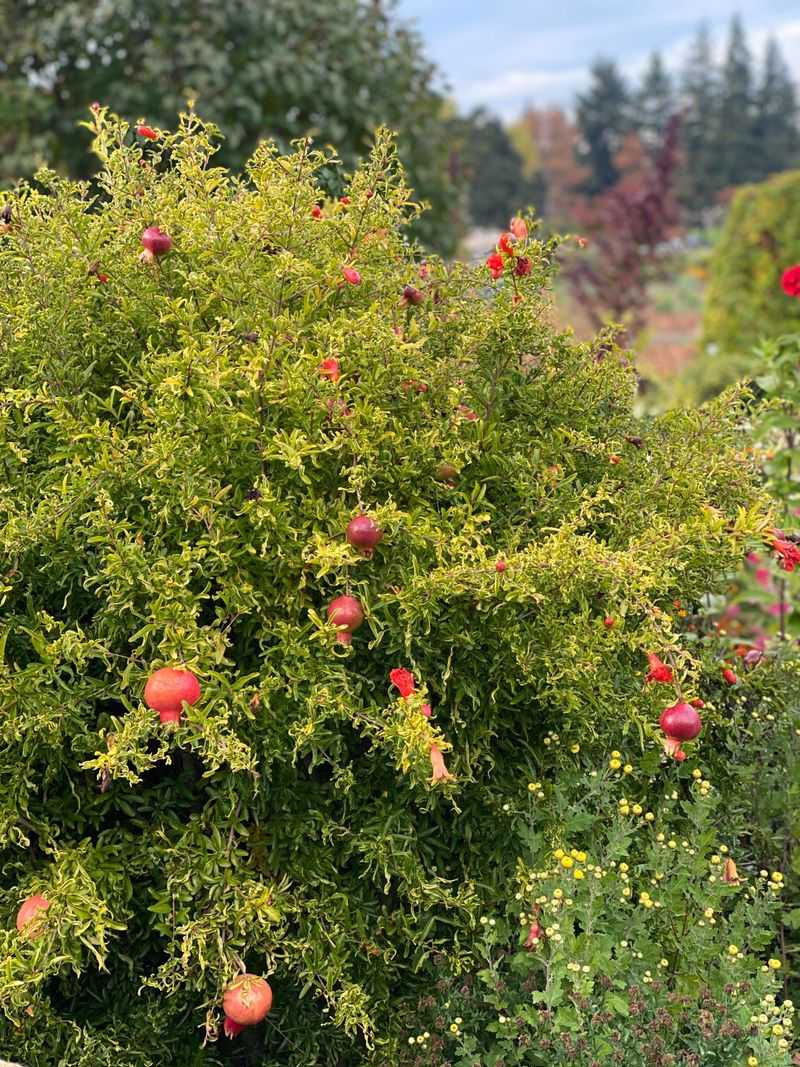
Some plants tolerate Arizona summers. The pomegranate genuinely enjoys them.
This tree originated in the Middle East and Central Asia, where dry heat and rocky soil are the baseline conditions, not the exception.
Triple-digit temperatures do not slow it down. It keeps flowering and setting fruit while most other trees in the yard have stopped doing anything useful.
The difference between a good pomegranate harvest and a great one comes down to how the tree is watered. Shallow, frequent irrigation produces weak surface roots that struggle when the heat really builds.
The smarter approach is deep, slow watering that pushes moisture down at least eighteen to twenty-four inches into the soil.
Established trees in the low desert typically need water every seven to fourteen days during peak summer, adjusted for soil type and microclimate.
Variety selection matters more than most first-time growers realize.
Wonderful is widely recommended for Arizona low desert gardens because it produces large, deeply colored fruit with a rich, tart flavor that only gets better after a long hot growing season.
Grenada and Sweet are strong alternatives. Pomegranates grown in Arizona often develop higher sugar content than those grown in milder climates, a direct payoff from the intense sun exposure that makes everyone else uncomfortable.
Once established, pomegranates are genuinely forgiving.
They handle alkaline soils, bounce back from drought stress faster than most fruit trees, and tolerate reflected heat from walls and pavement without visible complaints.
Plant one in full sun with room to spread, and it quietly builds toward a spectacular fall harvest while you are still sweating through August. Not a bad deal for a tree that actually likes the heat.
4. Citrus Keeps Producing With Smart Irrigation
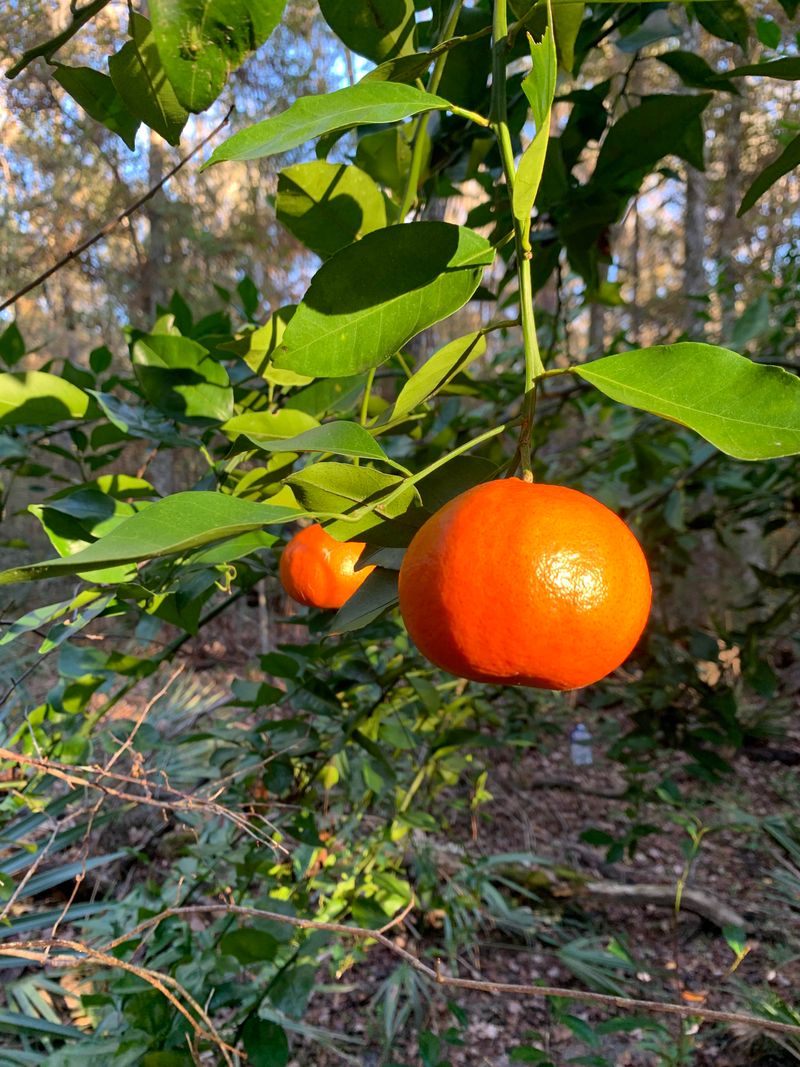
Drive through any established Phoenix neighborhood and citrus trees appear in nearly every backyard. Orange, lemon, grapefruit, tangerine.
They are practically part of the architectural vocabulary of Arizona living.
The low desert climate is one of the best citrus-growing environments in the entire country, and summer heat is a direct contributor to the sweetness and juice content that makes Arizona citrus genuinely outstanding.
Smart irrigation is the variable that separates thriving citrus trees from struggling ones during Arizona summers.
Citrus actively setting and developing fruit is not drought-tolerant, and pulling back on water during that critical window costs the harvest.
Deep watering every seven to fourteen days for mature trees is the working guideline, with adjustments for soil type, tree size, and current temperatures.
Sandy soils dry out faster and need more frequent attention than heavier soils. Getting this rhythm right is the foundational skill for serious citrus production.
Navel oranges, Valencia oranges, Ruby Red grapefruit, Eureka lemons, and Satsuma mandarins all perform well in Arizona low desert gardens.
Each variety has slightly different requirements, so matching the selection to the specific elevation of the planting site matters more than many first-time growers expect.
Below 1,500 feet, almost all citrus varieties deliver excellent results. At higher elevations, some varieties underperform or fail to ripen fully before temperatures cool.
Sunburn on citrus fruit and bark is a genuine summer concern that catches new Arizona gardeners off guard.
Applying whitewash or diluted white latex paint to exposed trunks and lower branches reflects intense afternoon sun and prevents bark damage that compromises long-term tree health.
Mulch around the root zone keeps soil temperatures manageable and reduces evaporation between irrigation cycles.
These small adjustments add up to a tree that produces consistently through the months that challenge everything else in the yard.
5. Mulberry Offers Fruit And Shade
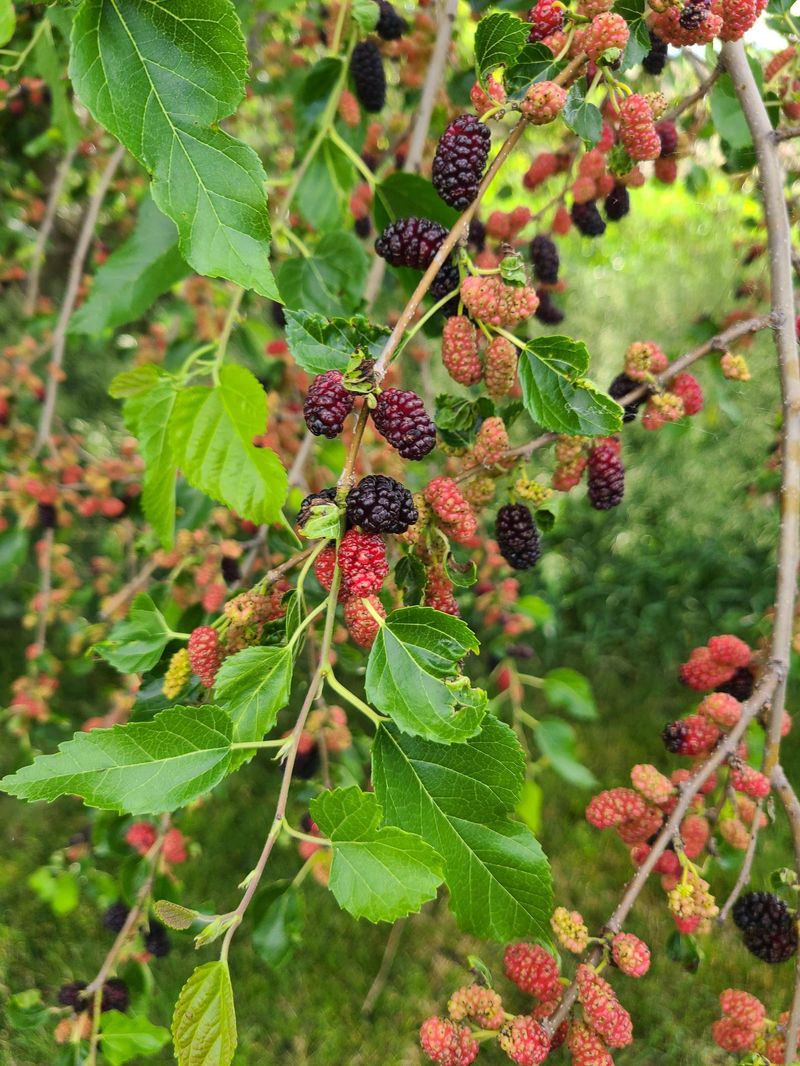
A mulberry tree in an Arizona yard is running a two-department operation all summer long. The fruit department drops sweet, juicy berries for weeks on end.
The shade department casts a wide cooling canopy that drops temperatures underneath by ten to fifteen degrees.
For anyone trying to spend actual time outdoors in an Arizona summer, that shade alone justifies the planting before a single berry appears.
The fruitless mulberry became famous in Arizona for fast-growing shade, but fruit-bearing varieties have been gaining serious attention from growers who want production alongside coverage.
Pakistani mulberry is a standout performer in the low desert, producing enormous, intensely sweet berries that can reach three to four inches in length.
Texas Everbearing mulberry offers a long fruiting window stretching from late spring into summer, extending the harvest season past what most other berries can manage in the Arizona heat.
Mulberries handle Arizona conditions well once established. Full sun suits them, and they tolerate alkaline desert soils better than many other fruit trees on this list.
Consistent summer irrigation remains important during fruit development, so watering deeply every seven to fourteen days and maintaining a generous mulch layer around the base gives the tree the steady moisture supply it needs to keep producing through the hottest weeks.
Fruit drop requires some planning ahead. Ripe mulberries fall quickly and stain concrete, pavers, and anything underneath the canopy a deep purple-red that does not come out easily.
Placing the tree over gravel or lawn makes cleanup considerably more manageable. Shaking branches over a tarp or sheet collects ripe fruit before it hits the ground.
Fresh mulberries are best eaten the same day they are picked, which is honestly one of the best arguments for growing your own that any fruit can make.
6. Jujube Handles Tough Summer Conditions
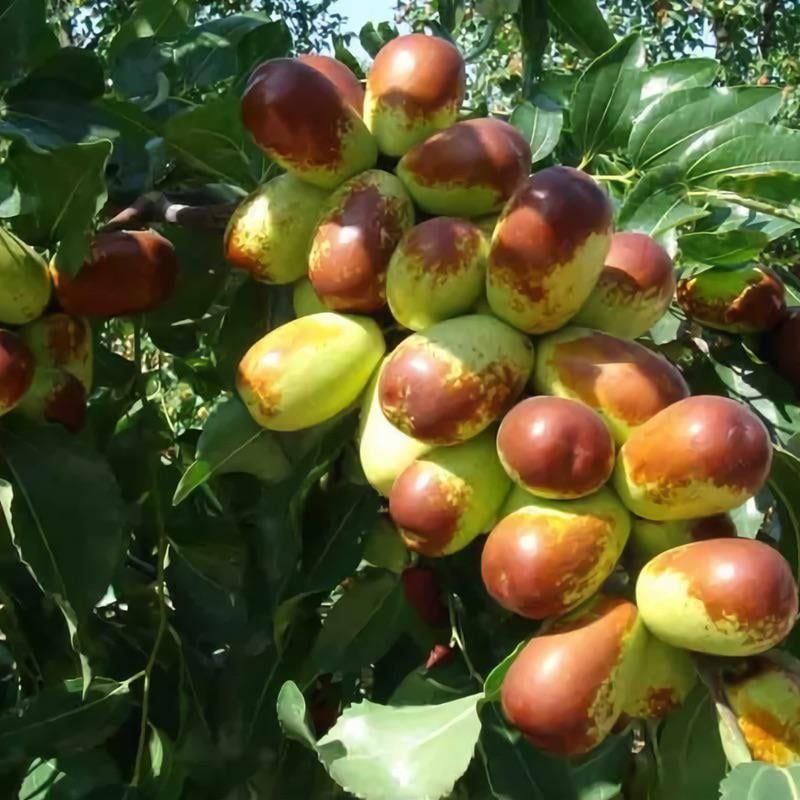
Jujube is one of the best fruit tree many Arizona gardeners have never planted, and the ones who finally try it tend to become enthusiastic advocates immediately.
Sometimes called the Chinese date, jujube produces small to medium fruits that taste like apple when fresh and develop a chewy, rich sweetness when dried.
The tree itself is built like it was specifically designed for difficult conditions, because in many ways it was.
Jujube evolved across dry, arid regions of Asia and adapted to soils that are poor, rocky, and alkaline over thousands of years.
That background makes it a natural fit for much of Arizona’s native terrain in a way that most imported fruit trees can never fully replicate.
Established jujube trees need significantly less water than citrus or fig trees, typically managing well with deep irrigation every fourteen to twenty-one days once root systems are fully developed.
In a state where water is a serious long-term concern, that efficiency matters.
Li and Lang are the two most commonly recommended varieties for Arizona gardens. Li produces large, round, sweet fruits that are excellent for fresh eating straight off the tree.
Lang leans toward a more elongated shape and performs particularly well for drying, which extends the harvest well beyond the fresh-eating window.
Both varieties perform reliably across low desert and mid-elevation zones up to about 3,500 feet, giving jujube broader geographic flexibility than most other fruit trees on this list.
Young jujube trees need consistent water during their first two growing seasons to develop the root systems that will later make them so self-sufficient.
After that establishment period, water requirements drop significantly. Chill hour requirements are low, typically between one hundred and two hundred hours, which suits Arizona’s mild winters perfectly.
Full sun produces maximum fruit every summer. Once this tree is established, it mostly just asks to be left alone and rewarded with a harvest. Most plants could learn something from that attitude.