Arizona Rose Pruning: Choosing Between the Fall Trim and the Winter Prune
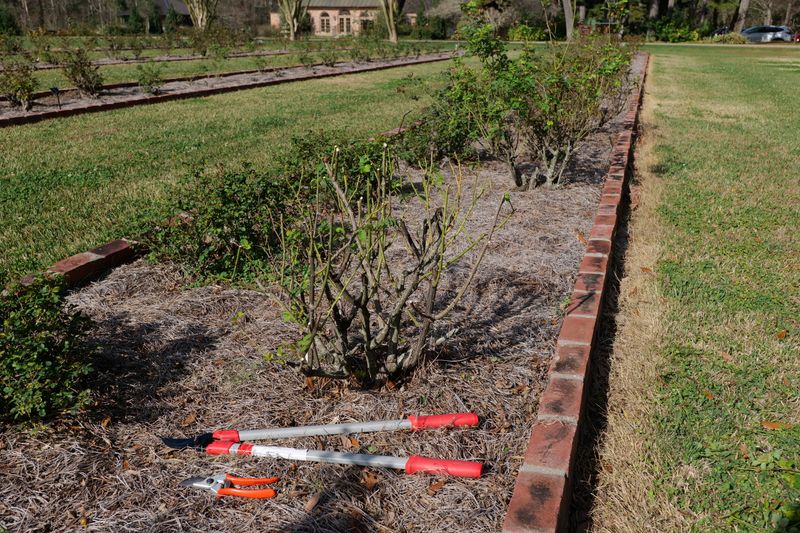
Roses in Phoenix get two different haircuts a year, and mixing them up is easy. I have to admit I used to think one big cut did everything. Arizona gardeners hear about fall pruning, winter pruning, and spring blooms all at once.
The title you may have seen promises more spring flowers from a late fall job. That promise goes further than the local advice does. A light trim in fall has a smaller goal, and the main prune comes later.
I like clearing this up before you pick up the shears. The right timing depends on where you live and what kind of rose you grow.
So which cut belongs in October, and which one waits for winter? Let’s sort it out together.
Separate the Fall Trim From the Main Prune
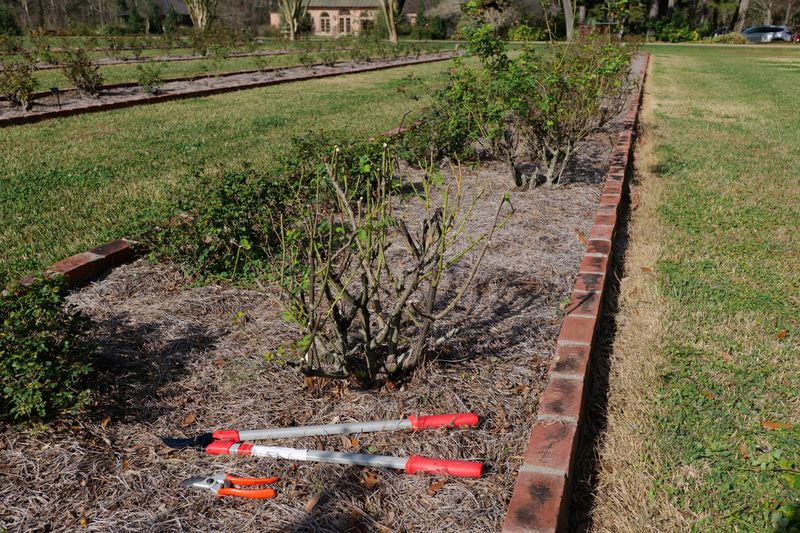
Here is the plain truth: a late fall prune is not a proven way to get more flowers next spring. Local low-desert advice treats September or October trimming as a light job.
Its aim is to encourage another fall flush of growth and blooms.
The big cut comes later. According to Mesa-East Valley Rose Society guidance, major pruning in the Phoenix-Mesa area happens between January and mid-February.
That is a separate job with a separate purpose.
Think of the fall trim as a tidy-up and the winter prune as the main event. The winter work gets roses ready for new growth.
It does not come with a promise of a bigger spring flower count.
Rose type and region matter too. Mesa-area advice treats climbers and some old garden roses differently from hybrid teas.
Colder parts of the state follow other calendars, which the next section covers.
Match the Winter Schedule to Your Arizona Region

Arizona is too big for one pruning date. In the Phoenix-Mesa low desert, the main pruning window runs from January to mid-February.
Roses there often stay mild enough that winter work comes early.
Head north and the calendar shifts. University of Arizona Cooperative Extension guidance for Yavapai County starts winter pruning in mid-March around Prescott, Prescott Valley, and Chino Valley.
The Verde Valley, including Sedona and Cottonwood, begins sooner. The schedule there says February, or after the leaves fall.
Same state, very different timing.
The Arizona Rose Societies calendar lists winter pruning starting in late December. It calls itself a guide, not a universal schedule.
Use it as a starting point, then adjust for your elevation and your own frost dates.
Keep Low-Desert Fall Trimming Light
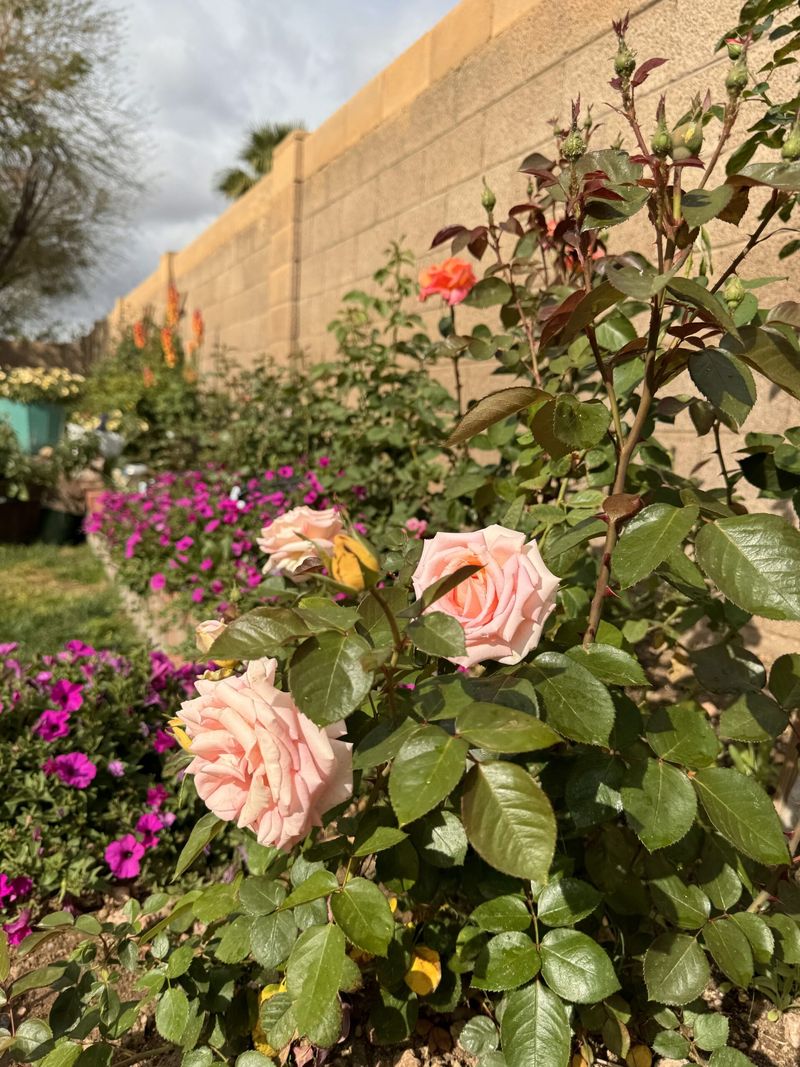
October in the low desert feels like a reward after summer. Local guidance says to wait until temperatures fall below 90 degrees F before you trim.
Cutting during a heat spike can stress the plant.
The job itself is small. The same Mesa-area rose care page describes light pruning in September or October to stimulate new fall growth.
Think of snipping back leggy tips, not cutting the bush down.
The Arizona Rose Societies calendar also lists fall pruning in September and October. It sits right before the winter pruning note.
That order tells you the fall task is the smaller one.
A hard cut now is the wrong move. It does not match the local advice, and it skips the plan for winter.
Keep the shears gentle, and aim for a fall flush rather than a spring promise.
Use Winter Pruning to Prepare for New Growth
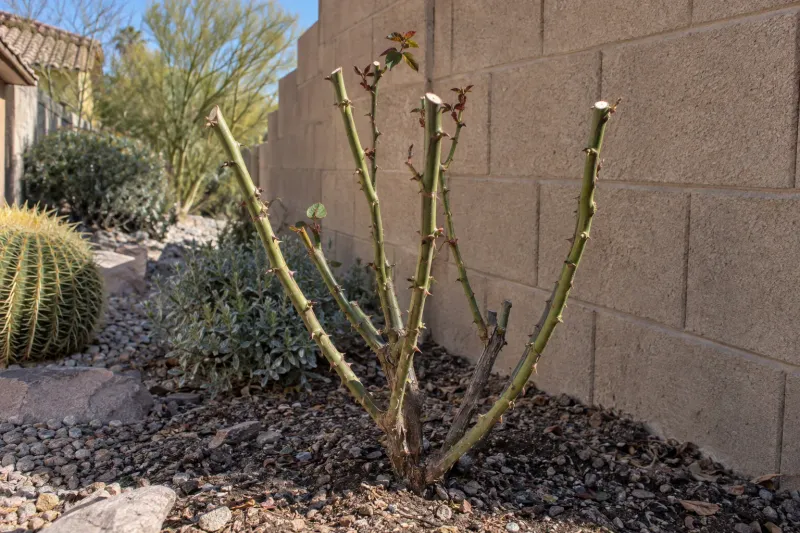
Winter pruning is the big reset. In its Yavapai County guide, University of Arizona Extension recommends pruning in late winter.
The goals are to remove remaining leaves and damaged or crossing canes, and to stimulate new growth.
Notice what that list includes. It talks about cleaning up the plant and waking up growth.
It does not promise a larger flower count in spring.
Stripping leftover leaves matters because old foliage can carry problems into the new season. Crossing canes rub each other and make wounds.
Clearing them gives the shrub an open shape.
Fresh growth is the real payoff here. Healthy new canes are where spring flowers can form.
Prune with that in mind, and let the blooms be a pleasant result instead of a guarantee.
Make Clean Cuts Without Applying One Rule to Every Rose
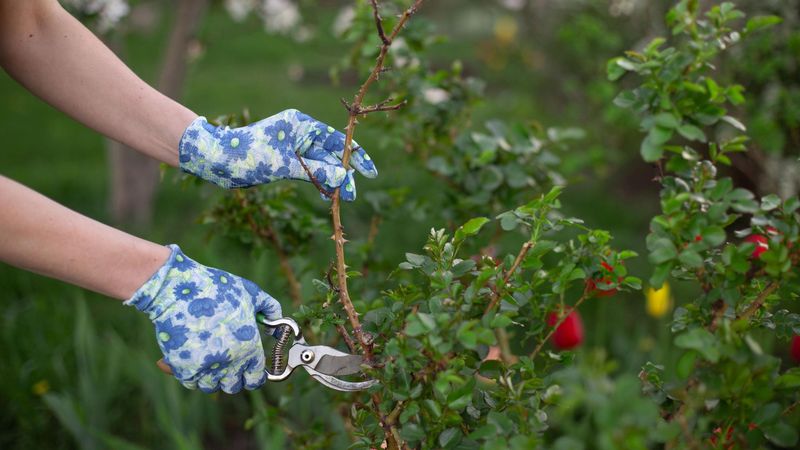
Good cuts start with the bud. For established roses, cut just above an outward-facing bud so new growth opens up the center of the plant.
Then remove canes that are damaged, crossing, weak, or diseased.
Tool hygiene matters as much as the cut. The University of Arizona guide recommends disinfecting your shears after pruning each shrub.
That keeps problems from traveling from one rose to the next.
How much to remove depends on the rose. Mesa-area advice suggests cutting back one-third to one-half of the bush in the major winter prune.
That figure fits the rose types it addresses, not every rose in the state.
Climbers and several old garden roses get different treatment from hybrid teas and floribundas. Check your variety before you cut.
One percentage for every plant is a recipe for mistakes.
Treat Bloom Expectations and Deadheading Separately
Let’s keep expectations realistic. Pruning prepares a rose for growth, and local sources describe possible benefits for bloom quality.
None of them show a measured increase in next-spring flower numbers.
Pruning even changes what you get. One Mesa-area pruning page notes that an unpruned rose can still grow and bloom, though stems may be shorter and flowers smaller.
Heavier cuts can mean fewer, larger blooms.
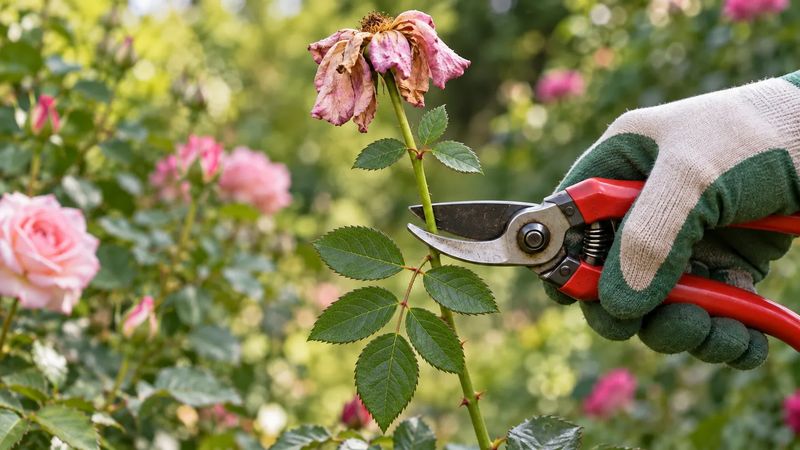
Deadheading is a different job entirely. For repeat-flowering roses, removing spent blossoms during the growing season can stimulate additional flowers.
It is a quick snip, not structural pruning.
So keep two mental lists. Deadheading happens whenever flowers fade.
Structural pruning happens on the seasonal schedule for your region.
Choose the Pruning Job That Fits Your Garden
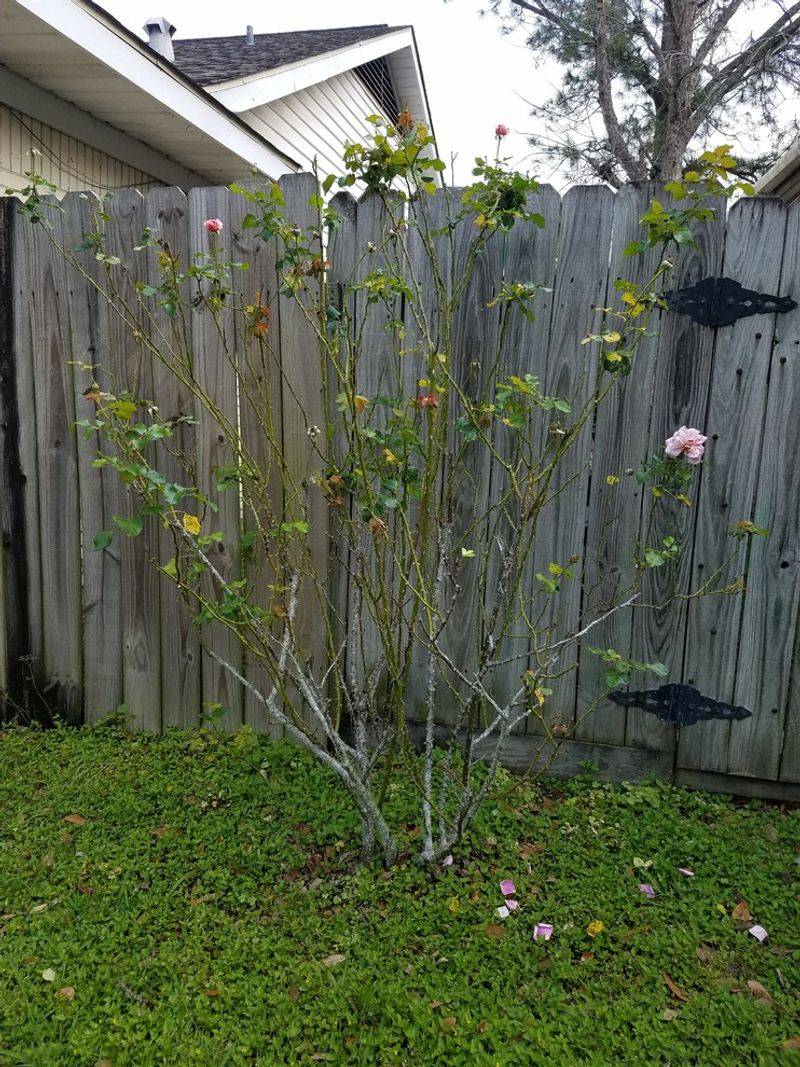
Start with where you live. A Phoenix or Mesa yard follows the low-desert advice, while Prescott and the Verde Valley follow the Yavapai schedule.
Then check your rose type, since climbers and old garden roses are not handled like hybrid teas.
Next, decide about October. If you garden in the low desert, a light trim once temperatures drop below 90 degrees F can encourage a fall flush, as local rose society guidance describes.
Skip the hard cut.
Finally, mark your winter date. Low-desert gardeners look to January through mid-February, Verde Valley gardeners to February or leaf fall, and Prescott-area gardeners to mid-March.
Use clean shears and cut above outward-facing buds.
Roses tend to forgive a gardener who follows the calendar and keeps the shears sharp. The best prune is the one made in the right season.