Who Is Responsible When a Neighbor’s Tree Falls Into Your Yard in Arizona
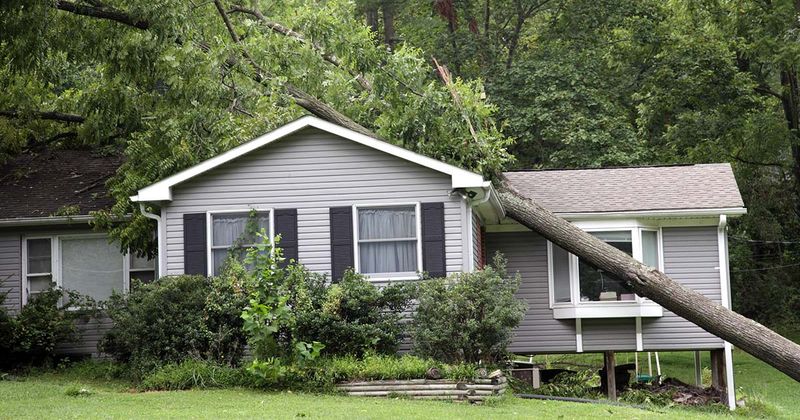
A big branch lands across your patio, and your first thought is probably who has to pay for it. The answer in Arizona is less simple than most people expect.
Legal responsibility, insurance coverage, and cleanup are three different questions. Sorting them out calmly can save you money and keep the peace with the folks next door.
Does the Neighbor Automatically Have to Pay?
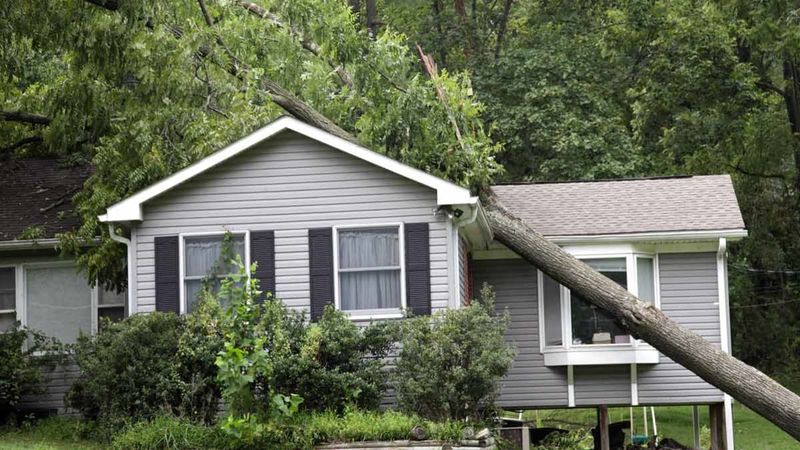
Short answer: not automatically. The tree’s origin and the place it landed do not, by themselves, settle who pays.
A storm does not settle the question either, because a storm does not automatically excuse an owner or automatically make one responsible.
The research for this article located no published Arizona appellate decision squarely deciding the ordinary case of a tree falling from one private yard into another. That does not mean no such authority could exist.
It means readers should be careful about anyone claiming a firm rule.
One Arizona case does talk about trees. Carver v.
Salt River Valley Water Users’ Association involved a tree that fell onto a car on a public highway, so it is a different setting from a backyard.
The Town of Gilbert also has a civil code FAQ suggesting an owner may be responsible for damage from a tree that was not maintained. That is general municipal guidance, not a statewide rule and not a decision that resolves every claim.
What the Tree’s Condition and Prior Notice Can Show
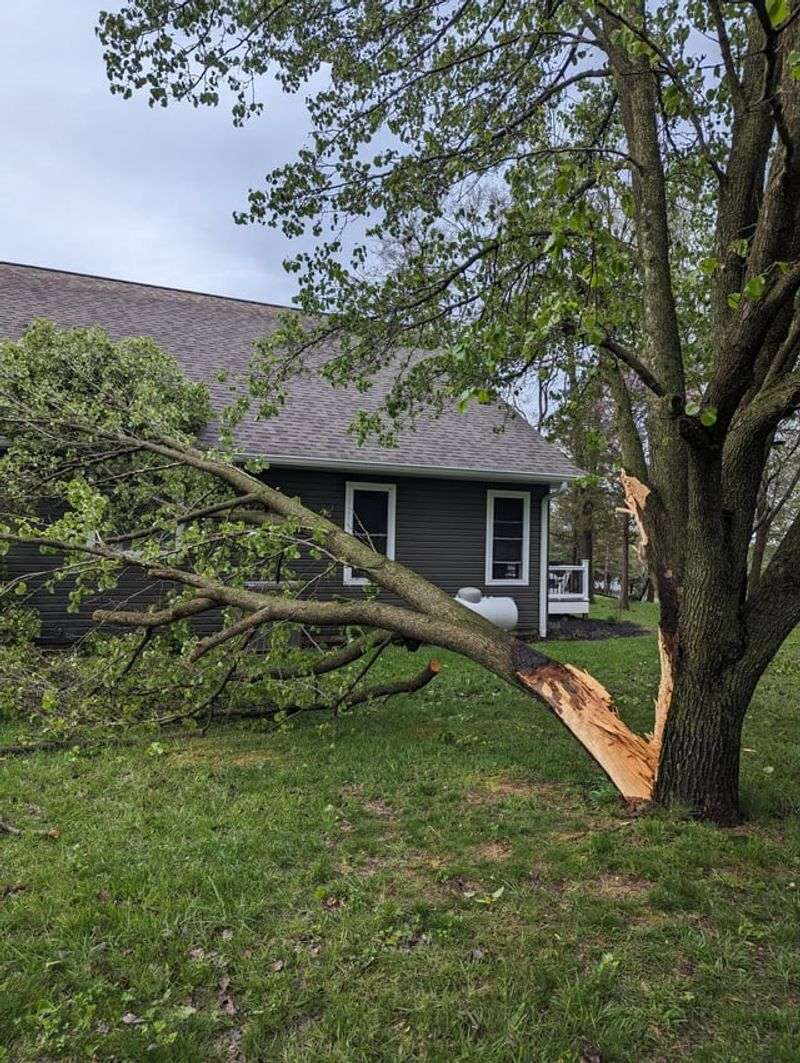
Picture the tree a week before it fell. Was it leaning, hollow, cracked, or full of bare limbs?
Those details may help clarify what a responsible owner knew or reasonably should have recognized.
Photographs, earlier complaints or warnings, inspection or maintenance records, and an arborist’s assessment are the kinds of facts that may matter. They can inform a claim, but they are not a checklist that proves anyone is liable.
Carver talked about reasonable care for hazardous trees near public highways, including steps a land possessor might take when aware of a dangerous condition. Keep that tied to its highway setting, since it is not a ruling on private yards.
A friendly note or a text about a worrying tree can show what was said and when. Still, no particular letter or notice format automatically makes an owner liable.
Gilbert’s general guidance about unmaintained trees points the same direction: condition and upkeep are part of the story.
Insurance Coverage Is a Separate Question
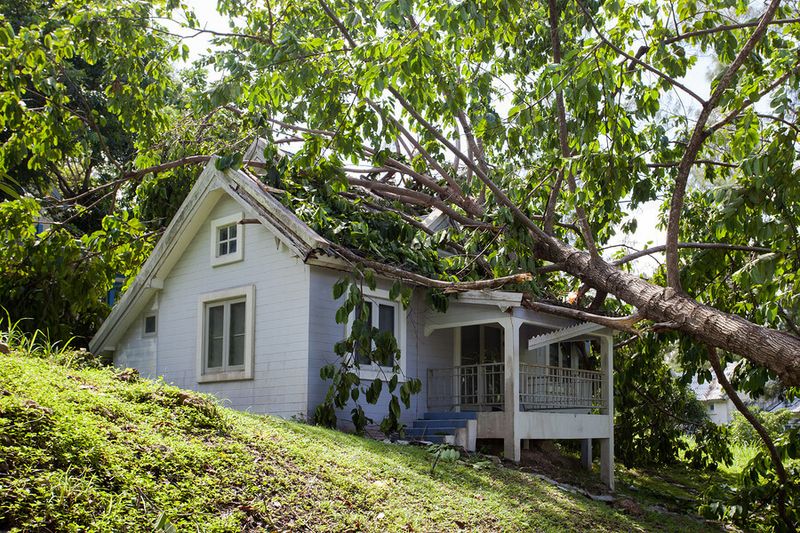
Your own policy may respond even when a neighbor’s legal responsibility is unclear. Those are two separate paths, and one does not have to be settled before you explore the other.
The Arizona Department of Insurance and Financial Institutions says a homeowner may file a claim when a tree falls on a house. It also says vehicle damage may be covered under auto insurance if the owner has comprehensive coverage.
Yard damage is where things get murkier. Fences, landscaping, debris removal, and other costs depend on the specific policy, including its terms, conditions, and exclusions.
Nothing in that guidance promises coverage for each of them.
The best move is to read your policy and ask your insurer directly. Ask what is covered, what your deductible is, and whether cleanup costs are included.
An agent can answer in minutes what guessing cannot.
Document the Damage Before Cleanup

Before anyone picks up a saw, grab your phone. Take wide photos and video of the whole scene, then close-ups of the trunk, the break point, and each item that was damaged.
Arizona’s insurance department advises contacting your insurer before repairs or cleanup when possible. Follow whatever instructions the insurer gives you, since they may want to inspect first or have specific requirements.
Do not delay necessary emergency action, though. If water is pouring from a broken line or part of the roof is open to the weather, protect the home first.
The same guidance says to document emergency work, so keep receipts and take photos as you go.
Write down dates, times, and names of anyone you speak with. It also helps to photograph the tree’s wood, because rot or hollow spots may show its earlier condition.
Documentation supports a claim, but it does not guarantee reimbursement from anyone.
Stay Away From Trees Near Power Lines
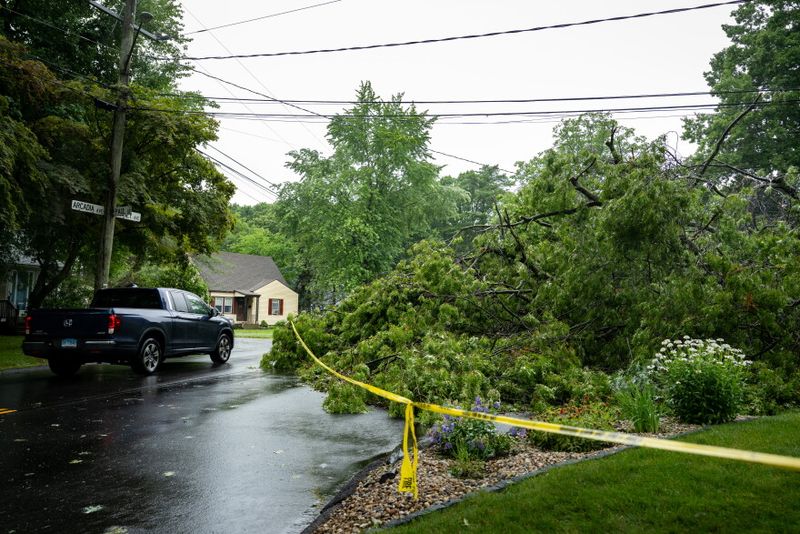
If a fallen tree is touching or near a downed or low-hanging power line, stay far away. Treat every line as live, even if it looks quiet.
Call your electric utility right away, as the Arizona Corporation Commission advises. If anyone is in danger, call 911.
Do not cut, move, or approach a tree that is tangled with a line, and do not let kids or pets wander close. Wait for the utility to make the area safe.
The cleanup conversation with your neighbor can wait until then.
Coordinate Cleanup With the Neighbor or HOA
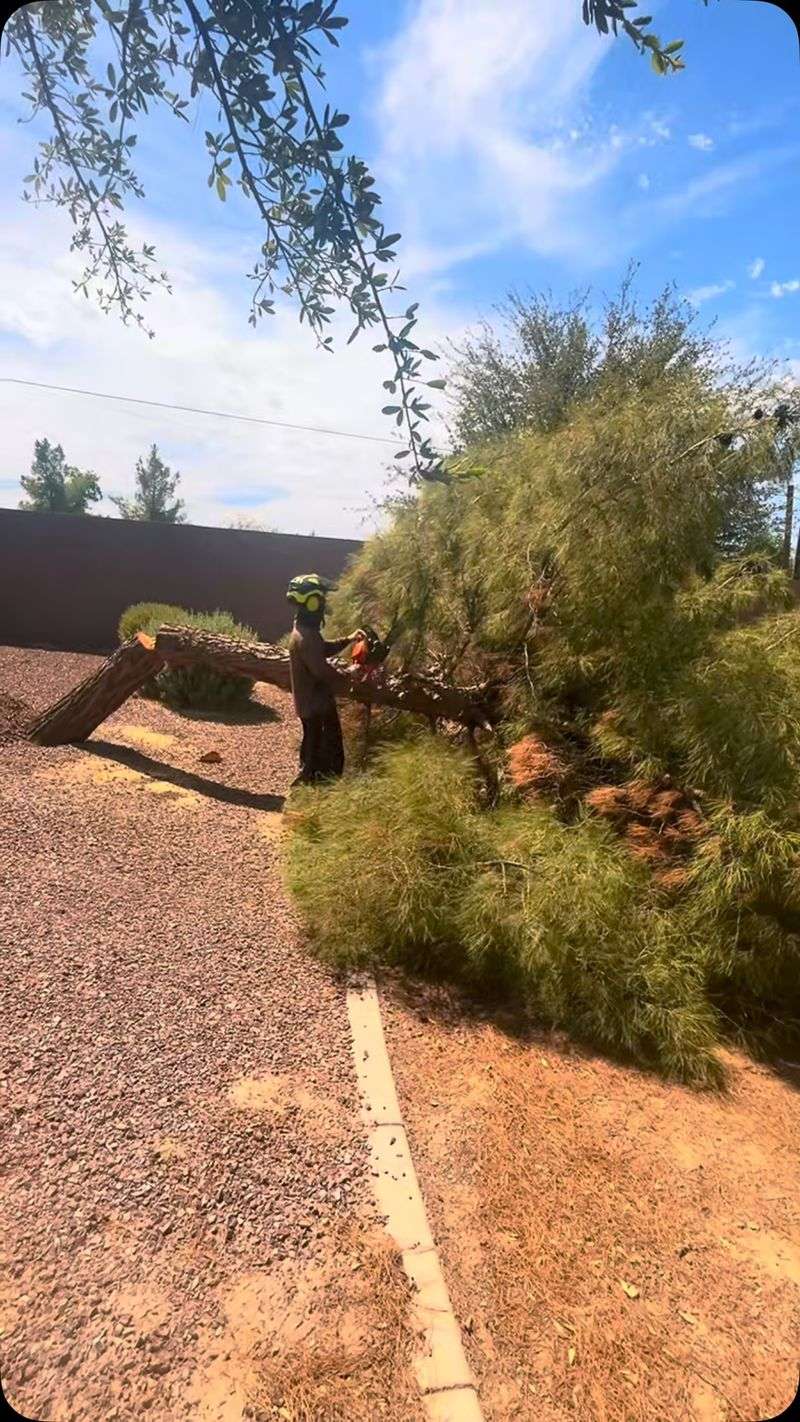
Once everyone is safe, a friendly knock on the door goes a long way. Start by describing what happened and asking how your neighbor would like to handle it.
The City of Mesa suggests respectful communication, getting permission before taking action, and documenting any agreement. A short text or email that confirms who will do what, and when, keeps everyone on the same page.
If your community has an HOA, check who maintains the landscape or wall. Ownership boundaries, public or shared property, and local rules may also change whom you should contact.
These are practical steps, not a finding about who owes money. Legal responsibility, insurance response, and cleanup arrangements are three separate questions, and you can work on the friendly one first.
A good neighbor is often the cheapest cleanup crew.