Arizona’s Gambel’s Quail Form Family and Winter Feeding Groups Through Fall and Winter
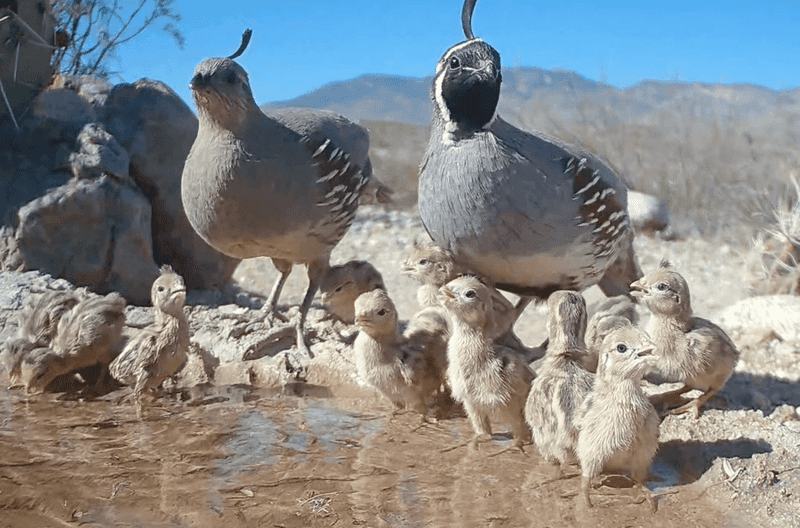
Walk a desert neighborhood in winter and you might spot a line of Gambel’s quail scurrying across the ground, topknots bobbing. Those groups did not appear out of nowhere.
Quail follow a seasonal pattern that starts with family groups and grows into bigger feeding gatherings. Knowing how it works helps you shape a yard that suits them, without expecting any promises.
Family groups are together before fall
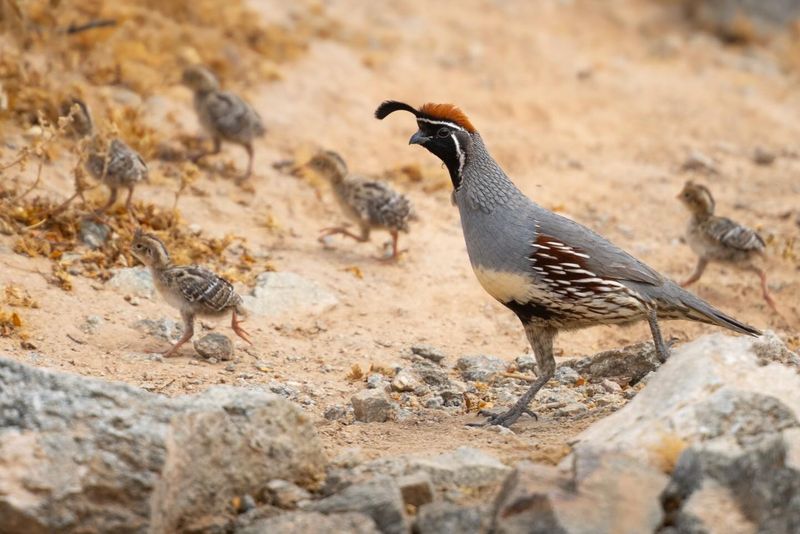
Gambel’s quail do not live as loners until autumn and then suddenly turn social. Adults and their young already move as family groups through the warm months, so the group life you see later builds on something that is already there.
According to Cornell Lab life history notes, these family coveys stay together well into fall. A parent leads, chicks follow, and the little parade crosses washes, yards, and gravel paths in a tight line.
That is a handy baseline for any homeowner. If you see a cluster of quail in September or October, it may well be one family still sticking together rather than a brand-new crowd.
Watching for different sizes, from small adults to half-grown birds, can tell you a lot about what you are looking at.
Winter brings larger feeding groups
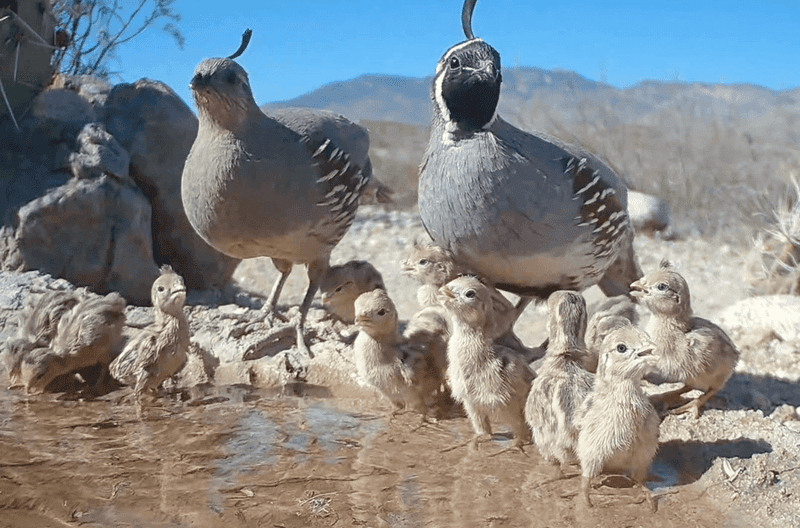
As winter settles in, several coveys often join up to feed together. The result can be a big, busy flock pecking across open ground, and it looks much larger than a single family.
That bigger gathering is not necessarily one permanent, enlarged family. Cornell’s description of Gambel’s quail life history notes that the larger groups later break apart, and some birds end up joining new coveys.
So the faces in your yard can change over the season. One week you may see twelve birds, and a month later a smaller bunch that includes some newcomers.
Scientists describe the pattern, but nobody has pinned down a single motive for it, so it is best to simply enjoy the shifting cast.
Cooling temperatures are not an established trigger
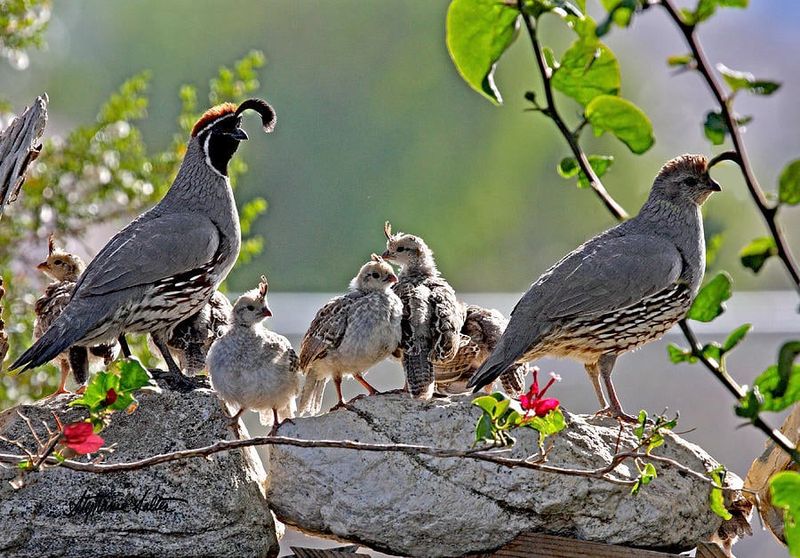
Cool nights make a nice story, but nobody has shown that a temperature drop sets off covey behavior. What sources describe is timing: family groups in fall, bigger feeding groups in winter, then breakup as breeding approaches.
Arizona Game and Fish says that fall and winter coveys are likely to stay near where they were raised. Notice the word likely.
It describes a tendency, not a promise about any one bird or backyard.
The same agency notes that quail numbers rise and fall with seasonal rainfall. That is a note about local population, not an explanation for why coveys form.
If your yard sees more quail one year than another, rain patterns may be part of the picture.
Communal roosting may offer benefits, but the cause is uncertain
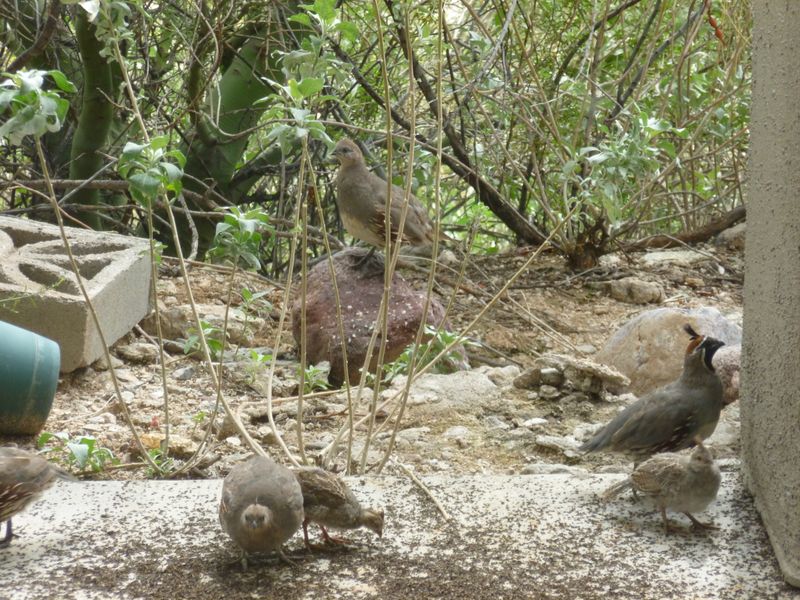
Gambel’s quail lean on brushy, shaded cover. They tuck into shrubs to rest and to hide, then step out to feed on open ground nearby.
Your Arizona Garden Changes Every Week. Your Plan Should Too.
Gardening in Arizona changes quickly throughout the season. Every Friday you’ll receive a simple weekly plan showing exactly what to plant, prune, fertilize, harvest, and protect so you never miss the right timing.
Quail roosting together may help with warmth and with spotting predators. A book chapter on quails describes these as presumed benefits for quail in general.
Presumed is the key word. Nobody has shown that warmth or predator detection explains why Arizona quail form fall and winter groups.
It is a reasonable idea, but it is still an idea.
For your yard, the practical takeaway is simple. Dense cover gives birds a place to retreat, whatever the reason they flock.
Pair native cover with open ground
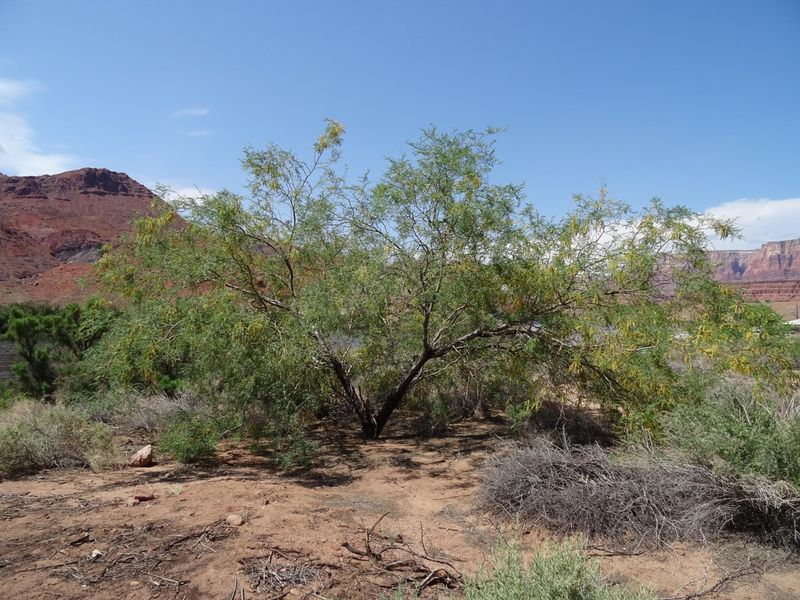
A quail-friendly desert yard mixes hiding spots with room to walk and peck. Think shrubs and trees on one side and bare or lightly planted ground on the other.
Cornell lists mesquite, catclaw acacia, desert hackberry, yuccas, and cacti as plants quail use for food or cover. A Tucson Audubon handout likewise suggests combining open space with dense shrubs.
Leave patches of ground uncluttered, since quail forage there. Dense plantings everywhere can leave them with nowhere to feed.
If neighbors also keep native cover, the habitat connects across several yards, which tends to help more than one lone patch. Even so, a good planting only makes a yard more suitable.
It cannot guarantee a covey will stop by.
Support natural food instead of relying on feeders
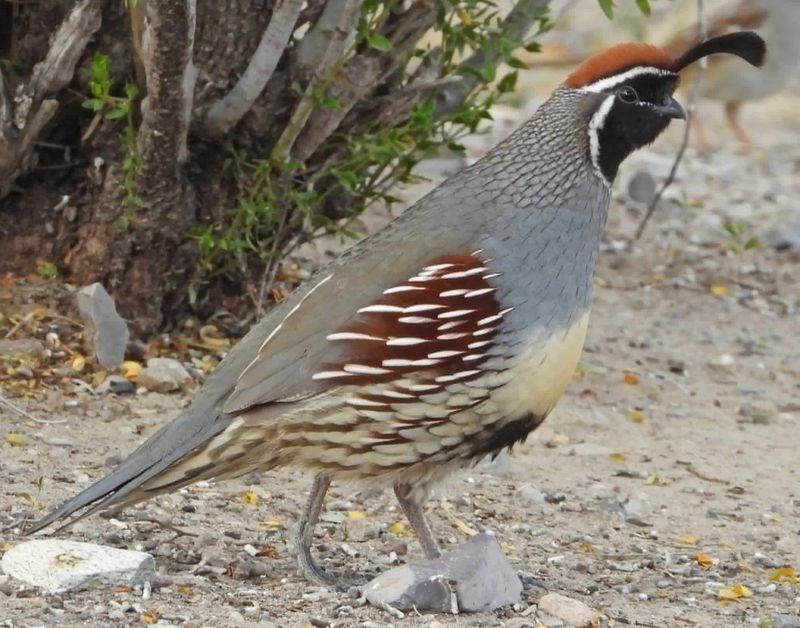
Adult Gambel’s quail eat mostly plant matter, including seeds, leaves, and fruits. Insects matter most for chicks, so quail are not a dependable way to cut down on bugs in your yard.
That makes food-bearing native plants a smarter investment than a scoop of seed. Let fallen seeds and leaf litter stay in place under shrubs, where birds can scratch through them.
Water is also optional. A western quail management plan reports no benefit from added free water in studies in the species’ Arizona core range, and adults can get moisture from food.
If you still add a birdbath, keep it shallow and clean. California wildlife officials explain that birds crowding at feeders and baths can spread disease.
Scrub it thoroughly at least weekly, and more often when it gets heavy use.
A suitable yard cannot control a covey’s schedule
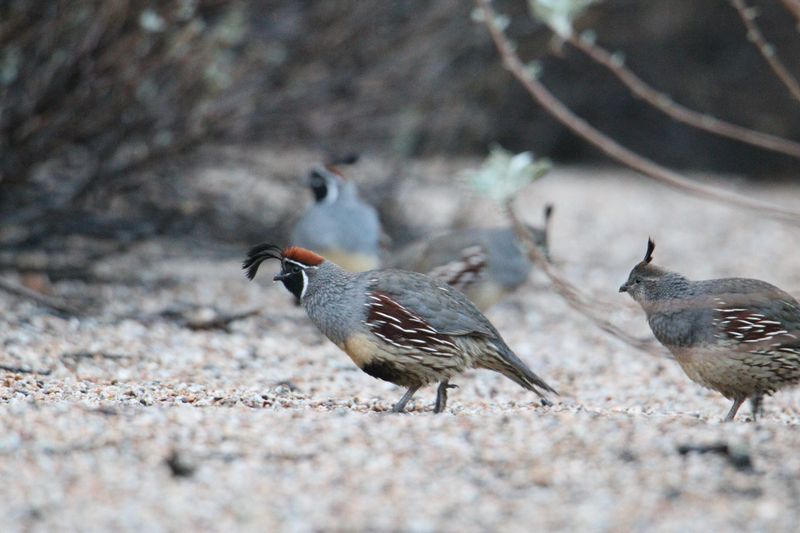
The realistic goal is a yard that suits quail: native cover, open ground for foraging, and natural food. Together those make a visit more possible.
They do not make it certain. Quail move, numbers shift with the seasons, and Arizona Game and Fish only says coveys are likely to stay near where they were raised.
A Tucson Audubon guide also encourages neighbors to connect cover, since one small yard may be too isolated.
So plant for the habitat, then watch what happens. The quail keep their own schedule, and a yard that offers shade and seeds is simply there when they pass by.