Beautiful Non-Toxic Plants Arizona Gardeners Are Choosing Instead Of Sago Palm
A plant can be popular for years and still fall out of favor. That is often what happens when gardeners begin paying attention to details that once received very little thought.
A plant may look impressive in the landscape, yet other factors can become just as important over time.
Sago palms are a good example. Their distinctive appearance helped make them a common sight in many yards, and they still stand out wherever they are planted.
Recently, however, more gardeners have started searching for alternatives that offer a different balance of beauty and practicality.
Fortunately, attractive choices are not difficult to find. Many plants thrive in hot conditions and provide color, texture, or striking foliage throughout the year.
Some fit naturally into landscapes while offering features that appeal to people looking beyond the usual options.
That growing interest is easy to see in Arizona, where more gardeners are turning to beautiful non toxic plants instead of relying on sago palms alone.
1. Desert Willow Produces Showy Summer Flowers
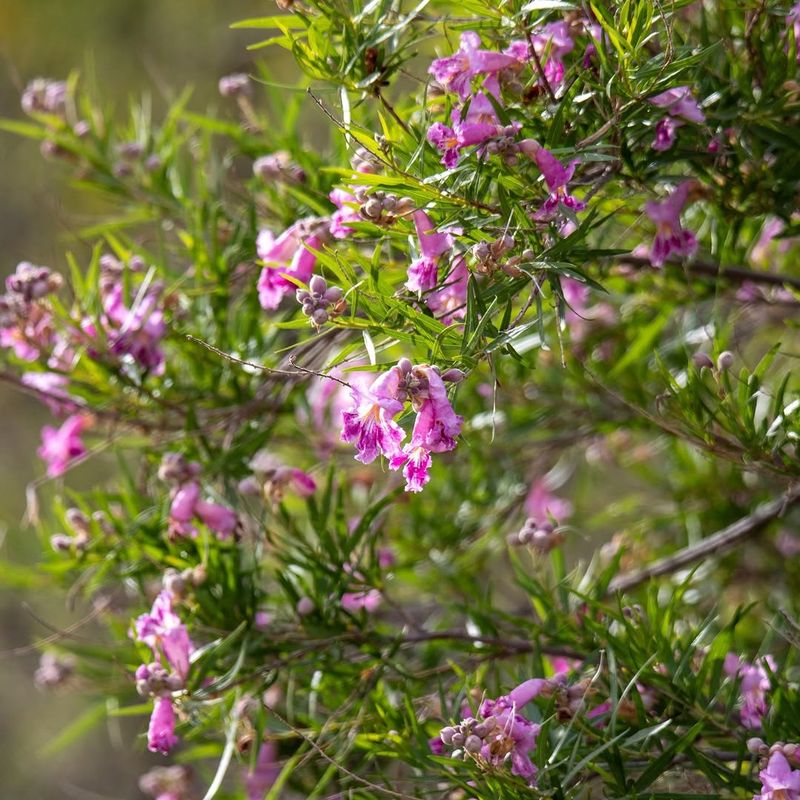
Nothing quite stops a neighbor mid-walk like a desert willow in full bloom. Trumpet-shaped flowers in shades of pink, burgundy, and white cover the branches from late spring all the way through summer.
It is genuinely hard to ignore.
Despite the name, desert willow is not a true willow. It belongs to a completely different plant family and handles drought far better than any willow species.
Long, narrow leaves give it a graceful, airy appearance.
Hummingbirds visit the flowers constantly during bloom season. Bees and butterflies show up too.
Planting one near a patio or window gives you a front-row view of the activity.
Expect the tree to reach fifteen to twenty-five feet tall at maturity, though growth rate depends on watering and soil conditions. With regular deep watering during the first two years, establishment goes quickly.
After that, it needs very little supplemental water.
Winter brings leaf drop, which surprises some new gardeners. It is deciduous, so bare branches in January are completely normal.
New growth returns reliably in spring.
No toxicity concerns have been documented for desert willow with pets or children. It is a clean, safe option for households with animals roaming the yard.
Varieties like ‘AZT Bubba’ and ‘Lucretia Hamilton’ offer especially rich flower color for those who want a bolder look.
2. Jojoba Brings Year-Round Texture
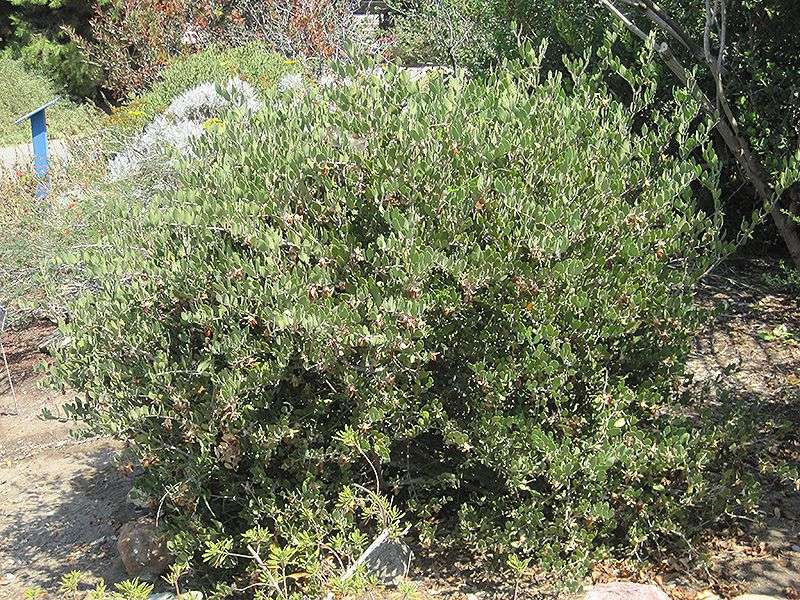
Jojoba does not ask for much, and it gives back more than most people expect. Dense, leathery leaves hold their color through brutal summers and cold desert nights without flinching.
Texture-wise, it earns a permanent spot in any low-water landscape.
Native to the Sonoran Desert, jojoba evolved to handle exactly the conditions found across much of the low desert. It thrives in full sun, tolerates reflected heat off walls and pavement, and asks for almost no supplemental water once rooted in.
Plants are either male or female. Only female plants produce the seed pods jojoba is known for.
If you want seeds for any reason, planting one of each nearby helps, though most gardeners grow it purely for structure and foliage.
Your Arizona Garden Changes Every Week. Your Plan Should Too.
Gardening in Arizona changes quickly throughout the season. Every Friday you’ll receive a simple weekly plan showing exactly what to plant, prune, fertilize, harvest, and protect so you never miss the right timing.
Height ranges from three to six feet depending on conditions and pruning. Left alone, it forms a rounded, informal mound.
Light trimming shapes it into a neat hedge without causing stress to the plant.
Wildlife value is real. Quail, rabbits, and other desert animals use jojoba for cover and food.
Planting it near a natural wash or open area often brings in more wildlife traffic than expected.
Jojoba is non-toxic to pets and people. No documented cases of toxicity exist in standard references.
For families wanting a tough, reliable, year-round shrub without safety worries, it consistently delivers exactly what the landscape needs.
3. Chuparosa Attracts Hummingbirds Naturally
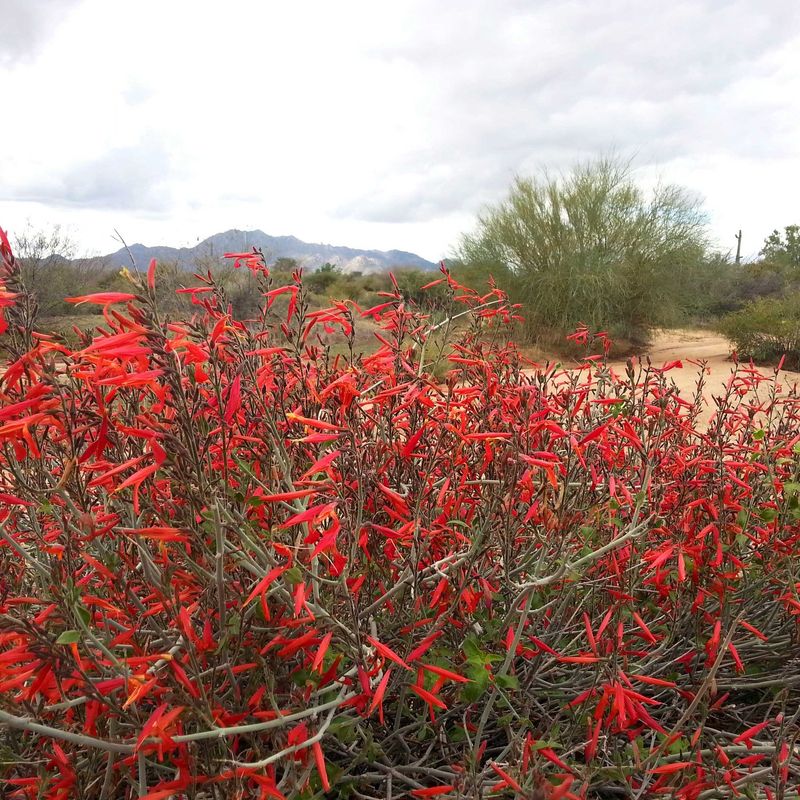
Chuparosa is practically a hummingbird magnet. Bright red tubular flowers bloom heavily in winter and early spring, right when hummingbirds need reliable nectar sources most.
Planting one near a window turns your yard into a live nature show.
The name chuparosa means hummingbird in Spanish, which tells you everything about the relationship between this plant and its most loyal visitor. Anna’s hummingbirds, in particular, return to established plants season after season.
They seem to remember where it grows.
Plants reach three to five feet tall and spread wider than they are tall. Stems are green and mostly leafless during drier periods, which gives the plant an unusual, almost skeletal look.
After rain, small oval leaves emerge and soften the appearance.
Full sun works best, though chuparosa tolerates light afternoon shade. Soil drainage matters more than soil quality.
Avoid spots where water pools after rain, since standing water around the roots causes problems over time.
Once established, it needs very little irrigation. An occasional deep soak during dry stretches keeps it looking its best.
Avoid frequent shallow watering, which encourages weak surface roots.
Chuparosa is non-toxic and safe around pets and children. Flowers are actually edible and have a mildly sweet flavor.
Some people add them to salads for color, though using plants not treated with any pesticides is obviously important before eating anything from the garden.
4. Baja Fairy Duster Adds Soft Color And Texture
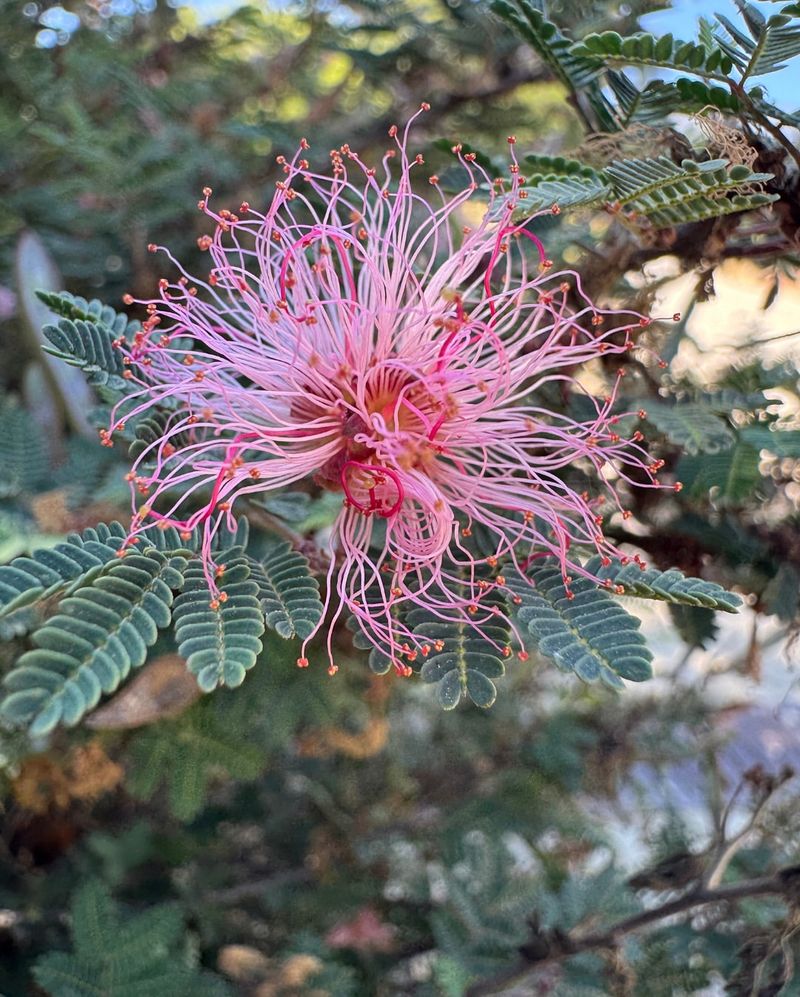
Soft, feathery flower clusters that look like something out of a fantasy garden make Baja fairy duster one of the most visually interesting shrubs in the low desert plant palette. Color ranges from deep pink to coral red depending on the plant and conditions.
Bloom time stretches from late winter through spring, with occasional repeat flowering after summer rains. Few other shrubs deliver that kind of extended color in a dry climate.
Pairing it with plants that bloom at different times keeps the yard looking interesting year-round.
Baja fairy duster stays relatively compact, usually reaching three to five feet in height. Finely textured, ferny foliage adds visual lightness even when the plant is not in flower.
It never looks heavy or clunky in the landscape.
Full sun is ideal, though it handles partial shade reasonably well. Very well-draining soil is essential.
In clay-heavy ground, amending with gravel or decomposed granite before planting improves drainage significantly.
Hummingbirds, bees, and butterflies all visit the flowers regularly. Planting it near other flowering shrubs creates a wildlife corridor that benefits the whole yard.
Birds also use the dense branches for shelter.
No toxicity concerns are associated with Baja fairy duster for pets or people. Compared to sago palm, the safety difference is enormous.
Gardeners looking for color, texture, and wildlife value in one low-maintenance package will find it hard to beat this plant.
5. Hibiscus Provides Tropical-Looking Blooms
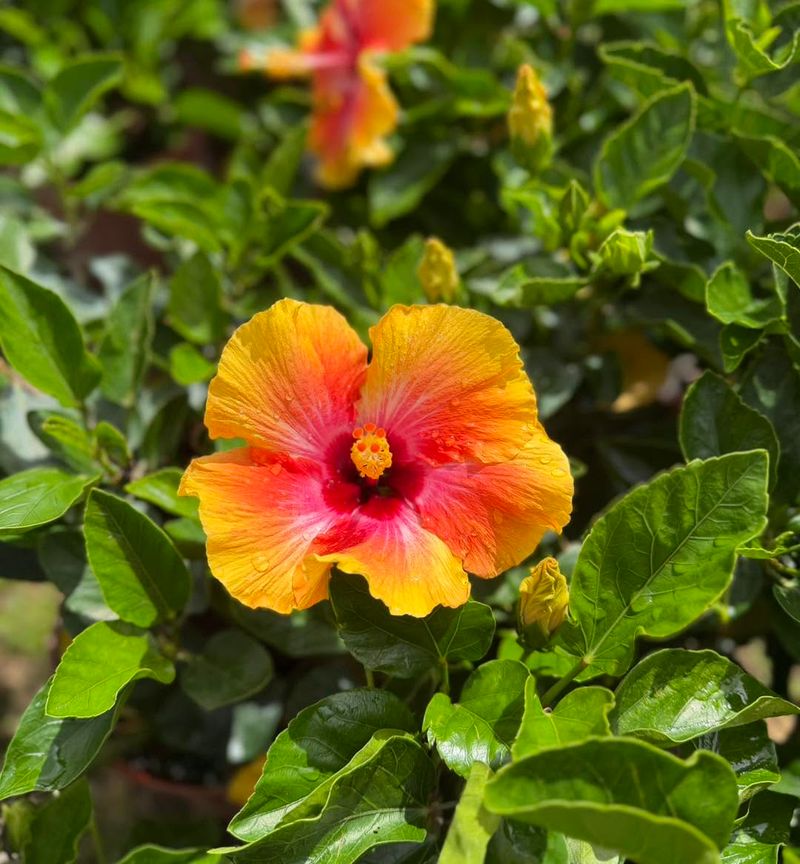
Plate-sized flowers in shades of red, yellow, orange, and pink make hibiscus one of the most dramatic-looking plants you can grow in a hot, dry climate. Native desert hibiscus varieties handle the heat far better than tropical cultivars sold at big-box stores.
Rock hibiscus and desert rose mallow are two native options worth seeking out. Both handle drought, reflected heat, and alkaline soil without complaint.
Tropical hibiscus varieties need more water and may struggle through extreme heat without afternoon shade.
Bloom season for native types runs from spring through fall in warmer areas. Flowers last only a day or two each, but new buds open continuously throughout the season.
A well-established plant can produce hundreds of blooms over a single summer.
Plant in full sun for the best flowering. Hibiscus planted in too much shade tends to grow tall and leggy with fewer blooms.
Consistent deep watering every week or two during summer keeps plants healthy without overwatering.
Butterflies and bees visit hibiscus flowers heavily. Hummingbirds are also frequent visitors, especially with red or orange varieties.
Positioning the plant near a seating area makes it easy to enjoy the activity.
Petals are commonly used in herbal teas worldwide. Gardeners interested in growing hibiscus around pets should verify the safety of the specific species they choose.
Once established, native desert hibiscus requires far less maintenance than many flowering shrubs grown for similar color and visual impact.
6. Rosemary Combines Beauty With Everyday Use
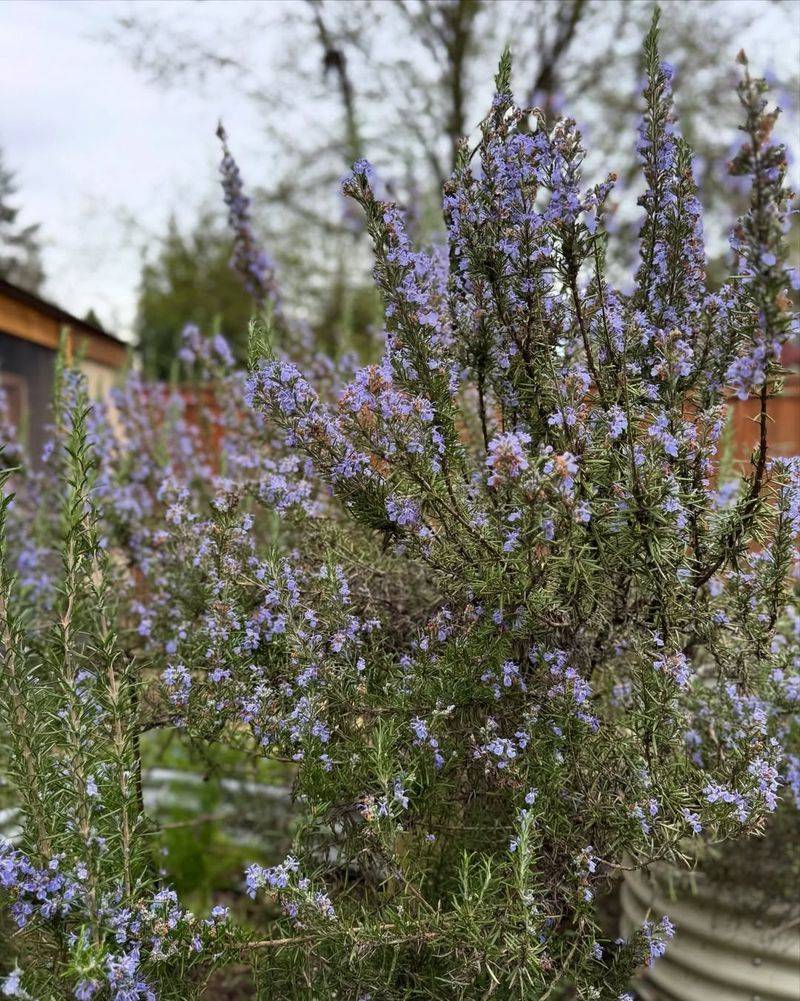
Rosemary earns space in the landscape twice over. First as a reliable, drought-tolerant shrub that looks sharp year-round, and second as a fresh herb ready to use in the kitchen whenever you need it.
Very few plants pull double duty that effectively.
Trailing varieties spread low and wide, making excellent ground cover on slopes or along pathways. Upright varieties grow into tidy, aromatic hedges reaching four to six feet tall.
Both handle full sun and dry conditions without much complaint once established.
Flowers appear in late winter to early spring. Small blooms in blue, purple, or white cover the stems and attract bees in significant numbers.
Rosemary is considered one of the better early-season bee plants in warm, dry gardens.
Well-draining soil is non-negotiable. Rosemary planted in heavy clay or poorly drained spots tends to develop root problems.
Raised beds or mounded planting areas solve drainage issues in yards with compacted or clay-heavy soil.
Watering needs drop dramatically after the first year. Established plants in most low-desert areas can survive on rainfall alone during cooler months.
Summer may require a deep soak every two to three weeks depending on heat and soil type.
Rosemary is completely safe for people and pets. Cats and dogs can wander through it with no risk at all.
Fresh sprigs work in roasted vegetables, grilled meats, homemade breads, and dozens of other recipes most families already cook regularly.
7. Gaura Keeps Flowers Coming For Months
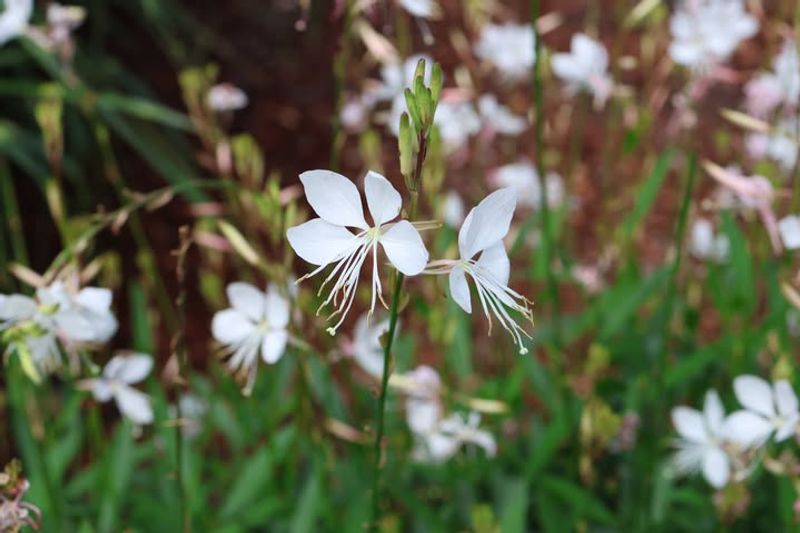
Gaura looks like it is always in motion. Delicate white or pink flowers perch on long, wiry stems that sway with the slightest breeze, giving the plant an airy, almost dancing quality that heavier shrubs simply cannot replicate.
Bloom season is genuinely impressive. Flowers start appearing in spring and continue through fall without much interruption.
Few perennials in a dry climate match that kind of sustained performance over so many months.
Plants reach two to four feet tall depending on variety and growing conditions. Compact selections like ‘Siskiyou Pink’ and ‘Whirling Butterflies’ stay neater and work better in smaller beds or containers.
Larger varieties make excellent back-of-border plants.
Full sun brings out the best flowering. Afternoon shade is tolerated but often reduces bloom density noticeably.
Planting along south or west-facing walls gives gaura the heat and light it prefers.
Soil drainage matters more than soil richness. Gaura planted in amended, well-draining beds tends to perform better than plants stuck in heavy clay.
Avoid overwatering, which is the most common mistake made with this plant in garden settings.
Butterflies and bees visit gaura flowers regularly throughout its long bloom season. Hummingbirds occasionally stop by as well.
Gaura is non-toxic to pets and people, which makes it a genuinely worry-free addition to any yard where animals and children spend time outdoors in the warm months.
8. Texas Sage Handles Intense Heat With Ease
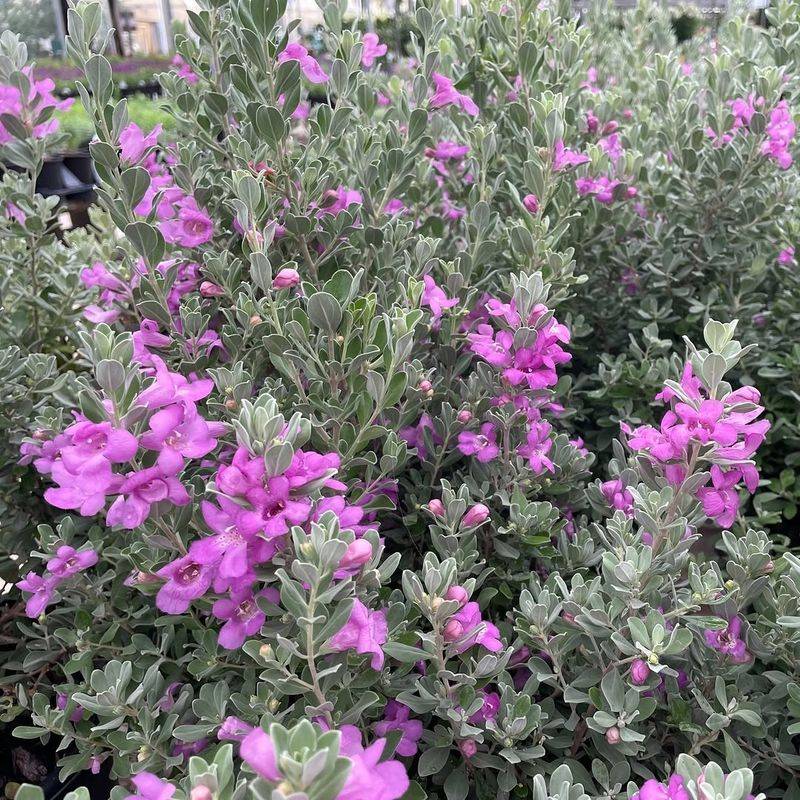
Purple blooms appearing right after a monsoon rain is one of the most satisfying moments in desert gardening. Texas sage earns its keep by doing exactly that.
It reads the humidity in the air and bursts into flower almost overnight.
Known locally as barometer bush, this shrub can go weeks without irrigation once established. It does not need rich soil, regular feeding, or extra fuss.
Sandy, rocky ground suits it just fine.
Full sun is where it performs best. Partial shade tends to make it leggy and reduces flowering.
Plant it in a spot that gets at least six hours of direct sunlight daily.
Mature plants reach around five to eight feet tall and wide. Pruning once or twice a year keeps the shape tidy without hurting the plant.
Hard pruning in late winter encourages a denser, more compact form.
Deer tend to leave it alone, which is a bonus in neighborhoods near open desert. Birds occasionally nest in its dense branches.
No part of Texas sage is considered toxic to dogs, cats, or people, making it a genuinely family-friendly choice.
Colors range from pale lavender to deep violet-purple depending on the variety. Silver-leafed types like ‘Green Cloud’ and ‘White Cloud’ offer different looks.
Mixing varieties creates a layered, natural feel in the landscape.