Before You Block A Groundhog Burrow Under Your Ohio Porch, Do This First
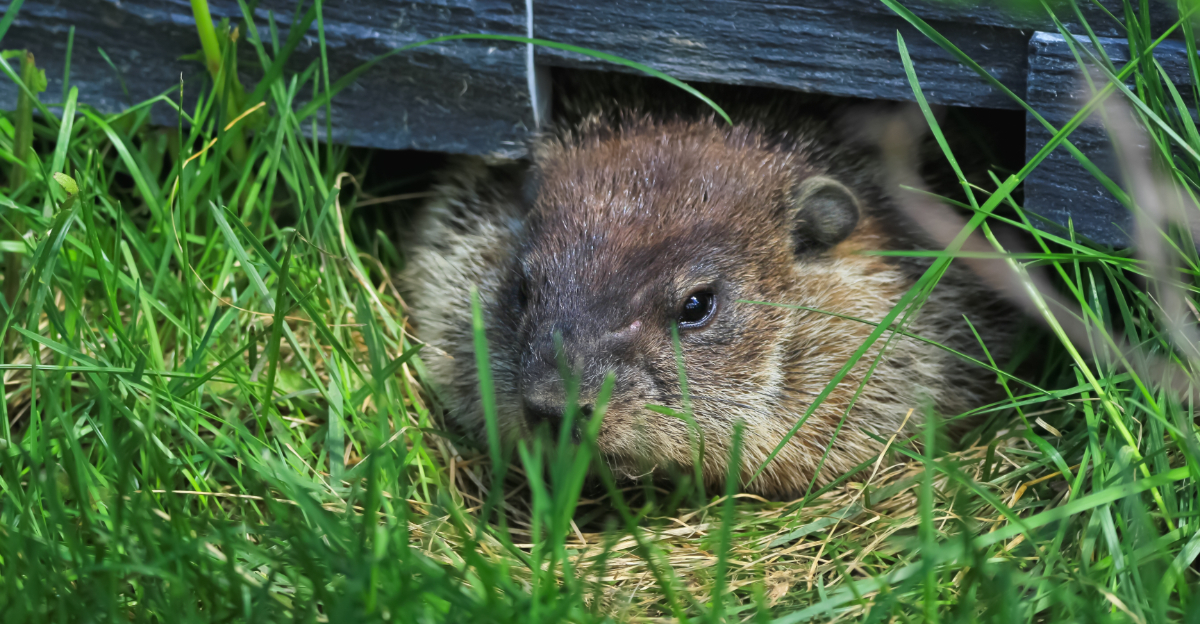
A hole beneath your Ohio porch can create an instant urge to grab dirt, boards, or whatever will close the opening. The problem is that a groundhog burrow is not just an empty space under the house.
Something may still be inside, and sealing the entrance at the wrong moment can create a much bigger problem than the hole itself.
Groundhogs use these sheltered spots for reasons that make your porch especially appealing, from protection to a stable environment away from open areas.
The signs around the entrance can reveal whether the burrow is active, abandoned, or part of a larger network nearby. Before you block the opening and consider the job finished, look for what the ground is telling you first.
One quick check can prevent damage, trapped wildlife, and a frustrating repeat of the same problem somewhere else around your home.
1. Make Sure The Burrow Is Actually Empty
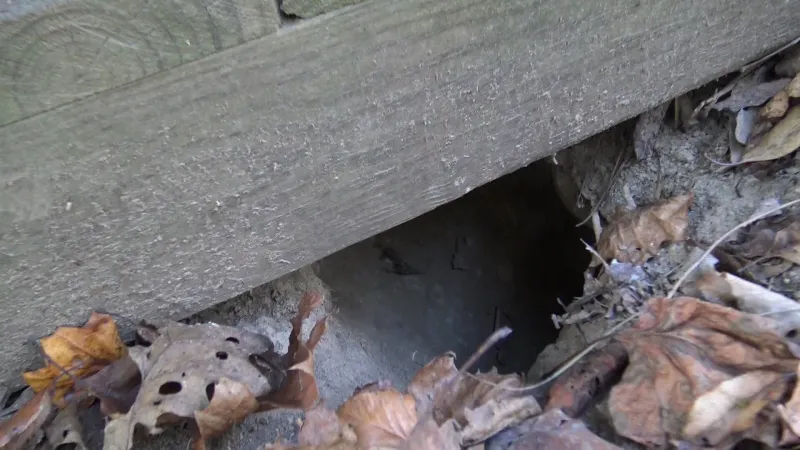
Confirming that a burrow is vacant before permanently closing it off is the single most important step an Ohio homeowner can take. Blocking an occupied space traps an animal inside with no way out.
That creates a welfare problem and can lead to damage as the animal tries to dig a new exit through your porch floor or foundation.
Not seeing a groundhog at one particular moment does not prove the space is empty. Groundhogs are known to leave their dens to forage during daylight hours and return later in the day.
A quiet entrance at noon could look very active by mid-afternoon.
Wildlife guidance from university extension programs consistently emphasizes confirming vacancy before any permanent exclusion work begins. Watching the site patiently over multiple days gives you far more reliable information than a single glance.
Keep your distance from the opening during observation so you do not disturb normal activity patterns.
Avoid reaching into, crawling beneath, or probing the space physically. You cannot safely determine occupancy that way, and you risk startling an animal that is resting just inside.
Steady, calm observation from a reasonable distance is the safest and most effective approach before any blocking work starts.
2. Fresh Dirt Can Reveal Recent Activity
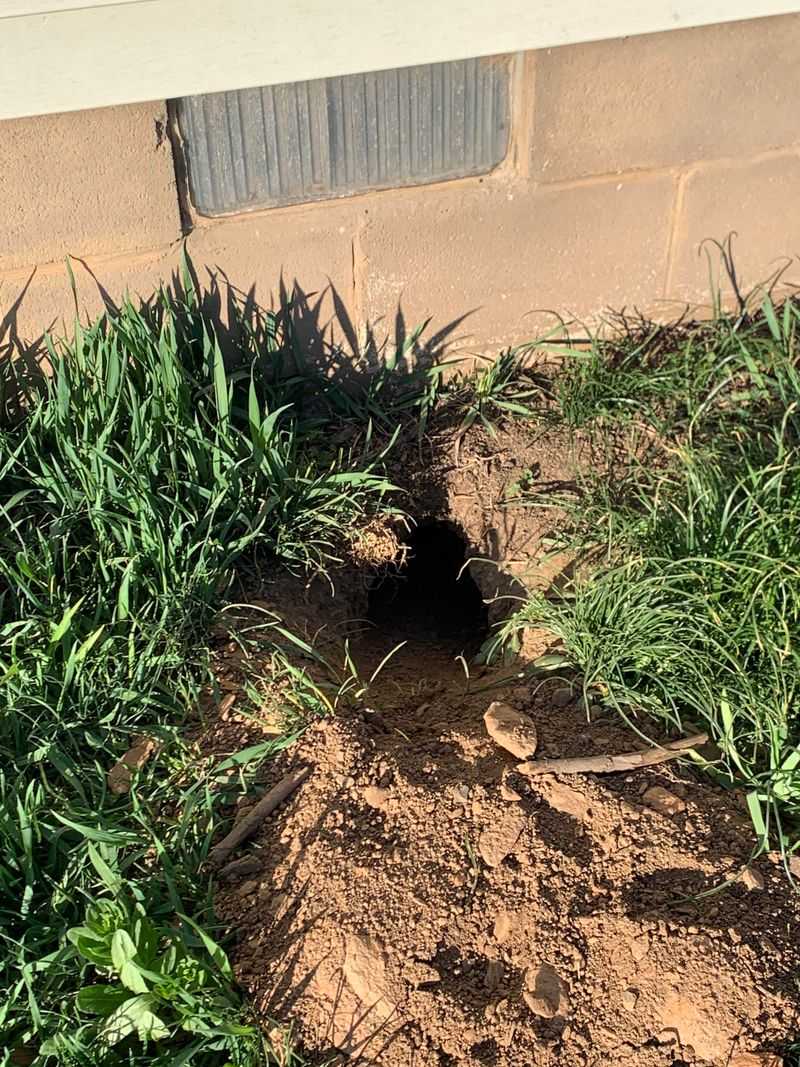
A fresh pile of soil sitting right beside a porch entrance can be one of the first clues that something has been digging recently.
Newly moved earth tends to look loose, lighter in color than the surrounding ground, and somewhat crumbly compared to packed soil nearby.
Noticing that kind of change near an opening is worth paying attention to before you decide anything.
Fresh excavation alone does not guarantee a groundhog is actively using the space. Other animals, including rabbits, skunks, and even rats, can take over existing burrows or dig new ones under structures.
Looking at the size and shape of the entrance alongside the soil can help you get a clearer picture.
Tracks in soft dirt near the entrance are another useful sign. Groundhog footprints show four toes on the front feet and five on the back, with short claw marks.
Your Ohio Garden Changes Every Week. Your Plan Should Too.
Gardening in Ohio changes quickly throughout the season. Every Friday you’ll receive a simple weekly plan showing exactly what to plant, prune, fertilize, harvest, and protect so you never miss the right timing.
Worn vegetation paths leading away from the opening can also suggest regular travel to and from a feeding area.
Rather than relying on any single clue, consider several signs together. Fresh soil combined with visible tracks and a worn path creates a much stronger case for recent activity than any one factor alone.
Taking a few days to gather multiple observations will give you a more accurate read on whether the site is currently in use.
3. One Entrance May Not Tell The Whole Story
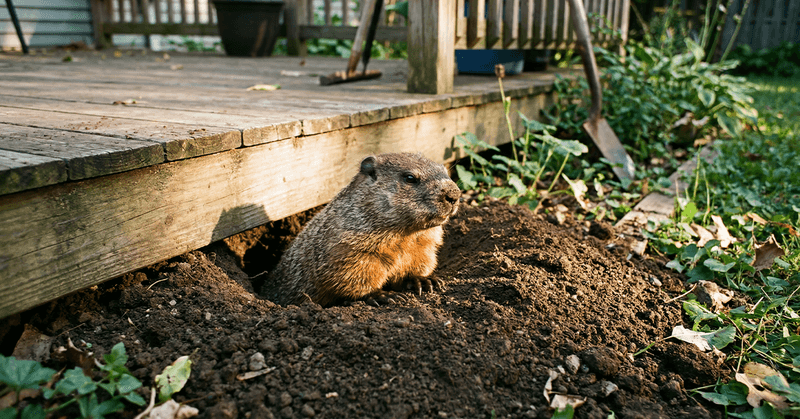
Spotting a second opening several feet from the first one can catch an Ohio homeowner completely off guard. Groundhog burrow systems commonly include more than one entrance.
Wildlife guidance from extension sources notes that secondary openings often serve as escape routes. They may not have the large soil mound that makes a main entrance so obvious.
Blocking only the most visible hole while leaving a secondary opening unchecked means the animal still has full access to the space beneath your porch. A thorough walk around the entire porch perimeter is a practical starting point.
Check along the foundation, near landscaping beds, and in areas where grass looks worn or patchy.
Secondary entrances can be harder to spot because they tend to be smaller and may be partially hidden by grass, mulch, or plant roots. Some openings are tucked against a foundation wall where they are easy to overlook during a quick inspection.
Slow, careful attention to the ground near and around the structure gives you a better chance of finding all the access points.
Do not crawl beneath the porch to search for openings. A visual inspection from outside the structure is both safer and sufficient for most situations.
Knowing the full picture of where animals can enter and exit is essential before any permanent barrier work begins.
4. Watch For Daylight Trips Away From The Den
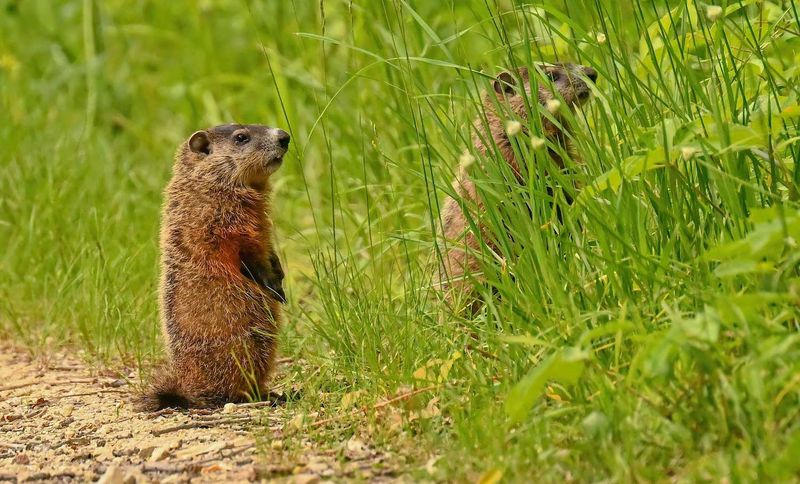
Seeing a groundhog leave the porch area to feed in the yard is actually useful information. Groundhogs are diurnal animals, meaning they are primarily active during daylight hours.
That pattern gives Ohio homeowners a practical window for safe, patient observation without needing any special equipment or tools.
Watching from a window or from a comfortable distance in the yard can help you confirm whether an animal is still using the site. A single quiet afternoon is not enough evidence to conclude the burrow is empty.
Groundhogs can spend hours foraging before returning, and activity levels can vary depending on temperature, season, and food availability.
Repeated observation over several days builds a more reliable picture. If you consistently see no activity over a stretch of days under normal weather conditions, that pattern carries more weight than one uneventful hour.
Keep notes on what you see and when, since that record can be helpful if you later consult a wildlife professional.
Stay at a comfortable distance during observation and avoid approaching the entrance directly. Close approaches can cause a groundhog to stay underground longer than usual, which could give you a false impression that the burrow is no longer active.
Calm, consistent watching from a distance is the most practical and least disruptive method available to homeowners at this stage.
5. Young Groundhogs Can Change Your Timing
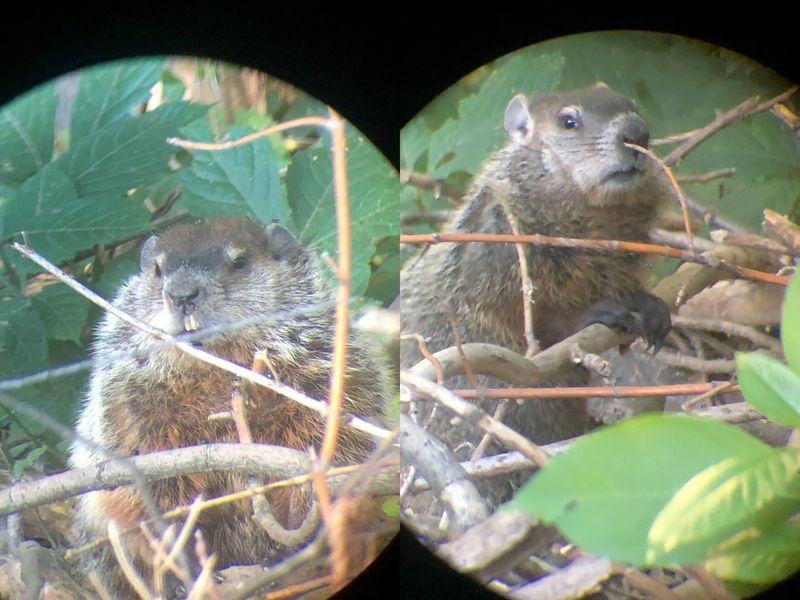
Spotting just one adult groundhog near your porch does not automatically mean the burrow holds only one animal. Groundhogs give birth in late winter to early spring, and young animals remain dependent on the mother for a period of weeks.
They stay dependent before they are ready to venture out on their own. Sealing an entrance while dependent young are still inside creates a serious problem.
Extension wildlife guidance recommends being especially cautious about exclusion timing during spring and early summer. Young groundhogs may not appear at the entrance regularly, making them easy to miss during casual observation.
The fact that you only see one adult at the opening does not rule out the possibility that young animals are present deeper in the burrow.
Waiting until young animals are old enough to be mobile and foraging on their own before beginning any permanent exclusion is the more cautious approach.
If you are uncertain about the time of year or what age the animals might be, qualified wildlife guidance is worth seeking before you proceed.
A local wildlife rehabilitator or your state wildlife agency can provide helpful direction.
Rushing exclusion during a sensitive period can create more complications than it solves. Taking a few extra weeks during spring to confirm the situation more fully is a reasonable trade-off.
It is far better than the alternative of sealing a family group inside the space beneath your porch.
6. Never Seal An Entrance That Is Still Active
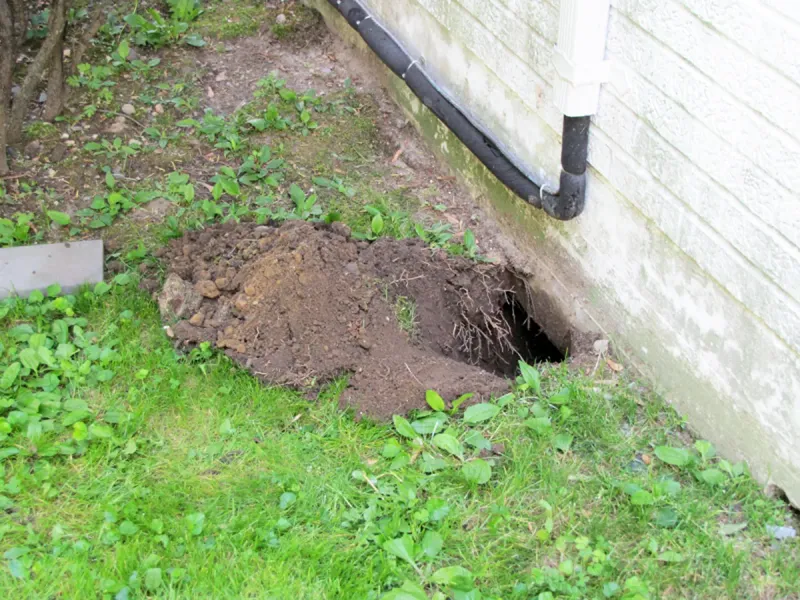
The temptation to just cover that hole and be done with it is completely understandable. A wide opening under a porch looks like a problem begging to be solved on the spot.
But permanently closing an entrance while animals are still actively using it is one of the most common mistakes Ohio homeowners make in this situation.
An animal sealed inside a burrow will not simply settle in and stay quiet. It will attempt to dig a new exit, which can mean damage to your porch framing, foundation edges, or nearby landscaping.
The effort and expense of repairing that kind of secondary damage can far exceed the cost of waiting a bit longer to confirm vacancy first.
Avoid using any homemade eviction methods such as flooding the burrow, using smoke, or applying chemicals near the entrance.
These approaches are not recommended by wildlife authorities and can create additional hazards for you, neighboring animals, and local water sources.
Confirmed vacancy through patient observation is the only sound starting point.
If you are not certain whether the entrance is still active, treat it as active until evidence clearly suggests otherwise. A few extra days of careful watching is a small investment compared to the problems that come from sealing an occupied space.
Safe, confirmed vacancy should always come before any permanent barrier work.
7. Exclusion Starts Only After The Space Is Vacant
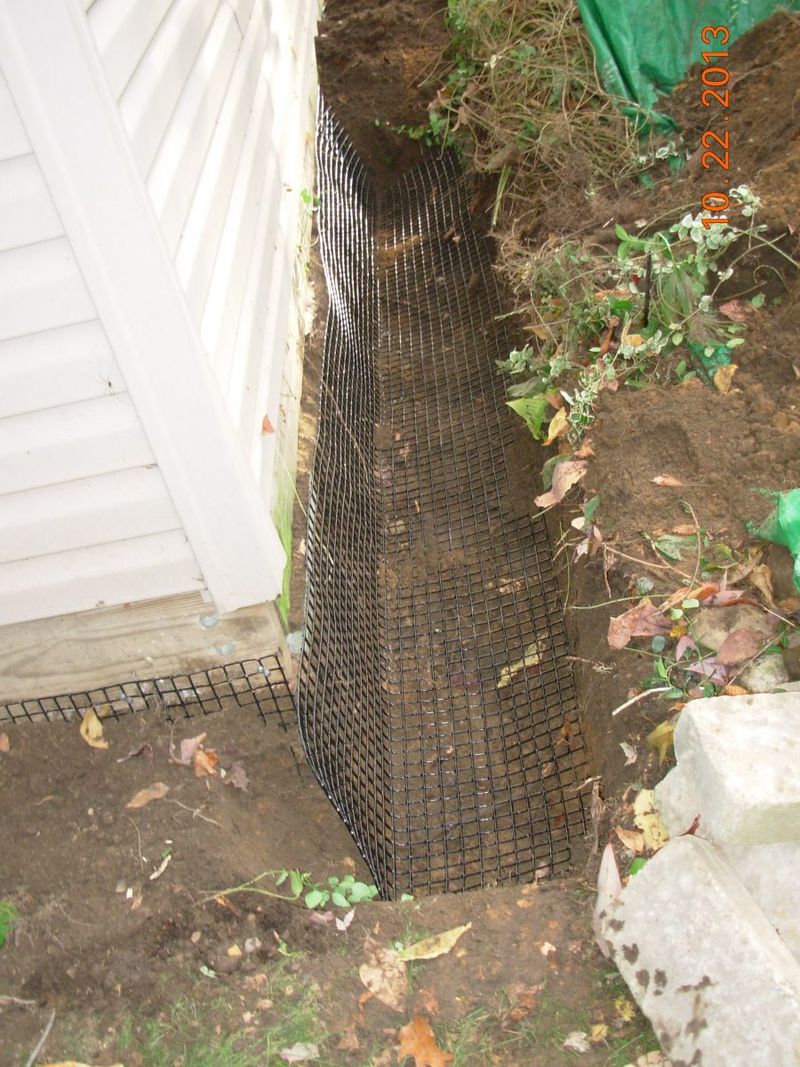
Switching from observation to prevention feels satisfying once you are confident the space beneath your porch is no longer occupied. That moment of confirmed vacancy is the right starting point for permanent exclusion work.
Moving too soon before that confirmation is established puts you back at the problems described in earlier sections.
Extension wildlife guidance for excluding animals from beneath porches, decks, and sheds typically recommends a sturdy wire mesh barrier. That barrier should be attached securely to the base of the structure.
The barrier needs to be fastened firmly enough that it cannot be pushed aside or lifted by an animal testing the edge from outside. Loose or poorly secured materials are unlikely to hold up over time.
One-way exclusion devices are sometimes used by wildlife professionals to allow animals to exit a space while preventing re-entry. These can be a practical option in situations where vacancy cannot be fully confirmed through observation alone.
Their use is best guided by a qualified wildlife professional who can assess whether the specific situation calls for that approach.
Ohio homeowners who are uncertain about occupancy or who have limited access beneath their porch are often better served by consulting a licensed wildlife professional.
Attempting exclusion in a confined or awkward space without proper guidance can lead to incomplete work that leaves gaps large enough for re-entry.
Getting the job done correctly the first time saves effort in the long run.
8. Bury The Barrier To Stop Another Dig-In
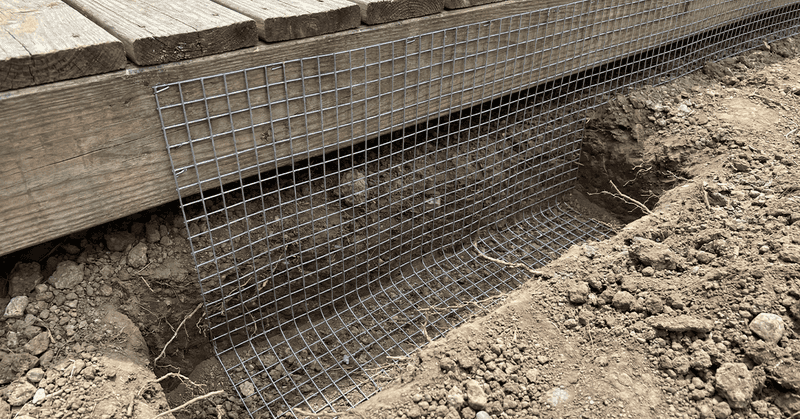
Covering the visible opening is only part of a solid long-term solution. A barrier that stops at the surface leaves the bottom edge exposed to any animal willing to dig along the foundation.
Reliable exclusion guidance recommends extending the mesh below ground level or bending it outward at the base to discourage new digging attempts.
The logic behind burying or angling the barrier is straightforward. An animal that encounters resistance at the surface will often start digging straight down along the edge of the barrier.
A buried or outward-bent section redirects that effort and makes a successful new entry much harder to achieve without a great deal of sustained digging.
Use durable mesh materials that are appropriate for ground contact. Some lighter wire products can rust or weaken quickly when buried, which defeats the purpose of installing them in the first place.
Extension exclusion resources can point you toward materials that hold up well in outdoor and underground conditions over multiple seasons.
Simply dropping a flat board or a piece of plastic sheeting over the opening will not provide lasting protection. Groundhogs are capable diggers, and any barrier that is not anchored and buried at the base is vulnerable.
The whole point of going through the confirmation and observation process is to set yourself up for a permanent solution that actually holds.
Confirming the space is empty first, then installing a properly anchored barrier, is the sequence that gives you the best chance of a lasting result.
9. Know When To Call A Wildlife Professional
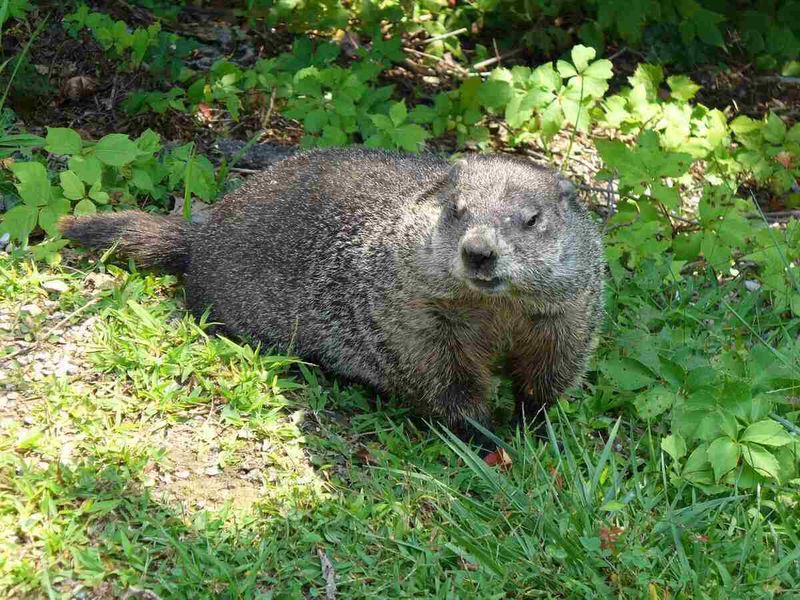
Some situations are straightforward enough for a careful homeowner to handle through patient observation and proper barrier installation. Others are not so simple, and recognizing the difference can save a lot of time and frustration.
Calling in a qualified wildlife professional is a reasonable choice whenever you feel uncertain about what you are dealing with.
Licensed wildlife control operators in the state are familiar with local groundhog behavior and the legal guidelines that apply to wildlife management.
They can assess the site, help confirm vacancy, and install exclusion barriers in a way that meets both structural and wildlife standards.
Their experience with difficult access situations, like low crawl spaces or complex foundation edges, is genuinely useful.
Your state wildlife agency is also a good first call when you have questions about what is and is not permitted in your area. Regulations around trapping, relocation, and exclusion can vary from place to place.
Getting accurate information from an official source protects you from making a costly or legally problematic mistake.
Reaching out to a professional does not mean the situation is beyond your control. It means you are taking the problem seriously enough to get it right.
The central goal throughout this entire process has stayed the same from the very first step. Make sure nothing is still living under your porch before you close that entrance for good.
That one confirmation makes every step that follows far more effective.