Why Crape Myrtle Bark Scale Is Worse In Florida After August Humidity
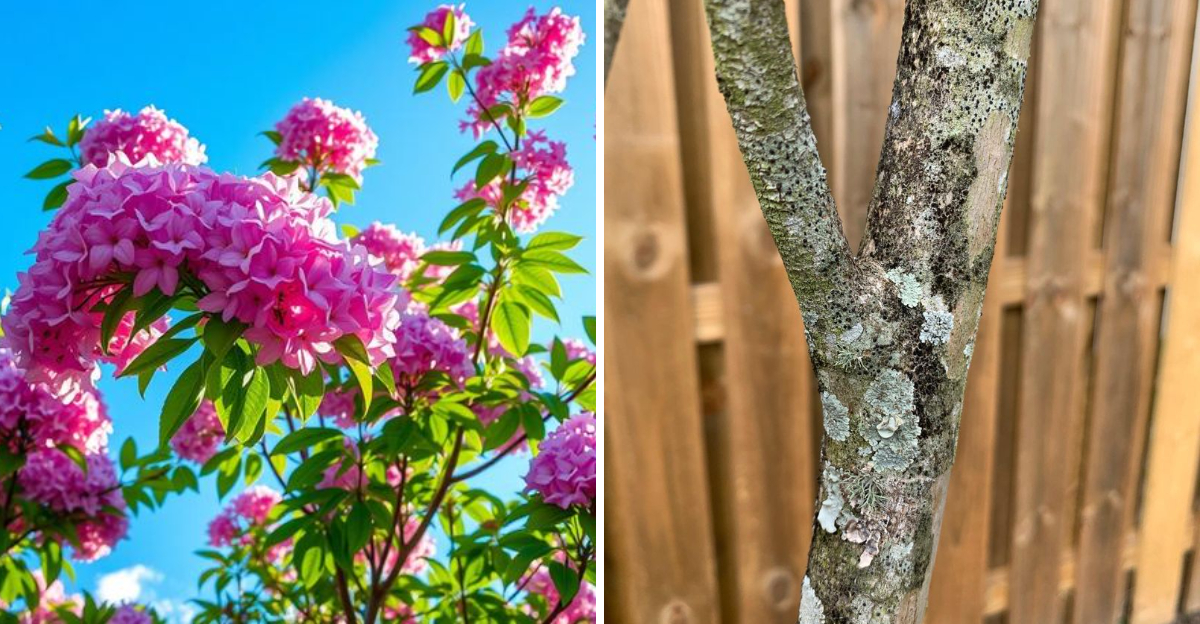
A Florida crape myrtle can look healthy through early summer, then seem to change almost overnight once August settles in.
The bark darkens. Leaves lose their shine. Pale bumps may appear around branch crotches, while black residue spreads across stems and foliage until the tree looks much worse than it did a few weeks earlier.
That timing makes the weather an easy suspect.
But the real story is more complicated.
Several problems can overlap on the same tree, and the humid late-summer backdrop can make each one harder to separate from the next.
One symptom comes from insects. Another grows on what those insects leave behind. Others have more to do with wet foliage, crowded growth, or seasonal stress.
So what are you actually looking at?
The answer starts on the bark, not with a spray bottle.
Once you know which clue belongs to which problem, August becomes far less confusing, and you can respond without treating the wrong target or making the tree’s natural defenses weaker in the process.
1. Humid Weather Keeps Foliage Wet Longer
The first correction is important: humid weather does not automatically mean crape myrtle bark scale populations suddenly explode.
What August does is make several visible problems overlap.
Florida crape myrtles can carry bark scale, aphids, sooty mold, leaf spot, or mildew at the same time, and late-summer moisture can leave the tree looking much rougher than one insect problem alone would suggest.
Start with the bark.
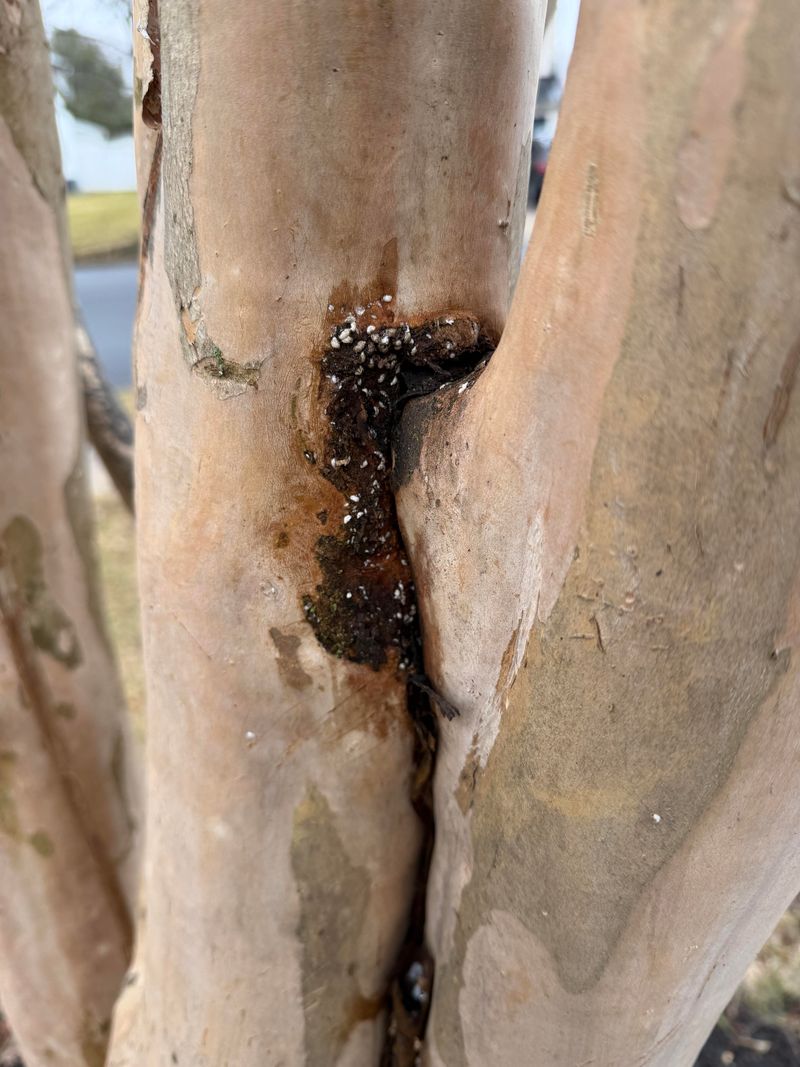
Crapemyrtle bark scale, Acanthococcus lagerstroemiae, appears as white to gray felt-like bumps on woody stems, branch crotches, pruning wounds, and sometimes smaller twigs.
UF/IFAS notes that mature females can ooze pink when crushed, which is one of the most useful identification clues.
Black bark is not enough.
Heavy bark-scale infestations produce honeydew, and sooty mold grows on that sugary material. Crape myrtle aphids can produce the same black coating, so the dark residue does not tell you which insect is responsible.
That distinction matters in Florida because the invasive scale is still a pest worth tracking carefully. It was first confirmed in the Florida Panhandle in 2021, and state and Extension programs continue monitoring its spread.
August may make the tree look worse.
The white or gray insects on woody tissue are what tell you bark scale is actually part of the problem.
2. Honeydew Makes Sooty Mold More Noticeable
Black soot across the trunk can look like a disease eating into the bark. It usually is not.
Sooty mold grows on honeydew, the sugary waste produced by sap-feeding insects.
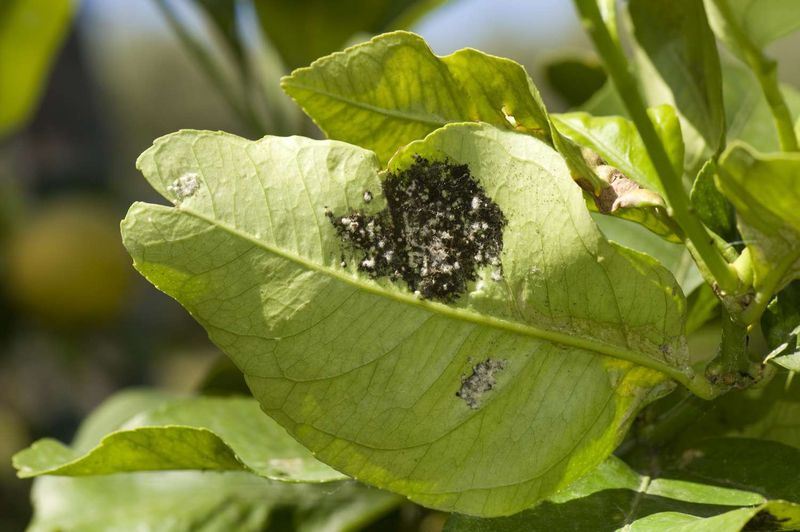
Crapemyrtle bark scale can create large amounts of it, but crape myrtle aphids also produce honeydew and can cover leaves, branches, patios, cars, and pavement underneath the canopy with sticky residue.
That is why treating the black coating alone gets you nowhere.
Look at where the insects are feeding. Bark scale attaches to woody parts of the tree and often clusters around crotches, old pruning wounds, and sheltered bark. Aphids are found mainly on leaves and tender green growth.
Your Florida Garden Changes Every Week. Your Plan Should Too.
Gardening in Florida changes quickly throughout the season. Every Friday you’ll receive a simple weekly plan showing exactly what to plant, prune, fertilize, harvest, and protect so you never miss the right timing.
Once the honeydew source declines, sooty mold gradually becomes less important. Washing reachable bark and foliage can improve appearance, but cleaning does not replace insect identification and management.
UF/IFAS specifically recommends inspecting any crape myrtle covered in sooty mold to determine whether bark scale or another honeydew-producing insect is responsible.
Heavy bark-scale infestations can be especially conspicuous because the white scale coverings contrast sharply with blackened bark.
In humid Florida weather, that messy combination can look dramatic.
Use the black coating as a clue, not a diagnosis.
Find the insect producing the honeydew first, and the next step becomes much easier to choose.
3. Dense Canopies Hold Moisture Around Leaves
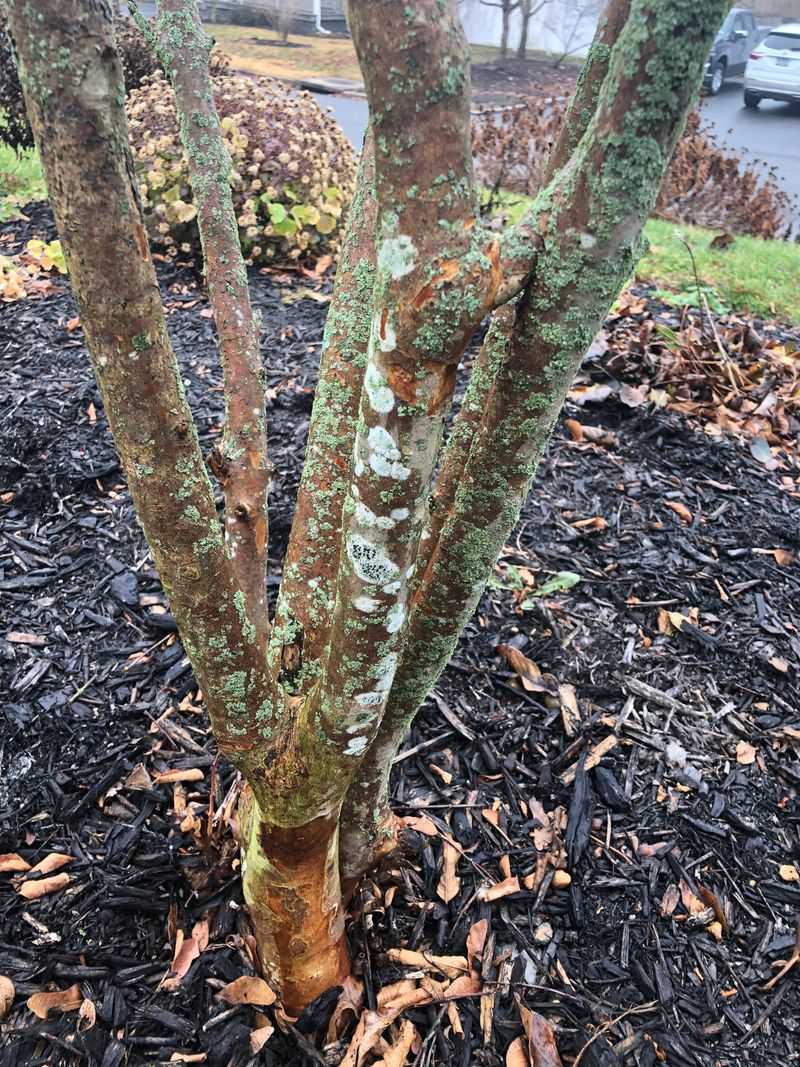
Dense growth can make a late-summer crape myrtle harder to inspect and easier to misread.
Branches packed through the center hide bark crotches, old pruning wounds, and undersides where scale insects may cluster.
Crowded foliage also stays damp longer after rain or irrigation, which can increase the visibility of separate foliar problems such as powdery mildew.
The solution is not an August haircut.
Florida crape myrtles generally need far less pruning than many landscapes receive. Repeated topping, often called crape murder, creates clusters of vigorous shoots and more pruning wounds instead of preserving the tree’s natural framework.
Those wounds matter here.
Florida’s state pest alert notes that light bark-scale infestations can hide in bark notches, branch forks, and old pruning wounds.
Over-pruned trees can therefore become harder to scout because the structure is packed with exactly the sheltered places you need to examine.
Do structural pruning during the appropriate dormant-season window and keep it selective.
Remove crossing, rubbing, damaged, or genuinely misplaced branches rather than cutting every limb back to the same height. During August, limit yourself to obvious hazards or storm damage.
A naturally open canopy also makes monitoring easier.
You can see the trunk, check branch crotches, and spot white scale coverings before the entire tree becomes blackened with honeydew and sooty mold.
Better structure will not cure bark scale.
It simply makes a problem easier to find before it becomes impossible to miss.
4. Aphid Feeding Leaves Sticky Growth Behind
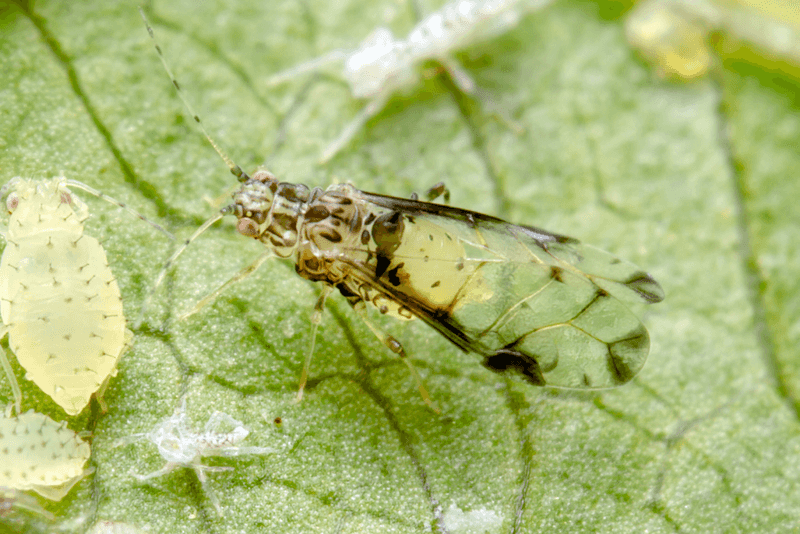
Sticky new growth points you toward a different culprit before you blame every blackened crape myrtle on bark scale.
Crape myrtle aphids feed on leaves and tender shoots. As they take in plant sap, they release honeydew that coats the foliage and everything below the canopy.
Sooty mold then grows across those sugary deposits, creating the same dark appearance that can accompany a bark-scale infestation.
Check the leaves closely.
Aphids are small, soft-bodied insects found on fresh growth and leaf surfaces rather than fixed to older bark. Bark scales are white or gray, felt-covered insects attached to trunks, branches, and twigs.
That location difference is extremely useful.
UF/IFAS notes that aphid infestations commonly cause heavy black sooty mold on crape myrtles, yet the mold itself is generally an appearance problem rather than a fungus invading the tree tissue.
Do not rush into broad-spectrum spraying.
Lady beetles and other natural enemies can suppress aphids, and harsh insecticides may remove beneficial insects along with the pest. A strong stream of water can knock down small aphid populations on reachable foliage.
Then watch what happens.
A tree that remains sticky because aphids are still feeding needs a different response from one carrying stationary white bark scales.
August makes both problems easy to notice.
A five-minute inspection of leaves versus woody stems keeps you from treating the wrong insect.
5. Poor Airflow Lets Leaf Problems Build Faster

Some of the ugliest August symptoms are not bark scale at all.
Crape myrtles can develop powdery mildew and leaf-spot problems, particularly when foliage stays wet or the plant grows in a site with limited sun and airflow. UF/IFAS notes that some cultivars are especially prone to powdery mildew when planted in shade or when leaves remain moist.
Look at the pattern.
Powdery mildew creates a pale, powdery coating on leaves and young growth. Leaf spots appear as lesions within the leaf tissue.
Sooty mold, by contrast, forms a black coating on honeydew and can occur on leaves, stems, and surfaces beneath the tree.
Those symptoms may overlap on one plant.
That is why an August crape myrtle can look as though one problem suddenly became severe when several smaller issues are simply showing up together.
Reduce avoidable leaf wetness.
Irrigate the root zone rather than routinely spraying the canopy, and avoid watering foliage late enough that it stays wet unnecessarily.
Where surrounding shrubs crowd the tree, selective pruning of those neighboring plants may improve airflow without cutting apart the crape myrtle itself.
Cultivar choice helps too.
Several crape myrtle hybrids were selected for stronger mildew resistance, which matters in humid parts of Florida.
Do not make one pesticide responsible for every dark, pale, or spotted leaf.
Separate the symptom first.
August looks complicated because sometimes it genuinely is.
6. Late Summer Stress Makes Damage Stand Out
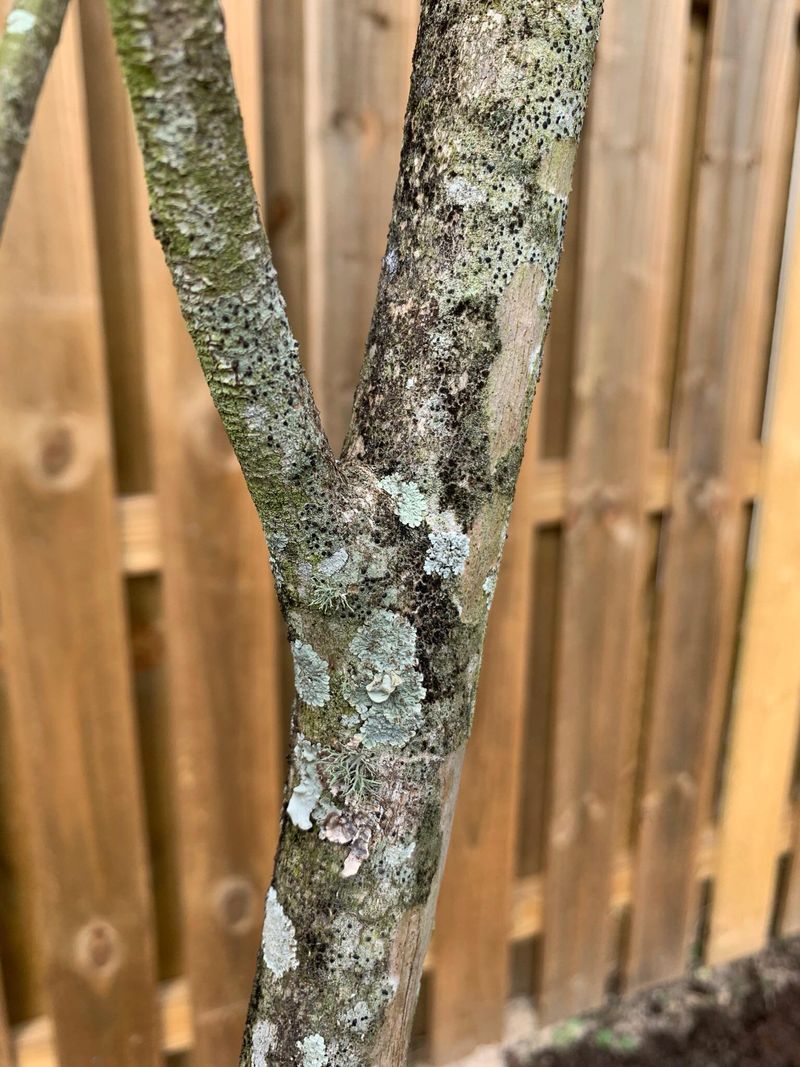
By late summer, accumulated stress can make a crape myrtle look much worse without proving that bark scale numbers increased that month.
The tree has already moved through months of heat, flowering, rainfall swings, insect feeding, and repeated flushes of growth.
Older leaves naturally show more wear, while honeydew and sooty mold may have had weeks to build on branches and foliage.
That is a poor moment for panic fertilizing.
Extra nitrogen can push soft new growth that aphids readily use, and fertilizer will not remove bark scale, sooty mold, or a fungal coating. Feed according to an actual landscape need rather than trying to make an August tree look greener overnight.
Water deserves the same restraint.
Crape myrtles are reasonably drought tolerant once established, but newly planted trees and those under prolonged stress still need appropriate root-zone moisture.
Constantly wetting the canopy or keeping poorly drained soil saturated creates a different set of problems.
Use late summer as an inspection period.
Check the bark for white or gray scale coverings. Turn leaves over for aphids. Look at whether black residue wipes from the surface. Note powdery white growth or actual leaf lesions separately.
That sequence costs nothing and gives you far more useful information than treating the entire tree based on color alone.
A tired August canopy can recover.
The smartest fix starts by deciding which symptom actually needs fixing.
7. Correct Identification Prevents The Wrong Treatment
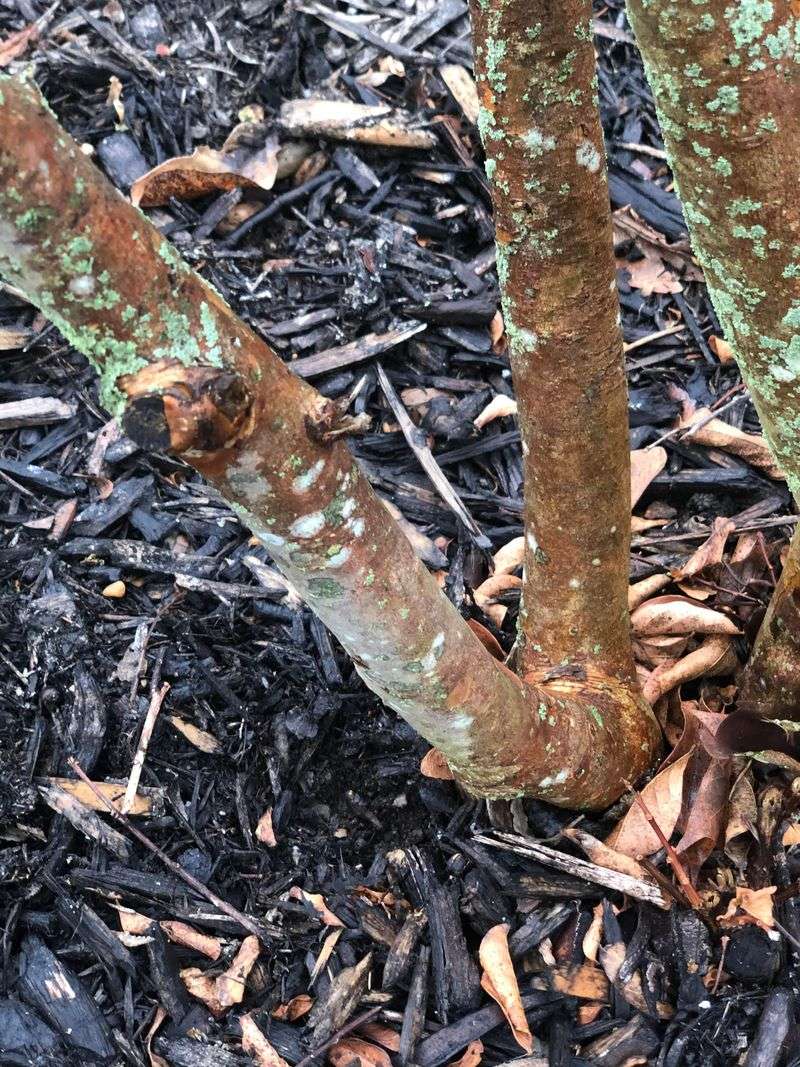
Correct identification matters even more in Florida because crapemyrtle bark scale is an invasive pest whose distribution is still being monitored.
Florida officials confirmed the insect in the Panhandle after it was reported on crape myrtles in Santa Rosa County, and UF/IFAS was still highlighting the pest in its 2026 invasive-ornamental training.
That makes a suspicious white scale worth checking rather than assuming every dirty-looking tree has the same common aphid problem.
Look for white to gray felt-like insects attached to woody tissue.
Clusters often gather at branch forks, bark crevices, old pruning wounds, and protected portions of branches. When the covering is disturbed, females or egg masses can reveal pink material underneath.
Then compare that with the look-alikes.
Normal crape myrtle bark exfoliates in smooth, attractive patches and does not need treatment. Aphids move around tender foliage.
Sooty mold is the black coating growing on honeydew. Powdery mildew is pale and primarily affects foliage and young tissue.
Photographs can help with initial screening, but a new or uncertain infestation deserves expert confirmation.
Florida’s Department of Agriculture and Consumer Services and UF/IFAS Extension can help identify suspected bark scale, particularly where the pest has not been documented locally.
Do not let August humidity make the diagnosis for you.
The insect itself is the evidence that matters, and finding it correctly is what keeps the treatment from becoming another problem.