Better Front Yard Trees Than Crape Myrtle For North Carolina Homes From The Piedmont To The Coast
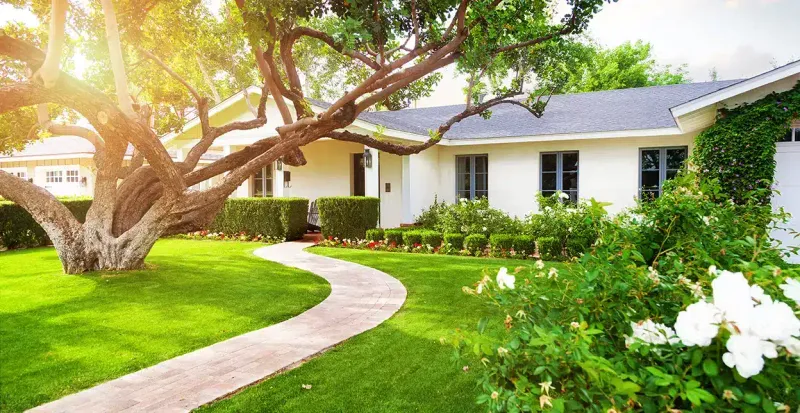
You pull into the driveway on a July evening, and there it sits again. That crape myrtle you planted, chopped back to knuckles last spring, now shooting up in a tangle with a few tired blooms. Half the yards on your street look the same, and honestly, they all blend together. The good news is that North Carolina grows dozens of trees that do more, feed birds and pollinators, hold up to summer storms, and never need that ugly yearly haircut.
Here are nine that earn their spot out front, from the red clay of the Piedmont to the sandy soil down at the coast.
1. Flowering Dogwood Turns Every Spring Into An Event
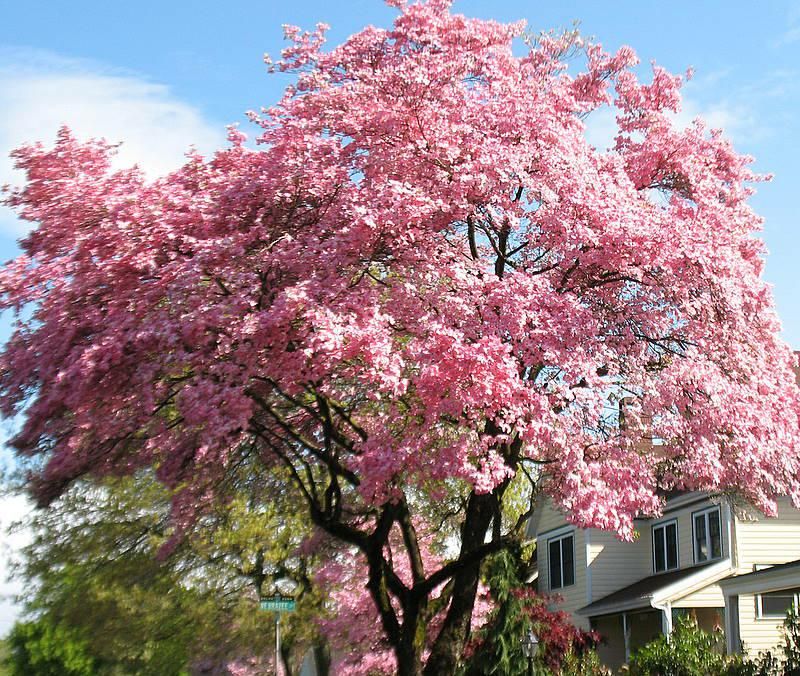
Drive through any Piedmont neighborhood in early April and you already know the tree that stops traffic. The flowering dogwood, Cornus florida, opens white or pink blooms before most trees even wake up, and it is North Carolina’s state flower for good reason.
Here is where it gets better than crape myrtle. Those spring flowers turn into bright red berries by fall, and more than 30 species of birds feed on them, including cardinals and woodpeckers heading into winter. The leaves blaze deep red in October too, so you get three seasons of show instead of one.
Dogwoods stay small, usually 15 to 25 feet, so they fit under power lines and beside a one-story house without swallowing it. They genuinely prefer a little afternoon shade, which suits an east-facing front yard perfectly.
Plant one in fall, spacing it at least 15 feet from the house, and mulch a wide ring to keep that red clay from baking dry. NC State Extension recommends the disease-resistant Appalachian varieties if anthracnose worries you.
Give it a season, and you will find yourself watching for those first blooms like an old friend coming home.
2. Eastern Redbud Blooms Right On The Bark
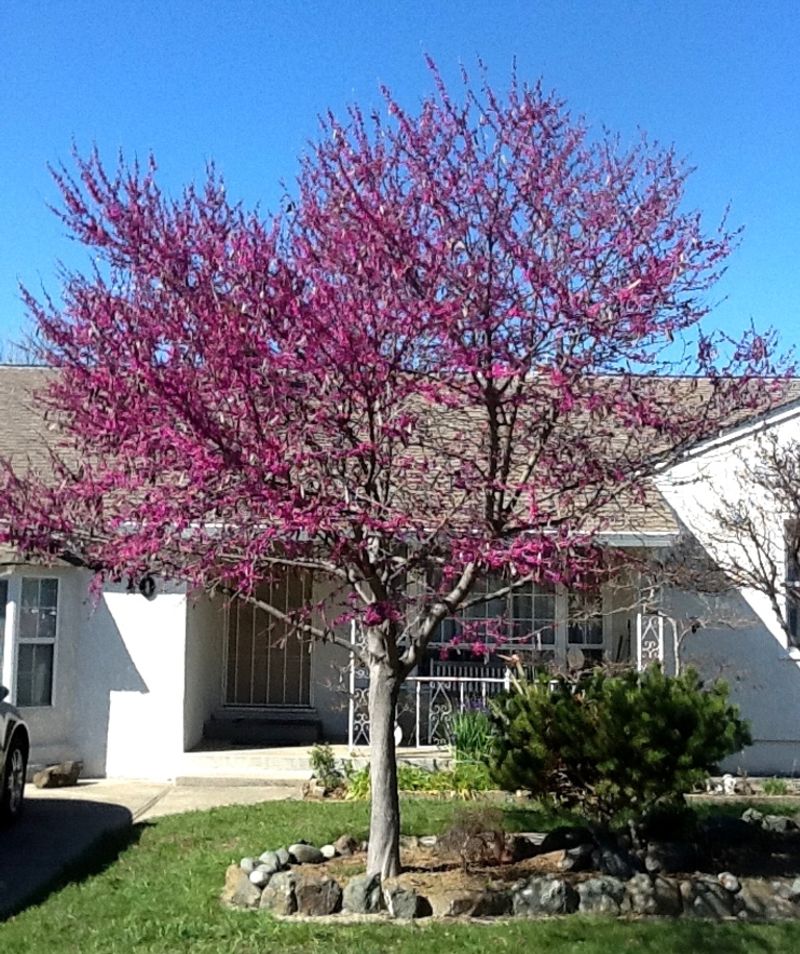
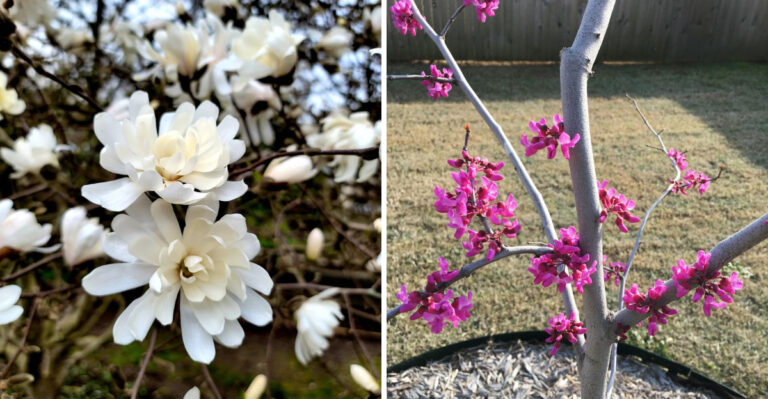
Most trees wait for leaves. The eastern redbud, Cercis canadensis, skips that step and pops pinkish-purple flowers straight out of its bare branches and trunk in late March, weeks before crape myrtle even thinks about waking up.
The surprise is what those flowers do. Native bees and early butterflies rely on redbud blooms when almost nothing else is open, so you are feeding pollinators at the hungriest time of year. After the show, heart-shaped leaves fill in for clean summer shade.
Redbuds handle Piedmont clay and Sandhills sand about equally well, topping out around 20 to 30 feet with a graceful spreading shape. They tolerate the muggy summers and the odd surprise cold snap that dips below 20 degrees.
Set one out in fall, 20 feet from the foundation to give the canopy room. Water deeply once a week the first summer, roughly 10 gallons, and then it mostly fends for itself.
You will catch neighbors slowing down every March, wondering how a tree can bloom on its own bark.
3. Serviceberry Feeds You And The Birds Both
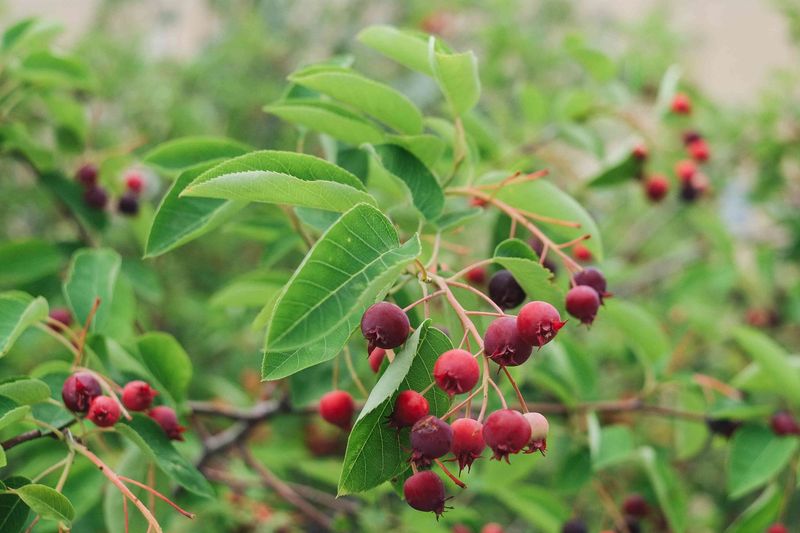
Picture stepping off the porch in late May and eating breakfast off a tree in your own front yard. Serviceberry, Amelanchier arborea, makes that real with sweet blue-purple berries that taste like a blueberry crossed with an almond.
Your North Carolina Garden Changes Every Week. Your Plan Should Too.
Gardening in North Carolina changes quickly throughout the season. Every Friday you’ll receive a simple weekly plan showing exactly what to plant, prune, fertilize, harvest, and protect so you never miss the right timing.
But the berries are only round two. White clouds of flowers open in early spring, then June brings fruit that cedar waxwings and robins will fight you for, and October closes with orange-red leaves. Four seasons of interest from a tree that barely reaches 20 feet.
Serviceberry works from the mountains through the Piedmont, comfortable in zones 6a to 8a, and it shrugs off wet spring soil better than most. The multi-stemmed form makes a soft, natural anchor beside a walkway.
Plant in fall about 12 to 15 feet from the house, and keep the root zone mulched. It is not a magic solution to every problem, but it is one of the hardest-working small trees you can grow here.
Beat the birds to a handful of berries once, and you will grin about it all summer.
4. American Fringe Tree Drips With Snowy Blooms
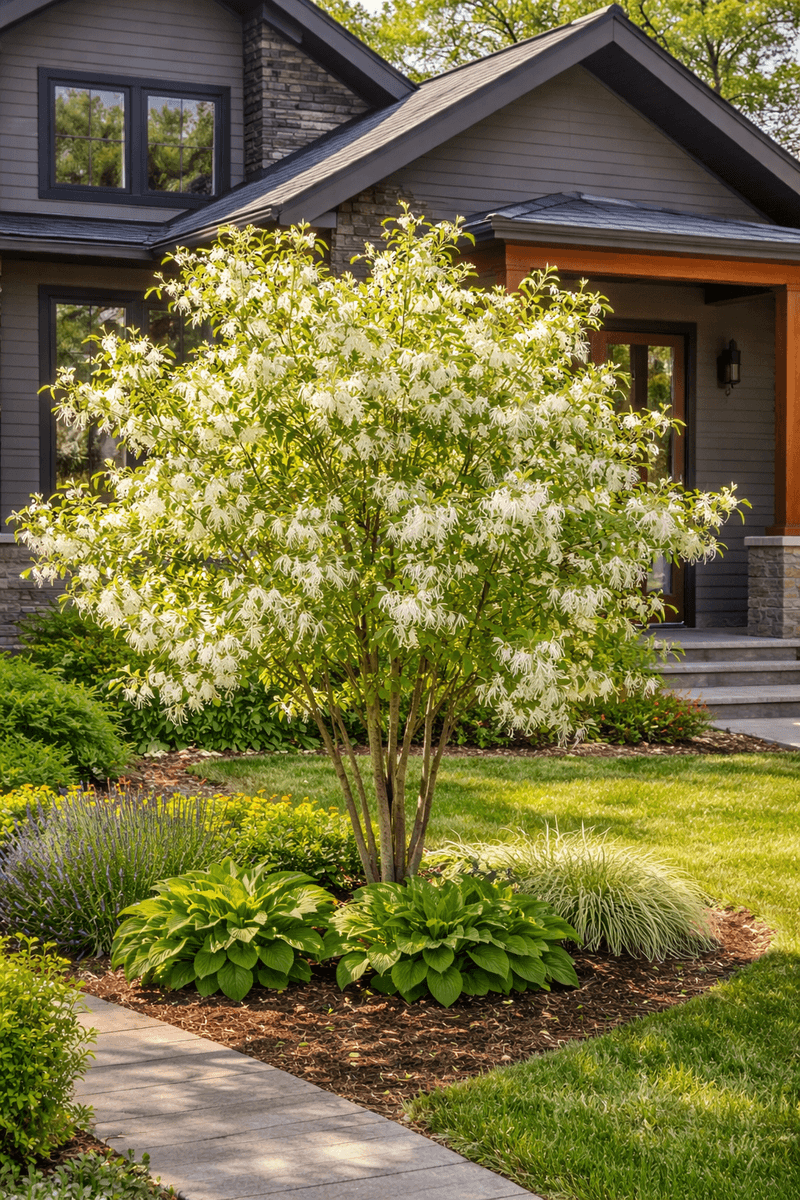
There is a tree that looks like it is caught in a gentle snow shower in the middle of May, and hardly anybody plants it. Meet the American fringe tree, Chionanthus virginicus, sometimes called old man’s beard for its long, drooping white flower fringes.
Why it beats crape myrtle comes down to fragrance and timing. The blooms carry a light, sweet scent across the whole front yard, and they arrive in mid to late spring when your neighbors’ crapes are still bare sticks. Female trees follow up with dark blue fruit that birds clean off fast.
Fringe trees stay modest, around 12 to 20 feet, and they take Coastal Plain heat and Piedmont clay in stride. They also laugh off the emerald ash borer problem plaguing other trees, which is a quiet relief.
Fall planting suits them best, set 15 feet out with steady water the first year. Slow to start, sure, but worth every patient week.
Stand under one in full bloom on a warm evening, and you will understand why the old-timers gave it such a poetic name.
5. Southern Magnolia Owns The Coastal Look
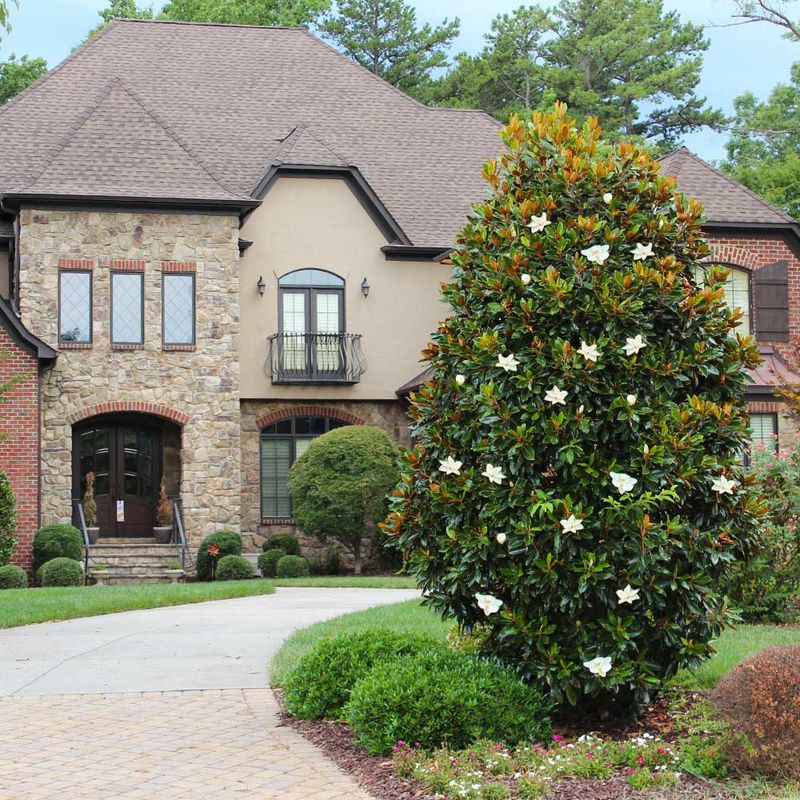
Nothing says a Carolina summer like the smell of a magnolia flower the size of a dinner plate. The southern magnolia, Magnolia grandiflora, offers glossy evergreen leaves and creamy white blooms up to 10 inches across from May clear into July.
Crape myrtle drops every leaf and goes bare all winter. Magnolia does the opposite, holding thick green foliage year round, so your front yard never looks empty in January. Those seed cones later split open to show red seeds that birds love.
These trees thrive in the muggy heat and sandy soil of the Coastal Plain and lower Piedmont, comfortable in zones 7a through 9. The catch is size, since a full magnolia can reach 60 feet tall and 40 feet wide.
Give it real room, at least 25 feet from the house, or choose a compact variety like Little Gem that tops out near 20 feet. Plant in fall and mulch to catch the dropping leaves.
One deep breath by an open bloom on a June morning, and you are hooked for life.
6. Red Maple Delivers Fall Color On Autopilot
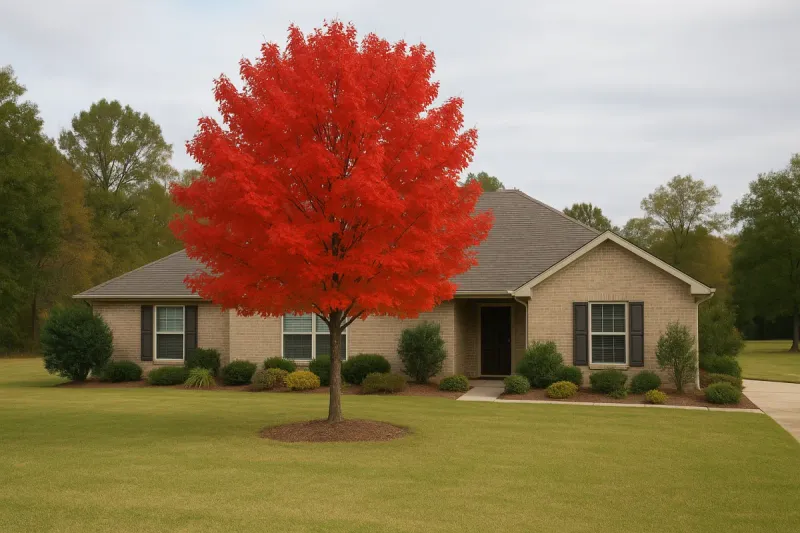
Some October, you will look up and realize your whole street glows because of one tree everybody planted for a reason. The red maple, Acer rubrum, is native across all of North Carolina, from the mountains to the tidewater, and it turns fiery scarlet with almost no effort.
The advantage over a crape myrtle is honest shade and reliability. A red maple grows fast, 40 to 60 feet, and throws down a canopy that can shave real dollars off the summer power bill by cooling the house. Tiny red flowers in February also give early bees a first meal.
Red maples take wet clay and poor soil without complaint, one reason they show up in swamps and suburbs alike. They handle the hurricane winds of the Coastal Plain better with proper spacing and pruning.
Plant in fall, keep it at least 25 feet from the foundation so roots stay clear of pipes, and water weekly the first season. Choose a named cultivar like October Glory for the most dependable color.
Rake a few leaves in November, and call it a fair trade for that view.
7. Yaupon Holly Keeps Songbirds Around All Winter
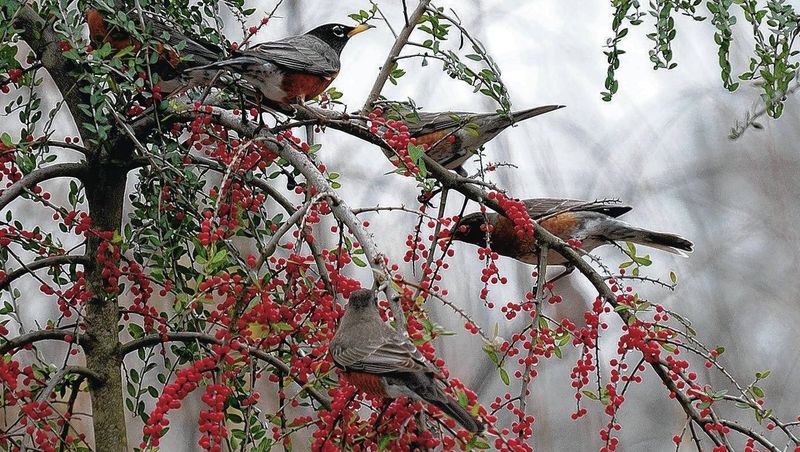
Cold gray January, the flower beds are asleep, and yet one corner of the yard is loud with cardinals and cedar waxwings. Odds are they found a yaupon holly, Ilex vomitoria, loaded with red berries when almost nothing else is feeding them.
Where crape myrtle checks out for the season, yaupon stays evergreen and productive. It is one of the few native plants that actually contains caffeine, and coastal folks have brewed its leaves for centuries. The berries carry birds through the leanest months.
Yaupon is tough as nails, sailing through drought, salt spray, and sandy Coastal Plain soil, hardy in zones 7a to 9. Grown as a small tree it reaches 15 to 20 feet, or you can limb it up into a tidy specimen near the entry.
You need a female plant for berries and a male somewhere nearby for pollination. Plant in fall, space multi-stem forms about 10 feet apart, and it needs very little once established.
Watch it fill with birds on a frozen morning, and your quiet winter yard suddenly feels alive.
8. Sweetbay Magnolia Handles The Wet Spots
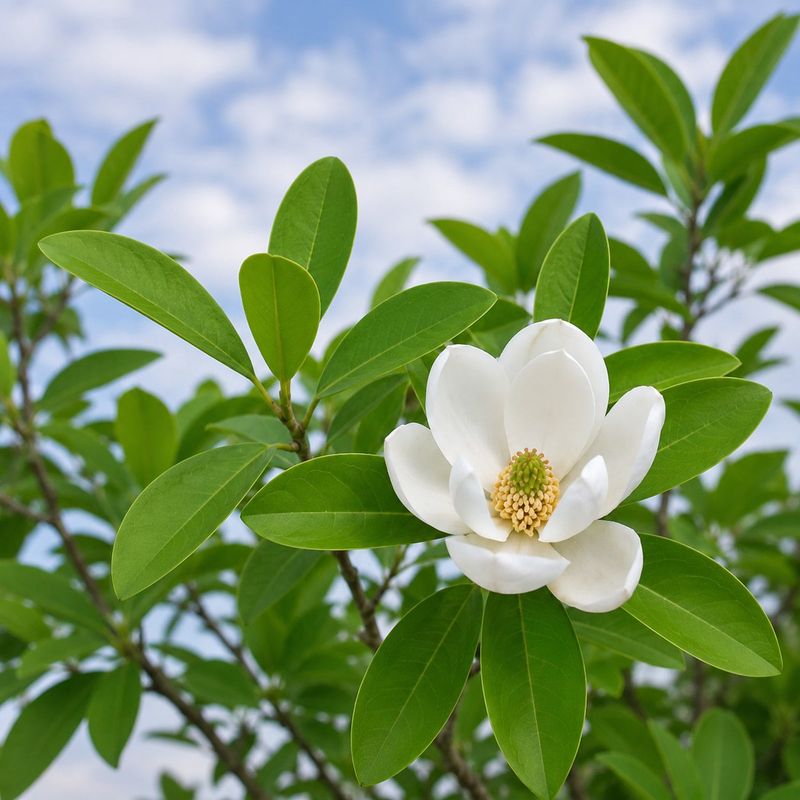
That low corner of the front yard that stays soggy after every afternoon storm has beaten a lot of trees. Sweetbay magnolia, Magnolia virginiana, actually likes wet feet, which makes it a quiet problem-solver where crape myrtle would sulk and rot.
The reward for planting in the boggy spot is lemon-scented white flowers that open through late spring and summer. Leaves flash silvery undersides in the breeze, and the tree serves as a host for the eastern tiger swallowtail butterfly, so caterpillars and monarchs alike find a foothold.
Sweetbay fits smaller yards at 20 to 35 feet and stays semi-evergreen in the warmer Coastal Plain, hardy through zones 7 to 9. It shrugs off the humidity that makes so many trees fungal and cranky here.
Set it out in fall in that damp low spot, no more than 15 feet from the walk, and it will barely ask for water. NC State Extension lists it among the best natives for poorly drained sites.
Turn a wet nuisance into a butterfly stop, and you have genuinely upgraded the worst part of the yard.
9. Chinese Pistache Shrugs Off Storms And Drought
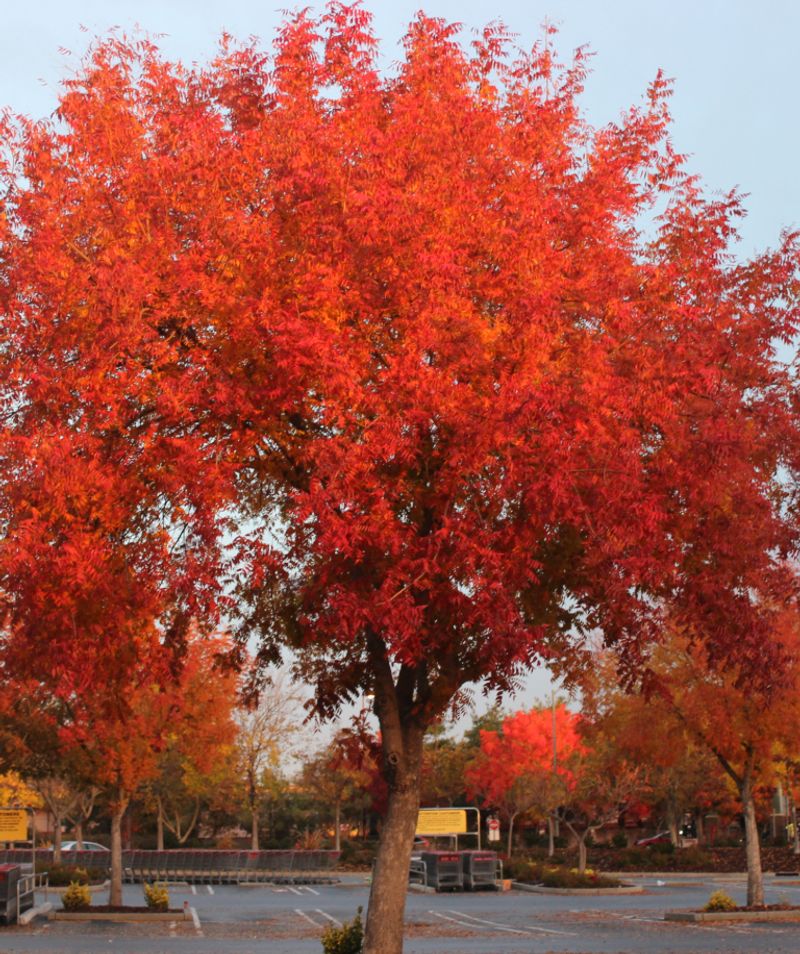
Ask around after a hurricane rolls through the Coastal Plain, and you will hear which trees snapped and which stood. The Chinese pistache, Pistacia chinensis, has a reputation for holding firm, plus it ends the year in a burst of orange, red, and gold that outshines most anything on the block.
Unlike crape myrtle, it does not need coddling or annual pruning. Once rooted, it laughs at drought and clay and blistering pavement heat, which is why cities plant it along parking lots. That toughness translates straight to a low-fuss front yard.
It reaches a rounded 30 to 35 feet, giving you real shade without the runaway size of an oak. Female trees carry small red berries that ripen blue and draw in birds by fall.
Plant in fall, keep it 20 feet from the house, and stake it the first year since young ones lean while they build a trunk. Water weekly at first, then step way back.
Come November, when the neighbors are still raking sticks, your tree will be putting on the best color show on the street, and you will not have lifted a finger to earn it.