Black Fuzzy Caterpillars In Georgia May Still Be Crossing Yards This November
In Georgia, late fall often brings small, bristly wanderers across driveways, sidewalks, and freshly raked lawns. They move with surprising speed and a clear sense of purpose.
I like how they seem to ignore everything except the path ahead.
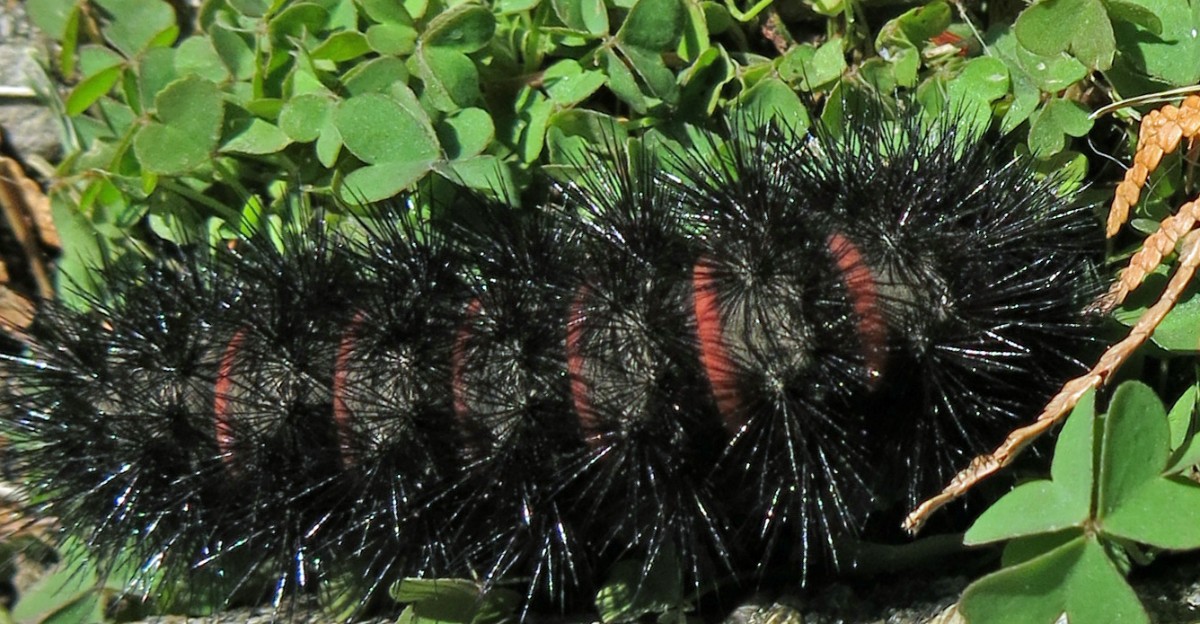
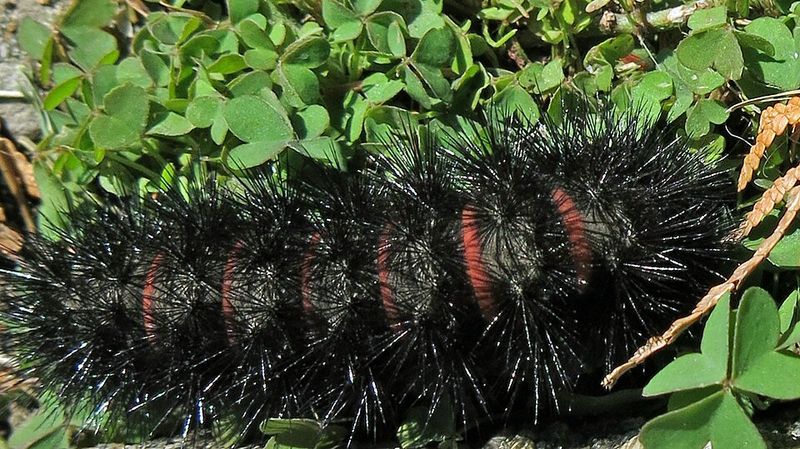
Some are covered in thick black bristles, with flashes of red hiding between their body segments. That unusual appearance makes them easy to mistake for other fuzzy caterpillars.
But there is a more interesting story behind where they are headed and why.
Those tiny travelers crossing your grass in November are on a mission, and their destination may surprise you.
1. That Black Fuzzy Caterpillar On Your Driveway Has Somewhere To Be
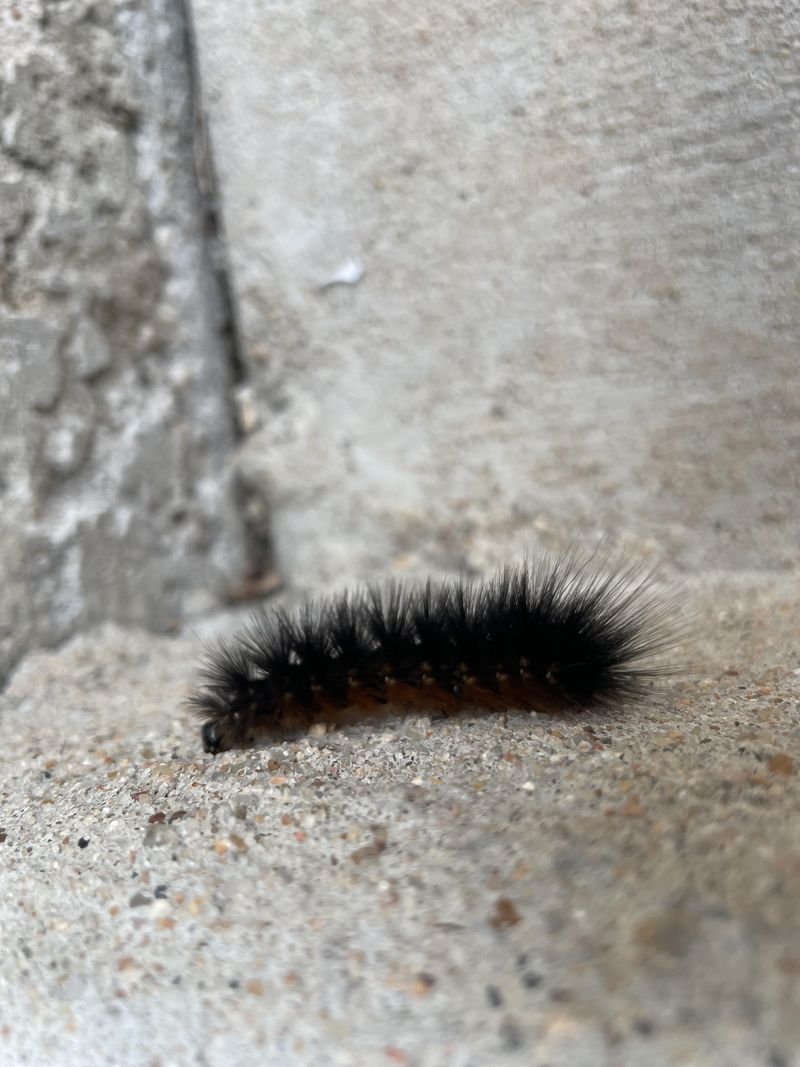
Some of the large black fuzzy caterpillars you see in November are giant leopard moth caterpillars. They are the young stage of the giant leopard moth, a striking native species found across much of eastern North America.
Here in the South, these caterpillars spend summer and early fall eating quietly among garden plants and weeds. As the season changes, many begin wandering in search of shelter.
That is the moment you notice them, often crossing pavement in a hurry.
So what are they looking for? A safe winter hideout.
Giant leopard moth caterpillars spend the cold months as caterpillars, so they need a sheltered spot under leaf litter, logs, loose bark, or rocks.
I find it charming that their big journey is mostly about finding a good blanket. Sunny driveways and sidewalks can also warm them up, which helps them keep moving on cool mornings.
In Georgia, mild fall weather can stretch this travel season well into November. Warm spells may even bring them out again on a sunny December afternoon.
Seeing them now is a normal seasonal pattern, not a sign of anything unusual in your yard.
Give them a few seconds to cross, and they will soon tuck themselves away.
2. Cold November Nights Send These Bristly Wanderers Looking For Cover
Few backyard creatures have a winter routine quite like this. Giant leopard moth caterpillars spend the colder months in their caterpillar stage, tucked away in sheltered spots until conditions improve.
Rather than turning into moths before winter arrives, they wait out the season beneath fallen leaves, logs, or other natural cover. These hiding places help shield them from harsh weather and sudden temperature changes.
Georgia winters are much gentler than those up north, but a cold snap in the north Georgia mountains can still test them. Finding a protected spot gives them a better chance of making it through the colder months.
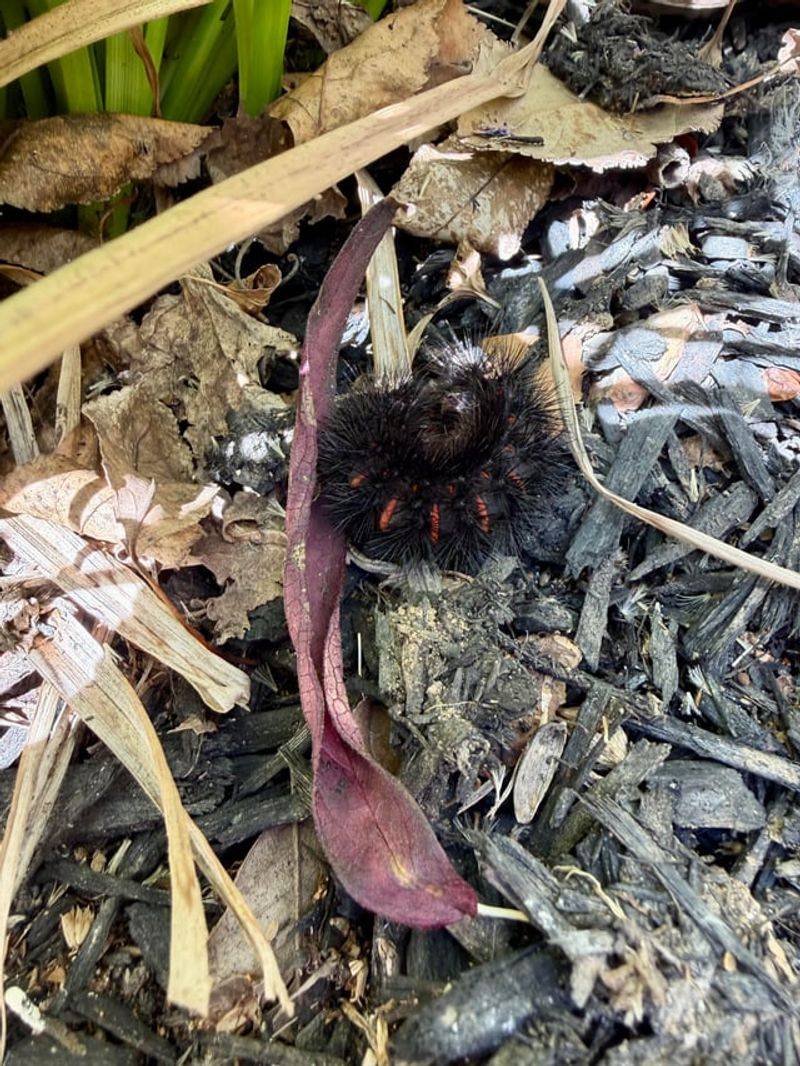
When disturbed, a giant leopard moth caterpillar usually curls into a tight, bristly ball. You may find one this way if you lift a patio stone or rake deep leaves in January.
If that happens, simply tuck the caterpillar back under some leaves nearby. Moving it into a warm house can disrupt its seasonal timing and leave it without suitable food.
I love that something so small can make it through winter with little more than a sheltered hiding place and its own fuzz. It makes my wool socks feel a little less impressive.
Honestly, it is one of nature’s neatest survival strategies.
3. A Flash Of Red Beneath The Black Bristles Gives This Caterpillar Away
At first glance, giant leopard moth caterpillars look like little black bristle brushes crawling across the ground. But there is a surprising splash of color hiding beneath all that fuzz.
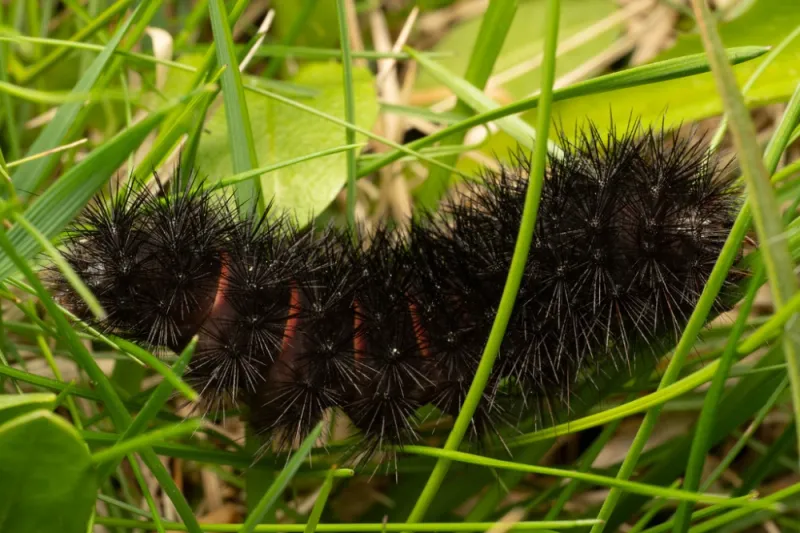
Their bodies are covered in stiff, glossy black bristles, making them look almost entirely black as they move.
The real surprise comes when one curls into a tight ball and reveals bright red bands between its body segments.
Those red markings are one of the easiest ways to recognize this species. Unlike the familiar banded woolly bear, which has a rusty orange section across its back, the giant leopard moth caterpillar keeps its red coloring mostly hidden beneath the bristles.
You might walk past one without noticing anything unusual. I have to admit, the contrast between those black bristles and red bands is pretty striking once you know what to look for.
The markings are not a warning about the coming winter, and they certainly cannot predict Georgia’s weather. They are simply part of what makes this caterpillar distinctive.
Next time you spot a black fuzzy caterpillar crossing your driveway, take a closer look without disturbing it.
You might discover that its most interesting feature was hiding in plain sight.
4. Not Every Black Fuzzy Caterpillar In Georgia Is A Woolly Bear
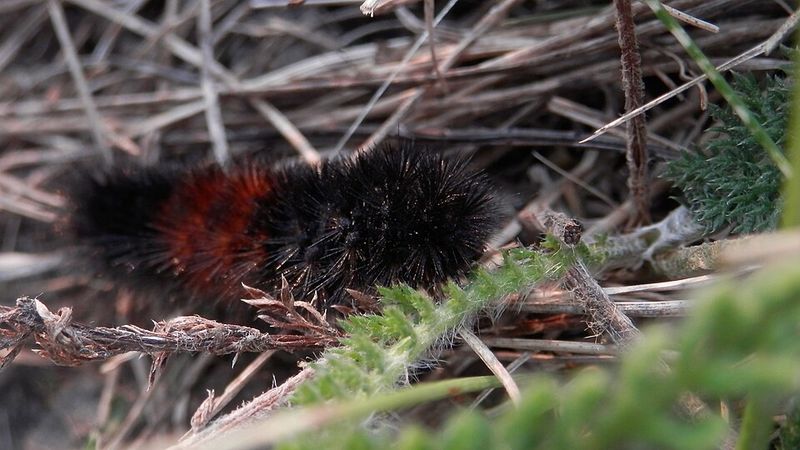
Spot an all-black fuzzy caterpillar and you may wonder which species it is. Georgia has a few lookalikes worth knowing, and they are not always easy to tell apart.
The giant leopard moth caterpillar is one of them. It is glossy black with stiff bristles, and red bands flash between its segments when it curls up.
Like banded woolly bears, it overwinters as a caterpillar and wanders in fall.
Banded woolly bears are usually black at both ends with a rusty orange band in the middle. That makes them easier to distinguish from giant leopard moth caterpillars, which appear almost entirely black until their red markings become visible.
Some yellow woolly bears, the young of the Virginian tiger moth, can appear dark too. Their hairs range from pale yellow to rusty brown, and they have a softer appearance.
Pay close attention to anything with flat, tufted hair or striking color patterns. The puss caterpillar, also called the southern flannel moth caterpillar, looks like a soft toupee but hides venomous spines.
It is tan to gray rather than black, yet people sometimes lump fuzzy caterpillars together.
A quick photo can help you sort them out. Apps like iNaturalist can help with identification, and your local University of Georgia Extension office may be able to assist.
I usually prefer snapping a picture before touching any caterpillar I do not recognize. It is a small habit that can save your fingers from an unpleasant surprise.
5. The Scary Looking Bristles Are Not As Dangerous As They Seem
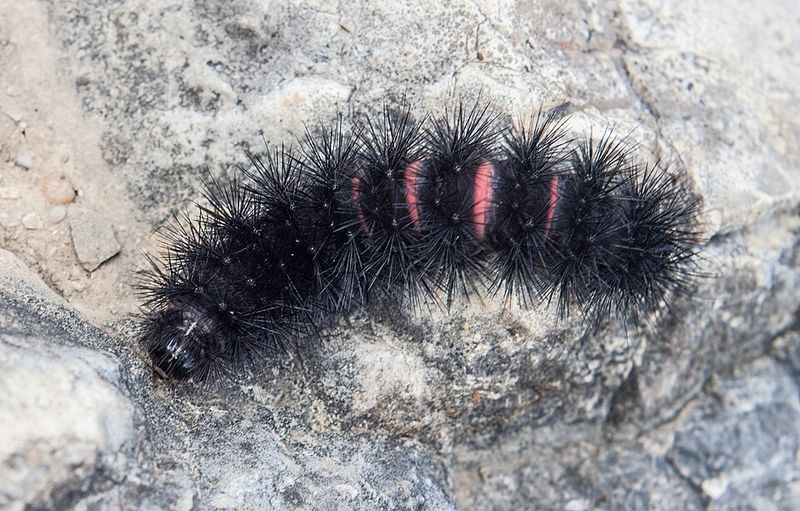
Kids are often curious about letting fuzzy caterpillars crawl across their palms.
Luckily, giant leopard moth caterpillars are not venomous and do not sting.
When disturbed, a giant leopard moth caterpillar usually rolls into a tight ball. Those stiff hairs, called setae, make it a prickly mouthful for birds and other predators.
Still, people with sensitive skin may notice mild itching or a small rash after handling them. The bristles can irritate skin, much like tiny splinters.
Washing hands with soap and water after touching any caterpillar is a smart habit.
For extra caution, use a leaf or a twig to move them. Gardening gloves work well too, especially if you are relocating several from a walkway.
Keep caterpillars away from eyes and mouths, and teach little ones to do the same. If a rash or swelling seems unusual, a call to your doctor is wise.
I have to admit, those long black bristles look a little intimidating at first.
But watching one curl into a tiny ball can turn that first impression into curiosity, especially for someone seeing this unusual caterpillar for the first time.
6. Your Garden Plants May Already Be Feeding These Fuzzy Visitors
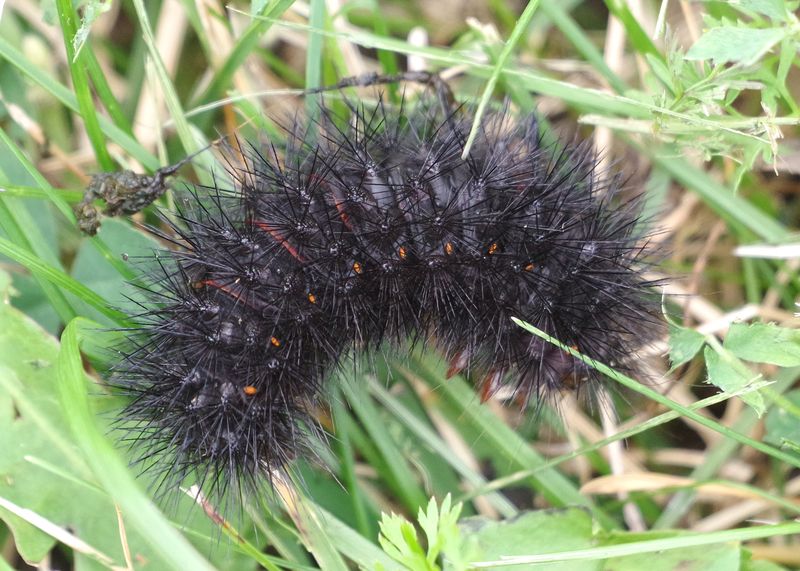
Gardeners tend to panic at the sight of any caterpillar. Giant leopard moth caterpillars rarely deserve that worry.
They are generalist feeders, so they nibble many plants. Their food sources include dandelions, plantain, violets, and other low-growing plants.
In fall, many begin looking for sheltered spots where they can spend the winter.
Occasionally, one might feed on garden plants, leaving a few ragged edges on the leaves. Unless large numbers are present, the damage is usually minor and scattered.
You are more likely to notice a little chewing than a seriously damaged bed.
If a handful show up in your fall garden, simply use a leaf or twig to move them to a nearby sheltered area with suitable plants. No sprays are needed for such a small issue.
Insecticides would also harm helpful insects like pollinators and lady beetles.
I count them as part of a healthy yard. Birds and other wildlife benefit from having insects around.
A garden with a few insect visitors tends to be a more balanced garden.
Fall is also prime planting time in Georgia for kale, collards, and pansies. A passing caterpillar is rarely a reason to worry about your entire fall garden.
Spend your energy on watering and mulching, and let the fuzzy travelers pass through.
7. This Black Caterpillar Eventually Becomes A Surprisingly Beautiful Moth
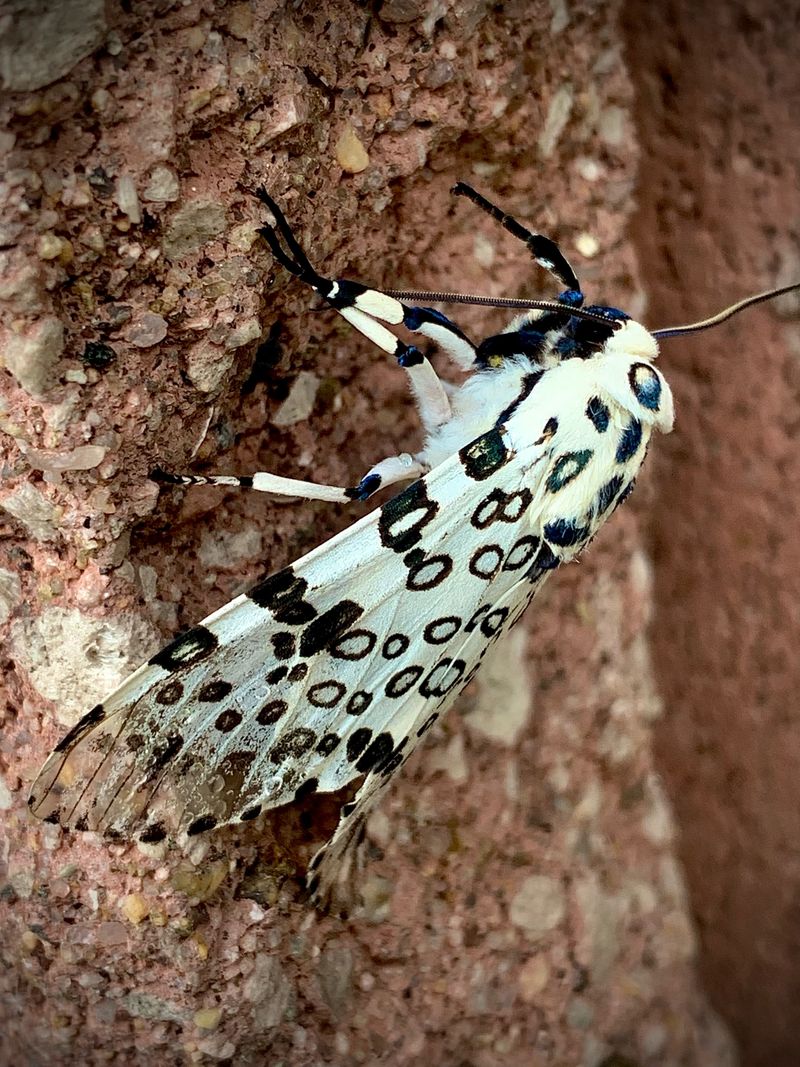
Come spring, the story takes a pretty turn. Giant leopard moth caterpillars emerge from their winter hiding places, resume feeding, and eventually spin cocoons before becoming pupae.
Inside, they undergo a remarkable transformation. The giant leopard moth emerges with bright white wings covered in bold black spots.
Some markings even form hollow rings, giving this moth a striking appearance. Adults are often seen near porch lights at night.
The adults mate and lay eggs on host plants. Those eggs hatch into the next round of caterpillars.
In warmer southern areas, the growing season gives these insects plenty of time to feed and develop.
Caterpillars that spend the winter tucked beneath leaves and other shelter continue the cycle when warmer weather returns. The fuzzy black wanderers you notice in fall have a very different appearance waiting for them as adults.
I find it delightful that the fuzzy creature you step around today eventually becomes such a beautiful moth. It is a fun life lesson to share with kids or grandkids.
Keep an eye on your porch light during warmer months. You might spot one fluttering nearby and recognize an old friend from the driveway.
8. A Pile Of Fallen Leaves Can Make All The Difference This Winter
Want to help these little travelers? The easiest step might be raking a bit less.
Giant leopard moth caterpillars and many other insects spend winter tucked in leaf litter. Bagging every leaf removes the shelter they need.
Instead, rake leaves off the lawn and spread them under shrubs or across garden beds as mulch.
A few logs, flat stones, or a brush pile in a quiet corner also make cozy hideouts. These spots double as shelter for toads, beetles, and other overwintering insects.
Skip broad pesticide sprays in late fall. Most garden pests are already slowing down, and sprays can harm caterpillars that pose little threat.
Hand-picking works fine when you truly need it.
Planting native species helps too. Georgia natives like asters, goldenrod, and native grasses support moths and many other insects through the year.
I keep one leafy corner untouched each winter, and it rewards me with buzzing life in spring. You can watch these black fuzzy travelers crossing your yard this November knowing they have somewhere safe to settle.
Slow down for them on the driveway, and let nature finish its cycle.