Are Yellow Jackets Taking Over Your Georgia Yard This September
Late summer cookouts in Georgia come with a lot of great things. Good food, warm evenings, time outside with people you actually like.
And then the yellow jackets show up and suddenly everyone is swatting at the air and eyeing the trash can nervously.
Sound familiar?
These yellow-striped visitors become noticeably more aggressive and active in late summer and early fall, and it catches a lot of homeowners off guard every single year.
Here is the thing though: their increased presence is not random and it is not your fault.
Seasonal changes drive yellow jacket behavior in ways that have nothing to do with your yard specifically. Understanding what is actually going on this time of year makes a real difference.
It helps you respond calmly, manage your outdoor spaces more confidently, and maybe even enjoy that cookout without the drama.
1. Why September Makes Yellow Jackets More Noticeable
Late summer is a turning point for yellow jacket colonies, and September is often when many homeowners in Georgia begin noticing much more activity around outdoor spaces.
During spring and early summer, colonies are smaller and focused on nest development and raising young.
By late summer, some colonies can grow to hundreds or even thousands of workers, depending on the species and local conditions.
As colonies mature, worker yellow jackets change their feeding patterns. Earlier in the season, they spend much of their time collecting insects and other protein sources to feed developing larvae.
During active brood production, larvae provide carbohydrate-rich secretions that help fuel worker activity. As the colony’s needs shift later in the season, adult workers begin searching more often for outside sources of sugar.
That change is one reason yellow jackets may suddenly show more interest in lemonade, fallen peaches, ripe fruit, and open soda cans. Their increased presence is usually linked to seasonal changes in food availability rather than a sudden change in behavior.
As the season progresses across Georgia, understanding this pattern can help homeowners recognize when yellow jacket activity may increase and take practical steps to reduce unwanted encounters around patios, gardens, and outdoor dining areas.
2. What Actually Attracts Yellow Jackets To Your Yard
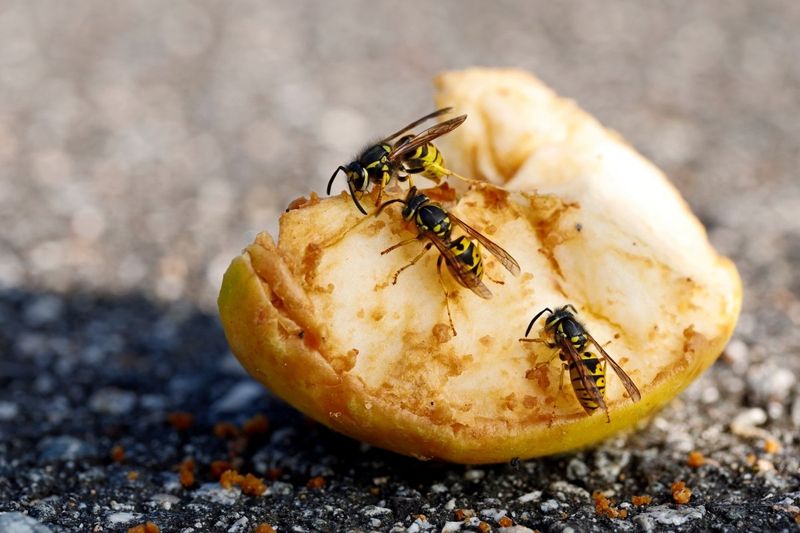
Picnic tables, trash cans, compost bins, and pet food bowls have something in common in September: they can all become food sources for yellow jackets searching for sugar and protein.
In Georgia, warm late-summer weather can keep many outdoor food sources available, making these areas more attractive to foraging workers.
Open soda cans are especially worth watching because a yellow jacket can crawl inside where it may not be noticed.
Fallen fruit is another major attractant in home landscapes. Pear trees, apple trees, fig trees, and muscadine vines can drop fruit that softens and ferments during the late-summer heat.
These sugary odors can draw yellow jackets looking for carbohydrates. Picking up fallen fruit regularly is one practical way to reduce activity near patios, gardens, and outdoor seating areas.
Protein sources matter too. Outdoor grills with leftover food residue, uncovered pet food, and garbage cans without secure lids can attract workers searching for additional food.
Your Georgia Garden Changes Every Week. Your Plan Should Too.
Gardening in Georgia changes quickly throughout the season. Every Friday you’ll receive a simple weekly plan showing exactly what to plant, prune, fertilize, harvest, and protect so you never miss the right timing.
Covering food during outdoor meals, rinsing recycling containers, and keeping trash containers closed can help limit these attractants.
In Georgia yards, these small cleanup habits can make outdoor areas more comfortable during September when yellow jackets are often more noticeable.
Reducing easy food sources does not remove all yellow jacket activity, but it can make heavily used spaces less appealing for foraging workers.
3. How To Spot Common Yellow Jacket Nesting Areas
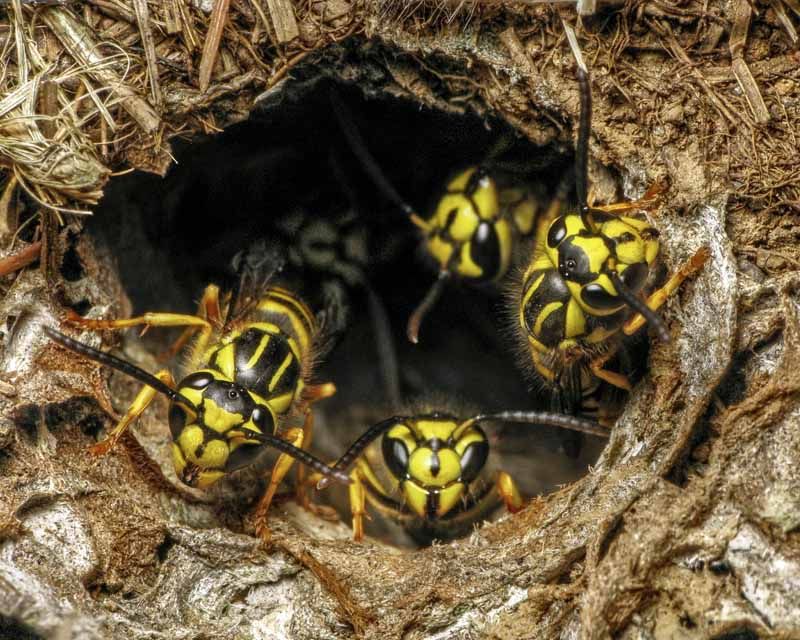
Seeing yellow jackets flying around your yard does not automatically mean there is a nest nearby. Workers can travel hundreds of feet from their nest while searching for food, so the source of activity may not be obvious at first.
In Georgia, this can be especially confusing in late summer when yellow jackets become more noticeable around gardens, patios, and outdoor gathering areas.
If you notice a steady stream of yellow jackets entering and leaving one specific spot, however, a nest may be located close by.
Underground nests are among the most common types found around homes. Yellow jackets often use abandoned rodent burrows, spaces beneath concrete slabs, and gaps around landscape materials.
These entrances can be difficult to spot because they may be small and partly covered by grass, mulch, or leaf litter. Some species may also build nests in wall voids, attic spaces, or other protected areas.
Finding a nest location can be helpful, but approaching it closely is not recommended. Yellow jackets defending a colony may respond quickly when they feel threatened.
If you suspect a nest near a busy area such as a walkway, play space, or porch, observe from a safe distance and look for repeated flight patterns.
In Georgia yards, noting the location without disturbing the area can help you decide whether the nest is far enough away to leave alone or whether professional assistance may be appropriate.
4. Telling Yellow Jackets Apart From Bees And Other Wasps
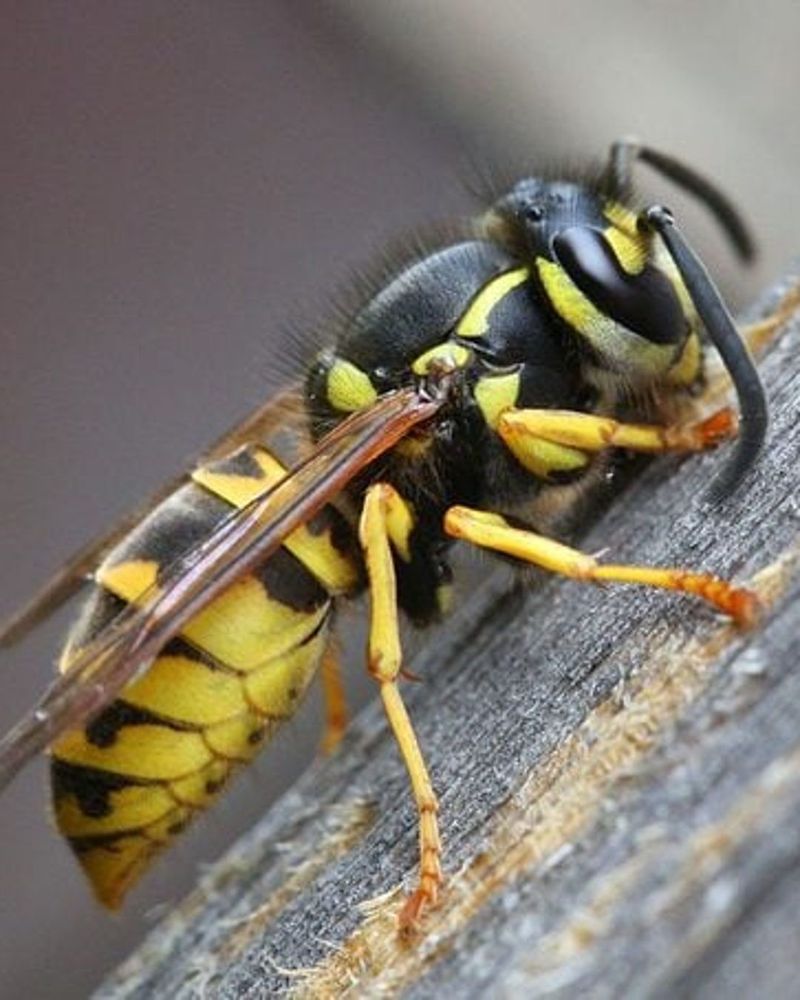
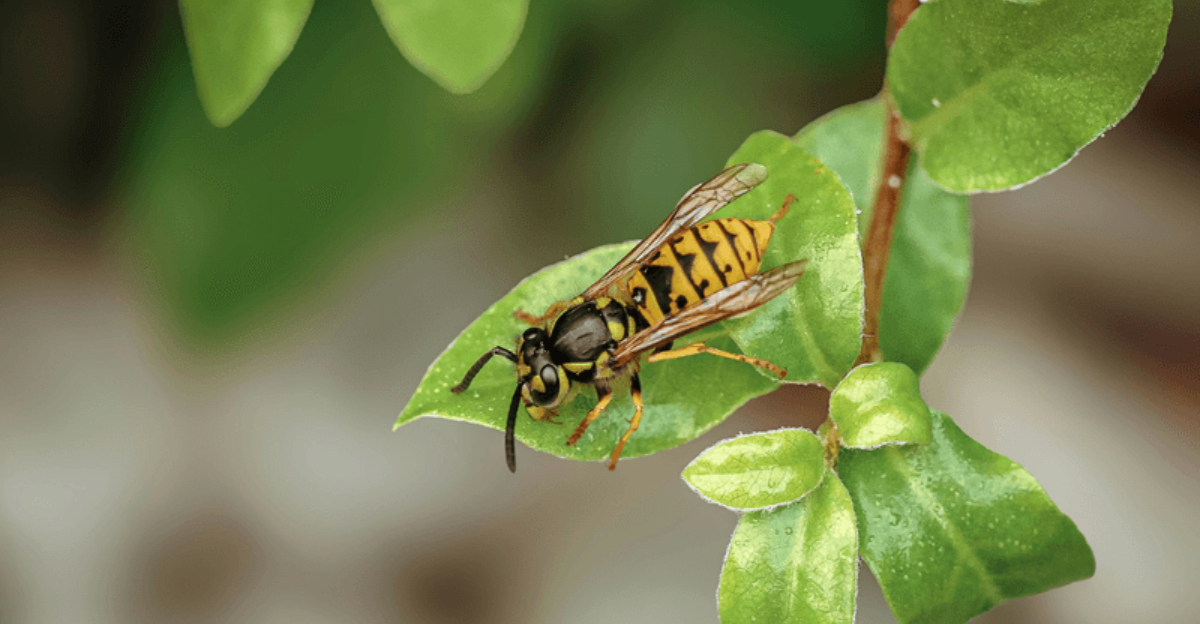
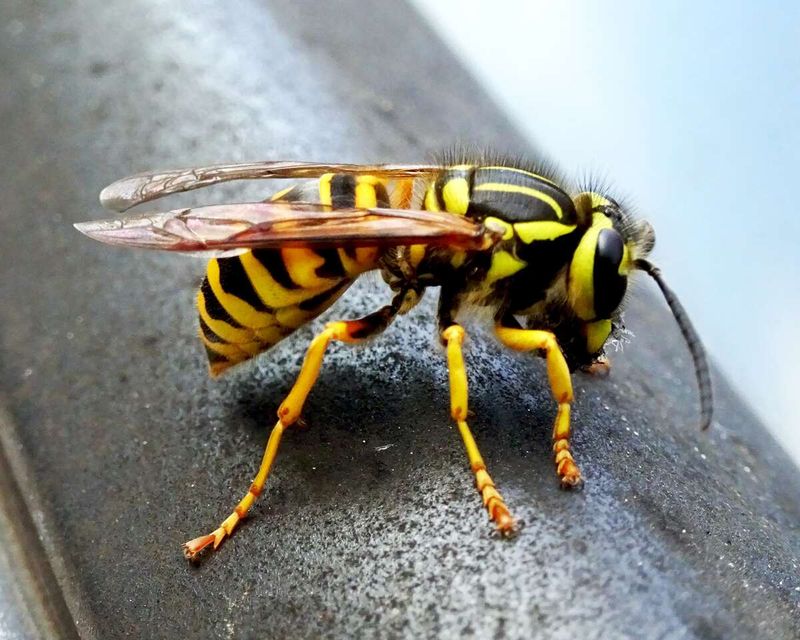
Many stinging insects get grouped together, but yellow jackets have some features that can help set them apart. They often have smooth bodies with yellow and black markings, although patterns can vary between species.
Unlike honeybees, yellow jackets do not have the fuzzy appearance associated with bees, and their bodies usually have a narrower waist.
In Georgia, several wasp and bee species are active during the warmer months, so careful observation is useful before making assumptions.
Behavior can also provide clues. Yellow jackets often fly quickly and may hover around food, drinks, trash, or other sources of sugar and protein.
Honeybees are more commonly seen collecting nectar and pollen from flowers rather than searching through human food areas.
Paper wasps, another group found in Georgia, are usually more slender than yellow jackets and often build open, umbrella-shaped nests under eaves, porch ceilings, or other protected structures.
Trying to identify a stinging insect at close range is not a good idea. If you are unsure what you are seeing, observe from a safe distance and avoid disturbing the insect or any suspected nest.
Learning basic differences between yellow jackets, bees, and other wasps can help homeowners make safer decisions without needing to become insect experts.
The goal is simply to recognize patterns and respond appropriately when these insects appear near outdoor spaces.
5. How Gardens And Landscaping Influence Yellow Jacket Activity
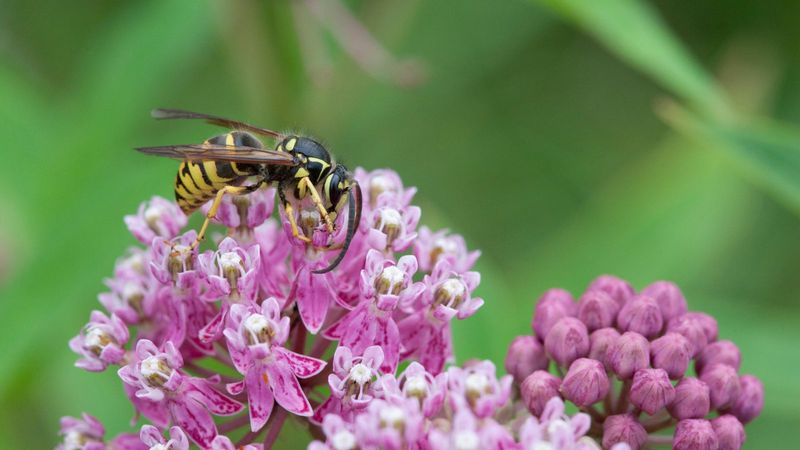
Gardens are productive, beautiful spaces, and they naturally attract many types of insects, including yellow jackets. Flowering plants can support pollinators, and yellow jackets may occasionally visit flowers while searching for food.
In Georgia, late-summer gardens often have a mix of ripe produce, fallen fruit, and insect activity that can create more opportunities for yellow jackets to forage.
However, the biggest attractions around most home landscapes are usually food sources rather than the plants themselves.
Vegetable gardens with ripe or damaged fruits, such as figs, melons, and other soft produce, can become feeding areas during late summer. Fallen fruit beneath trees and vines can also become attractive as it begins to break down.
Compost bins near garden beds may add to the problem when fruit scraps are left exposed. Placing compost away from outdoor seating areas and covering fresh additions with dry material can help reduce odors and limit attention from foraging insects.
Landscaping can influence where yellow jackets are noticed as well. Dense groundcover, thick shrubs near structures, and heavy vegetation can make possible nest entrances harder to see.
Keeping garden areas maintained and checking spaces around foundations can make unusual activity easier to notice.
In Georgia yards, the presence of yellow jackets is usually linked to a combination of available food, nesting locations, and how close those resources are to areas people use regularly. No single plant automatically creates a yellow jacket problem.
Managing attractants and observing activity patterns are often more useful than removing flowering plants that support other wildlife.
6. Practical Ways To Reduce Unwanted Encounters Safely
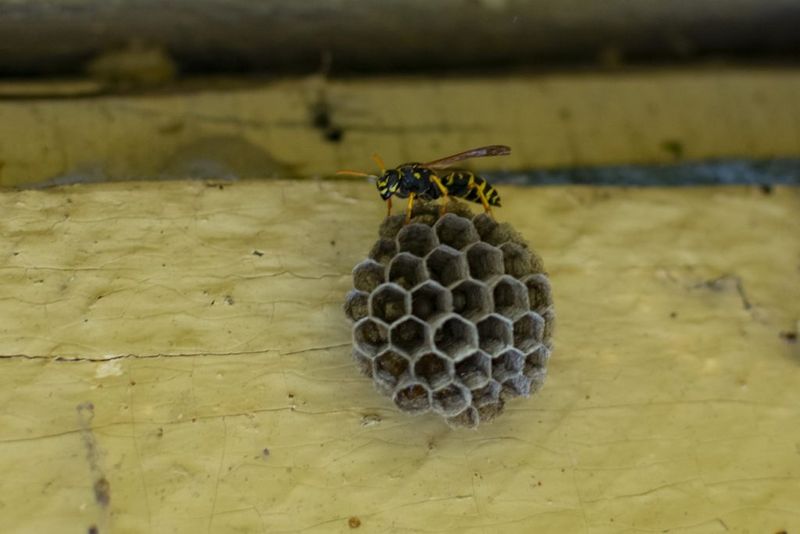
Reducing contact with yellow jackets does not require dramatic action. Most of the practical steps involve simple habits around food, trash, and outdoor spaces.
In Georgia, late-summer outdoor activities often overlap with the period when yellow jackets become more noticeable, making small prevention steps especially useful. Covering food and drinks during outdoor meals is one of the easiest changes you can make.
Using cups with lids when drinking sweet beverages outdoors can reduce the chance of an unexpected encounter.
Wearing light-colored, smooth-fabric clothing may be helpful when working outside, but avoiding unnecessary disturbance and controlling food odors are more reliable ways to reduce unwanted attention.
Avoiding strong fragrances and scented products during peak activity periods may also be worth considering.
Moving slowly and calmly around yellow jackets can help prevent accidental defensive responses.
If you discover a nest near a frequently used area, avoid disturbing it. Mark the location discreetly and keep people and pets away from that space while deciding on the next step.
Yellow jackets are generally less active during cooler, lower-light periods, which may make it easier to avoid areas near a suspected nest.
In Georgia yards, knowing where yellow jackets are feeding or nesting can make outdoor spaces more comfortable while allowing these insects to continue their role in the ecosystem.
Simple awareness and a few practical habits often go a long way.
7. When To Consider Professional Pest Control Help
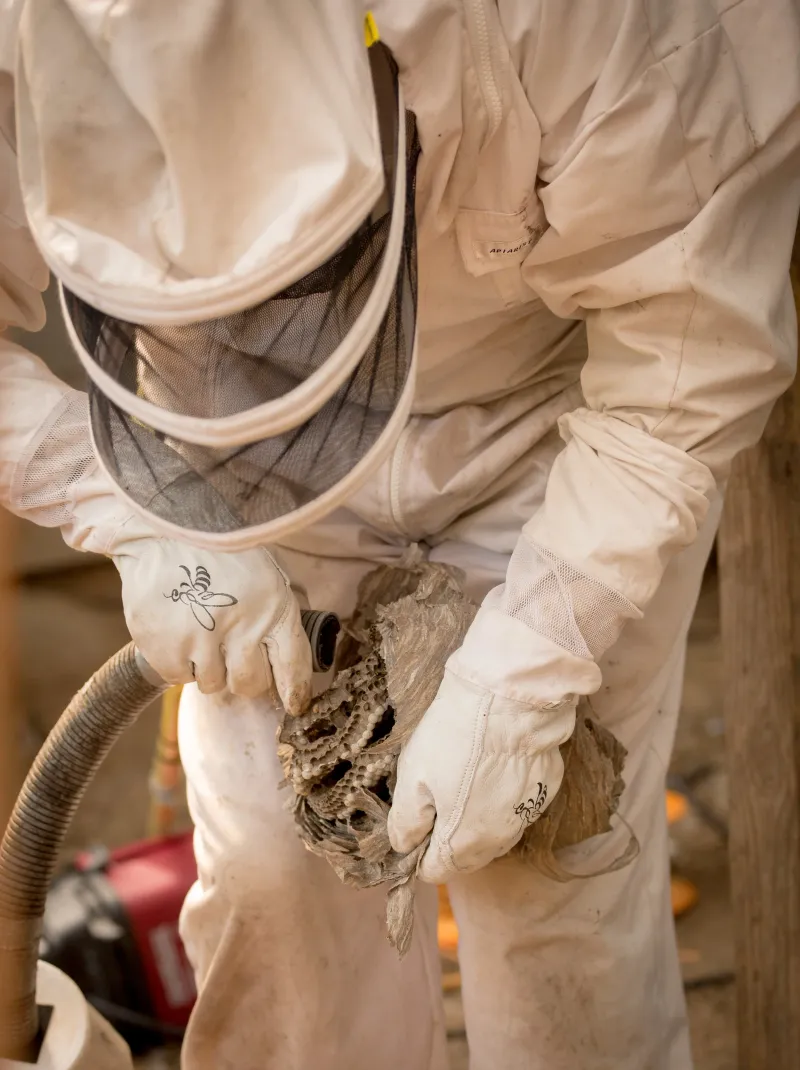
Handling a yellow jacket situation on your own is reasonable in many cases, but there are times when calling a licensed pest control professional is the safer choice.
Nests located inside wall voids, beneath concrete slabs, or in areas that are difficult to access without special equipment are good candidates for professional treatment.
In Georgia, where yellow jacket activity can increase during late summer and early fall, some nest locations may create more concern when they are close to homes or frequently used outdoor areas.
Attempting to manage these situations without proper protection and experience can increase the risk of multiple stings.
Households that include young children, elderly family members, or individuals with known insect sting allergies should think carefully before attempting any nest management on their own.
For people with a history of severe allergic reactions to stings, even a single encounter can become a medical emergency.
In those situations, professional help can provide a safer option.
A pest management professional familiar with regional insect activity can assess the nest location, identify the species involved, and recommend an appropriate treatment approach based on the situation.
Extension resources from universities with entomology programs can also help homeowners understand what to expect during inspections and what questions to ask.
If yellow jacket activity is concentrated near doorways, play equipment, or other high-use areas in a Georgia yard and you are not comfortable managing it yourself, contacting a qualified professional is a reasonable decision.
8. The Role Yellow Jackets Play In The Local Ecosystem
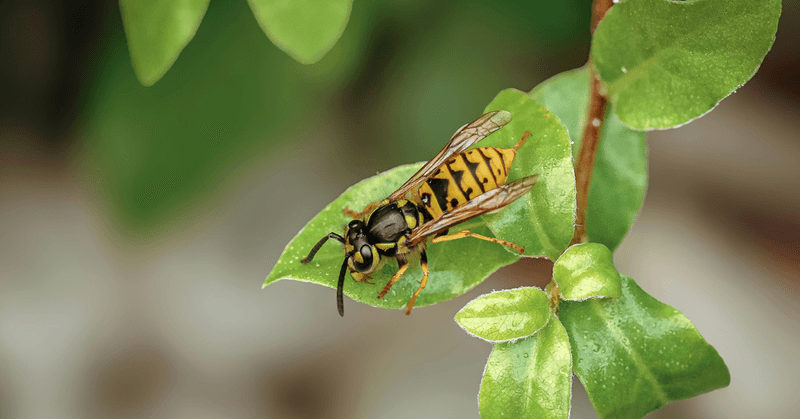
Yellow jackets have a reputation that often overshadows the role they play in the environment. For much of the season, these insects act as predators of soft-bodied insects, including caterpillars, flies, and beetle larvae.
In Georgia, this behavior can provide some natural pest control in gardens by reducing populations of insects that feed on plants and vegetables.
They also contribute to pollination in a limited way. While yellow jackets are not as efficient as bees at transferring pollen, they do visit flowers and may move pollen between plants during their foraging trips.
Their role in the food web extends further because they serve as prey for birds, spiders, and other animals that are part of healthy outdoor ecosystems.
Problems usually arise when nests are located close to areas where people and pets spend time. A colony tucked into a less-used corner of a wooded area or along a fence line away from regular activity may cause fewer concerns.
The goal for most homeowners is not to remove every yellow jacket from the property but to manage situations where people and insects are more likely to come into contact.
Understanding their role can help homeowners make more balanced decisions.
In Georgia yards, yellow jackets are often part of the natural insect community, and recognizing when they are simply foraging versus when they are creating a safety concern can lead to calmer and more practical responses during September and early fall.