Brain-Shaped Green Fruit Is Dropping In Maryland, But The Tree Isn’t From Here
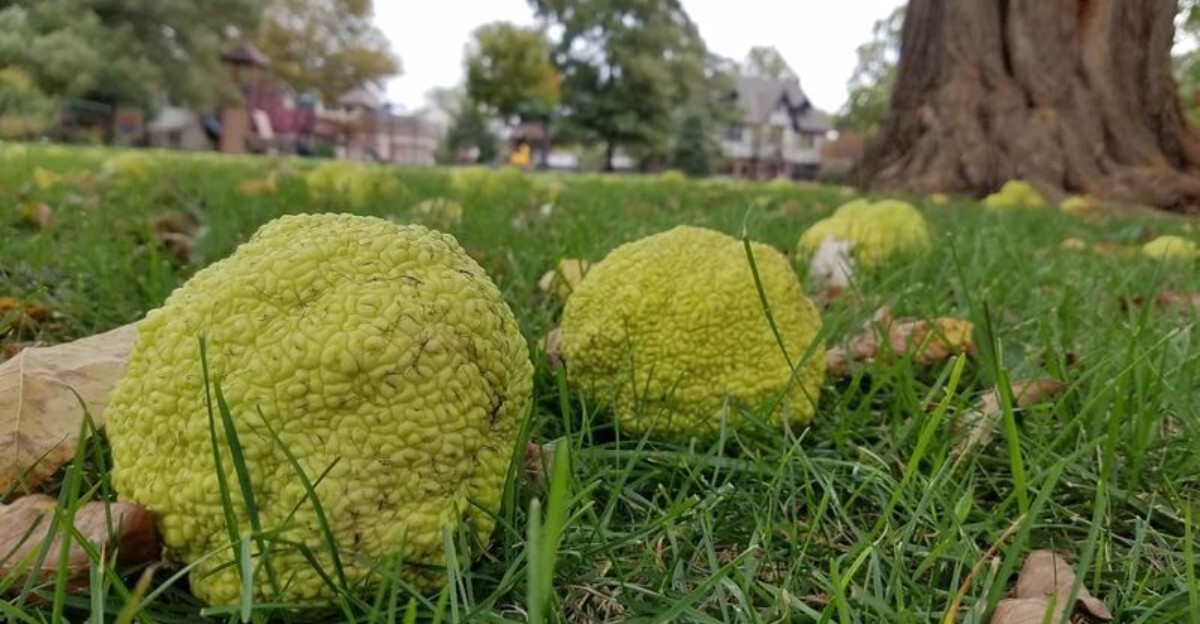
A green ball the size of a softball just thumped onto the trail beside me, and it looked exactly like a wrinkled brain. I jumped. Then I laughed, because a squirrel in the branches above seemed thoroughly unimpressed.
I’ll be honest, I picked it up right away. It felt heavy, firm, and oddly warm from the afternoon sun. A tiny scratch on the skin leaked a sticky, milky sap that clung to my fingers for an hour.
Here’s what gets me about these things. You can find piles of them in parks, fencerows, and old farm lanes all over Maryland this time of year. Yet the tree that drops them grew wild hundreds of miles away, near the Red River.
So how did a Texas and Oklahoma native end up raining green brains on the Chesapeake region? And why does almost nothing want to eat them?
Those Wrinkly Green Brains Under The Tree Have A Name
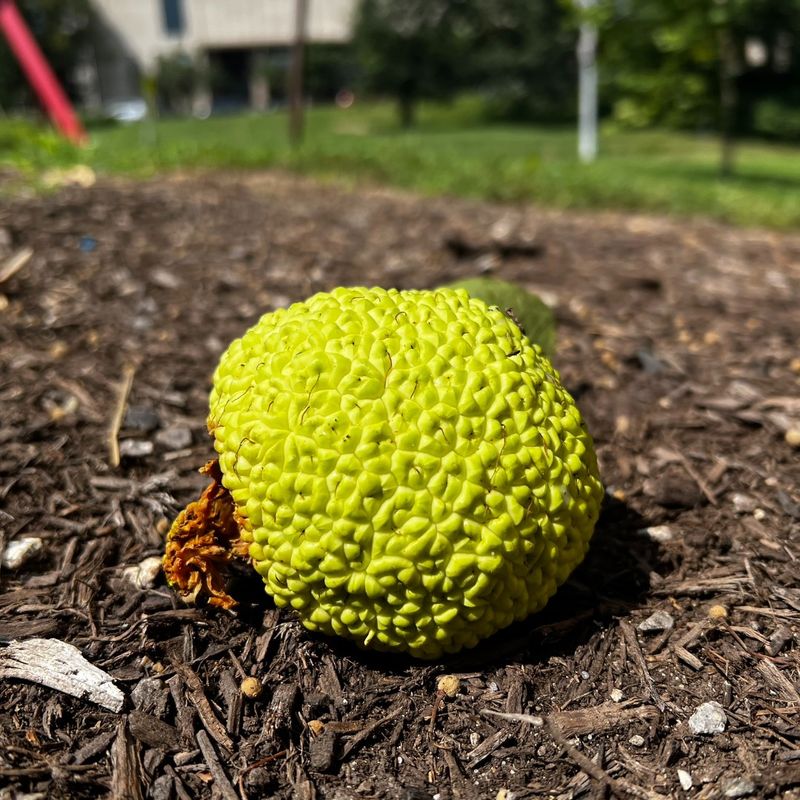
Hedge apple, horse apple, monkey ball. Folks have called this fruit plenty of goofy names, and every one of them fits.
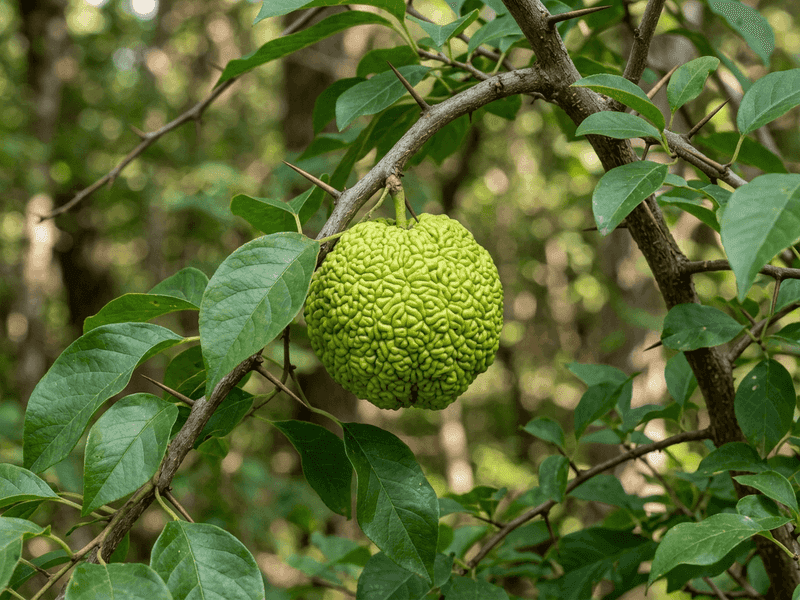
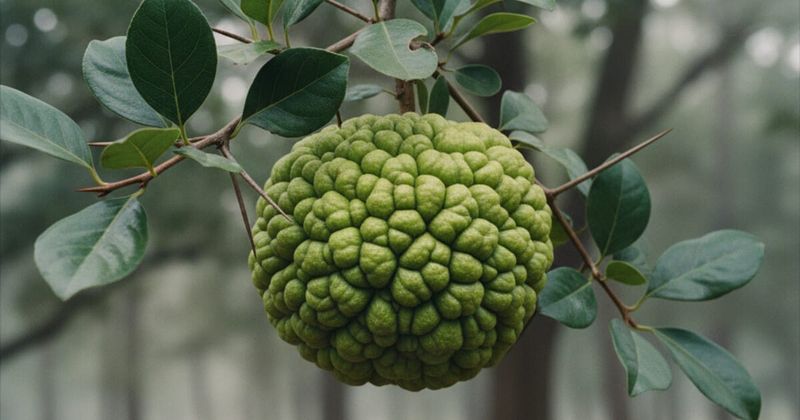
Botanists know it as the Osage orange, or Maclura pomifera. It belongs to the mulberry family, which surprises most people who see it. The fruit is not a true orange at all, and it has no citrus connection.
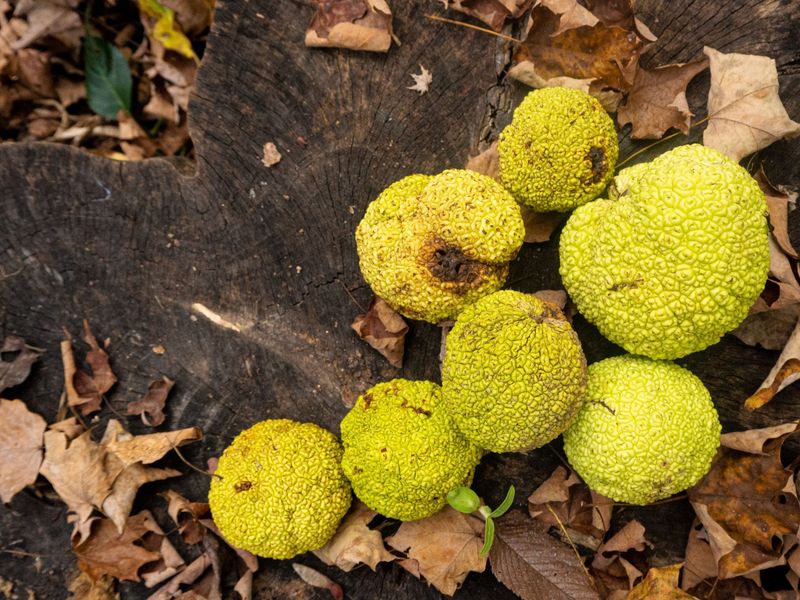
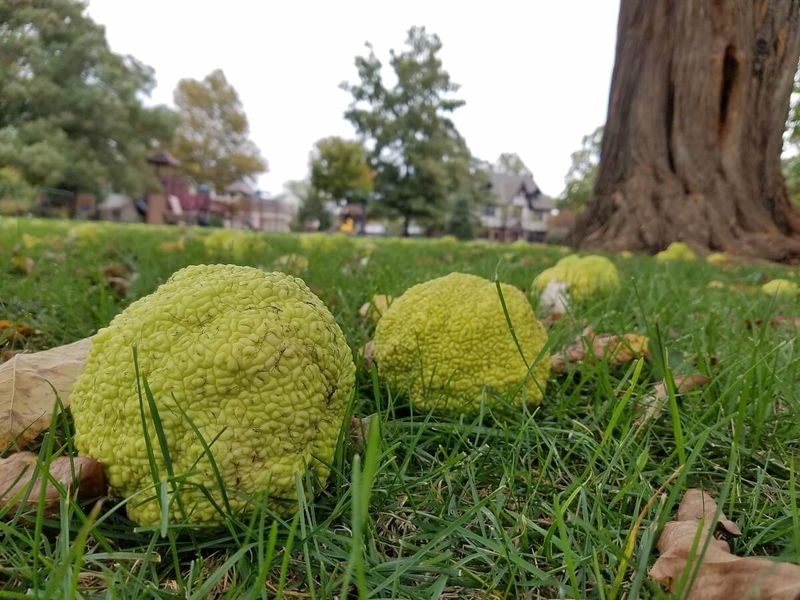
Each ball runs about the size of a grapefruit or softball. The skin is covered in tight, twisty bumps that look a lot like the folds of a brain. The color is a bright chartreuse that almost glows against brown leaves.
Technically, each one is a multiple fruit. Many tiny flowers fuse together as they ripen, so every bump is a separate little fruit packed into one ball. Small seeds hide inside the pulp.
Squeeze or cut one, and a white, sticky sap appears. That latex can irritate sensitive skin, so gloves are smart if you plan to collect a bunch.
Spotting the tree is easy once you know the clues. Look for shiny, pointed leaves, orange-tinted bark with deep ridges, and sharp thorns along the twigs. A pile of green brains underneath seals the deal.
Osage Orange Trees Started Out Near The Red River
Long before anyone in Maryland raked one up, these trees had a tiny home range. They grew wild mostly in the Red River area of southern Oklahoma, northeastern Texas, southwestern Arkansas, and a bit of Louisiana.
That small territory changed fast in the 1800s. Farmers learned the tree made a great living fence, and nurseries shipped huge numbers of seedlings east and north. By the late 1800s, Osage orange hedges stretched across much of the country.
Maryland picked up its share along the way. Many trees you see today grow near old farm lines, roadsides, and homesteads where someone planted a hedge generations ago. Birds and people helped spread a few more over time.
The Maryland Biodiversity Project and state records treat the species as introduced, not native. Observers have reported it in nearly every Maryland county, with Calvert, Worcester, and Wicomico the notable exceptions.
So when someone says the tree isn’t from here, they’re right. It is a fellow American, just a transplant from the south-central states.
I like thinking about that history while I walk. Every big old Osage orange along a field edge is basically a living clue about how that land used to be farmed.
Only The Female Hedge Apple Trees Drop Fruit In Fall
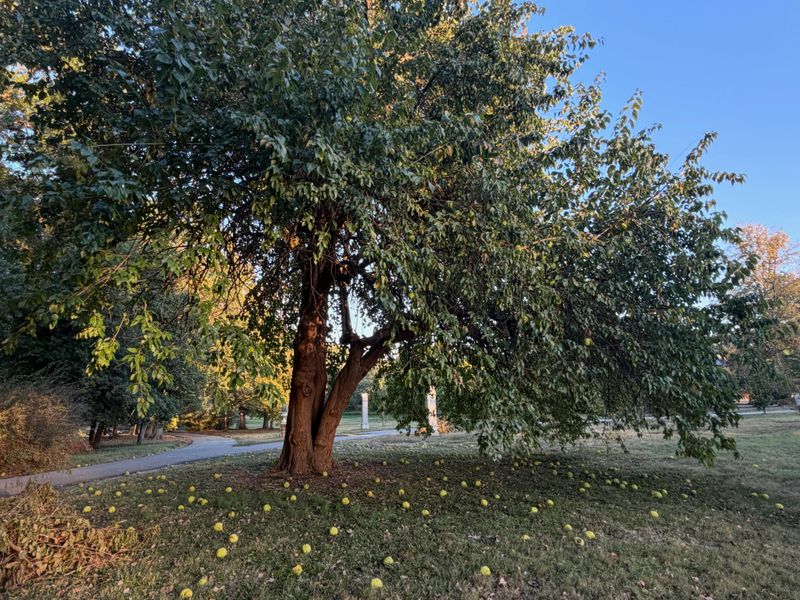
Thud. Thud. Thud. If you park under the wrong tree in October, you’ll hear about it.
Osage orange fruit ripens in late summer and falls mostly from September into November in Maryland. A single big tree can drop dozens or even hundreds of balls, and each one can weigh around a pound or more.
Not every tree joins the show, though. Osage oranges are dioecious, which means each tree is either male or female. Only females grow fruit, and they need a male nearby for pollen to make seeds.
Male trees still flower in late spring, but their blooms are small and easy to miss. They never leave green brains on your lawn. That’s why landscapers who like the tree’s toughness often pick fruitless male varieties such as ‘Wichita’ or ‘White Shield’.
Unpollinated females can still produce fruit, just without viable seeds. So a lonely female tree may keep tossing balls even with no male around.
Trust me on this one. Avoid parking cars, setting up picnic tables, or mowing quickly under a loaded female tree in fall. Those heavy fruits can dent a hood or bounce hard off a mower blade.
Mammoths May Have Been The Hedge Apple’s Best Customers
Guilty as charged, I once thought about taking a bite. One whiff of that bitter, sappy pulp changed my mind fast.
People generally find the fruit inedible. It isn’t considered seriously poisonous, but the taste is unpleasant and the sap can bother skin. Most wildlife mostly ignore it too, which seems strange for such a big, easy meal.
Squirrels are the main exception. You’ll often find shredded fruit at the base of the tree where squirrels dug out the seeds. Some deer, birds, and livestock nibble now and then, but plenty of fruit just rots in place.
Scientists have a fascinating idea about why. Many researchers suggest the fruit evolved for huge Ice Age animals, such as mammoths, mastodons, and giant ground sloths. Those giants could swallow whole fruit and spread the seeds far away.
When those animals vanished about 10,000 or more years ago, the tree lost its best seed movers. That may explain why its wild range shrank to one small region. Ecologists call fruits like this evolutionary anachronisms.
It’s a theory, not a proven fact. Still, I can’t look at a pile of uneaten hedge apples now without picturing a shaggy sloth wandering by.
Thorny Osage Orange Hedges Fenced Farms Before Barbed Wire
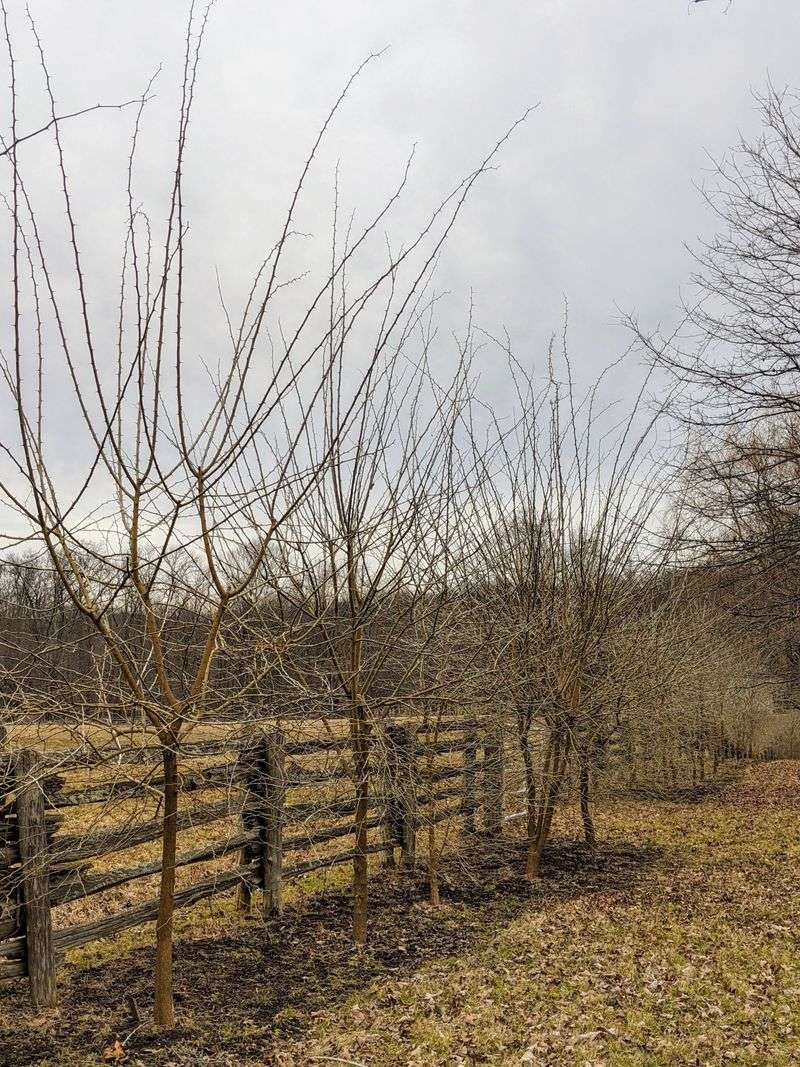
Horse high, bull strong, and pig tight. That old farm saying described a good Osage orange hedge, and it stuck.
Before barbed wire spread in the late 1870s, settlers needed cheap fences on land with few trees. Osage orange solved the problem. Planted close and pruned hard, the thorny branches knit into a wall livestock rarely pushed through.
The wood earned even more fans. It is one of the hardest, densest, and most rot-resistant woods in North America. Farmers split it into fence posts that lasted for decades in the ground.
Bowmakers adore it too. The Osage people and other Native nations prized the springy, strong wood for bows. French explorers called the tree bois d’arc, meaning bow wood, and some people still say bodark today.
The heartwood is a striking golden yellow that slowly ages to a deep brown. People have used it for tool handles, wagon wheels, and even a yellow dye.
Got an old tree coming down on your property? Ask a local woodworker or bowyer before hauling it away. Many will happily take good straight pieces, and it beats letting that remarkable wood go to waste.
Those Spider Repellent Hedge Apple Claims Need A Closer Look
Grandma swore by it. A hedge apple in each corner of the basement, and spiders would supposedly pack their bags.
That bit of folklore still pops up every fall. Research does show that compounds pulled from the fruit, such as elemol, can repel some insects in lab tests. A whole fruit sitting on a shelf is a different story.
Iowa State University and other extension programs looked into the claim. Their verdict: no solid proof that whole hedge apples keep spiders or bugs away from homes. The chemicals are too weak in that form.
The fruit also softens and rots indoors after a few weeks. It can leak juice and stain floors or shelves. Set it on a plate or tray if you try the old trick anyway.
Where hedge apples really shine is decoration. Their neon green color looks fantastic in fall bowls, porch displays, and harvest centerpieces with pumpkins and gourds.
Wear gloves while gathering, and skip any that are bruised or mushy. Keep them away from pets and toddlers who might chew. For real spider control, sealing cracks, cutting clutter, and using a dehumidifier will do far more than any green ball.
Living With An Osage Orange In Your Yard Takes A Plan
My knees have opinions about raking hedge apples. If one of these trees already shades your yard, a little planning keeps the peace.
Start with fall cleanup. Gather fallen fruit every week or so with gloves and a sturdy bucket. Rotting balls attract fruit flies and make lawns lumpy, and they can trip people in the dark.
Pruning works best in late winter while the tree is dormant. Wear thick gloves, long sleeves, and eye protection, because the thorns can reach an inch long. Remove broken, crossing, or low branches over walkways.
Watch for root suckers and seedlings too. Osage orange can sprout thickets in old fields and disturbed spots. Pull young seedlings early, since older ones grow deep roots fast.
The tree isn’t on Maryland’s official invasive plant list. Even so, it isn’t native, so skip planting new ones for wildlife value. Native picks like black gum, persimmon, oaks, or American holly feed far more local insects and birds.
Love the tough look already? Keep your existing tree, enjoy the quirky fruit, and treat it as living farm history. A healthy old Osage orange can stand for well over a century with very little fuss.