Why Trimming Your Kentucky Crape Myrtle The Wrong Way Does More Harm Than Good

Every spring, well-meaning homeowners across Kentucky pick up their loppers and accidentally start a slow-motion disaster. The crape myrtle never asked for this.
Here is the thing nobody tells you: bad pruning does not just look rough for a season. It can weaken a tree from the inside, raise the risk of disease, and set back years of healthy growth in a single season.
Your crape myrtle deserves better. If your tree looks stubby, stressed, or like it lost a fight with a hedge trimmer, you are not alone.
Most people learned to prune by watching someone else do it wrong. Here is an honest look at the most common mistakes, why Kentucky’s climate adds another layer of complexity, and what you can actually do about it.
No fluff. Just a straight conversation with someone who has watched one too many beautiful trees get ruined by good intentions.
Grab a coffee. Let’s sort this out.
Wrong Trimming Really Does Cause Lasting Damage
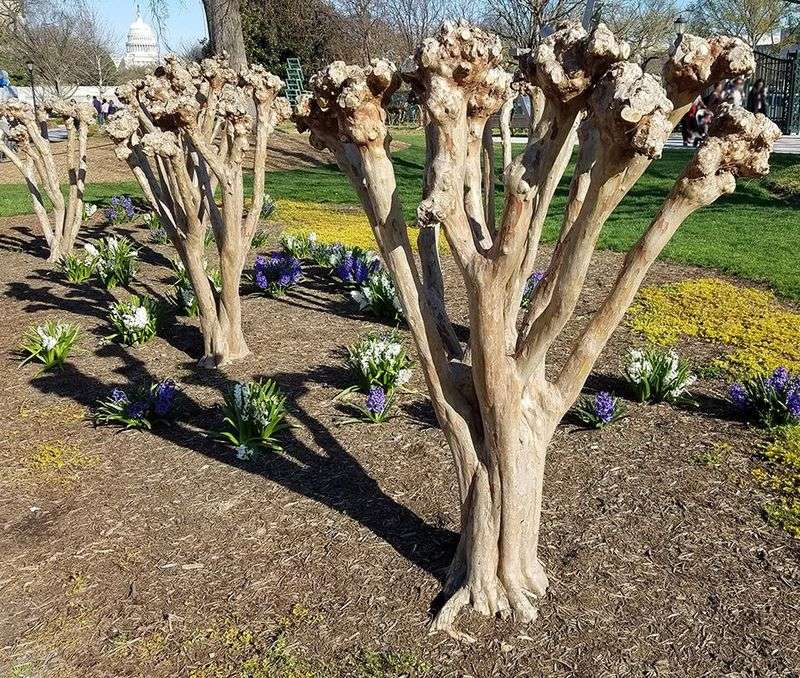
Grab your pruning shears and pause before you cut. Trimming your Kentucky crape myrtle incorrectly is one of the fastest ways to turn a stunning flowering tree into a gnarled mess.
Most people do not realize the damage happens below the surface first. When you top a crape myrtle, you remove the natural branch tips where healthy buds form each season.
Those cuts force the tree to push out dozens of weak, whippy shoots from each wound. Those thin shoots cannot support the weight of summer blooms, so they droop and snap in storms.
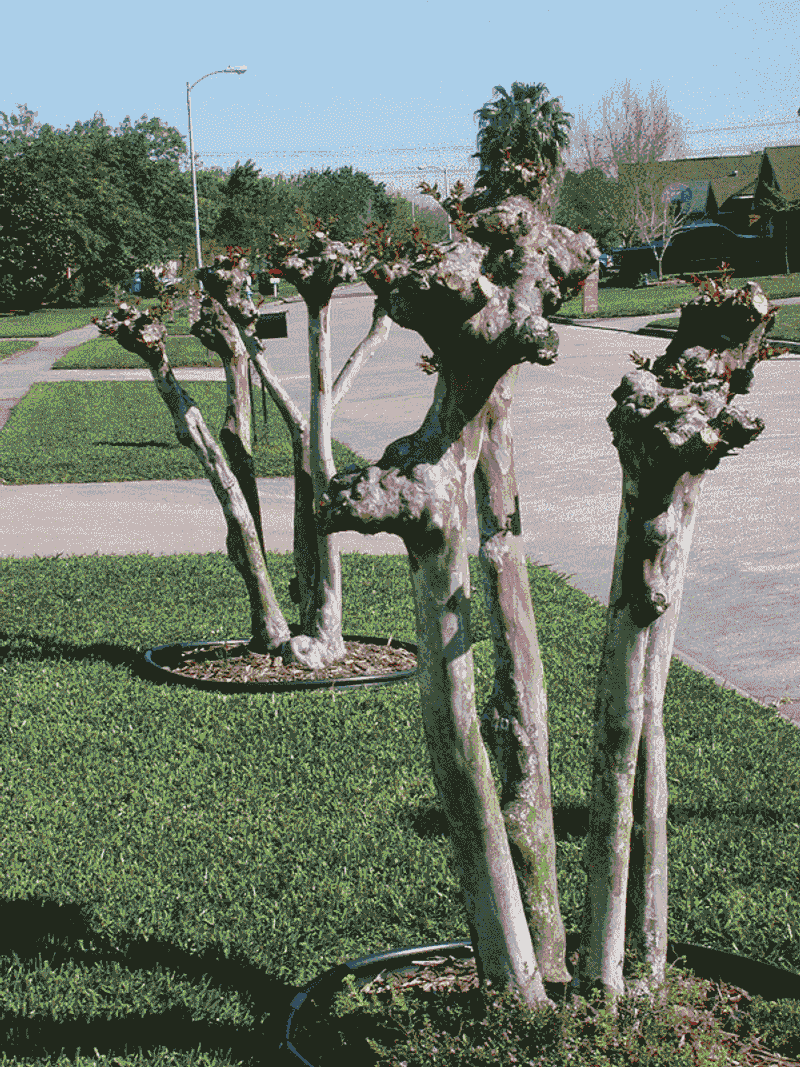
Repeated topping also causes the branch ends to thicken into knobby fists called witch knuckles. These knuckles are not just ugly.
They are permanent and cannot be undone without removing entire limbs.
Over time the tree spends energy healing old wounds instead of producing flowers. Bloom counts drop.
Branch structure weakens. The tree looks stressed because it actually is stressed.
Proper pruning respects the tree’s natural growth pattern and works with it, not against it. One bad cut does not have to mean the end, but repeated wrong cuts stack up into serious, lasting harm that takes years to correct.
What Bad Pruning Actually Looks Like
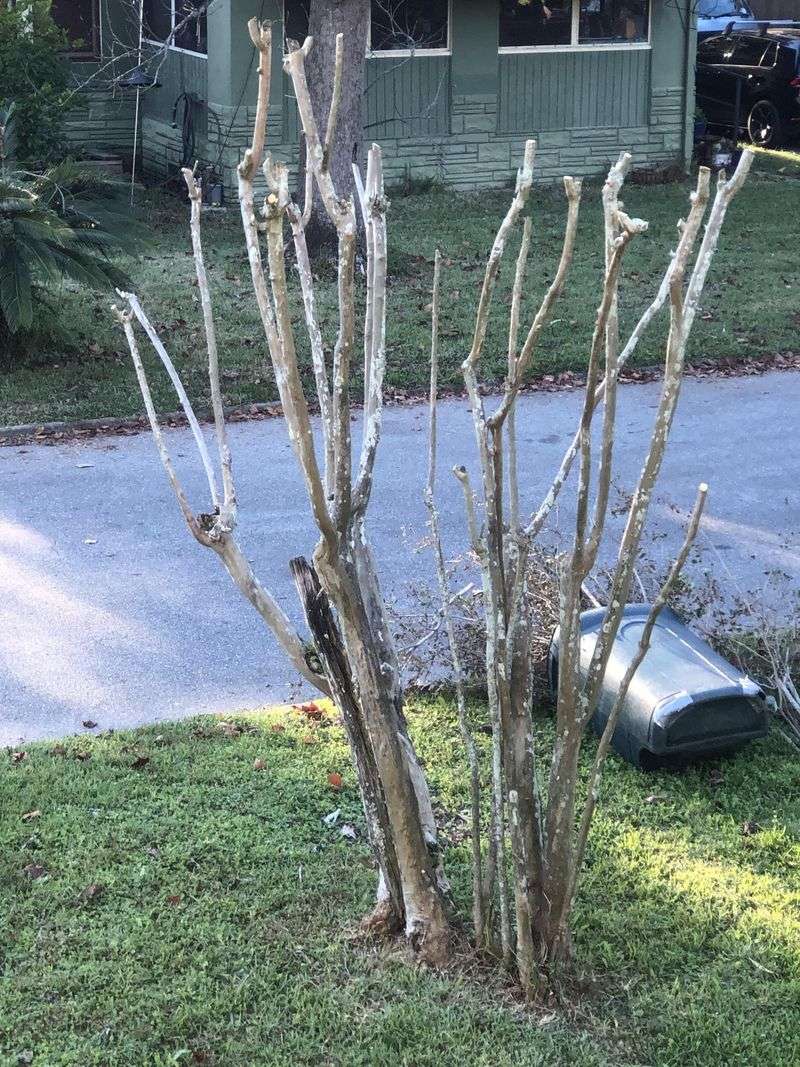
You have seen it a hundred times driving through the neighborhood. Rows of crape myrtles chopped flat across the top, looking more like telephone poles than flowering trees.
Bad pruning leaves behind blunt cuts that are too wide for the tree to seal properly. Those open wounds can become entry points for fungal infections and boring insects that hollow out branches from within.
The witch knuckles mentioned earlier grow larger every year a tree is topped. They create uneven weight distribution that makes the whole canopy structurally unstable during heavy rain or wind.
Another sign of poor pruning is a dense thicket of crossing branches in the center of the tree. That crowded interior blocks airflow and traps moisture, which encourages powdery mildew to spread fast.
Suckers shooting up from the base of the trunk are also a red flag. Stress from bad cuts triggers the tree to send up these desperate shoots in an attempt to compensate for lost growth.
Your Kentucky Garden Changes Every Week. Your Plan Should Too.
Gardening in Kentucky changes quickly throughout the season. Every Friday you’ll receive a simple weekly plan showing exactly what to plant, prune, fertilize, harvest, and protect so you never miss the right timing.
Knowing what to look for helps you stop the cycle before it gets worse.
Why Kentucky’s Climate Makes It Worse
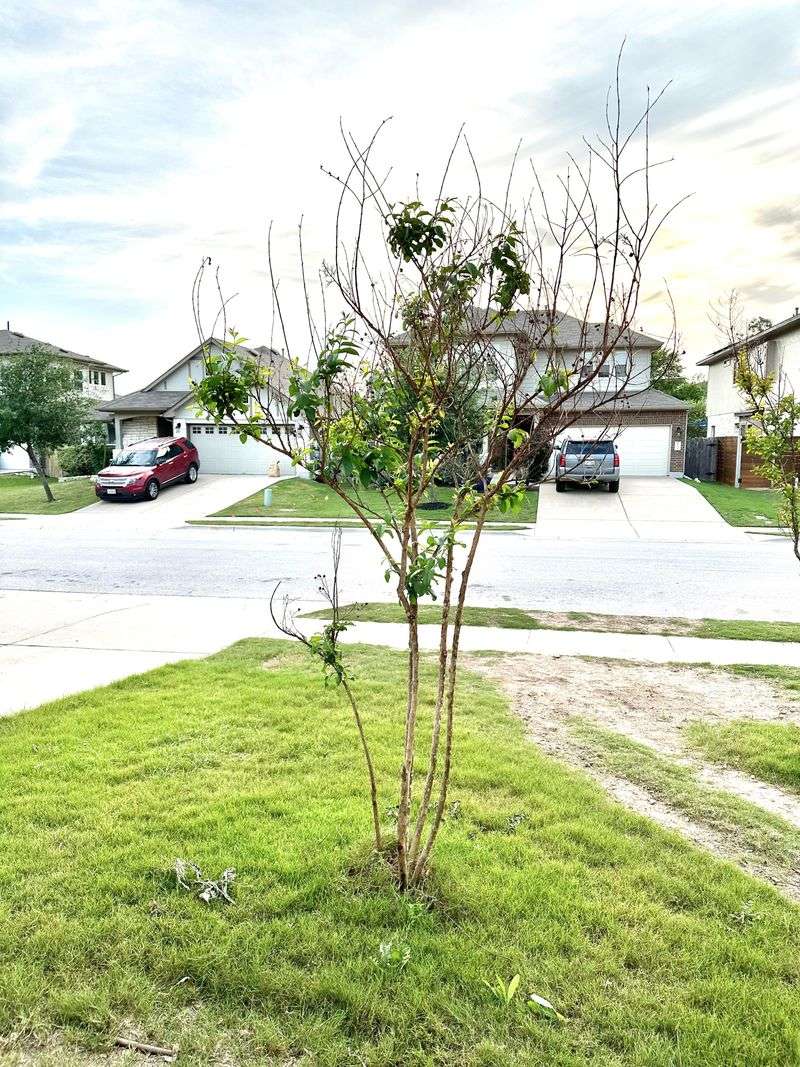
Kentucky’s weather is a wild card that most gardeners underestimate. Humid summers, unpredictable late frosts, and heavy spring rains create a stressful environment for any tree that is already wounded from poor pruning.
Fungal diseases like powdery mildew and Cercospora leaf spot thrive in warm, moist conditions. A crape myrtle with open pruning wounds is practically an open invitation for these pathogens to move in fast.
Late freezes in March and April are also a real concern across much of the state. A tree that was topped in late winter may have already pushed out tender new growth just before a cold snap wipes it out completely.
That freeze-and-regrow cycle burns through the tree’s stored energy reserves. Without those reserves, the tree struggles to fight off insects and disease when summer finally arrives in full force.
Kentucky’s clay-heavy soils in many regions add another layer of stress. Poor drainage around the root zone keeps moisture levels high, which amplifies the risk of root rot in trees already weakened by improper cuts.
Healthy, properly pruned crape myrtles handle these climate challenges with much more resilience. A tree with intact branch structure and sealed wounds is simply better equipped to survive whatever the Bluegrass State throws at it each year.
The Long Term Consequences You Are Not Seeing
Some damage is obvious the moment you make a bad cut. Other consequences build quietly beneath the bark for years before you notice something is seriously wrong.
Repeated topping causes the tree’s vascular system to reroute around old wounds. That rerouting slows the movement of water and nutrients from the roots to the upper canopy over time.
Flower production is one of the first things to suffer noticeably. Crape myrtles bloom on new wood, and consistently cutting that wood off trains the tree to spend its energy on structural repair instead of blooms.
Root health can also decline when the canopy is repeatedly reduced. Roots and canopy grow in balance with each other, so shrinking the top repeatedly signals the root system to pull back as well.
A smaller root system means less water and nutrient uptake during the hottest weeks of summer. That is precisely when a crape myrtle needs every resource it can gather to stay strong and productive.
Structural failure is a long-term risk that most homeowners never connect back to pruning mistakes made years earlier. Weak branch unions from poorly healed cuts can split suddenly under the weight of ice or heavy blooms.
The damage you cannot see today has a way of showing up at the worst possible moment.
How To Trim It The Right Way
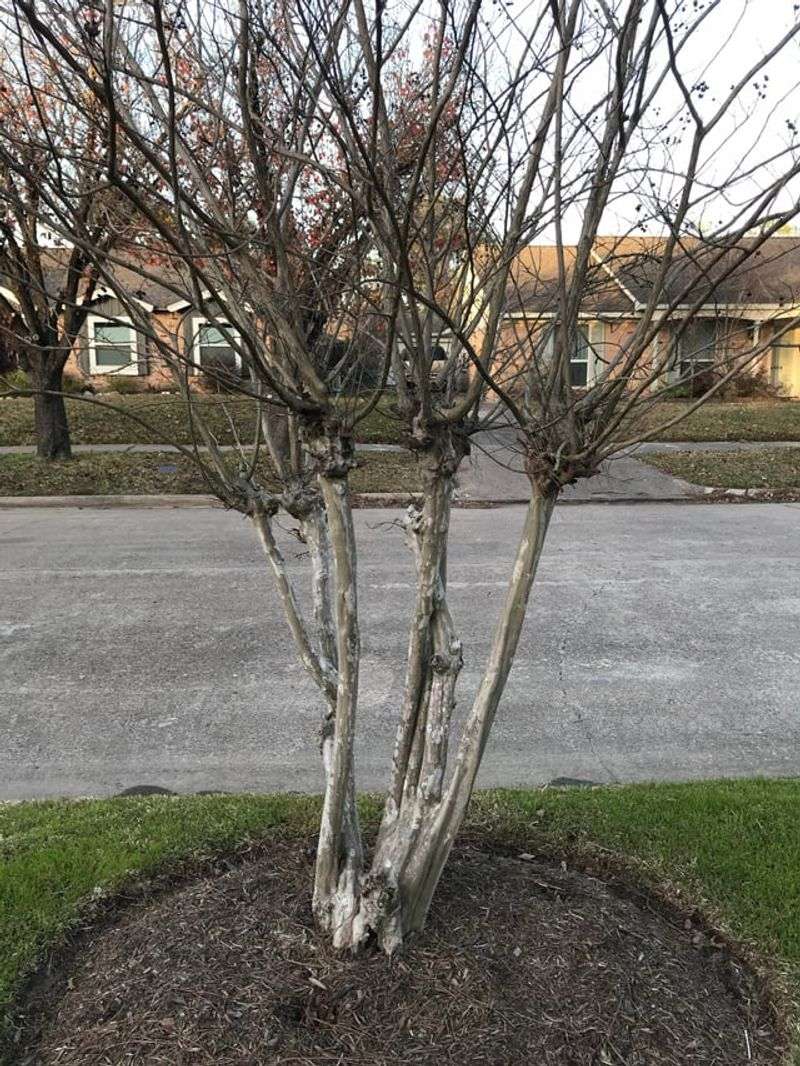
Good pruning gets easier once you understand what the tree actually needs. The goal is to enhance the natural shape, not fight against it with aggressive cuts.
Start by removing only the two D’s: damaged, and diseased wood. Those removals improve airflow and reduce disease pressure without touching any healthy structure.
Next, look for branches that cross or rub against each other in the interior of the canopy. Removing one of any two crossing branches opens up the center and lets light reach more of the tree evenly.
Always cut back to a lateral branch or a branch collar, never to a random point in the middle of a branch. Cutting to a collar allows the tree to form a protective callus ring that seals the wound naturally and quickly.
Use sharp, clean bypass pruners for smaller branches and a pruning saw for anything thicker than an inch. Dull blades crush tissue instead of cutting cleanly, which slows healing and invites infection.
Limit yourself to removing as little live wood as necessary, as it protects the tree’s energy reserves and keeps stress levels manageable.
Proper pruning takes patience, not power. The tree will show you the difference come bloom season.
When And How Often To Prune
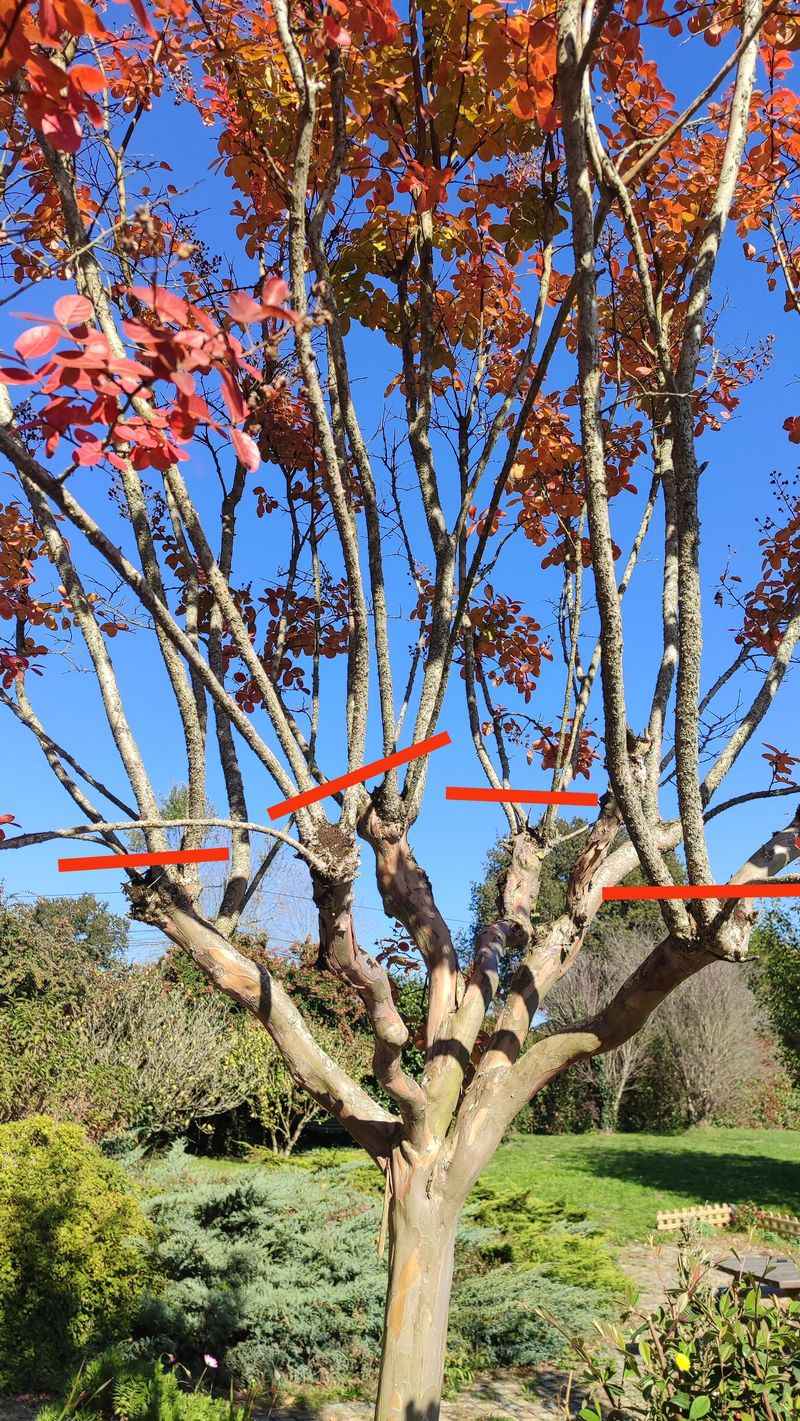
Timing is everything when it comes to pruning a crape myrtle, and getting it wrong can undo even the most careful cuts. Late winter is the sweet spot for most of the state, right before new buds begin to swell.
Pruning in late winter to early spring gives wounds time to begin callusing before the growing season kicks in. It also lets you see the branch structure clearly before new leaves obscure your view.
Avoid pruning in fall, even though the tree looks dormant by October. Cuts made in autumn can stimulate tender new growth that gets wiped out by the first hard frost weeks later.
Summer pruning should be limited to removing spent flower clusters if you want to encourage a second round of blooms. Even that step is optional since most crape myrtles bloom just fine on their own.
How often should you prune? For most healthy, well-shaped trees, a light cleanup once a year in late winter is more than enough.
Frequent heavy pruning is rarely necessary and usually signals that the wrong variety was planted in the wrong space.
Choosing a crape myrtle variety that naturally fits your space eliminates the urge to over-prune entirely. The best pruning schedule is the one that respects both the tree’s rhythm and your region’s seasonal patterns throughout the year.
Signs Your Tree Is Recovering Or Still Struggling
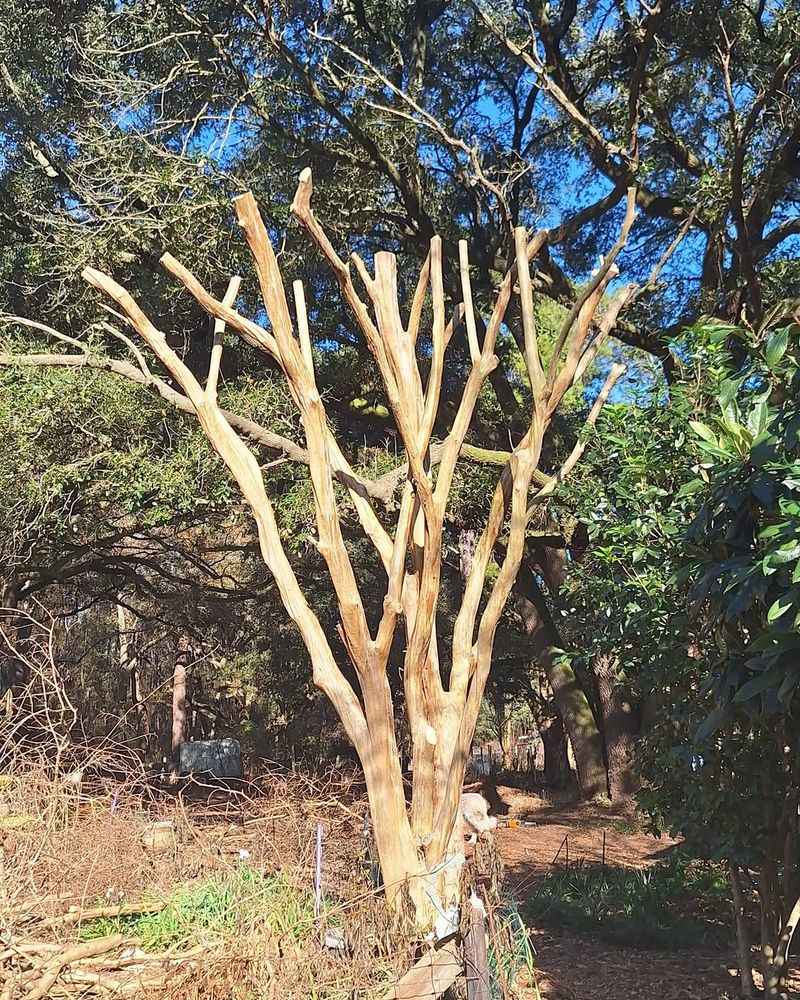
After correcting your pruning habits, watching the tree respond is one of the most satisfying parts of the process. Recovery does not happen overnight, but the signs show up faster than most people expect.
Healthy new growth is the clearest signal that the tree is bouncing back. Look for firm, upright shoots with green leaves rather than the limp, pale sprouts that follow stressful topping cuts.
Callus tissue forming around old wound sites is another excellent indicator. That ring of slightly raised, smooth bark around a cut means the tree’s natural defense system is doing exactly what it should.
Improved bloom production by the second or third season after correcting your approach is a strong sign of real recovery. More flowers mean the tree is redirecting energy away from wound repair and back toward healthy reproduction.
Signs of continued struggle include leaves that yellow early, bark that cracks or peels unexpectedly, and branches that fail to leaf out in spring. Those symptoms point to deeper stress that may need a professional arborist to assess.
Powdery white coating on leaves during summer means fungal pressure is still doing damage. Fix your pruning habits now.
That alone can do more for your tree than anything else you try.