Clever Tricks To Keep Skunks Out Of Your Indiana Yard
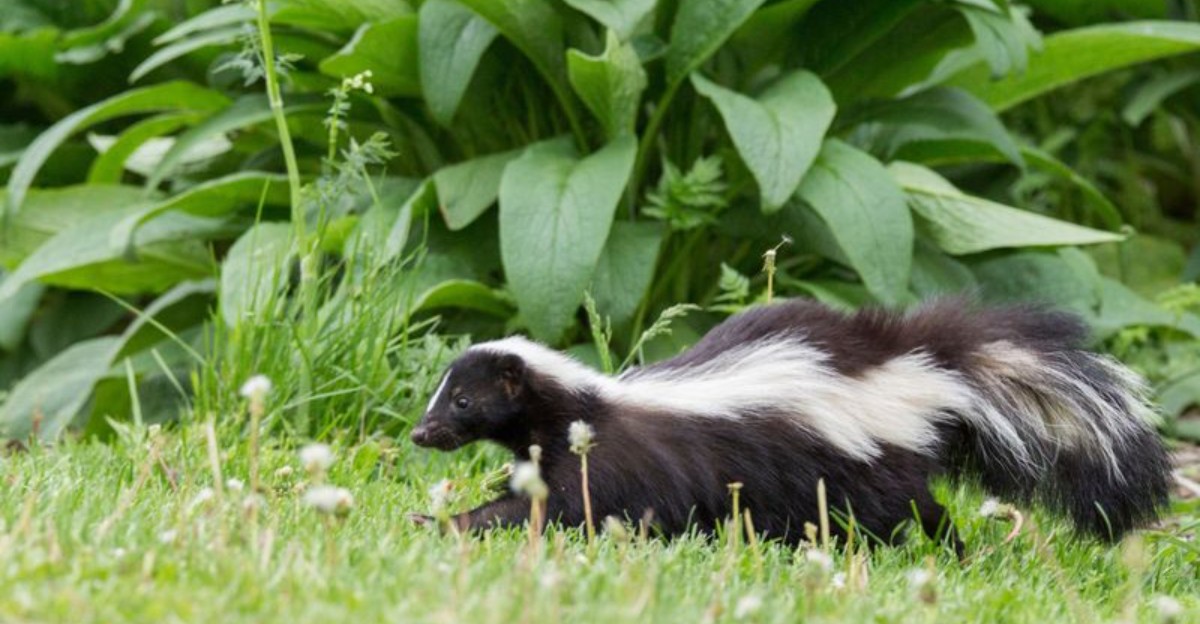
A single spray from this backyard visitor can reach about ten feet, and the scent may linger for days. I learned that the hard way one October night when my dog trotted back inside, proudly wagging his tail.
Across Indiana, these striped night wanderers get busy in fall as they fatten up before the cold months. They roam lawns after dark, sniffing for easy snacks and cozy hiding spots under porches or sheds.
I believe most visits happen because our yards accidentally roll out a welcome mat full of food. You need to think like a hungry critter for a moment, and the weak spots suddenly become easy to see.
Plenty of Indiana gardeners chase them off with smart, gentle tricks that cost very little money. So which simple change in your yard could send that smelly guest looking for dinner somewhere else?
Your Garden Beds Need A Surprise Splash Of Water
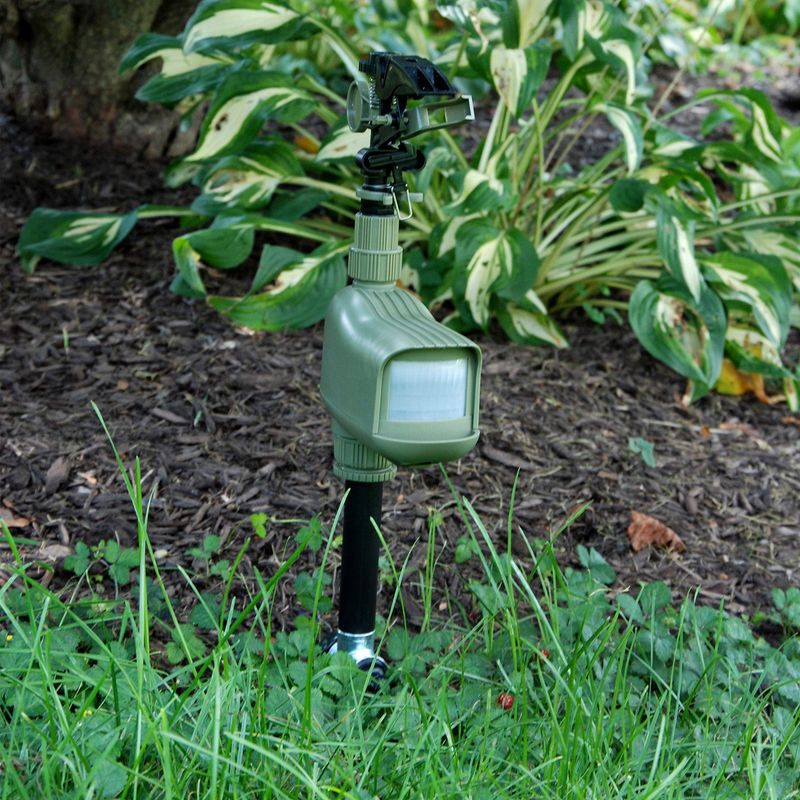
Few things startle a sniffing night visitor like a sudden burst of cold water hissing out of nowhere. Motion-activated sprinklers use a sensor to spot movement, then fire a quick spray toward the intruder.
Skunks often dig small cone-shaped holes in garden beds and lawns while hunting for grubs and insects. A surprise shower teaches them that your flower bed is an uncomfortable place to search for dinner.
Most models attach to a regular garden hose and run on batteries, so setup takes only a few minutes. Aim the sensor low, since these visitors stand only about a foot tall while waddling through the grass.
Fall in Indiana brings chilly nights, so keep an eye on the forecast as October slides toward November. Freezing temperatures can crack hoses and sprinkler parts, so bring the device inside after the first hard frost.
Moving the sprinkler every week or two helps, because clever animals sometimes learn to avoid one fixed spot. A fresh location keeps the surprise alive and covers different parts of the yard where digging shows up.
Remember to switch the sensor off before you head out to rake leaves or check your fall mums. I once got soaked carrying pumpkins to the porch, and my family laughed about it for weeks afterward.
Water startles without harming anyone, which makes this trick a kind choice for wildlife and neighborhood pets alike. Pair it with other steps from this list, and your garden beds should stay smooth and hole-free.
Seal Those Sneaky Gaps Under Your Deck Or Shed
A cozy gap under your deck looks like a five-star hotel to a skunk searching for winter shelter. Skunks do not truly hibernate, but they often hole up in dens during the coldest weeks of winter.
Fall is their house-hunting season, so October is a smart time to check every opening around your property. Walk slowly around decks, sheds, porches, and crawl spaces while looking for loose dirt or worn paths.
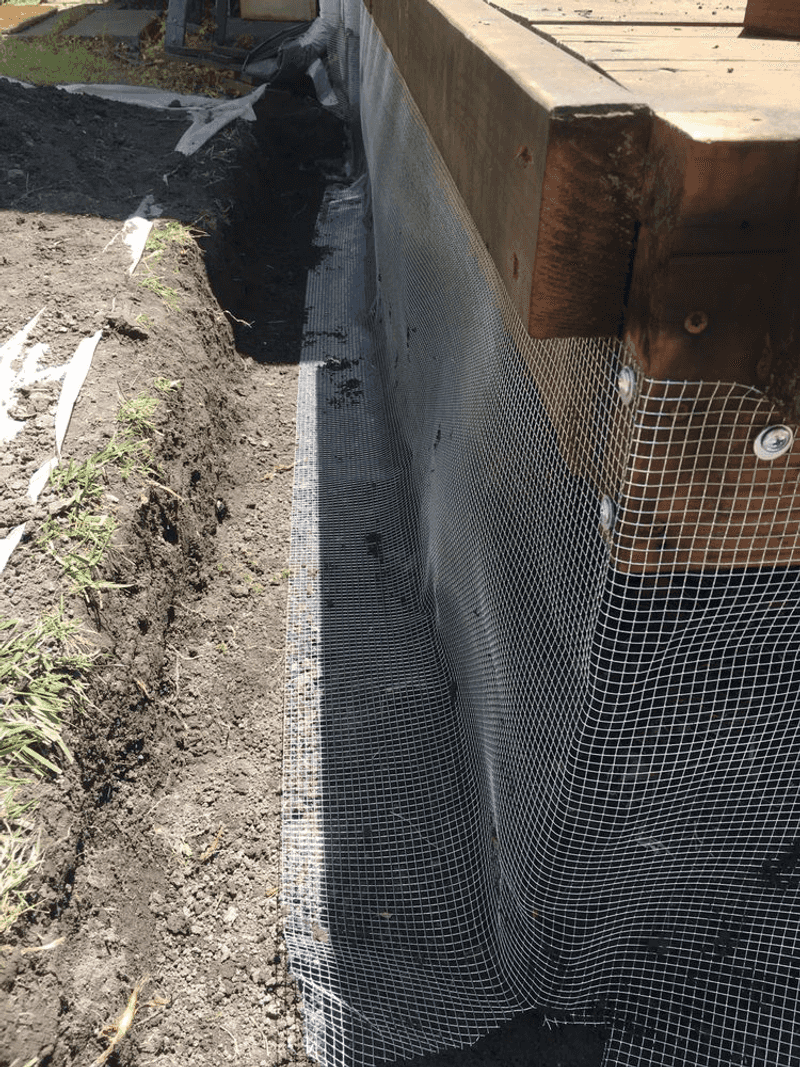
Galvanized hardware cloth with half-inch or quarter-inch openings works well for blocking these spaces from curious diggers. Many extension services suggest burying the bottom edge about a foot deep, then bending it outward.
Your Indiana Garden Changes Every Week. Your Plan Should Too.
Gardening in Indiana changes quickly throughout the season. Every Friday you’ll receive a simple weekly plan showing exactly what to plant, prune, fertilize, harvest, and protect so you never miss the right timing.
That L-shaped bend frustrates animals that try to dig straight down beside the wire, since they hit metal. Most give up quickly and wander off to find an easier place to settle for the season.
Before you seal anything, make sure no animal is already living inside the space you plan to close. Trapping a skunk under your deck creates a smelly problem that nobody wants to handle on a weekend.
Loosely stuff some crumpled newspaper or leaves into the hole and check it again after two nights. If the material stays untouched, the den is likely empty and ready for a sturdy wire barrier.
Indiana winters can be long, so blocking these spots now saves you from a stinky surprise in February. Your shed stays yours, and the local wildlife simply finds a hollow log or brush pile instead.
A One-Way Door Helps Den Guests Move Along
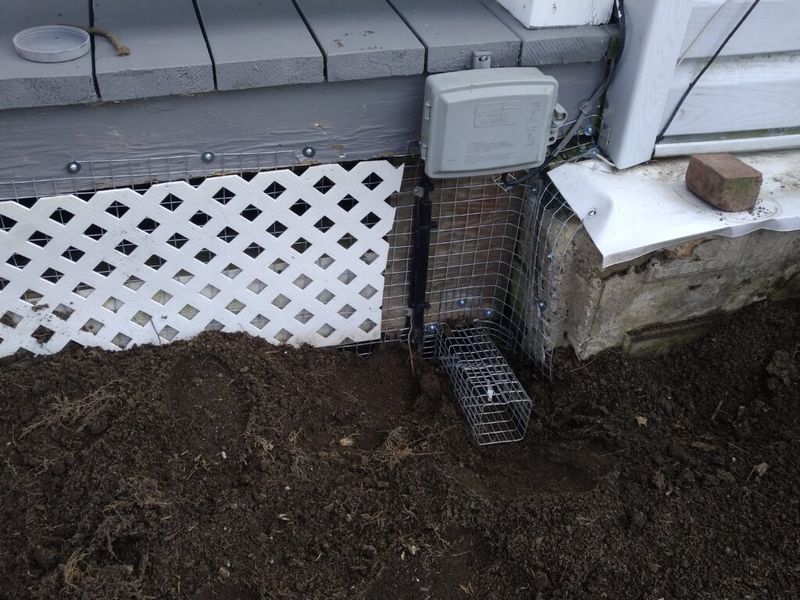
Think of a one-way door as a polite exit sign that lets your uninvited tenant leave but not return. These simple gadgets hang over a den opening and swing outward when the animal heads out at night.
Once the skunk leaves to feed, the flap closes behind it and blocks the way back inside. Wildlife experts often prefer this method because it avoids trapping and the stressful mess that can follow.
Timing matters a lot, since mother skunks raise their young in dens from late spring into early summer. October works well for exclusion because the young have grown up and usually moved out on their own.
Seal every other opening first, so the door covers the only remaining exit from under the structure. Leave the device in place for several nights, then test the space with loose soil or leaves.
When nothing disturbs the test material for a few days, you can remove the door and seal the hole. Use buried hardware cloth with an outward bend so the animal cannot simply dig back in nearby.
In Indiana, trapping and moving wild animals often requires a permit from the Department of Natural Resources. Exclusion avoids that headache, though checking current state rules before you start is still a wise move.
If the job feels overwhelming, a licensed wildlife control operator can install the door for you safely. Either way, your furry squatter finds a new home, and your deck finally smells like autumn leaves again.
Lock Down Your Trash Can Lids Tonight
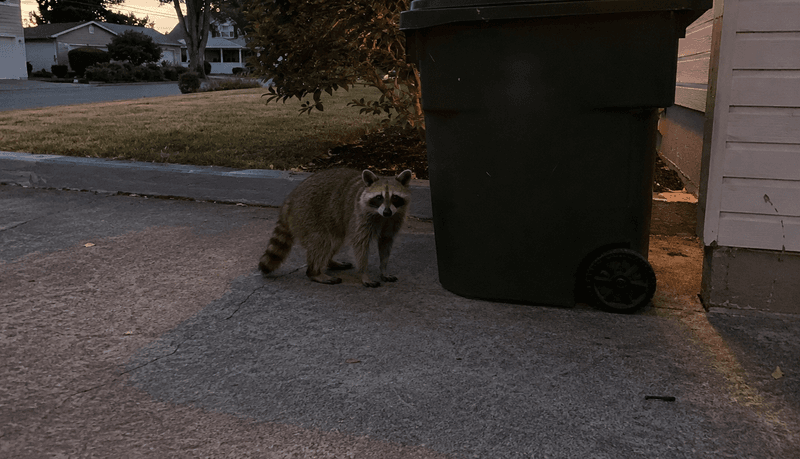
Raccoons get blamed for most trash raids, but skunks happily join the party when a lid sits loose. Their keen noses pick up leftover pizza crusts and greasy wrappers from surprisingly far across the yard.
Unlike raccoons, skunks are poor climbers, so they mostly target bins that tip over or sit open. A heavy can with a tight lid often solves the whole problem without any fancy equipment.
Bungee cords, locking latches, or clip-on straps keep lids snug even after a gusty October night. Fall winds in the Midwest can knock over light bins, so weight the bottom with a brick if needed.
Storing cans inside a garage or a sturdy shed until pickup morning gives hungry visitors even fewer chances. If you set bins out the night before, try waiting until sunrise during busy fall foraging weeks.
Rinse cans now and then with soapy water, because lingering food smells keep attracting curious noses for days. Double-bagging meat scraps and fish skins also helps trap those strong odors that animals find irresistible.
Compost bins deserve attention too, especially if you toss in kitchen scraps along with fallen autumn leaves. Indiana extension experts suggest keeping meat, dairy, and oily foods out of backyard compost to avoid drawing wildlife.
I switched to a locking lid last fall, and the scattered garbage on my driveway disappeared within a week. A few cheap straps cost far less than cleaning up chicken bones spread across your lawn at dawn.
Bring Your Pet Food Indoors Before Dark
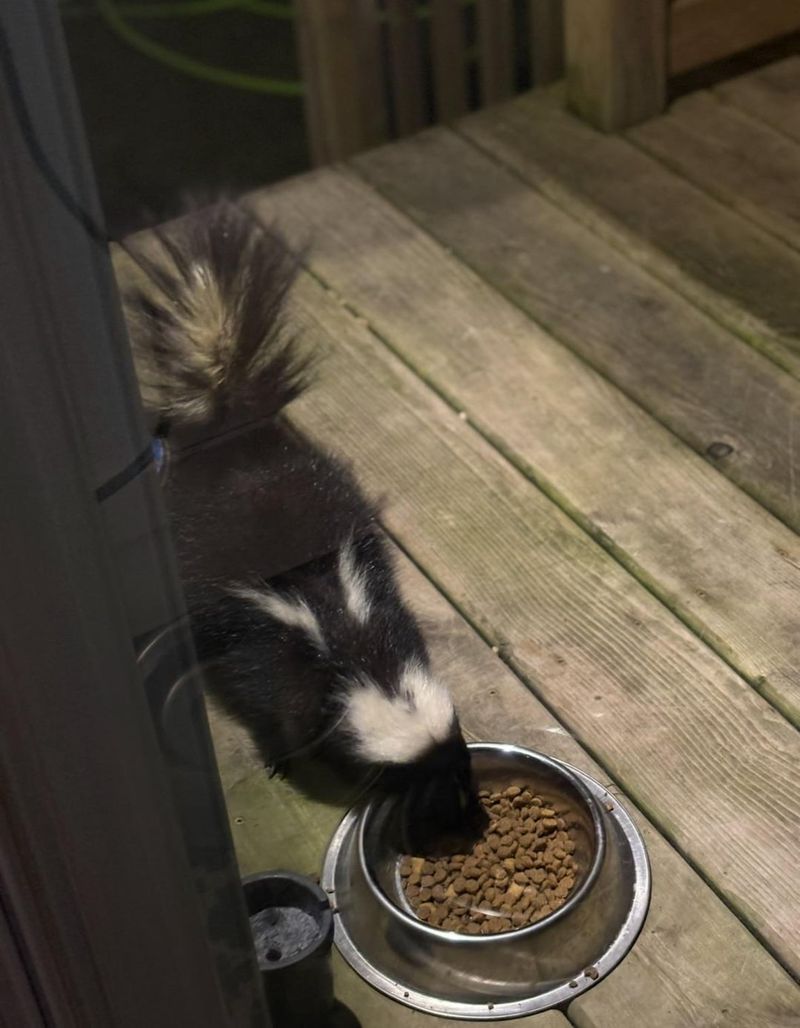
Your cat might be finished with dinner, but that half-full bowl on the porch is still advertising a buffet. Skunks are opportunists, and dry kibble ranks high on their list of easy, crunchy late-night treats.
These animals are mostly active from dusk until dawn, which means evening is the riskiest time for leftovers. Bringing bowls inside before the sun sets removes one of the strongest smells pulling them toward your house.
October sunsets arrive earlier each week, so adjust your feeding schedule as the days grow noticeably shorter. Feeding pets in the morning or early afternoon gives them time to finish before wildlife starts roaming.
Bird seed can cause the same trouble, since spilled sunflower seeds and suet often attract hungry night visitors. Rake up spilled seed under feeders every few days, or use a tray that catches falling bits.
Feeding stray cats outdoors is kind, yet it often turns a quiet yard into a busy wildlife cafeteria. If you care for outdoor cats, offer food at set times and pick up bowls within an hour.
Store big bags of pet food in sealed plastic bins rather than leaving them open in the garage. A torn bag near an open garage door can lure a curious visitor right inside your home.
Pets also benefit, because a surprise meeting with a skunk at the food dish rarely ends well for dogs. Wildlife encounters can carry health risks, so keeping pet vaccines current adds another layer of protection.
Bright Motion Lights Can Guard Your Entry Points
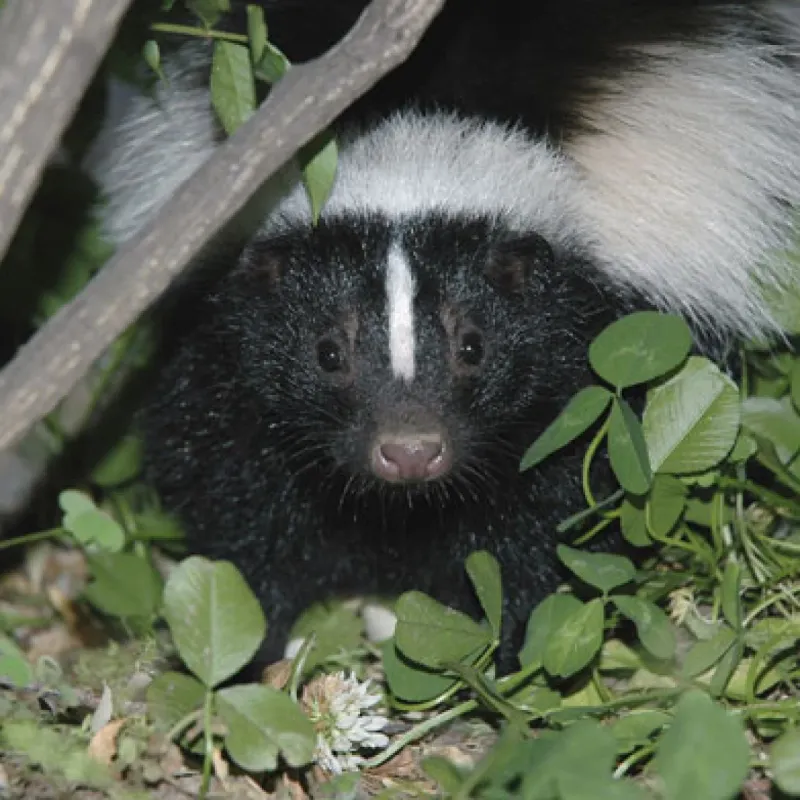
Skunks have weak eyesight and prefer the cover of darkness, so a sudden glow can feel very unwelcoming. Motion lights placed near decks, sheds, and garage doors may encourage these night owls to move along.
Honestly, lights alone rarely solve the problem, since many animals get used to them after a few weeks. Extension experts usually describe lighting as a helpful extra rather than a stand-alone solution for wildlife issues.
Point fixtures toward likely entry points, such as gaps under porches or the corners of your foundation. Lights work especially well near a den you are trying to empty before sealing it for good.
Bright light inside a crawl space can make it feel less safe, nudging the resident to relocate sooner. Pair that light with a radio playing quiet talk shows, and the space starts feeling crowded and noisy.
Solar motion lights are handy for sheds without power, though shorter fall days mean less charging time. Place the panels where they catch the most afternoon sun as cloudy Indiana days become more common later in fall.
Be a good neighbor by angling lights downward, so the beams stay in your yard instead of their bedroom. Shielded fixtures also help nearby birds and insects, which can get confused by bright light pouring skyward.
I added one cheap motion light by my shed, and the late-night rustling under the floor stopped quickly. It may not work that fast for you, but it makes a nice partner for sealing and cleanup.
Clear Away Fallen Fruit Before Visitors Arrive
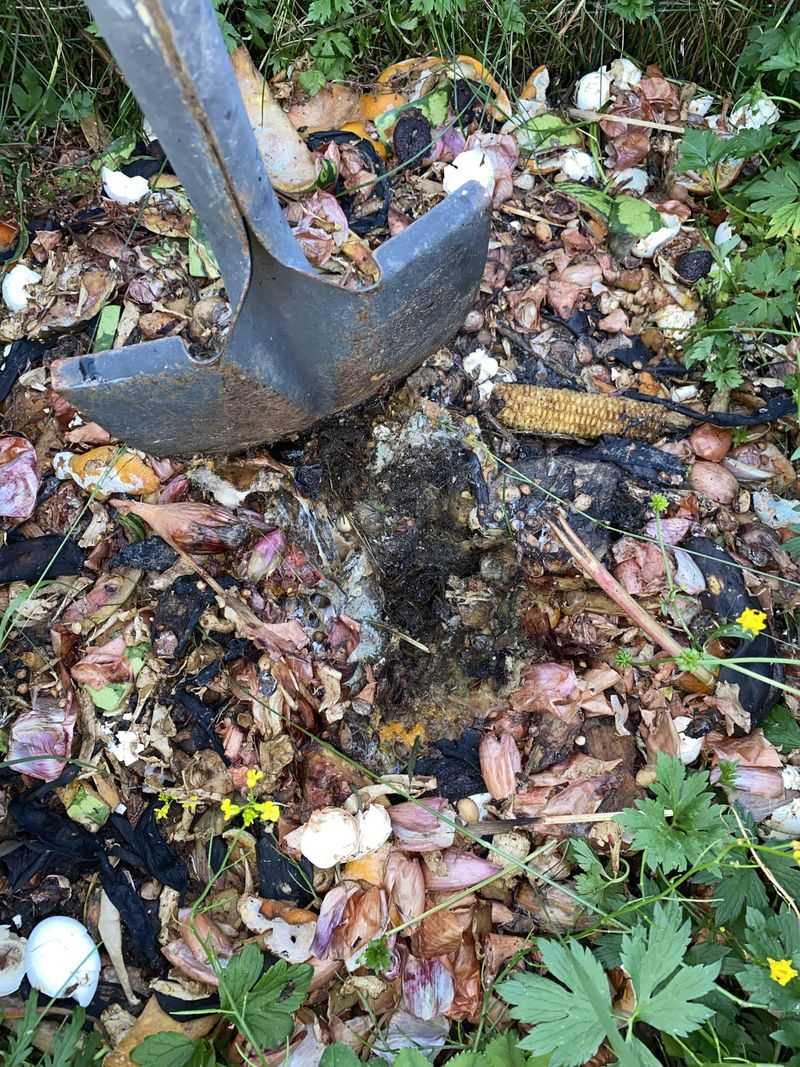
Apples thudding onto the grass in October sound peaceful, yet they ring a dinner bell for hungry wildlife. Skunks eat a surprising mix of foods, including insects, small rodents, berries, and soft, overripe fruit.
Rotting fruit also attracts beetles and other bugs, which gives these visitors a two-course meal in one spot. Clearing the ground removes both the sweet snack and the crawling dessert that comes along with it.
Plenty of Indiana backyards have apple, pear, or persimmon trees that drop fruit heavily during early fall. Wild persimmons often keep dropping well into October and November, so cleanup can stretch into late autumn.
Try a quick daily sweep with a rake or a rolling fruit picker, which saves your back from bending. Evening is the best time for this chore, since you remove food right before the night shift begins.
Bruised fruit can go into a sealed bin or a covered compost system rather than an open pile. Open heaps of mushy apples simply move the buffet from under the tree to the corner of the yard.
Vegetable gardens need the same attention, so pull leftover tomatoes, melons, and squash before they split open. Those forgotten pumpkins on the porch can tempt critters too, especially once they start softening at the bottom.
Share extra good apples with friends or a local food pantry, since some accept fresh backyard produce. Your neighbors get a sweet treat, and the striped visitors get one less reason to wander over.
Grub Control Makes Your Lawn Less Tempting
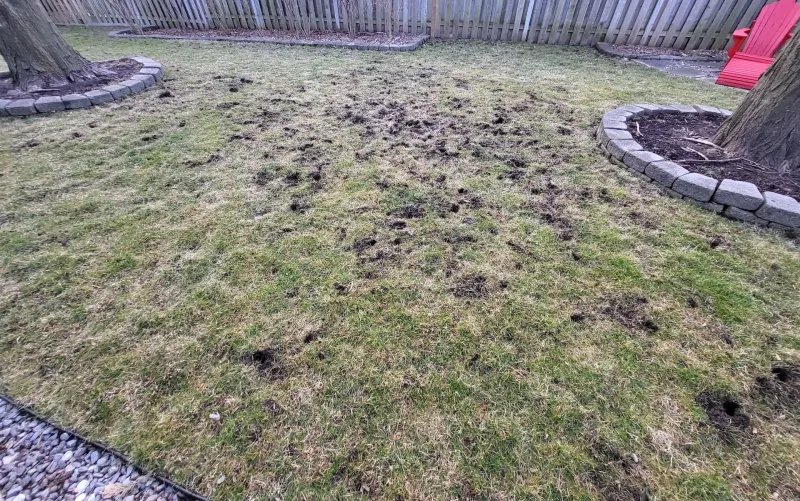
Waking up to a lawn full of small, funnel-shaped holes feels like someone went golfing in your yard overnight. Those holes usually mean a skunk was digging for white grubs, the plump larvae of beetles living underground.
Japanese beetles and masked chafers are common grub sources in Indiana lawns, according to Purdue University entomologists. Grubs feed on grass roots in late summer and fall, which is why digging often peaks right now.
Before buying any product, check whether grubs are actually the problem by peeling back a square of turf. Purdue experts suggest treatment mainly when you find about ten or more grubs per square foot of lawn.
Fewer grubs than that often means your grass can handle the feeding without any chemical help at all. Skunks may still dig a little, but the damage usually stays small and the lawn bounces back.
By mid-October, grubs start moving deeper into the soil as temperatures drop, which makes late treatments less effective. Keep notes on this year’s damage so you can plan preventive steps for next summer with better timing.
Healthy turf also holds up better, so mow a bit higher and water deeply during dry spells in fall. Thick grass with strong roots can tolerate more grub feeding before brown patches start showing up.
Some gardeners try beneficial nematodes, tiny worms that attack grubs, though results can vary with soil temperature. Fewer grubs means fewer midnight digging parties, and your lawn can finally rest smoothly under the falling leaves.