8 Climbing Plants To Start In April In Texas For Fences And Trellises
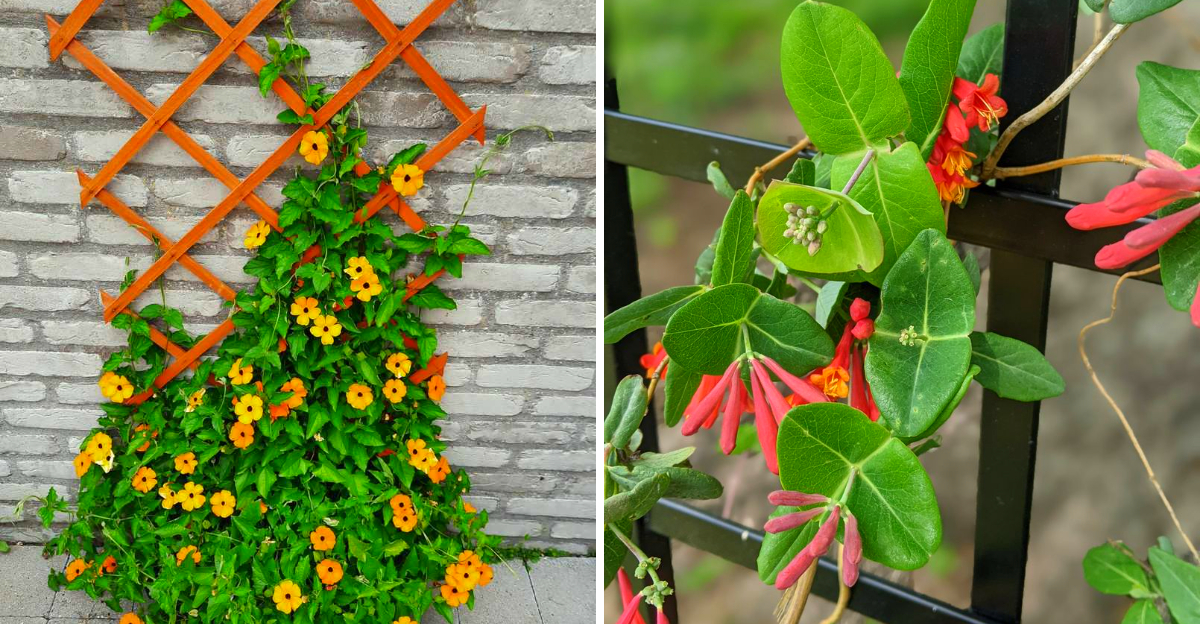
Ready to take your Texas garden to new heights? April is the official “launchpad” month for climbers.
With the soil warming and the last frost behind us, vines and creepers are primed to take off before the legendary Texas heat truly kicks in.
Vertical gardening is the ultimate space-saving hack, whether you’re trying to hide a plain fence, create a private patio “curtain,” or just add some lush shade.
Since Texas spring supports such rapid growth, you can transform a bare trellis into a stunning focal point faster than you think.
If you’re looking to add maximum beauty without losing precious ground space, these eight climbers are the perfect picks to plant this month.
1. Coral Honeysuckle Brings Color And Wildlife To Fences
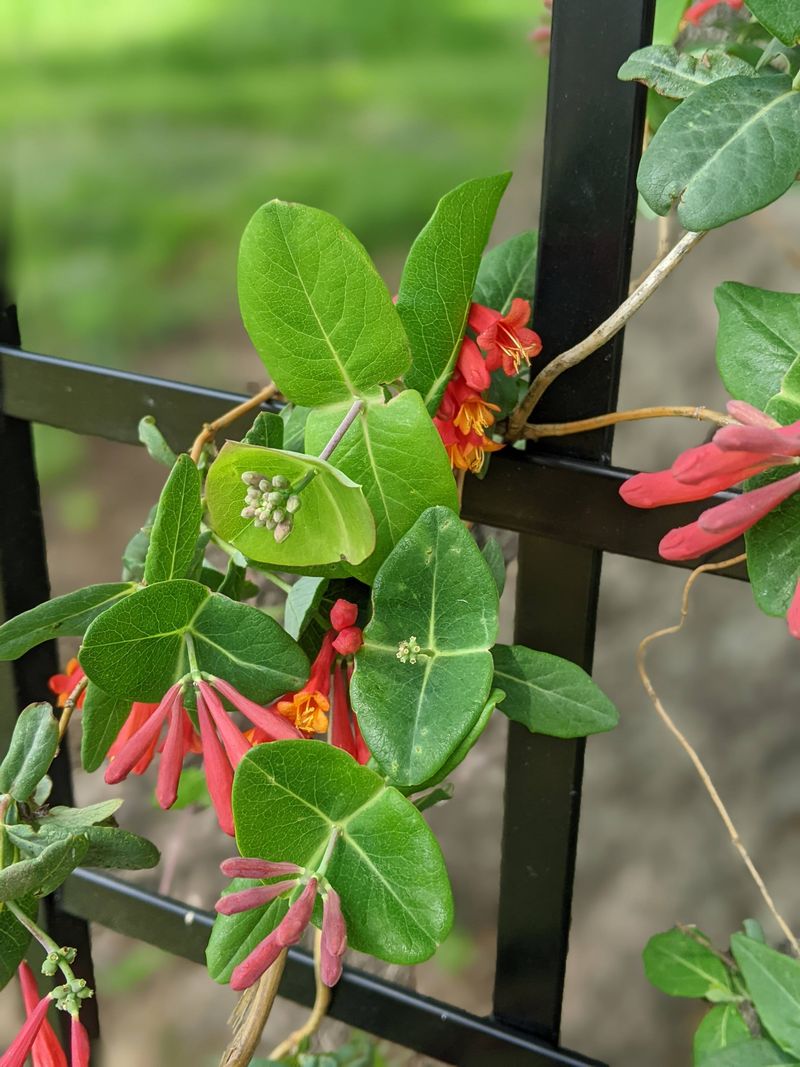
Hummingbirds find coral honeysuckle almost impossible to resist, and Texas gardeners quickly discover why this native vine earns such loyal fans.
Known botanically as Lonicera sempervirens, coral honeysuckle produces clusters of slender, tubular flowers in rich shades of orange and red that light up a fence from spring well into fall.
Unlike its invasive Japanese cousin, this species stays well-behaved and works beautifully in both formal and casual garden settings.
April is an excellent time to plant coral honeysuckle in Texas because the soil has warmed enough to encourage strong root development before summer heat intensifies.
It grows well in full sun to partial shade and handles the clay and sandy soils common across many Texas regions without much fuss.
Once established, it shows solid drought tolerance, which is a genuine bonus during those dry Texas summer stretches.
Coral honeysuckle can reach around 15 to 20 feet in length, making it a solid performer on fences, trellises, arbors, and pergolas. It climbs by twining its stems around supports, so giving it something to grab early on helps it get going faster.
Butterflies also visit the flowers regularly, adding extra wildlife activity to the yard.
For Texas gardeners who want native beauty, seasonal color, and real ecological value all in one plant, coral honeysuckle checks nearly every box worth checking.
2. Crossvine Covers Structures With Strong Growth
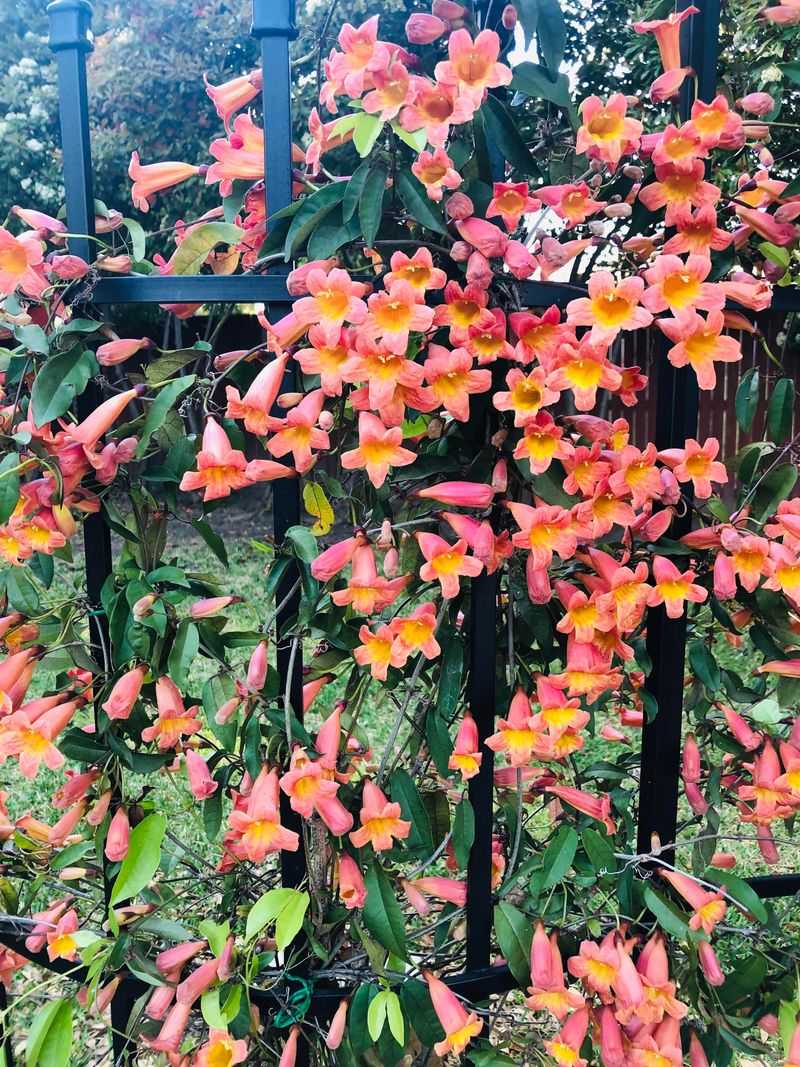
Few native vines match the sheer coverage and visual punch that crossvine delivers on a fence or trellis.
Bignonia capreolata is a semi-evergreen to evergreen climber native to the southeastern United States, including parts of Texas, and it earns its reputation by covering structures quickly and reliably.
The flowers are trumpet-shaped and come in bold shades of orange-red with yellow throats, making quite a statement when they bloom in spring.
Planting crossvine in April in Texas gives it the warm soil and increasing daylight it needs to send out strong new growth before summer arrives.
It tolerates full sun and partial shade, and it adapts to a range of Texas soil types, including the heavy clay soils found across North and Central Texas.
Hummingbirds visit the blooms regularly, adding lively movement to the garden during peak flowering season.
Crossvine climbs using adhesive tendrils that grip surfaces tightly, so it works especially well on wooden fences, brick walls, and metal trellises without needing much help from the gardener.
Your Texas Garden Changes Every Week. Your Plan Should Too.
Gardening in Texas changes quickly throughout the season. Every Friday you’ll receive a simple weekly plan showing exactly what to plant, prune, fertilize, harvest, and protect so you never miss the right timing.
In ideal Texas conditions, it can reach up to 30 to 50 feet, so giving it a sturdy structure from the start is a wise move.
The cultivar Tangerine Beauty is particularly popular in Texas for its softer orange and yellow tones and its reliable repeat blooming through the season.
3. Passionflower Adds Unique Blooms And Fast Coverage
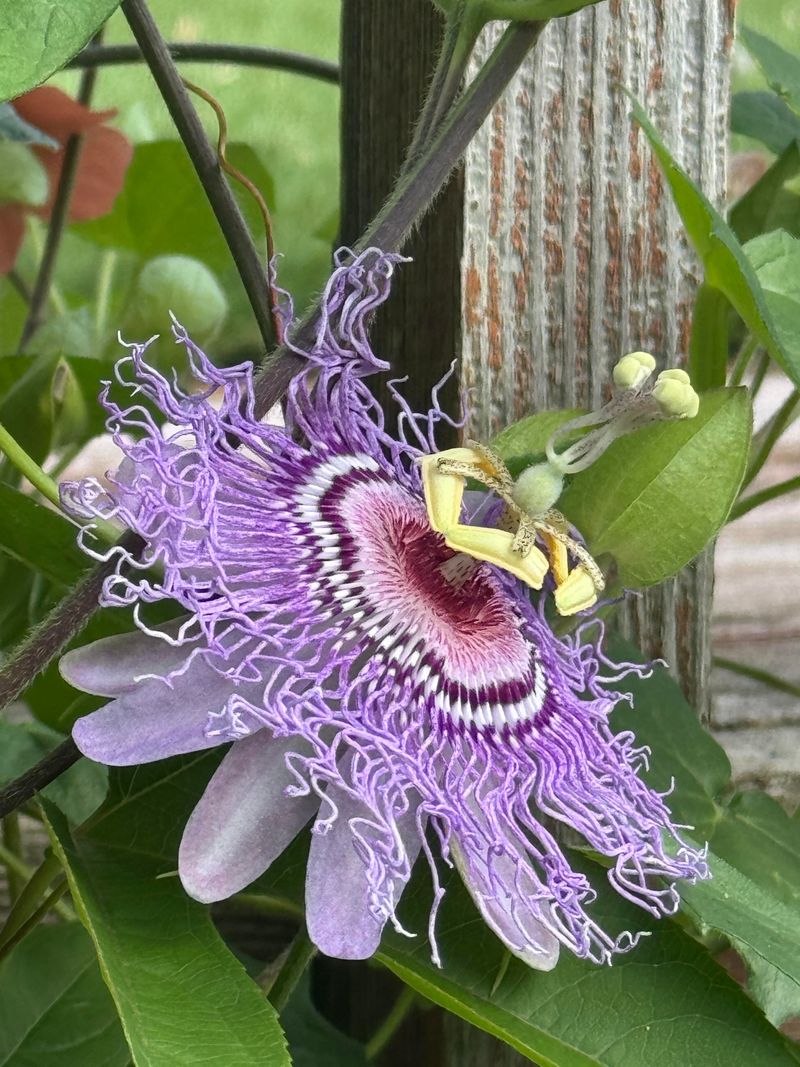
Walking past a fence covered in passionflower blooms tends to stop people in their tracks because the flowers look almost too elaborate to be real.
The native Texas species, Passiflora incarnata, produces striking purple and white blossoms with a complex, layered structure that draws curiosity from gardeners and pollinators alike.
Bees, butterflies, and especially Gulf Fritillary butterfly caterpillars rely on passionflower as a host plant, making it a meaningful addition to any Texas wildlife garden.
April planting gives passionflower a strong head start in Texas because it thrives in warm soil and full sun. Once established, it grows at a fast pace, easily covering a trellis or fence section within a single season.
It handles heat well, which makes it well-suited for the long, warm summers that much of Texas experiences from June through September.
Passionflower climbs using coiling tendrils that wrap around wire, wood, and other supports with ease. It does best with consistent moisture early on but becomes reasonably drought tolerant once it has settled in.
The vine can spread fairly widely, so giving it a dedicated section of fence or a generous trellis helps keep it organized.
As an added bonus, the fruit that follows the flowers is edible and attracts wildlife through the late summer and fall months.
For Texas gardeners who want something genuinely eye-catching, passionflower rarely disappoints.
4. Black Eyed Susan Vine Brings Quick Seasonal Color
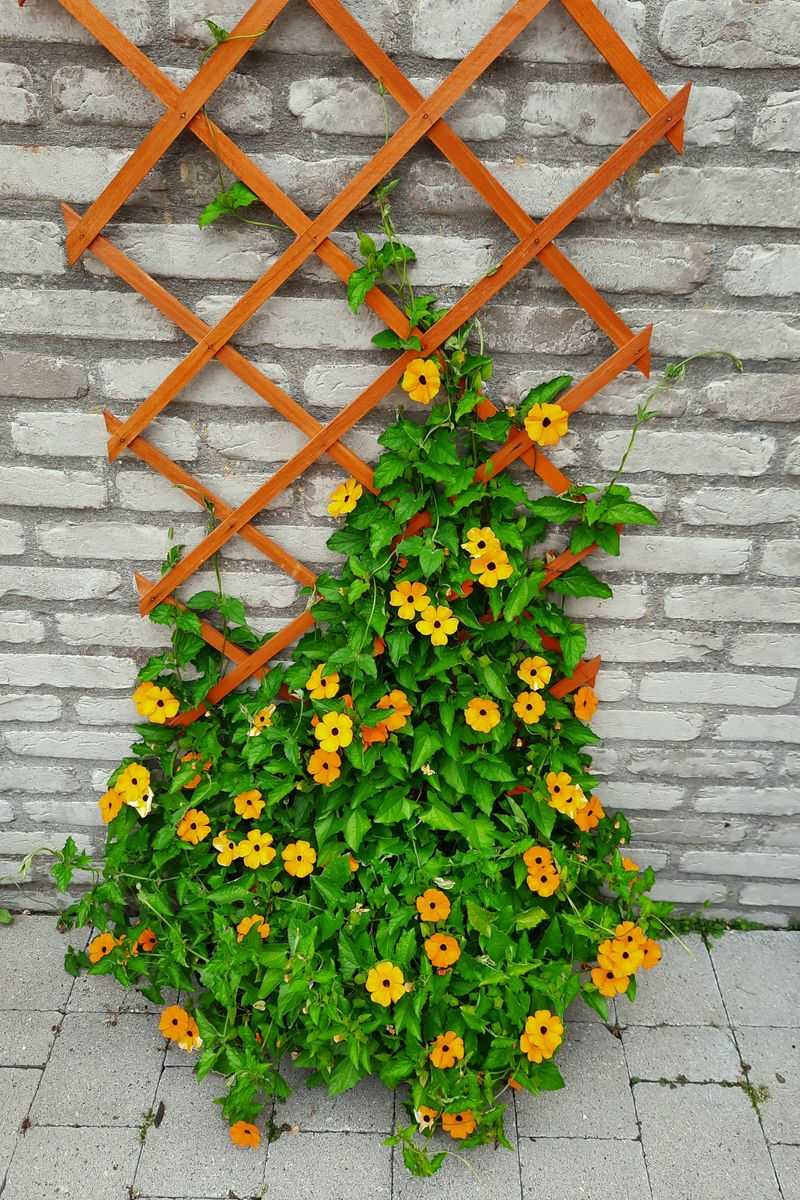
Gardeners who want fast color on a trellis without waiting half the season for results often reach for black-eyed Susan vine, and it rarely lets them down.
Thunbergia alata is a tropical annual in most of Texas that produces a steady flow of cheerful blooms in shades of orange, yellow, and white, each featuring a distinctive dark center that gives the plant its memorable name.
The flowers keep coming from late spring through the first cool snaps of fall, offering months of reliable visual interest.
Starting black-eyed Susan vine in April in Texas lines up well with the warming temperatures and longer days that push this plant into active growth.
It grows quickly in full sun and warm conditions, which Texas provides generously from spring onward.
The vine typically reaches five to eight feet in a season, making it a manageable and practical choice for smaller trellises, mailbox posts, container supports, and patio structures.
It climbs by twining its stems around supports, so a simple wire grid or wooden trellis works well. Regular watering during dry spells helps it maintain steady blooming through the hottest Texas months.
Since it is grown as an annual in most Texas regions, it gives gardeners the freedom to try different colors or combinations each year. The orange-flowered varieties tend to be especially vibrant and are widely available at Texas garden centers in spring.
5. Hyacinth Bean Climbs Fast In Warm Weather
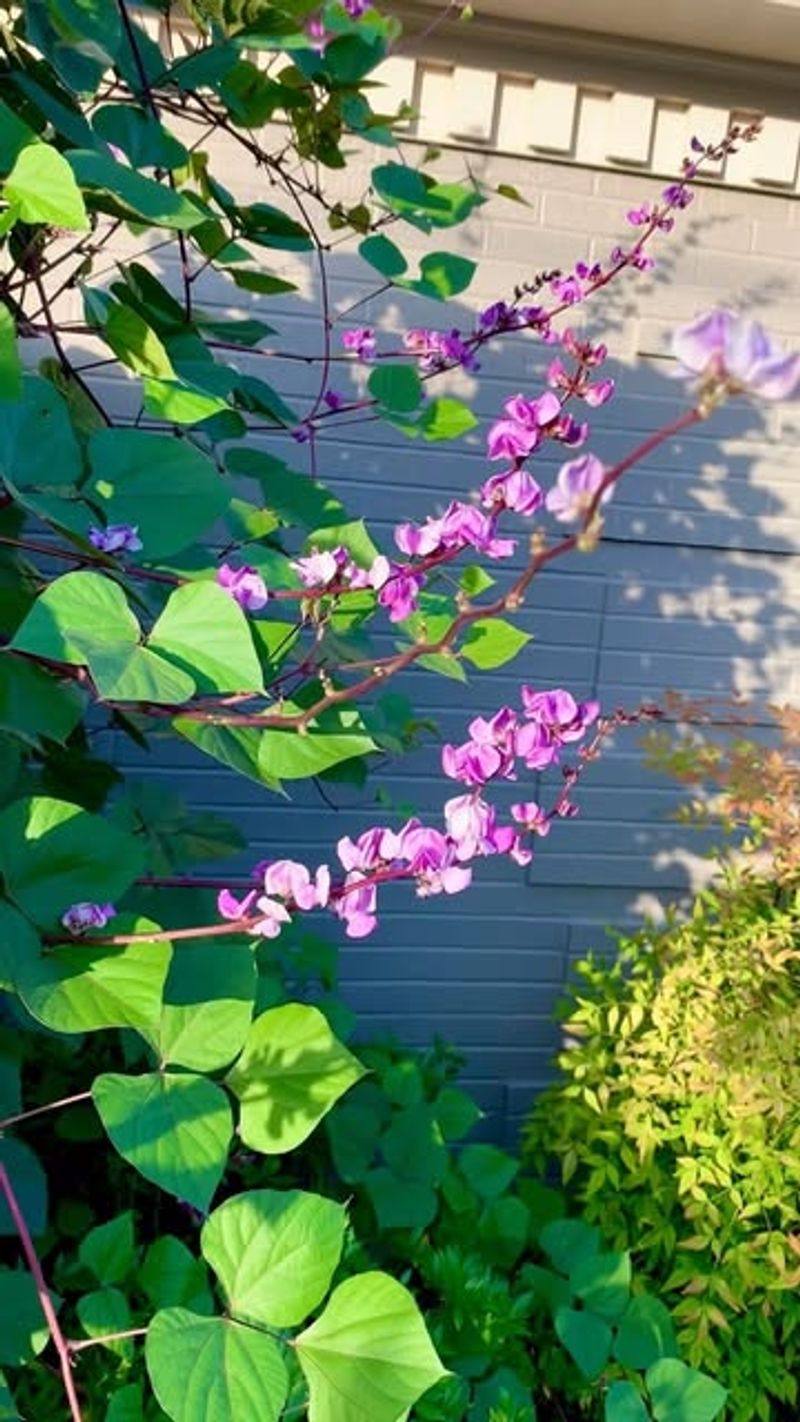
Once temperatures climb in Texas, hyacinth bean vine shifts into high gear and puts on one of the most colorful vertical displays in the warm-season garden.
Lablab purpureus is an annual climber grown for its striking combination of purple flowers, glossy dark green leaves with purple undertones, and deep burgundy-purple seed pods that persist on the vine long after the flowers fade.
The overall effect is bold, layered, and genuinely ornamental from midsummer through early fall.
April is a great time to direct sow hyacinth bean seeds in Texas because the soil temperature has typically risen enough to support quick germination. Seeds sprout fast in warm conditions, and seedlings take off with vigor once they are established.
It grows best in full sun and tolerates the heat and humidity that build across much of Texas through the summer months.
Hyacinth bean twines eagerly around trellises, fences, strings, and wire supports, often reaching 10 to 15 feet or more in a single season under good Texas growing conditions.
It needs consistent moisture, especially during peak summer heat, to keep flowering and producing pods.
While the pods and seeds are used as food in some cultures after proper cooking, they should not be eaten raw. As an ornamental vine, hyacinth bean offers a combination of fast growth, tropical color, and season-long interest that suits Texas gardens very well.
6. Morning Glory Fills Trellises With Easy Growth
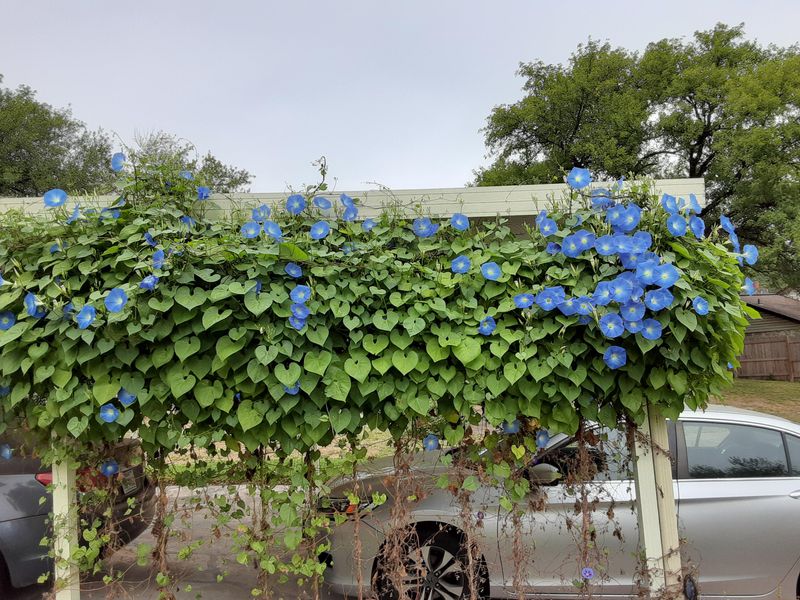
There is something genuinely satisfying about watching morning glory race up a trellis and burst into bloom just as the Texas summer heat settles in.
Ipomoea purpurea is a fast-growing annual vine that produces trumpet-shaped flowers in shades of purple, blue, pink, red, and white, opening fresh each morning and closing by afternoon.
The daily rhythm of the blooms gives the garden a lively, changing quality that many Texas gardeners find charming and rewarding.
April is a solid time to sow morning glory seeds directly into the ground in Texas because the soil is warm enough for good germination and the risk of late frost has passed across most of the state.
Lightly scratching the seed coat before planting, a process called scarification, can speed up germination noticeably.
Morning glory grows best in full sun and reaches 10 to 15 feet in a single season with minimal care.
It twines naturally around fences, trellises, strings, and posts, making it one of the easiest climbing plants to establish in a Texas yard.
Morning glory is not particularly picky about soil quality and actually tends to bloom more freely in moderately fertile ground rather than heavily amended beds.
Keeping the soil consistently moist during establishment helps get things going, after which it handles brief dry spells reasonably well. For beginning Texas gardeners looking for a rewarding, low-fuss climber, morning glory is a strong starting point.
7. Malabar Spinach Grows Fast And Handles Heat
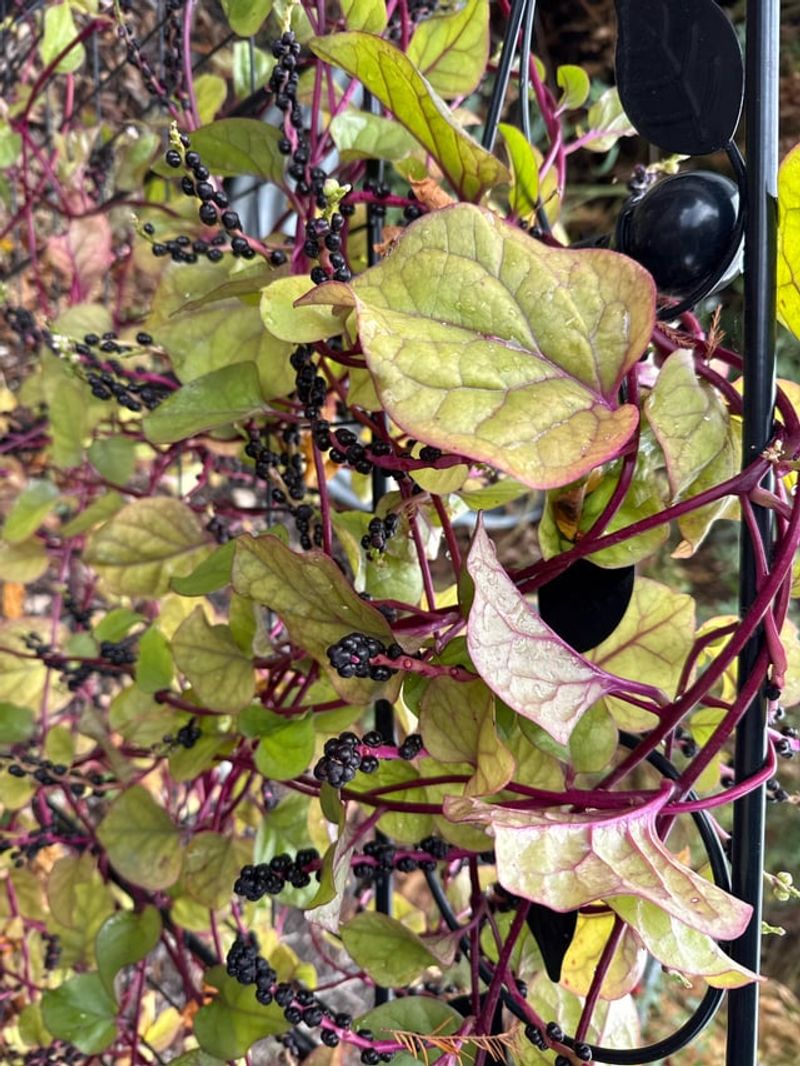
Not every climbing plant in a Texas garden has to be purely ornamental, and Malabar spinach makes a strong case for edible vertical gardening.
Basella alba is a tropical vining plant grown for its thick, glossy leaves that can be used much like regular spinach in cooked dishes, soups, and stir-fries.
Unlike traditional spinach, which bolts and fades in Texas heat, Malabar spinach actually thrives as temperatures rise, making it a clever warm-season swap for Texas vegetable gardeners.
Planting in April in Texas gives Malabar spinach the warm conditions it needs to establish quickly and begin climbing. It grows at an impressive pace once settled in, easily reaching 10 feet or more on a trellis or fence through the summer.
The plant prefers full sun but tolerates partial shade, and it appreciates consistent watering to keep the large, succulent leaves tender and productive.
Malabar spinach climbs by twining its stems around supports, and it responds well to trellises, fences, and wire frames.
The small pink or white flowers that appear through the season are modest but attractive, and the dark purple berries that follow add a bit of ornamental interest.
Regular harvesting of young leaves encourages continued production and keeps the vine from getting too woody.
For Texas gardeners with limited ground space who want both function and foliage, Malabar spinach offers a genuinely practical vertical gardening solution through the long warm season.
8. Star Jasmine Adds Fragrance And Evergreen Coverage
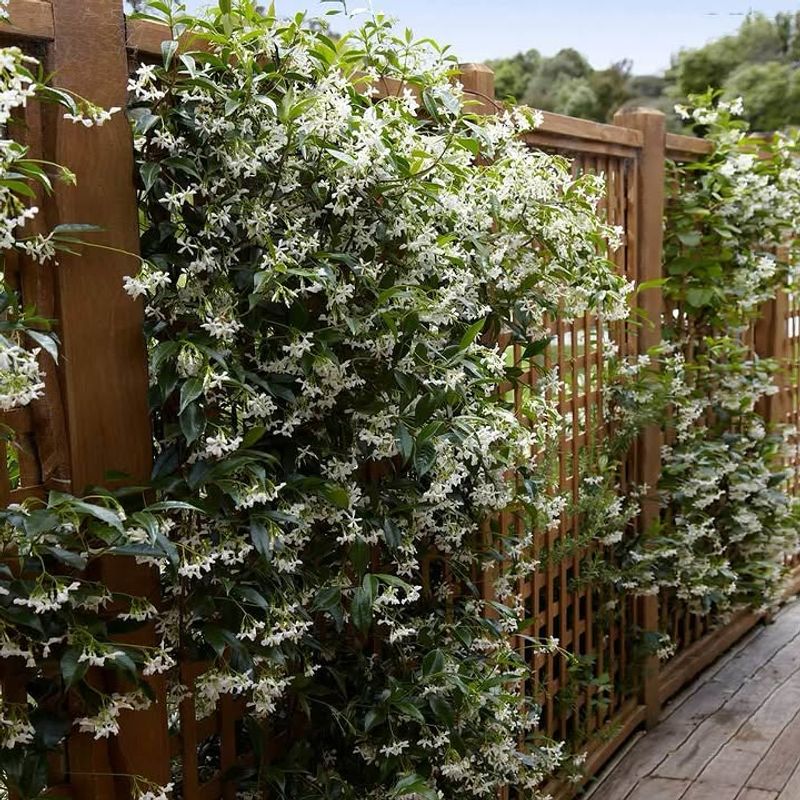
Few climbing plants reward the senses quite like star jasmine when it comes into bloom on a warm Texas spring evening.
Trachelospermum jasminoides is an evergreen vine that produces masses of small, pinwheel-shaped white flowers with a sweet, intoxicating fragrance that carries well through the yard.
The blooms typically appear in late spring to early summer, and the glossy, dark green foliage stays attractive year-round in most Texas climates, making it one of the more versatile evergreen climbers available to Texas gardeners.
April is a good time to plant star jasmine in Texas because the warming spring temperatures help new transplants settle in before the intense heat of summer.
It grows well in full sun to partial shade and adapts to a range of soil types common across Texas, though it appreciates good drainage.
Once established, star jasmine shows reasonable drought tolerance, especially in the more temperate regions of Central and East Texas.
Star jasmine is a twining vine that reaches around 15 to 20 feet under favorable conditions, making it well-suited for covering fences, trellises, arbors, and garden walls.
It grows at a moderate pace, so patience in the first season pays off with lush, dense coverage in subsequent years.
Regular pruning after the spring bloom keeps it tidy and encourages healthy new growth.
For Texas gardeners who want year-round greenery combined with seasonal fragrance, star jasmine is a reliable and rewarding choice that holds up well through the Texas climate.