10 Common Backyard Birds Every Oregon Homeowner Should Know
Oregon backyards are full of small visitors, but many homeowners only know a few by name. A quick flash near the feeder or a song from the fence can be easier to enjoy once you know who is behind it.
The same bird may return every morning without you realizing it. Another may show up only when certain plants are blooming.
Learning the common backyard birds in Oregon makes the yard feel more alive and a lot more interesting. It also helps you notice changes through the seasons.
Some birds are bold around people. Others stay tucked into shrubs and trees. Once you start spotting the regulars, even a normal day outside can feel like a tiny nature show.
1. American Robins Hunt Worms Across Oregon Lawns
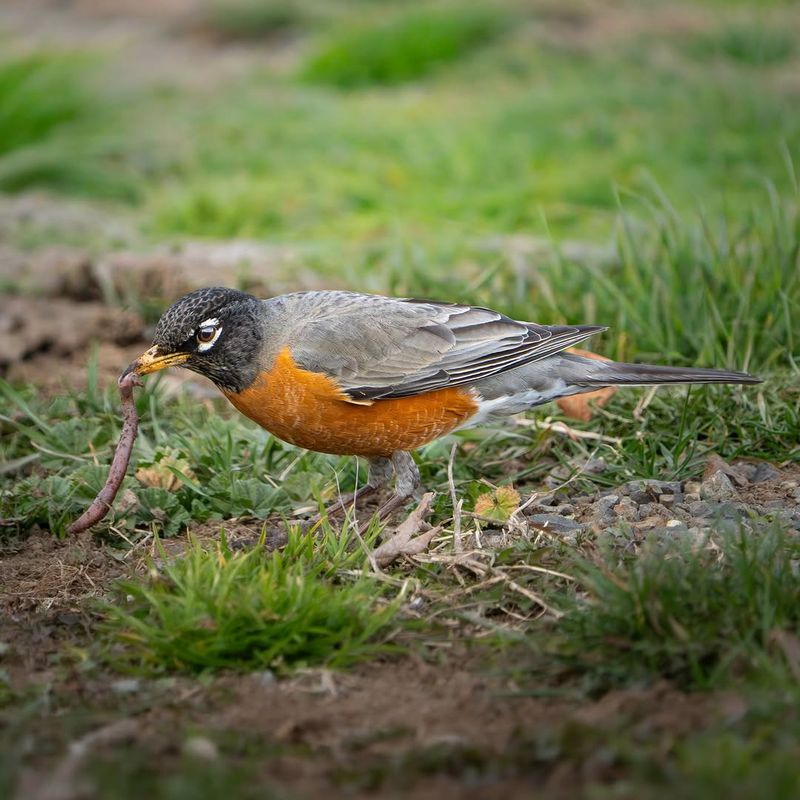
Few sights feel as familiar as a plump robin hopping across a wet lawn in the early morning. The American Robin is one of the most recognized birds in Oregon, and for good reason.
That bold orange-red breast makes it easy to spot from a distance. Robins spend a lot of time on the ground, hunting for earthworms and insects.
They tilt their heads to one side, not because they are listening, but because they are using their sharp eyesight to spot movement underground.
It is a clever hunting trick that works really well on moist soil after rain.
You will find robins in lawns, parks, gardens, and open fields across all regions of the state. They are year-round residents in many areas, though some move to lower elevations during colder months.
Their cheerful, flute-like song is one of the first sounds you hear at dawn.
Robins build cup-shaped nests using mud and grass, often in trees or on building ledges. The female lays three to five bright blue eggs per clutch and may raise two or three broods in a single season.
Spotting those famous blue eggs is always a thrill. Want to attract robins? Keep your lawn healthy and moist.
Avoid using pesticides, since robins eat a lot of the bugs that live in the soil. A birdbath with fresh water is also a great way to bring them in close.
2. Dark-Eyed Juncos Flash White Tail Feathers
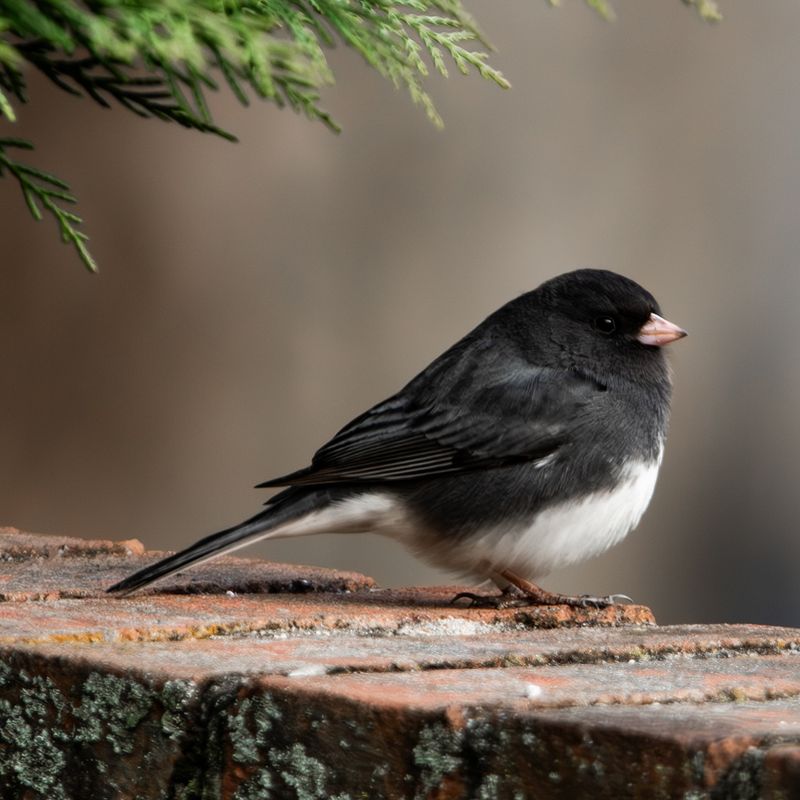
There is something almost magical about watching a small flock of Dark-Eyed Juncos scatter from the ground, flashing bright white outer tail feathers as they fly.
That flash of white is one of the easiest ways to identify this bird in a hurry. Once you know what to look for, you will spot juncos everywhere.
These compact little birds are common visitors to backyards across Oregon, especially during fall and winter.
They spend most of their time foraging on the ground beneath feeders, picking up seeds that other birds knock down.
Millet and sunflower chips are among their favorites. Juncos in our region usually have a dark gray or slate-colored hood and a pale pinkish bill. Their white belly contrasts sharply with their darker upper body.
Different populations can look slightly different, but the white tail feathers are a consistent clue no matter where you see them.
Your Oregon Garden Changes Every Week. Your Plan Should Too.
Gardening in Oregon changes quickly throughout the season. Every Friday you’ll receive a simple weekly plan showing exactly what to plant, prune, fertilize, harvest, and protect so you never miss the right timing.
During warmer months, many juncos move up into forested mountain areas to breed. In fall, they return to lower elevations and yards in large numbers.
Seeing a group of them scratching through leaf litter under a shrub is a sure sign that cooler weather has arrived.
Juncos are easy to attract with a simple ground-level feeder or by scattering seeds on a flat surface. They are not picky eaters and tend to be calm around other small birds.
Having them visit your yard through winter is a real treat.
3. Black-Capped Chickadees Call Their Name From Trees
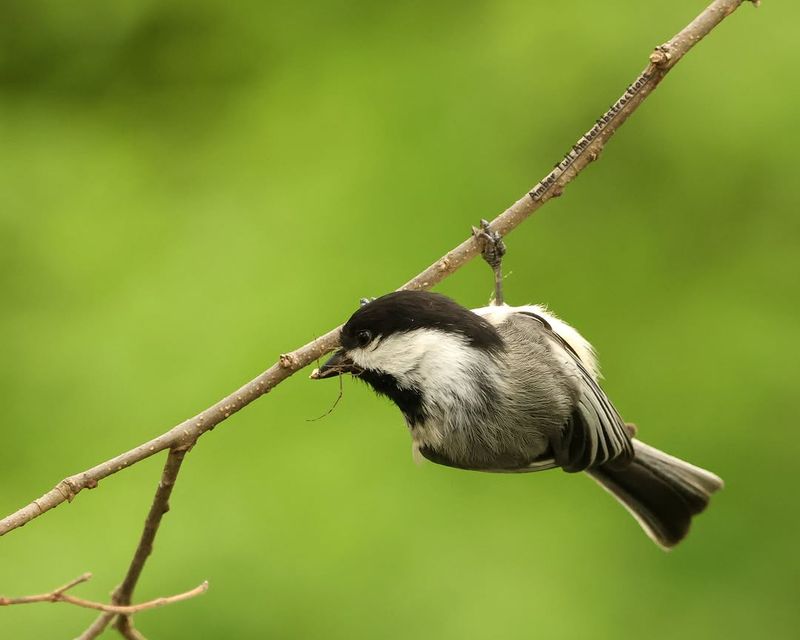
If you have ever heard a clear, two-note whistle that sounds almost like someone saying “fee-bee,” you have already met the Black-Capped Chickadee.
This tiny bird is one of the most beloved backyard visitors in Oregon, and its bold personality makes it stand out despite its small size.
Black-Capped Chickadees are easy to recognize with their crisp black cap, white cheeks, and soft gray and buff-colored body.
They are incredibly curious birds and will often hover at the edge of a feeder, grab a single seed, and fly off to eat it privately.
Watch closely and you might catch them hiding seeds in bark crevices for later.
These birds are year-round residents and stay active even on cold winter days. Their cheerful chick-a-dee-dee-dee call is one of the most familiar sounds in Pacific Northwest neighborhoods.
Interestingly, the more “dee” notes added to the call, the higher the alarm level in the flock.
Chickadees are cavity nesters, meaning they raise their young inside holes in trees. They will also use nest boxes if the hole size is right.
Putting up a small wooden nest box in your yard can encourage a pair to move in each spring.
Sunflower seeds and suet are the best foods to attract Black-Capped Chickadees. They visit feeders all year and are usually one of the first birds to find a new feeder in the yard.
Their energy and friendliness make them a true backyard favorite.
4. Spotted Towhees Scratch Under Shrubs
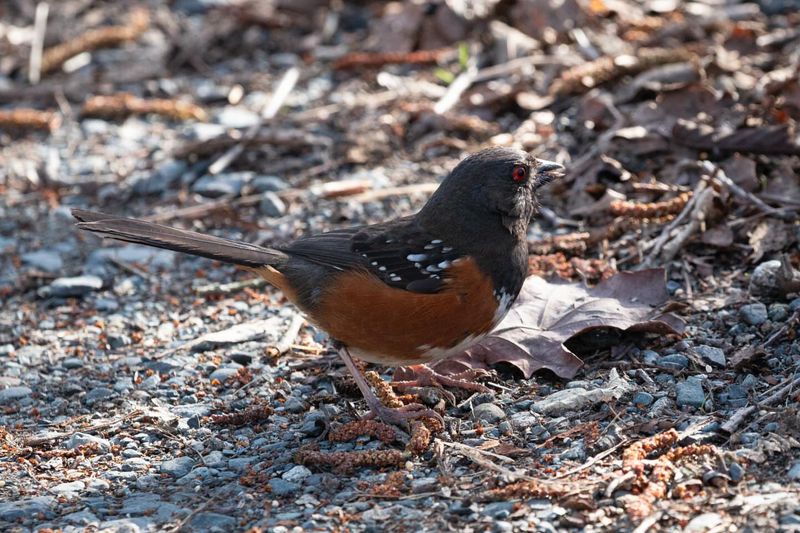
Loud scratching sounds coming from under a bush might make you think a small animal is rooting around in the leaves. More often than not, it is a Spotted Towhee doing what it does best.
These birds are enthusiastic foragers and use a two-footed backward hop to kick up leaf litter and uncover hidden insects and seeds.
Spotted Towhees are striking birds. Males have a jet-black head, back, and wings covered in white spots, with rich reddish-brown sides and a white belly.
Their bright red eyes are hard to miss up close. Females have the same pattern but in softer brown tones instead of black.
You will find them in shrubby areas, woodland edges, and yards with dense native plantings. They prefer to stay low, close to the ground or in low shrubs, rather than perching high in trees.
Their song is a buzzy, drawn-out trill that sounds like a rusty wheel slowly spinning.
Spotted Towhees are year-round residents across much of Oregon. They do not always come to feeders directly, but they will happily pick up seeds scattered on the ground beneath a feeder.
White millet and sunflower seeds work especially well. Planting native shrubs and leaving some leaf litter in your garden beds is the best way to attract towhees.
They need that loose ground cover to forage in. Once a pair finds your yard, they tend to stick around and become regular visitors.
5. Northern Flickers Feed On Ants In The Grass
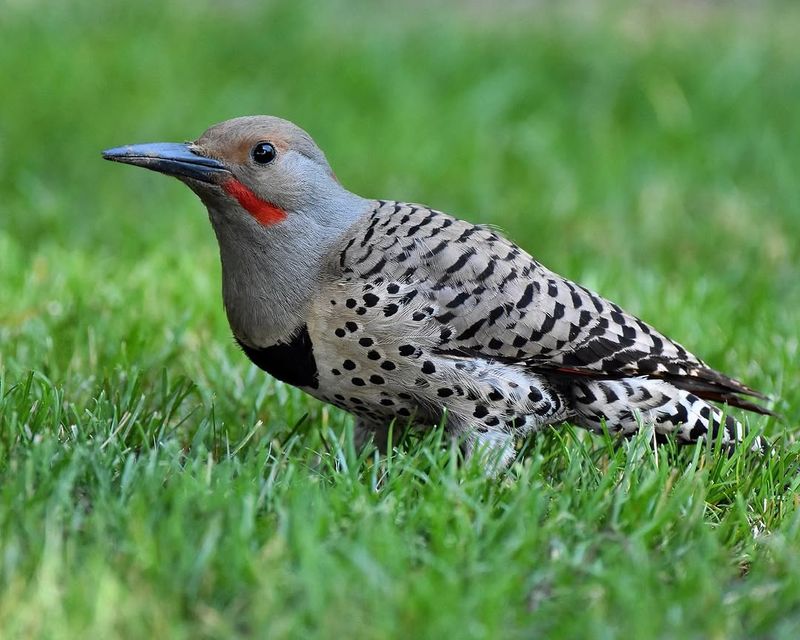
Most woodpeckers stick to trees, but the Northern Flicker has a different approach. This large, handsome woodpecker spends a surprising amount of time on the ground, using its long barbed tongue to lap up ants and beetles from the soil.
Watching one work across a lawn is genuinely fascinating. Flickers are easy to identify once you know what to look for.
They have a brown, heavily barred back, a bold black chest patch, and a white rump that flashes brightly when they fly.
In our region, most flickers belong to the red-shafted form, meaning the undersides of their wings and tail glow salmon-pink or red in flight.
Males have a red mustache stripe on their face, which females lack. Their loud, repeated call sounds like a sharp “wick-wick-wick” and can carry a long distance.
During spring, they also drum loudly on metal gutters or wooden structures to attract mates, which can be a noisy surprise for homeowners.
Northern Flickers live across Oregon year-round and are found in open woodlands, parks, and suburban yards. They are cavity nesters and will sometimes use nest boxes designed for larger birds.
Old trees with soft wood are their preferred nesting spots.
To attract flickers, avoid treating your lawn with pesticides that reduce ant populations. Leaving a few withered snags or old trees standing also gives them places to nest and roost.
Suet feeders can sometimes draw them in as well, especially during colder months.
6. American Goldfinches Bring Bright Yellow Summer Color
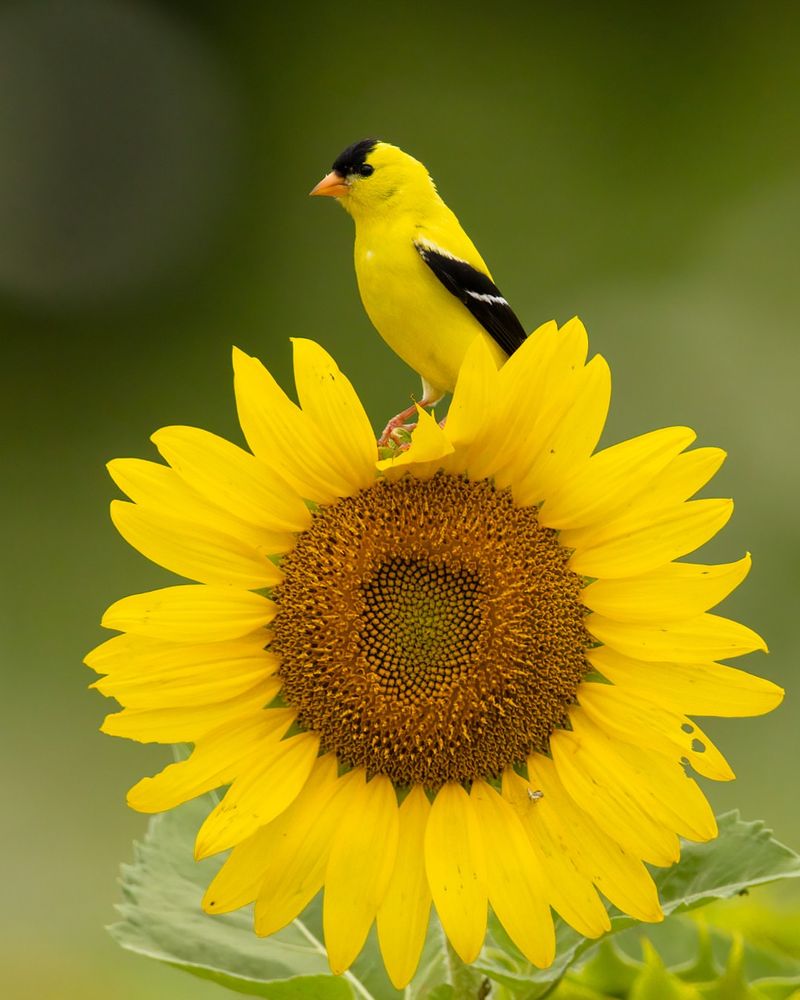
Nothing lights up a summer garden quite like a male American Goldfinch in full breeding color.
That electric yellow plumage with crisp black wings is hard to miss, and it never gets old no matter how many times you see it. These small finches are pure backyard sunshine.
American Goldfinches are found across our state and are especially common from late spring through early fall. Males wear their brightest yellow feathers during summer breeding season.
By winter, they fade to a more olive-yellow tone, which can make them harder to recognize at first glance.
Goldfinches are strict seed eaters and have a strong preference for thistle and sunflower seeds. Nyjer seed, sometimes called thistle seed, is hands down the best food to offer them.
A tube feeder with small ports designed for nyjer seed will bring goldfinches in quickly and reliably.
One fun fact about goldfinches is that they are among the latest nesters of any North American songbird.
They wait until mid-summer when thistles go to seed before building their nests, since they line the inside with soft thistle down.
The timing is smart and perfectly matched to their food source.
Planting native wildflowers like coneflowers, sunflowers, and black-eyed Susans gives goldfinches natural food sources right in your yard.
They also visit birdbaths regularly, so keeping fresh water available helps. Once you attract a small flock, they tend to return season after season.
7. Song Sparrows Sing From Fences And Thickets
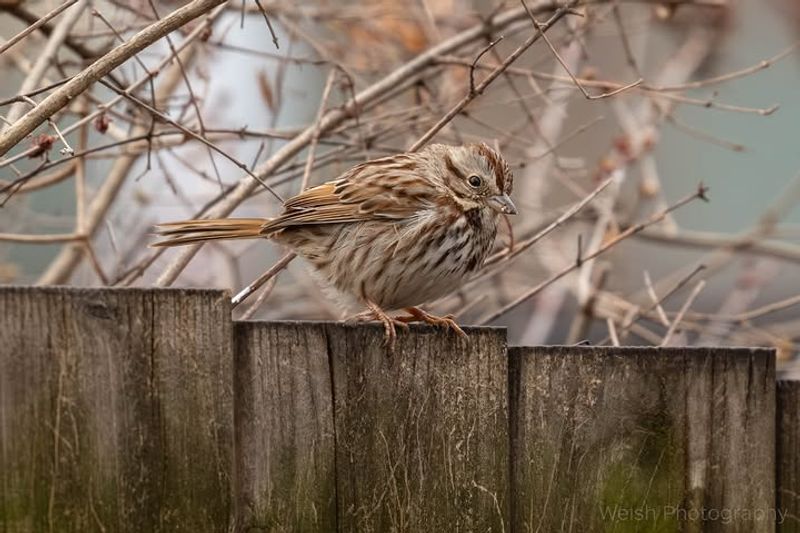
Song Sparrows are proof that small and brown does not mean boring. These compact little birds pour out a rich, complex song that has delighted birdwatchers for generations.
Each male has his own unique variation of the song, meaning no two Song Sparrows sound exactly alike.
Identifying a Song Sparrow takes a moment of practice. They are streaky brown overall with a thick central breast spot and a long, rounded tail.
The face has a grayish tone with brown stripes running through the eye and along the side of the throat. Once you learn the look, they are surprisingly easy to pick out.
These birds are common year-round residents across most of Oregon. They prefer brushy areas near water, overgrown garden edges, thickets, and shrubby roadsides.
You will often hear one singing from the top of a low shrub or fence post before you ever see it.
Song Sparrows forage on the ground and in low vegetation, picking up seeds, berries, and small insects.
They are not regular feeder visitors, but they will come to ground-level feeding areas where millet or cracked corn is scattered.
A nearby water source greatly increases the chances of attracting them.
Leaving a weedy or brushy corner in your yard is one of the best things you can do for Song Sparrows. They love dense, tangled growth for nesting and shelter.
Once a pair sets up in a yard, they often raise multiple broods in a single season, making them entertaining neighbors all summer long.
8. Anna’s Hummingbirds Stay In Many Oregon Yards Year-Round
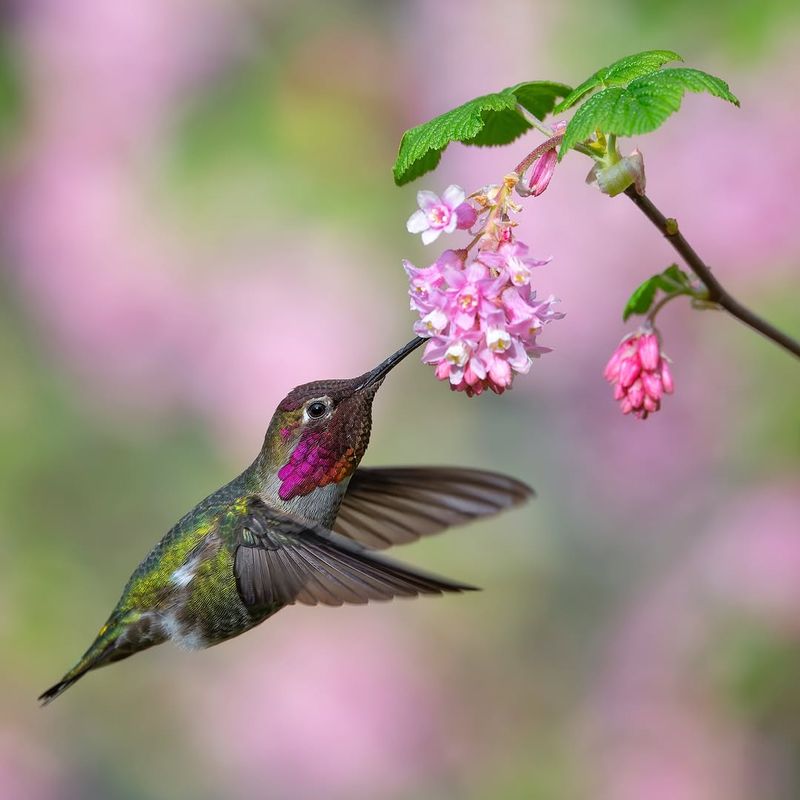
Most people think hummingbirds head south for the winter, but Anna’s Hummingbirds break that rule entirely.
These tiny, jewel-like birds are year-round residents in much of Oregon, including coastal and valley areas.
Seeing one hover at a feeder on a cold January morning feels like a small miracle every time.
Male Anna’s Hummingbirds have an iridescent rose-pink head and throat that can look dark or even black in low light. When the sun hits just right, the color blazes like a neon sign.
Females are more subdued with grayish-green plumage and just a small pink spot on the throat.
Anna’s Hummingbirds are feisty and territorial. A single male will often guard a feeder aggressively, chasing away other hummingbirds and even much larger birds.
Their call is a sharp, scratchy series of chips and buzzes that sounds nothing like the delicate bird it comes from.
Keeping a nectar feeder up year-round is the best way to support Anna’s Hummingbirds through winter. Use a simple mix of one part white sugar to four parts water.
Avoid red food dye, since it is not needed and may not be safe for the birds. In freezing weather, bring the feeder inside at night to prevent the nectar from turning to ice.
Planting early-blooming flowers like red currant and flowering quince gives hummingbirds natural nectar sources in late winter and early spring.
They also eat tiny insects for protein, so a pesticide-free yard supports them well all year long.
9. California Scrub-Jays Make Their Presence Loud And Clear
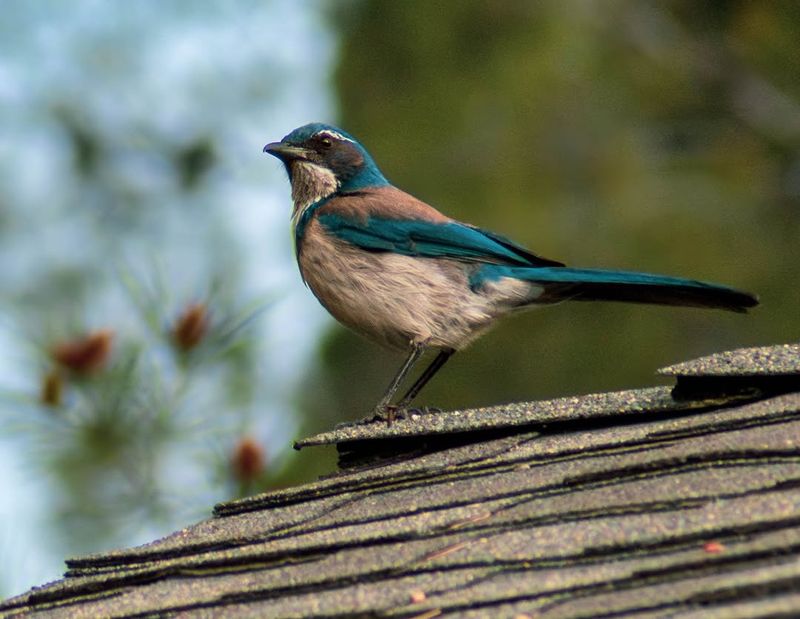
Bold, loud, and impossible to ignore, the California Scrub-Jay has a personality that fills the whole yard.
These striking birds are a brilliant mix of blue, gray, and white, and they carry themselves with an air of confidence that borders on theatrical. If there is a scrub-jay in the area, you will know it.
California Scrub-Jays are common in lowland areas of Oregon, particularly in the Willamette Valley and along the coast. They thrive in oak woodlands, suburban gardens, and open scrubby areas.
They are highly intelligent and have been observed planning for the future by caching food in dozens of hidden spots.
Their call is a harsh, raspy series of notes that carries a long distance. They also make a variety of softer sounds when communicating with their mate or young.
Scrub-Jays are known to hold what researchers call “funerals,” gathering quietly around a fallen member of their group, which shows just how socially complex they are.
At feeders, scrub-jays go straight for peanuts. Whole or shelled peanuts placed in an open tray feeder will bring them in fast.
They will grab one, fly off to hide it, and return for another almost immediately. Watching them work is endlessly entertaining.
Scrub-Jays also eat insects, berries, acorns, and even small lizards or eggs from other nests. They are omnivores with big appetites.
Planting native oaks and berry-producing shrubs makes your yard even more attractive to these colorful, clever birds.
10. American Crows Patrol Rooflines, Lawns, And Streets
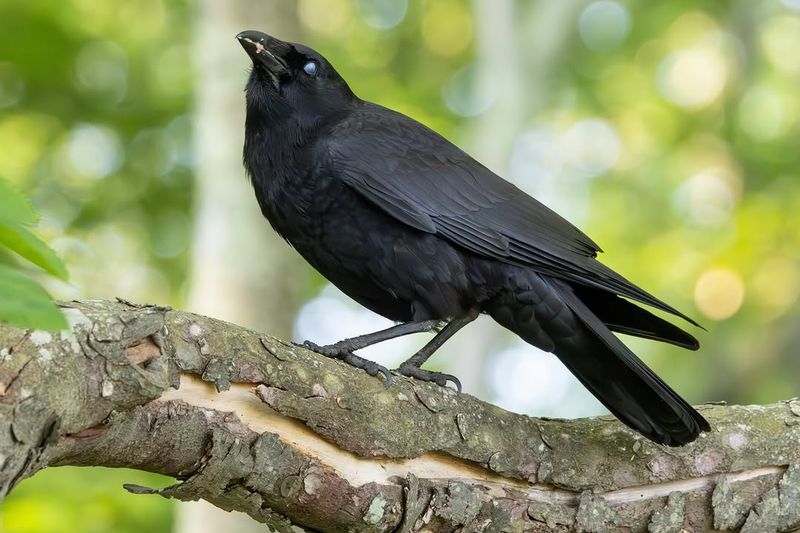
Love them or find them a bit much, American Crows are one of the most fascinating birds you will ever share your neighborhood with. These all-black birds are everywhere in our state, and for good reason.
They are highly adaptable, incredibly smart, and socially complex in ways that scientists are still working to understand.
Crows are known for their problem-solving ability. They have been observed using tools, recognizing human faces, and even holding grudges against people who have treated them poorly.
There are documented cases of crows bringing small gifts to people who regularly feed them, which is both charming and a little surprising.
American Crows are large birds, noticeably bigger than most other backyard species. Their glossy black feathers have a faint purple or blue sheen in bright sunlight.
Their loud, familiar “caw” call is one of the most recognizable sounds in any neighborhood in the Pacific Northwest.
Crows are opportunistic eaters and will consume almost anything, from insects and worms to leftover food scraps and roadside finds. They forage in groups and often post a lookout bird while others feed.
That kind of teamwork is rare in the bird world and speaks to their high intelligence.
If you want crows to visit your yard, try leaving out unsalted peanuts or small pieces of food on an open surface. Be consistent with your offerings and they will start to recognize you.
Over time, some crows may even begin to associate your face with food, which is a pretty remarkable connection to build with a wild bird.