Connecticut Homeowners Are Replacing Arborvitae With These 7 Plants
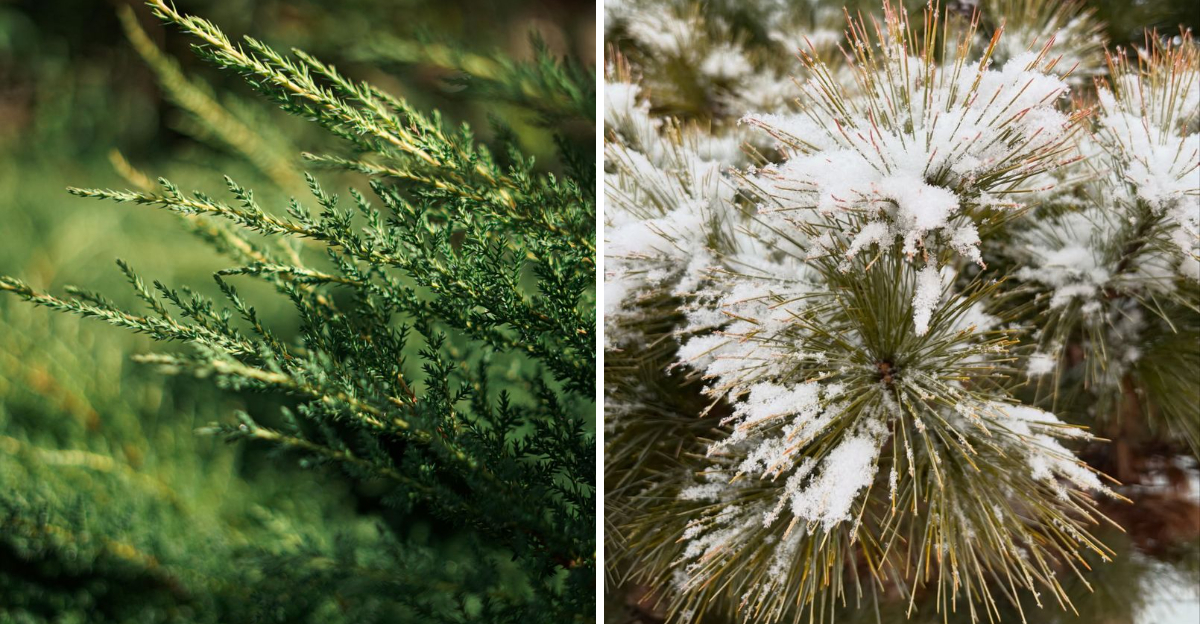
A perfectly installed arborvitae hedge can unravel faster than anyone expects. One season it stands tall, dense, and promising.
The next, something quietly drains the life out from the inside. Brittle, brown columns remain where a lush green privacy wall once stood.
Bagworm infestations move in without warning. Drought stress weakens even the most established plants.
A persistent fungal disease called Kabatina blight finishes what the others started. How does a plant that once seemed bulletproof become such a gamble?
Seasoned landscapers and backyard gardeners alike are asking that very question, and the answers are reshaping planting choices across Connecticut.
Tougher, more visually striking alternatives are quietly earning serious loyalty from homeowners who refuse to watch another hedge decline.
Resilient options exist that bring privacy, beauty, and staying power to yards across the state without the heartbreak. The upgrade is long overdue.
1. Japanese Cedar
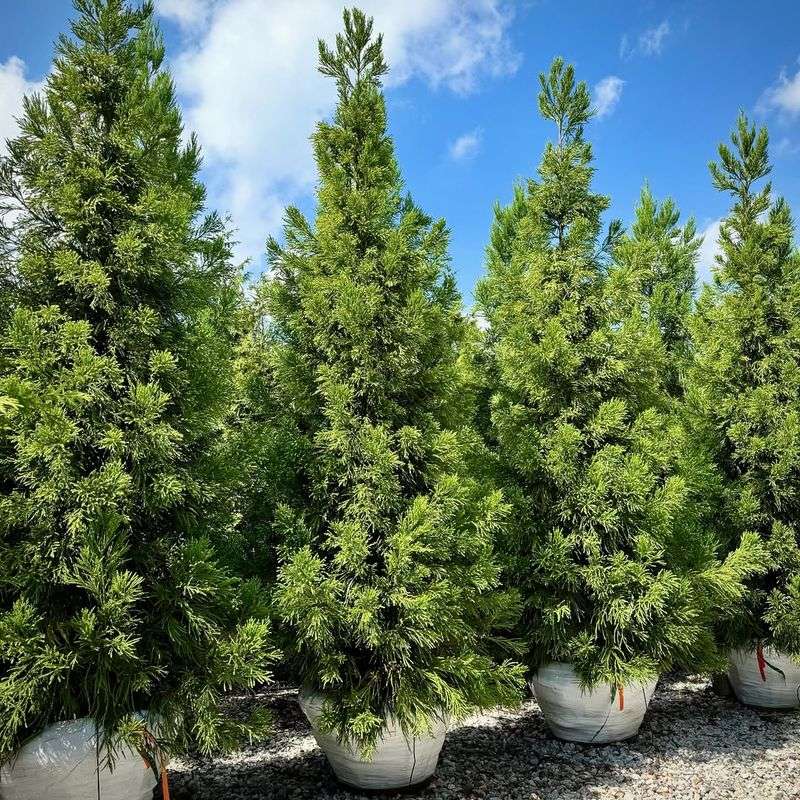
This tree earns every inch of space it occupies. Cryptomeria ‘Radicans’, commonly known as Japanese Cedar, is a fast-growing evergreen conifer with a dense, year-round privacy screen.
It delivers exactly what most homeowners picture when they decide to replace a failing arborvitae hedge. It is not an arborvitae.
It belongs to an entirely different genus and grows with a character all its own. The growth rate is one of the first things people notice.
Radicans puts on three to four feet per year under good conditions. A newly planted row becomes a meaningful screen within two to three seasons.
The naturally pyramidal form stays clean and dense without constant pruning. The soft, feathery foliage stays rich emerald green through spring and summer.
A slight bronze tint appears in the coldest winters before returning to full green in spring. Mature trees reach thirty to fifty feet tall and fifteen to twenty feet wide. They handle full sun and light shade equally well.
Clay soil, humidity, and summer heat present no serious obstacles. Deer tend to leave established Radicans alone, which matters considerably in Connecticut’s suburban and semi-rural landscapes.
One honest note applies. Japanese Cedar is non-native, originating in Japan and China. It provides shelter and structure but offers limited value to native insects and pollinators.
Homeowners who prioritize wildlife should consider pairing it with native plantings nearby. For a dense privacy screen, space plants five to six feet apart.
Wider spacing of eight to ten feet works for a looser windbreak where fast coverage is less critical.
The Yoshino cultivar is an equally strong alternative. It grows larger and broader than Radicans, reaching up to 40 feet tall and 20 to 30 feet wide. Properties with more horizontal room to fill may find it the better fit.
2. Eastern White Pine
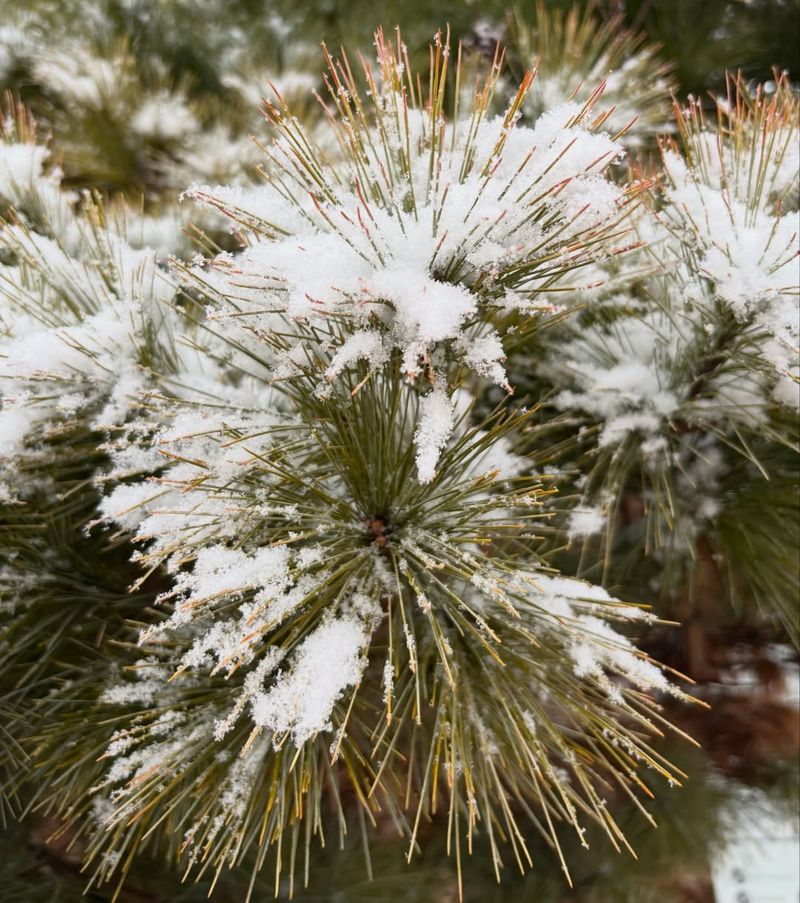
Connecticut’s own native evergreen deserves far more attention than it gets. Eastern White Pine is graceful, fast-growing, and deeply adapted to this region’s soils and climate.
It has grown across Connecticut’s forests and hillsides for centuries. It belongs in far more backyards than it currently occupies.
The soft blue-green needles give it a lighter, more elegant appearance than most conifers. The naturally pyramidal form works beautifully as a privacy screen, windbreak, or property border.
Your Connecticut Garden Changes Every Week. Your Plan Should Too.
Gardening in Connecticut changes quickly throughout the season. Every Friday you’ll receive a simple weekly plan showing exactly what to plant, prune, fertilize, harvest, and protect so you never miss the right timing.
Growth reaches two to three feet per year under good conditions. Trees can eventually top out at fifty to eighty feet, so this is a plant for homeowners thinking long-term.
When sheared regularly, Eastern White Pine holds a dense, uniform shape and stays full from the ground up. It tolerates partial shade better than many conifers.
That is a significant advantage on wooded lots where sunlight is limited. Wildlife value is strong as well. Birds use the branches for nesting and shelter throughout the year.
The ecological case is equally compelling. This tree is native, non-invasive, and hosts a wide range of native insects that support local bird populations.
Planting it means contributing directly to the health of Connecticut’s natural landscape. One important caveat applies.
Eastern White Pine is sensitive to road salt and air pollution. Avoid planting it near heavily salted roads or in areas with persistently poor air quality.
It is also worth noting that White Pine Needle Disease, caused by fungal pathogens, has affected trees across the Northeast since around 2009.
Choosing healthy nursery stock and planting on well-drained sites reduces that risk considerably.
On the right site, however, it is one of the most reliable, rewarding, and ecologically valuable screens available anywhere in the Northeast. Few trees earn their place as completely as this one.
3. Eastern Red Cedar
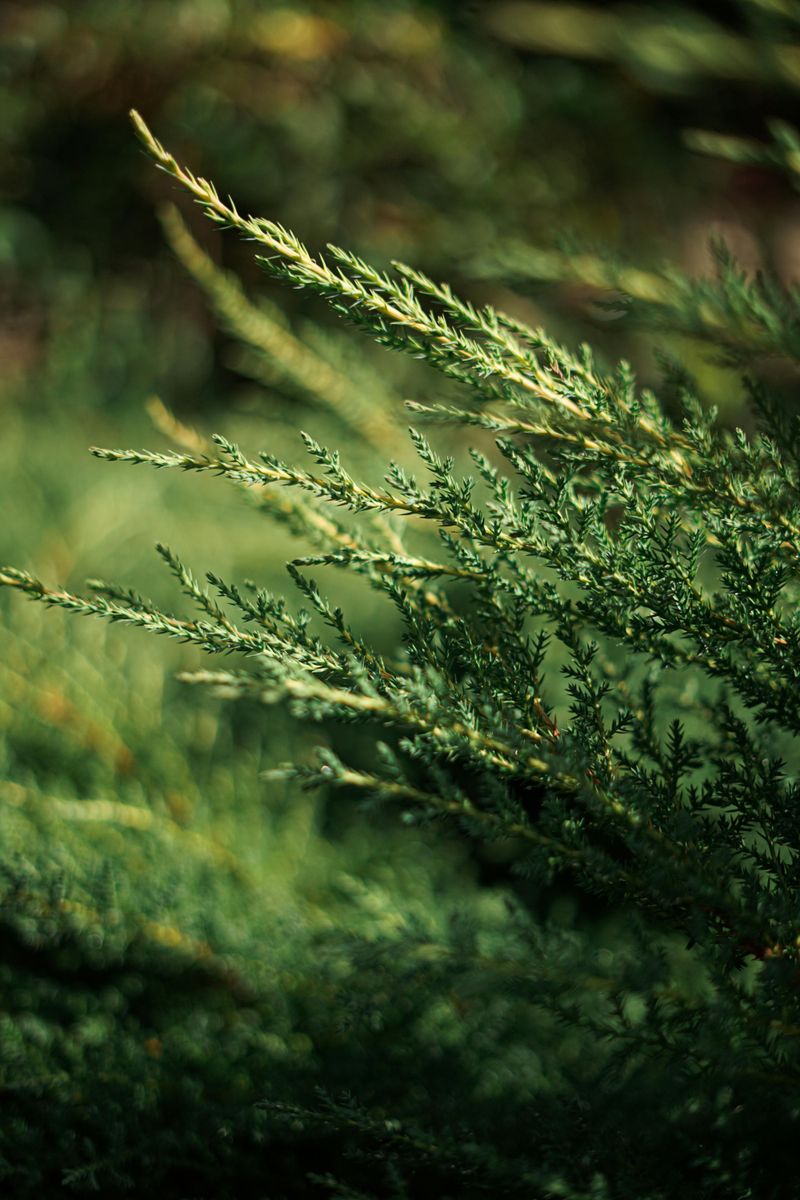
It thrives where other trees give up entirely. Eastern Red Cedar grows in rocky soil, sandy soil, and nutrient-poor ground that would defeat most evergreens before they took root.
It tolerates drought, salt spray, and relentless wind without complaint. For exposed lots, difficult sites, and properties where other screens have failed repeatedly, this native tree is the answer.
Despite its common name, Eastern Red Cedar is technically a juniper. That small botanical distinction comes with real practical benefits.
Junipers are among the most adaptable conifers in eastern North America. This species handles the full range of Connecticut conditions without requiring any particular soil amendment, irrigation schedule, or specialized care.
The dense evergreen canopy blocks wind and noise year-round. Blue-gray berries appear in fall and persist through winter, attracting dozens of bird species.
Cedar Waxwings, robins, and warblers visit regularly. Few privacy trees feed wildlife as reliably and generously as this one.
Growth sits at a moderate pace, around twelve to twenty-four inches per year. Plants can eventually reach forty to fifty feet tall.
Regular trimming keeps them compact and hedge-like for properties with limited space. The reddish-brown bark peels in thin strips, adding a rugged textural character that no arborvitae can match.
One important note: Eastern Red Cedar is an alternate host for cedar-apple rust. If apple trees or ornamental crabapples grow nearby, choose a rust-resistant cultivar or select a different plant.
On the right site, with no apples nearby, Eastern Red Cedar is one of the toughest and most self-sufficient screening trees in the entire Northeast.
4. Norway Spruce
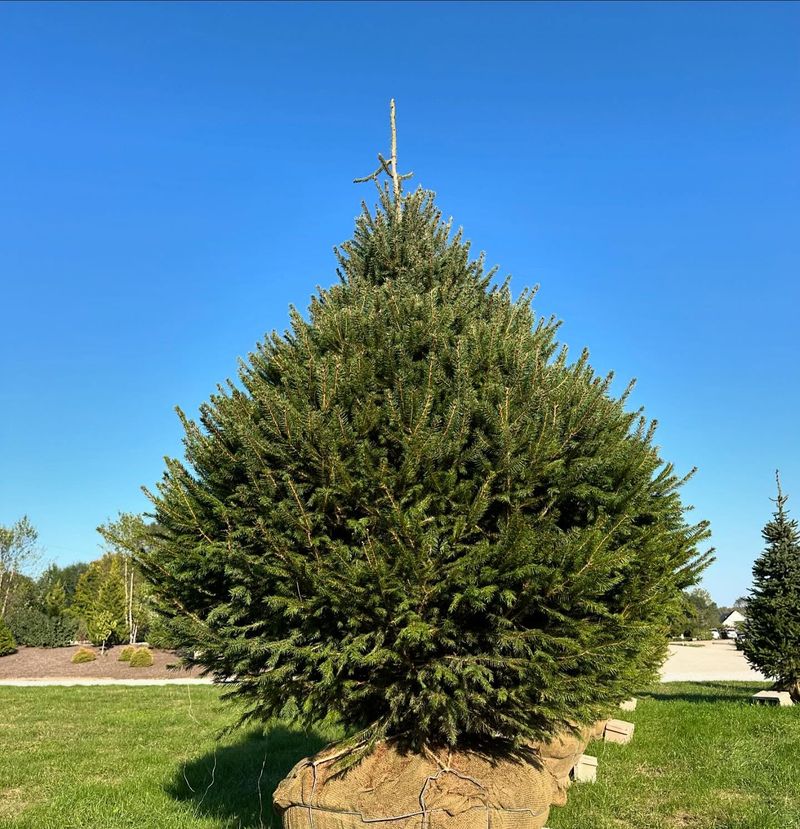
This tree means business. Norway Spruce is one of the most widely planted privacy and windbreak trees across Connecticut and the broader Northeast.
It has earned that reputation through decades of reliable, low-maintenance performance on some of the region’s most demanding sites.
When a homeowner needs a serious, large-scale screen, this is where the conversation starts. Growth is fast and consistent.
Expect two to three feet of new height per year under decent conditions. A newly planted row of Norway Spruce becomes a meaningful screen within three to four seasons.
The dark green pendulous branches create a dense wall that blocks sightlines, absorbs wind, and muffles noise effectively.
Mature trees reach thirty to forty-five feet tall and fifteen to twenty feet wide. That spread demands proper spacing. Plant trees twelve to fifteen feet apart for a screen.
Use a staggered double row for faster coverage on large properties. Crowded specimens lose their lower branches over time and become open and leggy at the base.
Norway Spruce tolerates most soil types and handles Connecticut winters without stress. It performs well in full sun and acceptable in partial shade.
Norway Spruce is non-native, originating in Europe, and naturalized populations have been documented in Connecticut and across the Northeast.
It is not listed as invasive in the state, but planting it away from natural woodland edges is a reasonable precaution. No significant pest or disease vulnerabilities define it as a landscape choice.
This is not a tree for small yards. The mature size is simply too large for tight suburban lots with limited depth.
But for properties with room to breathe, Norway Spruce is one of the most dependable, long-lived, and visually commanding screens a Connecticut homeowner can establish. Few trees match its combination of speed, durability, and scale.
5. American Holly
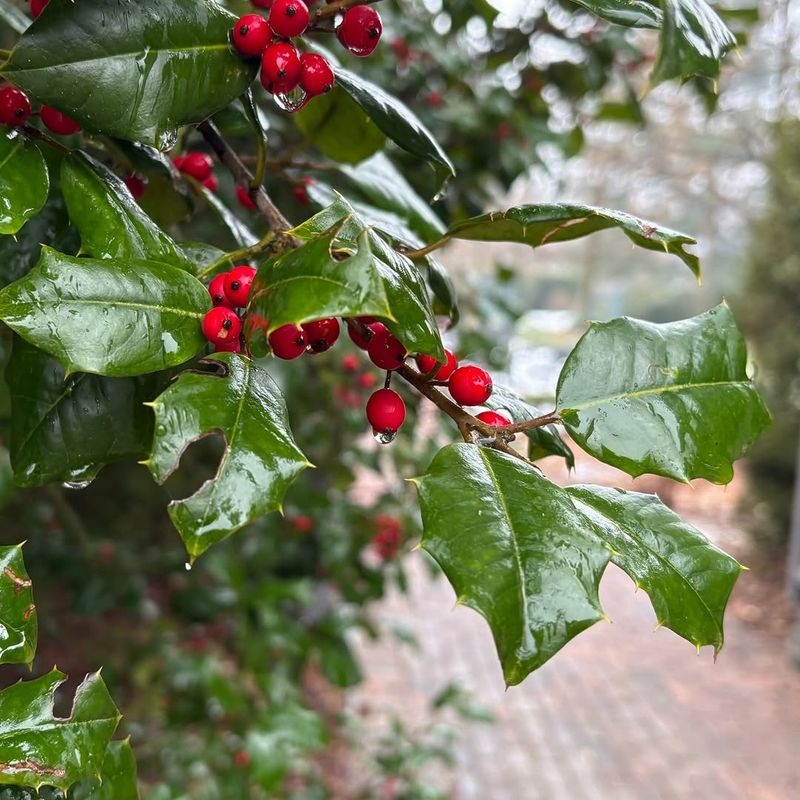
December belongs to this tree. A mature American Holly loaded with bright red berries against a gray winter sky is one of the most striking sights in any Connecticut landscape.
It is native to this region, non-invasive, and has grown in Connecticut forests for centuries. It is both a privacy screen and a living piece of seasonal art that earns its place in every season.
American Holly grows fifteen to thirty-five feet tall. It keeps its glossy, spiny leaves through every season without exception. The dense branching structure creates a solid visual barrier year-round.
Deer tend to avoid the spiny leaves, and the dense branching makes the tree an uninviting shortcut for anyone thinking about cutting through your yard.
This tree prefers slightly acidic, well-drained soil. That describes most Connecticut yards fairly accurately. Full sun produces the most berries.
The plant tolerates partial shade without losing its form or foliage density. Both a male and female plant are needed nearby for berry production, so plan accordingly when purchasing.
Growth is slow, roughly six to twelve inches per year. Patience genuinely pays off here. Planting a larger nursery specimen gives you a meaningful head start on privacy.
Some homeowners combine American Holly with faster-growing evergreens to bridge the gap while the tree matures into its full form.
American Holly also supports wildlife generously. At least eighteen bird species are known to eat its berries. The foliage serves as a host plant for butterflies and moths.
Once established, it becomes one of the most ecologically valuable and visually distinguished features on any Connecticut property it calls home.
6. Nellie Stevens Holly
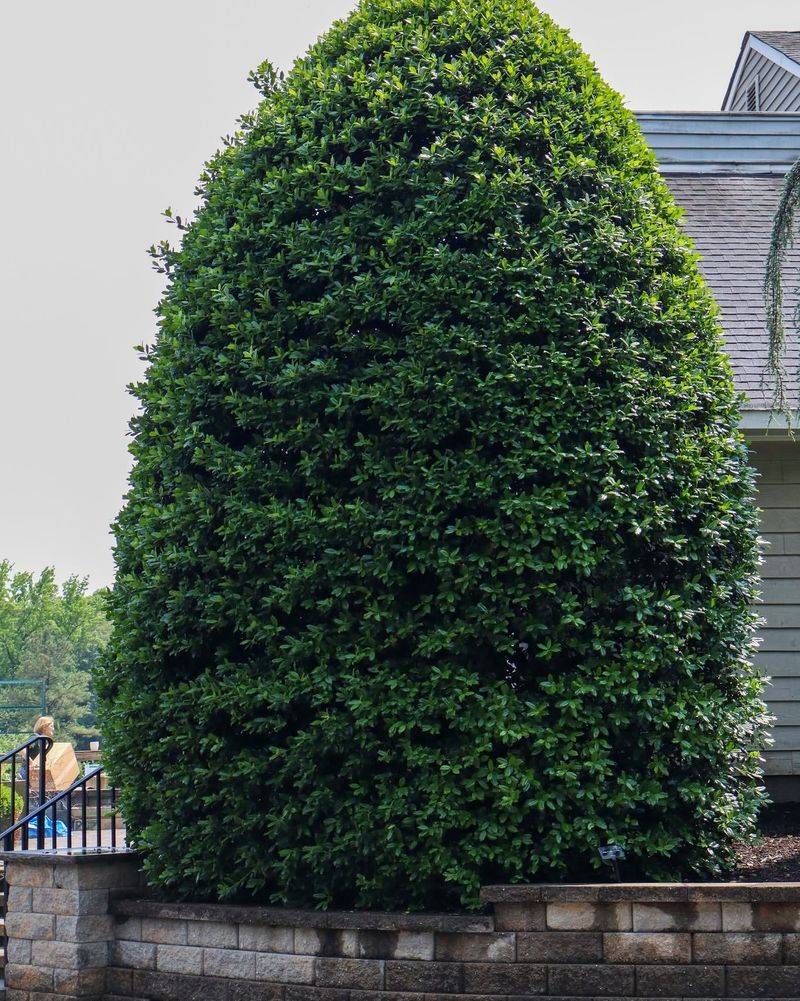
Speed and elegance rarely arrive in the same package. Nellie Stevens Holly manages both effortlessly.
This hybrid evergreen combines the best traits of English and Chinese holly into one of the most reliable screening plants available for Connecticut homeowners.
Fast growth, dense form, glossy dark foliage, and vivid red winter berries — it delivers all of it without drama.
Growth reaches two to three feet per year when young. That pace is exceptional for a broadleaf evergreen.
Mature plants reach fifteen to twenty-five feet tall with a naturally conical shape that looks polished without constant pruning.
The foliage stays deep green through winter. The berry display from late fall onward is genuinely striking and lasts well into the new year.
Nellie Stevens is self-fruiting. No male companion plant is required for berry production, which simplifies the planting process considerably.
It tolerates full sun to partial shade and adapts well to a wide range of soil types. Slightly acidic, well-drained conditions bring out the strongest growth.
Deer resistance is moderate, particularly once the plant is well established, though young specimens benefit from protection in high-pressure areas.
This holly is rated hardy to zone 6a, which covers all of Connecticut including the northwest hills. The entire state falls within its reliable hardiness range.
In any exposed or wind-swept location, apply a two-to-three-inch mulch layer at the base after planting. Space plants five to six feet apart for a dense hedge.
Nellie Stevens Holly is one of the smartest upgrades a Connecticut homeowner can make. It looks good from the first season and only improves from there.
7. Mountain Laurel
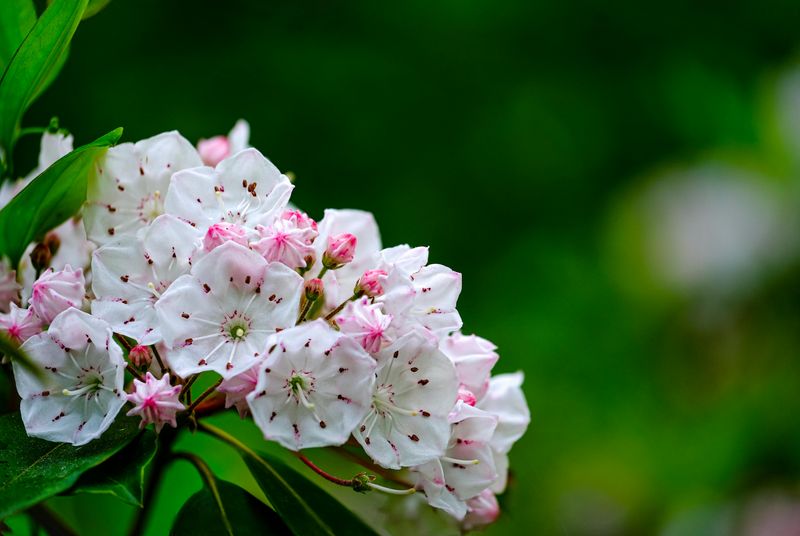
This one stops people in their tracks every May. Mountain Laurel is Connecticut’s state flower, shared with Pennsylvania, and its spring blooms are breathtaking.
Few native evergreen shrubs produce flowers this intricate or this memorable. Walking past a mature Mountain Laurel hedge in full bloom is an experience most gardeners never forget.
The flowers are only the beginning. Mountain Laurel offers dense, leathery foliage that stays green through even the harshest Connecticut winters.
It grows naturally in the rocky, acidic woodlands of this region. That means it is already perfectly adapted to local soil conditions and climate patterns without any special intervention.
Partial shade suits it best. That makes it one of the very few privacy plants that genuinely thrives beneath an established tree canopy.
Mature plants reach five to fifteen feet tall depending on the cultivar and growing conditions. Growth is very slow, typically under six inches per year.
Mountain Laurel works best when paired with faster-growing companions that provide coverage while the laurel gradually fills in around them.
Modern cultivars such as Elf, Minuet, and Ostbo Red offer compact sizes and deeper flower colors than the wild species.
Amending the planting area with peat moss or compost to lower the soil pH gives roots the acidic conditions they need to establish well.
Two critical safety notes apply. All parts of Mountain Laurel are toxic to humans, pets, and livestock.
It is not appropriate for properties where animals roam freely or where young children play unsupervised.
Given the right site, the right companions, and a little patience, Mountain Laurel rewards every homeowner who plants it with something genuinely unforgettable each spring.