Could Voles Be Hiding Under Your Michigan Fruit Trees Right Now?
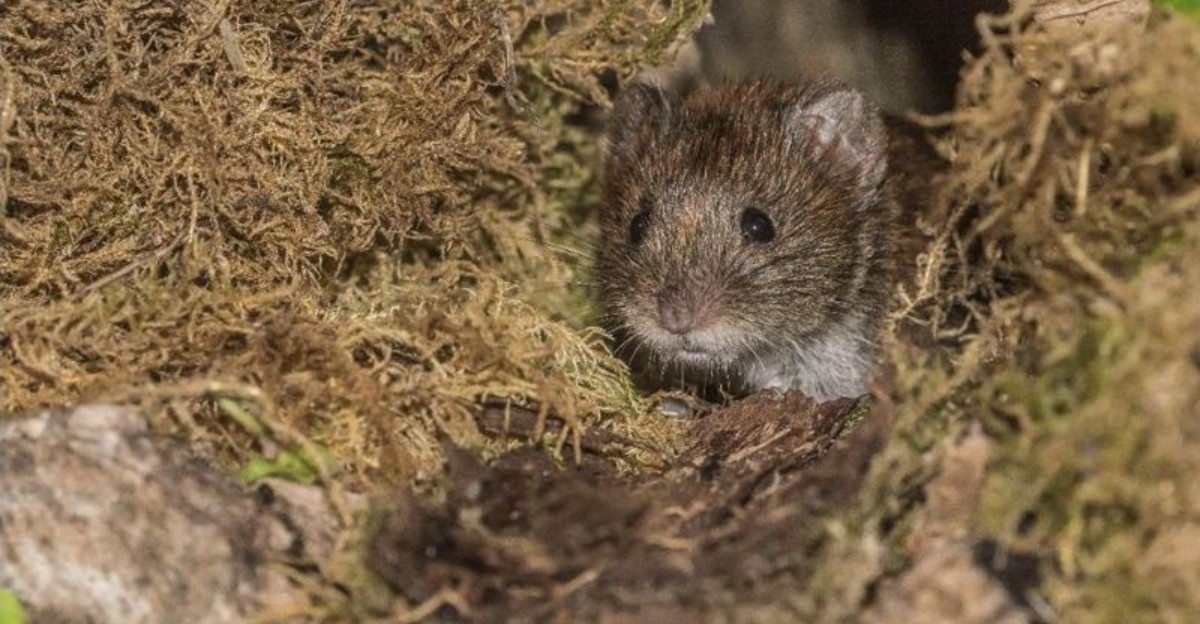
Voles are small, quiet, and easy to miss until the damage appears. They look like short-tailed mice and spend most of their time tunneling under grass, mulch, and snow. Fruit trees are an easy target, because bark near the base is soft and tasty in winter.
Chewing around the trunk can cut off a tree’s flow of water and nutrients. Fall is the time to check, before snow hides everything. Look for narrow paths worn through the grass, small round holes, and tiny gnaw marks at the base of the trunk.
Thick mulch piled against the tree gives voles perfect cover. A short inspection today shows whether they have moved in, and simple steps can keep your trees safe.
1. Voles Stay Active All Winter
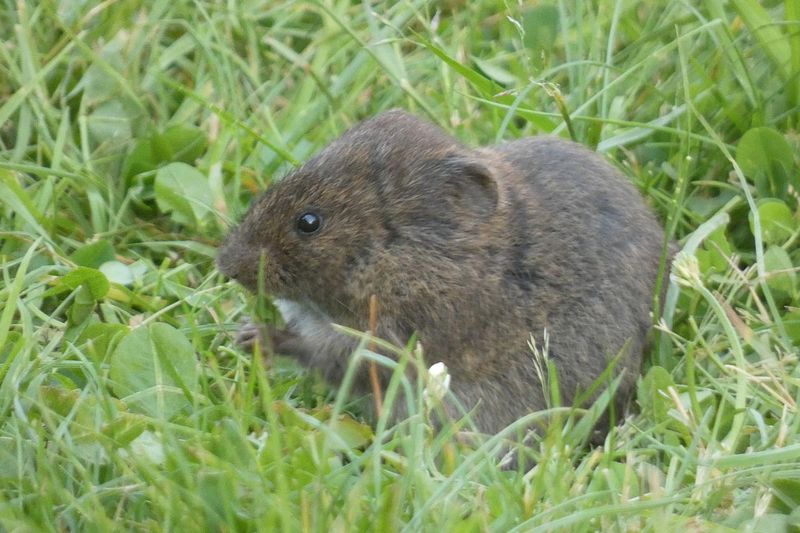
Bears sleep through the cold, but voles never take a break. These small, mouse-like rodents have chunky bodies, short tails, and tiny ears that almost hide in their fur. While many animals slow down in November, voles stay busy every single day.
Because they don’t hibernate, voles need a steady supply of food to stay warm. In summer, they snack on grasses, seeds, and tender plants.
Once frost hits and those green foods fade away, their menu changes fast, and the bark and roots of young fruit trees start to look very tasty.
Two kinds of voles cause the most trouble in home orchards. Meadow voles are the most common in Michigan, and they feed right at the soil surface, gnawing bark near the base of the trunk.
Pine voles work in a sneakier way, since they spend most of their time underground chewing on roots.
Root damage from pine voles can be hard to notice at first. A tree might look weak, lean a little, or grow poorly the next season without any obvious chew marks on the trunk.
Gently tugging on a struggling young tree can sometimes reveal roots that have been nibbled away.
Michigan winters give voles a long season to work. From November through March or even April, they can return to the same tree again and again. A single family can grow quickly, too, because voles breed several times a year when conditions are good.
Paying attention in late fall makes a real difference. Walk your orchard now, learn what you’re dealing with, and you’ll be ready to protect your trees long before the ground freezes solid.
2. Look For Runways And Small Holes
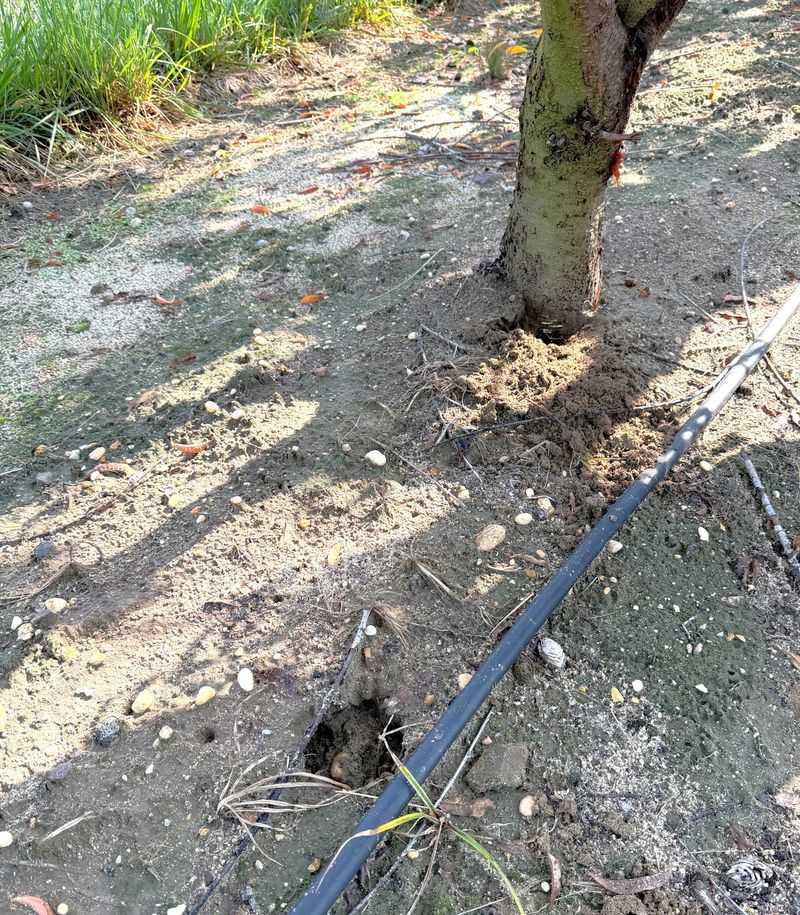
Your lawn may be telling a secret story. Voles leave clues everywhere they travel, and once you know what to look for, those clues become easy to spot. Late fall is the perfect time to go hunting for them.
Voles move along narrow paths called runways. These little trails connect their burrows to their favorite feeding spots, and they get used so often that the grass becomes flattened or worn down.
Most runways are about 1 to 2 inches wide, just big enough for a small, round body to scurry through. Small, round holes in the ground are another strong sign. Unlike moles or chipmunks, voles don’t leave a pile of dirt around the opening.
Your Michigan Garden Changes Every Week. Your Plan Should Too.
Gardening in Michigan changes quickly throughout the season. Every Friday you’ll receive a simple weekly plan showing exactly what to plant, prune, fertilize, harvest, and protect so you never miss the right timing.
The hole simply looks like a neat little doorway, often about the size of a quarter or a bit bigger, tucked near the base of a tree or along the edge of a garden bed.
Droppings can help confirm your suspicions. Vole droppings are small, dark, and shaped like tiny grains of rice. Finding fresh ones near trails or holes means the residents are still around.
Timing helps a lot here. After you mow for the last time or after the leaves drop, the ground opens up and those hidden paths suddenly show. Get down low, part the grass with your hand, and check carefully around every trunk.
For Michigan gardeners, a November search is worth the effort. Once snow covers everything, these signs vanish from view for months.
Spotting them early gives you time to set up guards, clear cover, and take action while you can still see exactly where the voles are living.
3. Snow Gives Them A Hidden Place To Feed
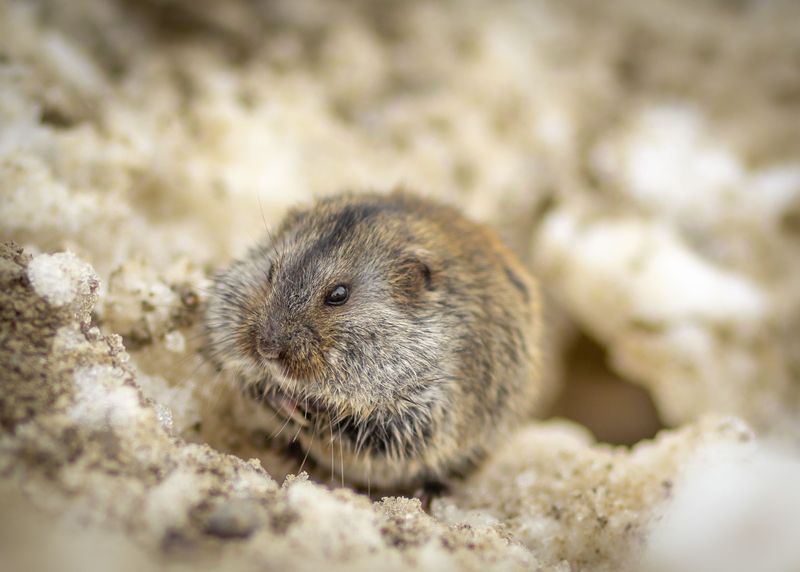
A fresh blanket of snow looks peaceful from your kitchen window. Underneath it, though, voles may be throwing a quiet party. That soft white layer works like a cozy roof that keeps them safe and hidden.
Hawks, owls, and foxes all love to hunt voles. In open grass, voles have to stay alert and move quickly. Once snow piles up, those predators can no longer see them, so the voles can relax and feed in one spot for days or even weeks.
Tunnels form between the snow and the ground, and voles use them like hallways. Many lead straight to the base of a tree, where the bark is easy to reach.
Because everything stays covered, gardeners often have no idea anything is wrong until the snow melts in spring and reveals chewed trunks.
Getting ahead of the first lasting snow is your best move. Put guards in place, clear away cover, and finish your prep work while the ground is still bare. Waiting until January usually means you’re already too late.
After a heavy snowfall, grab your boots and head outside. Packing down the snow in a circle around each young tree makes it much harder for voles to tunnel through to the trunk. Firm, stomped snow also takes away some of their safe hiding space.
In many parts of Michigan, snow can stay on the ground from late fall right into spring. That means months of hidden feeding time for hungry voles.
A few simple steps now, plus a little stomping after storms, can save your trees from a nasty surprise when the thaw finally arrives.
4. Chewed Bark Near The Base Can Girdle A Tree
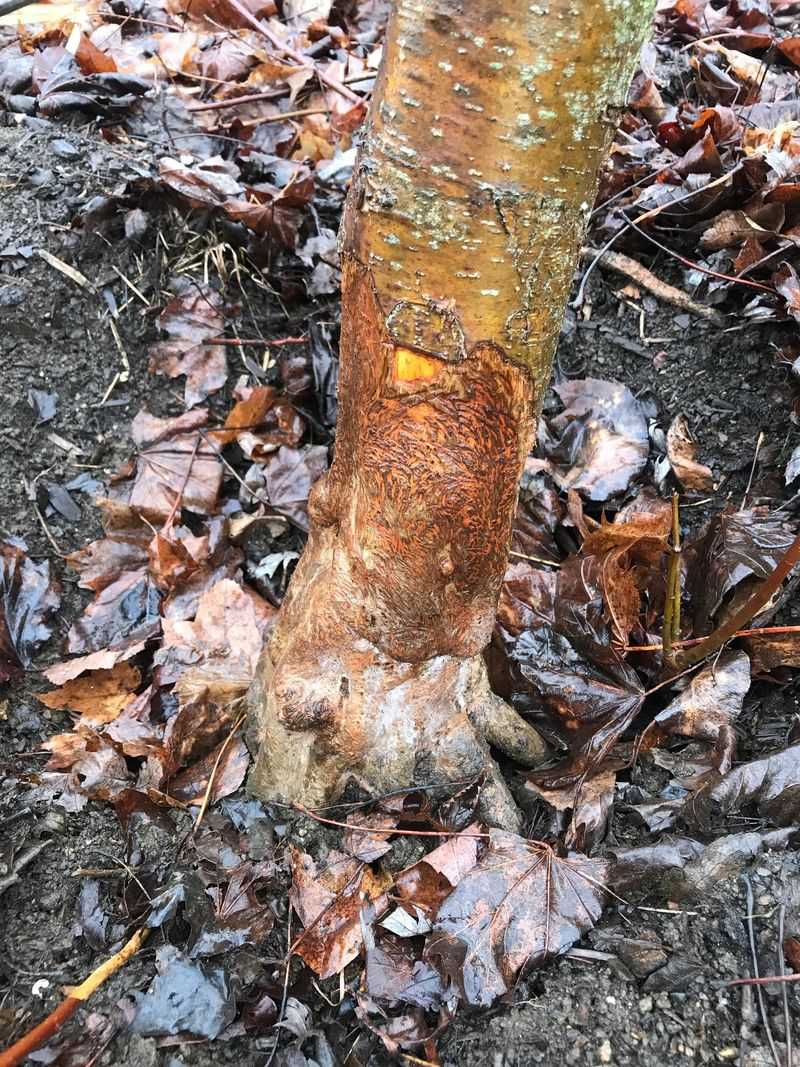
Bark might look tough, but it does a delicate job. Just under the outer layer, a thin living tissue carries water, sugars, and nutrients up and down the tree. When voles chew through it, the tree loses its supply line.
Vole damage has a special look. You’ll usually find it right at the soil line or just below it, where the trunk meets the ground. The bark appears scraped away in uneven patches, covered with tiny, irregular tooth marks about an eighth of an inch wide.
The real danger comes when voles chew all the way around the trunk. Gardeners call this girdling. A girdled tree can’t move water and food between its roots and leaves, and young trees often can’t recover from it, even if they leaf out for a short time in spring.
Early spring is the time to check. As soon as the snow melts, pull back any mulch or grass and look closely at the base of each tree. Small wounds on one side usually heal over time if you keep the area clean and protected.
Trees with bark damaged all the way around need fast help. Contact a fruit tree specialist, your local MSU Extension office, or a skilled orchardist and ask about bridge grafting.
This technique uses small pieces of healthy branches to connect the bark above and below the wound, and it can sometimes save a girdled tree.
Michigan home orchards often include young apple, pear, cherry, and peach trees, and all of them are favorite targets. Their thin, smooth bark is easy for voles to chew, which makes regular spring checks a smart habit for every backyard grower.
5. Tall Grass And Thick Mulch Invite Them In
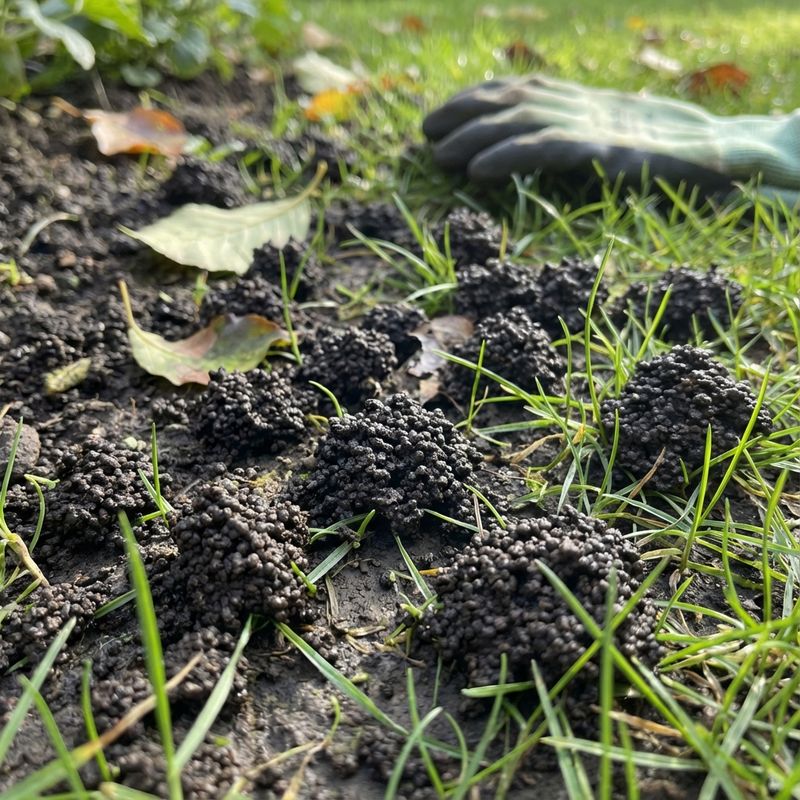
Think of tall grass as a welcome mat for voles. These little rodents feel nervous out in the open, so they search for places where they can hide while they eat. The messier the ground around your trees, the happier they become.
Thick cover keeps predators from spotting them. Tall grass, deep mulch, weeds, and piles of leaves all give voles shelter right next to a tasty food source. With bark only a few steps away, they hardly need to leave home.
Mowing makes a big difference. Before winter, cut the grass short around your fruit trees, especially in a wide circle near the trunks. Short grass leaves voles feeling exposed, and many will move somewhere safer.
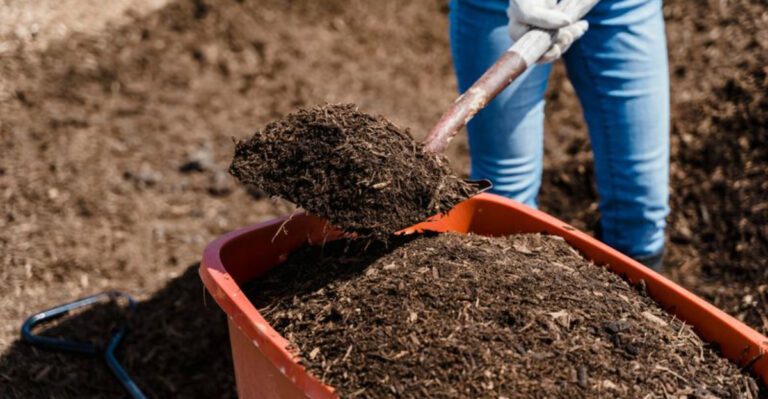
Mulch helps trees in summer, but it needs a little care in fall. Pull it several inches away from each trunk so it never touches the bark. Keep the layer no deeper than 2 to 3 inches, because thick, fluffy mulch creates a perfect hiding spot and a warm nest.
Weeds and leaf piles should go, too. Rake them away from the base of every tree and toss them in the compost or yard waste. Even a small clump can shelter a vole family.
If you can, keep a bare soil or gravel ring a few feet wide around young trees. Voles don’t like crossing open ground, and gravel is hard for them to dig through.
Michigan orchards and yards with tall grass often see the worst vole damage each winter. A tidy space around your trees is one of the easiest and cheapest ways to send these guests packing.
6. Hardware Cloth Guards Offer The Best Protection
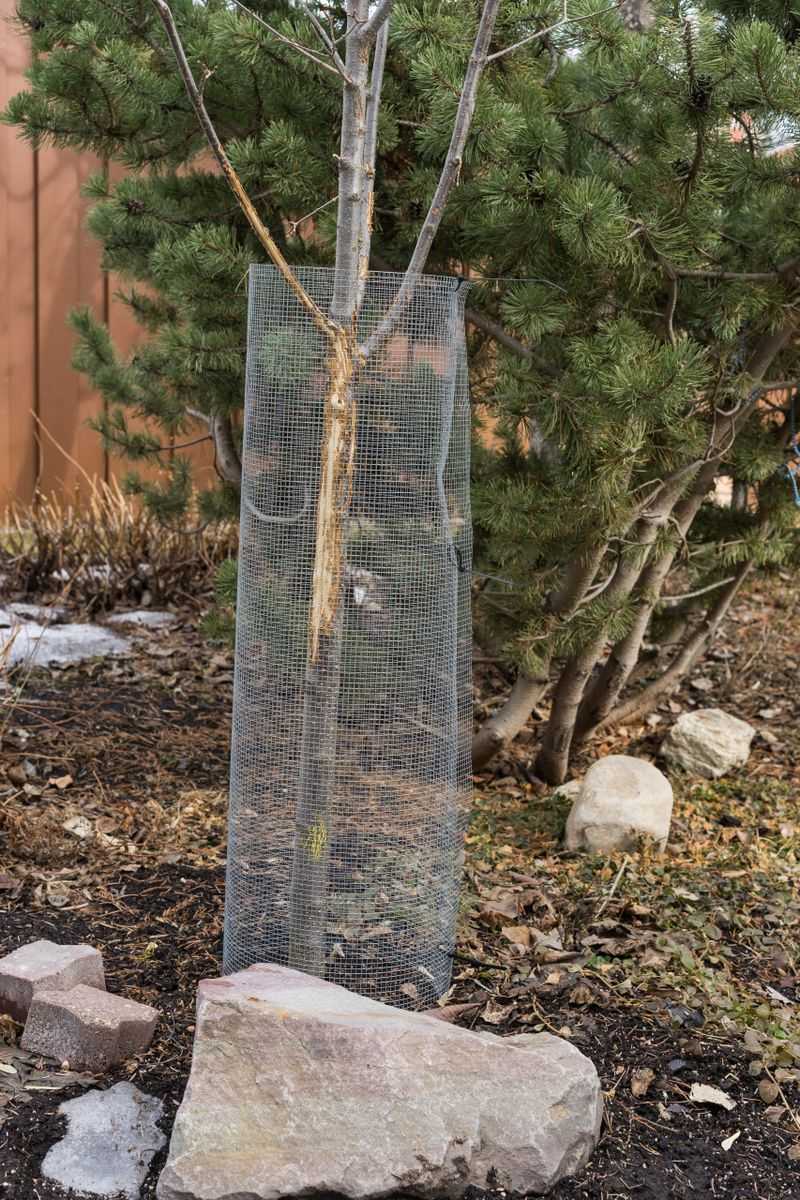
Sometimes the simplest solution works best. A plain roll of wire mesh can stop voles cold, and it lasts for years. Orchard experts agree that a hardware cloth guard is the most dependable way to protect a trunk.
Voles can chew through plastic and paper, but sturdy metal mesh is another story. A cylinder of hardware cloth wrapped around the trunk creates a solid wall they simply can’t get past.
Best of all, it guards the bark right at the soil line, where most vole damage happens. Choose 1/4-inch galvanized hardware cloth for the job.
Larger openings may let small voles squeeze through, and galvanized wire holds up against rust in wet weather. Cut a piece wide enough to form a loose tube around the tree.
Leave an inch or two of space between the wire and the bark. That gap gives the trunk room to grow and keeps the mesh from rubbing. Fasten the edges together with wire or zip ties so the tube stays closed.
Next, bury the bottom edge 2 to 3 inches into the soil. Voles like to sneak under barriers, so this step blocks their favorite trick. Pressing the soil firmly around the base helps hold everything in place.
Height matters, too. Make the guard tall enough to rise above your usual snow line, often 18 to 24 inches or more. That way, rabbits standing on top of the snow can’t nibble the trunk either.
Michigan gardeners face both pests every winter. One well-built guard handles voles below and rabbits above, saving time and keeping young trees safe through the long, cold months.
7. Trapping Can Reduce Numbers Near Trees
Some years, it seems like voles appear out of nowhere. Their numbers rise and fall in cycles, and during a boom year, a yard can host far more of them than usual. When that happens, guards and tidy ground may need a little backup.
Trapping offers a safe, targeted way to lower the crowd near your trees. Poison baits might seem easier, but they carry real risks. Pets can find them, and hawks, owls, and foxes that eat poisoned voles can be harmed, too.
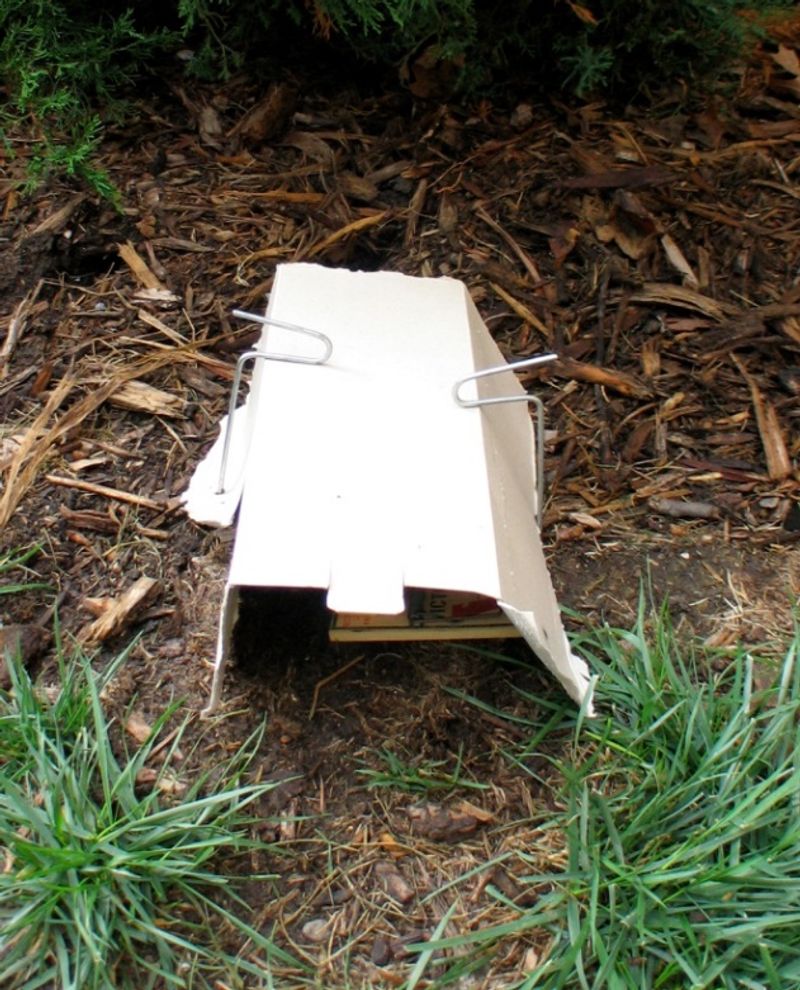
Regular mouse-size snap traps work well for voles. Set them right along active runways or next to burrow holes, with the trigger facing the path. Voles tend to follow the same routes, so placement matters more than the number of traps.
Bait can be simple. A thin apple slice works nicely, and so does peanut butter mixed with a little oats. Fresh bait draws voles in, so swap it out if it dries up.
Safety comes next. Place an upside-down box or bucket over each trap, with a small opening cut near the bottom so voles can get in. The cover keeps curious pets, birds, and kids away while giving voles the dark, sheltered feeling they love.
Check your traps every day. Reset them, refresh the bait, and move them if a spot stays quiet for a few days. Wearing gloves keeps your scent off the traps.
For Michigan gardeners, late fall is prime trapping time. Lowering vole numbers before snow arrives means fewer hungry mouths chewing on bark all winter, giving your fruit trees a much brighter spring.