Desert Hackberry: The Low-Water Arizona Native Worth Adding To A Tick-Conscious Yard Design
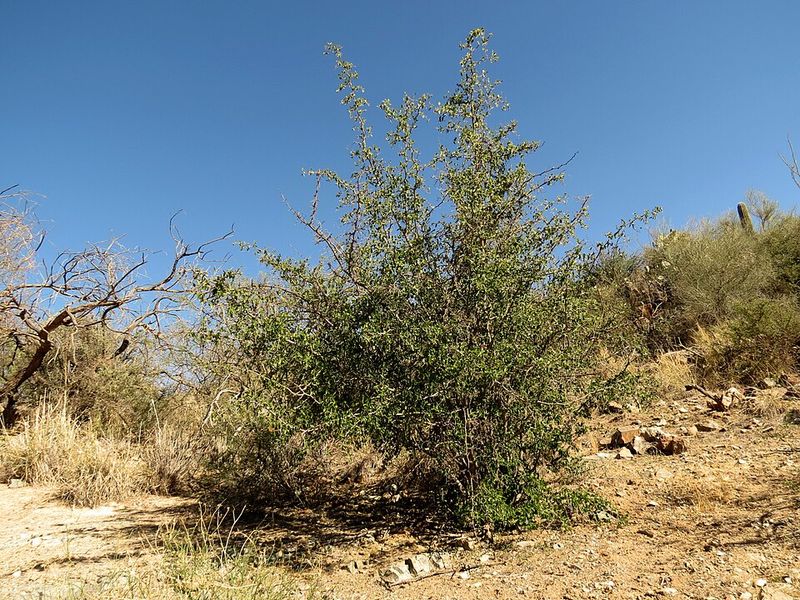
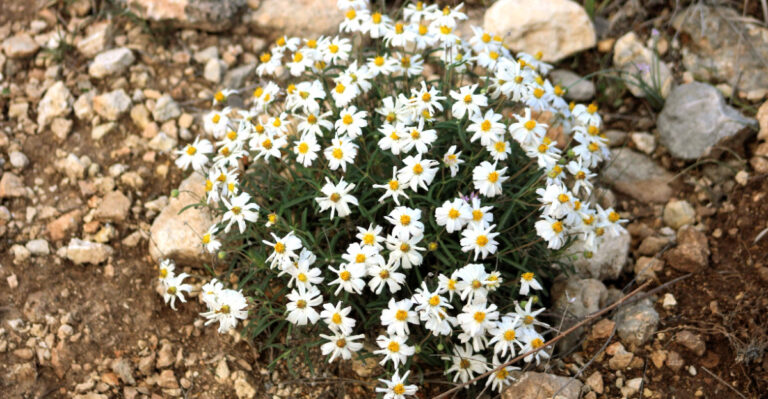
Most Arizona homeowners have never heard of desert hackberry, but this tough, thorny native shrub quietly earns its place along property edges from Phoenix to Tucson. It handles full sun, alkaline soil, and dry summers without much fuss, and its orange berries pull in birds that would otherwise skip your yard entirely.
What it cannot do, despite what some gardening sources suggest, is repel ticks or turn your yard border into a pest-proof zone. Understanding what the plant actually offers, and where real tick prevention comes from, makes it a much smarter addition to your landscape.
Desert hackberry earns attention for its landscape value
Few native shrubs in the low desert punch above their weight the way desert hackberry does. Known botanically as Celtis pallida, it grows naturally across Arizona, western Texas, and northern Mexico, which means it is already adapted to alkaline soils, scorching summer temperatures, and the feast-or-famine rhythm of monsoon rains.
Once established, it gets by on minimal supplemental water, making it a practical fit for homeowners trying to cut irrigation costs without ending up with a bare, lifeless yard edge.
The plant’s physical traits give it real landscape utility. Its branches carry small thorns that create a natural deterrent for foot traffic, which makes it useful as an informal screen along property lines or along fences where you want to discourage casual crossing.
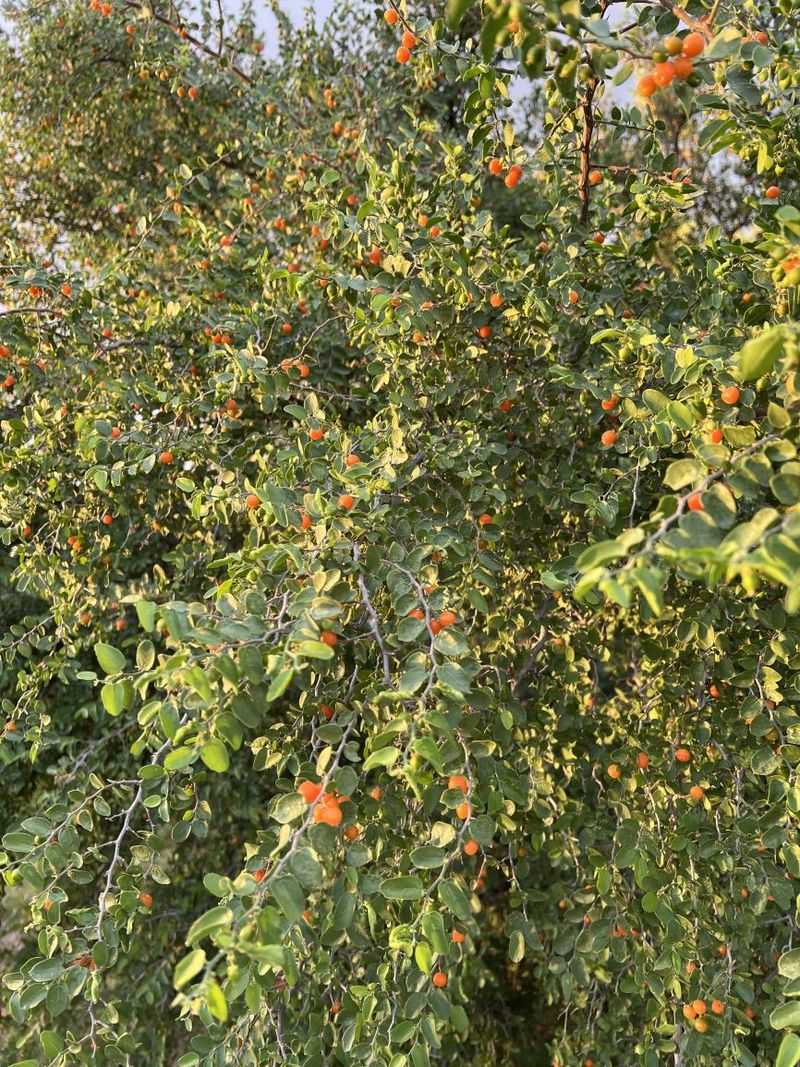
According to the Arizona Native Plant Society, it offers full-sun tolerance, low-to-moderate water needs, and orange fruit that attracts birds and provides wildlife cover, traits that go well beyond what most ornamental choices can deliver at the same water budget.
The City of Tucson’s low-water plant guide also notes its upright, dense growth habit, low litter, and value as wildlife shelter. Those qualities support a functional landscape edge and a productive habitat corridor.
They do not, however, support any claim that the plant changes tick populations or tick behavior in a yard.
No ordinary landscape plant has proved to repel yard ticks
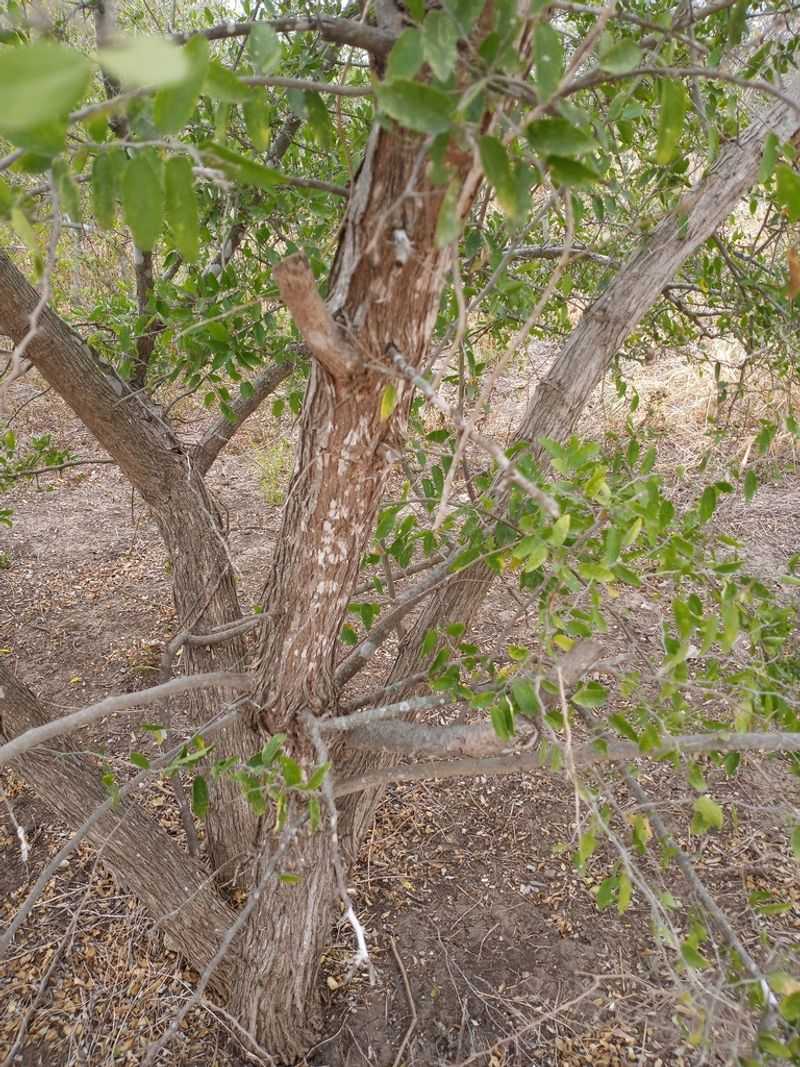
A reasonable question to ask before planting anything for pest control is whether the evidence actually supports the claim. For desert hackberry and ticks, the answer is no. An Ask Extension response addressing plant-based tick control states plainly that no plants have been proven to repel insects or ticks in a yard setting.
Desert hackberry is not an exception to that finding.
Some of the confusion around plant-based tick repellency comes from laboratory research on essential oils. Studies have tested concentrated extracts of rosemary, thyme, and other botanicals against ticks in controlled conditions, including treated fabric and direct-contact trials.
Those results measure whether a purified chemical compound affects tick behavior under specific lab conditions. They say nothing about whether an unprocessed living shrub growing in a Phoenix or Tucson backyard changes tick abundance or movement across that yard.
The gap between “this extract showed repellent activity in a lab” and “planting this shrub in your yard keeps ticks away” is wide enough to drive a truck through. Desert hackberry still has a legitimate place in a low-desert landscape for its drought tolerance, screening structure, bird value, and native status.
Your Arizona Garden Changes Every Week. Your Plan Should Too.
Gardening in Arizona changes quickly throughout the season. Every Friday you’ll receive a simple weekly plan showing exactly what to plant, prune, fertilize, harvest, and protect so you never miss the right timing.
Those are real and defensible reasons to plant it. Tick repellency is not one of them, and treating it as such gives homeowners a false sense of security that can delay more effective prevention steps.
Arizona’s brown dog tick changes the prevention conversation
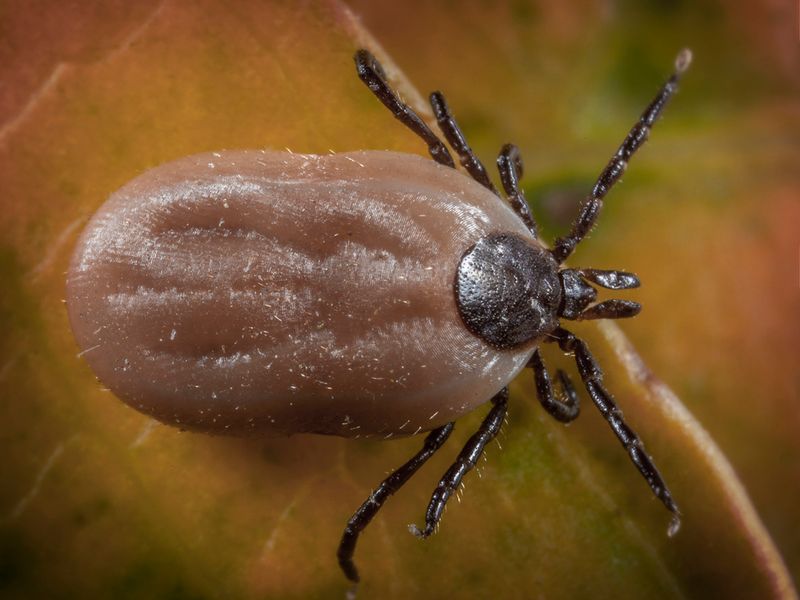
Before deciding how to arrange your yard for tick awareness, it helps to know which tick you are actually dealing with in Arizona. The brown dog tick, Rhipicephalus sanguineus, is the tick most commonly encountered by people in Arizona and northwestern Mexico, according to University of Arizona Cooperative Extension.
Unlike some ticks that primarily live at woodland edges and wait on vegetation for a passing host, the brown dog tick is strongly tied to dogs and can establish a foothold around or inside homes.
University of Arizona Cooperative Extension guidance on the brown dog tick explains that these ticks spend most of their life cycle off the host, sheltering in the environment between blood meals. That environment can include cracks in walls or foundations, sheltered spots under outdoor furniture, stacked firewood, leaf litter, tall grass, and accumulated clutter around the home.
The tick is not simply a pest of wooded natural areas that wanders into suburban yards from beyond the fence line.
Arizona populations of the brown dog tick have not been observed questing from vegetation tips the way blacklegged ticks do in the northeastern United States. That distinction matters because it means the standard image of ticks waiting on the edges of shrubs to grab a passing person or pet does not accurately describe what Arizona homeowners are facing.
The practical prevention approach here needs to account for a tick that lives close to the home, travels on dogs, and hides in sheltered structures rather than on plant foliage.
Use clear spacing as a management measure, not a proven tick barrier
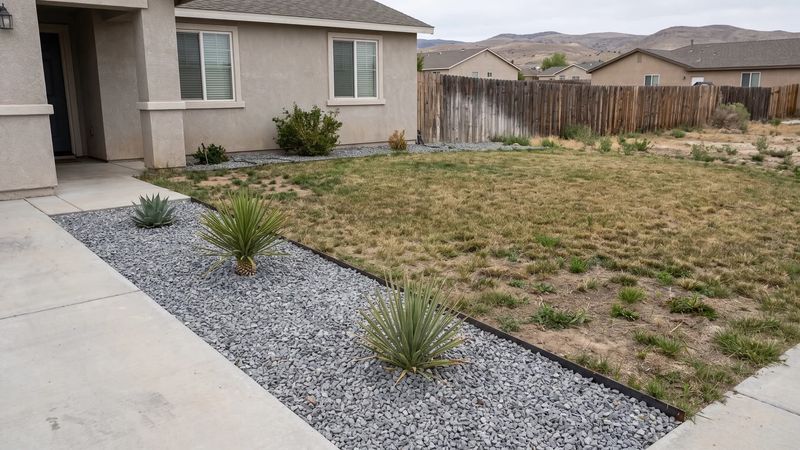
Placing desert hackberry thoughtfully in your yard can serve real purposes without overpromising on tick control. Keeping a clear, dry, open zone between denser plantings and the areas where people and pets spend most of their time is a practical layout choice.
An open zone is easier to inspect, easier to keep free of clutter, and easier to maintain than a tangle of growth pressed up against a wall or patio edge. Those are genuine advantages for anyone trying to stay on top of yard conditions.
CDC tick-safe landscaping guidance recommends placing a three-foot-wide barrier of wood chips or gravel between lawns and wooded areas to reduce tick movement. That recommendation is grounded primarily in research on blacklegged ticks in woodland-edge environments in the Northeast and upper Midwest, not in Arizona brown dog tick biology.
Applying it directly to a Phoenix or Tucson yard without qualification overstates what the evidence actually covers. A dry separation strip may still be a reasonable design choice here, but homeowners should understand it as a layout preference that supports inspection and maintenance rather than a guaranteed method for reducing brown dog tick populations.
A living shrub like desert hackberry is also not the same thing as a gravel or wood-chip physical separation zone. The two serve different functions.
The shrub adds screening, habitat, and shade. The open zone between it and your patio or play area makes it easier to see what is happening at ground level and keeps the high-use parts of your yard from becoming overgrown and harder to check.
Both can coexist in a well-planned design, as long as neither is treated as a tick-control mechanism on its own.
Place and maintain the shrub without creating concealed harborage
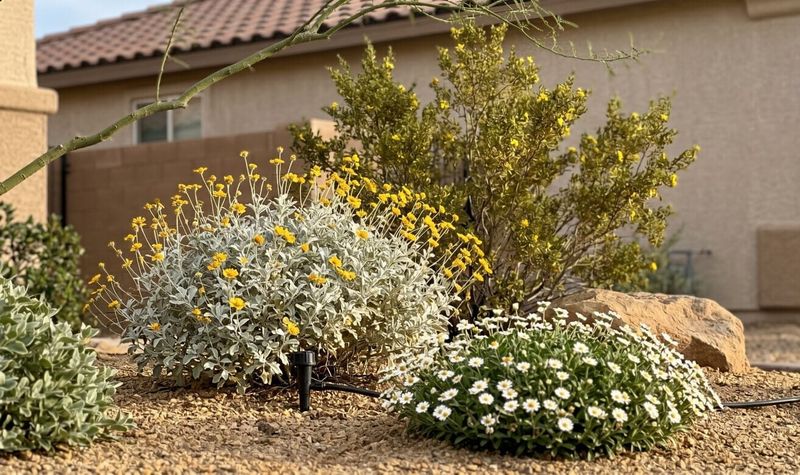
Where and how you plant desert hackberry matters as much as the decision to plant it. The shrub’s dense, thorny growth is an asset along a property boundary, but that same density becomes a liability if the plant is allowed to press against a foundation wall, grow over a walkway, or accumulate dead material and leaf debris at its base.
Brown dog ticks shelter in exactly those kinds of protected, low-traffic spots, so letting any shrub turn into an unkempt thicket near the home works against you.
Maintain open access along the base of the planting so you can inspect foundations, fence lines, and path edges without having to push through branches. Trim back growth that creeps toward walls or structures, and clear out fallen debris, dead leaves, and any brush that collects underneath.
Keep firewood stacks, unused furniture, and stored equipment away from the planting area, since those items create the kind of sheltered microhabitats where ticks can persist between host encounters.
The thorny structure of desert hackberry may discourage people, pets, and larger animals from cutting through a planting, which can keep high-traffic movement on defined paths. That is a physical-access effect, not chemical repellency, and it does not reduce the number of ticks present in a yard.
On the wildlife side, the orange berries and dense cover that attract birds are genuine assets, but wildlife-friendly landscaping can also mean more animal hosts moving through the area. The plant’s ecological value is real; a resulting reduction in tick risk is not something you can count on.
Dog protection and sanitation matter more than plant selection
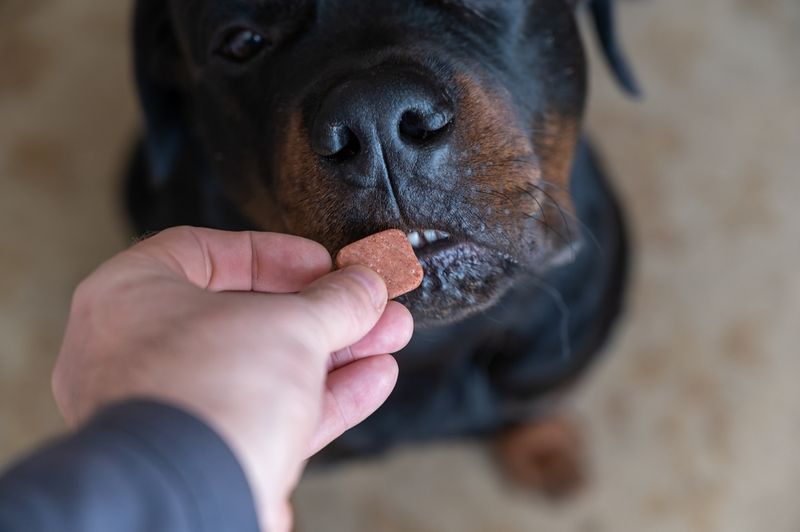
Choosing the right native shrub for your yard edge is a reasonable landscaping decision, but it sits well down the list of actions that actually affect tick exposure for your household. Dogs are the primary route by which brown dog ticks enter Arizona homes and yards, and University of Arizona Cooperative Extension guidance is direct on this point: year-round, veterinarian-approved tick control for dogs is a core prevention measure in the Arizona and Sonora region.
That recommendation holds regardless of what you plant along your fence line.
Regular inspection matters too. Check dogs thoroughly after any outdoor time, paying attention to ears, between toes, and around collars.
Check people as well, especially after working in or near denser plantings. Beyond the animals and people in your household, the physical environment around the home deserves attention.
Remove clutter from under decks and along walls, clear out leaf litter, cut back tall grass, and seal cracks and crevices in foundations or siding where feasible. Keep children’s play areas separated from dense vegetation and stored materials.
When ticks are already established around or inside a home, sanitation and dog protection alone may not be enough. A qualified pest management professional can assess the situation and recommend treatment options that fit the scale of the infestation.
General pesticide advice is beyond the scope of a planting article because product choices, application rates, and safety requirements depend on the specific situation, current labels, and local regulations. Broad yard spraying can also harm beneficial insects and pollinators, so it should not be a reflexive first response.
Planting decisions, unverified natural sprays, and essential-oil products are not substitutes for the steps above.
Make the accurate takeaway about desert hackberry
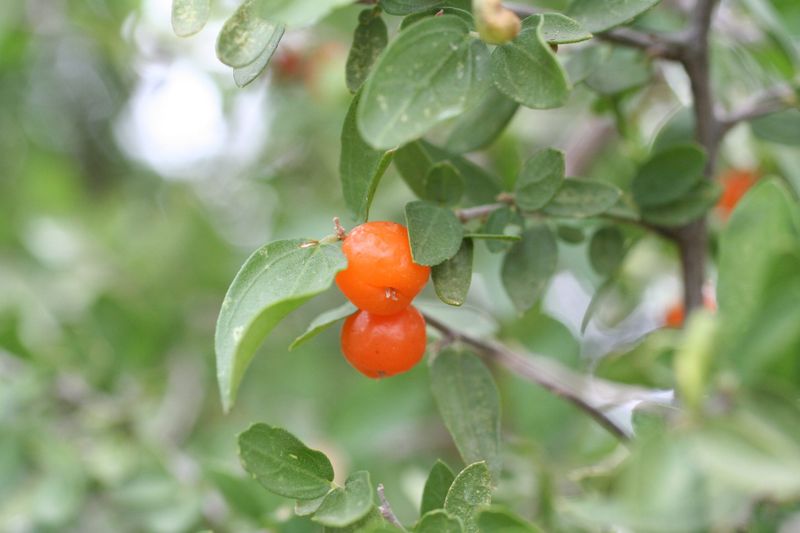
Desert hackberry is worth growing in a low-desert Arizona yard. Its drought tolerance, full-sun performance, thorny screening structure, orange berries, and value as bird and wildlife cover make it a genuinely useful native plant for homeowners in the Phoenix and Tucson areas who want a functional yard edge without a high water bill.
Those traits stand on their own, and they do not need a tick-control claim attached to make the plant worth planting.
An open, uncluttered, inspectable yard design can support better maintenance habits and reduce the chance that harborage goes unnoticed. Keeping denser plantings away from high-use areas and structures makes it easier to spot problems early.
What that design cannot do is make a yard tick-proof or demonstrate that desert hackberry itself reduces tick populations. The shrub is a landscape component, not a pest-control product.
The actions that carry the most direct support for reducing tick exposure in Arizona are the ones covered by University of Arizona Cooperative Extension’s brown dog tick guidance: year-round tick control for dogs, regular inspections of pets and people, sanitation around the home, and professional treatment when an infestation is established. Desert hackberry fits well into a yard that takes those steps seriously.
A good plant in a well-maintained yard is a reasonable combination; expecting the plant to carry the prevention load on its own is not.