Desert Rosemallow: A Lower-Water Arizona Native With Showy Yellow Blooms
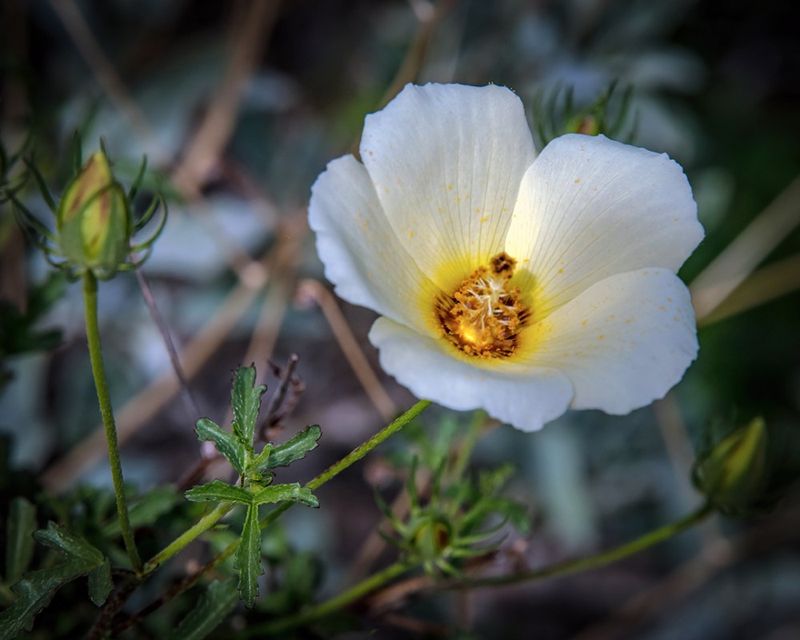
Looking for a flowering shrub that sips water instead of gulping it? Desert rosemallow is an Arizona native with bright yellow, hibiscus-like flowers that can liven up a dry yard.
It is not a copy of a rose bush, and it does not try to be. Here is what it looks like, where it fits, and how to care for it.
Meet the desert rosemallow
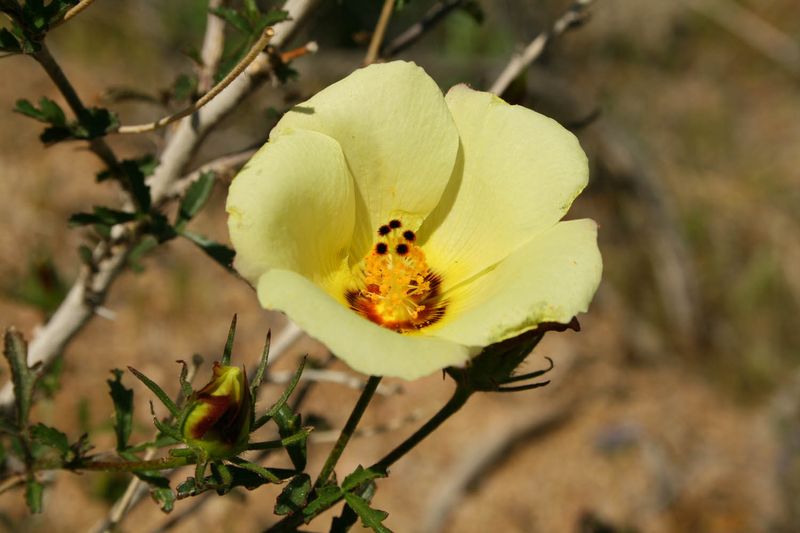
Desert rosemallow, Hibiscus coulteri, goes by a few other names too, including Coulter hibiscus and desert rose mallow. It is a perennial subshrub native to Arizona, and it is known for showy yellow flowers that resemble small hibiscus blooms.
Gardeners notice it because it is a low-water plant built for desert conditions. The Arizona-Sonora Desert Museum care sheet describes it as desert-adapted, comfortable in full sun to light shade, and usually not in need of pruning.
Think of it as an option for a different kind of yard, not a one-for-one swap for a rose bush. Its look is looser and more casual, and nothing in the published guidance shows it needs less total care than roses.
If you want a native with eye-catching flowers and modest water needs, it deserves a spot on your shortlist. Just make sure your site suits it, which the sections below will help you sort out.
What its flowers look like
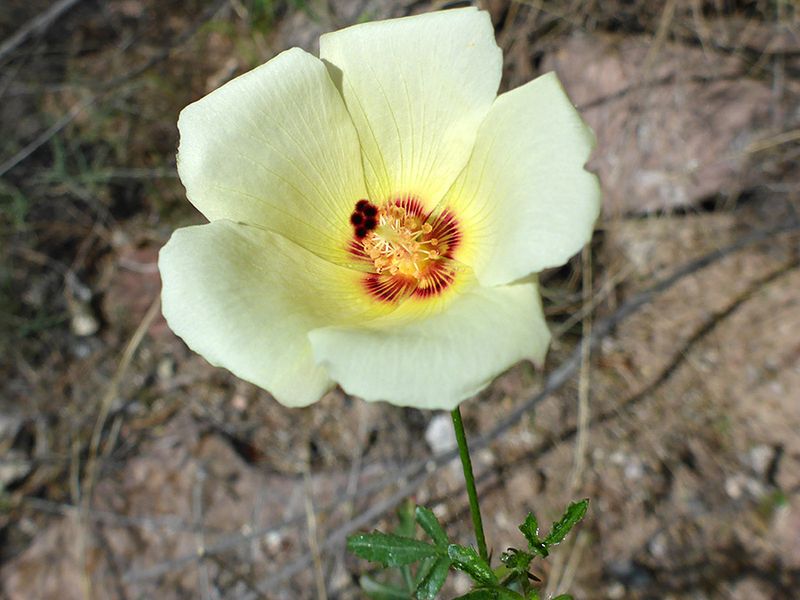
Picture a yellow, cup-shaped flower with petals that open wide and a center that is sometimes marked red or purple at the base. That hibiscus-style shape is the plant’s signature, and it stands out against gray-green desert foliage and pale gravel.
Reported flower width is about 2 inches. That is plenty to look showy on a slender, airy plant, but it is not a claim that the blooms match a rose in size.
Roses are not one uniform thing anyway. Miniatures, floribundas, and hybrid teas all produce very different flowers, so any single size comparison would be misleading.
A better way to judge is by look and feel. Rosemallow gives you simple, open, sunny yellow cups scattered along thin stems, while a rose gives you layered petals on a fuller bush.
Neither is better, they just serve different tastes.
Rain shapes its flowering season
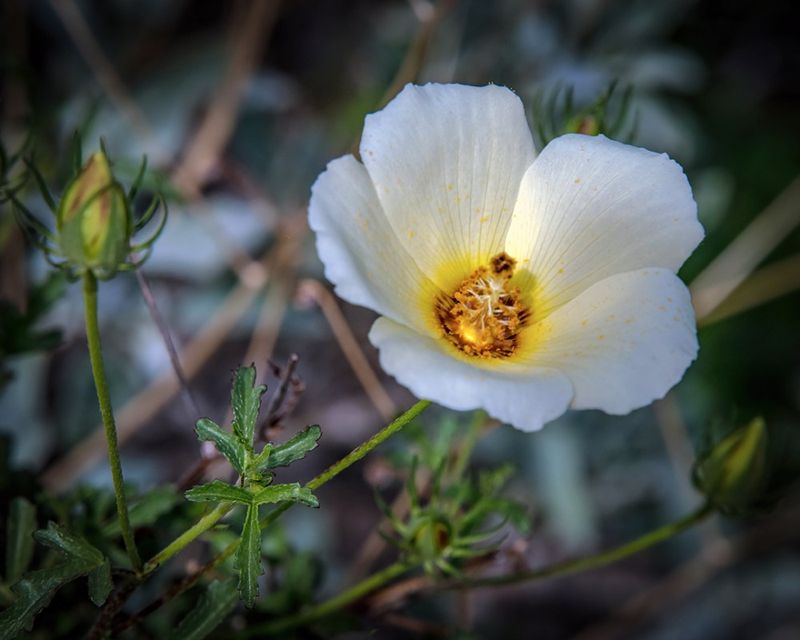
Rain is the cue to watch. According to the Desert Museum’s care sheet, desert rosemallow flowers are tied to rainfall, and blooms may show up anywhere from spring into fall.
That is a wide window, but a wide window is not a promise. You should not count on nonstop color, a fixed calendar date, or a specific amount of flowers in a managed yard.
Here is a practical way to think about it. After a good monsoon storm or a wet spell, keep an eye out for fresh buds, since that is the kind of moment when this plant tends to respond.
In a dry stretch, a quieter shrub is normal and does not automatically mean something is wrong.
Plan your garden so it still looks good when the shrub is between bursts. Pairing it with other desert plants that flower at different times can keep the space interesting while rosemallow waits for its next cue.
Your Arizona Garden Changes Every Week. Your Plan Should Too.
Gardening in Arizona changes quickly throughout the season. Every Friday you’ll receive a simple weekly plan showing exactly what to plant, prune, fertilize, harvest, and protect so you never miss the right timing.
Check whether it fits your part of Arizona
Arizona native does not mean native to every neighborhood. Desert rosemallow is recorded in several counties, including Pima, Pinal, and Maricopa, according to the University of Arizona’s EcoRestore portal, but that is not a guarantee for every yard.
Published elevation ranges also differ. The Arizona Native Plant Society describes it as a lower-elevation plant at roughly 1,000 to 4,000 feet, while the EcoRestore portal lists 1,500 to 4,000 feet.
Soil is a point in its favor. The same portal lists tolerance for alkaline and calcium-carbonate soils, which is the kind of ground many low-desert gardeners deal with.
Do not mix it up with Arizona rosemallow, Hibiscus biseptus. SEINet places that species at roughly 3,000 to 4,500 feet, so its range should not be borrowed for desert rosemallow.
If you are near the edges of the stated elevations, ask a local native plant nursery how it performs in your area.
Give its open, twiggy form room
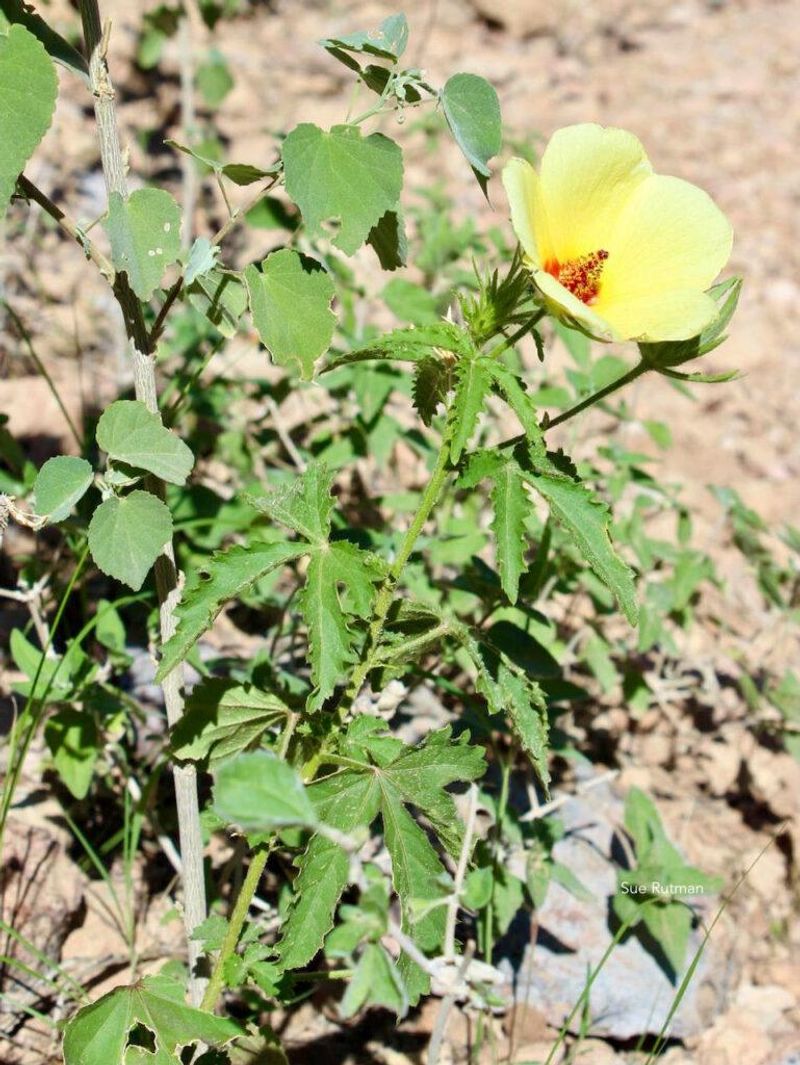
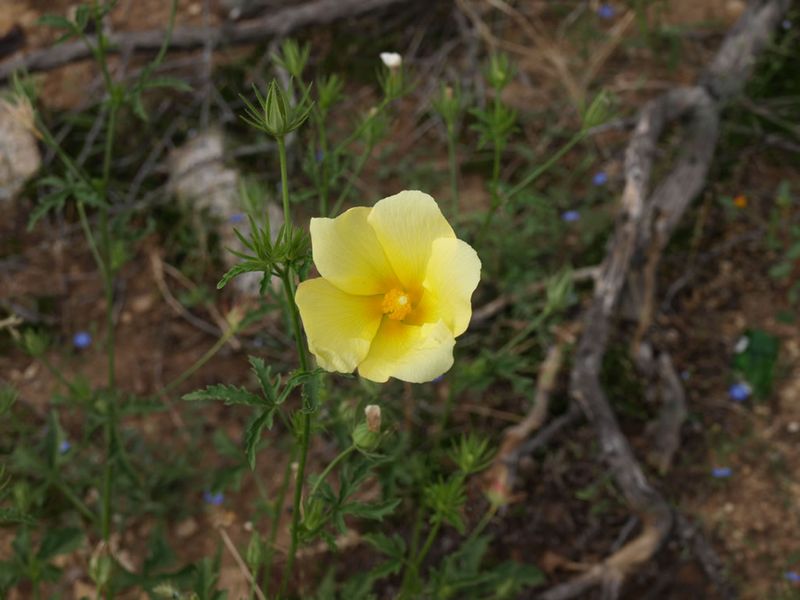
Expect slender stems and a loose, airy habit. The Desert Museum says the plant may reach about 5 feet, though it is often shorter.
That is quite different from the dense, rounded, formal shape many people associate with a rose bush. Rosemallow looks more like a natural desert plant that wandered into your yard.
The care sheet suggests letting it grow through small, open shrubs. The neighboring plant acts like a gentle trellis, and the yellow flowers can appear to float among the branches.
Skip the idea of using it as a tidy, compact hedge, since it will not give you a solid wall of green. Better spots include a casual native border, a wildscape corner, or a gravel bed where a relaxed shape fits the style.
Give it some elbow room and let the form do its thing.
Water according to conditions
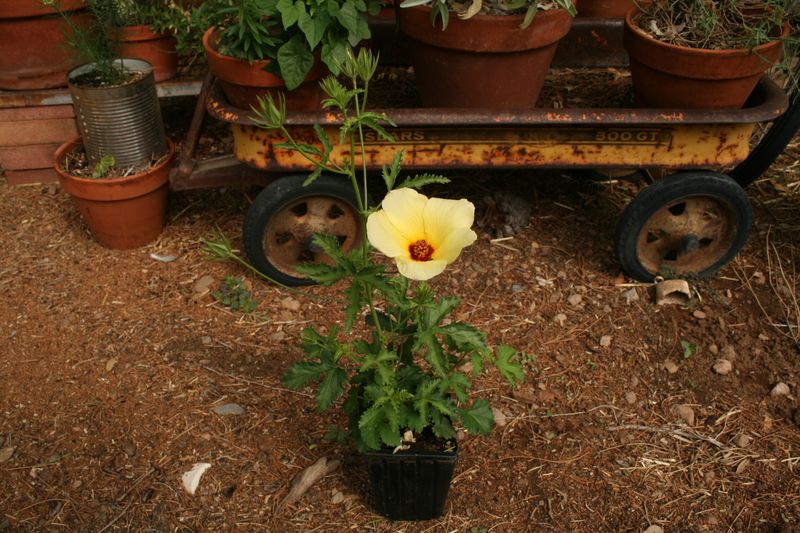
The Desert Museum rates this plant’s water use as low. Its care sheet suggests watering every few days while the plant is getting established, then about weekly to every 10 days afterward.
A regional Southern Arizona watering guide gives a different picture, listing established desert shrubs at roughly 14 to 21 day intervals in summer with no routine winter irrigation. That guide covers desert shrubs in general, not this species specifically, so treat it as a regional reference rather than a rosemallow prescription.
Neither schedule is a universal rule. Establishment, soil type, season, and recent rainfall all change what your plant needs, so check soil moisture before you turn on the water.
On the upkeep side, the care sheet says fertilizer is unnecessary and pruning is usually unnecessary. Keep in mind that the same sheet groups desert rosemallow with Arizona rosemallow for some recommendations, so not every line applies to one species alone.
Roses still have a place in low-desert gardens
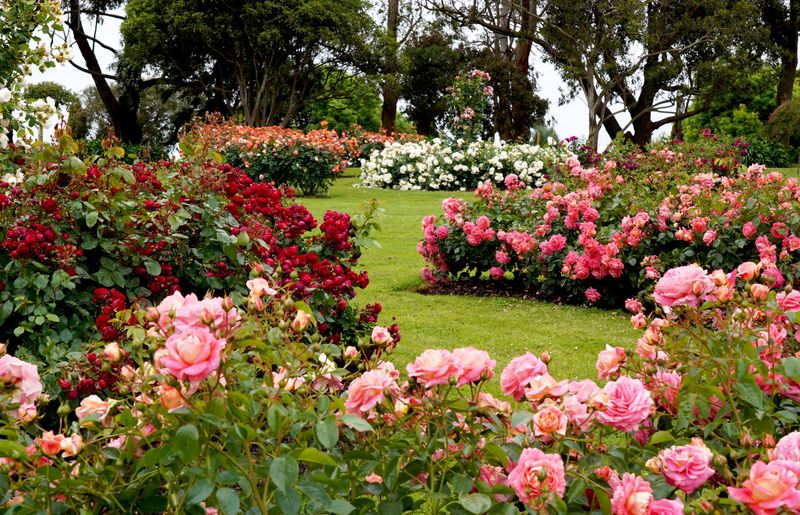
Nobody needs to rip out their roses. Cooperative Extension guidance says roses can thrive in the low desert with moderate care.
Summer heat is the catch, since it can reduce flower size and quality. Many Arizona rose growers see their best blooms in the cooler parts of the year.
Water is where the two plants differ on paper. The Southern Arizona watering guide assigns roses and perennial flowers more frequent irrigation than desert shrubs.
That gap does not make roses unsuitable, and it does not tell us which plant takes more total effort. If you love a rose’s layered petals and fragrance and are happy to meet its needs, keep growing them.
Rosemallow simply offers another path for the gardener who wants lower water use and a more natural look.
Choose it for a different kind of desert bloom
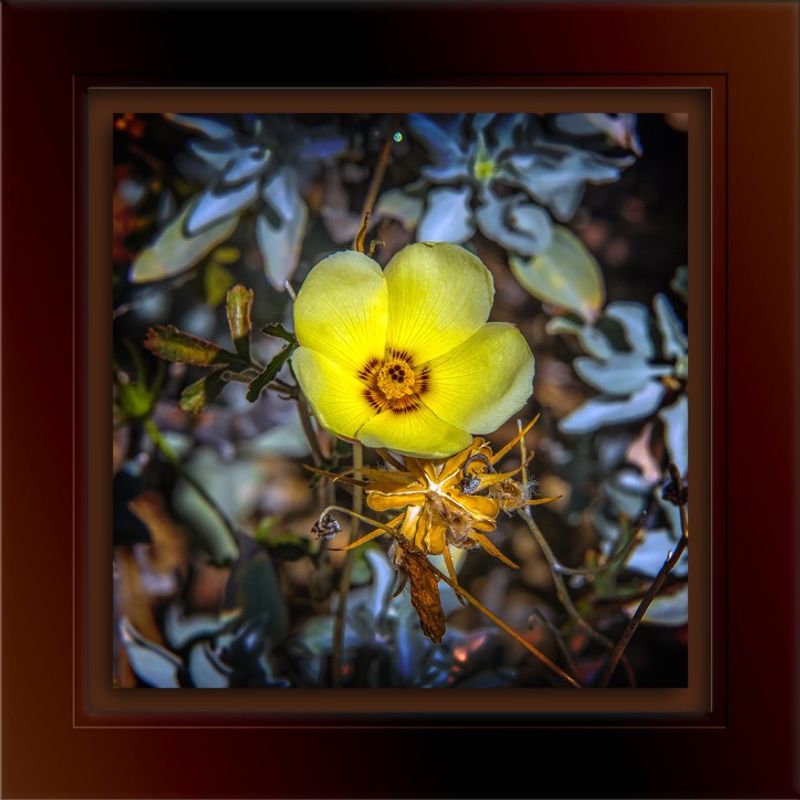
Desert rosemallow may suit you if your site fits its range and soil, and if you value a low-water native with showy yellow flowers and a relaxed, open shape. It is a strong candidate for a natural-style desert yard.
It is not a guaranteed rose-sized or nonstop flowering substitute, and roses remain a fine choice if they match your goals. Pick the plant that fits your yard and the look you love.
Some gardens have room for both, and that may be the best plan of all.