Most Arizona Homeowners Have No Clue This Backyard Volunteer Quietly Feeds Their Pollinators
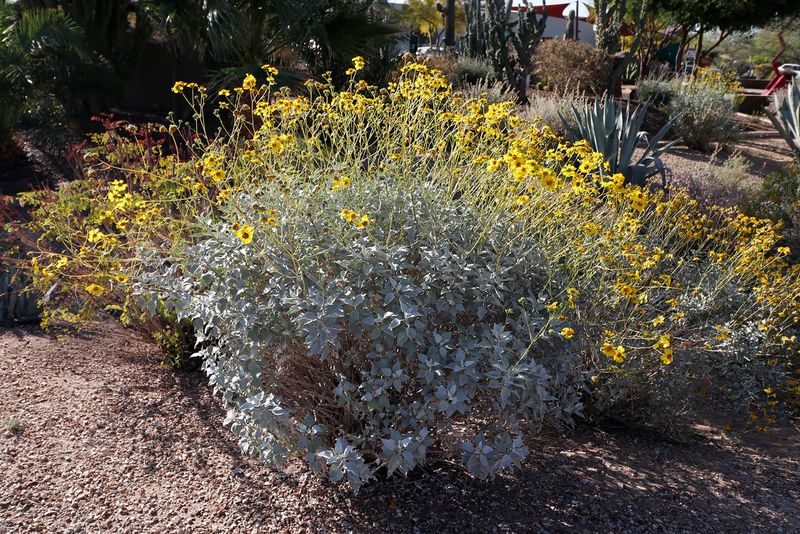
A shrubby volunteer with fuzzy gray-green leaves and bright yellow flowers keeps popping up in Arizona yards, and plenty of homeowners pull it out before they ever learn what it is. That plant is likely brittlebush, a native Sonoran Desert shrub that quietly feeds bees, butterflies, and other insects during the cooler months when few other plants are blooming.
Getting the identification right matters, though, because at least one invasive weed wears a similar yellow disguise. Here is how to tell the difference and decide whether your volunteer earns a permanent spot.
The yellow volunteer may be brittlebush
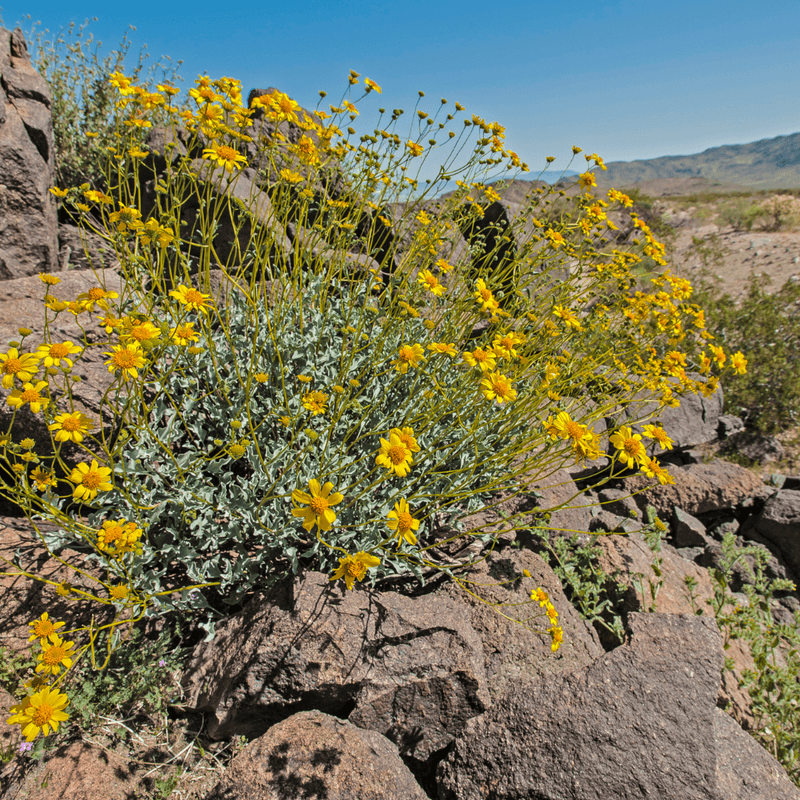
Fuzzy gray-green leaves are the first thing to notice. Brittlebush, known botanically as Encelia farinosa, carries a dense coat of fine hairs on its foliage that gives the leaves a soft, almost silvery look when the sun hits them at an angle.
The stems are noticeably brittle, snapping cleanly when bent rather than bending the way a woody shrub might, and the whole plant rounds out into a spreading mound rather than growing upright like a small tree.
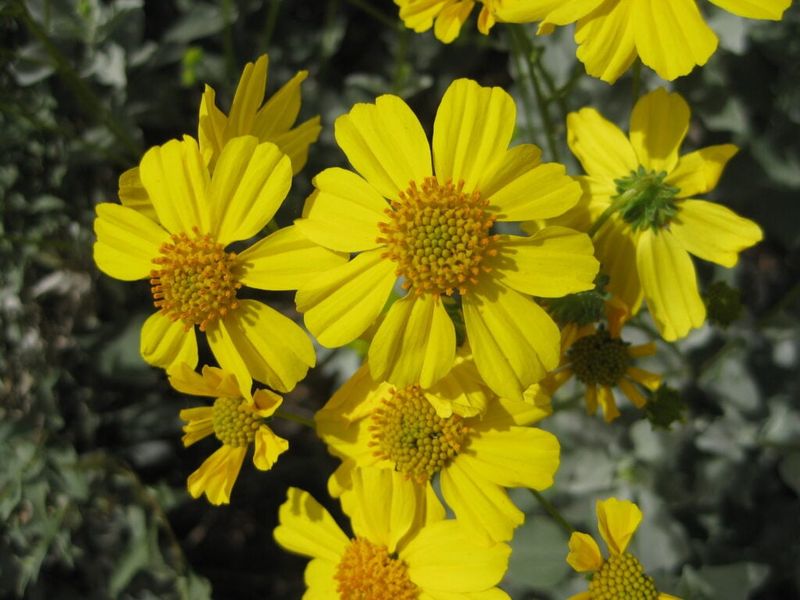
When it flowers, brittlebush puts up slender stalks topped with yellow, daisy-like blooms complete with visible ray petals surrounding a center disk. Those flowers and that fuzzy foliage together are the combination to look for.
Brittlebush is most common in dry, rocky, or gravelly areas of southern and western Arizona, generally below about 3,000 feet in elevation. That puts it squarely at home in the Phoenix and Tucson metro areas.
A volunteer showing up in a sunny, well-drained corner of the yard is behaving exactly as the plant does across the Sonoran Desert. Flower color alone does not clinch the ID, though.
Complete the full identification before deciding whether to keep it.
Rule out stinknet before you keep it
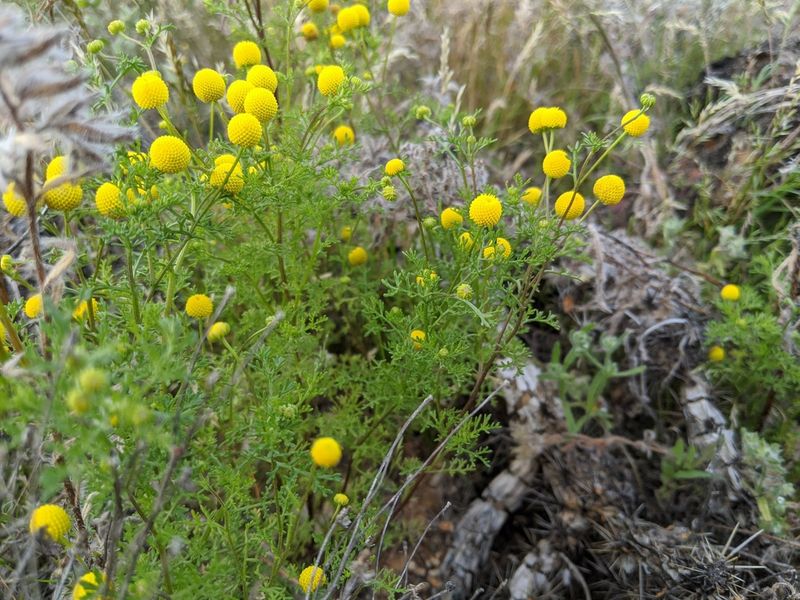
Positive identification is not optional here. Arizona is dealing with a fast-spreading invasive weed called stinknet, also known as globe chamomile (Oncosiphon piluliferum), and it shares the yellow-flower look that might make a homeowner think they have a native worth keeping.
Treating identification as a formality and skipping straight to “keep it” is the wrong call when stinknet is in the mix.
The two plants look different once you know what to check. Brittlebush carries yellow flowers with visible ray petals, the kind that fan out around a central disk the way a classic daisy does.
Its leaves are gray-green and noticeably fuzzy to the touch.
Run through the whole-plant checklist before making any decision. Check the leaf texture, the leaf shape, the flower structure, and the scent.
A fuzzy gray-green leaf paired with daisy-like ray flowers points toward brittlebush. A smooth, finely cut leaf with a pungent smell and globe-shaped flowers points toward stinknet, which should be removed and disposed of rather than kept.
Do not hold on to a specimen you cannot confidently name.
Its flowers offer a seasonal stop for desert insects
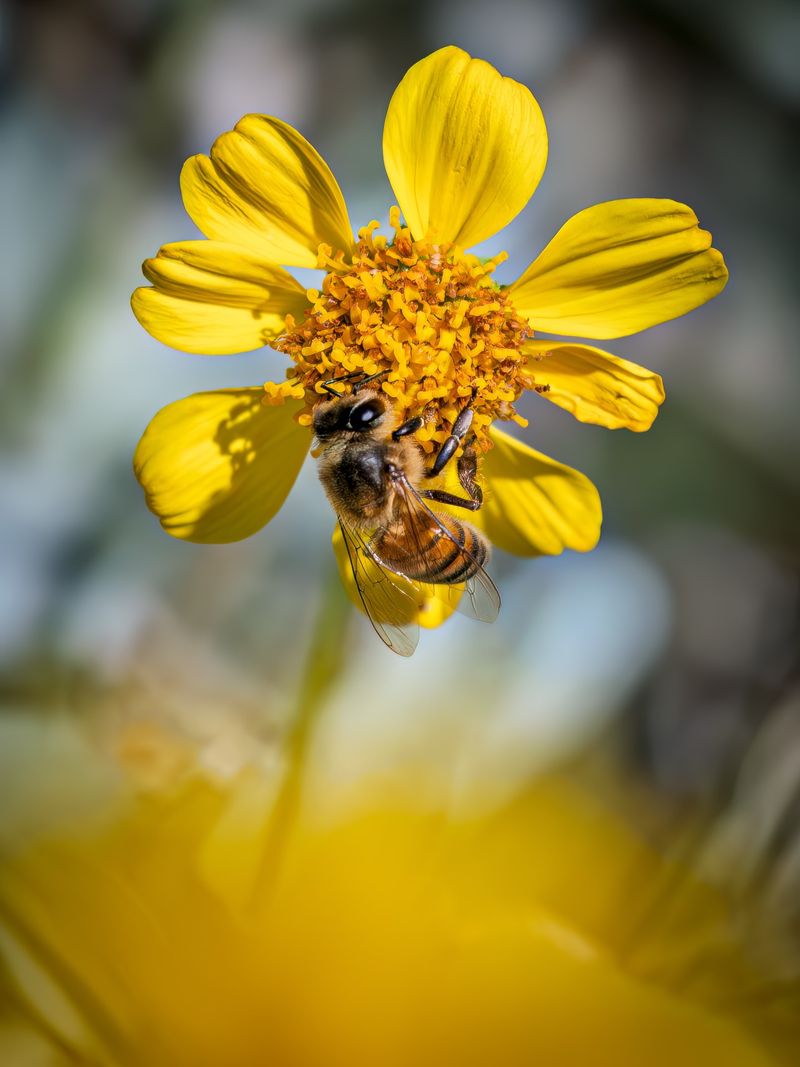
Brittlebush earns its reputation as a pollinator plant during the cooler months, not year-round. According to U.S.
Your Arizona Garden Changes Every Week. Your Plan Should Too.
Gardening in Arizona changes quickly throughout the season. Every Friday you’ll receive a simple weekly plan showing exactly what to plant, prune, fertilize, harvest, and protect so you never miss the right timing.
Forest Service documentation on Encelia farinosa, the plant is visited by beetles, bees, flies, moths, butterflies, and other insects. That is a broad community of generalist insect pollinators making use of the flowers, not a guaranteed roster that shows up in every yard on schedule.
The main flowering period in low-desert Arizona generally runs from late fall or winter into spring, with the heaviest bloom commonly occurring from around February or March through May. Rainfall and temperature drive that window more than the calendar does.
A wetter, cooler season tends to push more flowers; a dry spell can leave the plant looking sparse, dormant, or even leafless. A brittlebush that drops leaves and stops flowering during a dry stretch is not necessarily dying.
The plant is conserving moisture, and new growth typically follows when conditions improve.
Summer is a different story. The hottest months bring little to no flowering, and a plant sitting in July heat may look rough compared to its February self.
That seasonal rhythm is worth understanding before planting. Brittlebush fills a real gap in the late-winter and early-spring pollinator calendar when many other plants are not yet blooming, but it is not a continuous food source across all twelve months.
Plan the rest of the yard’s planting accordingly.
Brittlebush suits a sunny, low-water landscape
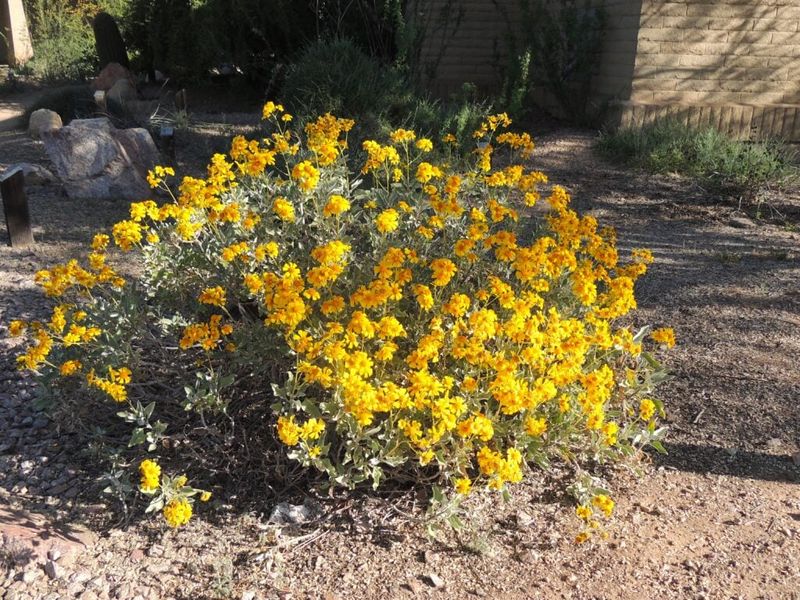
Full sun and good drainage are the two non-negotiables for brittlebush in a low-desert yard. The plant is native to the Sonoran and Mojave deserts and is adapted to long dry periods, alkaline soils, and intense solar exposure.
Shady spots, soggy ground, or heavy clay that holds water will work against it.
An established brittlebush is a genuinely low-water plant. The University of Arizona Campus Arboretum describes its irrigation needs as roughly zero to two times per month, depending on soil type, season, and plant age.
That range reflects real variability, not a fixed schedule. During an extended dry spell without monsoon relief, even an established plant may benefit from a slow, deep drink rather than being left entirely on its own.
Cold tolerance adds some nuance worth knowing before the first hard freeze. Frost can damage or kill brittlebush’s top growth when temperatures drop below the upper 20s Fahrenheit.
The Campus Arboretum notes potential damage below 28 degrees F, while established plants with a developed root system may survive considerably colder conditions and push new growth once temperatures recover. There is no single temperature that guarantees survival or death for every plant in every yard.
A young or recently transplanted brittlebush carries more cold risk than one that has been in the ground for several seasons, so a light frost cloth during an unusual cold snap is reasonable insurance for a newer planting.
Keep it only where its growth fits
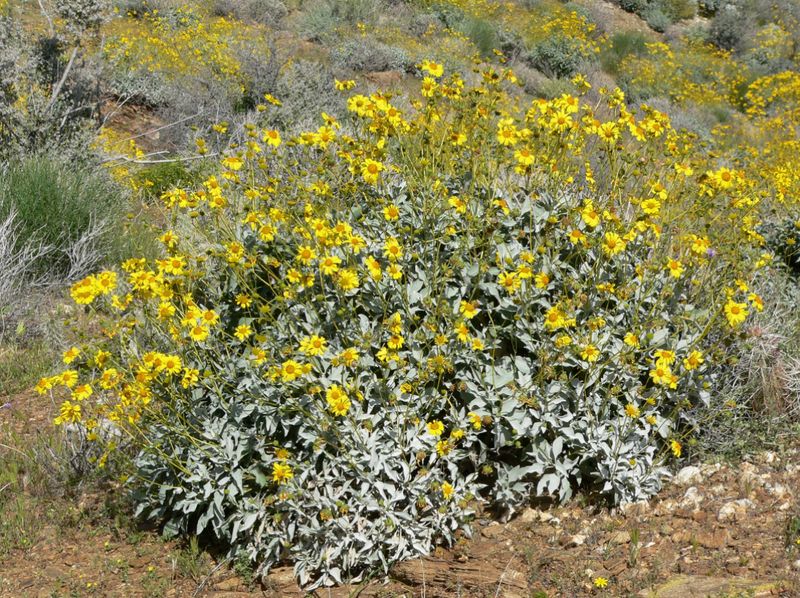
Size is the first practical question once identification is settled. Brittlebush can reach roughly 4 to 5 feet in both height and width at maturity, and it gets there faster than many homeowners expect.
A volunteer that looks modest in October can be a sprawling mound by April if the winter rains are generous.
Reseeding adds to the spread. A single plant left to drop seed freely can produce a cluster of volunteers in the surrounding gravel within a season or two.
That is great news in a large open area where coverage is the goal, and a real problem along a narrow path or against a wall where the plant has nowhere to go without causing trouble. The Arizona Native Plant Society notes that brittlebush can be cut back after flowering or as needed to manage its size.
What that pruning should not become is aggressive shearing into a tight ball. Heavy shearing removes the branching structure where new flower stalks emerge and pushes the plant toward a dense, woody center with fewer blooms the following season.
According to University of Arizona Cooperative Extension guidance on pruning low-desert shrubs, the better approach is selective thinning and light shaping that preserves the plant’s natural open form. Keep a volunteer brittlebush where it has full sun, room to reach its mature size, and soil that drains freely.
Remove it when it starts blocking foot traffic, crowding neighboring plants that cannot compete, or creating a maintenance burden that outweighs its seasonal benefit.
Give a new planting a desert-smart start
Fall is the preferred planting window for desert-adapted shrubs in low-desert Arizona. Soil stays warm enough to encourage root development while air temperatures drop enough to reduce the stress a new plant faces above ground.
Late spring can also work, but roots establish more slowly when summer heat arrives shortly after planting, which means more hands-on irrigation through the hot months.
Before putting anything in the ground, test drainage. Dig the planting hole and fill it with water, then check again after 12 to 24 hours.
If water is still standing, you likely have a caliche or hardpan layer blocking drainage below the hole. University of Arizona Cooperative Extension planting guidance recommends creating a drainage channel or “chimney” through the hard layer so water can move past it rather than pooling around the roots.
Brittlebush planted above a drainage barrier will struggle regardless of how well everything else is done.
When the hole is ready, use the native soil you removed as backfill rather than amending it with compost or other organic matter. Native desert plants generally establish better in their local soil, and amendments can actually create an interface that slows water movement.
Plant at the same depth the shrub sat in its nursery container, not deeper.
After planting, water regularly to support root establishment. The interval starts short and lengthens gradually as the plant anchors itself over the first season.
Moving a mature volunteer from one part of the yard to another is a different procedure with less predictable results; if you are considering that, check with your local Cooperative Extension office before digging.
Build a safer habitat around the shrub
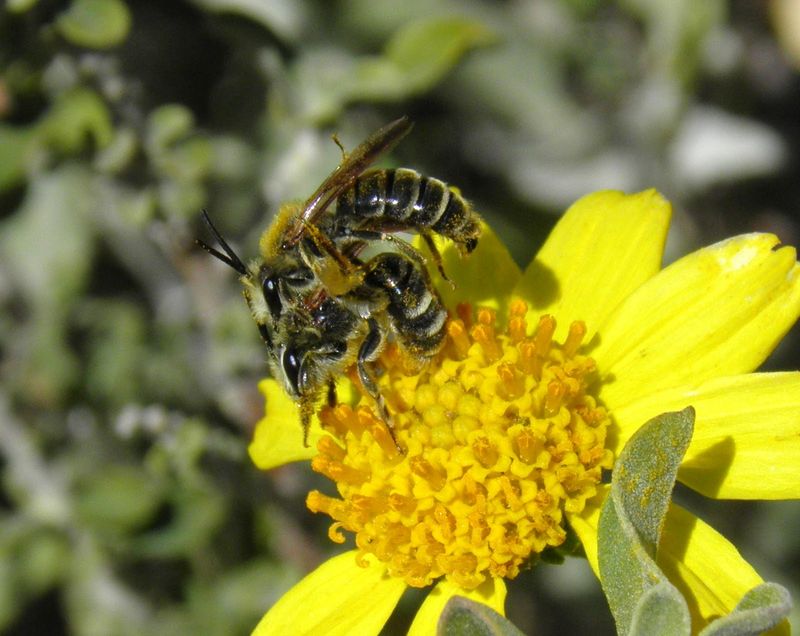
One seasonal shrub cannot carry the whole habitat. Brittlebush does real work for pollinators during its late-winter and spring bloom, but the insects that live in and around a low-desert yard need food sources across more of the year than brittlebush alone can provide.
University of Arizona Cooperative Extension guidance on supporting pollinators in the low desert specifically recommends maintaining a variety of plants with overlapping bloom times rather than relying on any single species.
Pairing brittlebush with plants that flower in summer, early fall, and late fall creates a more complete seasonal sequence. Desert willow, penstemon, and globe mallow are examples of native or desert-adapted plants that can extend that bloom calendar and keep multiple insect groups supplied across more of the year.
Pesticide use around flowering brittlebush deserves serious attention. Arizona pesticide training materials warn that bees are especially vulnerable to poisoning when they are actively feeding on blooms, and that many incidents occur because an applicator treated a plant while bees were present.
Avoid broad-spectrum insecticide applications to brittlebush or any plant in active bloom. If pest pressure in the yard requires treatment, use an integrated pest management approach and target only the affected plant or area, treating when pollinators are least active, such as early morning or evening.
One more boundary worth drawing clearly: pollinator habitat is not the same as scorpion, mosquito, or tick control. Brittlebush may support insects that are part of a healthy yard ecosystem, but that relationship does not translate into measurable deterrence of pest species.
Exclusion, sanitation, source reduction, and professional pest management remain the appropriate tools for those concerns.
Identify first, then decide
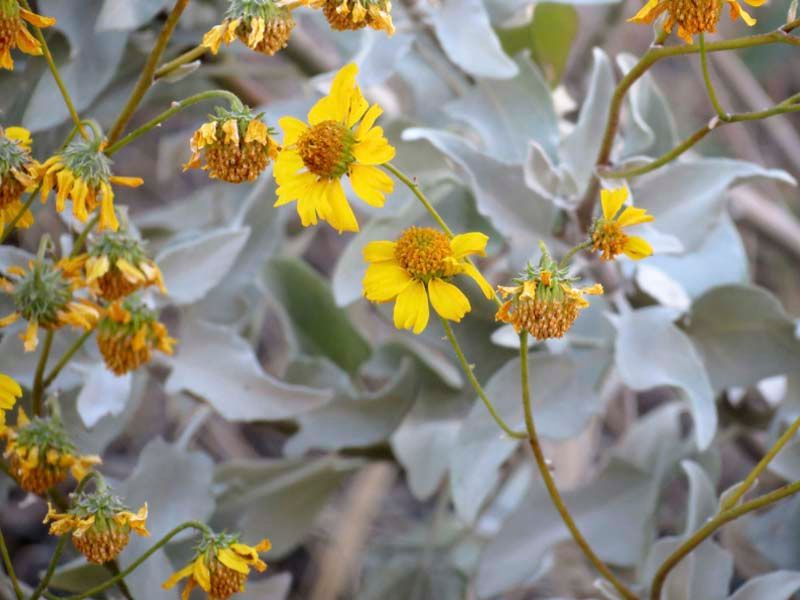
The decision about any yellow-flowered volunteer comes down to a short checklist. Gray-green fuzzy leaves, brittle stems, a rounded spreading form, and daisy-like ray flowers pointing to a sunny, well-drained spot all point toward brittlebush.
A plant that matches those traits, fits the available space, and sits where drainage is adequate is worth keeping.
A plant with compact yellow globes, finely divided leaves, and a pungent smell is not brittlebush. Pull it, bag it, and dispose of it rather than letting it reseed.
The Arizona Native Plant Society confirms that a correctly identified brittlebush volunteer can function as a low-water, seasonal food source for bees, butterflies, moths, and other insects, especially when it is part of a yard with varied plantings that cover more of the blooming calendar.
Skip the identification step and the whole calculation falls apart. A correctly named plant is an asset; an unverified one is a gamble.
The desert already provides the plant for free, which makes getting the ID right the only real investment required.