Do Overwintered Geraniums Need a Grow Light in a Michigan Winter?
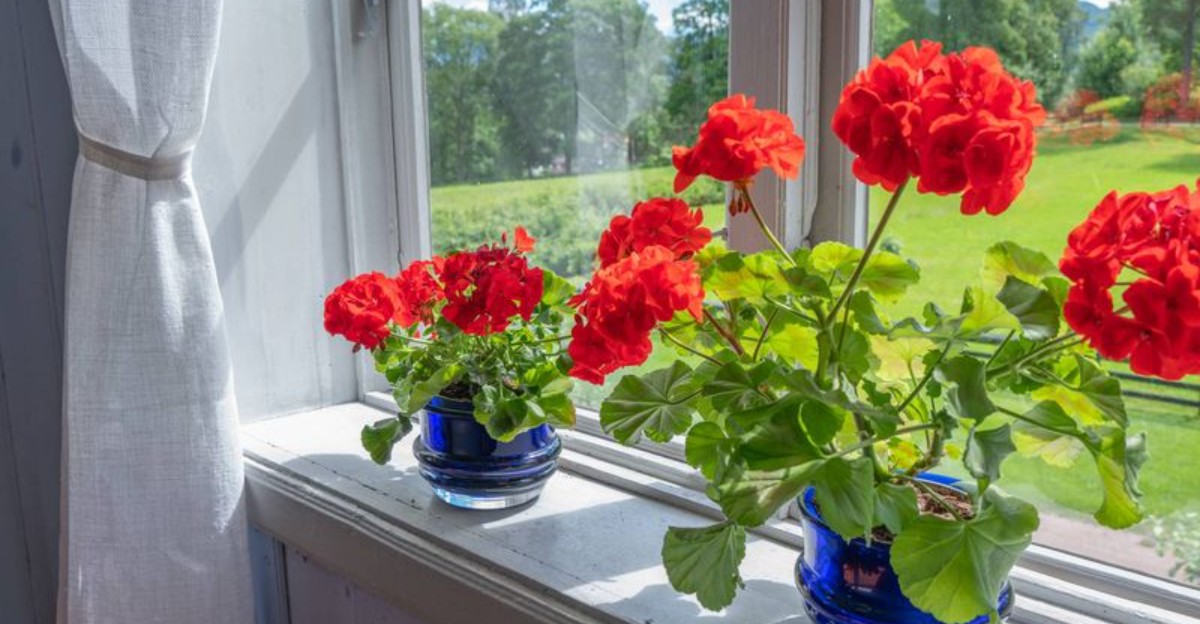
Those cheerful red blooms on your porch trace their roots to the sunny Cape region of South Africa. Then we haul them indoors and ask them to tough out a Michigan winter.
Truth be told, my first attempt went badly, and I have the photos to prove it. By February, my windowsill held a row of pale, floppy stems reaching for the glass like they were begging for a ride south.
What gets me is the math. In late December, Detroit sees barely nine hours of daylight, and the Upper Peninsula sees even less. Gray skies swallow a good chunk of what remains.
So do these sun lovers need a grow light to make it to May, or is that money better spent on seed packets? The answer hinges on one simple choice you make in the fall. Honestly, it surprised me.
Those Stretchy Geranium Stems Are Sending You a Message
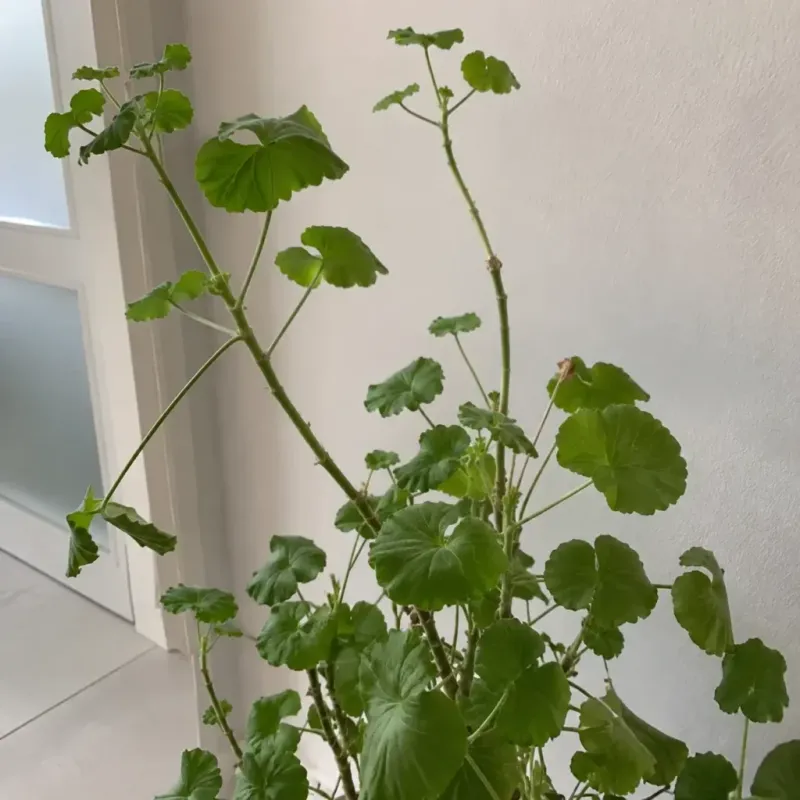
Leggy growth is the first clue most of us notice. Stems stretch long and thin, leaves spread far apart, and new foliage turns pale green or yellow.
Plant scientists call this etiolation. A geranium that senses weak light pushes its energy into stem length, hoping to reach brighter conditions. Indoors in winter, that brighter spot rarely shows up, so the stretching continues.
I used to blame my watering for these lanky plants. Eventually, I realized light was the real culprit. Water mistakes cause soft stems and yellow lower leaves, but steady stretching toward the window points straight at light.
Watch for a few telltale signs. Gaps between leaves grow wider than an inch or two. The whole plant leans hard toward the glass. Flower buds stall or drop before opening.
None of these signs mean your plant is a lost cause. Geraniums bounce back well once they get better light and a good trim in spring. The stretching simply tells you the current setup is not giving the plant enough energy to grow the way it wants.
That message matters, because the fix depends on how you chose to overwinter.
Potted Geraniums Kept Growing Indoors Usually Need Extra Light
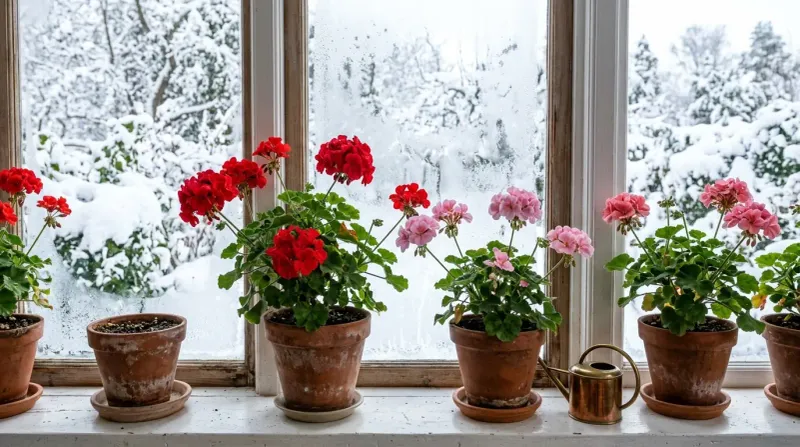
Keeping geraniums as active houseplants is a common approach, and it is also the one that most often calls for a grow light. Growing plants need steady light to make food through photosynthesis.
Michigan State University Extension suggests a bright, sunny window for geraniums you keep growing indoors. Many university experts add that supplemental lighting helps when windows fall short. In our state, from November through February, they often do.
Not going to lie, I resisted buying a light for years. My best south window still produced spindly plants by midwinter. Once I added an LED shop light, the difference showed up within a few weeks, with tighter growth and greener leaves.
Plan on these basics for actively growing plants:
Cut plants back by about one-third to one-half when you bring them in. Keep daytime temperatures near 60 to 65 degrees and nights a bit cooler. Give them 14 to 16 hours of combined light each day.
A plant sitting in a bright window may need only a few extra hours. A plant in a dim room may need the light to do most of the work.
So the short answer is yes, actively growing geraniums usually benefit from a grow light here.
Dormant Geraniums Stored in a Cool Basement Can Skip the Light

Grandma’s basement method still works beautifully, and it needs zero electricity. Dormant geraniums are resting, not growing, so they need little or no light.
The old-fashioned approach goes like this. Dig plants before frost, shake off most of the soil, and hang them upside down. Store them somewhere cool, ideally around 45 to 50 degrees, in a spot that stays above freezing.
An unheated basement or an attached garage that does not freeze can work. Many Michigan garages dip below 32 degrees in January, so check with a cheap thermometer before trusting yours.
Fair warning, this method has a few quirks. Some plants shrivel more than others, and a small share may not wake up in spring. Once a month, check them and soak the roots briefly in water if stems look badly shriveled.
You can also leave plants in their pots and let them go mostly dry in a cool, dim room. Water lightly, just enough to keep stems firm.
The key is temperature. A warm, dark spot pushes plants to grow without light, which produces pale, weak shoots. Cool and dark keeps them truly asleep.
Setting Up a Grow Light Over Geraniums Is Easier Than It Sounds
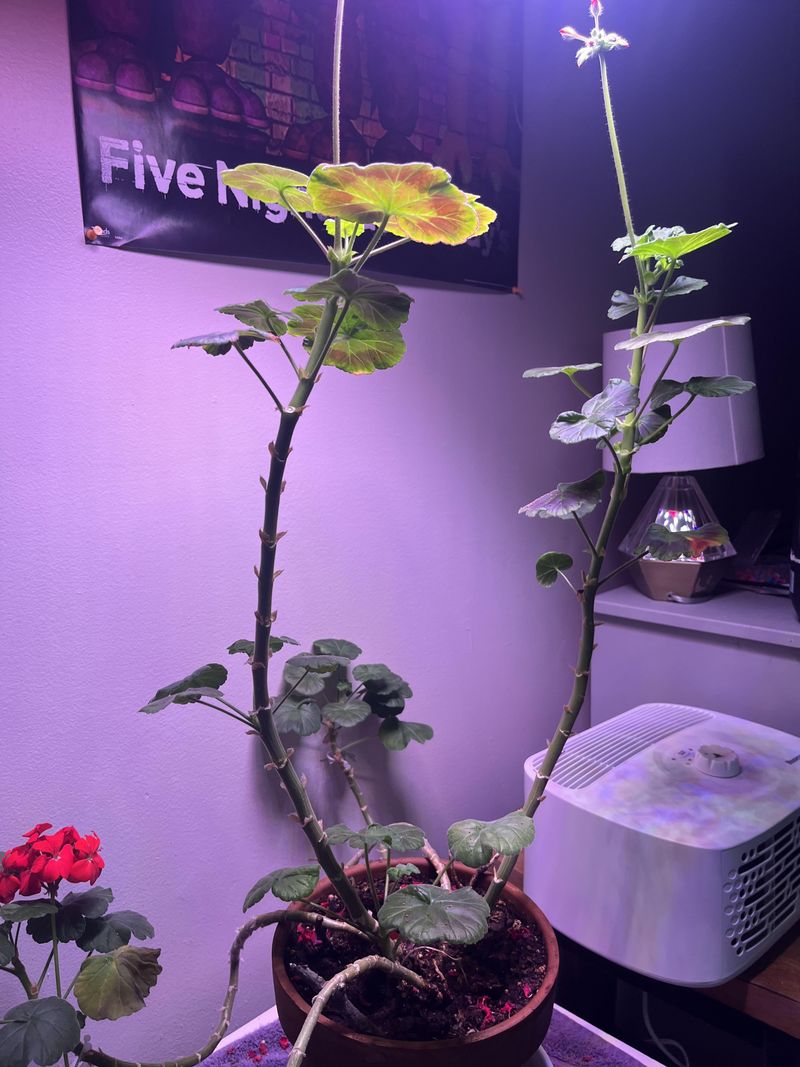
Shopping for a grow light can feel overwhelming, but geraniums are not fussy. A basic full-spectrum LED fixture or a standard fluorescent shop light handles the job for a few plants.
Distance matters more than brand. Fluorescent tubes work best about 4 to 6 inches above the leaves. Many LED fixtures can sit a bit higher, often 6 to 12 inches, but check the maker’s guidance, since output varies a lot.
Trust me on this one, a plug-in timer is the best few dollars you’ll spend. Set it for about 14 to 16 hours of light, then let plants rest in darkness overnight. Geraniums, like most plants, need that dark period too.
A few setup tips that help:
Hang the light on adjustable chains so you can raise it as plants grow. Put a reflective surface, like a white wall or foil board, behind the plants. Rotate pots every week so all sides get even light.
If leaves look bleached or crispy at the top, raise the light a few inches. If stems keep stretching, lower it.
LED lights run cool and sip electricity, so the monthly cost for a small setup is usually modest. That makes them a friendly choice for a long winter.
A South Window Helps Geraniums, but Only So Much
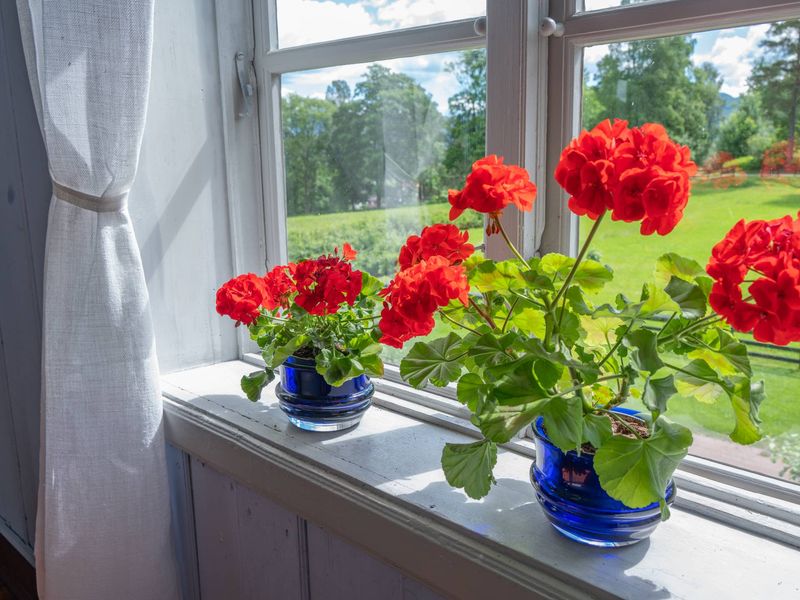
A sunny south window is prime real estate in any northern home, and geraniums love it. Even so, winter glass has limits that surprise a lot of gardeners.
Window glass filters some light, and light intensity drops quickly as you move away from it. A plant just three feet from the window can receive a small fraction of the light hitting the sill. Screens, dirty panes, and roof overhangs cut it further.
Then there’s the sun itself. In late December, the sun sits low in the sky across Michigan, and lake-effect clouds often block it for days, especially near the Great Lakes shorelines. Southeast parts of the state usually see a bit more winter sun, but gray stretches are common everywhere.
I’m the first to admit my windows looked bright to me. Our eyes adjust to dim light far better than plants do, which fools us into thinking a room is sunnier than it is.
To get the most from a window, set pots right against the glass, but keep leaves from touching cold panes. Wash the windows in fall. Pull curtains open early each morning.
If plants still stretch with all that effort, the window simply cannot carry them alone.
Geranium Cuttings on a Windowsill Root Better Under a Lamp
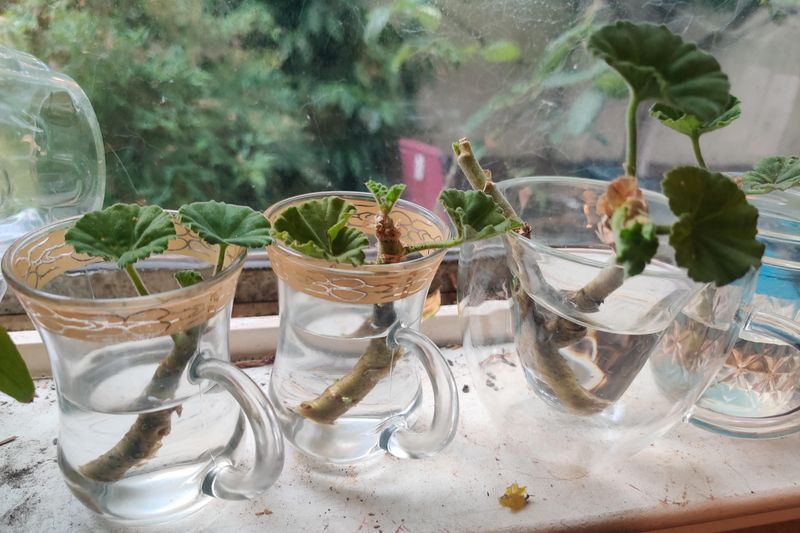
Rooting cuttings is my favorite space saver. One big potted plant can turn into a handful of small ones that fit on a single tray.
Take 3 to 4 inch tip cuttings before frost, strip the lower leaves, and let the cut ends dry for a few hours. Stick them in moist, well-drained mix such as perlite and peat or a seed-starting blend. Rooting usually takes about two to four weeks.
Don’t laugh, but I once lined up two dozen cuttings on a north windowsill and wondered why half of them sulked. Young cuttings have few leaves and no roots, so every bit of light counts.
A grow light makes the process far more reliable. Keep fixtures close, and run them 14 to 16 hours a day. Bright, indirect light is ideal until roots form, so avoid harsh direct sun that wilts tender stems.
Fun fact for the curious: the plants we call geraniums belong to the genus Pelargonium. The true geraniums are hardy perennials often called cranesbills, and they spend winter outdoors with no help at all.
Once cuttings root and push out new leaves, pot them up and treat them like small houseplants. They’ll keep needing bright light all winter.
Warm Rooms and Soggy Pots Make Geranium Light Problems Worse
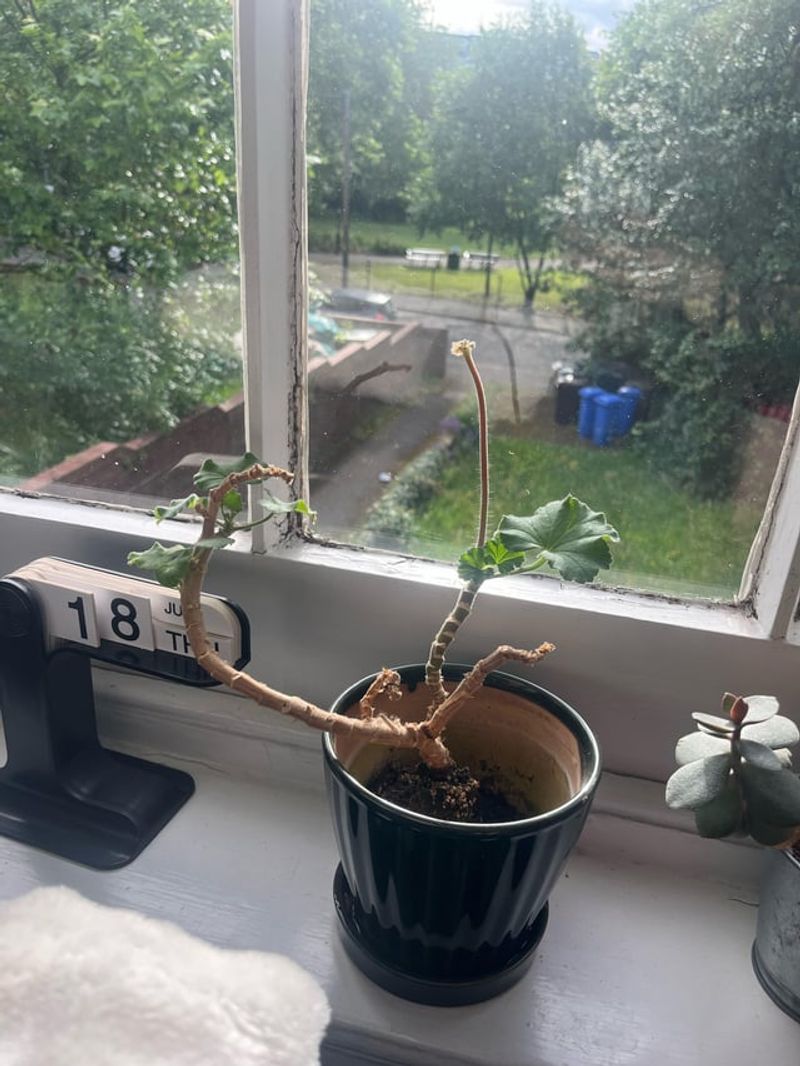
Cozy living rooms feel great to us, but they can work against a geranium in winter. Warm air speeds up growth, and fast growth in weak light equals extra stretching.
Extension experts often recommend cooler conditions for overwintered geraniums, around 60 to 65 degrees by day and 50 to 60 at night. A cool bedroom or sunroom often beats the toasty spot near the furnace vent. Cooler temperatures slow the plant down, so it needs less light to stay compact.
Guilty as charged, I used to drown my indoor geraniums with love. These plants handle dry soil far better than soggy soil. Wet roots in low light invite root rot and gray mold, also known as botrytis.
Let the top inch or so of soil dry before watering. Use pots with drainage holes and empty saucers after watering.
Skip most fertilizer until late winter. Feeding a plant that cannot grow well in dim light only pushes more soft, weak growth.
Good airflow helps too. A small fan on low nearby, or simply spacing pots apart, keeps leaves drier and reduces disease pressure.
Balance temperature, water, and light together, and even a modest grow light goes much further.
Late Winter Is When Your Geraniums Crave Light the Most
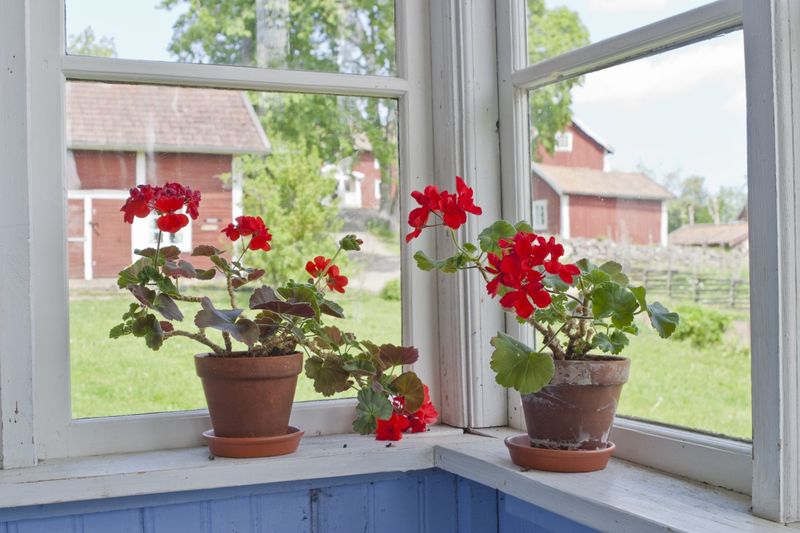
March light is a gift, but it often isn’t enough for the job geraniums want to do next. Late winter is when plants shift from survival mode into real growth.
Around late February or early March, bring dormant plants out of storage. Trim stems back to firm, green tissue, pot them in fresh potting mix, and water them well. Within a couple of weeks, new buds should appear along the stems.
This is the moment a grow light earns its keep. Waking plants and actively growing houseplants both push out lots of new leaves, and they need strong light to keep that growth compact. Even with longer days, many gardeners find plants still stretch near windows.
Every spring, I pinch back the tips of growing stems to encourage bushier plants. More branches mean more flowers come summer.
Before planting out, harden plants off over about a week. Start with a few hours of outdoor shade, then gradually add sun and time outside.
Wait until frost danger passes. That’s often mid to late May in southern Michigan and early June farther north, including much of the Upper Peninsula.
So the bottom line is simple. Growing plants want a light, sleeping plants don’t, and both appreciate a spring boost.