Do These Things The Moment You See Aphids On Ohio Rose Bushes
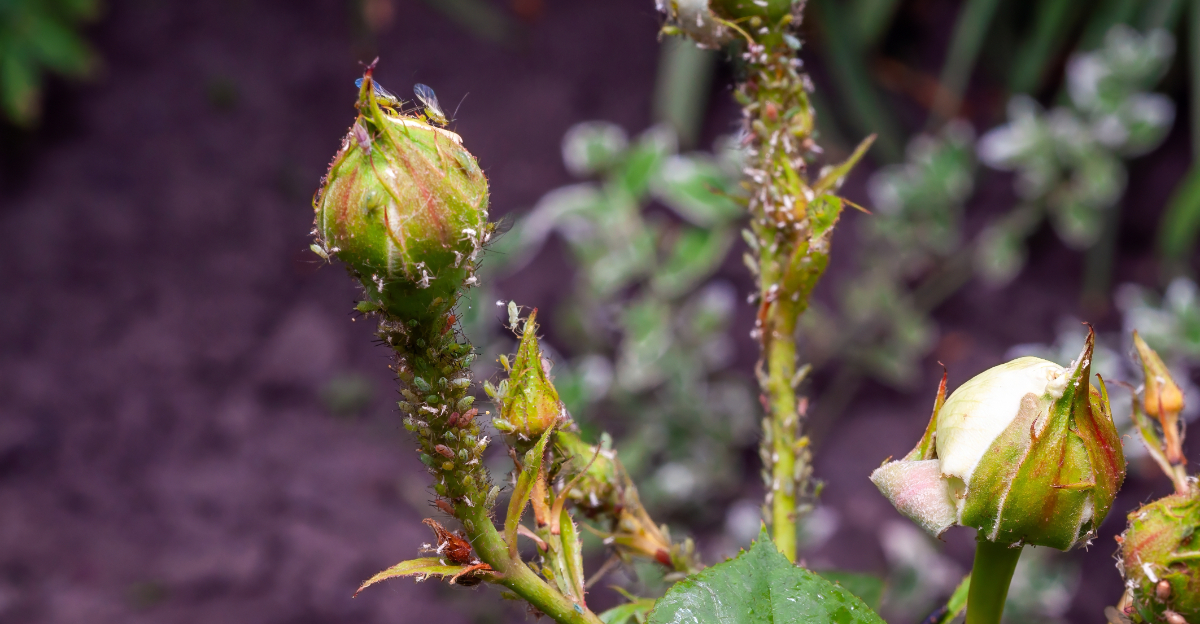
Aphids on Ohio rose bushes do not stay a small problem for long. Spot a cluster on a stem today and ignore it for a week, and what was manageable becomes something that is working against the entire plant.
Aphids reproduce fast, spread to neighboring plants, and attract the kind of secondary problems that make a rose bush look like it is fighting on multiple fronts at once. Speed is everything with aphids.
The moment you see them is the moment that counts. Most Ohio gardeners either reach for the wrong thing first or hesitate long enough for the population to establish in a way that takes real effort to reverse.
Neither approach serves the rose bush well in the middle of the growing season. What you do in the first hour after spotting aphids determines how much work the next few weeks require.
The right moves are simple. The timing is everything.
1. Check How Many Aphids Are Actually On The Roses
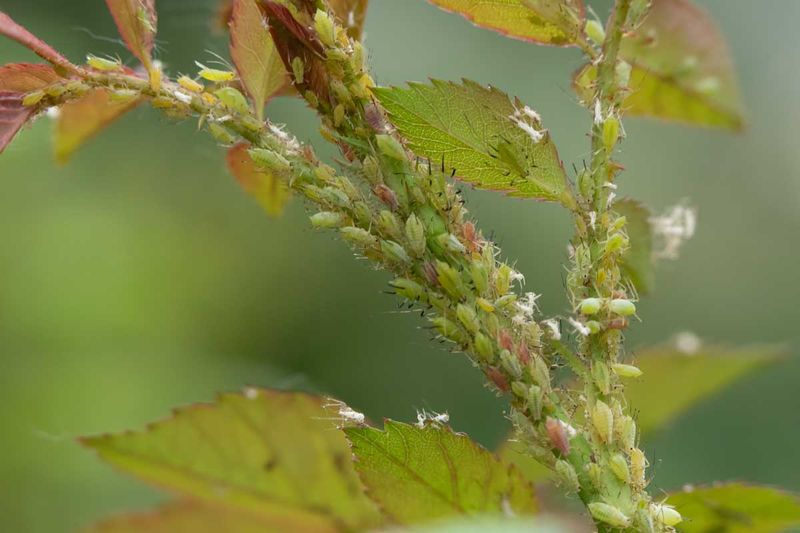
A rose bud covered with tiny green insects can look alarming until you slow down and take a closer look. Not every aphid sighting means a serious problem is underway.
A handful of insects on one new shoot is very different from dense, sticky clusters coating multiple buds and stems throughout the whole plant.
Start your inspection by walking around the rose bush and checking new growth carefully. Look under the leaves, along the tender green stems near the tips, and around the base of each bud.
Aphids tend to gather where plant tissue is soft and sap is easy to reach. They can be green, yellow, pink, or even black depending on the species and the season.
Take note of how many shoots are affected and whether the numbers seem to be growing. A light scattering of aphids on one or two stems often resolves on its own, especially when weather shifts or when natural predators are nearby.
Keeping a calm, diagnostic mindset at this stage helps you decide whether to act right away or simply monitor the plant over the next few days before doing anything else.
2. Spray Aphids Off With A Strong Stream Of Water
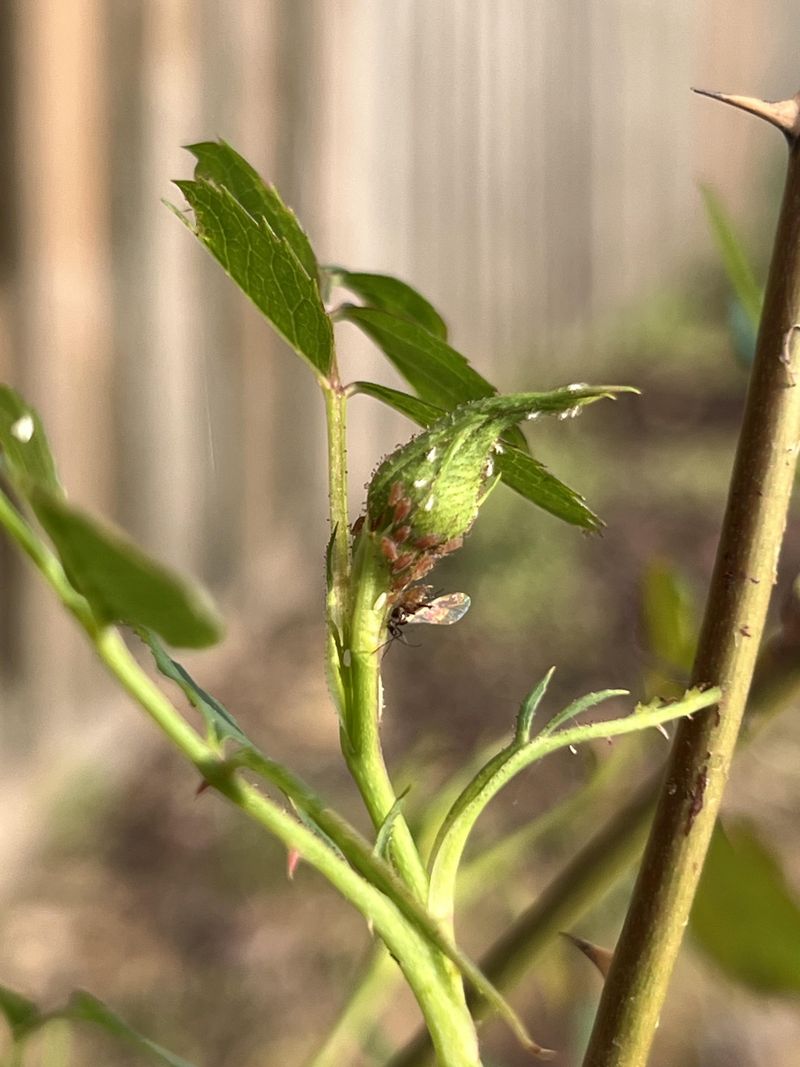
A garden hose can be one of the most useful tools you own when aphids show up on your rose bushes. A firm, well-aimed stream of water can knock aphids off stems and buds quickly, and it does not require any chemical products at all.
Most aphids that land on the soil after being sprayed off are not able to climb back up to the plant in large numbers.
Use a nozzle that lets you control the pressure. You want enough force to dislodge the insects without snapping tender stems or bruising soft petals.
Support fragile stems gently with your free hand if needed, especially on younger canes. Aim the spray under the leaves and along the stem tips where aphids tend to cluster most heavily.
Morning is a good time to do this so the foliage has time to dry before evening. Wet leaves sitting overnight can sometimes invite fungal issues, which rose bushes are already prone to in humid summers.
Your Ohio Garden Changes Every Week. Your Plan Should Too.
Gardening in Ohio changes quickly throughout the season. Every Friday you’ll receive a simple weekly plan showing exactly what to plant, prune, fertilize, harvest, and protect so you never miss the right timing.
Repeat the water spray every couple of days if aphid numbers stay stubbornly high. This simple step handles many light-to-moderate infestations without any additional intervention needed at all.
3. Look For Lady Beetles Lacewings And Other Helpers
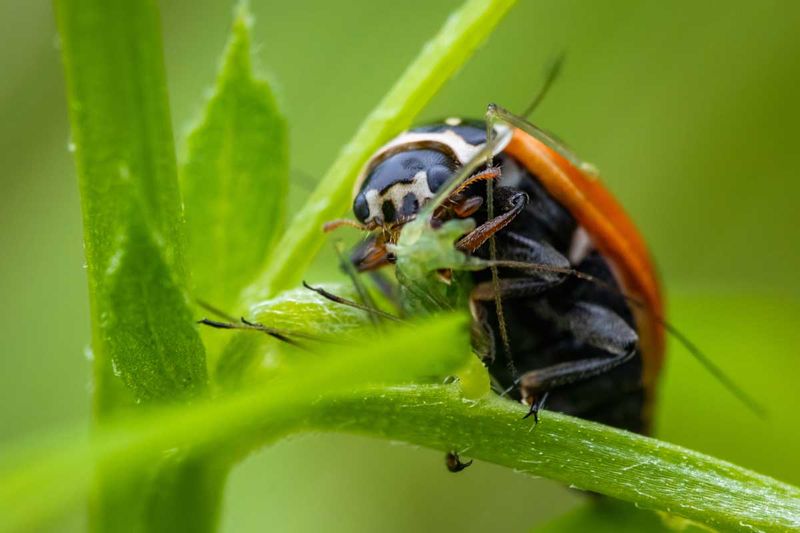
Before reaching for any spray, take a moment to scan the rose bush for beneficial insects. Lady beetles, both adults and their alligator-shaped larvae, are well-known aphid feeders.
Lacewing larvae, hoverfly larvae, and tiny parasitic wasps also help reduce aphid populations in Ohio home garden settings. These insects are worth protecting whenever they are present.
Lady beetle larvae do not look like the familiar spotted adults. They are small, dark, and somewhat spiky in appearance.
Lacewing eggs look like tiny white dots on thin stalks attached to leaves. If you see these signs, beneficial insects may already be working on the problem for you.
Spraying at that point could remove your best natural allies.
Beneficial insects do not solve every aphid outbreak instantly, and their presence is not a guarantee that populations will drop fast enough for your satisfaction. But they are a real part of the garden ecosystem and worth factoring into your decision before you treat.
Avoiding broad-spectrum sprays, especially early in the season, gives these helpful insects a better chance to build up in your rose beds. Patience here often pays off over the course of a few days.
4. Remove Badly Curled Tips Before Aphids Spread
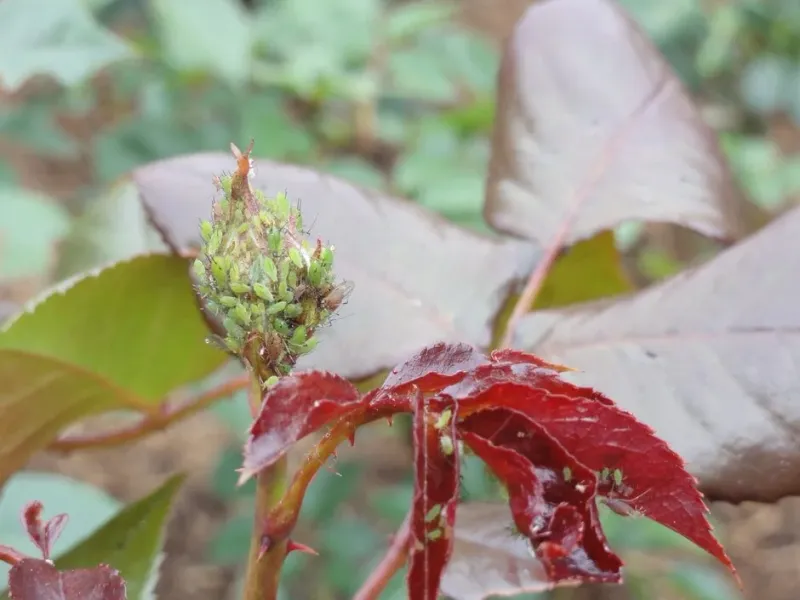
Curled, twisted shoot tips are a telltale sign that aphids have been feeding there for a while. Once a tip curls tightly around a cluster of insects, water sprays become much less effective because the leaves shield the aphids from direct contact.
Removing those worst-affected tips can stop the problem from spreading to nearby healthy growth.
Use clean, sharp pruning snips and cut just below the curled section. Drop the removed tips directly into a bag or bucket rather than leaving them on the ground near the plant.
Aphids can sometimes move from fallen plant material back onto the rose if left close by. Dispose of the clippings away from the Ohio garden bed.
Be selective about what you remove. There is no need to cut healthy, uncurled growth just because a few aphids are nearby.
The goal is to take out the most heavily sheltered clusters where water and beneficial insects cannot reach easily. Cutting too much healthy growth weakens the plant unnecessarily and can slow flowering.
A careful, targeted approach protects the rose while giving you a practical way to reduce the most crowded aphid hotspots on the bush.
5. Avoid High-Nitrogen Feeding That Pushes Soft Growth
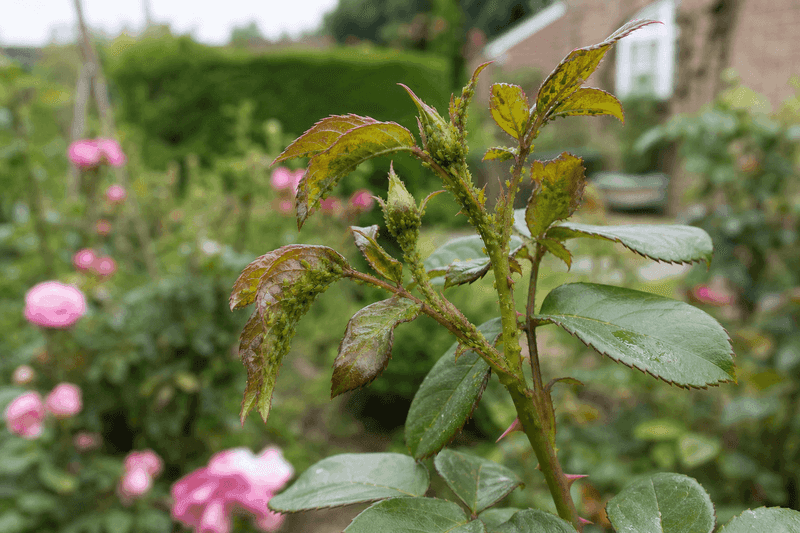
Fertilizer choices can quietly influence how attractive your rose bush is to aphids. Heavy nitrogen feeding pushes out fast, lush, soft new growth.
That tender tissue is exactly the kind that aphids prefer. Roses fed with too much nitrogen can end up producing more soft-growth flushes than the plant needs, and those flushes draw aphid activity.
This does not mean you should stop feeding your roses altogether. Roses do benefit from balanced nutrition, especially during the growing season.
The key is using products that match the plant’s actual needs and following the label directions on application rates. Slow-release fertilizers and products formulated specifically for roses tend to deliver nutrients more evenly than a heavy dose of fast-acting nitrogen.
Soil conditions also matter. A soil test from your local cooperative extension office can tell you what your Ohio garden actually needs before you add anything.
Feeding based on real soil data is more reliable than guessing. Roses growing in well-balanced soil with appropriate fertility tend to produce growth that is sturdy and resilient.
That kind of growth is less inviting to aphid colonies than the soft, pale shoots that follow a heavy nitrogen push in warm weather.
6. Use Insecticidal Soap Only When Aphids Keep Building
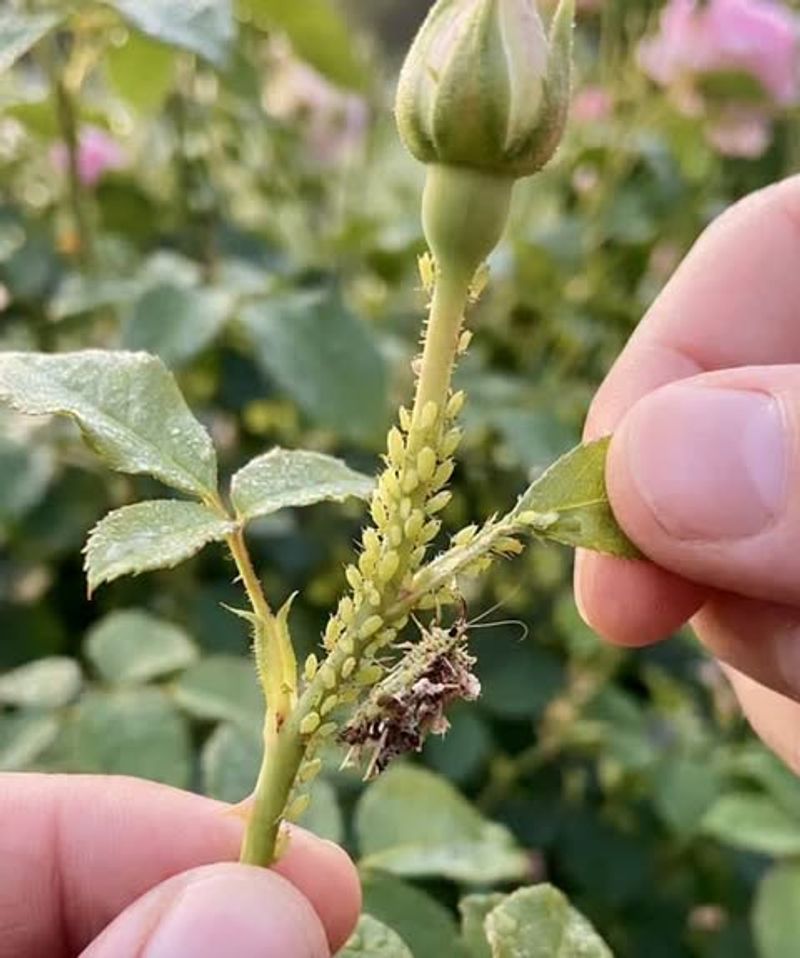
Insecticidal soap is a reasonable option when aphid numbers keep climbing despite water sprays and natural predator activity. It works by direct contact with the insect, so thorough coverage of stems, leaf undersides, and bud clusters is necessary for it to be effective.
Missing the insects means the treatment does not work.
Always read the product label before using insecticidal soap on your roses. Labels carry legally required directions for a reason, and following them protects both your plant and the environment.
Avoid applying the soap during the hottest part of the day or when plants are already stressed from drought or heat. Treating in those conditions can cause leaf burn on the rose foliage.
Early morning application, after dew has dried but before midday heat, is generally a safer window. Avoid spraying open blooms where pollinators may be visiting.
Bees and other helpful insects can be affected by contact with soap sprays even though insecticidal soap is considered a gentler option overall.
If you are unsure how your specific rose variety will respond, test the product on a small area first and wait a day or two before treating the whole plant.
7. Check New Buds Every Few Days In Warm Weather
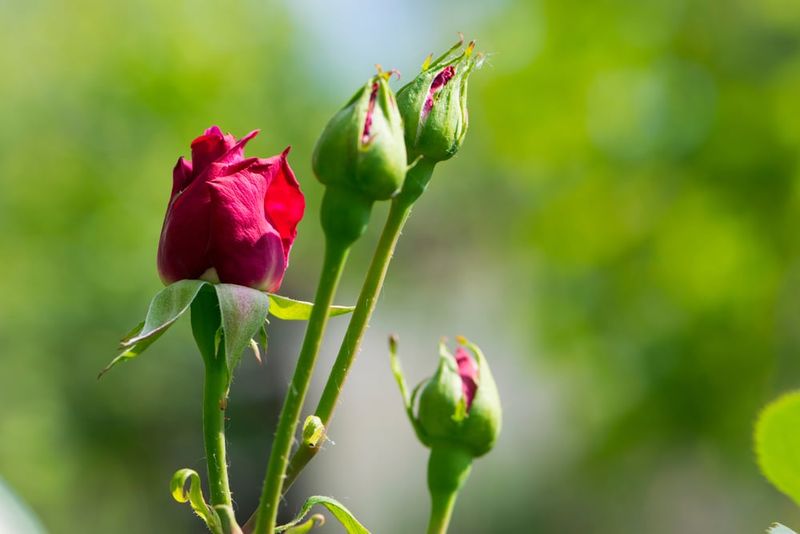
Warm weather in this region can help aphid populations rebound faster than many gardeners expect.
A rose bush that looked clean on Monday can show new clusters by Thursday, especially during stretches of mild, humid weather in late spring and early summer.
Building a simple checking habit keeps you ahead of the situation.
Every few days, walk over to the rose bed and look at the newest growth. Check the tips of stems, the undersides of young leaves, and the bases of developing buds.
These are the spots where aphids tend to resettle after being knocked off or after a new generation hatches. You do not need special equipment, just good light and a few minutes of focused attention.
Keeping a quick mental note of what you saw during the last check helps you track whether numbers are rising, holding steady, or dropping on their own. A declining population often means beneficial insects or weather conditions are working in your favor.
A rising count over several days is a sign that a water spray or other step might be worth repeating. Regular monitoring turns aphid management into a calm, informed routine rather than a reactive scramble.
8. Keep Roses Healthy So Aphids Do Less Damage
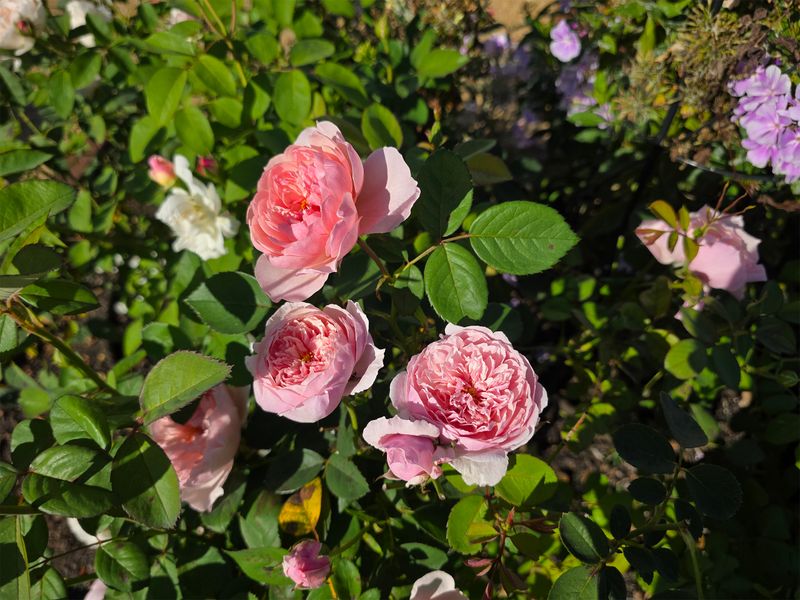
A rose bush growing in good conditions handles minor pest pressure better than one that is already stressed. Healthy plants have stronger cell walls and more consistent sap flow, which makes them somewhat less vulnerable to heavy aphid feeding.
The basics of good rose care go a long way toward reducing how much any pest can affect the plant.
Full sun is important. Most rose varieties perform best with at least six hours of direct sunlight each day.
Good airflow around the plant reduces humidity near the foliage, which helps discourage both fungal problems and pest buildup. Consistent watering at the base of the plant, rather than overhead, keeps the foliage drier and the roots steady.
A layer of mulch around the base helps retain soil moisture and keeps soil temperatures more even through warm-weather swings common in this state.
Balanced feeding, appropriate pruning, and removing spent blooms all contribute to a plant that stays vigorous through the season.
A rose bush in good health can tolerate a light aphid population without significant setback. Keeping that foundation strong is the most reliable long-term strategy for managing aphids in your home landscape with confidence and calm.