Do This To Oregon Zucchini This Week If You Want It Producing Into September
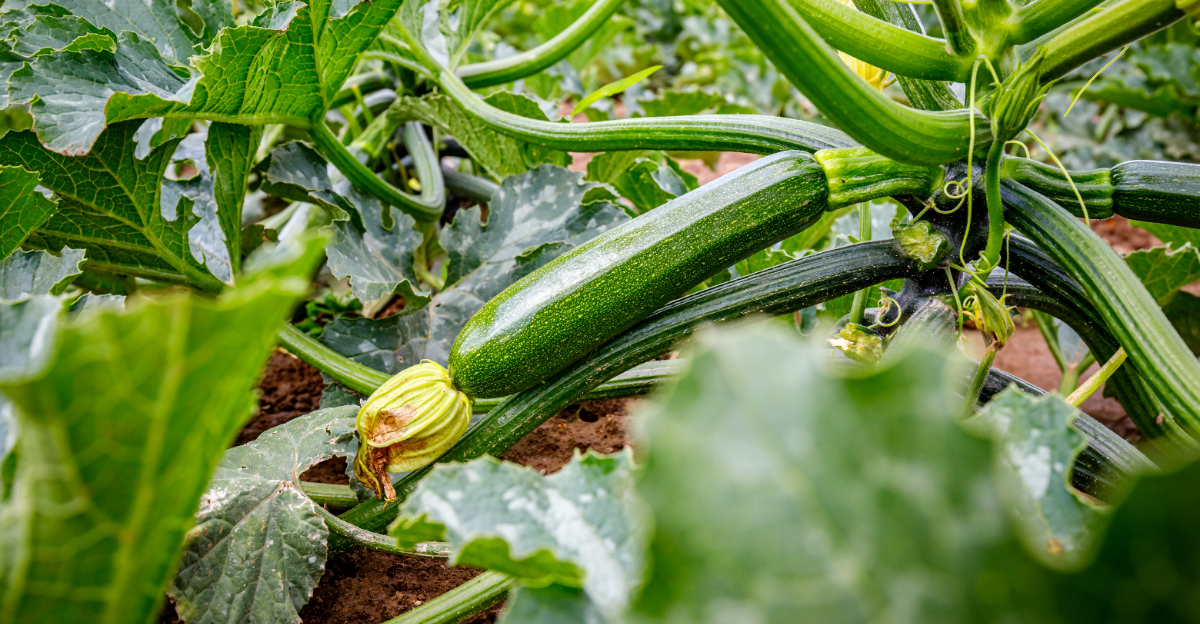
By mid-August, zucchini plants can start looking like they have already given everything they have.
Production slows, older leaves crowd the center, and new fruit may appear less often even though there is still plenty of growing season left.
That does not necessarily mean the plant is finished. A small amount of timely attention now can help redirect its energy and keep fresh growth moving into September.
The trick is knowing what to remove, what to leave alone, and how much stress the plant can handle during hot weather. Doing too much can set it back, but ignoring a tired plant can shorten the harvest faster than expected.
If your zucchini has started losing momentum, this week is a good time to make one strategic adjustment that can help extend the season instead of letting the plant fade out early.
1. Pick Zucchini Before They Turn Into Baseball Bats
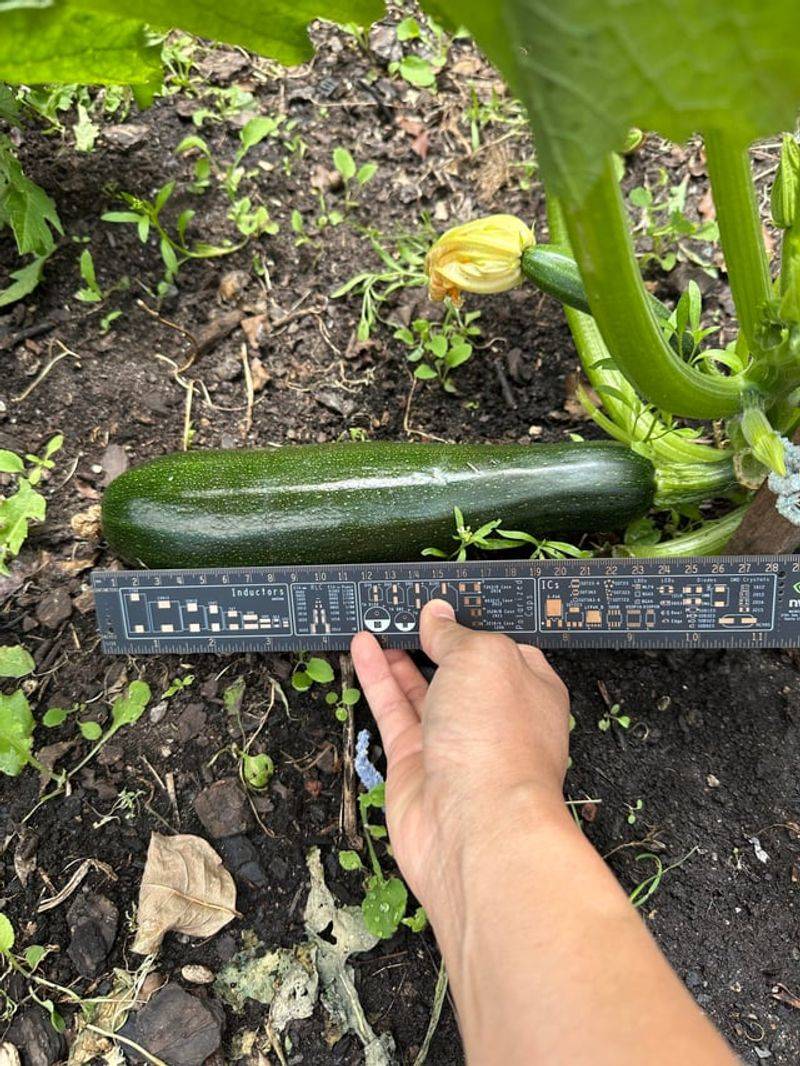
Every Oregon gardener has found one hiding under a leaf that got way too big. You reach in to grab what you thought was a normal fruit and pull out something that looks more like a club than a vegetable.
That giant zucchini did not happen overnight, but it grew faster than most people expect.
Zucchini can go from harvest-ready to oversized in just two or three days during warm weather. The sweet spot for picking is when the fruit is six to eight inches long.
At that size, the skin is tender, the seeds are small, and the flavor is at its best. Waiting longer does not improve the zucchini.
It just makes it worse and harder on the plant.
When a zucchini gets too large, the plant shifts its energy toward ripening that one fruit instead of producing new flowers. That means fewer harvests for you.
Picking at the right size tells the plant to keep making more. It is a simple trade-off that pays off big over the course of the season.
Use a sharp knife or garden scissors to cut the stem cleanly. Do not twist or pull, since that can stress the vine and even cause small tears that invite pests.
A clean cut keeps the plant healthy and ready to push out the next round of fruit. Make picking at the right size a weekly habit, and you will see a real difference by late August.
2. Check Plants Every Day During Peak Production
Most people check their garden every few days and think that is enough. During peak zucchini season, that is not quite enough.
These plants move fast, and a lot can change between visits.
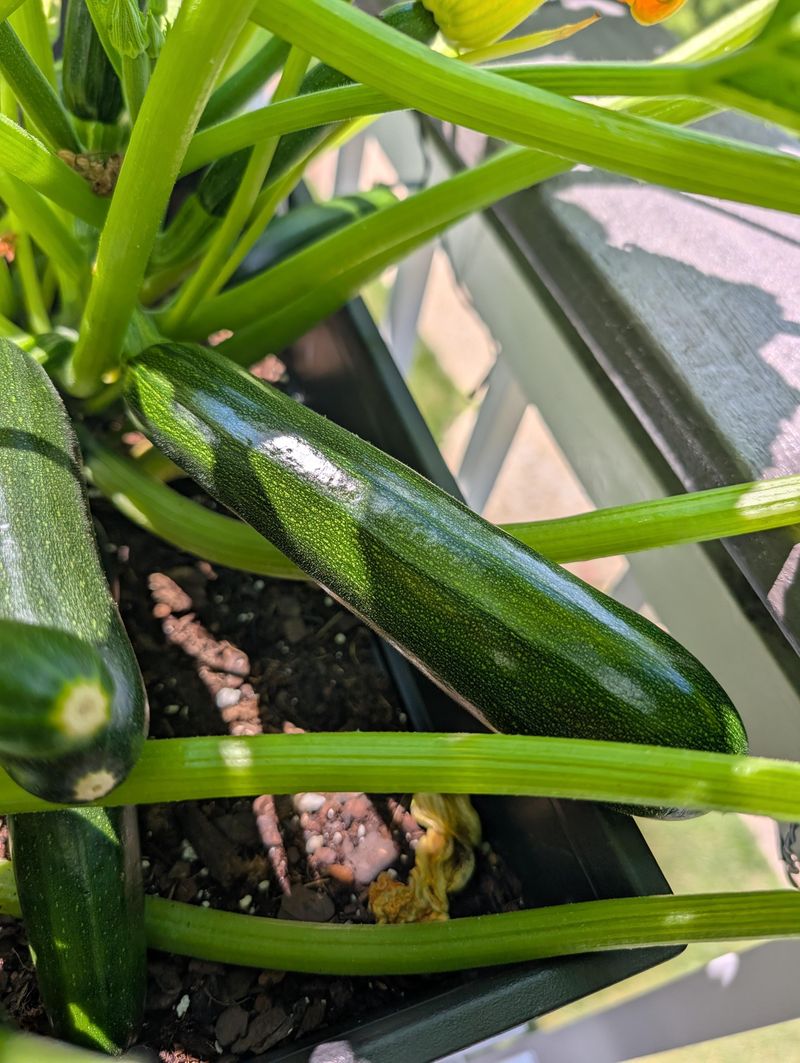
A daily walk through your garden takes only a few minutes. While you are out there, look under every big leaf.
Zucchini hides surprisingly well under its own foliage. A fruit that was invisible yesterday might be eight inches long today.
Spotting it early means you can pick it at the perfect time instead of finding a giant one later.
Daily checks also help you catch problems before they spread. You might notice a leaf that looks wrong, a flower that did not open properly, or a small pest starting to move in.
Your Oregon Garden Changes Every Week. Your Plan Should Too.
Gardening in Oregon changes quickly throughout the season. Every Friday you’ll receive a simple weekly plan showing exactly what to plant, prune, fertilize, harvest, and protect so you never miss the right timing.
Catching these things early gives you a much better chance of dealing with them before they become bigger issues.
In Oregon, late summer days can be unpredictable. A stretch of hot weather speeds up growth dramatically.
What seems like a reasonable check-in schedule in June can fall apart completely in August. Adjust your habits as the season heats up.
Think of your daily garden visit as a quick check-in with a friend. You are not doing heavy work every time.
You are just staying connected to what is happening so nothing catches you off guard. That small habit keeps your harvest window open longer and helps you stay ahead of the plant instead of always playing catch-up.
3. Remove Hidden Fruit Before It Gets Huge
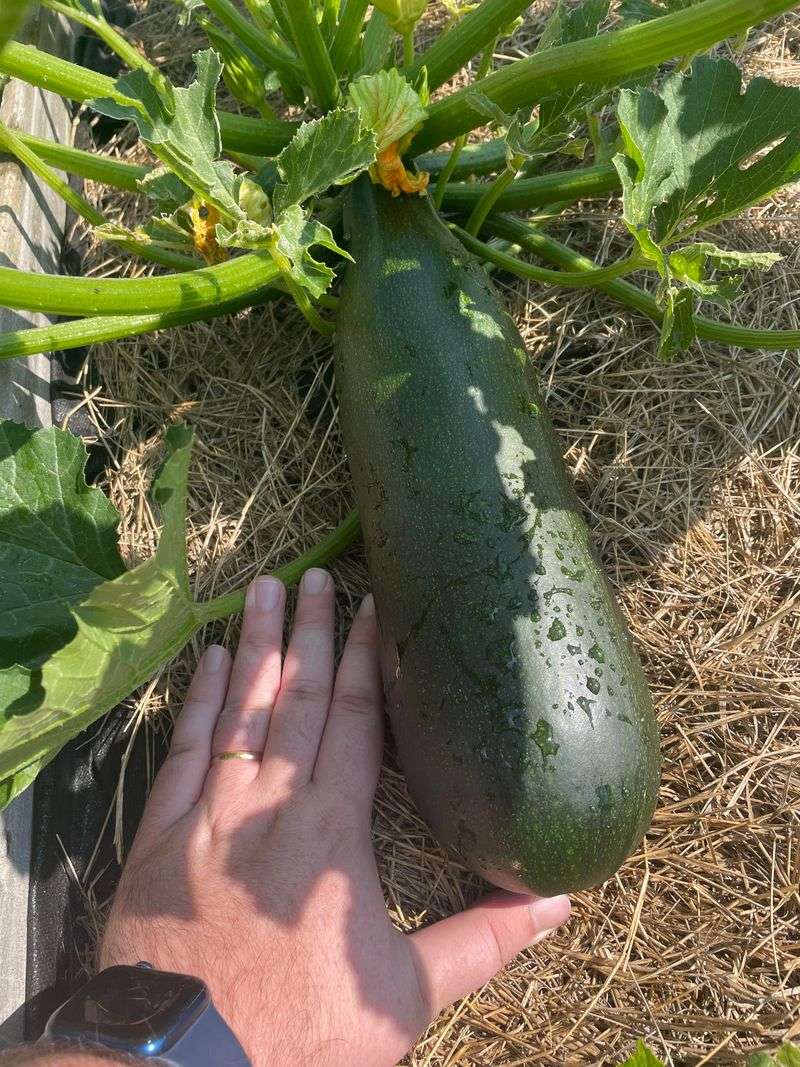
Zucchini leaves are enormous, and that creates the perfect hiding spot for fruit that grows unnoticed. A small zucchini can tuck itself under a leaf and double in size before you ever spot it.
By the time you find it, the damage to your harvest schedule is already done.
Hidden fruit is one of the top reasons plants slow down in late summer. That oversized zucchini sitting in the shade of its own leaves is pulling energy away from every other part of the plant.
New flowers may stop forming, and the ones that do open might not develop into fruit at all. The plant is too busy trying to finish what it already started.
Make a habit of gently lifting the large outer leaves during your daily checks. Look toward the base of the plant where fruit tends to form close to the main stem.
That area gets shaded quickly as the plant fills in, and it is exactly where hidden zucchini tend to appear.
When you find a hidden fruit that has already gotten large, remove it right away. Even if it is not something you want to eat, getting it off the plant is the priority.
Toss it in the compost or give it to a neighbor. The goal is to free up the plant’s resources so it can focus on producing new, harvest-ready fruit.
Staying ahead of hidden fruit makes a noticeable difference in how long your plants stay productive through the rest of summer.
4. Harvesting More Often Keeps New Flowers Coming
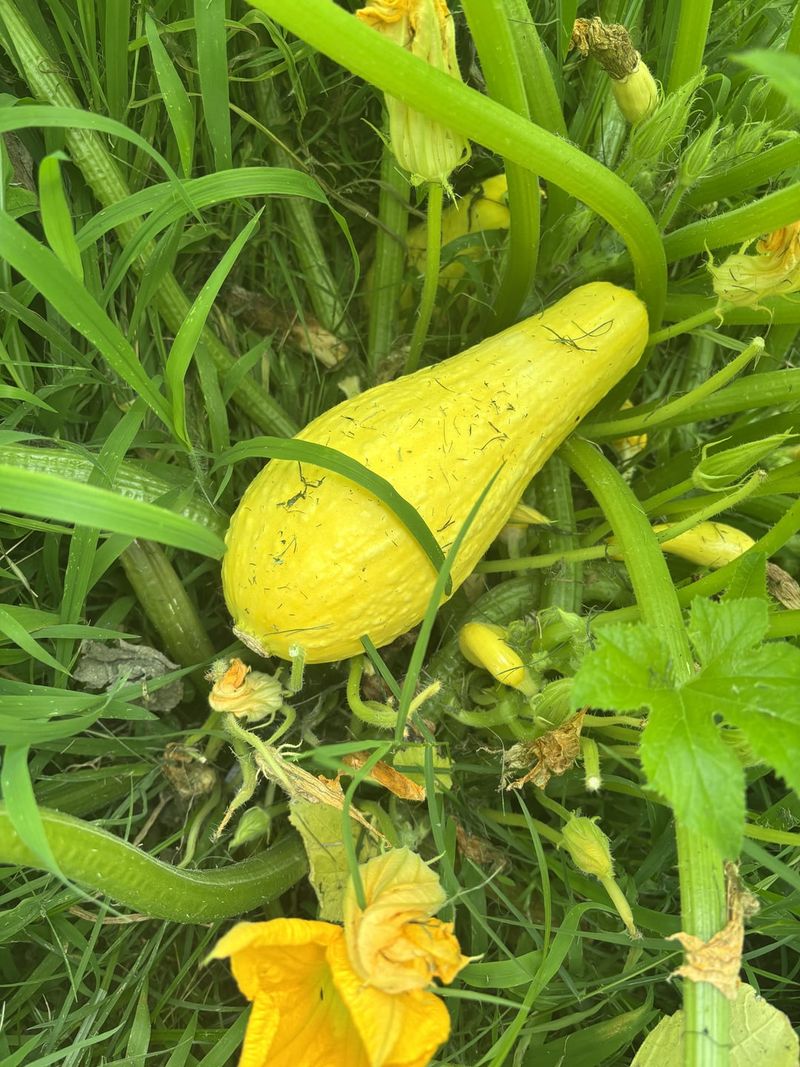
There is a direct connection between how often you harvest and how many flowers your plant produces. It sounds almost too simple, but it is one of the most reliable rules in vegetable gardening.
The more you take, the more the plant makes. Zucchini plants are programmed to produce seeds and complete their life cycle. Every time you remove a mature fruit, you interrupt that cycle.
The plant responds by pushing out more flowers and trying again. That cycle of harvesting and flowering is exactly what keeps production going strong through August and into September.
If fruit stays on the vine too long, the plant gets the signal that its job is done. Flower production slows down, and eventually stops.
You might still have a big zucchini sitting there, but you will not be getting any new ones to replace it. That is the opposite of what you want during the height of the season.
Aim to harvest every one to two days when your plants are at peak production. Yes, that might feel like a lot.
But the reward is a steady stream of tender, flavorful zucchini instead of a few giant ones that are not very enjoyable to eat.
Share the extras with friends, donate them to a local food bank, or try new recipes. The important thing is to keep removing fruit so the plant never thinks it has finished its work.
That mindset shift turns a short harvest window into a long one.
5. Do Not Let One Giant Zucchini Hog The Plant’s Energy
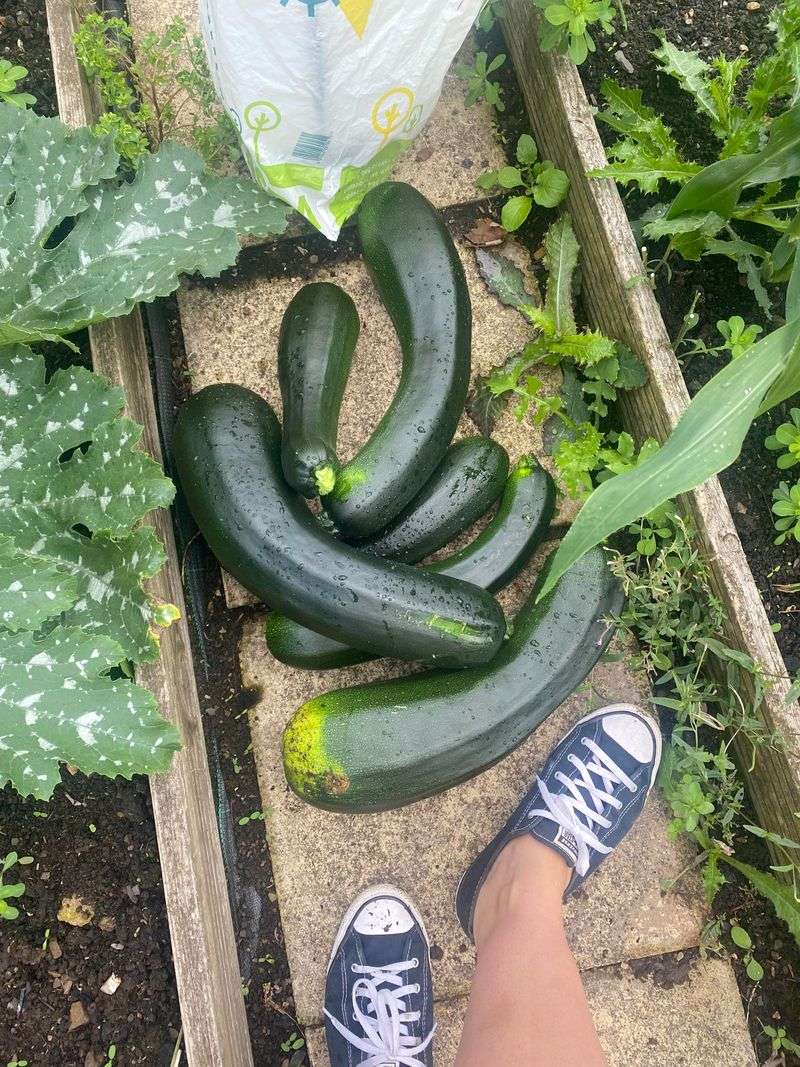
One oversized zucchini can quietly take over your entire plant. It sits there looking impressive, but behind the scenes it is pulling nutrients, water, and energy away from everything else.
The rest of the plant suffers while that one fruit keeps growing bigger and bigger.
Think of the plant’s energy like a budget. Every fruit on the vine is spending from that budget.
A normal-sized zucchini costs a little. A giant one costs a lot.
When one fruit dominates the budget, there is nothing left for new flowers, new fruit, or even keeping the leaves healthy. The whole plant starts to look tired and worn out.
This is especially important to watch for in mid to late summer when plants have already been working hard for weeks. They are not as vigorous as they were in June.
They have less reserves to draw from, and a single oversized zucchini can tip the balance toward a slowdown that is hard to recover from.
As soon as you spot a zucchini that has gotten past the ideal harvest size, remove it immediately. Do not wait to see how big it gets.
Do not save it for a special recipe later. Get it off the plant now so the energy can be redirected.
Your plant will respond quickly. Within a few days, you should see new flowers forming and the overall plant looking more alert and healthy.
That fast turnaround is one of the most satisfying things about growing zucchini.
6. Snip Off Damaged Fruit Before Rot Sets In
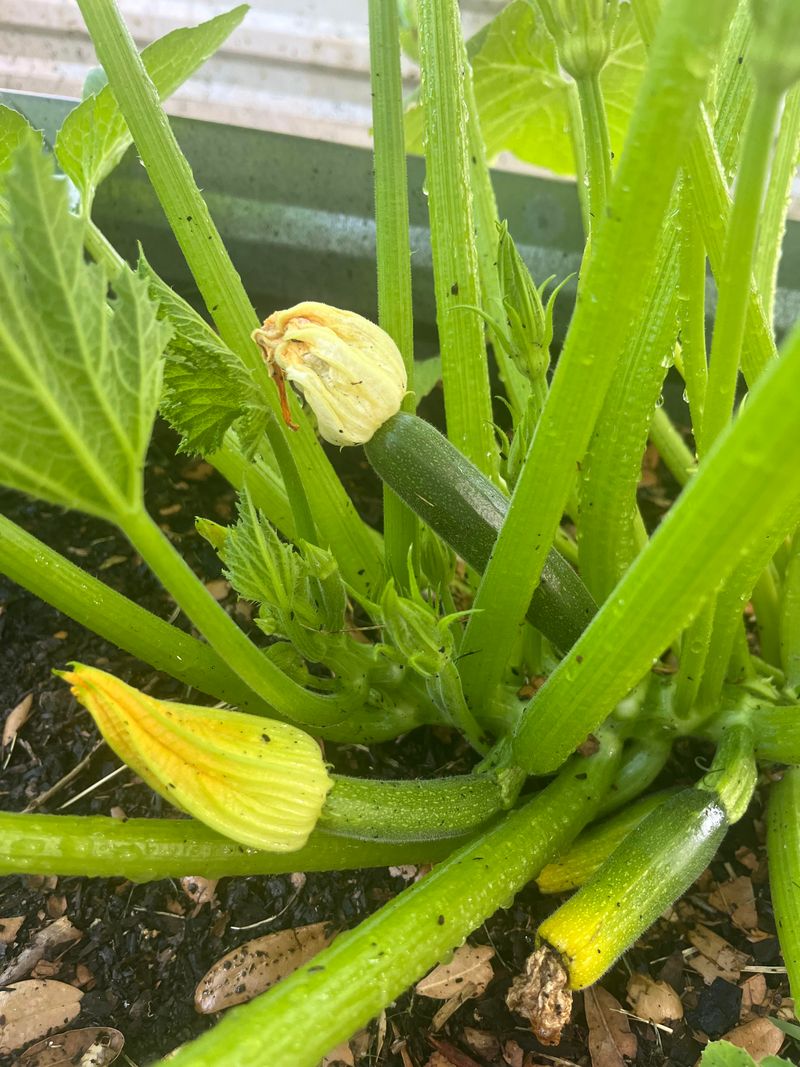
Not every zucchini that forms on your plant will make it to harvest. Some will have soft spots, strange discoloration, or blossom end problems that appear early in development.
Leaving those damaged fruits on the vine is a mistake that can cost you more than just that one zucchini.
Damaged fruit starts to break down fast, especially in summer heat. Once rot sets in, it can spread to the stem and nearby parts of the plant.
Pests are also attracted to soft, rotting fruit. What started as one bad zucchini can quickly turn into a bigger problem for the whole plant.
Snip off any damaged or poorly formed fruit as soon as you notice it. Use clean scissors or pruning shears and cut the stem close to the vine.
Drop the damaged fruit into your compost pile or a waste bag. Do not leave it on the ground near the plant, since it can still attract pests or harbor fungal spores.
Blossom end rot is one of the most common issues you will see. It shows up as a dark, sunken spot at the tip of the fruit.
It is usually caused by inconsistent watering or calcium issues in the soil. Removing affected fruit is the right call, but also look at your watering habits to prevent more from forming.
Keeping your plant clean and free of damaged fruit lets it focus on the healthy ones. That focused energy makes a real difference in how many good zucchinis you get through the end of summer.
7. Keep Watering Deep Through Late-Summer Heat
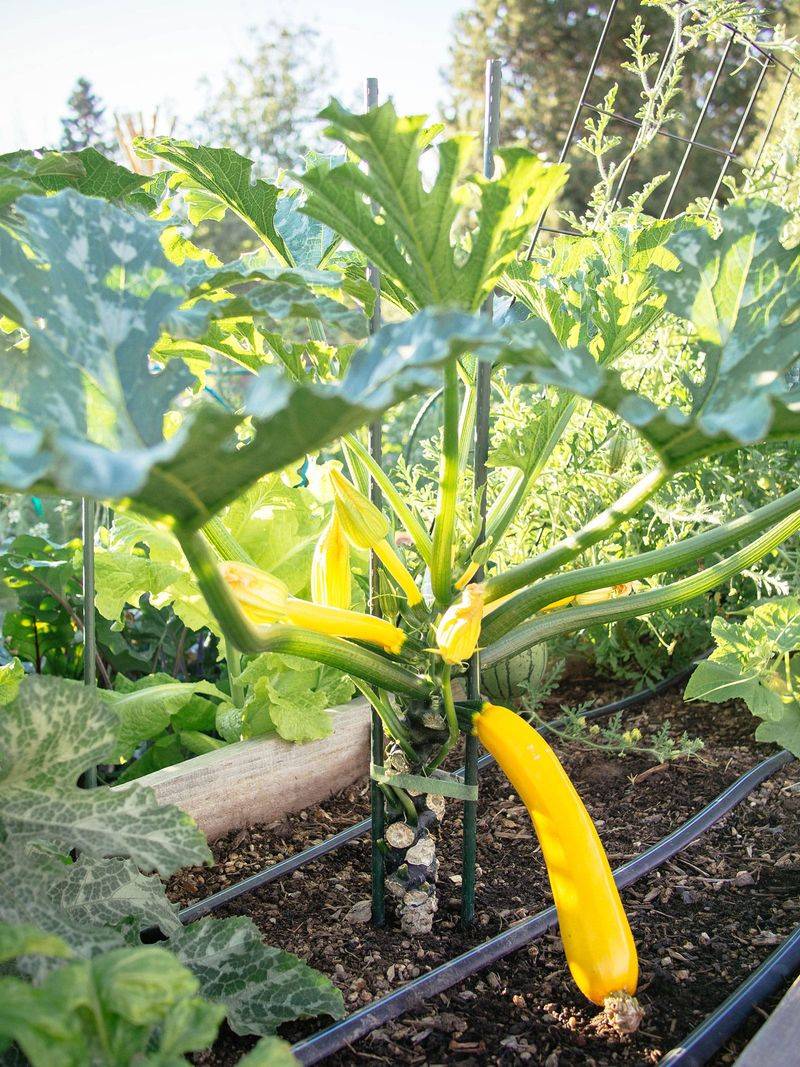
Water is the foundation of a productive zucchini plant, and late summer is when it matters most. As temperatures climb and the soil dries out faster, plants need consistent deep watering to keep producing.
Shallow watering just does not cut it when the heat is on.
Deep watering means getting moisture down six to eight inches into the soil where the roots actually live. A quick sprinkle on the surface evaporates fast and does very little good.
Slow, deep watering encourages roots to grow downward, which makes plants more resilient during hot, dry stretches.
Water at the base of the plant, not overhead. Wet leaves invite powdery mildew and other fungal problems that are already common in Pacific Northwest gardens during late summer.
A soaker hose or drip system works great for keeping moisture at the root zone without wetting the foliage.
Mulching around your plants helps a lot too. A two to three inch layer of straw or wood chips slows evaporation and keeps the soil cooler between watering sessions.
That steady moisture level is key to keeping fruit development on track.
Watch for signs that your plant needs more water. Wilting in the morning, not just during the hottest part of the afternoon, is a clear signal.
Leaves that look dull or slightly curled are also telling you something. Respond quickly and water deeply.
A well-hydrated plant stays productive much longer than one that swings between wet and dry conditions throughout the week.
8. Feed Lightly If Leaves Start Looking Tired
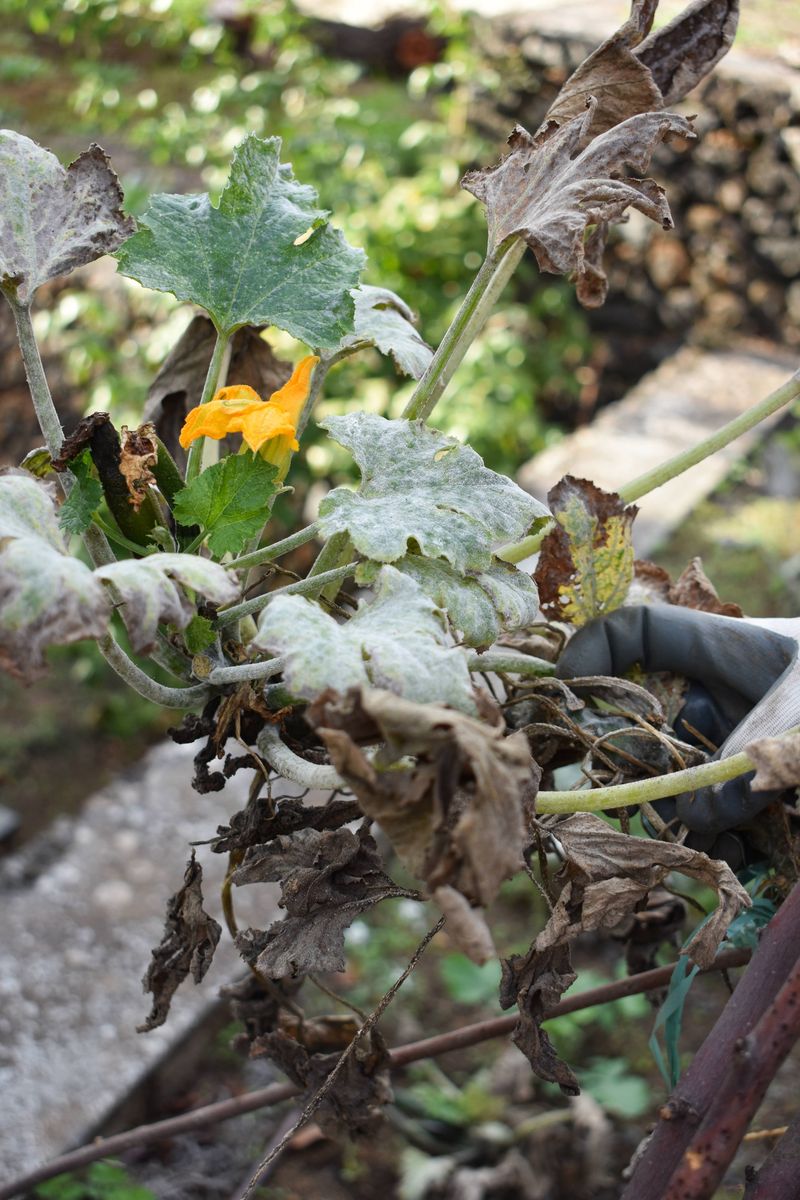
By late Oregon summer, your zucchini plant has been working hard for months. It has pushed out dozens of fruits, dealt with heat, and used up a lot of the nutrients that were in the soil at the start of the season.
Sometimes the leaves start to show it. They might look pale, slightly yellow, or just not as lush and green as they used to be.
That is the plant telling you it could use a little help. A light feeding at this stage can give it the boost it needs to keep flowering and fruiting through September.
The key word here is light. Too much fertilizer late in the season, especially nitrogen-heavy types, can push the plant to grow more leaves instead of more fruit.
Look for a balanced fertilizer or one that is slightly higher in phosphorus and potassium than nitrogen. Those nutrients support flowering and fruit development, which is exactly what you need right now.
Follow the label directions and apply at half strength if you are unsure. Less is more at this stage of the season.
Compost tea or a gentle liquid fertilizer works well because it gets absorbed quickly without overwhelming the roots. Apply it around the base of the plant and water it in well.
Do not feed a plant that looks completely healthy and is producing well. Save the extra nutrients for when the plant actually shows signs of slowing down.
Feeding at the right time, and in the right amount, can extend your harvest by several weeks.